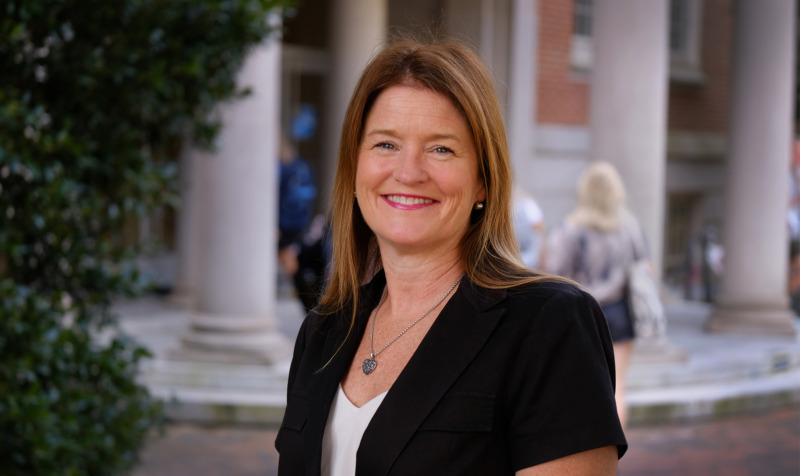
Dr. Kyla Walters is an Associate Professor in the Department of Sociology at Sonoma State University. Her research focuses on gender, labor, and education policy, particularly exploring issues of inequality in retail work, sexual harassment in industries, and resistance to charter school expansion. She holds a Ph.D. from the University of Massachusetts-Amherst. Current research includes an interview-based study on beauty appraisals during pregnancy and childbirth, conducted with Sonoma State sociology students. Her work has been published in journals like Sociology of Race and Ethnicity and Hospitality & Society , as well as in the book Walking Mannequins (University of California Press, 2022). She has also contributed to policy analyses on teacher union resistance to educational reforms.
Richard Jochelson serves as Dean of Law at the Faculty of Law, University of Manitoba (Robson Hall), a position he has held since July 1, 2016. Previously, he taught criminal law for 10 years at the University of Winnipeg. Dr. Jochelson holds a Ph.D. in Law from Osgoode Hall Law School at York University, an LLM from the University of Toronto Faculty of Law, an LL.B. with Gold Medal from the University of Calgary Faculty of Law, and a B.Sc. in Zoology with Distinction from the same institution. He completed his legal training as a clerk at the Alberta Court of Appeal and Court of Queen's Bench before working at a major Canadian law firm. Dr. Jochelson's research program centers on critical issues in criminal justice and constitutional law, with primary interests in police powers jurisprudence, sexual regulation (particularly obscenity and indecency law), jury systems and representativeness, and legal pedagogy. His interdisciplinary approach bridges law with sociology and psychology, bringing empirical and theoretical rigor to legal scholarship. His work consistently addresses social justice concerns, examining how vulnerable populations interact with the justice system and how concepts like risk, precaution, and visibility shape legal decision-making. He has developed a distinctive methodology combining doctrinal analysis with empirical research on judicial behavior and jury decision-making. His recent publications reveal evolving scholarly priorities that respond to contemporary legal challenges. The 2025 article "Morbid Matters" addresses medical assistance in dying within federal corrections, while his 2024 works on youth terrorism cases and agnotology demonstrate expansion into new interdisciplinary territories. His longstanding commitment to police powers scholarship continues with "Ancillary Police Powers in Canada" (2024). The pandemic period saw significant contributions to understanding digital justice, mental health in legal education, and remote court proceedings. His criminal law scholarship maintains focus on jury representativeness, particularly regarding Indigenous inclusion following Bill C-75's elimination of peremptory challenges. Students' Teacher Recognition Award (CATL) - 2018 Dr. Jochelson has secured multiple SSHRC Insight Grants as both Principal and Co-investigator, demonstrating his ability to lead interdisciplinary research teams. His mentorship extends to junior academics and students, with several publications co-authored with emerging scholars. He has built significant research infrastructure, notably assembling nearly 40 interdisciplinary scholars across Canada for Robsoncrim.com, which has elevated the Criminal Law Edition of the Manitoba Law Journal to prominence as one of Canada's preeminent criminal law publications. As Dean of Law, Dr. Jochelson provides leadership in academic governance and legal education innovation. His service includes extensive committee work on academic affairs, workload policy, and hiring/tenure committees. His commitment to universal design principles informs both his teaching approach and administrative leadership, emphasizing accessibility and student-centered pedagogy that allows flexible evaluation methods tailored to individual learning preferences.
Dr. Katerina Marcoulides is an Associate Professor in the Quantitative and Psychometric Methods Program at the University of Minnesota's Department of Psychology. She is affiliated with the Minnesota Population Center and serves as Co-Chair of the Structural Equation Modeling Special Interest Group (SEM SIG) for the American Educational Research Association. Her research focuses on advanced data mining and modeling techniques for complex longitudinal data, particularly applied to developmental processes in economically disadvantaged immigrant children. She holds a PhD in Quantitative Psychology from Arizona State University, an MA from UC Davis, and a BA from UC Santa Barbara. Education: PhD: Quantitative Psychology, Arizona State University MA: Quantitative Psychology, University of California, Davis BA: Psychology (minor in Education), University of California, Santa Barbara Research Interests: Dr. Marcoulides develops and applies statistical methods such as structural equation modeling (SEM), Bayesian synthesis, and data fusion to study developmental and educational processes. Her work emphasizes longitudinal data analysis, item response theory, and multilevel modeling. Recent projects include NIH-funded research on parenting, marginalization, and well-being during the pandemic. Awards: APS Rising Star Award (2021) NIH Grant Award Teaching & Collaboration: She teaches courses on SEM, multilevel modeling, and data analysis at the University of Minnesota. Previously at the University of Florida, she contributed to workshops on educational data mining and served as an APA Advanced Training Institute presenter. Her interdisciplinary collaborations span population studies, health inequities, and workforce research. Labs & Groups: She leads the Data Analytics and Visualization Lab and actively participates in the Minnesota Population Center, integrating computational and statistical innovations with real-world applications.
Lisa M. Jones is a Research Associate Professor of Psychology at the University of New Hampshire , affiliated with the Crimes Against Children Research Center (CCRC) and Family Research Lab . With over 20 years of experience, she specializes in child victimization, abuse, trafficking, and digital safety. Education: Ph.D. in Clinical Psychology – University of Rhode Island (1999) M.A. in Clinical Psychology – University of Rhode Island B.A. in Psychology – University of Virginia Research Focus: Dr. Jones's research spans child abuse and neglect , commercial sexual exploitation of children (CSEC) , human trafficking , youth internet victimization , and digital citizenship education . She leads multiple large-scale studies funded by the CDC, NIJ, WHO, and private foundations, focusing on prevention, intervention, and policy development. Current Projects: She is Principal Investigator on: A 5-year CDC-funded RCT evaluating youth-focused trafficking prevention education in Minnesota. An NIJ-funded quasi-experimental evaluation of Love 146’s services for trafficking victims. An NIJ-funded study on improving national surveillance of child sexual abuse in youth-serving organizations. Private RCTs evaluating digital citizenship programs like Common Sense Education and Google Be Internet Awesome. Publications & Impact: With over 100 publications, her work has shaped national and international discourse on child protection, digital safety, and trauma-informed practices. She regularly presents at national and international conferences. Contact: Email: lisa.jones@unh.edu Address: Crimes Against Children Research Center, 10 West Edge Dr., Suite 106, Durham, NH 03824, USA
Dorothy L. Espelage is the William C. Friday Distinguished Professor of Education at the University of North Carolina at Chapel Hill, affiliated with the School of Education's Applied Developmental Science and Special Education (ADSSE) department. She holds joint appointments in Human Development and Family Science (HDFS) and School Psychology, and leads the Diverse and Resilient Educators Advised through Mentorship (DREAM) initiative. Her research focuses on translating empirical findings into prevention programs targeting bullying, teen dating violence, and school safety. Dr. Espelage advises U.S. Congress on anti-bullying legislation and has secured over $15 million in external funding. Education: Ph.D. in Counseling Psychology (1997), Indiana University M.S. in Clinical Psychology (1993), Radford University B.S. in Psychology (1991), Virginia Commonwealth University Research Interests: Prevention science, social-emotional learning interventions, bullying and cyberbullying prevention, school-based suicide prevention, and addressing violence against educators. Her work emphasizes policy development and community engagement, with a focus on marginalized youth such as LGBTQ+ adolescents and students with disabilities. Key Contributions: Developed evidence-based programs like Sources of Strength and DIAL (Disability Anti-Bullying Training). Authored influential books including Bullying in North American Schools and Handbook of Bullying in Schools . Her recent studies explore racial disparities in bullying-suicidality links and violence against school staff. Awards & Recognition: Lifetime Achievement Award (APA Division 17, 2023) 2023 BRNET-WABF Career Award Invited speaker at White House Bullying Summit (2011) Advising & Grants: Mentor for early-career researchers through the DREAM program. Current grants focus on school climate improvement, anti-bullying teacher training, and mental health equity initiatives. Collaborates with CDC, NIH, and NIJ on dissemination efforts. Labs & Teams: Leads transdisciplinary teams at UNC and previously at University of Illinois Urbana-Champaign (Gutgsell Professorship) and University of Florida. Engaged in global anti-bullying advocacy through organizations like the World Anti-Bullying Forum.
Associate Professor Samantha Schulz is a sociologist of education at The University of Adelaide's School of Education, within the Faculty of Arts, Business, Law and Economics. She specializes in educational justice, focusing on First Nations education, race critical theory, affect studies, and gender equity. Her work spans international contexts including Kenya, India, China, and Australia's APY Lands. She is co-convenor of the Pedagogies for Justice Research Group, affiliated with CRESI and the Fay Gale Centre for Research on Gender. As Program Director for the Master of Teaching program, she emphasizes socially engaged pedagogies. Recent research includes the ARC-funded 'Culturally Responsive Schooling' project (2022-24) and studies on gender-based violence in educational settings. Her publications explore decolonial methodologies, critical race theory, and the intersection of affect and pedagogy. Her grants include leadership roles in projects addressing Indigenous sovereignty in education, culturally responsive curriculum design, and restorative practices. Notable collaborations involve UniSA and Open University of Cyprus. She co-edits the Routledge 'Local Global Issues in Education' series and actively publishes on topics ranging from toxic masculinity in academia to anti-racist policy frameworks. Her advising focuses on fostering critical scholarship in Masters and PhD candidates, with research supervision emphasizing justice-oriented educational practices. She leads initiatives like 'Teaching in an era of digital influence' and has contributed to policy discussions on preventing violent extremism in schools. Her work bridges theoretical rigor with practical advocacy for marginalized communities in education systems globally.
Dr. Dean G. Kilpatrick is a Distinguished University Professor in the Department of Psychiatry and Behavioral Sciences at the Medical University of South Carolina (MUSC). He holds leadership roles as Director of the National Crime Victims Research and Treatment Center and Director of the Charleston Consortium Clinical Psychology Internship Program. His career spans over 50 years with continuous NIH funding since 1985 and extensive extramural grants from agencies like CDC, NIMH, and NIJ. His research focuses on traumatic stress, particularly PTSD prevalence, sexual violence epidemiology, and mental health impacts of mass violence. He pioneered rape crisis advocacy in South Carolina and has authored over 300 peer-reviewed publications (h-index 109), with eight papers cited over 1,000 times. His work influences policy through roles in IOM committees and testimony to U.S. Congress. Key areas of expertise include posttraumatic stress disorder, trauma exposure measurement, and disaster mental health interventions. His recent studies address mass violence community responses, lead exposure screening, and mobile health apps for PTSD mitigation. He has directed major initiatives like the Bounce Back Now intervention trial and the National Survey of Adolescents. Awards include the Presidential Award for Victims of Crime (1990) and the South Carolina Order of the Palmetto (2020). Professional service includes Editor-in-Chief of the Journal of Traumatic Stress (1997-2005) and ISTSS presidency (2005-2006). His grants total millions, funding projects on sexual assault policy, disaster preparedness, and trauma genetics. He advises federal agencies on victim services and has trained generations of psychologists through MUSC's clinical programs.
Dr. Cheryl Collier is a Professor and Dean of the Faculty of Arts, Humanities and Social Sciences at the University of Windsor, appointed since July 2021. She holds a position in the Department of Political Science with research expertise in gender-based violence in political contexts, Canadian social policy, and feminist institutionalism. Her research examines: Violence against women in politics (VAWIP) #MeToo movement impacts on political institutions Comparative legislative harassment policies Media representations of gender-based violence Intersectional approaches to policy analysis Recent publications form a comprehensive analysis of gender-based violence in Canadian politics, including social media harassment, mainstream media coverage, institutional responses, and policy solutions. Her work employs comparative frameworks analyzing Canada alongside the UK and other democracies.
Dr. Yijing Li is a Senior Lecturer in Urban Informatics at King’s College London, Department of Informatics. She joined King’s in 2018 and previously held roles at the University of Warwick and China Executive Leadership Academy Pudong. Her research focuses on spatial analysis of urban crime, counter-terrorism strategies, climate change impacts on crime, and risk management using big data. She holds a PhD in Geography of Crime from the University of Cambridge and an MSc in Urban Ecology from Peking University. Her work integrates theories from sociology, criminology, and economics with quantitative and qualitative methods. Key research areas include crime patterns during pandemic lockdowns, One Belt One Road security strategies, and environmental sustainability assessments. She has authored over 30 publications, including studies on London’s crime dynamics, spatial disparities in crime data, and vegetation change modeling using remote sensing. Dr. Li is affiliated with the Centre for Urban Science and Progress (CUSP) London and the Computing Education Research Centre (CERC). She has supervised interdisciplinary projects on employability in data science programs and collaborated with organizations like Transport for London and Westminster City Council. Her recent work examines health resilience in European countries post-pandemic and employs Bayesian models to analyze crime patterns during lockdowns.
Paul H. White is an Associate Professor of Social Psychology in the Department of Psychology at the University of Utah, where his research centers on the three 'P's': persuasion, prejudice, and performance, investigating motivational drivers of human behavior. His educational background: B.A., Berea College (1989) Ph.D., Northeastern University (1993) Post-doctoral training, Ohio State University (1993-1995) Dr. White's persuasion research examines how source/target characteristics (race, gender, sexual orientation) impact message processing and attitude change, including 'stealing thunder' dynamics. His prejudice work investigates subtle bias through intergroup models incorporating stigmatized groups' perspectives, while his performance studies explore evaluation effects, social underachievement ('letting up'), and stereotype threat mitigation. Analysis of his publications reveals sustained focus on stereotype threat, intergroup relations, and environmental behavior across cross-cultural contexts, with consistent application of social psychological theory to real-world problems in education and sustainability. Dr. White currently mentors three graduate students: Logan Call (admitted 2020) Emma Franklin (2022) Brittany Clark (2022) He directs the Persuasion, Prejudice, and Performance (PPP) Lab, which serves as the primary research environment for experimental and applied investigations into his three core research areas.
Mala Htun is a Professor of Political Science at the University of New Mexico, specializing in comparative politics, women’s rights, and social inequalities. She holds a Ph.D. from Harvard University and an A.B. from Stanford University. Her research focuses on gender justice, policy analysis, and strategies to promote inclusive environments in STEM. Education: PhD in Political Science (Harvard University, 2000), A.B. in International Relations (Stanford University, 1994). Research Interests: Gender equality policies and their implementation Comparative analysis of women’s rights legislation Impact of feminist activism on policy change STEM inclusion and institutional accountability Awards and Recognition: Best Book Award (Human Rights Section, ISA, 2019) Andrew Carnegie Fellow (2015) Recognized by New Mexico legislature for scholarly contributions (2016) Leadership Roles: Vice President of the American Political Science Association (APSA) Chair of APSA’s Committee on the Status of Women in the Profession Co-chair of APSA’s Presidential Task Force on Women’s Advancement Key Contributions: Authored three influential books, including The Logics of Gender Justice (2018) and Inclusion Without Representation in Latin America (2016). Her work bridges theory and practice, analyzing how states respond to gender justice demands globally.
Bård Erlend Solstad is an Associate Professor at the Department of Sport Science and Physical Education, University of Agder. His research focuses on youth sports psychology, athlete development, and coach education, with a particular emphasis on the impact of training loads, motivation, and injury prevention in young athletes. He holds a postdoctoral fellowship from the Norwegian Research Centre for Children and Youth Sports (2017–2020) and was a Research Fellow at the Norwegian School of Sport Sciences (2012–2017). Key affiliations: ROPE (Research in Outdoor and Physical Education), SPADE (Sports Performance and Athlete Development Environments). Research interests include the psychological aspects of sport injury, perfectionism in elite performers, and the motivational climate in youth sports. His work integrates qualitative and quantitative methods to address issues like athlete well-being, coaching practices, and retention in organized sports. Recent studies have explored factors influencing dropout rates in youth soccer and the efficacy of interventions like the FUEL program for female endurance athletes. Solstad has advised on coach education initiatives, emphasizing empowering coaching behaviors and the psychological needs of athletes. He collaborates with multidisciplinary teams to advance athlete development programs and policy recommendations.
Andrew Soderberg serves as an Associate Professor in the Management and Human Resources Department at the College of Business, University of Wisconsin Oshkosh. He holds a Ph.D. from the University of Utah (2016) and a BS from Brigham Young University (2005), bringing over a decade of academic expertise to his role. His research spans critical domains in organizational behavior and business ethics, with particular emphasis on: Workplace ethics and moral decision-making processes Leadership dynamics and trust formation Political ideology's impact on organizational perceptions Artificial intelligence ethics in human resources Sexual harassment training effectiveness Work-life balance and parental status implications Soderberg's publication trajectory reveals a sophisticated evolution toward examining ethical tensions in modern workplaces. His recent work demonstrates increasing focus on AI ethics, political polarization in organizations, and psychological reactance to leadership failures. Methodologically, he employs mixed-methods approaches to dissect complex interactions between status perceptions, moral reasoning, and organizational outcomes, with notable contributions to understanding how e-training design influences harassment prevention and how political identity shapes workplace status hierarchies. His scientific recognition includes: Dean's Excellence Award, College of Business (2024) College of Business Outstanding Faculty Award (2023) Dean's Excellence Award (2022) Management Department Teaching Award (2022, 2019) As an educator, Soderberg has pioneered innovative classroom methodologies including the 'Court of Theories' debate exercise for motivation theory instruction and the 'FOG' framework for team communication training. His research collaborations span multiple institutions, addressing pressing organizational challenges from sexual harassment prevention to ethical AI implementation. While specific grant details aren't provided, his publication record indicates sustained funding for research on workplace ethics, leadership dynamics, and political ideology in organizations.
Christina Fattore is a Professor in the Department of Political Science at West Virginia University (WVU), affiliated with the Eberly College of Arts & Sciences. She also serves as a faculty member in the International Studies program and the Center for Women's and Gender Studies. Her research focuses on international trade, development, and the sociology of academia, with a particular emphasis on mentoring strategies and pedagogy of care. She holds a Ph.D. in Political Science from Florida State University (2007). Dr. Fattore teaches courses on international political economy, international organizations, and gender in international relations. She is actively involved in academic leadership, serving as Vice Chair/Program Chair of the International Studies Association's Women's Caucus. Her work bridges theoretical scholarship and practical pedagogy, addressing issues such as academic well-being, gender disparities in academia, and the impact of global events on scholarly productivity. Her research trends reflect a dual focus: analyzing international trade disputes and institutional frameworks while advocating for inclusive, care-centered educational practices. Recent studies examine post-pandemic scholarly challenges, gendered academic networks, and the psychological impacts of political events on marginalized groups. Dr. Fattore’s affiliations include cross-disciplinary roles that emphasize feminist methodologies and global justice. She contributes to policy-relevant research on trade liberalization in Latin America and the evolving dynamics of international dispute resolution mechanisms.
Dennis Nickson is Professor in Service Work and Employment at the Department of Work, Employment and Organisation, University of Strathclyde, where he has been a faculty member since 1996. He previously served as Head of Department (2008–2014) and co-directed the Scottish Centre for Employment Research (2004–2008). He is Editor-in-Chief of Employee Relations and a leading figure in research on service sector employment. PhD in Internationalization Strategies of Hotel Companies, University of Strathclyde (1999) BA in Humanities, University of Kent (1991) His research centers on aesthetic and emotional labour , skills, employability, and human resource management in interactive service work, particularly in retail and hospitality. He is a co-developer of the influential concept of aesthetic labour with Professors Chris Warhurst and the late Anne Witz. His work explores labour market dynamics, gender inequalities, fair work, and workplace harassment, especially in low-paid service roles. His recent publications focus on fair work frameworks, intersectional inequalities in global education sectors, and the impact of the pandemic on hospitality workers. These works reflect trends in critical HRM, service work ethics, and policy-oriented labour research. Scientific Awards: Academic Fellow, Chartered Institute of Personnel and Development (CIPD), 2013 He has supervised multiple research students and led externally funded projects on topics including equal pay, recruitment in the voluntary sector, and customer abuse in hospitality. His research has influenced employment relations policy and practice, particularly in Scotland’s public and third sectors. He has also contributed to major journal editorial work and professional conferences. He is actively involved in the Global Hospitality Research Alliance and collaborates internationally on fair work and hospitality employment issues. His work aligns with UN Sustainable Development Goals related to decent work and economic growth.