Adelle Forth is a Professor in the Department of Psychology at Carleton University, specializing in psychopathy research. Her work examines cognitive and affective processes underlying psychopathic traits, early manifestations in youth, and societal impacts. She has published extensively on violence risk assessment, forensic evaluation tools, and interpersonal dynamics affected by psychopathy. Research Focus: Her studies explore psychopathy's influence on romantic relationships, empathy deficits, humor styles, and vulnerability perceptions. She also validates cross-cultural diagnostic tools like the Spanish PCL:YV and investigates cyber-related deviant behaviors linked to dark personality traits. Professional Service: Dr. Forth serves on editorial boards and has supervised numerous graduate theses. She no longer accepts new students.
Ryan Thibodeau is a Professor at St. John Fisher University and a New York State licensed psychologist with Apple Teacher certification. His research examines the history of psychiatry and mental illness stigma, with publications spanning PTSD, schizophrenia, depression, and autism stigma. Recent work explores continuum beliefs, social distance, and intervention efficacy. Community involvement includes the Mount Hope Cemetery unnamed deceased memorial project and sensory-friendly space development. His publication portfolio demonstrates extensive focus on mental health stigma mechanisms across military/civilian contexts, celebrity influences, and parent-associated stigma. Methodologies include laboratory experiments, correlational studies, and implicit/explicit measures spanning psychophysiology and social cognition.
Kristen Pleil is an Associate Professor at Weill Cornell Medicine in the Graduate School of Medical Sciences, affiliated with the Department of Pharmacology and Neuroscience. She serves as Co-director of the NIGMS-sponsored Training in Pharmacological Sciences (TIPS) predoctoral T32 program. Academic Appointments: Assistant Professor (2016), Associate Professor (2021) Education: BA in Psychology (Emory University, 2005), PhD in Neuroscience (Duke University, 2010), Postdoc at University of North Carolina School of Medicine Research Focus: The Pleil lab investigates how sex and stress hormones regulate alcohol/substance use, stress responsivity, and affective behavior through neuropeptidergic brain circuits and hormone-neuropeptide signaling. Key projects include estrogen's role in alcohol drinking and anxiety, opioid receptor signaling in reward/aversion learning, and sex-dependent thalamic control of stress responses. The lab uses in vivo and ex vivo mouse models to study synaptic/epigenetic plasticity across developmental stages. Publications Trends: Her work spans molecular pharmacology, neurophysiology, and addiction research with a focus on sex differences in neuropsychiatric diseases. Articles cover topics like estrogen signaling in binge drinking, opioid-context memory, thalamic circuits in stress response, and optogenetic tools for receptor imaging. Scientific Awards: President’s Young Investigator Award, ISBRA (2013) Elizabeth Young New Investigator Award, OSSD (2015) K99/R00 Pathway to Independence Award, NIAAA (2015) Kellen Foundation Junior Faculty Fellowship (2016) NARSAD Young Investigator Award (2017) Early Career Investigator Award, NIDA-NIAAA (2017) Training and Collaborations: As Co-director of the TIPS T32 program, she mentors graduate students in pharmacological sciences. Her collaborations include researchers at UNC, Duke, and Weill Cornell, with grants from NIAAA, NIMH, and NIGMS.
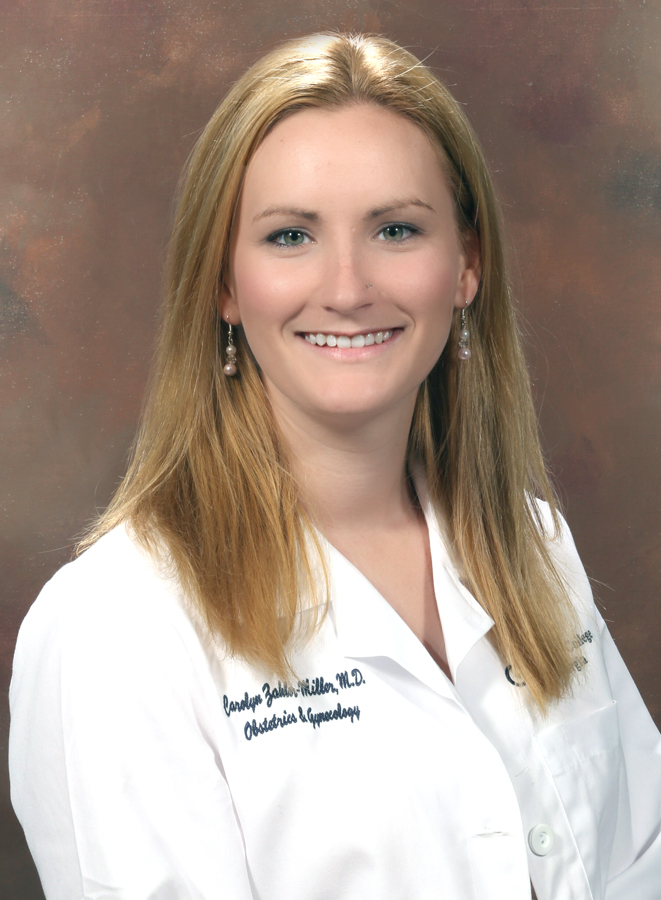
Carolyn Zahler-Miller serves as Associate Professor and Assistant Dean for Clinical Integration at Augusta University's Medical College of Georgia, Department of Obstetrics and Gynecology. She directs the Ob/Gyn medical student clerkship and provides clinical care at downtown Augusta and Grovetown sites, specializing in abnormal uterine bleeding, PCOS, menopausal medicine, and breastfeeding optimization. Her educational background includes: MD, University of Florida, 2014 BS in Chemistry, University of Florida, 2010 Dr. Zahler-Miller's research focuses on women's health across the lifespan, with expertise in abnormal uterine bleeding, PCOS, menopausal disorders, breastfeeding medicine, HPV vaccination, and gestational diabetes. Her work integrates clinical practice with educational innovation to develop evidence-based interventions for patient care and physician training. Recent publications (2023-2025) demonstrate her commitment to translational research, spanning mobile health applications for breastfeeding support, RSV prevention in newborns, surgical decision-making in benign gynecology, menopausal sexual health therapies, and cost-effective surgical training models. These works highlight her dual focus on clinical outcomes and medical education advancement. Notable honors include: AU/MCG Woman Who Inspires (2023) Fellow of the American College of Obstetricians and Gynecologists (2021) As an educator, Dr. Zahler-Miller teaches 12+ medical student courses, chairs the Ob/Gyn Student Advising Committee, and serves on departmental and college committees including the Executive Committee and Curriculum Enrichment Committee. She actively shapes medical education through curriculum development, student mentorship, and clerkship leadership while maintaining clinical practice in general obstetrics and gynecology.
Denise Esserman is a Professor of Biostatistics at the Yale School of Public Health, where she joined the faculty in 2014. She is a member of the Yale Center for Analytical Sciences and collaborates with multiple departments at the Yale School of Medicine, including the Clinical and Translational Science Award Program, Patient-Centered Outcomes Research Institute, and the Cancer Center. Her research focuses on methodological aspects of clustered randomized trials and sample size calculations. Education: PhD in Biostatistics from Columbia University (2006) MS in Statistics from University of Georgia (2001) Dr. Esserman's research interests span several critical areas in biostatistics and public health methodology. She specializes in clustered randomized trials, with particular expertise in understanding how intraclass correlation coefficients (ICC) and other factors impact sample size calculations. Her work extends to longitudinal studies methodology, randomized controlled trial design, and sampling techniques. She has contributed significantly to statistical methods for clinical trials, healthcare data analysis, and public health research. Her interdisciplinary approach bridges theoretical statistics with practical applications in healthcare settings. Analysis of Dr. Esserman's recent publications reveals a strong focus on methodological innovations in clinical trial design and analysis, particularly for cluster-randomized trials. Her work spans healthcare applications including fall injury prevention in elderly populations, opioid use disorder treatment in international settings, pain management for hemodialysis patients, and validation of medical coding algorithms. She frequently employs advanced statistical techniques including Bayesian methods, mediation analysis, and methods for handling clustered data. Her research demonstrates a consistent commitment to improving the rigor and applicability of statistical methods in public health and clinical research. Dr. Esserman serves as a reviewer for several prestigious journals including the American Journal of Epidemiology, Arteriosclerosis, Thrombosis and Vascular Biology; Statistics in Biopharmaceutical Research; Clinical Trials; and Obesity. As a member of the Yale Center for Analytical Sciences, Dr. Esserman collaborates with numerous researchers across Yale University. Her current projects include the EQuIP trial (HIC ID 2000033355), where she serves as Sub Investigator with primary completion date of 08/31/2027, focusing on mental health and behavioral research for sexual minority women.
Gülçin Elboga is an Associate Professor at Gaziantep University Faculty of Medicine, Department of Psychiatry. She has been serving in this position since 2019, following her tenure as a Doctor Lecturer from 2017-2019 at the same institution. Her academic career is deeply rooted in the Department of Psychiatry within the Faculty of Medicine at Gaziantep University. Her educational background includes Medical Specialization (2010-2015) and a Medical License (2004-2009), both completed at Gaziantep University Faculty of Medicine. This strong foundation in medical education has supported her specialized focus in psychiatry. Dr. Elboga's research interests span across multiple critical areas in mental health, with particular emphasis on bipolar disorder, depression, schizophrenia, and anxiety disorders. Her work frequently explores the biological underpinnings of psychiatric conditions, including neuroimaging studies, biomarker research, and neuroendocrine aspects of mental illnesses. She has made significant contributions to understanding the application of cognitive behavioral therapy, electroconvulsive therapy, and novel pharmacological approaches in psychiatric treatment. Her publication record demonstrates consistent productivity with a focus on clinically relevant research. Recent work shows increasing attention to pandemic-related mental health issues, neuroimaging correlates of psychiatric disorders, and the biological mechanisms underlying mood disorders. Her research often involves collaborations with colleagues across multiple institutions, reflecting an interdisciplinary approach to psychiatric research. Dr. Elboga has authored numerous scientific publications including 90 articles and 7 book chapters, with a strong presence in both national and international psychiatric literature. Her work appears in reputable journals across various psychiatric subfields, demonstrating breadth and depth in her scholarly contributions. She has been actively involved in research related to the psychological impact of the COVID-19 pandemic on healthcare workers, circadian rhythm disturbances in psychiatric disorders, and innovative treatment approaches for treatment-resistant depression. Her work bridges clinical practice with scientific investigation, contributing valuable insights to the field of psychiatry.
David J. Moore, Ph.D., is a licensed clinical psychologist and Professor of Psychiatry at UC San Diego Health. He co-directs the SDSU/UCSD Joint Doctoral Program (JDP) in Clinical Psychology and leads research at the HIV Neurobehavioral Research Program (HNRP). His work focuses on neurocognitive impairments in individuals with HIV, comorbid mental illness, and substance use disorders, with a special emphasis on technological interventions for medication adherence. Doctorate: Ph.D. in Clinical Psychology (SDSU/UCSD JDP, neuropsychology specialization) Postdoctoral Fellowship: UCSD (serious mental illness) Clinical Internship: West Los Angeles VA Dr. Moore’s research addresses: Neurocognitive complications of HIV infection Intersection of HIV and aging Technological interventions for medication adherence Impact of comorbid psychiatric/substance use disorders on functioning His publications span topics including HIV neurocognitive profiles, syndemic factors in sexual risk behavior, and aging with HIV. Current studies integrate metabolomics, neuroimaging, and behavioral data through NIH-funded grants.
Matthew Price is the George W. Albee Green & Gold Professor of Psychological Science and Director of the Clinical Psychology Training Program at the University of Vermont's College of Arts and Sciences. He holds a B.A. from SUNY Binghamton (2004), an M.A. (2006), and Ph.D. (2011) from Georgia State University. His research focuses on expanding clinical care access for trauma survivors and anxiety disorder patients via technology-driven interventions. Key areas include mobile health applications, wearable sensors, and acute trauma care in Emergency Departments. His interdisciplinary approach involves collaborations with computer science, bioinformatics, and medicine. Current projects explore digital biomarkers (e.g., heart rate variability), technology adoption barriers, and culturally adapted therapies. He leads the Center for Research on Emotion, Stress, and Technology, emphasizing translational frameworks bridging basic research and clinical practice. Recent work includes randomized controlled trials evaluating mobile apps like 'Bounce Back Now' for disaster-related PTSD, and sleep-monitoring studies using wearable devices. Over 150 peer-reviewed articles highlight his focus on trauma mechanisms, symptom networks in veterans, and tech-enabled mental health innovations. His lab actively addresses global mental health disparities through mHealth solutions.
Dr. Ara J. Schmitt is a Professor of School Psychology and Associate Dean for Research and Faculty Advancement at Duquesne University's School of Education. He holds a Ph.D. from Illinois State University (2001) and a B.S. from the University of Illinois at Urbana-Champaign (1996). His research focuses on neuropsychological assessment, evidence-based interventions for learning disabilities, school-based chronic illness management, and bullying dynamics. Dr. Schmitt has authored numerous peer-reviewed articles, book chapters, and textbooks, including Patterns of Learning Disorders (2006) and Theory and Cases in School-Based Consultation (2020). Education: Ph.D., School Psychology, Illinois State University (2001); B.S., Psychology, University of Illinois (1996) Professional Roles: Associate Dean for Research, School Psychology Program Director, Adjunct Faculty Collaborator His research interests emphasize applied interventions in schools, including neurocognitive assessments, concussion management, and bullying prevention. He has pioneered studies on Taped Problems Intervention adaptations for remote learning and explored cognitive predictors of bullying behavior in adolescents. Recent work addresses socially responsive evaluation practices in health psychology and disparities in concussion awareness among athletes and parents. Dr. Schmitt has advised over 20 graduate students and contributed to national initiatives like the CCTC 2020 guidelines for health psychology training. His work bridges clinical practice and education, particularly in supporting students with chronic illnesses and neurodiverse needs.
Drexler James is an Assistant Professor of Psychology at the University of Minnesota, Twin Cities, and an affiliate faculty member of the Robert J. Jones Urban Research and Outreach-Engagement Center. His research focuses on the social and psychological determinants of health among minoritized groups, particularly African American adults and men of color who have sex with men. He also examines the health consequences of biological race essentialism, using intersectionality as a framework to understand health inequities. James holds a B.Sc. in Psychology from the Illinois Institute of Technology and a Ph.D. in Social & Personality Psychology from the University of Illinois at Chicago, with a minor in Community Health Research. His specialties include racism and health, psychological essentialism, and internalized oppression. As the primary investigator of the Health, Intersectionality, Essentialism, & Stigma (HIES) Research Team, he investigates how stigma operates dynamically across perceivers and targets to reinforce health disparities. Recent work explores barriers to healthcare access, internalized racism’s mental health impacts, and the socio-cultural implications of racialized stereotypes. His academic contributions span over 20 peer-reviewed articles addressing race-related health disparities, internalized oppression, and the psychological impacts of systemic racism. While no formal awards are listed, his work demonstrates significant engagement with marginalized communities’ health challenges.
Lief Fenno, MD, PhD, is an Assistant Professor at The University of Texas at Austin, affiliated with Dell Medical School’s Department of Psychiatry and Behavioral Sciences and the College of Natural Sciences’ Department of Neurology. He is a board-certified psychiatrist specializing in addiction medicine, particularly medication-assisted treatment (MAT) for opioid use disorder. His research focuses on molecular and viral tools to study neuron circuitry and behavior, with applications in precision medicine for neurological and psychiatric conditions. Fenno earned his MD and PhD from Stanford University and a BA in neurobiology from Harvard University. His research integrates neuroscience, bioengineering, and clinical medicine to develop novel tools for understanding neural circuits. Key interests include optogenetics, chemogenetics, and optical imaging of neuronal activity in awake subjects. The Fenno Lab explores mechanisms of neurological diseases, particularly addiction, and aims to translate findings into clinical treatments. Recent work emphasizes brain-wide mapping of neural circuits, including studies on glutamate neuron subtypes and VTA-lateral habenula interactions. His lab also develops sono-optogenetic technologies and nanotransducers for deep brain stimulation. Fenno’s educational background includes residency in psychiatry and a bioengineering fellowship at Stanford, underscoring his interdisciplinary approach to neuroscientific challenges.
Stacy Holman Jones is a Professor of Theatre and Performance in the School of Languages, Literatures, Cultures and Linguistics at Monash University. With over 23 years of academic experience, she has developed an international reputation for leadership in performance studies, particularly in feminist and queer theory, new materialist research, and critical arts-based methodologies. Her educational background includes a PhD in Communication/Performance Studies from the University of Texas at Austin (2001), an MA in Communication from California State University Sacramento (1996), and a BA in Humanities (1988). Professor Jones's research focuses on performance as socially, culturally, and politically resistive and transformative activity. She is a recognized leader in critical autoethnography and has published over 100 articles, book chapters, and editorials, as well as authored, co-authored, and edited 14 books including the influential Handbook of Autoethnography (2013, 2021) and Queering Autoethnography (2018). Her work spans cultural critique, social inclusion, education, resilience building, designing for social impact, and enhancing health and wellbeing among minoritarian communities. Analysis of her recent publications reveals a strong trajectory toward creative ecological approaches to mental health, collaborative autoethnographic methods, and innovative design for social impact. Her research increasingly integrates performance studies with mental health applications, particularly in educational settings, while maintaining strong connections to queer theory, new materialisms, and critical autoethnography. International Congress of Qualitative Inquiry's Special Career Award National Communication Association's Distinguished Service Award in Performance Studies Janice Hocker Rushing Early Career Research Award Organization for the Study of Communication, Language, and Gender Feminist Teacher/Mentor Award Over the Rainbow Recommended Book List for Queering Autoethnography (2019) International Congress of Qualitative Inquiry Qualitative Book Award, Honourable Mention (2020) Multiple Good Design Awards for 'The Tomorrow Party' (2024) Professor Jones has been part of 3 successful ARC applications totaling $1,353,604, including as Lead CI for DP200102876 Staging Australian Women's Lives (2020-2023). She is currently accepting PhD students with supervision interests in theatre and performance studies, social change and social justice, and health and wellbeing research. She serves as the founding editor of Departures in Critical Qualitative Research and has been actively involved in professional organizations including serving as President of the International Congress of Qualitative Inquiry (2015-2018). Her current research activities include multiple collaborative projects such as 'Playing Transitions - Settling and Belonging in School together' (2024-2027), 'Learning Creates: Tomorrow Party' (2024), and 'Canopy: Creative partnerships for policy advocacy in Climate and Health' (2024), demonstrating her commitment to interdisciplinary, impact-focused research that bridges theory and creative practice.
Dr. Philip R. Holland is a Reader in Neuroscience at King's College London, affiliated with the Wolfson Sensory, Pain and Regeneration Centre within the School of Neuroscience and the Institute of Psychiatry, Psychology & Neuroscience. His research focuses on understanding migraine mechanisms and developing therapies, with a particular emphasis on neurovascular interactions and pain pathways. He leads a team funded by organizations like the Medical Research Council, Wellcome Trust, and European Research Council. Dr. Holland earned his PhD under Prof. Peter Goadsby at University College London, followed by postdoctoral research at UCSF and the University of Edinburgh. He actively engages in teaching, public awareness, and editorial roles (e.g., Cephalalgia). Key awards include the 2020 Medical Research Foundation Emerging Leaders Prize. His work spans clinical and translational research, aiming to bridge basic science with patient care. Education: PhD in Neuroscience, Postgraduate Certificate in Academic Practice (King's College London). External Roles: External Examiner at UCL, Science Editor of CGRP Forum, Associate Editor of Cephalalgia. Grants/Projects: Investigates trigeminal autonomic cephalalgias, neuroendocrine signaling, and novel therapies like cannabidiol combinations. Labs/Teams: Leads a migraine-focused research group exploring neurobiological and pharmacological interventions.
Sari Fröjd is a **Lecturer** at **Tampere University**, affiliated with the **Faculty of Social Sciences** and the **Health Sciences** department. Her research focuses on adolescent mental health, bullying, sexual harassment, transgender identity, and the impact of social media on youth. She has published extensively on topics such as mental health interventions, suicide risk in transgender adolescents, and socioeconomic influences on adolescent behavior. Her work emphasizes the intersection of clinical and public health approaches, with studies on programs like the Icehearts and Gutsy Go initiatives. She has contributed to understanding the mental health trends of Finnish adolescents, including changes in cannabis use, delinquency, and bullying over time. Key research interests include: Bullying and its mental health consequences Social media's role in adolescent well-being Gender identity and mental health outcomes Adolescent substance use epidemiology Her publications (85+ since 2003) reflect collaborations with institutions like Pirkanmaan Sairaanhoitopiiri and involve large-scale population surveys. No notable awards are mentioned, but her work informs national health policies and clinical practices.
Dr. Andrew D. Eaton is an Assistant Professor at the University of Regina’s Faculty of Social Work (Saskatoon Campus) and holds a Status-Only Assistant Professorship at the Factor-Inwentash Faculty of Social Work, University of Toronto. He earned his PhD and MSW from the University of Toronto and his BSW from Toronto Metropolitan University. His research focuses on HIV/AIDS, mental health crises, aging populations, sexual health, and harm reduction, with a commitment to community-based participatory research. Eaton’s work addresses complex comorbidities affecting marginalized groups, particularly sexual and gender minorities. He leads projects such as the '3 Infections, 1 Fight Study' using geospatial tools to reduce harm from injection drug use, and the 'ReportNeedles.ca' initiative to map needle disposal hotspots. His studies also explore cognitive remediation therapies for aging HIV-positive populations and crisis mental health response models. He holds grants from CIHR, SSHRC, CTN, and OHTN. His publications emphasize innovative interventions, including cognitive training programs, civilian-led crisis response systems, and global comparative studies on sexual identities. Eaton’s lab (eaton-lab.com) fosters collaboration between academics, practitioners, and communities to translate research into actionable health policies and practices.