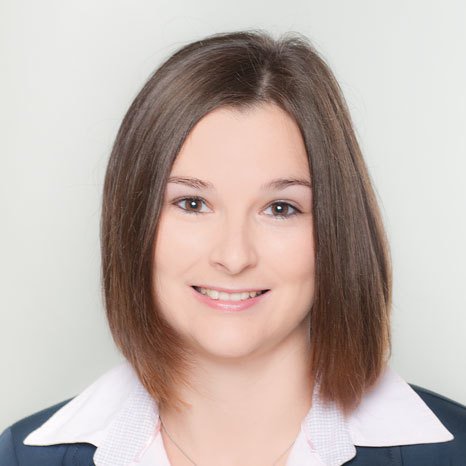
Roswitha Wimmer-Grötzl is a Lecturer in the Department of Health Sciences at the University of Applied Sciences St. Pölten. She is affiliated with the Institute of Health Sciences and contributes to the Healthcare and Nursing (BA) program as well as the academic Prehospital care and nursing course. Her professional roles include teaching and collaborative work with institutions like Volkshilfe NÖ, Service Mensch GmbH, SeneCura Social Center Krems, and the School for General Health and Nursing Horn. Key research and professional interests focus on nursing diagnostics, stroke care protocols, and healthcare system integration. Notable projects include 'Computer-assisted vs. paper-based nursing diagnostics' and 'Fast help for stroke.' Her work emphasizes bridging clinical practice with educational frameworks in healthcare training. Roswitha holds BSc and MSc qualifications and maintains active collaborations with regional healthcare providers to enhance practical training experiences for students. Her location is at B - Campus-Platz 1, St. Pölten, Austria.
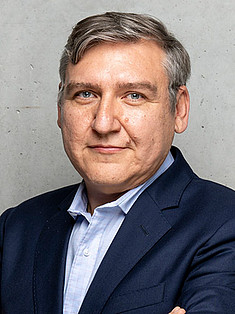
Sabina Simonic is a Senior Scientist at the Institute for Conservation and Restoration at the Academy of Fine Arts Vienna, where she actively contributes to teaching and research in modern and contemporary art conservation. She serves as a lecturer and contributor in multiple courses, focusing on modern materials and conservation-restoration practices. Her research interests include the conservation of time-based media, digital and interactive artworks, hacker ethics, and the preservation of computer-based art. She emphasizes the intersection of technology, art, and ethical conservation practices, particularly in DIY and open-source contexts. The recent publications reflect a strong trend toward the analysis of digital art conservation, professional regulation in Europe, and risk assessment in media artworks. Her work bridges technical documentation with policy advocacy in the conservation field. Representative of the European Confederation of Conservators-Restorers' Organisations (E.C.C.O.) Vice President, Berufsverband Österreichischer Restauratorinnen und Restauratoren (ÖRV) Board Member, ENCoRE – European Network for Conservation-Restoration Education She has advised on conservation strategies for significant artworks and contributed to national and international discourse on conservation standards. Her professional service extends into leadership roles shaping policy and education across Europe. Sabina Simonic is also affiliated with pioneering tech communities, having chaired Metalab (Austria’s first hackerspace) and co-founded Mz Baltazar’s Lab, a feminist hackerspace, highlighting her commitment to inclusive technological cultures.
Andreas Körner is an Assistant Professor at TU Wien's Institute for Analysis and Scientific Computing. He holds roles in the Faculty of Mathematics and Geoinformation, focusing on Scientific Computing and Modeling. His research spans computational biology, reinforcement learning, control mathematics, and medical modeling (e.g., thyroid disease treatment). He leads the 'Mathematics in Simulation and Education' group, emphasizing digital teaching innovation. Education: Doctorate in Technical Mathematics (TU Wien, 2012), Dipl.-Ing. in Technical Mathematics (2009–2015), Dipl.-Ing. in Electrical Engineering (Telecommunications, TU Wien). Projects: Managed the 'Model-based treatment of thyroid diseases' (2020–2023), and previously worked as a Visiting Lecturer at University of Ljubljana (2015–2020). Awards: Multiple teaching excellence awards, including Best Teacher Awards (2023, 2020) and a Best Paper Award (2023). Teaching: Oversees service courses like Linear Algebra for Technical Physics and Differential Equations 1, plus advanced topics in mathematical modeling and simulation. His research integrates system simulation, ODE/DAE models, and AI-driven optimization. He promotes interdisciplinary work through groups like the IMMTL (Innovative Methods and Models for Teaching and Learning) and AKMATH.
Manuel Schabus is a University Professor of Psychology at the University of Salzburg, specializing in sleep research, consciousness studies, and cognitive neuroscience. With over 403 publications and numerous ongoing research projects through 2027, he leads significant work in understanding sleep mechanisms and developing innovative sleep interventions. His research spans from fundamental neuroscience to practical applications for sleep disorders. Professor Schabus's work focuses on the intersection of sleep, brain activity, and cognitive functions, with particular expertise in EEG analysis and sleep architecture. His research explores how sleep affects memory consolidation, emotional regulation, and overall mental health. He has pioneered digital approaches to sleep assessment and intervention, including mobile applications and online therapy platforms that make evidence-based sleep treatments accessible to broader populations. His recent publications reveal a strong trend toward digital sleep medicine, with multiple studies on AI-enhanced wearables, mobile CBT-I applications, and personalized sleep optimization strategies. The research spans from fundamental neuroscience (examining prediction-related signals during sleep) to applied interventions (including specialized programs for Ukrainian refugees and shift workers). Franz Gerstenbrand Wachkoma Award 2020 Kurt-Zopf-Förderpreis 2018 START-Preis 2014 Professor Schabus manages numerous research grants totaling millions in funding, with current projects including the Virtual Sleep Laboratory (2024-2027), Sleep2Optimize, and specialized interventions for shift workers and Ukrainian refugees. He actively mentors junior researchers and collaborates internationally across multiple institutions. His work bridges laboratory research with real-world applications, as evidenced by his frequent media appearances discussing practical sleep optimization strategies for the general public. He leads the Center for Cognitive Neuroscience at the University of Salzburg, where his team operates both traditional sleep laboratories and develops digital sleep assessment tools. The research group combines expertise in neuroscience, psychology, computer science, and clinical medicine to tackle sleep-related challenges from multiple angles, with a strong emphasis on translating research findings into practical interventions that improve sleep health in diverse populations.
Simon Kranzer is a Senior Lecturer and Head of Research Group at the Department of Information Technologies and Digitalisation, FH Salzburg. His work bridges academic research and practical application in digital transformation. Location: Campus Urstein, Room 425 Contact: simon.kranzer@fh-salzburg.ac.at | +43-50-2211-1316 Research Focus: Digital Twins for industrial systems Collaborative Robotics (Co-Bots) in retail Knowledge Transfer between academia and industry Operational Technology (OT) Security Data Acquisition and Visualization Programming Language Applications in industrial contexts Research Trends: Recent publications show expertise in retail automation (service robots, customer behavior analysis), industrial digital twins, and OT security. Earlier work spans GIS-SCADA integration, medical software implementation, and 3D microstructure analysis. Collaborative Projects: Active in interdisciplinary living labs, smart factory bootcamps, and 5G-based robotics exploration.
Egon Lüftenegger is a Senior Lecturer at Fachhochschule Salzburg's Department of Information Technologies and Digitalisation. His work bridges academia and industry through innovative process mining and sentiment analysis applications. PhD in Information Systems (TU Eindhoven) Focus on Service-Dominant Logic and Business Process Management Active in Industry 4.0 and Digital Transformation research His research explores sentiment-driven process redesign, technology-enabled social inclusion, and smart production analytics. Publications highlight process mining frameworks , LLM applications in BPM, and service-dominant business models . Current projects involve creating tools like SentiProMoWeb and Cost-Benefit Tracker, with applications in manufacturing, airline services, and education sectors.
Mathew Gillings is Assistant Professor at the Institute for Language and Discourse in Business at WU Vienna University of Economics and Business. He earned his PhD in Linguistics from Lancaster University and previously served as an Associate Lecturer there. Current teaching: Qualitative and Quantitative Research Methods & Data Analysis; Applied Research Projects; Critical Perspectives on Management Communication Professional memberships: International Pragmatics Association (IPrA), International Association for Media and Communication Research (IAMCR), Research Committee for Association for Business Communication (ABC) Research Interests include: Corpus linguistics with focus on deception detection and digital discourse analysis Critical discourse analysis of climate change, business, political, and media narratives Sociopragmatics of (im)politeness across cultural and regional boundaries Methodological innovation through integration of corpus techniques with qualitative and quantitative approaches Interdisciplinary applications in humanities, social sciences, and business contexts Scientific Contributions demonstrate expertise in combining corpus methods with discourse analysis, LLMs, and forensic linguistics. His 2024 monograph Corpus Linguistic Approaches to Deception Detection established foundational work in this field. Advising & Collaboration includes mentoring through WU's in-house faculty training, academic proofreading services, and cross-sector consultancy in UK and DACH region. He actively collaborates with international scholars like Gerlinde Mautner and Jonathan Culpeper.
Professor Christian Stary serves as Head of the Institute for Business Informatics - Communications Engineering at Johannes Kepler University Linz. With over 481 research outputs spanning conference proceedings, journal articles, book chapters, and literature reviews, he is a prominent figure in business informatics research. His research spans several key areas including Business Informatics, Communications Engineering, Knowledge Management, and Design Thinking. Professor Stary has published extensively on human-centric systems, AI applications in business processes, value network analysis, and digital process twins. His recent work focuses on integrating cognitive ergonomics with technological solutions to enhance human-computer interaction in business contexts. With 49 research projects to his name (11 currently active), Professor Stary has secured funding from various sources including EU programs and national research agencies. His current projects include 'KheepU Kommunikationsplattform' (2023-2026), continuing his long-standing research trajectory that began with projects like 'Scholion' in 2000. Professional Activities: Editor of the Journal of Interaction Science (Volumes 1-7 published 2013-2019) Head of Competence Center for Knowledge Management 384 recorded academic activities including invited talks and conference organization Professor Stary teaches doctoral seminars, dissertation colloquia, and master's thesis seminars, emphasizing practical applications of business informatics principles. His teaching approach integrates Design Thinking methodologies with AI applications, preparing students for contemporary challenges in business information systems.
Richard Heininger is a Senior Lecturer at the Institute for Business Informatics - Communications Engineering at Johannes Kepler University Linz, where he teaches Communications Engineering courses and conducts research in cyber-physical systems and digital process engineering. His research interests include: Communications Engineering Cyber-Physical Systems Digital Process Twins Autonomy in Multi-Agent Systems Knowledge Management Process Engineering Professor Heininger maintains an active research profile with 22 documented research outputs including 13 conference proceedings, 5 peer-reviewed articles, and 4 book chapters. His recent publications demonstrate a strong focus on the intersection of human factors and technical systems, particularly in the areas of digital process twins, vulnerability management, and autonomy negotiation in multi-agent systems. His notable recent works include research on managing customer deviance in last mile logistics, human-centric negotiation mechanisms for multi-agent systems, and improving vulnerability management through process mining techniques. Professor Heininger is actively engaged in teaching, offering multiple Communications Engineering courses for the 2025W semester in various formats including lectures (VL), practical seminars (PS), and exercise sessions (UE and SE). His office is located in Science Park 3, 1st floor, Room S3 0153 at JKU.
Peter Fröhlich serves as a Research Associate at the Institute for Marketing within the Faculty of Business at the University of Applied Sciences Wiener Neustadt (FH Wiener Neustadt). Based at the Wieselburg Campus, he maintains an active research profile with continuous scholarly output since 2005. His academic credentials include Mag. Dr. (Master's and Doctoral degrees in the Austrian system) and an MBA. Dr. Fröhlich's research focuses on human-computer interaction, with particular expertise in user experience design, mobile interfaces, and automotive human-machine interaction. His scholarly fingerprint reveals strong specialization in User Interface (100%), Interaction Technique (76%), Mobile Device (76%), and User Experience (69%) research domains. Recent work has examined touchscreen interfaces in extreme environments, takeover requests in automated driving, and design frameworks for automated material handling vehicles. His publication record shows consistent scholarly productivity with 119 documented publications between 2005 and 2025. The output has accelerated in recent years, with 10 publications in 2020, 10 in 2021, 7 in 2022, and 12 in 2023, demonstrating growing research activity. His work appears in reputable venues including Frontiers in Robotics and AI, CEAS Space Journal, and proceedings of the Automotive User Interfaces conference. Dr. Fröhlich maintains active research collaborations across multiple institutions, with co-authorship patterns indicating interdisciplinary work bridging computer science, human factors engineering, and business perspectives. His methodological approach emphasizes empirical user studies and experimental design to evaluate interaction techniques in real-world contexts.
Dr. Ali Ozkes is a Research Professor at the Institute for Public Management & Governance and an affiliated researcher at the Competence Center for Applied AI & Scientific Computing at Vienna University of Economics and Business. He also holds a part-time professorship at SKEMA Business School. His academic journey includes a habilitation from University Paris 1 Panthéon-Sorbonne, a doctorate from École Polytechnique in Paris, a master's from Istanbul Bilgi University, and bachelor's degrees from the University of London and LSE. Dr. Ozkes' research spans several interconnected fields: Collective decision-making processes and consensus building Ethics of artificial intelligence and human-AI interaction Public administration and organizational behavior Behavioral social sciences and social choice theory Strategic decision-making in public and nonprofit sectors His recent publications (2024-2025) show a strong focus on the intersection of AI ethics, public administration, and organizational decision-making. Key themes include consensus building in leadership teams, ethical frameworks for AI in public sector applications, and cognitive models of decision-making. His work frequently appears in top journals across management, public administration, and AI ethics domains. Scientific recognition includes: WU Visiting Fellowship for Japan (2019) Dr. Ozkes actively supervises graduate students and has served on numerous doctoral committees. His research is supported by multiple interdisciplinary projects, including 'Morality, social choice and artificial intelligence' (2019-2021) and 'Establishment of an international research center for experimental financial markets' (2020-2025). He has collaborated with institutions worldwide including Aix-Marseille University, Caltech, Lund University, and Waseda University. Dr. Ozkes contributes significantly to academic service as co-editor of code and data for Management Science and co-editor of a special issue of Theory and Decision. He is also a member of several prestigious academic societies including the Academy of Management, Association for Computing Machinery, and Society for Social Choice and Welfare. His expertise was instrumental in developing the Code of Conduct for General Purpose AI Models under the EU AI Regulation.
Jozsef Arato is a Research Fellow at the Vienna Cognitive Science Hub, University of Vienna, where he has worked as a senior scientist for data science since 2019. His research spans multiple interdisciplinary domains within cognitive science, with particular expertise in computational modeling of eye-movement patterns and visual statistical learning. His research interests focus on understanding the principles that guide learning and decision-making through computational modeling approaches. He investigates how eye-movement patterns can reveal learning processes, comparing gaze patterns across different observers. His work spans diverse application areas including art perception, environmental psychology, and animal communication systems. His publication record from 2020-2024 shows a strong focus on eye-tracking methodologies applied to art perception, with significant contributions to understanding how gaze patterns relate to aesthetic experiences. His research also extends to environmental conservation psychology and comparative studies of vocal learning in birds, demonstrating remarkable interdisciplinary breadth. Dr. Arato has been actively involved in academic service, having served as Program Chair of the Pattern Recognition in Neuroimaging Summer School in 2020. He organizes the CogData reading group and contributes to the academic community through collaborative research projects. As an educator, he teaches Scientific Computing in Python (TEWA 1) for the Psychology master's program at the University of Vienna. Previously, he taught Cognitive Modelling at both the University of Vienna and Eötvös University in Budapest, demonstrating his commitment to training the next generation of cognitive scientists and data analysts.
Johann Heinzelreiter serves as an FH-Prof. DI at the University of Applied Sciences Hagenberg, actively contributing to the Assistive Technology Lab and Center of Excellence for Smart Production . His research spans industrial automation, smart factory systems, and cloud computing applications in production environments. His research interests focus on assembly task modeling , low-cost tracking systems for industrial environments, and human-centered workplace design . Heinzelreiter develops practical solutions for real-world manufacturing challenges, particularly in optimizing human-machine collaboration on shop floors through the General Assembly Task Model (GATM) framework. Publication analysis reveals consistent contributions to industrial informatics, with recent work emphasizing smart factory implementation (2019-2020), cloud-based optimization (2014), and digital identity management (2015). His research demonstrates strong industry relevance through COIN Cooperation & Innovation projects. With an h-index of 34, Heinzelreiter has secured significant research funding through multiple COIN projects: Human Centered Workplace (2016-2021) - Co-Investigator Themis - Conserve Your Digital Life (2013-2015) - Principal Investigator BackmeUp - Offline Datensicherung Web 2.0 (2010-2012) - Principal Investigator He collaborates extensively with researchers including Pimminger, Kurschl, and Augstein across production environments and assistive technology domains. His work bridges academic research with practical industrial applications through the Smart Automation and Robotics initiative.
Stefan Hinterholzer serves as a Professor at the University of Applied Sciences Upper Austria, based at the Research Center Hagenberg. His research bridges civil engineering and information systems, specializing in computational optimization of building construction processes for energy efficiency and cost reduction. His primary research domains include: Building Construction Design Optimization Energy Demand Modeling and Reduction Construction Cost Minimization Automated Construction Planning Systems Business Process Management for Knowledge Work Hinterholzer pioneered the “Bauoptimizer” simulation tool for architectural and material selection, enabling dual optimization of energy consumption and construction expenditures. His work establishes standardized reference frameworks for quantitative assessment in construction planning, addressing complex trade-offs between environmental impact and financial constraints through algorithmic exploration of design spaces. Analysis of his 2010-2014 publications reveals consistent application of computer-aided systems theory to sustainable construction challenges. His research demonstrates how automated simulation can navigate multi-dimensional optimization problems in building design, significantly advancing methodologies for eco-efficient construction planning within constrained computational search spaces. Professional activities include peer-review services for Wirtschaftsinformatik 2005 (eEconomy/eGovernment conference) and presentations on Business Process Management integration with enterprise software. His interdisciplinary approach connects construction engineering with information systems through practical computational solutions.
Philipp Schmidt-Dengler is University Professor of Economics at the University of Vienna and Vice-Dean of its Faculty of Business, Economics and Statistics. He is also Research Affiliate of the Centre for Economic Policy Research (CEPR) and Research Fellow of the Mannheim Centre for Competition and Innovation (MaCCI), among other international affiliations. Education Ph.D. in Economics, Yale University, December 2005 M.A. in Economics, Queen’s University, October 2000 B.A. in Economics, University of Vienna, March 1998 Research Interests Professor Schmidt-Dengler’s research lies at the intersection of industrial organisation , applied econometrics and competition policy . A major strand develops structural methods for estimating dynamic oligopoly games and applies them to study entry, investment and technology adoption. A second strand analyses consumer search, price dispersion and the effects of indirect taxation in retail markets. Recent work also evaluates health-care market reforms, auction design and the impact of state aid on firm survival. Scientific Awards & Fellowships Zellner Thesis Award, American Statistical Association (2006) AER Excellence in Refereeing Award (2010) Young Economist Award, Austrian Economic Association (2008) Young Economist Essay Award, E.A.R.I.E. (2005) Carl Anderson Prize Fellowship, Cowles Foundation (2004) Yale and Queen’s University Graduate Fellowships Research Funding “Business Use of Digital Platforms”, OeNB Jubiläumsfonds (2020-23) “Understanding Consumer Search”, Austrian Science Fund (FWF, 2018-21) “Individual Behaviour and Aggregate Economic Outcomes”, FWF Doctoral School (2017-20, Speaker) DFG SFB-TR15 Grant on “Stability, Competition and Liquidity in Financial Markets” (2012-15) ESRC Award on “General Pre-emption Games” (2006-07) Editorial & Professional Service He served as Co-Editor of the International Journal of Industrial Organization (2014-21), Associate Editor of the Review of Economic Studies , Journal of Applied Econometrics , Journal of the European Economic Association and is Editor of the Journal of Industry, Competition and Trade . He has advised the Bank of Canada, the UK Competition Commission and the Austrian Competition Authority.