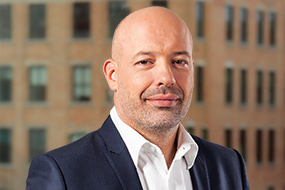
Ali Ozkes
استاد پژوهشی · Collective Decision-Making
Vienna University of Economics and Businessمعرفی
Dr. Ali Ozkes is a Research Professor at the Institute for Public Management & Governance and an affiliated researcher at the Competence Center for Applied AI & Scientific Computing at Vienna University of Economics and Business. He also holds a part-time professorship at SKEMA Business School. His academic journey includes a habilitation from University Paris 1 Panthéon-Sorbonne, a doctorate from École Polytechnique in Paris, a master's from Istanbul Bilgi University, and bachelor's degrees from the University of London and LSE.
Dr. Ozkes' research spans several interconnected fields:
- Collective decision-making processes and consensus building
- Ethics of artificial intelligence and human-AI interaction
- Public administration and organizational behavior
- Behavioral social sciences and social choice theory
- Strategic decision-making in public and nonprofit sectors
His recent publications (2024-2025) show a strong focus on the intersection of AI ethics, public administration, and organizational decision-making. Key themes include consensus building in leadership teams, ethical frameworks for AI in public sector applications, and cognitive models of decision-making. His work frequently appears in top journals across management, public administration, and AI ethics domains.
Scientific recognition includes:
- WU Visiting Fellowship for Japan (2019)
Dr. Ozkes actively supervises graduate students and has served on numerous doctoral committees. His research is supported by multiple interdisciplinary projects, including 'Morality, social choice and artificial intelligence' (2019-2021) and 'Establishment of an international research center for experimental financial markets' (2020-2025). He has collaborated with institutions worldwide including Aix-Marseille University, Caltech, Lund University, and Waseda University.
Dr. Ozkes contributes significantly to academic service as co-editor of code and data for Management Science and co-editor of a special issue of Theory and Decision. He is also a member of several prestigious academic societies including the Academy of Management, Association for Computing Machinery, and Society for Social Choice and Welfare. His expertise was instrumental in developing the Code of Conduct for General Purpose AI Models under the EU AI Regulation.