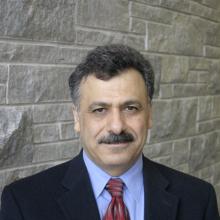
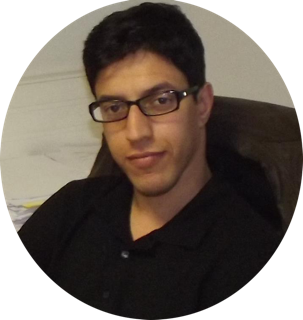
Dr. Ali Grami is an Associate Professor in the Department of Electrical, Computer and Software Engineering at Ontario Tech University, within the Faculty of Engineering and Applied Science. He holds a PhD in Electrical Engineering from the University of Toronto (1986), an MEng from McGill University (1980), and a BSc from the University of Manitoba (1978). His research focuses on satellite communications, digital transmission systems, and wireless networks. He has extensive industrial experience, including roles at Telesat Canada and Nortel Networks, and has contributed to pioneering projects like Canada's Anik-F2 Ka-Band satellite system. Dr. Grami has authored several textbooks, including Introduction to Digital Communications and Discrete Mathematics: Essentials and Applications . His work spans theoretical advancements (e.g., beamforming algorithms, spectrum access protocols) and practical applications in broadband satellite systems and cognitive radio networks. Awards include the United Nations TOKTEN Award (1995) and Nortel Award of Excellence (1989). He has designed academic programs at Ontario Tech, including the BEng, MASc/MEng, and PhD in ECE, and contributed to IT security programs. His teaching spans undergraduate and graduate courses in digital transmission, communication systems, and signal processing.
Professor Jinho Choi is a Chair and Professor in Radio Frequency at the School of Electrical and Mechanical Engineering, University of Adelaide, Australia. He holds a B.E. (magna cum laude) from Sogang University, and M.S.E. and Ph.D. degrees from KAIST. His research focuses on advancing wireless communication and sensing technologies, particularly in IoT, 5G/6G, non-terrestrial networks, and cognitive satellite systems. He authored three books and has been recognized with the 1999 EURASIP Best Paper Award, IEEE Fellowship, and inclusion in Stanford's Top 2% Scientists list since 2020. He currently serves as a Senior Editor of IEEE Wireless Communications Letters and editorial roles in multiple journals. Education: B.E. (Electronics Engineering) - Sogang University, Seoul (1989) M.S.E. (Electrical Engineering) - KAIST (1991) Ph.D. (Electrical Engineering) - KAIST (1994) Research Interests: Professor Choi's work addresses connectivity challenges in non-terrestrial networks, leveraging statistical signal processing and machine learning. Current projects include UAV-assisted LEO satellite technologies, cognitive satellite radios, and semantic communication protocols. His research aims to enhance global connectivity and efficiency in terrestrial and satellite networks. Publications: His recent work spans semantic communication, satellite quantum key distribution, federated learning optimization, and coverage diversity in mega constellations. These studies reflect trends in 6G-ready technologies, AI-driven communication systems, and hybrid satellite-terrestrial networks. Awards: 1999 Best Paper Award for Signal Processing (EURASIP) IEEE Fellow (Leadership in technical excellence) World’s Top 2% Scientists (Stanford University, 2020–present) Grants & Supervision: As a senior academic, he oversees grants in wireless innovation and has advised numerous students on advanced communication systems. His lab focuses on next-generation networks, integrating theoretical insights with practical implementations. Labs/Teams: Active in interdisciplinary teams at the University of Adelaide, collaborating on projects funded by industry and government to bridge gaps between academic research and real-world applications.
A.A.J. (Erjen) Lefeber is an Assistant Professor in the Department of Mechanical Engineering at Eindhoven University of Technology (TU/e). His research focuses on control systems, cooperative driving, vehicle dynamics, and autonomous systems. He is affiliated with the EAISI Mobility cluster and the ICMS Core group, emphasizing interdisciplinary collaboration. Dr. Lefeber has contributed to over 150 research outputs, including peer-reviewed articles, conference contributions, and datasets. His work addresses challenges in platooning systems, model predictive control (MPC), cybersecurity in cooperative vehicles, and multi-agent systems. Research interests include cooperative adaptive cruise control (CACC), decentralized control strategies, and robust control against adversarial attacks. His projects integrate theoretical analysis with experimental validation, such as testing heterogeneous platoons with actuation delays. Dr. Lefeber has received the AVEC '24 Best Paper Award for contributions to vehicle platooning control. He teaches courses on nonlinear control, manufacturing networks, and mechanical engineering fundamentals. Collaborations span academia and industry, focusing on sustainable transportation and automation. Current efforts explore online learning for interaction dynamics in multi-agent systems and high-performance MPC for aerial robotics. His research aligns with UN Sustainable Development Goals, particularly addressing safe and efficient mobility solutions.
Roberto Rojas-Cessa is a Professor in the Department of Electrical and Computer Engineering at New Jersey Institute of Technology (NJIT), affiliated with the School of Applied Engineering and Technology. His research focuses on networking, blockchain applications in smart cities, energy systems, wireless communications, and high-performance switching. He has led multiple National Science Foundation (NSF)-funded projects, including initiatives on controlled delivery power grids and next-generation network quality of service. Notably, his work explores blockchain for energy metering, sustainable environmental measures, and smart grid optimization. He is also a Senior Member of the National Academy of Inventors (2024). His research interests span network protocols, distributed systems, and IoT applications. Recent projects include AMI-Chain (a blockchain-based power metering system) and studies on indirect free-space optical communications for vehicular networks. He has contributed to advancements in medium access control for crowded networks and energy packet switches for digital microgrids. Rojas-Cessa’s work integrates machine learning for network management and flood impact analysis. He has developed tools for time-lapse analysis of urban data and agent-based models to evaluate electric vehicle adoption. His publications emphasize scalability, security, and efficiency in both traditional and emerging technologies. Grants: Collaborative Research on Power Grids (NSF, 2016–2018), NeTS-NR: Quality of Service Networks (NSF, 2004–2008) Awards: Senior Member of the National Academy of Inventors (2024) His lab activities include experimental evaluations of digital microgrids and blockchain implementations for carbon footprint tracking. He actively collaborates on projects addressing emergency communications and resilient energy distribution systems.
Julian Fierrez is a Full Professor at the School of Engineering, Universidad Autonoma de Madrid. With an h-index of 74 and over 20,000 citations, his work spans biometrics, signal/image processing, artificial intelligence, and human-computer interaction. Key research areas include: Biometric anti-spoofing and DeepFakes detection Mobile and behavioral biometrics Bias/fairness in AI systems Biometric applications in e-health and education Security in multimodal biometric systems His recent publications show strong focus on deep learning applications for biometric security, with specific subfields including fake detection, keystroke authentication, facial analysis for Parkinson detection, and privacy-preserving AI. He serves as Associate Editor for multiple IEEE and Elsevier journals. Scientific distinctions include: IAPR Young Biometrics Investigator Award (2017) Miguel Catalan Award to Best Researcher under 40 (2017) EURASIP Best PhD Award (2012) EBF European Biometric Industry Award (2006) Prof. Fierrez leads the BiDA Lab and supervises students like Ruben Tolosana and Aythami Morales. Current projects include BBforTAI (Biometrics and Behavior for Unbiased & Trustworthy AI) and PRIMA (Privacy Matters). He also contributes to standardization efforts in biometric evaluation.
Professor Simon Pollard OBE DIC PhD DSc FREng FHEA is a Professor of Environmental Risk Management at Cranfield University's School of Water, Energy and Environment. With over 20 years of service at Cranfield, he has held numerous leadership positions including Pro-Vice Chancellor for the School of Water, Energy and Environment (2014-2021) and Pro-Vice-Chancellor International (2018-2024). He has served on the University's Executive for a decade and chaired key committees including Cranfield's Board for Energy and Environment, Health and Safety Committee, and International Committee. As an environmental engineer, Professor Pollard earned his PhD from Imperial College and his DSc from Cranfield University. His academic journey has positioned him as a leading authority in environmental risk governance, with significant contributions to government guidelines on environmental risk and leadership of risk centers for EPSRC and NERC. Professor Pollard's research focuses on environmental risk governance, preventative risk management, and regulatory design, with recent work exploring risk governance in the international water sector. His scholarship directly addresses the green economy, seeking to reconcile society's concerns about pollution with organizational responsibilities for safe management. His work spans carbon and climate risk, environmental policy, corporate sustainability, waste management, and resource efficiency. His extensive publication record demonstrates expertise across environmental engineering, risk assessment methodologies, water utility management, and sustainable waste practices, consistently bridging theoretical frameworks with practical applications. Professor Pollard has been honored with several prestigious awards including: Order of the British Empire (OBE) in 2020 Fellowship of the Royal Academy of Engineering (FREng) Fellowship of the Higher Education Academy (FHEA) Professor Pollard has served in numerous advisory capacities beyond academia, including membership on the Government's Interdepartmental Liaison Group on Risk Assessment, the joint engineering institutions' Hazards Forum, and BBSRC's Beringer Panel. As editor of Science of the Total Environment for 16 years, he has significantly influenced environmental research publication standards. His international engagement includes visiting professorships at the University of South Australia, Jiangsu University, and most recently, the University of Salerno (2024). Professor Pollard has led significant initiatives in responsible internationalization, resetting Cranfield's approach to academic partnerships amid changing geopolitical climates and renewing the university's approach to knowledge diplomacy. His work has directly influenced UUKi's commitment to international postgraduate education.
Stefan Decker is a full University Professor (Universitätsprofessor) at RWTH Aachen University, Germany, where he heads the Chair of Information Systems and Databases (Informatik 5) within the Faculty of Mathematics, Computer Science and Natural Sciences. He is actively involved in teaching, research, and the supervision of numerous ongoing and completed doctoral, master’s, and bachelor theses. Education & Academic Background Doctorate (Dr. rer. pol.) – field of Information Systems or related (exact institution/year not stated in text). Appointed as University Professor and Chair of Information Systems and Databases at RWTH Aachen University. Research Interests Prof. Decker’s work lies at the intersection of databases, knowledge graphs, semantic web technologies, data science, and cybersecurity . He investigates architectures and algorithms for large-scale, privacy-preserving, decentralized data analytics , develops ontology-driven information systems , and explores the use of large language models (LLMs) for educational technology, anomaly detection, and incident-response playbooks. Additional focal areas include smart energy systems, mixed-reality learning environments, FAIR data principles, and federated machine learning . Scientific Contributions & Trends His recent publications (2022-2025) demonstrate a clear trend toward explainable AI, LLM-enhanced systems, secure data spaces, and semantic interoperability . Key contributions include novel anomaly-detection frameworks for encrypted power-grid communications, knowledge-graph-driven chatbots for higher-education support, and methodological advances in decentralized analytics and FAIR data sharing. These works are disseminated in top-tier venues such as AAAI, IEEE ISGT Europe, ESWC, IDEAL, and various Springer LNCS and IEEE Transactions. Supervision & Grants Doctoral Theses Advised: A. T. Neumann – “Chatbots as professional companions in large-scale community information systems” (2024) S. M. Welten – “Methods for practical data sharing and decentralized analytics” (2025) Master’s Theses Co-Advised: A. R. Küsters – “Object-centric process constraints using variable bindings” (2025) Additionally supervising more than 30 ongoing bachelor, master, and doctoral projects covering topics such as LLM-driven cybersecurity playbooks, knowledge-graph construction for German law, privacy-preserving analytics in smart grids, and mixed-reality learning agents. Principal investigator or senior researcher in large collaborative projects including NFDI4DS, WestAI, champI4.0ns and several EU/national initiatives on sovereign data spaces and AI services. Labs & Teams Prof. Decker leads the Information Systems & Databases (DBIS) Research Group . The group operates well-equipped laboratories for knowledge-graph engineering, mixed-reality applications, privacy-enhancing technologies, and secure distributed analytics . Current team size exceeds 30 researchers including PhD candidates, postdocs, and scientific programmers, supported by national and EU funding streams.
Li Yi is a Tenured Associate Professor at the School of Microelectronics, Southern University of Science and Technology (SUSTech) , with expertise in nanoplasmonics, nano-optics, and biochips. His career spans institutions including KU Leuven, Imperial College London, and Ludwig-Maximilians-Universität München. Education: Ph.D. (2015, KU Leuven & IMEC), M.S. (2010) and B.S. (2007) in Biomedical Engineering from Zhejiang University. Career: Associate Professor (2021–present) and Assistant Professor (2019–2020) at SUSTech; LMU Research Fellow (2018–2019); Research Associate (2015–2018) at Imperial College London. Research Interests focus on single-molecule biochips, DNA data storage, and nanopore sequencing. His work bridges nanotechnology with biomedical applications, including: Integrated circuit-compatible optical/electrical devices Computational lithography and nanoscale imaging Neural network training for biosensing Publications include >60 peer-reviewed articles with 25 H-index. His recent work emphasizes DNA-based data encryption, nanopore engineering, and portable biosensing systems. Key journals: Nature Communications, Nano Letters, ACS Nano. Scientific Awards : LMU Research Fellowship (Marie Curie COFUND) imec Excellent Scientific Award Shenzhen 'Peacock Plan' Category B Talent Outstanding Poster Award at Surface Plasmon Photonics 2017 Participation in Lindau Nobel Laureates Meeting (2019) Grants include Ministry of Science and Technology Key R&D Youth Program, NSFC General Program, and Guangdong Provincial Key Program. His lab develops: Fluidic nanopores for single-molecule sensing Optical antennas for enhanced detection Training programs in biochip design and nano-optics
Dr Raja Akrom is a Senior Lecturer in the Department of Computer Science , School of Natural and Computing Sciences , University of Aberdeen since July 2020. Previously, he held research positions at Royal Holloway, University of London (Post Doctoral Research Assistant), University of Waikato (Research Fellow), and Edinburgh Napier University (Senior Research Fellow). PhD in Information Security from Royal Holloway, University of London MSc in Information Security and Computer Science from Royal Holloway and University of Agriculture, Faisalabad BSc in Mathematics and Physics from University of the Punjab His research focuses on user-centric applied security and privacy architectures , data ownership in heterogeneous computing , security for machine learning , and security in emerging technologies such as blockchain, UAVs/drones, and autonomous vehicles. Key technical interests include smart card security, cryptographic protocols, IoT security, and Trusted Execution Environments. The article list reveals expertise in: edge computing security (DECML 2025), medical AI applications (2024), embedded device ownership (CO-TSM 2024), NFC transaction security (2024), and malware detection with ML (2024). Earlier work explored UAV security , blockchain governance , and smart card protocols . Currently teaching courses in Operating Systems , Secure Software Design , and Enterprise Security Architecture . Supervises postgraduate MSc Cybersecurity program.
Nick Cheney is an Associate Professor in the Department of Computer Science at the University of Vermont, leading the UVM Neurobotics Lab. He also serves as Graduate Program Director and is affiliated with the Vermont Complex Systems Center, an interdisciplinary hub for data-rich complex systems research. PhD in Computational Biology and Biological Statistics from Cornell University Advised by Hod Lipson and Steve Strogatz His research focuses on bio-inspired machine learning algorithms, particularly in evolutionary computation, deep learning, and reinforcement learning. Key applications span robotics, healthcare diagnostics, and environmental science. The lab's interdisciplinary work has been recognized with prestigious awards including the NSF CAREER Award and SIGEVO Impact Award . Recent publications highlight advancements in morphological computation, continual learning, and cross-domain applications of machine learning. His team develops algorithms for soft robots, medical diagnostics using wearable sensors, and sustainable agriculture systems, often publishing in venues like the Nature Scientific Reports , GECCO , and Soft Robotics . Scientific Awards : NSF CAREER Award SIGEVO Impact Award The lab actively mentors graduate students in Complex Systems and Data Science, with alumni securing positions at institutions like Harvard, UC Berkeley, and Medidata. Collaborative grants with biomedical and environmental researchers demonstrate the lab's commitment to societal impact through machine learning applications.
Amin Mesmoudi serves as Associate Professor in Data Engineering at the University of Poitiers' IUT (Institut Universitaire de Technologie), with dual laboratory affiliations at LIAS-ENSIP (Poitiers campus) and LIAS-ISAE-ENSMA (Chasseneuil campus). His research bridges theoretical database systems with practical large-scale data engineering challenges, particularly in semantic web technologies and machine learning applications. The laboratory maintains physical presences at both ENSIP's Bâtiment B25 in Poitiers and ISAE-ENSMA's Téléport 2 facility in Chasseneuil, facilitating cross-institutional collaboration. Mesmoudi's research program centers on scalable data management systems, with three interconnected pillars: (1) RDF and graph-based query optimization techniques for billion-triple datasets, (2) machine learning integration for spatial query performance and anomaly detection, and (3) explainability frameworks for complex black-box models. His work demonstrates consistent evolution from foundational database systems (2011-2016) toward contemporary AI-driven data engineering, particularly evident in his 2023-2025 publications on temporal dependency preservation and co-selection explainability. The Data Engineering team within LIAS laboratory provides the primary research context for these investigations. Publication analysis reveals strong methodological continuity in addressing scalability bottlenecks across database paradigms. Early work focused on SQL-on-MapReduce benchmarking for astronomy databases (2015-2016), transitioning to specialized RDF processing frameworks (2019-2021), and culminating in current hybrid approaches combining temporal modeling with machine learning (2023-2025). Key technical themes include fragmentation strategies for distributed data, optimizer feedback mechanisms, and graph-based query acceleration - all targeting real-world performance constraints in big data environments. As a core member of LIAS laboratory's Data Engineering team, Mesmoudi contributes to France's national research infrastructure in computer science and automation systems. The laboratory's dual-university structure enables unique cross-pollination between University of Poitiers' academic programs and ISAE-ENSMA's engineering specialization, with Mesmoudi's work exemplifying this synergy through applications spanning astronomy databases to wireless sensor networks.
Ming Li is a Professor of Electrical and Computer Engineering at Duke Kunshan University's Division of Natural and Applied Science, and a Principal Research Scientist at the Digital Innovation Research Center. He holds an adjunct position as a Professor at Wuhan University's School of Computer Science. His research focuses on audio/speech processing, multimodal behavior signal analysis, and applications in autism spectrum disorder diagnosis. Li has over 200 publications and serves on editorial boards of journals like IEEE Transactions on Audio, Speech and Language Processing. Education: Ph.D. in Electrical Engineering from the University of Southern California (2013). Awards include the IBM Faculty Award (2016), ISCA 5-Year Best Paper Award (2018), and Youth Achievement Award (2020). He leads initiatives in anti-spoofing countermeasures, voice conversion, and speech synthesis. Recent Courses: Random Signals and Noise Speech Recognition Data Science Key Research Contributions: Development of datasets like KunquDB, TMCSpeech, and systems for speaker verification, deepfake detection, and autism diagnosis tools. His work bridges signal processing with clinical applications, leveraging AI for social interaction improvement in neurodiverse populations.
Kshirasagar Naik is a Professor in the Department of Electrical and Computer Engineering at the University of Waterloo, Ontario. He is actively involved in graduate research supervision and has been a member of IEEE since 1994. His academic career spans decades, with a focus on wireless communication, energy efficiency, and cybersecurity. 1992, Doctorate in Computer Engineering from Concordia University, Ontario 1988, Master of Mathematics in Computer Science from University of Waterloo, Ontario 1983, MTech in Computer Engineering from Indian Institute of Technology, Kharagpur, India 1981, BScEng in Electronics and Telecommunication from Sambalpur University, India His research interests include Mobile and Ad Hoc Networks , Cybersecurity , Internet of Things (IoT) , and Intelligent Transportation Systems . He has published extensively on energy optimization in wireless devices, delay-tolerant networks, and security protocols for vehicular systems. Recent publications highlight the integration of Machine Learning and IoT in environmental monitoring, particularly forest fire detection and prediction. Other works focus on cybersecurity , vehicular networks , and energy optimization in data centers and handheld devices. Professor Naik is currently accepting graduate students for research in mobile systems, network protocols, and green computing at the University of Waterloo.
Ying-Cheng Lai is a Regents' Professor in the School of Electrical, Computer and Energy Engineering at Arizona State University (ASU), where he has been a full-time faculty member since 2005. He holds affiliations with the Center for Biodiversity Outcomes and the Center for Biological Physics. Previously, he served as the Sixth Century Chair in Electrical Engineering at the University of Aberdeen (2009–2017) and returned to ASU as the ISS Endowed Professor (2014–present). His academic journey includes a BS and MS in Optical Engineering from Zhejiang University (1982–1985), followed by MS and PhD in Physics from the University of Maryland, College Park (1989–1992). He completed a postdoctoral fellowship in Biomedical Engineering at Johns Hopkins University School of Medicine (1992–1994). His research focuses on Nonlinear Dynamics and Chaos , Machine Learning applied to complex systems, Relativistic Quantum Chaos , Complex Networks , Mathematical Biology , and Theoretical Ecology . He explores topics such as quantum scars in Dirac materials, synchronization control in networks, and early warning signals for ecological tipping points. His work integrates data analysis techniques with interdisciplinary applications in healthcare, climate science, and cybersecurity. His recent publications highlight advancements in machine learning-driven predictions for critical transitions, quantum transport modeling in graphene, and cybersecurity strategies for power grids. These trends reflect his commitment to bridging theoretical physics with applied engineering solutions. Awards: Regents Professor (ASU's highest faculty honor, 2021) Vannevar Bush Faculty Fellowship (DoD, 2016) Corresponding Fellow of the Royal Society of Edinburgh (2018) Foreign Member of Academia Europaea (2020) Fellow of AAAS (2020) Fellow of the American Physical Society (1999) Ying-Cheng Lai has advised 24 PhD and 20 MS students, supported 15 postdocs, and secured funding from agencies like DOD (AFOSR, ARO, Navy-ONR), NSF, and the National Academies. His grants include projects on quantum billiard systems, sensor applications, and network resilience in multilayer ecological frameworks. He runs a research group focused on advanced topics in electrical engineering and interdisciplinary physics.
Scott E. Crouter is a Professor in the College of Education, Health, and Human Sciences at the University of Tennessee, Knoxville. He serves as director of the Applied Physiology Laboratory and is a Fellow of the American College of Sports Medicine. His research focuses on improving physical activity and energy expenditure measurement using wearable monitors and machine learning algorithms, with applications in youth, adults, and special populations like pregnant individuals and cancer survivors. Education: Postdoctoral in Nutritional Sciences (Cornell, 2005-07), PhD in Exercise Physiology (University of Tennessee, 2005), MS in Cardiac Rehabilitation/Adult Fitness (University of Wisconsin, 2000), BS in Exercise Science (Linfield College, 1998) Dr. Crouter's work spans physical activity assessment , sedentary behavior analysis , and technology validation . He has developed machine learning models for energy expenditure estimation using ActiGraph GT9X and Cosmed K5 devices. His recent studies examine pregnancy hyperglycemia interventions, urban environment impacts on activity patterns, and robotic exercise aids. He has secured significant NIH funding for projects including digital health weight management , pediatric obesity treatment translation , and fall risk factors in the elderly . As associate editor for Medicine and Science in Sports and Exercise and Journal for the Measurement of Physical Behaviors , he contributes to methodological advancement in activity monitoring. Scientific Awards: Fellow, American College of Sports Medicine Editorial Leadership National Physical Activity Plan Alliance Participation CDC/National Collaborative on Childhood Obesity Research Contributions National Academy of Sciences Committee Member Dr. Crouter's student collaborations include works with Natalie Butte on youth compendiums, Allan Opotowsky in cardiac rehabilitation trials, Patrick Hibbing in metabolic equivalent research, and Sara LaMunion in consumer monitor validation. His lab has produced over 100 publications and 15 recent articles focusing on sensor technology and population health.