Luis Pedrosa is an Assistant Professor in the Department of Computer Science and Engineering at Instituto Superior Técnico / University of Lisbon and a Researcher at INESC-ID . He leads Systems and Networking research in the Distributed Parallel & Secure Systems Group . Education: PhD in Computer Science (2016, University of Southern California), advised by Professor Ramesh Govindan in the Networked Systems Laboratory Postdoctoral: Swiss Federal Institute of Technology in Lausanne (EPFL) His research combines techniques from programming languages and formal methods to create models that: (1) identify software bugs, (2) debug performance issues, and (3) enable formal verification of correctness/performance guarantees. He also develops adversarial workload generation tools for network defense. Key publication trends span 2012-2024, focusing on: Software Network Functions (5+ papers) Wireless Sensor Networks (4+ papers) Formal Verification (3+ papers) Cloud/Distributed Systems (3+ papers) Network Security (3+ papers) Scientific Recognition: EuroSys'25 Test-of-Time award for co-authored Borg paper He teaches 1st Cycle Integrative Projects in Telecommunications/Computer Engineering and Computer Networks courses. The research group maintains open-source projects like CASTAN for adversarial workload generation.
Martin Radetzki is a full Professor at the Institute for Computer Architecture and Parallel Systems (University of Stuttgart) , specializing in Embedded Systems . His work focuses on network-on-chip (NoC) design, fault tolerance, memory optimization, and simulation frameworks. Key research areas: NoC synthesis, deadlock-free routing, performability analysis, and power-efficient memory subsystems Recent publications emphasize integer linear programming frameworks for co-designing floorplanning and routing, chiplet-based systems , and machine learning-enabled performance evaluation His methodologies address cross-layer challenges in NoC design, combining formal optimization with practical implementation for heterogeneous processing elements. Collaborative projects include fault resilience analysis, parallel simulation techniques, and memory allocation strategies for SoCs. Dr. Radetzki supervises research with students like Shuang Liu and Manuel Strobel , contributing to IEEE Transactions on Computers , ACM TECS , and conferences such as DATE and MCSoC . Current work explores optimal routing topologies for emerging chip architectures.
Özcan ÇETİNKAYA is an Assistant Professor at Keşan Vocational School , Trakya University, where he has held academic and administrative roles since 2008, including Head of the Electricity and Energy Department since 2018 and Deputy Director since 2009. Education: High School: Kırklareli Technical High School, Electrical Department (2000, School Topper) BSc: Marmara University, Electrical Education (2004) BSc: Trakya University, Faculty of Engineering, Electrical and Electronics Engineering (2020) MSc: Trakya University, Mechanical Engineering (2009) PhD: Trakya University (2017) Research Interests: Robotics, control systems, and automation technologies. His work focuses on robot arm kinematics, microcontroller applications, and environmental sensor systems. He designs cost-effective solutions for industrial automation, unmanned aerial vehicles, and embedded systems. Publication Trends: His research spans robotics (kinematic control, Sumo robots), sensor systems (temperature, humidity, water level logging), and automation (PLC programming, motor control). Recent work includes IoT-enabled data logging and unmanned aerial vehicle design. Projects: He leads the ongoing Design and Experimental Research of Unmanned Aerial Vehicles (TUBAP 2014/112) and completed Electronics Laboratory and Robot Arm Design projects. Certifications: Includes Class C Occupational Safety Specialist (2013), Siemens PLC programming courses (2009), and Schneider Electric electrical installation training (2010).
Dr. Zhihang Song serves as Assistant Professor in the Department of Horticulture at the University of Georgia's College of Agricultural & Environmental Sciences, with dual affiliation at the Institute for Integrative Precision Agriculture. His work advances digital agriculture through plant phenomics and controlled environment agriculture (CEA) to enhance food security and sustainability. Education: B.S. in Agricultural Engineering, China Agricultural University (CAU), Beijing, China, 2017 B.S. in Agricultural Engineering (Machine Systems), Purdue University, West Lafayette, IN, 2017 M.S. in Agricultural & Biological Engineering, Purdue University, West Lafayette, IN, 2020 Ph.D. in Agricultural & Biological Engineering, Purdue University, West Lafayette, IN, 2024 Dr. Song's research integrates imagery sensors, machine learning, computer vision, and robotics to solve critical challenges in CEA crop production. His work spans plant phenotyping (above and below ground), nutrient deficiency detection, disease resistance screening, and root system analysis. He develops innovative robotic platforms and imaging solutions that enable precise crop monitoring and management, significantly contributing to sustainable food production systems through data-driven approaches. His publication record (2019-2025) reveals a clear research evolution from foundational hardware development (MISIRoot, LeafSpec) to advanced spatial-spectral analysis methods. The work consistently focuses on corn and soybean phenotyping using hyperspectral/multispectral imaging, with increasing sophistication in machine learning applications for nitrogen estimation, disease detection, and stress analysis. This trajectory demonstrates growing integration of AI with agricultural robotics for precision farming. Scientific Awards: Estus H. and Vashti L. Magoon Award for Excellence in Teaching Dr. Song actively mentors undergraduate, Master's, and Ph.D. students through paid research assistantships in his top-tier CEA laboratory. While specific grant details aren't provided, his research profile indicates strong funding potential in digital agriculture technologies, with appointment allocations showing 70% research commitment supporting his extensive publication output in agricultural robotics and precision phenotyping. He leads a specialized research group within the Institute for Integrative Precision Agriculture, operating advanced facilities at the 1111 Plant Sciences Building (Office: 1311 Miller Plant Sciences). The lab develops cutting-edge technologies including drone-based phenotyping systems (PhenoBee), minimally invasive root imaging robots (MISIRoot), and portable spectral imaging devices for field and controlled environment applications.
Dr. Eric Howard is a Research Fellow at Macquarie University , affiliated with the School of Engineering , School of Mathematical and Physical Sciences , and School of Computing . His research spans interdisciplinary domains at the intersection of quantum physics, machine learning, and AI-driven systems. Key research themes include: Quantum cryptography for Industry 4.0 security Machine learning in IoT temperature sensing Adversarial AI in cybersecurity 6G wireless communication optimization Quantum information processing Deep learning for data imputation Recent publications demonstrate a focus on emerging technologies, with articles on quantum Bayesian inference , 6G signal processing , and smart city IoT systems . His collaborative work extends to blockchain-enabled supply chain visibility and generative AI applications in programming. Research collaborations span institutions in India (AIP Publishing) and Australia, with technical contributions to quantum dynamics, neural network applications, and nanosensor development.
Dr. Katja Bettenbrock is a Team Leader in the Experimental Systems Biology group at the Max Planck Institute for Dynamics of Complex Technical Systems (Magdeburg, Germany). Her research focuses on understanding bacterial metabolism and its regulatory systems to enable biotechnological applications, particularly in strain development for chemical production. Education: Diploma in biology from the University of Osnabrück (1993), thesis on PTS-dependent chemotaxis in Escherichia coli Doctorate at the University of Osnabrück (1997), studying D-galactose degradation pathways in Lactobacillus casei Her research spans systems biology, regulatory network analysis, and metabolic engineering in bacteria like Escherichia coli and Zymomonas mobilis , with applications in biofilm regulation, ATP turnover control, and synthetic microbial communities. Articles highlight interdisciplinary approaches combining experimental biology with kinetic and computational models. Labs & Teams: She leads the Experimental Systems Biology team, collaborating on bioprocess optimization and cybergenetic control frameworks for industrial microbiology.
Bin Ran serves as the Vilas Distinguished Achievement Professor and Director of the Intelligent Transportation Systems (ITS) Program within the Civil & Environmental Engineering Department at the University of Wisconsin-Madison. A globally recognized expert in Connected Autonomous Mobility (CAM), he has authored over 850 scientific articles and secured more than 200 patents across multiple jurisdictions, significantly advancing transportation engineering through innovations in vehicle-highway automation and intelligent infrastructure systems. His educational foundation includes a PhD from the University of Illinois at Chicago (1993), an MS from the University of Tokyo (1989), and a BS from Tsinghua University (1986). These qualifications underpin his leadership in transportation research and education. Ran's research program centers on Connected Autonomous Mobility (CAM), Collaborative Automated Driving Systems (CADS), and Connected and Automated Vehicle & Highway (CAVH) technologies. His work integrates dynamic transportation network modeling, smart city applications, big data analytics, and Drive GPT-enhanced traffic simulation to develop proactive safety systems and resilient infrastructure solutions. Current projects emphasize cloud-based architectures, digital twins, and cooperative vehicle control frameworks. Analysis of his 2024-2025 publications reveals dominant trends in cloud-to-vehicle control systems, risk-quantified adaptive cruise control, and federated digital twin frameworks for connected corridors. Research spans cybersecurity for connected vehicles, energy-efficient platooning, and urban traffic flow optimization—addressing both technological innovation and sustainability challenges in transportation networks. Professor Ran has received prestigious accolades including the ITE's Wilbur S. Smith Distinguished Transportation Educator Award (2018) and the Vilas Distinguished Achievement Professorship (2016). His complete award portfolio features: 2025 TRB Committee on Vehicle-Highway Automation Best Paper Award 2024 Top 0.05% Lifetime Global Highly Ranked Scholar in Transport 2020 ASCE Journal Best Paper Award 2010 Chinese National Distinguished Expert Lifetime Honor 1994 Charley Wootan Award for best transportation PhD dissertation He actively mentors graduate researchers through thesis supervision (CIV ENGR 890/990 courses) and leads major initiatives including the Transportation Research Board's Task Force on vehicle-highway automation architecture and the World Transport Convention's Faculty Committee. His grant portfolio supports international collaborations through the International Road Federation's 180-country network. As ITS Program Director, Ran oversees a research ecosystem integrating connected vehicle corridors, roadside edge computing, and V2X-enabled infrastructure. His team develops physical-virtual integration frameworks like the Digital Twin for Connected Vehicle Corridors, focusing on real-world deployment of cooperative automated driving systems across diverse environmental conditions.
Mario Muñoz Organero serves as a Full Professor in the Telematics Engineering Department at University Carlos III of Madrid, concurrently directing the University Master's Degree in Connected Industry. His academic profile centers on leveraging computational intelligence to address complex challenges across healthcare, urban systems, and educational frameworks through rigorous interdisciplinary collaboration. His research spans Artificial Intelligence, Machine Learning, and Smart Environments with significant applications in Healthcare Informatics (pancreatic cancer registries, diabetes management), Transportation Systems (traffic flow optimization, commuter stress analysis), and Educational Technology (generative AI for learning, micro-credentials). He pioneers context-integrated neural network architectures for sensor data interpretation in real-world environments, emphasizing practical deployment in smart cities and clinical settings. Analysis of his 2023-2025 publications reveals a distinctive interdisciplinary trajectory where machine learning methodologies bridge traditionally separate domains. Recurrent and graph neural networks form the technical backbone for projects ranging from pandemic-influenced traffic modeling to blockchain-enabled agricultural trading in Colombia, while explainable AI frameworks increasingly inform educational applications. This cross-pollination of techniques demonstrates exceptional adaptability in addressing domain-specific constraints across medical, transportation, and pedagogical contexts.
Pedro Manuel Moreno Marcos serves as an Associate Professor in the Department of Telematics Engineering at Charles III University of Madrid, where he maintains an active research profile in educational technology. His academic work bridges telecommunications engineering with data-driven educational innovation, focusing on the practical implementation of analytics in real-world learning environments across Spanish and European higher education institutions. His research centers on learning analytics and artificial intelligence applications in education, with particular expertise in student behavior modeling, dropout prediction, and AI-enhanced learning environments. Key contributions include developing predictive models using multi-source data, creating tools like Statoodle for cheating prevention in LMS platforms, and pioneering human-centered generative AI applications through projects like GENIE Learn. His methodological approach combines machine learning algorithm evaluation with institutional ethnography to address adoption challenges in learning analytics. Analysis of his 15 most recent publications reveals an accelerating focus on generative AI's educational potential since 2023, with increasing attention to ethical implementation frameworks and micro-credentialing systems. His work consistently addresses practical barriers in learning analytics adoption while maintaining strong connections to Spanish higher education contexts through projects like PALABRIA-CM-UC3M. No scientific awards were documented in the provided materials. While specific student supervision details aren't disclosed, his research methodology frequently involves multi-institutional collaborations across European higher education settings. Current projects indicate active grant funding for initiatives including SHEILA (Support Higher Education to Integrate Learning Analytics) and PALABRIA-CM-UC3M, though specific grant amounts and durations aren't specified in the source text. Dr. Moreno Marcos leads research within the university's learning analytics ecosystem, contributing to frameworks like SHEILA that inform institutional policy. His work with telepresence classrooms and IoT-enabled educational scenarios demonstrates engagement with emerging technology infrastructure, while his focus on multi-source data integration suggests leadership in developing comprehensive analytics platforms for complex educational environments.
George D Konidaris serves as Associate Professor of Computer Science at Brown University, where his research bridges artificial intelligence, machine learning, and robotics with emphasis on autonomous decision-making systems. His work focuses on developing algorithms that enable robots and AI agents to learn hierarchical structures, discover reusable skills, and operate effectively in complex environments. Education: 2010: PhD, University of Massachusetts, Amherst 2003: MS, University of Edinburgh 2001: BS, University of the Witwatersrand 2000: BS, University of the Witwatersrand His research spans reinforcement learning , robotic motion planning , and hierarchical abstraction , with significant contributions to skill discovery, temporal abstraction, and model-based methods. Current work integrates visuo-haptic perception for manipulation tasks and explores language-guided robotics using large language models. His approach emphasizes creating systems that learn compact world representations for efficient long-horizon planning in partially observable environments. Analysis of his 2025 publications reveals strong trends in model-based reinforcement learning with focus on memory mechanisms, uncertainty quantification, and hierarchical skill composition. Key themes include temporal abstraction for planning efficiency, visuo-haptic fusion for robotic manipulation, and language grounding for task specification. His work increasingly connects cognitive science concepts like theory of mind with AI capabilities. Teaching responsibilities include CSCI 1410 (Artificial Intelligence) and CSCI 2951X (Reintegrating AI), where he bridges theoretical foundations with practical robotics applications.
Professor Erdem Alaca is a full Professor in the Department of Mechanical Engineering at Koç University, Turkey, where he leads research at the intersection of micro/nanoelectromechanical systems (MEMS/NEMS) and nanomaterials science. Education: PhD, University of Illinois, 2003 MSc, University of Illinois, 1999 BSc, Boğaziçi University, 1997 Research Interests Professor Alaca’s work focuses on MEMS/NEMS design, nano-patterning and nano-fabrication, mechanical property measurement at micro- and nano-scales, and nano/bio interfaces for molecular diagnostics using MEMS sensors . His laboratory pioneers monolithic integration of suspended sub-micron silicon nanowires with thick MEMS architectures, enabling next-generation physical sensors, force transducers, and biochemical detectors. He combines advanced clean-room microfabrication, high-resolution experimental mechanics, and atomistic-to-continuum modeling to understand size-dependent elasticity, surface stress effects, and intrinsic/extrinsic damping in nanostructures. Recent Publication Trends Between 2023 and 2025, his group has intensified efforts on silicon-nanowire-based force sensors , covering multiscale fabrication, hybrid integration, machine-learning-assisted characterization, and application-specific demonstrations in gas-flow sensing and biomechanics. Parallel themes include stencil-based surface functionalization, high-throughput vibrational metrology, and analytical-atomistic modeling of mechanical behavior. Awards & Recognition TÜBA Outstanding Young Scientist Award (2009) Research Group & Contact Professor Alaca heads an active research group at Koç University. His laboratory website and further resources can be reached via the university portal. Contact: ealaca@ku.edu.tr , Tel: +90 212 338 1727, Office: ENG 273.
Professor Song Jae-seung is affiliated with Sejong University in the Department of Information Security , where he leads the Software Engineering and Security Lab . His academic rank is Professor , with a focus on Internet of Things (IoT) , Machine-to-Machine (M2M) Communications , and Software Security . Research spans IoT/6G networking , Air-gap security , Semantic smart cities , and AI-driven security frameworks Active in international standardization via oneM2M and TTA PG 308 Serves as journal editor and conference TPC member for IEEE events Developed cloud-based conformance testing and optical attack analysis techniques Recent publications address 6G IoT interworking , XR services , and air-gap defense , reflecting trends in smart city security and AI-enabled IoT . No students or awards are explicitly listed in the provided data.
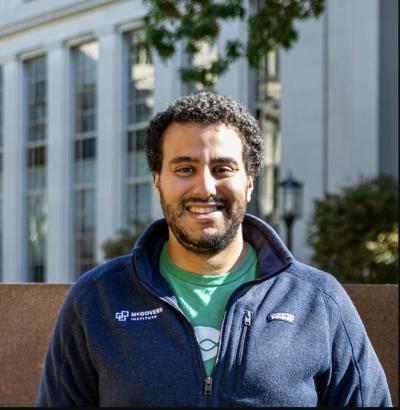
Omar Abudayyeh, PhD is a faculty member at Harvard Medical School , an Investigator at Brigham and Women’s Hospital and Mass General Brigham’s Gene and Cell Therapy Institute , and a faculty member in the Department of Stem Cell and Regenerative Biology at Harvard University . Previously, he was a McGovern Fellow at MIT directing his own research group and earned his PhD in Feng Zhang’s lab at the Broad Institute. Education: PhD, Harvard Medical School / MIT, Broad Institute (Feng Zhang lab) – CRISPR enzyme discovery & engineering SB, Massachusetts Institute of Technology (2012) Two years of MD studies, Harvard Medical School Research Interests: Dr. Abudayyeh’s laboratory pioneers next-generation CRISPR systems for genome editing , gene therapy , and molecular diagnostics . They focus on discovering novel RNA-guided nucleases , engineering programmable integrases for large-cargo gene insertion, and developing point-of-care diagnostic platforms leveraging multi-effector CRISPR cascades. Recent work integrates artificial intelligence with protein engineering to accelerate evolution of high-performance enzymes. Publication Trends: Across >50 recent publications (2022-2025), a dominant theme is the expansion of the CRISPR toolbox: from Fanzors —eukaryotic RNA-guided nucleases—to PASTE systems enabling kilobase-scale insertions without double-strand breaks, and AI-driven protein evolution platforms like EVOLVEpro. Diagnostic innovations include multiplexed Cas13 assays for SARS-CoV-2 and malaria, deaminase-based RNA sensors, and field-deployable CRISPR tests. Scientific Awards & Honors: Technology Review Innovators Under 35 Bloomberg New Economy Catalyst Endpoints 20 under 40 Next Generation of Biotech Leaders 2022 Termeer Scholar 2018 Forbes 30 under 30 Business Insider 30 under 30 2018 TEDMED Hive honoree 2013 Paul and Daisy Soros Fellow Funding & Teams: Dr. Abudayyeh leads an interdisciplinary team across the Gene and Cell Therapy Institute , integrating molecular biology, computational design, and translational medicine. His group is supported by federal grants, industry partnerships, and foundation awards focused on accelerating CRISPR tools to clinical reality.
Francesco Nex is an Associate Professor at the University of Twente in the Department of Earth Observation Science , where he holds the chair of real-time analytics for ubiquitous geo-sensors. He earned a Master's in Environmental Engineering (2006) and a PhD (2010) from TU Turin. His career spans roles at Italy's FBK institute (2011-2015) and the University of Twente (2015-present). His research integrates photogrammetry , deep learning , and robotics to enable automated UAV-based solutions for applications like disaster management , infrastructure monitoring , and precision farming . Key projects include EU-funded initiatives (Ingenious, Panoptis, RECONASS) and leadership roles in the ISPRS (Chairman of ICWG II/Ia). He has supervised 12 PhD students directly and co-supervised others at institutions like Politecnico Milano and Politecnico Torino. Recent publications highlight advancements in glacier monitoring using low-cost UAV systems, real-time 3D reconstruction , and autonomous drone navigation . Awards include the ISPRS President’s Honorary Citation (2021) and the E.H. Thomson award (2020). His work aligns with UN Sustainable Development Goals for Smart Industry , Climate Action , and Robotic Mobility .
Sudip Misra is a Professor in the Department of Computer Science and Engineering at the Indian Institute of Technology Kharagpur, West Bengal, India. With an extensive publication record of 168 publications and over 1,142 citations, he has established himself as a leading researcher in networking and sensor systems. His work spans multiple domains within computer science and engineering, with a particular focus on practical applications of theoretical concepts. Dr. Misra's research interests encompass Wireless Sensor Networks, Internet of Things (IoT), Mobile Networks, Routing Protocols, Network Security, Energy Efficiency, Underwater Sensor Networks, UAV Networks, and Machine Learning applications for networking. His work demonstrates a consistent focus on solving real-world problems through innovative networking solutions, particularly in resource-constrained environments. He has made significant contributions to security protocols, energy management, and connectivity solutions across various network paradigms. Analysis of his recent publications reveals a strong trend toward practical applications of networking technologies, with increasing focus on IoT security, vehicular networks, underwater communication systems, and UAV-enabled networks. His work shows evolution from fundamental networking protocols to more complex, application-specific solutions addressing contemporary challenges in smart transportation, precision agriculture, and secure cloud-based IoT services. Dr. Misra has mentored numerous students and researchers, as evidenced by his extensive co-authorship record. His collaborative work spans multiple institutions across India and internationally, demonstrating strong research leadership and networking capabilities. His research has been supported by various funding mechanisms, though specific grants are not detailed in the available information. His laboratory or research group appears to focus on sensor networks, IoT systems, and related communication technologies, with particular emphasis on security, energy efficiency, and practical deployment scenarios. The research output suggests a well-established team working on cutting-edge networking challenges with real-world applicability.