معرفی
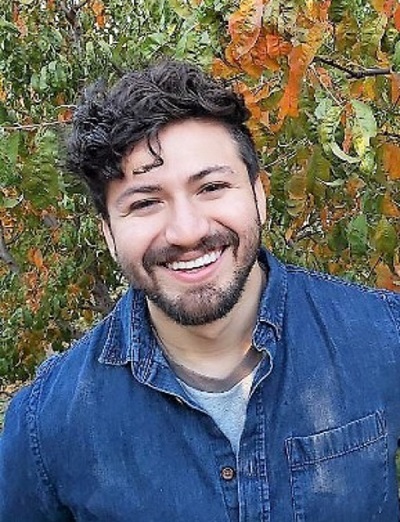
Dr. Zhihang Song serves as Assistant Professor in the Department of Horticulture at the University of Georgia's College of Agricultural & Environmental Sciences, with dual affiliation at the Institute for Integrative Precision Agriculture. His work advances digital agriculture through plant phenomics and controlled environment agriculture (CEA) to enhance food security and sustainability.
Education:
- B.S. in Agricultural Engineering, China Agricultural University (CAU), Beijing, China, 2017
- B.S. in Agricultural Engineering (Machine Systems), Purdue University, West Lafayette, IN, 2017
- M.S. in Agricultural & Biological Engineering, Purdue University, West Lafayette, IN, 2020
- Ph.D. in Agricultural & Biological Engineering, Purdue University, West Lafayette, IN, 2024
Dr. Song's research integrates imagery sensors, machine learning, computer vision, and robotics to solve critical challenges in CEA crop production. His work spans plant phenotyping (above and below ground), nutrient deficiency detection, disease resistance screening, and root system analysis. He develops innovative robotic platforms and imaging solutions that enable precise crop monitoring and management, significantly contributing to sustainable food production systems through data-driven approaches.
His publication record (2019-2025) reveals a clear research evolution from foundational hardware development (MISIRoot, LeafSpec) to advanced spatial-spectral analysis methods. The work consistently focuses on corn and soybean phenotyping using hyperspectral/multispectral imaging, with increasing sophistication in machine learning applications for nitrogen estimation, disease detection, and stress analysis. This trajectory demonstrates growing integration of AI with agricultural robotics for precision farming.
Scientific Awards:
- Estus H. and Vashti L. Magoon Award for Excellence in Teaching
Dr. Song actively mentors undergraduate, Master's, and Ph.D. students through paid research assistantships in his top-tier CEA laboratory. While specific grant details aren't provided, his research profile indicates strong funding potential in digital agriculture technologies, with appointment allocations showing 70% research commitment supporting his extensive publication output in agricultural robotics and precision phenotyping.
He leads a specialized research group within the Institute for Integrative Precision Agriculture, operating advanced facilities at the 1111 Plant Sciences Building (Office: 1311 Miller Plant Sciences). The lab develops cutting-edge technologies including drone-based phenotyping systems (PhenoBee), minimally invasive root imaging robots (MISIRoot), and portable spectral imaging devices for field and controlled environment applications.