Karel Keesman is an Associate Professor at Wageningen University & Research, specializing in mathematical and statistical methods applied to environmental engineering and biotechnology. He leads research in aquaponics, wastewater treatment, and sustainable energy systems, focusing on optimizing resource use and environmental impact. His work integrates advanced modelling techniques with real-world applications, such as bioreactor stability, nutrient cycling in aquaculture, and renewable energy storage. His research interests span aquaponics system design, desulfurization processes, and sensor-based monitoring in water networks. He actively contributes to interdisciplinary projects, including the development of off-river pumped hydro energy storage and nutrient recovery from biofloc systems. Keesman supervises multiple PhD candidates exploring topics like aquaponics sustainability, anaerobic digestion, and energy mixes in Indonesia. He has authored over 300 publications and datasets, emphasizing open-access research. His work bridges theoretical models with practical solutions for environmental challenges.
Gijs Krijnen serves as a Professor at the University of Twente within the Faculty of Electrical Engineering, Mathematics and Computer Science, based in Room Carré 3435 with contact email gijs.krijnen@utwente.nl. His research spans advanced engineering domains including: Additive manufacturing 3D printed sensors & actuators Embedded sensing systems Parametric & nonlinear transduction mechanisms Bio-inspired control algorithms Wearable & soft robotics platforms Current initiatives involve Mission I.A.M., Wearable Robotics, IRE, and the RaM laboratory, driving innovation in robotic sensing and actuation. No scientific awards were documented in the source material. Advising activities and research funding details remain unspecified in the provided information. The RaM laboratory constitutes his primary research environment for developing integrated robotics and mechatronics solutions.
Nina Schwarz is Assistant Professor of human-environment interactions in cities at the Department of Urban and Regional Planning and Geo-Information Management, ITC—University of Twente. Holding a Diploma in Environmental Sciences (University of Lüneburg, 2003) and a PhD in Social and Economic Sciences (University of Kassel, 2007), she spent a decade as senior scientist at the Helmholtz Centre for Environmental Research – UFZ before joining ITC. Her interdisciplinary research integrates urban land-use science, ecosystem-service evaluation and advanced modelling techniques—especially agent-based models—to explore sustainable urban development under global change. Research interests revolve around three interconnected themes: (i) urban land-use change —understanding how residential, commercial and green-space dynamics co-evolve; (ii) urban ecosystem services —quantifying both supply and demand of services such as local climate regulation, recreation and biodiversity; and (iii) behavioural modelling —formalising human decision-making to simulate policy scenarios ranging from slum-upgrading to vineyard management. She actively links these themes to UN Sustainable Development Goals, notably SDG 11 (Sustainable Cities) and SDG 15 (Life on Land). Recent publications (2022-2025) reveal a methodological breadth spanning citizen-science impact assessment in Suriname, cooling effects of urban water bodies in Chinese mega-cities, European wine-growers’ adaptive behaviour, and methodological advances in upscaling and validating agent-based land-use models. Across these studies, Schwarz consistently combines empirical field data, geospatial analytics and participatory approaches to produce policy-relevant insights for cities in both the Global North and South. She has (co-)authored >80 peer-reviewed works, accumulating c. 5 900 citations and an h-index of 28 (Scopus). While specific honours are not itemised in the supplied text, her sustained citation impact and invited contributions to major conferences (e.g., iEMSs 2020, IAHR 2025) underscore scientific recognition. Schwarz frequently engages with societal stakeholders: her projects have generated open datasets on urban green-space monitoring in Paramaribo, e-learning modules for Latin-American universities, and interactive dashboards for sustainable water management. Within ITC she contributes to capacity-building programmes for emerging economies, supervises graduate researchers and maintains active collaborations across Europe, Latin America, Africa and Asia. No explicit lists of PhD students or personal grants are provided in the current corpus, but her leadership of externally funded projects (e.g., citizen-science evaluation, vineyard decision-making database) indicates ongoing acquisition of research funding.
Angelo Cervone is a Professor at Delft University of Technology's Department of Astrodynamics & Space Missions within the Faculty of Aerospace Engineering. His research focuses on advanced propulsion systems, CubeSat technology, additive manufacturing for space applications, and space systems design. He leads projects like LUMIO, a CubeSat mission to monitor lunar meteoroid impacts, and has contributed to the development of green propellants and smart composite structures with embedded sensors. His work integrates cutting-edge manufacturing techniques like laser powder directed energy deposition with propulsion system optimization, emphasizing sustainable and robust space technologies. Cervone has authored over 130 publications and edited the book Adaptive On- and Off-Earth Environments , reflecting his expertise in off-world infrastructure and robotic production systems. He received the Rhizome Award (2021) for advancing autarkic systems in off-Earth habitat development. Key Projects: LUMIO CubeSat mission, Rhizome habitat system development, smart propellant tank design Research Themes: CubeSat propulsion, lunar exploration, additive manufacturing for space, in-situ resource utilization His articles highlight advancements in micro-thrusters, structural health monitoring via fiber optics, and autonomous navigation systems for deep-space CubeSats. Cervone collaborates globally on missions requiring innovative propulsion architectures and materials science breakthroughs.
Constant Hak is an Assistant Professor with the Building Acoustics research group at the Department of Built Environment, Eindhoven University of Technology (TU/e). His work focuses on reducing adverse health effects caused by human-induced noise while promoting positively perceived sound environments through computational and experimental acoustic methods. Dr. Hak specializes in room and hall acoustics, developing advanced acoustic measurement techniques based on impulse responses. His research includes analyzing how orchestra members influence stage acoustic parameters across multiple concert hall stages and orchestra pits, as well as creating methods for accurate impulse response measurements in large open-air theaters. Software and measuring equipment developed by Hak is used worldwide for research and engineering applications. His recent publications demonstrate expertise spanning building acoustics, plasma physics, and indoor environmental quality measurement. The research shows consistent focus on measurement techniques, with applications in architectural acoustics, concert hall design, and educational tools for environmental quality assessment. Dr. Hak teaches multiple courses including Architectural Acoustics, The Science of Sound, Techniques in Architectural Acoustics, and various Master's projects related to Building Physics and Services. His educational work includes developing the SvS (Senses versus Sensors) device, which helps students understand indoor environmental quality through hands-on measurement of temperature, humidity, light, and sound.
Frank Willems is a Full Professor of Systems and Control Technology and Chair of Integrated Powertrain Control at Eindhoven University of Technology (TU/e), holding a part-time position realized with support from TNO. He is affiliated with the Control Systems Technology group within the Department of Mechanical Engineering, and also contributes to EIRES and EAISI research initiatives. Dr. Willems obtained his MSc (1995) and PhD (2000) in Mechanical Engineering from Eindhoven University of Technology (TU/e). His academic journey continued with a position at TNO Automotive, where he currently serves as a principal scientist in powertrain control. Professor Willems' research focuses on developing optimal and robust control methods for automotive powertrain systems. His work addresses the critical challenge of integrating energy and emission management strategies at the powertrain system level, which is essential as traditional methods become infeasible due to increasingly strict environmental regulations. Key research areas include control-oriented modeling of internal combustion engines, cylinder pressure-based combustion control, and integrated energy and emission management. His research aims to minimize development time and costs through model-based control methods, with the ultimate goal of achieving auto-calibration where powertrain energy efficiency is optimized online using smart sensors and route information. Dr. Willems serves as an Associate Editor for Control Engineering Practice and is an active member of the IFAC Technical Committee Automotive Control. He has participated in numerous international program committees for conferences including the IFAC Conference on 'Engine and Powertrain Control, Simulation and Modeling (E-CoSM)', IFAC Symposium 'Advances in Automotive Control (AAC)', and 'Symposium for Combustion Control (SCC)'. His research has been supported by organizations including the Dutch Technology Foundation (STW) and DENSO Japan. At TU/e, Professor Willems teaches courses on 'Optimal control and reinforcement learning' and 'Advanced control for future heavy-duty powertrains.' His research group, part of the Control Systems Technology group, focuses on developing self-learning powertrain control systems to address the complexity and diversity of future ultra-clean and efficient vehicles.
George Vosselman is a Full Professor at the University of Twente, Faculty of Geo-Information Science and Earth Observation (ITC), specializing in Geo-Information Extraction with Sensor Systems. Educated with honours at Delft University of Technology (1986) and PhD in Photogrammetry from Rheinische Friedrich Wilhelms University of Bonn (1991), he has held academic roles at the University of Stuttgart, University of Washington, and Delft University of Technology (1993–2004). Since 2004, he has been a key figure at ITC, serving as department head (2012–2018, 2023–). Education: Delft University of Technology (BSc with honours, 1986), Rheinische Friedrich Wilhelms University of Bonn (PhD with honours, 1991) His research focuses on leveraging sensor technology advancements for large-scale geo-information production. Key expertise includes quality analysis of laser altimetry data, point cloud segmentation/classification, 3D building/road modeling, and model-driven imagery analysis. He has published over 220 papers and co-edited the textbook Airborne and Terrestrial Laser Scanning (2010). Recent work integrates deep learning with geospatial data, addressing semantic segmentation, visual question answering, and drone-based mapping. Recent publications (2025–2023) highlight trends in deep learning for remote sensing , including multimodal question answering benchmarks (HRVQA), vectorized building extraction (RoIPoly), latent diffusion for road modeling (LDPoly), and drone obstacle avoidance systems. His work bridges photogrammetry , computer vision , and robotic mapping , with applications in urban planning, disaster management, and informal settlement monitoring. Scientific Awards : Hansa Luftbild (1993), ISPRS Otto von Gruber (2000), Schwidefsky Medal (2012), Karl Kraus Medal (2012), ASPRS Fairchild Award (2015), ISPRS Fellow (2020) As an educator, Vosselman has taught photogrammetry, remote sensing, and laser scanning at Delft University of Technology and globally. He chaired the ITC Examination Board (2015–2023) and modernized geo-information education in Asia/Africa. His software for point cloud processing is commercialized in Europe, and he currently leads ISPRS working groups on point cloud methodologies. Labs/teams include the Earth Observation Science Chair Group at ITC, collaborating on UAV-based datasets (UAVid, UAVPal) and indoor laser scanning systems. Recent activities (2025) involve invited talks on pulse matching limitations in laser scanning and deep learning for point cloud classification.
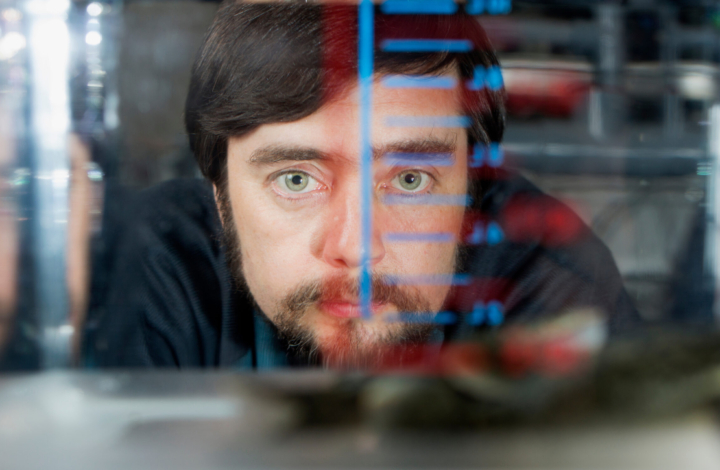
Michael Levin is a Distinguished Professor at Tufts University in the Department of Biology within the School of Arts and Sciences. He serves as Director of both the Allen Discovery Center at Tufts University and the Tufts Center for Regenerative and Developmental Biology. His laboratory investigates the intersection of developmental biology, artificial life, bioengineering, synthetic morphology, and cognitive science. Allen Discovery Center at Tufts Tufts Center for Regenerative and Developmental Biology Tufts/UVM: ICDO Harvard Wyss Institute Stibel Dennett Consortium for Brain and Cognitive Science The Proteus Institute MIT Science and Technology Center EBICS Levin's research focuses on understanding diverse intelligence in evolved, designed, and hybrid complex systems. His lab combines developmental biophysics, computer science, and behavioral science to study how cognition scales up from cellular competencies to organism-level behaviors. A key specialty is developmental bioelectricity—the study of how somatic electrical networks store, process, and act on information to control large-scale body structure. His team creates tools to read and edit the bioelectric code guiding proto-cognitive computations in the body. Levin's publications reveal a strong focus on bioelectricity, morphogenesis, and non-neural cognition across multiple model systems including Xenopus, planarians, and synthetic living constructs. His recent work explores collective intelligence as a unifying concept across biological scales, the development of microfluidic devices for measuring electrical connectivity, and optical estimation of bioelectric patterns in living embryos. His research spans fundamental developmental mechanisms to potential biomedical applications in regeneration and disease treatment. As an editor, Levin serves as Co-Editor-in-Chief of Bioelectricity and Founding Associate Editor of Collective Intelligence. He has mentored numerous post-doctoral fellows and graduate students who have gone on to establish their own research programs. His lab has received significant attention for creating novel biological machines (xenobots) and demonstrating that cells can store and transmit behavioral memory outside the brain. The Levin Lab maintains several significant research initiatives including the Allen Discovery Center at Tufts, the Tufts Center for Regenerative and Developmental Biology, and collaborations with the Wyss Institute at Harvard. The lab employs a multidisciplinary approach combining wet lab experiments with computational modeling to investigate how living systems achieve goal-directed behavior and pattern formation.
Peter Zijlstra is a Full Professor in the Department of Applied Physics at Eindhoven University of Technology (TU/e), leading the Molecular Plasmonics group. His research focuses on single-molecule sensing using plasmonic and nanophotonic approaches to study biomolecular interactions in complex environments. He is a core member of the Institute for Complex Molecular Systems at TU/e, collaborating across disciplines like chemistry, biomedical engineering, and mathematics. Education: MSc in Applied Physics, University of Twente (2005) PhD from Swinburne University of Technology (2009), studying plasmonic nanoparticles in optical data storage Postdoctoral fellowship at Leiden University under Prof. Michel Orrit Research Interests: Developing novel sensing concepts via nanophotonics and super-resolution microscopy. Key areas include plasmon-enhanced fluorescence, real-time biomolecular dynamics, and applications in cancer management. His work contributes to UN Sustainable Development Goals through advancements in biosensing technologies. Awards: 2013 NWO Vidi Award for research on plasmonic imaging of enzymes in living cells Teaching & Activities: Teaches courses like Advanced Optical Microscopy and Electromagnetism Supervised 32 academic works Contributed to conferences and editorial roles for journals like npj Biosensing Labs & Collaborations: Molecular Plasmonics group website: www.molecular-plasmonics.nl Marie Curie ITN SuperCol project: www.supercol.eu
Johannes Balling is a Postdoc researcher at the Laboratory of Geo-information Science and Remote Sensing, Wageningen University. His work focuses on tropical forest monitoring using satellite remote sensing, particularly integrating Synthetic Aperture Radar (SAR) and optical data to detect forest disturbances. He has contributed to projects analyzing deforestation patterns in regions like Indonesia and the Amazon, leveraging tools like Google Earth Engine for large-scale data analysis. Research Interests: Tropical forest dynamics, SAR applications, deforestation detection, multi-source satellite data fusion. Recent work emphasizes timeliness and accuracy in disturbance mapping through innovative combinations of radar and optical sensors. Collaborations include projects with researchers like Herold and Reiche, focusing on fire-related forest changes and real-time monitoring systems. His PhD thesis (2024) explored temporally-dense satellite remote sensing for tropical forest monitoring. He has published widely on SAR-based methods and their application to environmental challenges.
Dr. Yara Khaluf is an Assistant Professor in the Information Technology Group at Wageningen University & Research, Department of Social Sciences. She holds a PhD (2014, Paderborn University, cum laude) on robot swarm task allocation, followed by postdoctoral research at Paderborn University (2014–2015) and Ghent University’s IDLab (2015–2021). Her work focuses on computational social science, hybrid human-agent societies, and distributed artificial cognition, leveraging agent-based modeling and systems dynamics for behavior prediction/modulation. She leads European-funded projects like ChronoPilot (EU Horizon2020 FET) and DELICIOS (FWO, 2019–2022). Her research explores interactions between artificial agents and humans, developing cognitive capacities for seamless interaction via social feedback networks. Notable contributions include collective foraging algorithms, time perception modeling, and agent-based simulations for public health interventions. Awards include competitive IGS and DFG fellowships. She collaborates with leading experts in swarm intelligence (Dorigo, Stuetzle), collective decision-making (Hamann, Marshall), and experimental psychology (Johansson, Vatakis). Current projects investigate modulating human time perception and delegation of conflict-of-interest decisions to AI agents. Teaching includes courses on model thinking, agent-based modeling of complex systems, and data science applications in food/consumer science. Her work bridges computational methods with societal challenges, emphasizing scalable solutions for hybrid systems.
Jan Dijkstra is an Associate Professor at the Animal Nutrition Group of Wageningen University & Research , with an Adjunct Professor appointment at the University of Guelph since 2009. His work focuses on modeling digestive and metabolic processes in dairy cattle to enhance health, reduce environmental impact, and improve profitability. He has led major projects integrating dynamic mechanistic models with experimental research and secured over €10 million in grants. Research Themes : Methane emission reduction, rumen fermentation, nutritional physiology, seaweed-based feed additives (e.g., Asparagopsis taxiformis ), and protein/energy metabolism. Key Methods : Mathematical and computational modeling, in vivo and in vitro trials, bromoform analysis via GCxGC-TOFMS, and histological evaluations of rumen health. Scientific Leadership : Chair, MODNUT (International Workshop on Modeling Nutrient Utilization in Farm Animals, 2018–present) Co-chair, Feed and Nutrition Network (Global Research Alliance, 2012–2019) Member, International Symposium on Nutrition of Herbivores (2003–2014) Grants and Projects : Over €10 million in funding (past 5 years), involving 10 PhD students and 2 postdocs. Projects include assessing the safety of Asparagopsis taxiformis in dairy diets and developing antimethanogenic feed strategies.
Marc C.W. Geilen is an Associate Professor at the Electronic Systems group , Eindhoven University of Technology. He leads the Model-Based Design Lab and contributes to the CompSOC Lab and High Tech Systems Center . His work focuses on model-based design methods, design automation, and optimization for real-time and embedded systems. Research Keywords: Cyber-Physical Systems, Real-Time Systems, Embedded Systems, Performance Analysis, Design Automation Key Collaborations: EU ECSEL TRANSACT project, SAM-FMS project, Arrowhead Tools initiative His recent publications address weakly-hard timing constraints in server-based systems, hybrid performance modeling for cyber-physical systems, and neural network optimization for communication. Article trends span Real-Time Scheduling , Trustworthy Modeling , Neural Network Efficiency , and Resource Allocation in distributed environments. Scientific Awards : Partial-Order Reduction for Performance Analysis (2018) Teaching activities include courses in Computational Modeling , Embedded Signal Processing , and Discrete Mathematics . He collaborates across projects like TRANSACT, SAM-FMS, and Arrowhead Tools, focusing on flexible manufacturing and cloud-to-edge transitions.
A.A.J. (Erjen) Lefeber is an Assistant Professor in the Department of Mechanical Engineering at Eindhoven University of Technology (TU/e). His research focuses on control systems, cooperative driving, vehicle dynamics, and autonomous systems. He is affiliated with the EAISI Mobility cluster and the ICMS Core group, emphasizing interdisciplinary collaboration. Dr. Lefeber has contributed to over 150 research outputs, including peer-reviewed articles, conference contributions, and datasets. His work addresses challenges in platooning systems, model predictive control (MPC), cybersecurity in cooperative vehicles, and multi-agent systems. Research interests include cooperative adaptive cruise control (CACC), decentralized control strategies, and robust control against adversarial attacks. His projects integrate theoretical analysis with experimental validation, such as testing heterogeneous platoons with actuation delays. Dr. Lefeber has received the AVEC '24 Best Paper Award for contributions to vehicle platooning control. He teaches courses on nonlinear control, manufacturing networks, and mechanical engineering fundamentals. Collaborations span academia and industry, focusing on sustainable transportation and automation. Current efforts explore online learning for interaction dynamics in multi-agent systems and high-performance MPC for aerial robotics. His research aligns with UN Sustainable Development Goals, particularly addressing safe and efficient mobility solutions.
Peter Baltus is Full Professor of High-Frequency Electronics in the Department of Electrical Engineering at Eindhoven University of Technology. With industry experience at Philips/NXP and academic credentials from TU/e, his research focuses on high-frequency integrated circuit and system design. Research domains include: Ultra-low power transceivers Millimeter-wave wireless power transfer Efficient wideband beamforming Sensor swarm networks RF system architecture His educational contributions feature innovative RF laboratory designs for remote learning environments. Current projects include photonic-electronic integration and satellite communication systems.