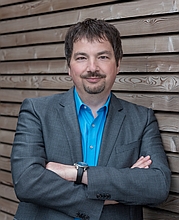
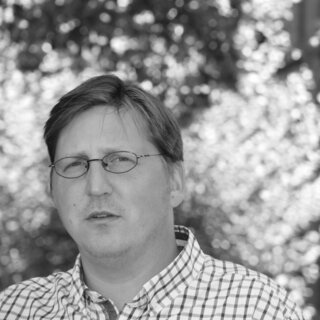
Prof. Dr. Christoph Kann is a Professor of Philosophy at the Institute for Philosophy , Faculty of Arts and Humanities , Heinrich-Heine-Universität Düsseldorf , with a career spanning over three decades. His work bridges metaphysics, epistemology, analytic philosophy of language, logic, and the history of logic , alongside specialized research in antiquity and medieval philosophy . He has led significant projects, including the DFG-funded "Albert Camus's Early Philosophical Work – New Sources and Perspectives" (2023–2025), and co-edits series like Whitehead Studies and Studia Philosophica et Historica . A key figure in medieval logic and Whiteheadian thought , he has held visiting fellowships and advisory roles in societies such as the Society for Medieval Philosophy and Renaissance and the German Whitehead Society . Education : First State Examination in Philosophy and Classical Philology (Düsseldorf, 1988), Doctorate (Cologne, 1991), Habilitation (Paderborn, 1998). His research explores medieval scholastic debates , frame theory in historical philosophy, and existentialist themes in Camusian thought. Collaborations with scholars like Oliver Victor and Dennis Sölch highlight his interdisciplinary approach. Recent projects focus on "Footnotes to Plato" in Whitehead's work and Camus's early writings , aiming to contextualize their relevance to European cultural concepts and 20th-century philosophy . He has supervised PhD students, including Oliver Victor, and contributed to DFG research units on functional concepts and historical representations. Key publications include monographs on Albert of Saxony's logic , Whitehead's philosophy of history , and Camusian existentialism , alongside co-edited volumes on medieval logic and modern views of medieval thought . His editorial work with transcript Verlag and Verlag Karl Alber underscores his influence in philosophical publishing . Current lectures and workshops, such as those on "Cultural Foundations of Europe" , reflect his ongoing engagement with historical-systematic intersections in philosophy and cultural studies.