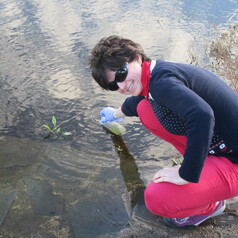
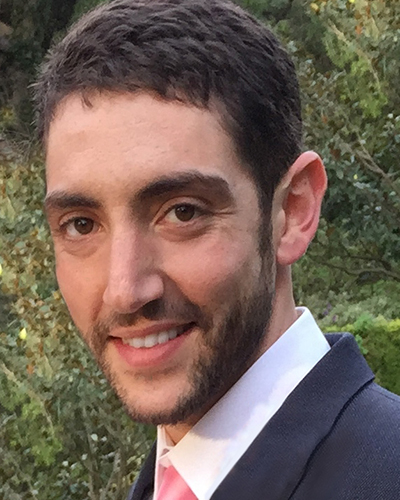
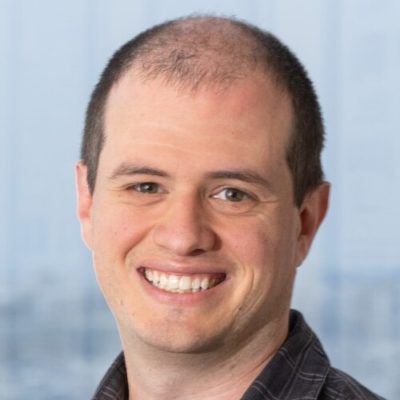
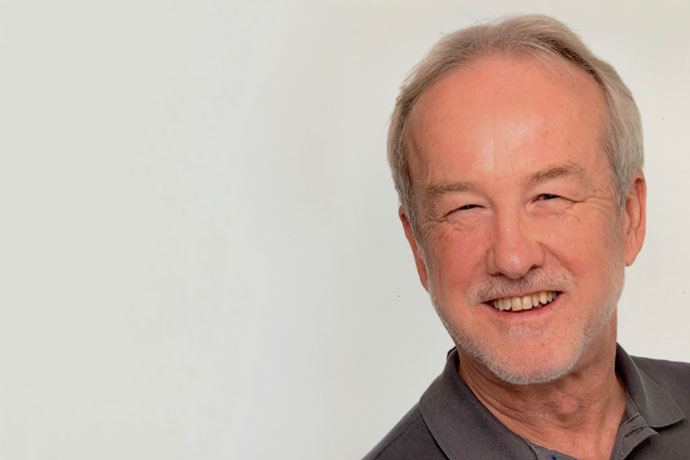
Dorthe Brogård Kristensen is an Associate Professor at the University of Southern Denmark , affiliated with the Department of Marketing & Management . Her work bridges medical anthropology and consumer culture , focusing on intersections of health, body and identity , and medical pluralism , with a regional focus on Chilean and Danish societies . She leads projects on AI in healthcare and digital fitness culture , contributing to debates on self-tracking technologies and health branding . Education : Ph.D. in Anthropology (University of Copenhagen) Key Collaborations : Interdisciplinary teams in Denmark and Chile Her research examines medical decision-making , technological affordances , and consumer strategies for health , with recent publications analyzing AI's impact on radiology and ethical implications of health data . She has presented at conferences on digital health and consumer culture , and her teaching includes medical anthropology and market ethnography at master's and Ph.D. levels.
Desi R. Ivanova is a research fellow at the University of Oxford's Department of Statistics under the Florence Nightingale Bicentennial Fellowship. Her work bridges probabilistic machine learning, Bayesian experimental design, and LLM evaluation frameworks. She holds a DPhil in Statistics from Oxford's StatML CDT program (2020-2024) and an MMORSE in Mathematics from University of Warwick (2011-2016) with Erasmus exchange at LMU Munich. Research spans causal machine learning and uncertainty quantification Developed CO-BED and Step-DAD frameworks Focus on LLM evaluation methodology and calibration Expert in real-time adaptive experimental systems Her publications demonstrate expertise in Bayesian self-consistency methods, neural data compression, and privacy-preserving dataset merging. Key contributions include improving amortized inference efficiency and developing gradient-based causal experimental designs. Current work emphasizes rigorous statistical evaluation of language models, advocating for appropriate uncertainty quantification when analyzing performance across small datasets. She critiques CLT-based methods for LLM evaluation and proposes more robust frequentist and Bayesian alternatives.
Alessandra Sutti is an Associate Professor at Deakin University's Institute for Frontier Materials , focusing on polymers, textiles, and sustainable material solutions. Her work bridges industry collaboration with environmental stewardship, particularly through microplastics research and STEM education initiatives. PhD in Materials Science from Universita' degli Studi di Parma (2007) Active in Australian Research Council-funded projects and industry partnerships
Jocelyn Chanussot is a Professor at Grenoble Institute of Technology, holding the AXA Chair of Remote Sensing. He is affiliated with GIPSA-Lab (Laboratoire de traitement du Signal et des Images) at Ense3 (École Nationale Supérieure de l'Énergie, l'Eau et l'Environnement) and maintains a connection with the Chinese Academy of Sciences through his AXA Chair position. His research focuses on advancing remote sensing technologies, particularly in hyperspectral imaging and artificial intelligence applications for environmental monitoring. Professor Chanussot specializes in hyperspectral imaging, which captures information across several hundred wavelengths, allowing for detailed characterization of physical properties in observed scenes. His work develops algorithms to extract meaningful information from complex remote sensing data, with applications spanning natural disaster monitoring, environmental observation, biodiversity assessment, and urban planning. He has pioneered approaches that leverage artificial intelligence, particularly deep learning techniques, to process and analyze large-scale remote sensing datasets. His scholarly output shows a clear trend toward integrating advanced AI techniques with remote sensing data. Recent publications demonstrate growing emphasis on transformer architectures, contrastive learning, generative models, and foundation models specifically adapted for hyperspectral data. His work increasingly addresses multimodal data fusion, anomaly detection, and real-time processing for applications in natural disaster response. Ranked among the 157 most cited French researchers in 2019 by Clarivate Analytics Professor Chanussot actively serves on numerous conference program committees, particularly for SPIE's Image and Signal Processing for Remote Sensing conferences. His research is supported by the AXA Research Fund through his AXA Chair in Remote Sensing, which focuses on developing algorithms for natural disaster monitoring and emergency response. He collaborates extensively with international institutions including UCLA and Stanford University on applications ranging from toxic gas detection to tropical forest biodiversity assessment. He leads research at GIPSA-Lab, focusing on developing advanced tools and algorithms for extracting information from complex remote sensing data. His team works on processing heterogeneous data including aerial photos, multispectral and hyperspectral images, and other environmental measurements to improve natural disaster prediction and response capabilities.
Emmanuel Dupoux is a Professor at École des Hautes Études en Sciences Sociales (EHESS), affiliated with the School of Advanced Studies in Social Sciences and the Laboratory of Cognitive Science and Psycholinguistics (LSCP). His work bridges cognitive science, computational linguistics, and machine learning to study infant language acquisition and social cognition. Co-creator and director of EHESS Cognitive Science Master program Former LSCP laboratory director (1998-2009) Current research focuses on textless speech modeling and ecological audio analysis Research areas include: Modeling early language acquisition mechanisms using Bayesian models and HMM Investigating phonological 'deafness' and critical age plasticity Studying social cognition development through infant-toddler experiments His technical contributions span speech processing toolkits like Shennong, emergent communication frameworks (STOP dataset), and innovative approaches to self-supervised speech modeling. Recent publications demonstrate breakthroughs in: Topography-inspired CNN designs for better memory efficiency Prosody-aware generative spoken language models (pGSLM) Textless emotion conversion systems He actively explores how machine learning can reverse-engineer infant language learning processes from ecological audio data, with applications in neurodegenerative disease diagnostics. Key collaborations include: INRIA's Cognitive Machine Learning (CoML) team Facebook AI Research (FAIR) partnerships VoxPopuli multilingual speech corpus development
Søren Knudsen is an Assistant Professor at the Digital Design Department, IT University of Copenhagen and holds a Marie Curie Fellowship for postdoctoral work at the University of Copenhagen. He serves as Academic Director of the Human Data Interaction Lab. Positions: Assistant Professor, Marie Curie Postdoctoral Scholar Affiliations: IT University of Copenhagen, University of Copenhagen Key Roles: Academic Director, Human Data Interaction Lab His research centers on information visualization and human-computer interaction , particularly in face-to-face and online contexts. He explores how large-area displays and social media can enhance data comprehension and collaborative discussion. Notable work includes surveys on interactive visualization techniques for large displays, frameworks for data visualization education , and EMR-based algorithms for healthcare performance evaluation. His publications span journals like IEEE Transactions on Visualization and Computer Graphics and PLOS ONE . Awards and honors: Marie Curie Fellowship He collaborates across disciplines, with ties to healthcare analytics, educational technology, and computer science departments. His recent studies address challenges in visualization design handoff , proxemics , and ubiquitous data interaction .
Dr. Ian Thacker is an Associate Professor of Educational Psychology at the University of Texas at San Antonio, focusing on STEM education, teacher bias, and conceptual change. His research explores mathematical skills in science learning, technology-enhanced STEM pedagogy, and systemic disparities in STEM education linked to gender and race. Education: B.A. in Mathematics & Physics, University of Colorado at Boulder (2005) M.A. in Science and Mathematics Education, University of California at Berkeley (2010) M.S. in Statistics, University of Southern California (2018) Ph.D. in Urban Education Policy, University of Southern California (2020) His research spans data literacy for climate change education, implicit bias in teachers, and technology-driven learning. Recent publications emphasize climate change pedagogy, equity in STEM, and teacher dispositions. Funded by NSF, Gates, SSHRC, and internal awards, his work addresses systemic barriers in education. Scientific Awards: 2020 USC Ph.D. Achievement Award 2020 USC Student Recognition Award: The Order of Arête Dr. Thacker has received grants from the National Science Foundation, Gates Foundation, SSHRC, and APA Division 15. His media contributions include USA Today and The Conversation, discussing STEM equity and climate change education.
Dr. Erik Kline is a Computer Scientist and Research Lead at the Information Sciences Institute (ISI) of the University of Southern California (USC), leading critical research in network and cyber-security through projects including SABRES (DARPA OPS-5G), APROPOS (DARPA SearchLight), and DREAMS (NSF). His educational background includes: B.S. in Computer Science from Georgia Institute of Technology M.S. in Computer Science from University of California, Los Angeles Ph.D. in Computer Science from University of California, Los Angeles Dr. Kline's research centers on network security with emphases on anomaly detection, line-rate traffic analysis, DDoS defense mechanisms, anonymity systems, and security-aware routing protocols. His innovative work in large-scale network modeling enables scientifically rigorous experimentation and validation of complex network systems, directly addressing evolving cybersecurity threats through both theoretical frameworks and practical implementations. His publication record demonstrates consistent advancement in network security testbeds, traffic analysis, and defensive architectures. Key themes include machine learning applications for encrypted traffic classification, novel approaches to DDoS mitigation through traffic deflecting and authentication, and foundational work on security-aware routing systems. These contributions collectively strengthen network infrastructure resilience against sophisticated attacks while maintaining operational efficiency. No scientific awards were mentioned in the provided text. Dr. Kline directs substantial research funding as Principal Investigator on multiple high-impact projects including SABRES (DARPA OPS-5G), APROPOS (DARPA SearchLight), and EXCEED (DARPA XD3), alongside leadership in DREAMS (NSF) and EdgeLab (DARPA EdgeCT). His grant portfolio consistently bridges theoretical innovation with real-world deployment, evidenced by successful technology transitions to commercial applications. Based at USC/ISI's Network and Cyber-security Division, Dr. Kline actively develops and enhances DETERLab for cybersecurity experimentation. His team creates advanced network emulators capable of processing millions of packets per second while implementing realistic network impairments, supporting complex experiments in edge computing, 5G security, and cyber-physical systems through multi-institutional collaborations.
Currently a postdoctoral researcher at the Max Planck Institute for Empirical Inference under Bernhard Schölkopf, Zhijing Jin will soon join the University of Toronto as an Assistant Professor. Her work bridges Natural Language Processing , causality , and ethical AI to address challenges in large language model behavior and societal impact. Research interests include causal reasoning in language models , moral decision-making in AI agents , multi-agent collaboration , and responsible deployment of NLP technologies . She focuses on understanding how models handle ethical dilemmas, political biases, and cooperative dynamics while improving their robustness and alignment. Her publications explore collaborative LLM evaluation, ethical reasoning frameworks, and causal modeling for trustworthy AI. Key trends include causality-based NLP , LLM alignment , and socially beneficial language technology . Current projects investigate multi-agent debate systems , political bias detection , and responsible AI practices .
Prof. Günter Neumann is a Professor of Computational Linguistics at Saarland University and a Research Fellow at the German Research Center for Artificial Intelligence (DFKI) . He has over 30 years of experience in research software development, with a focus on language technology , information extraction , and question answering systems . PhD in Computer Science (1994) and Venia Legendi in Computational Linguistics (2004) from Saarland University Visiting researcher at Stanford , CMU , and MIT His research spans computational linguistics , artificial intelligence , and their applications in defence , healthcare , and education . He leads projects like AtLaS (AI-based NLP for low-quality data in defence), PRECISE4Q (predictive modeling in stroke medicine), and iREAD (personalized reading apps). Recent publications focus on low-resource language retrieval , cross-lingual transfer , and graph-based reasoning in biomedical domains. He has participated in numerous program committees (ACL, AAAI, LREC) and contributed to advancements in multilingual question answering , knowledge graph reasoning , and medical text de-identification . He has collaborated with institutions like Fondazione Bruno Kessler , econob , and NICE Systems . Current tools developed with his team power semantic search services for Informationsdienst Wissenschaft and the Deutsche Allianz Meeresforschung portal.
Eelon Mikael Lappalainen serves as a Postdoctoral Researcher within the Department of Civil Engineering at Aalto University's School of Engineering, actively contributing to the Performance in Building Design and Construction research group. His work bridges theoretical frameworks with practical applications in construction project delivery, emphasizing process optimization and digital innovation in the built environment sector. His research spans lean construction methodologies, situational awareness systems, and digital transformation in infrastructure projects, with specific focus areas including Last Planner System implementation, Takt Time production, BIM-based visualization, and decision-making dynamics in building design. He investigates how digital tools enhance work flow management, address design complexity, and empower self-managed construction teams while examining challenges faced by small and medium enterprises in alliance contracting environments. Analysis of his 2024-2025 publications reveals consistent exploration of situational awareness systems across infrastructure projects, with emerging trends in batch sizing for design workflows, real-time visual management, and cognitive aspects of construction decision-making. His work demonstrates strong interdisciplinary collaboration, frequently co-authored with Finnish researchers like Olli Seppänen and Petri Uusitalo, and targets high-impact venues including IGLC conferences and journals such as Buildings and Frontiers in Built Environment. Dr. Lappalainen's scholarly contributions appear primarily in proceedings of the International Group for Lean Construction (IGLC) conferences and peer-reviewed journals focused on construction innovation, with notable publications examining digital situational awareness adoption barriers, empowerment challenges in self-managed teams, and SME competitiveness in alliance contracts. His research methodology combines case studies, user experience analysis, and theoretical framework application to practical construction scenarios. He maintains active involvement in the Performance in Building Design and Construction research group, which focuses on developing and testing performance-enhancing strategies through lean principles, digital tools, and collaborative design approaches. The group's work addresses critical industry challenges including work complexity navigation, real-time project monitoring, and technology adoption in infrastructure construction contexts.
Jerry den Hartog is an Assistant Professor at the Security Group within the Department of Mathematics and Computer Science at Eindhoven University of Technology (TU/e). His research focuses on data protection for collaborative systems, network situational awareness, intrusion detection, access control, trust management, and formal verification. He applies this work to areas such as critical infrastructure, industrial control systems, intelligent transport systems, smart buildings, and IoT, contributing to TU/e research themes like Data Science and Engineering Health. PhD in Formal Methods (Vrije Universiteit Amsterdam) Previously worked at Centrum for Mathematics and Computer Science, University of Twente Established TU/e's Security Group in 2008 His research bridges fundamental and applied cybersecurity, with industry collaborations in critical infrastructure and IoT. He teaches courses on: Verification of Security Protocols Automata and Formal Languages Computer Networks and Security Recent projects include: INTERSECT (NWA.1160.18.301): Internet of Secure Things DEPICT (628.001.032): Cyber-Physical Systems defense SECREDAS GA 783119: Automotive Controller Area Network security
Mexhid Ferati is an Associate Professor of Informatics at Linnaeus University within the Faculty of Technology, Department of Informatics. He has established an international academic career spanning institutions across the United States, North Macedonia, Norway, and Sweden. Currently, he serves as head of the Interaction Design Research Group and program manager for the Interaction Design program at Linnaeus University. Dr. Ferati's research interests encompass Human-Computer Interaction, Interaction Design, Accessibility, Internet of Things, and STEM Education. His work focuses on inclusive design approaches, digital accessibility for visually impaired users, gender equality in ICT education, and sustainable technology applications. He actively investigates how technology can address societal challenges through applied research that bridges academic theory with practical implementation. His recent publications reveal a strong focus on emerging technologies and their societal impact, with particular attention to augmented reality in education, blockchain applications for sustainability, and gender dynamics in technology fields. The research demonstrates an interdisciplinary approach that combines technical innovation with social considerations, particularly regarding accessibility and inclusion. Dr. Ferati coordinates and participates in numerous research projects including STEFORA (STEM for All), DIGRIS (Implementation Challenges of Digitalisation Rights in Sweden), IDEAL (Interaction Design Program Expansion), Forest 4.0, RAPID (Recasting best practices of European universities), and IGNITE (Transforming Kosovo and Albanian Education System). His teaching portfolio includes User-oriented Design (1IK430), Digital Environments: Information Society and Internet of Things (4IK506), Current Topics within Informatics (2IK300), Methods in Interaction Design (1IK422), Information Systems Methodology (4IK524), and Degree Project in Informatics at Master Level (5IK50E). He has played a significant role in developing and delivering courses in Interaction Design and Accessibility/Inclusive Design across various educational institutions. The Interaction Design Research Group, which he leads, addresses current societal and industrial challenges using ICT solutions through applied research. His work has received funding from diverse sources including the EU, STINT, Crafoord Foundation, Knowledge Foundation (KK-Stiftelsen), EUniWell, Platform eHealth, NSF (US), and Google.
Jean-Baptiste Eichenlaub is an Associate Professor at Université Savoie Mont Blanc (USMB), affiliated with the Laboratoire de Psychologie et NeuroCognition (LPNC). Previously, he held postdoctoral positions at Massachusetts General Hospital/Harvard Medical School and Swansea University. His work spans sleep research , cognitive neuroscience , and neural correlates of dreaming , with a focus on memory consolidation , dream recall frequency , and REM sleep mechanisms . Ph.D. in Cognitive Neuroscience (Lyon Neuroscience Research Center, 2011) Master of Physiology & Neuroscience (Lyon University, 2008) Bachelor of Biology (Lyon University, 2006) His research integrates neuroimaging , electrophysiology , and computational tools , exemplified by contributions like the DREAM EEG database and Spinky toolbox for sleep analysis. Recent publications examine sleep habits in preteens , dream-lag effects , and gamma oscillations in NREM sleep . Notable roles include: Junior member, Institut Universitaire de France (2024 - present) Co-responsible - Memory Team (2021 - present) Coordinator - 1st Year Bachelor's in Psychology (2021 - 2024)
Associate Professor Warren Smith is a faculty member in the School of Engineering and Information Technology at the University of New South Wales (UNSW) Canberra campus. He serves as the Naval Architecture Coordinator and has held various leadership positions including Head of School from 2003-2009. With a background in naval architecture and operations research, Professor Smith has established himself as a leading educator and researcher in maritime engineering and design education. Professor Smith holds a PhD in Operations Research from the University of Houston, an MS in Mechanical Engineering from the same institution, and a BE in Naval Architecture with First Class Honours from UNSW Sydney. His extensive professional experience includes 20 years as a Naval Architect with the Australian Department of Defence (1978-1998), where he held various specialist engineering, research and managerial positions. Professor Smith's primary research interests span Naval Architecture, Ship Design and Safety, Engineering Design Education, and Complex Systems. He has pioneered authentic and immersive experiential learning approaches, particularly through student design competitions. His work in systems modeling, decision-based design, and optimization methods has contributed significantly to both naval architecture and engineering education fields. Professor Smith has developed innovative frameworks for ship design optimization, particularly for high-speed planing craft, and has explored the application of evolutionary algorithms to complex engineering problems. His recent scholarly output demonstrates a continued focus on naval architecture education, maritime engineering, and interdisciplinary applications of optimization techniques. Professor Smith has expanded his research into aircraft proximity systems and air traffic management, showing the transferability of his systems engineering approach across domains. His work consistently bridges theoretical advances with practical applications in both maritime and aerospace contexts. AGM Michell Medal, Mechanical College Board of Engineers Australia for outstanding service to mechanical engineering (2018) Australian Council of Engineering Deans National Award for Engineering Education Excellence Re-Engineering Australia Foundation Founder's Award for Outstanding Contributions to the F1inSchools Program (2017, 2013) Australian Society for Operations Research Conference Best Paper Award (2016) UNSW Canberra Community Engagement Award for Services to the F1inSchools Program (2013) UNSW Canberra Rector's Commendation for Excellence in Classroom Teaching (2010) ALTC Citation for Outstanding Contributions to Student Learning (2008) AAEE Citation for Outstanding Contributions to Student Learning (2008) Ship Shape 2000, Royal Institution of Naval Architects Walter Atkinson Prize (1993) Professor Smith has been instrumental in developing and leading numerous student design competitions that provide authentic learning experiences. He has served as Faculty Advisor for the Formula SAE Student Design & Build Competition (2003-2013 at UNSW Canberra, 2013-2014 at University of Oklahoma) and as National Coordinator for the Warman Design & Build Project & Competition (2002-2021). He currently chairs the Re-Engineering Australia National Rules Committee and serves as Chair of Judges for F1inSchools and Subs in Schools competitions. His educational leadership extends to mentoring first-year engineering students and researching the development of student teamwork competencies. Professor Smith leads the UNSW Canberra Warman Design and Build Project & Competition (1998-present) and is actively involved with the Re-Engineering Australia Foundation as ACT Hub Chair (2007-present). His work connects academic research with practical engineering challenges through student competitions that engage thousands of participants annually. These initiatives form an integrated ecosystem for engineering education that spans from primary school through to university level.