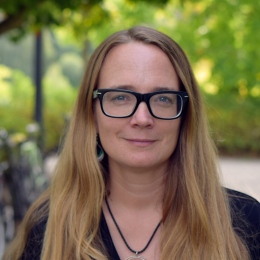
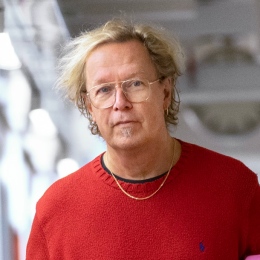
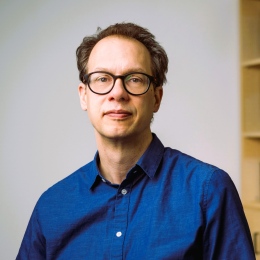
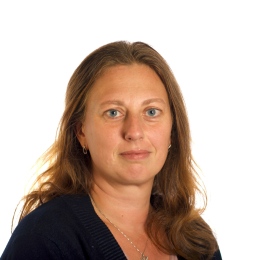
Andrea Voyer is a Professor of Sociology at Stockholm University , focusing on social norms, boundaries, and their role in shaping social inequality , particularly in the context of immigrant integration , class disparities, and ethnic inequality. She employs both qualitative and computational methods , including large-scale text analysis and cultural theory, to explore these themes. Her research has received funding from Riksbankens Jubileumsfond , the Swedish Research Council , the National Science Foundation (USA) , and the Russell Sage Foundation . Voyer serves as a program coordinator for master's programs in sociology and applied social research, and leads the department's research groups in qualitative methods , computational sociology , and cultural sociology . She is also an editorial board member for Sociological Theory and American Journal of Cultural Sociology , and contributes to public discourse on immigration, segregation, and social norms. Her recent publications highlight the use of computational techniques to analyze immigrant incorporation through shifts in mainstream discourse, the cultural processes of inequality during the COVID-19 pandemic , and the evolving role of class distinction-making in etiquette literature. These works bridge cultural theory with empirical analysis, offering actionable insights for addressing social inequality.
Luca Peretti is an Associate Professor in Electric Machines and Drives at KTH Royal Institute of Technology, affiliated with the School of Electrical Engineering and Computer Science and the Department of Electrical Engineering, Division of Electric Power and Energy Systems. He works as a researcher in the EMD (Electric Machines and Drives) group and serves as Partner Director for KTH's strategic partnership with ABB. Education: M.Sc. in Electronic Engineering (2005) from University of Udine, Ph.D. from University of Padova (2008) Professional Experience: Postdoc at University of Padova (2009-2010), Principal Scientist at ABB Corporate Research (2010-2018), Associate Professor at KTH (2018-present) His research focuses on: Automatic parameter estimation in electric machines Multiphase drive systems Sensorless control algorithms Loss segregation in drive systems Condition monitoring of industrial and transportation applications Recent publications demonstrate expertise in variable phase-pole machines, harmonic plane decomposition, predictive control algorithms, and advanced modeling of permanent magnet motors. Key application areas include transportation electrification, wind energy systems, and industrial drive technologies. Scientific roles include: Associate Editor, IET Electric Power Applications Journal (2019-present) Theme Co-Leader, Swedish Electromobility Center (2020-present) Member, IEEE (2021-present) and IET (2006-present) He leads the strategic partnership with ABB and contributes to doctoral program committees at University of Padova.
Dr. Catrin Lundström is an Assistant Professor of Ethnicity and Migration at the Department of Migration, Ethnicity and Society (REMESO) within the Department of Culture and Society (IKOS) at Linköping University's Faculty of Philosophy. Her research focuses on the intersection of migration, whiteness, and gender, examining how Swedish women experience transnational migration and return migration processes. Dr. Lundström received her PhD in Sociology from Uppsala University in 2007 and became an Associate Professor (Docent) in Sociology there in 2011. Her academic journey includes teaching and research positions at multiple Swedish institutions including Uppsala University, Stockholm University, Mälardalen University, Södertörn University, Umeå University, and Linköping University. She has also been a visiting researcher at the University of Arizona and the University of California. Dr. Lundström's research centers on whiteness as both a place-bound and transnational construction. She challenges conventional migration studies by focusing on privileged Swedish women migrants, developing the concept of 'white capital' to understand how whiteness functions as transferable cultural capital across national borders. Her work examines how racial privilege, gender, and class intersect in migration experiences, particularly among women who migrate for lifestyle, companionship, or professional reasons. Her recent publications demonstrate an expanding focus on the relationship between race, whiteness, and educational systems in Sweden, as well as critical examinations of contemporary political debates through the lens of critical race theory. Lundström's work increasingly addresses how colorblind discourse operates in Swedish society while simultaneously exploring the politics of national identity in a globalized world. Dr. Lundström has led significant research projects including: 'White Migrations: Gender, Whiteness and Privilege in Transnational Migration' (2014) 'Tre faser av hegemonisk vithet' (Three Phases of Hegemonic Whiteness) with Tobias Hübinette 'Att återintegrera svenskheten' (Reintegrating Swedishness) on returning Swedish migrant women, funded by the Swedish Research Council Her research has been supported by organizations including the Sweden-America Foundation and the Swedish Research Council. Dr. Lundström is actively involved in several academic networks: IMISCOE Standing Committee on Gender, Migration and Transnational Lives White Spaces Network at Leeds University Lifestyle Migration Hub, an international network of researchers studying lifestyle migration She regularly lectures within and outside academia, both in Sweden and internationally, and has received significant media attention for her research on school segregation, colorblind language, and gender equality in migration contexts.
Gunnar Andersson is a Professor of Demography at Stockholm University's Department of Sociology and Head of the Stockholm University Demography Unit (SUDA). He leads research on fertility, migration, mortality, and family dynamics in Nordic contexts, with a focus on register-based methodologies. His work explores socio-demographic shifts, including fertility decline, migrant health outcomes, and the intersection of welfare policies with family formation. University: Stockholm University Department: Department of Sociology Research Group: Stockholm University Demography Unit (SUDA) Research Interests: Gunnar’s work addresses fertility trends in Sweden and the Nordic region, migration’s impact on population health, and the role of socio-economic factors in family dynamics. Key projects include studies on fertility intentions post-2010, mortality disparities among migrants, and the societal implications of declining birth rates. His studies utilize advanced demographic techniques and longitudinal register data for policy-relevant insights. Recent Research Trends: Publications highlight analyses of Nordic fertility decline, socio-demographic risk factors for COVID-19 mortality, and cross-national comparisons of family policies. Collaborative projects with SUDA emphasize multi-generational and spatial demographic shifts, including residential segregation and commuter mobility in urban Sweden. Grants and Collaborations: Lead researcher in projects funded by Swedish Research Council and EU programs. Oversees the Swedish Generations and Gender Survey (GGS), a key infrastructure for demographic research. Directs the SUNDEM node, leveraging Sweden’s administrative registers for demographic innovation. Labs/Teams: Leads SUDA, a multidisciplinary group analyzing population dynamics. Collaborates with international partners in Denmark, Norway, and Germany for comparative studies.
Jorge Gil is an Associate Professor in Urban Analytics and Informatics at Chalmers University of Technology's Department of Architecture and Civil Engineering. His research focuses on integrated urban models, Smart Cities, City Information Modelling (CIM), and Urban Digital Twins, with applications in sustainable mobility, social inclusion, energy transition, and circular economy. He develops GIS solutions and open science methodologies. Teaching includes GIS, sustainable mobility, and spatial data science courses. He supervises Bachelor, Master's, and PhD students. Current projects include LogiNets (logistics network flows analysis), ComCy (cycling safety), and FlowSense (traffic flow data). Key research outputs span agent-based modeling of waste sorting behavior, mobility equity analysis, and multimodal urban network frameworks. He co-authored over 50 publications and actively contributes to interdisciplinary urban planning initiatives.
Jonas Vlachos is a Full Professor at the Department of Economics , Stockholm University , specializing in Labor Economics and the Economics of Education . He was appointed Deputy Chair of his department on September 1, 2024, and actively participates in academic networks including the American Economic Association , European Association of Labour Economists , and Global Labor Organization (GLO) . Current Research: School segregation, teacher work environments under market reforms, mental healthcare utilization post-COVID-19 school closures Key Publications: Analyzed pandemic education impacts, voucher school effects, intergenerational ability transmission, and teacher-student achievement dynamics His recent work explores the intersection of education policy and public health , particularly through the lens of Sweden's market-oriented schooling reforms. He maintains a Google Scholar profile with 15+ years of empirical research spanning education equity, labor market risks, and institutional effectiveness. Jonas Vlachos actively contributes to public discourse through his blog Ekonomistas.se and social media @jonasvlachos.bsky.social . He serves as co-organizer for the 7th Stockholm-Uppsala Education Economics Workshop (May 2025), reflecting his commitment to advancing education economics research.
Susanne Urban is a Professor of Sociology at the Institute for Housing and Urban Research (IBF) , Uppsala University, and a Senior Lecturer at the Department of Sociology. Her research focuses on urban development, residential and school segregation, neighborhood effects, immigrant integration, and entrepreneurship. Contact: susanne.urban@ibf.uu.se
Nils Hertting is a Professor at Uppsala University's Institute for Housing and Urban Research (IBF) and holds a concurrent position as Senior Lecturer/Associate Professor at the Department of Government. His research centers on local governance, urban politics, and public sector evaluation practices, with specific expertise in deliberative and participative network governance, civil society dynamics, ethnic associations, public space, and policy implementation challenges across Swedish and European contexts. His primary research domains include Local Governance Urban Politics Network Governance Public Sector Evaluation Civil Society Ethnic Associations Public Space Implementation He critically examines how participatory mechanisms function within representative democracy, the role of ethnic associations in urban political integration, and the rationality behind halting implementation in participatory planning processes. Analysis of his 2020-2025 publications reveals consistent thematic focus on participatory governance in urban settings, particularly neighborhood renewal programs and energy community development. His work demonstrates growing emphasis on equity dimensions, institutional dilemmas in collaborative governance, and the normalization of urban entrepreneurialism through subtle de-politicization tactics in city center developments. Hertting co-founded the Seminar for Qualitative Methods at Uppsala's Department of Government, significantly contributing to methodological development in qualitative political science research and advancing rationalistic generalization approaches from single-case studies.
Claudia Bernhard-Oettel is a Professor and Deputy Head of Department at the Department of Psychology, Stockholm University , with a focus on work and organizational psychology . Her career spans roles at institutions like the Swedish Institute for Working Life, Södertörn University College, and Karolinska Institutet, where she coordinated interdisciplinary initiatives in the Stockholm Stress Center. She serves on editorial boards and grant review committees, including the Research Council for Health, Working Life and Welfare (FORTE) and the Academy of Finland. Education: Diplom in Psychology (equivalent to Master's) from TU Dresden (2001); PhD in Psychology from Stockholm University (2008). Her research examines changing labor markets , emphasizing temporary employment , self-employment , and gig work . Key areas include organizational justice , effort-reward imbalance , and career sustainability . She investigates how job insecurity and psychological contracts affect health, well-being, and career transitions. Recent articles highlight trends in temporary agency work narratives , illegitimate tasks , and self-employment health trajectories . Her workgroup-level analyses of leadership and task design offer practical insights into mitigating stress and turnover in the public sector. Scientific Contributions: Editorial leadership in the Scandinavian Journal of Work and Organizational Psychology (2019–2024). Coordination of the Stockholm Stress Center Graduate School (2017–2018). Membership in grant review committees for FORTE and the Academy of Finland. Advising: Supervised doctoral students in alternative employment forms , organizational justice , and workplace lock-in . Current supervisees include Louise Bergman (2025 defense) and Clara Plückelmann.
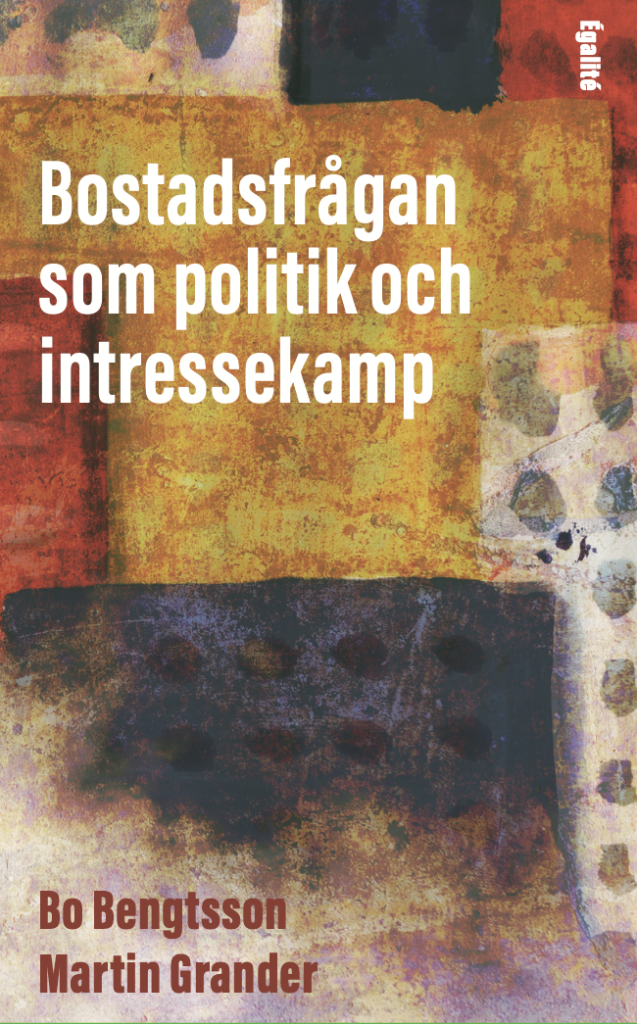
Martin Grander is a researcher at the Department of Urban Studies, Faculty of Culture and Society, Malmö University. His work focuses on housing policy, welfare states, and urban development, particularly addressing socioeconomic segregation, housing inequality, and the evolution of public housing systems. Key Affiliations: Malmö University (current) SNS Förlag (book author) Formas-funded research projects European Union Citispyce project Swedish Association of Local Authorities and Regions (SKL) collaboration Research Trends: Grander’s publications analyze housing as a welfare dimension, historical institutionalization of housing policies, and contemporary challenges like globalization and financial market integration. Recent articles explore social innovations, youth inequality, and housing market neutrality between ownership and rental. Scientific Awards: Recipient of Årets avhandling (Dissertation of the Year) for his PhD thesis on Swedish social housing. Collaborations: Engaged with stakeholders such as AFRY, Rädda Barnen, Stadsmissionen, Glokala Folkhögskolan, Seved Area Program, and Swedish housing policy actors (Fastighetsägarna Sverige, Sveriges Allmännytta, Hyresgästföreningen).
Irene Molina is a Professor of Human Geography at Uppsala University, affiliated with both the Department of Human Geography and the Institute for Housing and Urban Research (IBF). Her academic work focuses on the intersection of urban space, power relations, and social inequality, with particular emphasis on racialization, gender, and class dynamics in the Swedish context and beyond. Professor Molina's educational background spans institutions in both Chile and Sweden: PhD in Human Geography, Uppsala University (1997) with dissertation "Stadens rasifiering. Etnisk boendesegregation i folkhemmet." (Racialization of the City. Ethnic Residential Segregation in the Swedish Folkhem) Licenciate of Philosophy, Catholic University of Chile, Santiago (1986) with thesis "El Programa de Erradication de Campamentos en la Región Metropolitana de Santiago (1979-1984): Implicancias Socioeconómicas y Espaciales." Associate Professor title from Uppsala University (2002) Professor title in Human Geography with focus on settlement and built environment from Uppsala University (2011) Molina's research explores the city as a site of social power relations, with specific focus on racialization and discrimination processes, as well as class, gender and intersectional dynamics. Her work critically examines how urban space is produced through relations of power, particularly how racial hierarchies are constructed and maintained through housing policies, urban planning, and everyday practices. She has made significant contributions to understanding ethnic residential segregation in Sweden, the racialization of suburbs, and the intersection of gender and space in urban environments. Her approach combines critical geography with feminist and postcolonial perspectives to challenge dominant narratives about integration, segregation, and urban development. Her recent publications demonstrate a consistent focus on housing justice, with increasing attention to intersectional approaches that connect housing struggles with broader social justice movements. Molina's work bridges theoretical innovation with practical engagement, often collaborating with housing activists and organizations fighting for the right to housing. Her research spans multiple scales, from local Swedish contexts to comparative studies with South America, revealing global patterns of urban inequality while remaining attentive to specific historical and cultural contexts. Throughout her career, Professor Molina has been actively involved in research collaborations addressing housing discrimination, urban segregation, and gender equality in the built environment. She has contributed to numerous reports on housing policy and discrimination, serving as an expert on issues of ethnic discrimination in housing markets. Her work has influenced both academic discourse and policy discussions on urban development and social justice in Sweden.
Danielle Ekman Ladru is a Senior Lecturer and Head of the Department of Child and Youth Studies at Stockholm University. Her research bridges childhood studies, human geography, and urban planning, focusing on children’s spatiality, mobility practices, and participation in public spaces. She leads the Formas-funded project Sustainable Vertical Childhoods? and co-led the research on The Whole City as a Preschool Yard , examining how dense urban environments shape children’s play and mobility. Research Interests : Spatiality, mobility, public space, urban planning, childhood geography Teaching : Lecturer in Child and Youth Studies master’s program Projects : Sustainable Vertical Childhoods? (2019–present) Learning in the City (funded by Vetenskapsrådet, 2015–2020) Her recent publications analyze urban inequalities during the pandemic, the role of materialities in mobile preschools, and national identity construction in Nordic curricula. She supervises doctoral students in childhood studies and collaborates with interdisciplinary networks on children’s geographies.
Klara Dolk is a Senior Lecturer at Stockholm University's Department of Child and Youth Studies, specializing in early childhood education. She teaches in the Programme in Early Childhood Education and is an active member of the Practice-based research in and about early childhood education and care (PraFF) research group. Her work focuses on integrating critical perspectives into preschool educational practices across Sweden. Dr. Dolk's research interests center on gender pedagogy, equal treatment, children's rights, and norm-critical perspectives in early childhood education. Her work examines how preschools address sensitive social issues including poverty, economic inequality, and social vulnerability. She employs poststructuralist and feminist theoretical frameworks to analyze power relations between children and adults within educational settings, with particular attention to how children's resistance can challenge and transform educational practices. Her recent publications (2020-2023) reveal a growing focus on how preschools handle controversial social phenomena like begging, economic inequality, and class perspectives. These works demonstrate her commitment to examining how norm-critical approaches can be effectively implemented in early childhood education to address societal challenges while maintaining educational integrity. Her research shows consistent engagement with ethical dilemmas in preschool settings and the practical challenges of implementing fundamental values education. Dr. Dolk has contributed significantly to scholarly discourse through numerous publications in both Swedish and international journals. Her work spans theoretical explorations of gender and power to practical examinations of how preschools address real-world social issues. She has published in journals such as Lambda Nordica, International Journal of Equity and Innovation in Early Childhood, and Tam-Revy, demonstrating her interdisciplinary approach to early childhood education research. As a dedicated educator and researcher, Dr. Dolk actively contributes to advancing critical approaches in early childhood education through her teaching, research projects on preschool attendance and social vulnerability, and participation in the PraFF research group. Her work bridges theoretical frameworks with practical educational challenges, providing valuable insights for both academic and practitioner communities in the field of early childhood education.
Tobias Dalberg is a Senior Lecturer at Uppsala University's Department of Pedagogy, Didactics and Educational Sociology, with research focusing on sociology of education, social stratification, and higher education policy. His work examines gender differentiation in course selection, curricular blind spots, and historical transformations in academic disciplines. Contact: tobias.dalberg@edu.uu.se | Personal Website Research: Utilizes graph theory, natural language processing, and geometric data analysis for educational pathway studies Current research areas include: Gendered patterns in major selection and course enrollment Educational policy analysis (1950-2020) Academic field institutionalization processes Disciplinary legitimacy struggles (1935-1980) Recent publications (2021-2024) reveal trends in: Higher education marketization and gender segregation Curriculum structure impacts on student trajectories Disciplinary evolution in social sciences and humanities Assessment consistency in educational evaluation As member of international research collaborations, Dalberg works with networks studying educational stratification and transnational academic markets. His methodological contributions include applications of network analysis for studying epidemic spread in educational contexts.
Lena Ström, Senior Lecturer at the Department of Cell and Molecular Biology, Karolinska Institutet, specializes in sister chromatid cohesion, DNA damage responses, and genome integrity. Her research explores the role of Structural Maintenance of Chromosome (SMC) complexes in DNA repair, chromosome segregation, and developmental syndromes like Cohesinopathies. 2017: Senior Lecturer at Karolinska Institutet 2015: Docent at Karolinska Institutet 2002: PhD in Cell and Molecular Biology from Karolinska Institutet Her work focuses on the Cohesin complex's dual role in sister chromatid cohesion and DNA repair, particularly in cancer and Cohesinopathies. By studying yeast and human cells, her group investigates how DNA damage activates cohesion, impacts telomere maintenance, and contributes to tumor development and developmental disorders. Recent publications highlight Cohesin's role in damage-induced cohesion, DNA repair regulation, and SMC complex dynamics. Key collaborations span genetics, immunology, and medical research, with applications in cancer treatment and patient support for Cornelia de Lange syndrome. Current projects aim to elucidate Cohesin network mechanisms in chromatin structure, transcriptional regulation, and cancer therapy targets. Her group integrates advanced biochemistry, genomics, and functional studies to address molecular pathways in healthy and malignant cell cycles.