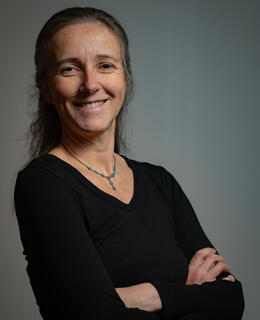
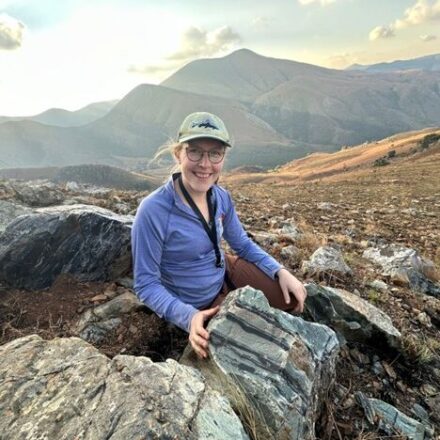
Eva Enkelmann is an Associate Professor at the University of Calgary's Department of Earth, Energy, and Environment. She leads research on orogenic systems evolution using geo- and thermochronology methods. Educational Background: PhD Geology, TU Bergakademie Freiberg, 2005 MSc Geology and Paleontology, University of Freiberg, 2001 Her research examines mountain belt evolution across spatial scales, focusing on interactions between tectonic forces and surface processes. She specializes in multi-method dating of mineral grains and thermochronologic method development. Current projects include geothermal potential assessment in the Liard Basin (NWT), Cu-porphyry exploration in British Columbia, and rock exhumation studies in Yukon. Recent publications focus on methodological advances in detrital thermochronology, including laser ablation (U-Th-Sm)/He dating, zircon triple-dating, and novel data analysis techniques for complex thermal histories. Scientific Awards: Fellow, Geological Society of America (2022) Outstanding Achievements Award, Faculty of Science, University of Calgary (2023) She teaches courses on global tectonics, structural geology, and field methods, including the Canadian Cordillera Field School.
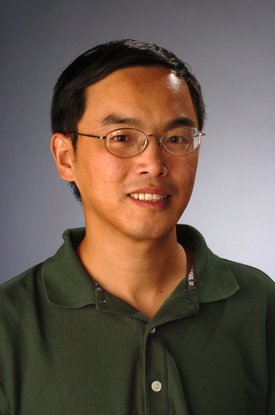
Peng Gao is a Professor in the Department of Geography and the Environment at Syracuse University, affiliated with the Maxwell School of Citizenship and Public Affairs. His work bridges river geomorphology and urban geospatial analysis, leveraging GIS, remote sensing, and UAV technologies to address environmental and social challenges. Education: Ph.D., Physical Geography, State University of New York at Buffalo (2003) M.S., Physical Geography, Lanzhou University (1993) B.S., Solid Mechanics, Lanzhou University (1990) Professor Gao specializes in river morphodynamics—particularly in the Qinghai-Tibet Plateau—and geospatial applications for urban planning. His research examines braided/meandering river systems, peatland hydrology, and how urban built environments influence social inequities and public health outcomes through spatial analysis. His 2020-2024 publications reveal a dual focus: (1) fluvial processes in high-altitude regions (e.g., neck cutoff dynamics, braided river discharge estimation using Landsat), and (2) urban applications (e.g., green building design, lead poisoning exposure mapping). This reflects a strategic integration of field geomorphology with computational geospatial modeling. Professor Gao actively mentors through SOURCE undergraduate research grants and PhD committees. Current funded projects include peatland mapping in the Andean Altiplano, I-81 Viaduct impact analysis in Syracuse, and studies on urban built environments affecting childhood lead poisoning. His work utilizes UAVs for BVLOS operations and collaborates with Syracuse CoE on urban environmental simulations, emphasizing technical innovation in geospatial data acquisition and analysis.
Dr. Jonathan T. Overpeck is the Samuel A. Graham Dean of the School for Environment and Sustainability (SEAS) at the University of Michigan, where he also holds the William B. Stapp Collegiate Professorship of Environmental Education. He is a Professor of both Climate and Space Sciences and Engineering, and Earth and Environmental Sciences, with a career spanning climate-vegetation interactions, abrupt climate change, monsoon dynamics, drought hydroclimate, sea level rise research, and interdisciplinary climate assessment. Overpeck has published over 230 works cited 60,000+ times, emphasizing public education, university-community partnerships for climate solutions, and environmental justice initiatives. PhD in Geological Sciences, Brown University MSc in Geological Sciences, Brown University BA in Geology (Honors), Hamilton College His research spans climate-biosphere interactions , climate variability and abrupt change , monsoon dynamics , drought and hydroclimate , sea level rise , climate law , and climate adaptation . Overpeck pioneered studies on megadrought terminology, temperature-driven drought intensification, and the aridification of North America. His work with the NOAA Paleoclimate Program and World Data Center for Paleoclimatology established foundational understanding of climate dynamics through annually-laminated sediment analysis in the Cariaco Basin. Overpeck's 2020-2024 research includes climate aridification , hydroclimate scaling mismatches , and temperature-precipitation interactions , with recent focus on Antarctic heatwaves, Mississippi River Basin changes, and corporate climate accountability. His article trends show concentration in climate attribution , hydrological extremes , paleoclimate modeling , and climate policy analysis . Scientific Honors: 2024 U.S. National Academy of Sciences 2015 American Geophysical Union Fellow 2009 AAAS Fellow 2007 Nobel Peace Prize contributor (IPCC) 2005 Guggenheim Fellowship Multiple U.S. Department of Commerce awards Overpeck has led or participated in significant climate adaptation projects , including NSF grants totaling $5.1M+ for Southwest Hydroclimatic Extremes (2017-2020), Amazon Drought Impacts (2014-2018), and Quantifying Drought Risk (2013-2018). He serves on the Colorado River Research Group (2014-present) and advises Climate Communication (2011-present). Current initiatives include Great Lakes University positioning, Michigan's climate resilience planning, and the Audacious Water podcast series examining Mississippi River Basin transformations. Overpeck actively contributes to climate policy discourse , advocating for science-informed decision-making and stakeholder collaboration across government, military, and corporate sectors.
Prof. Rajiv Sinha is a Professor in the Department of Earth Sciences at Indian Institute of Technology Kanpur . With a PhD from the University of Cambridge (1992), his career spans over two decades at IITK, including roles as Head of Department since 2014. Education: PhD (University of Cambridge, 1992), M.Tech (University of Roorkee, 1987), B.Sc (Patna University, 1983) Key Affiliations: Member of International Association of Sedimentologists, SEPM, Quaternary Research Association, and Indian Professional Societies Research Focus: Specializing in river science , Prof. Sinha investigates fluvial geomorphology , sedimentology , and natural hazards like Kosi floods . His work integrates remote sensing and GIS for climate change and paleoclimate reconstruction , notably studying the Ganga river system and its anthropogenic impacts . Scientific Leadership: His publications (2013-2017) reveal: Anthropocene river systems (2016) Indus Civilization paleohydrology (2017) Kosi megafan dynamics (2015) Monsoon evolution (2010, 2014) Groundwater management (2016) Awards & Recognitions: Pandit Girish Ranjan Chair Professorship (2013) National Mineral Award (2002) Alexander von Humboldt Fellowship (2000) UGC Research Fellowship (1988) University Gold Medal (1987) Collaborative Network: Partners include University of Durham , Imperial College London , and Institute du Physique de Globe, Paris . Currently leading Ganga River Basin Management studies and river science initiatives at IITK.
Dr. John Lehrter is a Professor of Marine Sciences and Associate Director of the Stokes School of Marine & Environmental Sciences at the University of South Alabama, as well as a Senior Marine Scientist at the Dauphin Island Sea Lab. He holds a Ph.D. in Marine Sciences from the University of Alabama (2003). His research focuses on coastal biogeochemistry, ecosystem modeling, and satellite ocean color remote sensing, with an emphasis on understanding eutrophication, hypoxia, and multiple stressor impacts on coastal ecosystems. Dr. Lehrter has advised numerous graduate and undergraduate students and leads a lab engaged in field studies, numerical modeling, and satellite data analysis. His work addresses societal challenges in coastal management and climate change adaptation. Research Interests: Multiple Stressor Impacts to Coastal Ecosystems, Marine Biogeochemistry, Ecosystem Modeling, Satellite Remote Sensing, and Hypoxia Dynamics. His lab develops tools to quantify nutrient pollution effects and predict ecosystem responses to management actions. Advising and Grants: Dr. Lehrter oversees a dynamic lab with graduate students, postdocs, and technicians. Current projects include modeling nutrient dynamics, satellite data applications for water quality, and experimental studies on multiple stressors (e.g., temperature, pH) impacting marine organisms. His lab collaborates with agencies like the EPA and NOAA, contributing to coastal policy and restoration efforts. Labs/Teams: Dauphin Island Sea Lab (DISL) and the University of South Alabama’s Stokes School of Marine & Environmental Sciences. The lab recently established a state-of-the-art facility for multiple stressor experiments on marine species.
Dr Xinchen Zhang is a Grant-Funded Researcher (A) at the University of Adelaide's Department of Mechanical Engineering within the School of Electrical and Mechanical Engineering. His research focuses on integrating machine learning with computational fluid dynamics (CFD) to enhance predictive capabilities for multiphase flow solutions, particularly in sustainable energy applications like decarbonization technologies. He holds a PhD (2022) with a Dean's Commendation for Doctoral Thesis Excellence, emphasizing fluid and particle dynamics in particle-laden flows. His work addresses challenges in net-zero industrial processes such as limestone calcination and hydrogen production via methane pyrolysis, leveraging advanced CFD and ML-augmented methodologies. Key research areas include turbulence modeling, particle dispersion in jets, and flow regime analysis in horizontal particle-laden pipe systems. He is eligible to supervise Masters and PhD students as a co-supervisor. Dr Zhang's publications span 2018–2024, with recent trends focusing on physics-informed machine learning for turbulence modeling and multiphase flow optimization. His contributions advance computational efficiency and accuracy in predicting complex fluid-particle interactions.
Nadja Drabon is an Assistant Professor of Earth & Planetary Sciences at Harvard University's Faculty of Arts and Sciences. She leads the Drabon Group , focused on understanding early Earth habitability through crustal processes and environmental changes. Her research integrates stratigraphy, geochemistry, and field studies of ancient geological formations like the Barberton and Pilbara cratons. Education: B.S. in Geological Sciences, Free University of Berlin (2011) Ph.D. in Geological and Environmental Sciences, Stanford University (2018) Research Interests: Drabon examines: Formation of Hadean/Archean crust via zircon and detrital mineral analysis Impact events' influence on early life and environments Archean tectonic processes using sedimentary and geochemical proxies Labs & Collaborations: Her lab coordinates with institutions globally, focusing on fieldwork in Australia and South Africa. She actively seeks PhD students for projects analyzing early Earth crustal evolution and biosphere interactions.
Matthew A. Reidenbach is a Professor and Department Chair of Environmental Sciences at the University of Virginia, with a courtesy appointment in Mechanical and Aerospace Engineering. His research focuses on coastal oceanography, particularly the interplay between hydrodynamics and marine ecosystems, including coral reefs, seagrass meadows, and oyster reefs. He investigates topics such as larval transport, wave dynamics, and nature-based coastal resilience strategies. His work emphasizes ecological engineering solutions for climate change adaptation, combining field observations with computational modeling. Reidenbach holds a Ph.D. (2004) and M.S. (1998) in Civil and Environmental Engineering from Stanford University, and a B.S. (1997) from Cornell University. He has received prestigious awards including the NSF Career Award and the University of Virginia’s All-University Teaching Award. His research group utilizes advanced techniques like LiDAR remote sensing, PIV flow visualization, and eddy covariance systems to study coastal processes. Key research themes include: 1) Biophysical interactions in marine ecosystems (e.g., mussel aggregations, sponge filtration); 2) Coastal protection via living breakwaters; 3) Ecosystem metabolism and nutrient cycling in tidal systems. He collaborates with engineers and ecologists to bridge theoretical and applied science, addressing real-world challenges like sea-level rise and habitat restoration. Notable grants: NSF CAREER award, collaborative NSF projects on biophysical feedbacks Labs: Coastal Ecosystem Dynamics Lab, affiliated with UVA’s Batten Institute for Climate Theory and Practice Public engagement: Advises on oyster reef restoration strategies for Chesapeake Bay and Gulf Coast communities
Paul D. Brooks is a Professor in the Department of Geology/Geophysics at the University of Utah, where he has been a faculty member since July 2014. His research focuses on understanding water, energy, and biogeochemical cycling in seasonally snow-covered catchments, with increasing emphasis on predicting how climate and land use changes impact snow accumulation, ablation, and snowmelt-derived surface and ground water resources. His educational background includes a BS in Biology and Chemistry from Florida State University, followed by an MS in Ecohydrology (1991) and PhD in Biogeochemistry (1995), both from the University of Colorado, Boulder. Prior to his position at the University of Utah, Dr. Brooks was a Professor in the Department of Hydrology and Water Resources at the University of Arizona from December 2000 to June 2014. Dr. Brooks' research spans multiple disciplines within earth sciences, focusing primarily on hydrology, ecohydrology, and biogeochemical cycling in mountainous, snow-dominated environments. His work examines how climate change affects snowmelt processes, groundwater-surface water interactions, and water resource availability in the western United States. He employs a combination of field measurements, isotope hydrology, and modeling approaches to understand complex hydrological processes across multiple spatial and temporal scales. His research increasingly involves collaboration with stakeholders to translate scientific findings into practical water resource management applications. Analysis of Dr. Brooks' recent publications reveals a strong focus on groundwater-surface water interactions in snowmelt-dominated systems, with particular attention to how climate change affects streamflow generation processes. His work bridges fundamental hydrological science with practical water resource concerns, examining topics such as runoff efficiency, groundwater storage dynamics, and the impacts of land cover changes on hydrological processes. A significant portion of his recent research investigates the Western United States water resources under changing climate conditions. AGU Fellow (American Geophysical Union) Dr. Brooks actively mentors graduate students through thesis research (both PhD and Master's level) as evidenced by his teaching activities. His lab conducts research supported by various grants focused on understanding water resources in mountainous regions, particularly examining how climate change affects snowmelt hydrology and water availability. He collaborates extensively with researchers across multiple institutions, as demonstrated by his numerous co-authored publications with scientists from various universities and research organizations. Dr. Brooks leads research efforts through his lab at the University of Utah and is involved with the Wasatch Environmental Observatory, a mountain-to-urban research network in the semi-arid Western US. His work integrates field measurements across complex terrain to understand how topography, vegetation, and climate interact to control water, energy, and biogeochemical cycling in seasonally snow-covered environments.
David Bastviken is a Professor at the Environmental Change Theme (TEMAM), Linköping University , specializing in environmental science and biogeochemical cycles. His research focuses on greenhouse gas emissions, particularly methane and carbon dioxide, from freshwater systems and human activities, with implications for climate policy and pollution management. Research Pillars : Aquatic greenhouse gas dynamics, chlorine cycling in soils, drinking water disinfection by-products, landscape-scale carbon budgets Methodologies : Drone-based sensing, hyperspectral imaging, sensor networks, cross-disciplinary ecosystem experiments Notable findings include the discovery of underestimated methane emissions from lakes and rivers, the role of trees in methane uptake , and natural chlorine production in boreal forests. His work has been funded by ERC , Formas , VINNOVA , and The Swedish Research Council . Recent publications highlight climate sensitivity of methane emissions, day-night emission patterns , and global methane budget modeling. He leads international collaborations across Amazonas , Arctic , and Boreal regions.
Dr. C. Rhett Jackson serves as the Associate Dean of Academic Affairs and holds the John Porter Stevens Distinguished Professorship in Water Resources at the University of Georgia's Warnell School of Forestry and Natural Resources. His research focuses on the impacts of land use (forestry, agriculture, urbanization) on water quality and aquatic habitats, with particular emphasis on riparian vegetation, stream temperatures, and hydrological processes. He leads trans-disciplinary projects involving collaborators from environmental engineering, ecology, and geology. Education: PhD in Hydrology (University of Washington), MSE and BSE in Environmental Engineering (Duke University). Affiliations: Institute for Resilient Infrastructure Studies (IRIS), River Basin Center, and Coweeta LTER. Research interests include interflow dynamics, nitrogen cycling in mountain catchments, and the effectiveness of best management practices for nonpoint source pollution. He has authored over 100 peer-reviewed articles and has been recognized for his contributions to environmental science through the Distinguished Professor title. Key labs/centers: Water Resources Area, IRIS, and Coweeta LTER. His work bridges basic hydrologic science with applied water resource management, addressing both rural and urban challenges such as bioenergy crop impacts, karst groundwater interactions, and urban stream restoration.
Dr. Mary E. Power is a Professor of the Graduate School at the University of California, Berkeley. She specializes in river ecology, focusing on algal-based food webs and their interactions with hydroclimatic regimes. Her research integrates field experiments and long-term monitoring in the South Fork Eel River, examining how flow variations and environmental conditions drive ecosystem state transitions. Primary Research Site: Angelo Coast Range Reserve (Mendocino Co., CA) Key Methodologies: In situ incubations, stable isotope probing, nanoSIMS analysis Current Focus: 2024- study of three alternative algal food web states during summer low flows Her work reveals critical thresholds where reduced summer flows and warming pools shift nutritious algal ecosystems toward toxic cyanobacterial dominance, impacting salmon and cross-ecosystem linkages. Selected Research Trends: Hydrological control of food web structure Cyanotoxin dynamics in river networks Climate change impacts on freshwater ecosystems Long-term ecological reconstructions via sediment cores Top-down and bottom-up regulation of river communities Her lab employs cutting-edge techniques to analyze microbiome elemental exchanges and successional patterns in Cladophora glomerata, a dominant green macroalga in the Eel River system.
Mohamed Farhat is a Senior Scientist at EPFL's School of Engineering, Department of Mechanical Engineering, where he leads the Research Group on Cavitation and Interface Phenomena. He serves as PhD Director, Lecturer, and Member of EPFL Doctoral Committee (Mechanics), while also representing EPFL at CLUSER association and coordinating activities at the Société Hydrotechnique de France (SHF). His research expertise spans Cavitation & Multiphase flows, Flow Induced Noise & Vibration, Fluid-Structure Interaction, Flow control, Flow instabilities in hydro turbines and pumps, Condition monitoring of Hydraulic Machines, Hemodynamics, and Advanced Instrumentation in Fluid Dynamics. Farhat's work uniquely bridges fundamental fluid mechanics with practical applications across hydropower, marine propulsion, healthcare, and water management sectors. Analysis of his recent publications reveals strong focus on cavitation bubble dynamics, with particular emphasis on measurement techniques for collapsing bubbles, vortex shedding control, hydrodynamic monitoring of hydraulic machinery, and biomedical applications of cavitation phenomena. His work increasingly integrates advanced imaging techniques with computational modeling to understand complex multiphase flow phenomena. 2021: Life Sciences Book Award of the International Academy of Astronautics 2019: 1st Prize Winner of Scientific Image Contest (Swiss National Science Foundation) 2020: EPFL-Rhyming Prize (Best PhD thesis in Fluid Mechanics) 2018: EPFL-EDME Prize (Best PhD thesis in Mechanics) 2015: Edmund Optics Educational Award 2014: APS-DFD Gallery of Fluid Motion Award Farhat has successfully supervised numerous PhD students including Ali Amini, Philippe Ausoni, and Outi Supponen, with research spanning from fundamental bubble dynamics to practical hydraulic machinery applications. His Cavitation Research Group maintains strong collaborations with industry partners in hydropower and medical device sectors. Current research directions include advanced instrumentation for cavitation monitoring, condition-based maintenance of hydraulic machinery, and biomedical applications of cavitation phenomena in therapeutic ultrasound and drug delivery.
Dr. Nathan Sheldon is a Professor in the Department of Earth and Environmental Sciences at the University of Michigan (U-M), part of the College of Literature, Science, and the Arts (LSA). His research focuses on paleoclimatology, environmental biogeochemistry, and biosphere-environment interactions. He leads the Geobiology Research in Terrestrial Systems (GRiTS) lab, which integrates geochemical analyses, stable isotope studies, and modeling to explore Earth’s climate history. Dr. Sheldon’s work emphasizes reconstructing ancient CO2 levels, paleoclimate dynamics, and microbial ecosystems. Education: PhD in Geological Sciences, University of Oregon (2003) BA in Geology, Carleton College (1999) Research Interests: Environmental Biogeochemistry Climate Change and Paleoclimate Geochemical proxies for paleoenvironmental reconstruction Microbialite formation and early Earth systems His lab investigates terrestrial and lake sediment records to understand long-term climate shifts and biosphere interactions. Awards: 2020 AAAS Fellow for contributions to paleosol-based CO2 reconstructions Advising & Labs: Dr. Sheldon mentors students in graduate and undergraduate programs. His GRiTS lab operates from facilities in the North University Building (labs 3501 and 5565). Research includes collaborative projects like the Cenozoic CO2 Proxy Integration Project (CENCO2PIP), aiming to synthesize atmospheric CO2 histories. Key Locations: The lab is based in Ann Arbor, Michigan, on the traditional lands of the Anishinaabeg peoples. Dr. Sheldon’s global fieldwork includes sites in Iceland, Scotland, and the Faroe Islands.
Prof. Benno Liebchen holds a faculty position at the Technische Universität Darmstadt within the Institute for Condensed Matter Physics , part of the Faculty of Physics. He leads the Liebchen Group , dedicated to advancing research in the Theory of Soft Matter , focusing on active matter, colloidal systems, and non-equilibrium phenomena. His work explores collective behavior in self-propelled particles, phase transitions in active fluids, and adaptive strategies in smart materials. Research Interests include: Active matter dynamics and pattern formation Non-equilibrium statistical mechanics Biophysical systems and biomimetic design Computational modeling of soft matter Recent publications highlight breakthroughs in intelligent active particles , self-reverting vortices , and motility-induced phase coexistence . His lab develops tools like the AMEP Python package to analyze active systems. Teaching responsibilities include advanced modules in soft matter physics. Collaborative projects involve interdisciplinary approaches to microswimmer behavior and machine learning-driven optimization of collective systems. Contact: +49 6151 16-24509 / Office: S2|04 104