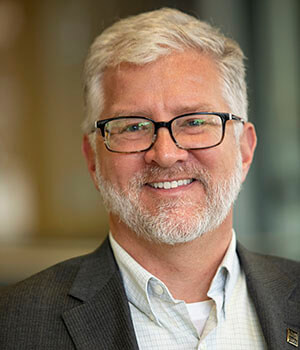
Lance Weinhardt is a Professor in the Department of Community & Behavioral Health Promotion at the University of Wisconsin-Milwaukee (UWM) and serves as the Associate Dean for Research. His work focuses on developing scalable HIV prevention interventions for resource-poor settings in Milwaukee, South Africa, and Malawi, integrating social, economic, and behavioral strategies to enhance resilience and reduce disease burden. He has recently expanded his research to examine the intersection of sustainable economic development and health outcomes in sub-Saharan Africa, alongside prioritizing health equity for transgender and gender nonbinary youth. Education: PhD and MS in Clinical Psychology from Syracuse University; BS in Psychology from Indiana State University His research spans HIV prevention, behavioral health, LGBTQ+ health disparities, and structural interventions like microfinance and food security programs. Current projects include analyzing the impact of economic development on health outcomes in Malawi and designing resilience-building initiatives for LGBTQ+ youth. Recent publications highlight his interdisciplinary approach, addressing topics such as technology acceptance in STI testing, bystander interventions for campus safety, and qualitative insights into immigrant health. His work emphasizes mixed-methods research, cross-cultural adaptation, and community-engaged methodologies. Email: weinhard@uwm.edu
Jacopo Bonchi is an Assistant Professor (Tenure Track) at the University of Bologna's Department of Economic Sciences. His research focuses on macroeconomic policy design, monetary and fiscal interactions, and macro-finance linkages. He holds a Ph.D. in Economics from Sapienza University of Rome and previously served as a Research Fellow at the University of Pavia, Sapienza University of Rome, and LUISS University, alongside an Assistant Professor role at Bicocca University of Milan. His work examines critical issues such as declining natural interest rates, the role of social security systems, and the impact of asset price bubbles on monetary policy effectiveness. Notable contributions explore policy responses at the zero lower bound and the stabilization role of public debt. Publications span top journals like Journal of Public Economics , European Economic Review , and Review of Economic Dynamics . His research demonstrates expertise in quantitative macroeconomic modeling, fiscal-monetary policy coordination, and the macroeconomic implications of financial market phenomena. Bonchi's academic affiliations include dual campus locations in Bologna and Forlì. Office hours are held Thursdays in Forlì (in-person) and by online appointment during the first semester, requiring 24-hour prior email notification.
Kevin Harmon serves as Assistant Professor in the Information Systems Department at the University of Arkansas' Walton College of Business. His research examines system delays' impact on user performance and experience across diverse technological contexts, bridging psychology and information systems. Education: Ph.D. in Management Information Systems, Texas Tech University (2022) MBA, Texas Tech University (2020) M.S. in Data Science, Texas Tech University (2018) M.A. in Psychology, Texas Tech University (2015) B.S. in Psychology, Truman State University (2012) Dr. Harmon's research integrates cognitive psychology with information systems to investigate latency effects on human-technology interaction. His work spans NeuroIS, UX design, and IT gender gap analysis, revealing critical insights about decision-making under system constraints and demographic disparities in technology careers. Current projects examine how artificial delays affect fake news credibility and neural adaptation during performance degradation. As an educator, he teaches Business Analytics to MBA and Executive MBA students, emphasizing data-driven decision frameworks. His scholarly contributions appear in premier journals including Management Information Systems Quarterly and Journal of the Association for Information Systems , where he also serves as ad-hoc reviewer. Research trends in his 12 most recent publications (2013-2024) demonstrate consistent focus on cognitive aspects of human-computer interaction, evolving from foundational memory studies toward contemporary NeuroIS investigations of system latency. His work increasingly incorporates intersectional analysis of gender/ethnicity in IT careers while maintaining rigorous experimental methodology. Dr. Harmon actively contributes to academic discourse through editorial reviews and professional membership in the Association for Information Systems, advancing methodological standards in information systems research.
Nicola Dell is an Associate Professor at Cornell University, affiliated with the Jacobs Technion-Cornell Institute and the College of Computing and Information Science. Her research focuses on the intersection of human-computer interaction (HCI), computer security & privacy, and technology for at-risk communities, particularly addressing digital abuse in intimate partner violence and supporting home health care workers. Clinic to End Tech Abuse (co-founder/director) Initiative on Home Care Work (co-leader) Siegel Faculty Impact Fellow (2023) Her work spans three major areas: (1) mitigating technology abuse in interpersonal violence, (2) protecting home health care workers through technology innovation, and (3) strengthening community health in the Global South. She has received prestigious awards including the MacArthur Fellowship (2024), NSF CAREER Award (2018), and SIGCHI Societal Impact Award (2023). Key publication trends show her expertise in digital safety research (8/15 recent papers), AI for home care (5/15), and ICTD for marginalized populations (7/15). She has advised 22 Ph.D./M.S. students, many of whom now hold faculty/research positions at institutions like NYU, University of Washington, and Stanford. NSF CAREER Award SIGCHI Societal Impact Award MacArthur Fellowship Multiple Best Paper Awards at CHI, CSCW, USENIX Her teaching includes courses on Human-Computer Interaction, Technology and Social Justice, and Tech for Underserved Communities. She leads interdisciplinary research groups combining technical innovation with community engagement to address systemic inequities in technology access and safety.
Prof. Dr. Katrin Blasek, LL.M. serves as Professor of Commercial Law at the Brandenburg University of Applied Sciences within the Department of Business and Management. Her academic appointment specifically focuses on IT and Media Law, Data Law and Digitalisation, Artificial Intelligence, and Chinese Law, positioning her at the critical intersection of technology, data governance, and comparative legal systems between Europe and China. Prof. Blasek's research interests center on the complex regulatory challenges emerging from digital transformation, with particular expertise in comparative analysis of Chinese and European legal frameworks. Her work examines artificial intelligence regulation, data protection mechanisms, digital identity systems, credit scoring methodologies, and the adaptation of traditional legal concepts to evolving technological landscapes. She has developed significant expertise in cross-jurisdictional legal challenges, especially regarding the implementation of GDPR principles in international contexts and the comparative study of algorithmic governance. Analysis of her recent scholarly output reveals a clear trajectory toward increasingly sophisticated examination of AI governance frameworks across jurisdictions, with notable emphasis on the China-EU regulatory divergence. Her publications demonstrate consistent engagement with timely legal challenges surrounding digital identity systems (particularly the EU-ID-Wallet), credit scoring transparency, and the practical implementation of 'right to explanation' principles under GDPR. This body of work shows her evolving from foundational comparative legal analysis toward influencing regulatory development through expert contributions to policy discussions. Prof. Blasek maintains active engagement with professional organizations and governmental bodies as reflected in her board memberships and expert roles. She served as President of SP China Alumni e.V. until April 2020 and continues as a Member of the Board of the German-Chinese Lawyers Associations since November 2012. Her professional activities extend to regular expert contributions to the Federal Ministry of Justice's 'Großer Runden Tisch – China' since 2012 and German-Chinese Rule of Law Symposia since 2010. Her professional impact is further demonstrated through her role as peer reviewer for the Hague Journal on the Rule of Law since May 2015, reviewer for ZEVA accreditation processes, and membership on the DAAD selection committee since 2010. These positions reflect significant recognition of her expertise in both European and Chinese legal systems, particularly regarding technology law and data governance frameworks.
Prof. Dr. Simon Nestler is a Professor for Human-Computer Interaction at Technische Hochschule Ingolstadt (THI) since 2019, previously at Hochschule Hamm-Lippstadt (HSHL) (2011-2019). He holds a Diploma in Computer Science and a Ph.D. in Human-Computer Interaction from Technische Universität München (TUM) and International Graduate School of Science and Engineering (IGSSE) , supervised by Prof. Gudrun Klinker . Educated: TUM (Diploma), IGSSE (Ph.D.) Affiliations: THI (2019-present), HSHL (2011-2019), Intraworlds (User Experience Engineer) Research Interests focus on applying HCI principles to safety-critical systems , particularly in emergency scenarios . He designs interfaces for car drivers , disaster response teams , and crisis management , addressing challenges like mental workload , collaborative problem-solving , and RFID patient tracking . His work includes developing virtual reality crisis simulations and mobile disaster apps . Teaching includes courses like Masterpraktikum GAMES and FAR Oberseminar . He also offers digital accessibility training , UX workshops , and keynotes on digitalization through his Prof. Nestler Akademie , which has trained 5000+ learners and delivered 100+ corporate trainings .
Barry Brown is a Professor at Stockholm University's Department of Computer and Systems Sciences. He leads the Stockholm Technology & Interaction Research (STIR) group, which combines technologists and social scientists to research and build new digital technologies within the Human-Computer Interaction field. His research interests include Human-Computer Interaction, Mobile Technology, Wearable Computing, and the social aspects of autonomous vehicles. Brown's work uniquely combines computer science with social sciences to study and design technology for both work and leisure settings. His recent research has utilized video methods to examine mobile phone use, smartwatch interactions, and drivers' experiences with self-driving cars. Barry Brown's publications reveal a strong focus on context-aware interaction, particularly in wearable technologies and autonomous vehicles. His research shows how social context significantly influences technology use, with findings on how presence of others, activity type, location, and time of day affect interaction patterns. His work bridges technical design with social understanding, examining how people integrate new technologies into everyday life. Barry Brown has authored the book "Enjoying Machines" (MIT Press, 2015) and edited "The SAGE handbook of digital technology research" (Sage, 2013). He currently leads research projects on "implicit interaction" and critical approaches to security in the Internet of Things. His current research projects include "AI in motion," which studies the social order of traffic when artificial and human intelligence meet on the road, and "From Tracking to Hacking," which explores how people interact with sleep technology outside normative schedules.
Wissem Soussi is a PhD student and Researcher at the University of Zurich (UZH) and a research assistant at the Zurich University of Applied Sciences (ZHAW) within the Information Security Group. He holds a BSc in Computer Sciences from Montpellier University (2018) and an MSc in Cybersecurity from Grenoble University (2020), where his thesis focused on "RealPhish, a Real-Time Detector of Phishing Websites". University : University of Zurich and Zurich University of Applied Sciences Department : Institute for Informatics (IFI) at UZH and Information Security Group (IS) at ZHAW Education : BSc in Computer Sciences (Montpellier University, 2018), MSc in Cybersecurity (Grenoble University, 2020) His research interests center on networks and systems security , with a focus on Network Function Virtualization (NFV) security management , orchestration , and phishing detection . His recent publications address Moving Target Defense in next-generation networks (5G/6G), AI-enabled security , and GDPR compliance in vulnerability management. His work bridges theoretical frameworks with practical applications in cybersecurity and network management. He collaborates with researchers like Prof. Dr. Burkhard Stiller, Dr. Gürkan Gür, Maria Christopoulou, and George Xilouris. His affiliations include the Communication Systems Group (CSG) at UZH and the Information Security Group at ZHAW.
Dr. Donald Ekong serves as Associate Professor of Computer Engineering at Mercer University's School of Engineering in Macon, GA. A registered Professional Engineer in Georgia and Saskatchewan with Senior Member status in IEEE, he joined Mercer in 2002 after industry roles at Ciena Corp, Motorola, and Valmet Automation. His expertise spans computer architecture, networks, security, and mobile systems development. His educational credentials include: PhD in Electrical Engineering, University of Saskatchewan (1997) MS in Electrical Engineering, University of Saskatchewan (1991) BE in Electrical Engineering, University of Port Harcourt (1986) Research centers on mobile technology applications for healthcare improvement in vulnerable populations and STEM education initiatives. Key projects involve diabetic emergency response systems, telepathology solutions using Raspberry Pi, and interventions to increase female participation in STEM fields through mobile app development. Recent publications (2014-2024) reveal consistent focus on cybersecurity curriculum development, mobile health diagnostics, and gender-inclusive STEM education. His interdisciplinary approach bridges computer engineering with biomedical applications and educational innovation, often targeting underserved communities through service-learning frameworks. Professional recognitions include: ORAU Travel Grant (2019) NIH/NLM Visiting Scientist appointment (2016) Mentorship is demonstrated through student co-authorship in publications and conference presentations on speech impairment assistive technology and STEM career affinity research. His NSF review service and ASEE leadership (1999-2021) reflect commitment to advancing engineering education standards and research funding processes.
Professor Hyung Seok Kim is a distinguished academic at Sejong University, currently serving as Professor in the Department of AI and Robotics. He also holds significant administrative positions including Dean of the College of Software Convergence at Sejong University. Professor Kim leads the MINES LAB (Mobile Intelligent Embedded Systems Lab), located in Room 211, Chungmu Hall at Sejong University, where he directs research in cutting-edge AI and embedded systems technologies. Professor Kim's educational background includes: Bachelor of Engineering: Department of Electrical Engineering, Seoul National University Master of Engineering: Department of Electrical and Computer Engineering, Seoul National University Doctor of Engineering (Ph.D.): Department of Electrical and Computer Engineering, Seoul National University Professor Kim's research spans multiple domains at the intersection of artificial intelligence and embedded systems. His work focuses on AI robots, wearable AI devices, Large Language Models (LLMs), and on-device AI technologies . His research group develops innovative solutions for emotion recognition, medical imaging analysis, and IoT applications. The MINES LAB specifically targets the integration of AI with embedded systems to create efficient, low-latency solutions for real-world problems ranging from healthcare monitoring to industrial applications. Analysis of Professor Kim's recent publications reveals a strong focus on medical AI applications, federated learning for IoT networks, and multimodal emotion recognition . His work demonstrates consistent innovation in applying deep learning techniques to medical imaging (particularly ophthalmology and cardiology), developing efficient edge-AI solutions for wearable devices, and creating novel network optimization approaches for industrial IoT. The publications show a clear trajectory toward more integrated, privacy-preserving AI systems that can operate effectively on resource-constrained devices. While specific awards to Professor Kim aren't detailed in the provided information, his research group has achieved notable recognition: Dr. Song Seung-hwan, a Ph.D. candidate at the lab, received the Presidential Industrial Service Medal Professor Kim has mentored an extensive number of students throughout his career, with alumni pursuing diverse career paths at leading organizations worldwide. His former students have secured positions at major technology companies including Samsung Electronics, LG Electronics, Kakao, and Amazon, as well as academic positions at universities globally. The MINES LAB currently supports multiple graduate students, post-doctoral researchers, and research assistants working on various AI and embedded systems projects. Professor Kim's research appears to be well-funded, with connections to industry partners including Hyundai Motor Company and Samsung Electronics, though specific grant details aren't provided in the text. The MINES LAB serves as the central hub for Professor Kim's research activities, focusing on AI robots, wearable AI devices, and LLM applications. The lab maintains active collaborations with industry partners and has produced numerous commercial applications through its alumni network. Current research directions include developing low-latency emotion recognition systems, medical imaging analysis tools, and efficient network protocols for IoT applications. The lab environment appears highly collaborative, with both full-time and part-time researchers contributing to various projects across the AI and embedded systems spectrum.
Muhsin Menekse serves as an Associate Professor at Purdue University with a joint appointment between the School of Engineering Education and the Department of Curriculum & Instruction. His academic journey includes a Ph.D. in Curriculum and Instruction (Science Education specialization) from Arizona State University, complemented by advanced degrees in Educational Psychology and Physics from the same institution and Bogazici University. Ph.D. in Curriculum and Instruction (Science Education), Arizona State University M.A. in Educational Psychology (Measurement and Statistics), Arizona State University M.S. in Physics (Teaching specialization), Bogazici University B.S. in Physics (Teaching specialization), Bogazici University Menekse's research centers on engineering and science education with emphasis on student cognition, collaborative learning dynamics, metacognition, and technology-enhanced environments. His work bridges cognitive science with practical classroom applications through tools like CourseMIRROR, which leverages natural language processing to analyze student reflections. Current investigations explore AI-driven scaffolding, reflection quality metrics, and large-scale implementation of mobile learning platforms. Analysis of his recent publications reveals strong thematic continuity in reflection-based learning technologies, with increasing integration of NLP and AI methodologies since 2020. His work consistently addresses scalability challenges in engineering education while maintaining rigorous experimental designs across diverse classroom settings. Seed for Success Excellence in Research Awards (2017-2021) William Elgin Wickenden Award for best Journal of Engineering Education article (2014) NSF Fellow for Summer Institute in Advanced Research Methods (2021-2024) School of Engineering Education Excellence in Undergraduate Teaching Award (2020) AAAS scholarship for Next Generation Science Learning Goals workshop (2014) Menekse mentors doctoral students through dissertation committees while leading the CourseMIRROR project adopted across 15+ institutions including Purdue, University of Pittsburgh, and Bogazici University. His research has secured over $1 million in external funding annually since 2017. The CourseMIRROR platform, developed through collaborative grants, serves as both research instrument and pedagogical tool across engineering, computer science, and physics courses. His laboratory work focuses on the CourseMIRROR ecosystem, integrating mobile interfaces with NLP pipelines to analyze reflection data from thousands of students. Current initiatives involve large language model applications for sentiment analysis and adaptive scaffolding, with deployments spanning undergraduate engineering courses and middle school STEM classrooms.
Gianni Toscano is a Fixed-term researcher in Labor Law (IUS/07) at the Department of Law of the University of Messina, where he has been employed since October 1, 2021. He holds a PhD in Private Legal Sciences with specialization in Labor Law, awarded in 2015, and is also a practicing lawyer at the Messina Bar Association. His academic activities span across multiple departments including the Department of Clinical and Experimental Medicine, the Department of Human Pathology, and the Department of Biomedical Sciences. Professor Toscano's research focuses on contemporary labor law challenges, particularly in the digital economy. His work examines labor relations in the platform economy, digital work organization, gender equality in the workplace, and social security systems. He has published extensively on European labor law, employment contracts, and the legal implications of new work arrangements. His recent scholarship addresses critical issues such as pay transparency, algorithmic management, and the protection of gig economy workers. His 15 most recent publications demonstrate a clear trajectory toward increasingly sophisticated analysis of labor law in the digital age, with a growing emphasis on international and European regulatory frameworks. His work bridges traditional labor law concepts with emerging challenges posed by technological transformation in work organization. Professor Toscano actively contributes to university governance as a member of multiple departmental councils and selection committees. He has served in various capacities including as a representative of PhD students in the Academic Senate and as a member of the Technical Board for Legal Advice at the University of Messina. He teaches across multiple programs including the Degree in Labor Consultant and Legal Services Sciences, the Master's Degree in Diagnostic Technical Health Professions, and the School of Specialization in Forensic Medicine. His teaching covers Employment Law, Industrial Relations Law, Labor Law in Public Administration, and European Labor Law, reflecting his broad expertise in labor and social security law.
Charles Jennings is an Associate Professor in the Department of Security, Fire, and Emergency Management at John Jay College of Criminal Justice, City University of New York. He serves as Program Director for the Master's in Emergency Management program and Director of the Christian Regenhard Center for Emergency Response Studies (RaCERS). His educational background includes: PhD in City and Regional Planning from Cornell University (1996) MRP in City and Regional Planning from Cornell University (1994) MS in Fire Protection Management from John Jay College of Criminal Justice (1990) BS in Journalism from University of Maryland at College Park (1986) AS in Fire Science from Montgomery College (1984) Professor Jennings conducts research in emergency management, fire service operations, and public safety policy. His work focuses on response to complex incidents including active shooter events, bombings, and technological failures. He has developed after-action reports on major incidents such as the Pulse Nightclub shooting and Boston Marathon bombing. His research also examines community fire risk and resource deployment using Geographic Information Systems (GIS) to promote evidence-based practices in emergency response. His publications demonstrate expertise across emergency management, fire science, and public safety policy, spanning from high-rise building evacuation planning to fentanyl exposure risks for first responders, showing a career-long commitment to improving emergency response protocols through evidence-based approaches. His work bridges academic research with practical applications in the field. His scientific achievements include: Chief Fire Officer designee, Center for Public Safety Excellence Fellow, Institution of Fire Engineers City of White Plains Mayoral Proclamation, "Charles Jennings Day" January 22, 2008 With a career balancing academic and practitioner positions, Professor Jennings served as Deputy Commissioner of Public Safety for White Plains, NY and Chair of the Board of Fire Commissioners in Ithaca, NY. His professional memberships span numerous organizations including the National Fire Protection Association, Society for Risk Analysis, and International Association of Emergency Management, reflecting his interdisciplinary approach to emergency response. As Director of the Christian Regenhard Center for Emergency Response Studies, he leads research initiatives focused on improving emergency response protocols and policies, particularly in high-rise building safety and emergency communications.
Robert Till serves as an Associate Professor in the Department of Security, Fire and Emergency Management at John Jay College of Criminal Justice (CUNY). He teaches in the Bachelor of Science Fire Science program, Bachelor of Science in Emergency Services Administration, and the Protection Management Graduate Program. Research Expertise: Dr. Till specializes in fire safety engineering for transportation infrastructure, with particular focus on rail tunnel and underground station fire response. His work integrates fire dynamics, suppression system design, and emergency egress planning for complex underground environments. He has contributed to major infrastructure projects including the Second Avenue Subway and Moynihan Train Hall in New York City. Publications: His seminal work Fire Protection: Detection, Notification, and Suppression (2019, Springer) provides comprehensive guidance on fire protection system selection and design for engineers and architects. Fulbright Scholarship (Recife, Brazil 2013-2014) Fulbright Scholarship (Brasilia, Brazil 2020-2021 - Awarded but Visitation Canceled Due to COVID) Professional Leadership: Dr. Till serves as a Special Expert on NFPA 130 (Standard for Fixed Guideway Transit Systems), contributes to IAFSS professional development initiatives, and holds leadership positions in the Society of Fire Protection Engineers (SFPE) New York Metro Chapter. As a licensed Professional Engineer in Connecticut, he bridges academic research with practical fire safety engineering applications.
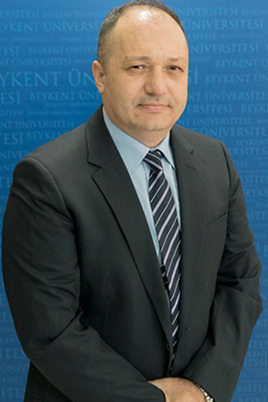
İbrahim Korkmaz serves as an Assistant Professor in the Department of Criminal and Criminal Procedure at Beykent University's Faculty of Law, holding OrcID 0000-0002-5690-432X with contact email ibrahimkorkmaz@beykent.edu.tr. His academic career commenced in 2017 following doctoral completion after a 23-year tenure as a Military Judge at Turkey's Ministry of National Defense (1994-2017). Education: Doctorate in Law, Ankara University (2017) - Thesis: Protection of personal data within the scope of criminal law LLM in International Law (Military Law Specialty), The Judge Advocate General's School (2013) MSc, Gazi University (2007) - Thesis: Use of analytical hierarchy process in military personnel assignment MBA, Naval Postgraduate School (2005) - Thesis: Survival patterns of U.S. naval officers Law Degree, Dicle University (2002) - Thesis: The crime of money laundering Law Degree, Ankara University (1998) Military Academy, Turkish Army School Command (1994) Korkmaz's research centers on criminal law with specialized focus on cybercrime legislation, military interventions, and data protection frameworks. His work bridges legal theory and practical applications in digital forensics, counterterrorism operations, and privacy compliance, reflecting interdisciplinary expertise developed through military service and legal scholarship. Recent publications analyze Turkish cybercrime statutes and European data protection standards. His 2016-2018 publications demonstrate a clear trajectory toward contemporary digital legal challenges, particularly cybercrime mechanisms and data sovereignty issues. Earlier work (2008) reveals foundational expertise in military operations research, showing consistent thematic evolution from defense logistics to cyber warfare jurisprudence. Current conference presentations indicate expanding research into human trafficking and narcotics offenses within Turkish penal code. No scientific awards were documented in available materials. Since 2017, Korkmaz has supervised graduation theses while teaching 15+ annual courses including Criminal Procedure Law, Constitutional Law, and specialized seminars on cybercrime applications. His administrative duties at Beykent University include curriculum development for criminal law programs, though specific grant funding details were not disclosed.