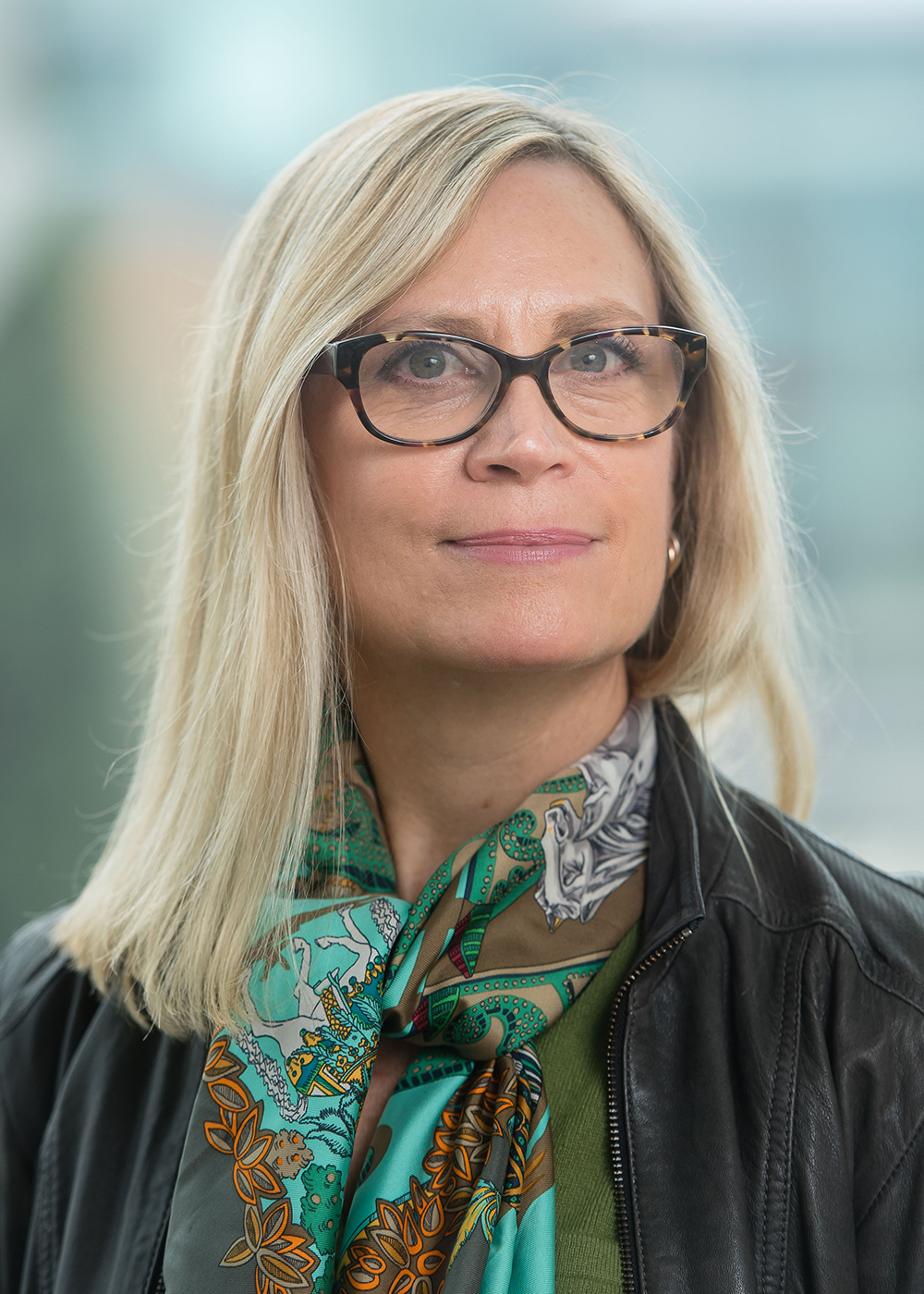
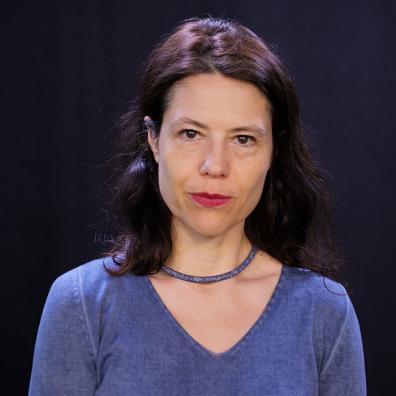
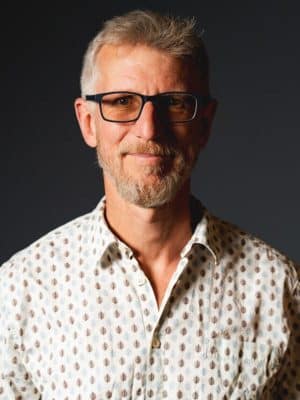
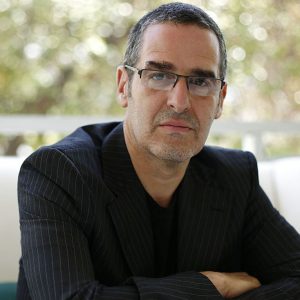
Tobias Bolch is a full Professor at the Institute of Geodesy, Graz University of Technology (TU Graz), Austria, specializing in cryospheric research with a focus on High Mountain Asia and the Tibetan Plateau. His work integrates advanced geodetic and remote sensing methodologies to address critical climate change impacts on glaciers and related systems. His research spans: Glacier dynamics and mass balance monitoring using InSAR and optical satellite data Rock glacier kinematics and permafrost interactions Glacial lake evolution and outburst flood hazards Climate-glacier-hydrology linkages in Central Asian river basins Long-term cryosphere reconstruction using historical satellite archives Analysis of his 2023-2025 publications reveals dominant trends in quantifying ice loss acceleration, particularly from lake-terminating glaciers, and the application of multi-sensor approaches (Sentinel, ASTER, UAV) for decadal-scale change detection. His work consistently emphasizes the hydrological consequences of glacier retreat for downstream water security across High Mountain Asia. No scientific awards or specific grant programs were documented in the provided materials. While student supervision details are absent, his position at TU Graz's Institute of Geodesy indicates active mentorship within geospatial and cryospheric research programs. His homepage (https://ifg.tugraz.at) serves as the primary hub for research dissemination through the university's PURE portal.
Victoria Lemieux is a Professor at the University of British Columbia (UBC) Faculty of Arts, School of Information, and Cluster Lead for Blockchain@UBC, Canada’s largest research cluster focused on blockchain technology. Her research centers on risks to trustworthy records in blockchain systems and their impact on transparency, financial stability, and human rights. She has pioneered Canada’s first research-oriented graduate blockchain training program and organized multiple interdisciplinary summer institutes. Education: Ph.D. in Archival Studies from University College London (2002), Certified Information Systems Security Professional (CISSP, 2005). Affiliated with UBC’s Peter Wall Institute for Advanced Studies, Sauder School of Business, and Institute for Computers, Information and Cognitive Systems (ICICS). Research interests span blockchain technology , trustworthy records , risk management , information governance , and visual analytics , with recent work addressing healthcare data frameworks, Web3 AI integration, and socio-cultural dynamics of decentralized systems. She has published extensively on blockchain applications in archives, land transactions, and privacy-preserving technologies. Scientific Awards : 2015 Emmett Leahy Award 2015 World Bank Big Data Innovation Award 2016 Emerald Literati Award 2016 Emerald Literati Outstanding Paper Award Supervision: Currently accepts doctoral students in Computational Archival Science and blockchain-related archival research. Affiliated with the Blockchain@UBC cluster and multidisciplinary research teams exploring decentralized systems for social good.
National Institute of Oriental Languages and CivilizationsFrance
Guibourg Delamotte is a tenured Full Professor of Political Science and head of the Japanese Studies Department at the French Institute of Oriental Studies (Inalco), where she has been affiliated since 2006. She also teaches at Sciences Po Paris and holds international research fellowships at the University of Tokyo’s Research Center for Advanced Science and Technology (RCAST), Temple University Japan, and the Japan Forum on International Relations (Tokyo). Her career spans Japanese defense policy, domestic politics, parliamentary institutions, and Indo-Pacific security dynamics. Education: Law, University of Paris Panthéon Assas Law, University of Oxford Japanese (BA, MA), Inalco Political Science, Sciences Po Paris PhD in Political Studies, EHESS (2007, Highest Honours, Shibusawa-Claudel Award) Habilitation à Diriger des Recherches, Sciences Po Paris (2022) Her research focuses on Japanese domestic and foreign policy, parliamentary governance, defense modernization, and Indo-Pacific security. She has authored/co-edited eight books, including Le Japon, un leader discret (Eyrolles, 2023) and La Démocratie au Japon, singulière et universelle (ENS Ed., 2022), and over 20 journal articles and book chapters. Recent publications emphasize Japan's strategic evolution in the Indo-Pacific, AUKUS implications, and democratic governance challenges. She examines security policy intersections with domestic politics, legal frameworks, and international alliances. Scientific Awards: Shibusawa-Claudel Award for PhD dissertation Highest Honours (PhD, EHESS) Delamotte leads the French Research Institute on East Asia (IFRAE)’s program on Contemporary East Asia's trajectory. She serves on the National Academic Council’s Political Science Section (CNU, Section 4) and contributes to policy debates through academic and governmental institutions.
Laia Balcells is a Professor in the Department of Government at Georgetown University. She holds a Ph.D. in Political Science from Yale University, along with M.Phil and M.A. degrees in Political Science from Yale, and a B.A. in Political Science from Universitat Pompeu Fabra. Her research focuses on political violence, civil wars, nationalism, and transitional justice. Her primary research examines the dynamics of violence in civil wars, post-conflict societies, and territorial disputes, with significant work on the Spanish Civil War and contemporary conflicts in Colombia and Catalonia. Key interests include the legacy of violence on political identities, mechanisms of transitional justice, and the relationship between historical memory and contemporary politics. Recent publications concentrate on themes of affective polarization in secessionist movements, the impact of international conflicts on domestic nationalism, and the role of cultural institutions in post-conflict reconciliation. Methodologically, her work combines historical archives with contemporary empirical analysis to study long-term effects of political violence.
Adrian Martin is Professor of Environment and Development at the School of Global Development, University of East Anglia (UEA). He is a member of the Tyndall Centre for Climate Change Research, Global Environmental Justice, and ClimateUEA. He directs UEA’s Global Environmental Justice research group and serves as a Coordinating Lead Author for the IPBES Assessment of Diverse Values of Nature. His research centers on interdisciplinary approaches to natural resource management in developing countries. Key themes include environmental justice, conservation governance, ecosystem services, payments for ecosystem services (PES), and the intersection of poverty alleviation and biodiversity conservation. His work spans regions including sub-Saharan Africa, Southeast Asia, and Latin America, with a long-standing focus on Rwanda. Adrian’s recent and ongoing research projects include NAVIGATE (2022–2026) on integrating plural values of nature into decision-making, and Environmental Justice Analysis to Advance Rural Landscape Transformations (2020–2024), funded by ESRC. His publications span high-impact journals such as One Earth , Global Environmental Change , and Nature Sustainability , reflecting interdisciplinary reach across social and natural sciences. His most recent publications highlight trends in environmental justice, particularly in conservation policy, Indigenous rights, rural transformations under climate change, and the ethical dimensions of biodiversity governance. The works emphasize equity, participation, and the need to challenge dominant assumptions in conservation and development. Advancing equitable governance in area-based conservation (2024, IUCN WCPA) Is it just conservation? (2024, One Earth ) Unveiling pervasive assumptions in conservation (2025, Current Opinion in Environmental Sustainability ) Adrian supervises multiple PhD students working on topics such as REDD+ in Cameroon, community forestry in Kenya, land tenure in Madagascar, and mangrove restoration in Indonesia. He has led or co-led major funded projects from ERC, ESRC, NERC, DFID, and other international bodies. His teaching includes modules on natural resource governance, rural development, and environmental justice, and he has served as course director for the MA Rural Development and BA Geography and International Development. He is actively involved in research groups including the Global Environmental Justice group and contributes to UN Sustainable Development Goals, particularly those related to poverty, inequality, climate action, and life on land.
Mark Mazower is the Ira D. Wallach Professor of History at Columbia University, where he has established himself as a leading historian specializing in modern Greece, 20th-century Europe, and international history. He also serves as the Stavros Niarchos Foundation Director of the Columbia Institute for Ideas and Imagination in Paris, which brings together scholars with leading artists, writers, composers and filmmakers from around the world to foster innovative interdisciplinary collaboration. His educational background includes a D.Phil. from Oxford University (1988), an M.A. from Johns Hopkins University (1983), and a B.A. from Oxford University (1981). This strong academic foundation has positioned him as a preeminent historian with expertise spanning multiple historical periods and geographical regions. Mazower's research focuses on modern Greek history, 20th-century European history, and international history, with recent work examining the historical evolution of the Greek islands over the very long term. His scholarship bridges academic rigor with public engagement, as he frequently contributes commentary on international affairs and book reviews to major publications including the Financial Times , The Nation , the London Review of Books , and the New York Review of Books . In 2016, he expanded his public engagement through the film Techniques of the Body , a meditation on the refugee crisis in Greek history created with director Constantine Giannaris. His publications reveal a consistent focus on understanding the complex interplay between national histories and broader international frameworks. Mazower's work often examines how local experiences intersect with global forces, particularly in the context of war, occupation, state formation, and the development of international institutions. His approach combines deep archival research with conceptual innovation, making significant contributions to our understanding of European history, Greek history, and international relations. Mazower's scholarly achievements have been recognized with numerous prestigious awards: Gennadius Prize (2023) Honorary Citizenship from the Republic of Greece (2022) Fellow of the British Academy (2019) D. Litt., honoris causa , Catholic University of Leuven (2019) D. Litt., honoris causa , University of Athens (2015) Dido Sotiriou Award of the Hellenic Authors Society (2012) Society of Columbia Graduates Great Teacher Award (2011) Fellow, American Academy of Arts and Sciences Hitler's Empire: Trilling Award and LA Times Book Prize for History (2009) Salonica, City of Ghosts: Duff Cooper Prize (2005) As an educator at Columbia University, Mazower has mentored numerous students in the Department of History, guiding research in modern European history, Greek history, and international history. His leadership extends to directing the Columbia Institute for Ideas and Imagination in Paris, which has received significant funding from the Stavros Niarchos Foundation to support interdisciplinary collaboration between scholars and creative artists from around the world. At the Columbia Institute for Ideas and Imagination, Mazower has created a unique intellectual environment where historians work alongside artists, writers, and filmmakers to explore new approaches to understanding complex historical and contemporary issues. This innovative space reflects his commitment to bridging academic scholarship with creative expression and public engagement, fostering dialogue across disciplinary boundaries to address pressing global challenges.
School for Advanced Studies in the Social SciencesFrance
Mathieu Arnoux is a University Professor and Director of Studies at the École des Hautes Études en Sciences Sociales (EHESS), affiliated with University Paris Diderot. He is attached to the Centre for Economic and Social History François Simiand (CRH) and works within the GrHEco research team. His professional contact is based at the EHESS-CRH center located at 48, boulevard Jourdan, 75014 Paris. Arnoux specializes in Medieval European History with a focus on economic history, particularly examining European economy from the 10th to 16th centuries. His research interests encompass work and techniques in medieval societies, Normandy, and the broader Anglo-Norman world. He is particularly known for his studies on resource management, economic growth, and social organization during the medieval period. His research output demonstrates a consistent focus on medieval economic structures, with particular attention to the relationship between resource availability, agricultural production, and societal development. Arnoux's work bridges historical analysis with contemporary questions about sustainability and economic development, as evidenced by his 2023 publication 'A world without resources. Need and society in Europe (11th-14th centuries)' and his 2019 article 'Renewable Resources and Economic Growth: Medieval Suggestions and Contemporary Questions'. Arnoux is actively engaged in academic life, teaching courses on natural resources including 'renewal, depletion and crisis' for the 2024-2025 academic year. He participates in multiple research groups including GRHECO and LIED (Intradisciplinary Laboratory for the Energies of Tomorrow at Paris 7-Diderot University).
Humphrey Southall is Professor of Historical Geography at the University of Portsmouth, affiliated with the Faculty of Science & Health and the School of the Environment and Life Sciences. He has been a key figure in advancing digital historical geography through large-scale projects such as A Vision of Britain through Time and the Great Britain Historical GIS . University: University of Portsmouth Faculty: Faculty of Science & Health Department: School of the Environment and Life Sciences Academic Rank: Professor Education: Bachelor's Degree, University of Cambridge (1976) Special Student, Harvard University (1976–1977) PhD, University of Cambridge (awarded 1984) Humphrey Southall's research centers on historical geography, with a focus on geospatial data modeling, gazetteers, and historical GIS. His work explores the long-term impacts of locality on health inequalities, the North-South divide in Britain, and the political roles of travellers. He has pioneered methods for disambiguating historical place names and constructing digital gazetteers from old maps and census data. His interdisciplinary approach bridges geography, history, and data science, contributing to digital humanities and sustainable development goals related to health and inequality. His recent publications reveal a strong trend toward integrating historical data with modern GIS and ontologies. Themes include electoral analysis (e.g., Reform UK), climate-land use interactions, and the digitization of historical statistics. His work emphasizes data accessibility, public engagement, and the application of historical insights to contemporary policy challenges. Scientific Awards and Recognition: No specific awards listed in the provided text. Humphrey Southall has secured major research grants from the ESRC, AHRC, JISC, and the European Commission. He leads the DDME: Data Discovery Made Easy project, applying machine learning to social science databases. He has supervised PhD students and actively collaborates with researchers across disciplines. His public engagement includes media commentary on homelessness, air pollution, and elections via The Conversation and national press. Labs and Research Teams: Lead Principal Investigator, A Vision of Britain through Time (VoB) Lead, Great Britain Historical GIS (GBHGIS) Team Member, PastPlace and AOU Resources as a Pelagios GIF Resource Collaborator with Patrick Aucott, Chris Thomas, and others on biodiversity and health projects
Davin Wallace is an Associate Professor at the University of Southern Mississippi's School of Ocean Science and Engineering, where he investigates coastal and marine system responses to storms, sea-level rise, and sediment dynamics across timescales ranging from days to millennia. His research employs field observations, laboratory analyses, and numerical modeling, with active sites across the Gulf of Mexico, Bermuda, and the Philippines. Education: Ph.D. in Earth Science, Rice University (2007-2010) B.S. in Geology and German, Tulane University (2003-2006) Research Focus: Dr. Wallace's work bridges paleotempestology, coastal geomorphology, and sedimentary processes. His research examines hurricane impacts on sediment structures, barrier island resilience under sea-level rise, and Holocene coastal evolution. He specializes in reconstructing historical storm patterns using geologic proxies and assessing anthropogenic influences on coastal erosion. Publication Trends: His recent articles demonstrate interdisciplinary approaches to coastal vulnerability, combining geophysical data, machine learning, and multiproxy sediment analysis. Work consistently addresses climate change impacts, with emphasis on sedimentation mechanisms during extreme events and Quaternary landscape evolution. Scientific Recognition: No major awards documented in provided sources. Academic Leadership: Leads the USM Coastal Evolution and Hazards Research Lab, supervising field campaigns and collaborative projects. Secured grants for Gulf Coast studies from NSF and NOAA. Mentors graduate students in geological oceanography programs and coordinates international research teams across field sites.
Nick Thieberger is an Associate Professor in the School of Languages and Linguistics at the University of Melbourne, Australia. He also holds adjunct positions at the University of Sydney, University of Hawai'i, LaTrobe University, Australian National University, and the University of Tasmania. Thieberger serves as Director of PARADISEC (Pacific and Regional Archive for Digital Sources in Endangered Cultures), President of DELAMAN (Digital Endangered Languages and Musics Archives Network), and Deputy Director of the Research Unit for Indigenous Language at the University of Melbourne. He is a Fellow of the Australian Academy of the Humanities and leads multiple major research projects including Nyingarn and Modularised cultural heritage archives. Thieberger's primary research interests focus on language documentation, endangered languages, and digital archiving methodologies. His work bridges linguistics, digital humanities, and Indigenous language preservation, with particular emphasis on Pacific and Australian Indigenous languages. He has developed innovative approaches to linguistic archiving, including the creation of PARADISEC, which has become a model for digital language archives worldwide. His research spans theoretical linguistics, practical archiving solutions, and community-based language work, with significant contributions to Nafsan (South Efate) language documentation and Australian Indigenous language preservation. His recent publications demonstrate a clear trend toward integrating digital humanities with language documentation, particularly focusing on computational approaches to endangered language preservation. Thieberger's work increasingly addresses ethical considerations in linguistic archiving, community-led documentation models, and the development of platforms that give Indigenous communities control over their linguistic heritage. His research shows a progression from descriptive linguistics toward infrastructure development for language preservation, with growing emphasis on access protocols, data sovereignty, and the technical challenges of long-term digital preservation. Open Scholarship Award (2025) for PARADISEC team Digital Repository of Ireland Award for Research and Innovation (2024) DASSH award for Research Partnership and Social Impact (2021) Fellow of the Australian Academy of the Humanities (2021) Ludwig Leichhardt Jubilee Fellowship by Alexander von Humboldt Foundation (2013-2015) ARC Australian Postdoctoral award (2004-2007) QEII Fellowship (2009-2014) Future Fellowship (2014-2018) Thieberger has secured substantial grant funding throughout his career, including multiple ARC grants as Chief Investigator. He leads the ARC LIEF grant 'Nyingarn: a platform for primary sources in Australian Indigenous languages' (2021-2025) and another ARC LIEF grant for 'Modularised cultural heritage archives – future-proofing PARADISEC' (2022-2025). He also serves as Chief Investigator in the ARDC-funded 'Online Heritage Resource Manager to Describo Collections' project (2023-2024) and in the ARC Centre of Excellence for the Dynamics of Language (2014-2025). His grant portfolio reflects his dual focus on theoretical linguistic research and practical infrastructure development for language preservation. Thieberger directs PARADISEC, a pioneering digital archive for endangered language materials that has become an international model. He also leads the Nyingarn project team, which is developing a platform specifically for Australian Indigenous language materials. Through DELAMAN, he coordinates with other language archives worldwide to establish best practices for digital language preservation. His work with the Language Data Commons of Australia (LDACA) further demonstrates his commitment to building research infrastructure that serves both academic researchers and Indigenous communities.
Parker VanValkenburgh is an Associate Professor of Anthropology and Associate Professor of Archaeology and the Ancient World at Brown University. His research employs archaeological methods to address anthropological questions, focusing on colonialism and imperialism's impacts on Indigenous people and environments in the Peruvian Andes. He directs the Brown Digital Archaeology Laboratory and co-directs several major projects including the Paisajes Arqueológicos de Chachapoyas (PACha) project and GeoPACHA (Geospatial Platform for Andean Culture, History and Archaeology). His educational background includes: PhD from Harvard University (2012) MA from University of London (2005) MPhil from University of Cambridge (2004) BA from Stanford University (2003) VanValkenburgh's research focuses on the long-term impacts of colonialism and imperialism on Indigenous people and environments in the Peruvian Andes. Through studying architecture, ceramics, environmental datasets, and archival documents, he explores how relationships between people, institutions, and environments transform during imperial histories. His work emphasizes how survival and resilience strategies developed by communities dealing with empires are passed down across generations. He applies digital methodologies, particularly GIS, to map and analyze social, political, and environmental change in space and time, while also critically examining how digital mediation transforms archaeological practice. His recent publications reveal a strong trend toward integrating advanced computational methods with archaeological research. There's a clear emphasis on using AI, machine learning, and remote sensing technologies to enhance archaeological survey and analysis in the Andes. His work spans traditional archaeological topics like landscape, ceramics, and colonial architecture with cutting-edge digital approaches including vision foundation models, point cloud processing, and semi-supervised learning for identifying ancient urbanization patterns. His scientific achievements have been recognized with numerous awards: John Carter Brown Faculty Fellow (2023-24) Meenakshi Narain Excellence in Research Mentoring Award (Brown University, 2023) William G. McLoughlin Award for Excellence in Teaching in the Social Sciences (2021) Cogut Center for the Humanities Faculty Fellowship (2018) American Council of Learned Societies Fellowship (2017) VanValkenburgh has successfully secured substantial research funding for multiple projects. His Paisajes Arqueológicos de Chachapoyas (PACha) project has received NSF funding through 2025, while his GeoPACHA initiative has garnered support from ACLS and SPARC grants. He also co-directs the 'Mapping Historical Trauma in Tulsa, 1921-2021' project. His teaching portfolio includes courses on Geographic Information Systems, cartography, critical digital archaeology, and the archaeology of the Andean region, for which he received Brown's prestigious teaching award. He directs the Brown Digital Archaeology Laboratory, which serves as a hub for integrating digital methodologies with archaeological research. His collaborative network includes scholars from institutions like Vanderbilt University (Steven Wernke) and the University of Tulsa (Alicia Odewale), reflecting his commitment to interdisciplinary research that bridges archaeology, anthropology, and digital humanities.
Prof. Dr. Lex Heerma van Voss is a Special Professor in Economic and Social History at Utrecht University's Faculty of Humanities. His research focuses on the history of social security, labor, and the North Sea region during the early modern period. He is also Director of the Huygens Institute for the History of the Netherlands (KNAW) and a Research Associate at the Humanities Research Institute for History and Art History. He studied Social and Economic History at Utrecht and Paris, with a research agenda that includes comparative global history of occupations such as dockworkers, textile workers, and sex workers. His work emphasizes the Dutch Republic's role as the first modern economy and its influence on the North Sea region. Expertise : History of labor, North Sea, social security Key Collaborations : Co-editor of Selling Sex in the City and contributor to The World and the Netherlands His publications span from 2000–2023, featuring works on prostitution, elderly provisions, and Dutch economic development. While no explicit awards are mentioned, his leadership roles and editorial contributions underscore his academic impact.
James B Lewis is an Associate Professor of Korean History at the University of Oxford, affiliated with Wolfson College and the Faculty of Asian and Middle Eastern Studies. His research focuses on Korean-Japanese relations before 1850, economic and social histories of premodern Korea and Japan, global history, and environmental/epidemiological dynamics in East Asia. He has held leadership roles as past President of the Association for Korean Studies in Europe and the British Association for Korean Studies. His grants include an ERC Horizon 2020 project (grant 758347). Current projects involve co-authoring An Economic History of Korea, 1400 to 1900 and translating Amenomori Hôshû's Kôrin Teisei . Courses taught include Korean-Japanese history surveys, research methodologies, and classical texts analysis. His publications span monographs, edited volumes, and peer-reviewed articles, emphasizing quantitative methods, archival analysis, and cross-disciplinary approaches. Notable works include Frontier contact between Chosŏn Korea and Tokugawa Japan (2003), The East Asian War, 1592-1598 (2015), and studies on Korean economic indicators across centuries. Public lectures and media engagements include talks at the Ricci Institute and the Daiwa Anglo-Japanese Foundation.
Felix Rau is a Researcher at the Data Center for the Humanities (DCH) at the University of Cologne, specializing in research data management, digital archiving, and language documentation. His work focuses on developing infrastructure, standards, and workflows for preserving and managing humanities research data, with particular expertise in audiovisual language resources. His research interests span research data management in the humanities, digital archiving practices, metadata standards for linguistic resources, and Austroasiatic language documentation. Rau has contributed significantly to establishing best practices for file naming, folder structures, README documentation, and data storage in research environments. His work bridges technical infrastructure development with linguistic research needs, particularly in the domain of endangered language documentation. Rau's publication trends reveal a strong focus on practical research data management solutions for humanities scholars. His recent work emphasizes dark and cold archiving services, metadata standards for audiovisual language data, and workflow development for research data preservation. He has been instrumental in developing the institutional research data infrastructure at the University of Cologne, with particular attention to the needs of language documentation researchers. As an active member of several professional organizations including the Digital Endangered Languages and Musics Archives Network (DELAMAN), Working Group Open Language Archives (OLAC), Metadata Research Data Alliance (RDA), and CLARIN Component Metadata Infrastructure (CMDI) Task Force, Rau contributes to shaping international standards for research data management in the humanities. He regularly teaches workshops on research data management for humanities scholars through the a.r.t.e.s. Graduate School and offers Master's level instruction in research data management. His educational efforts focus on practical implementation of research data management principles, helping humanities researchers navigate the complexities of digital preservation and data sharing requirements. Rau maintains an active presence in the research data management community through conference presentations and collaborative projects focused on developing sustainable infrastructure for humanities research data.
Max Planck Institute for Security and PrivacyGermany
Alexandre Bartel is a Professor in the Department of Computing Science at Umeå University, Sweden, specializing in software security and software engineering. His research focuses on system security and analysis of permission-based software stacks, particularly Android. With numerous publications in top-tier security and software engineering conferences and journals, Bartel has established himself as a leading researcher in vulnerability analysis and software security. Bartel's research interests primarily center around software security, with a particular emphasis on Java and Android ecosystems. His work delves into vulnerability analysis, deserialization attacks, control flow integrity, and security mechanisms for complex software systems. He investigates how to verify security properties through efficient algorithms and examines existing software layers from a security perspective. His research bridges theoretical security concepts with practical implementation challenges in real-world systems. Analysis of Bartel's recent publications reveals a strong focus on Java deserialization vulnerabilities, control flow integrity mechanisms, and Android security. His work demonstrates a consistent trajectory from fundamental vulnerability analysis to developing practical security solutions and benchmarks. The research spans both theoretical frameworks and empirical evaluations, with significant contributions to understanding long-term security adoption patterns and developing tools for vulnerability detection. Scientific Awards: Most influential Paper ICSE N-10 Award for IccTA: Detecting Inter-Component Privacy Leaks in Android Apps Bartel actively contributes to the academic community through service roles, having served on program committees for major conferences including ASE, ESEC/FSE, ICSE, and FSE. His research has practical implications for software developers and security practitioners, particularly in the areas of vulnerability detection and security mechanism implementation. While specific grant information isn't detailed in the provided materials, his extensive publication record suggests successful funding for his research initiatives. Though not explicitly detailed in the provided information, Bartel's research likely involves collaboration with students and researchers on projects related to software security analysis. His work on benchmarks like Gleipner and CONFUZZION suggests involvement in developing tools and resources for the security research community.