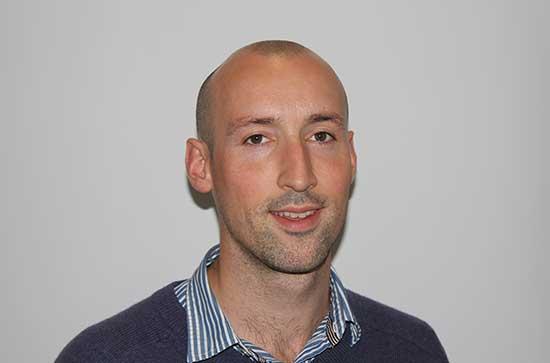
Jacopo Bisagni is a Lecturer at the School of Languages, Literatures, & Cultures, University of Galway. He specializes in Celtic and Indo-European linguistics, with a focus on medieval manuscript transmission and bilingualism. His academic profile includes extensive teaching in Latin, historical linguistics, and Hiberno-Latin studies. Education: PhD from NUI Galway (2008), Classics and Celtic Linguistics from University of Pisa (2004) His research explores early medieval Irish religious literature , manuscript transmission across Ireland, Brittany, and Francia, and computus (medieval time-reckoning systems). Additional interests include medieval martial culture , historical bilingualism, and the study of musical terminology in early Irish sources. Recent publications focus on early medieval scientific traditions, Breton manuscripts, and multilingualism in computistical texts. He has secured significant funding including the Irish Research Council Laureate Award and Marie Curie supervisory grants. Key Awards: Irish Research Council Laureate Award (2018) Marie Curie Postdoctoral Fellowships (Supervisor, 2023) Lady Gregory Fellowship (2005) Italian Ministry Student Mobility Grant (2004) Bisagni leads the Lutegerus Project on late medieval combat manuals and supervises postgraduate research including Dr Colleen Curran's Breton Palaeography project (2023-2025). His work bridges linguistic analysis, manuscript studies, and cultural history across early medieval Europe.
Dr. Edgar Galván is an Associate Professor in the Department of Computer Science at Maynooth University, Faculty of Science & Engineering. He holds a PhD in Computer Science from the University of Essex and has held senior research roles at institutions like University College Dublin and Trinity College Dublin. His research focuses on Evolutionary Algorithms, Genetic Programming, and their applications in optimization, games, and circular economy challenges. Education : PhD in Computer Science, University of Essex MSc (Hons) in Artificial Intelligence (Research), University of Veracruz BSc (Hons) in Computer Science, University of Veracruz Research Interests : Dr. Galván pioneers work in semantic-based Genetic Programming, neutrality and locality in evolutionary algorithms, and applications in combinatorial optimization and energy systems. He also explores AI-driven solutions for the circular economy, including material reuse and policy design. Grants & Projects : REBUILD (€449,879): Reimagining buildings as material banks for the circular economy (2024–2027) VISION (€149,874): Circular business models to reduce virgin material use in construction (2023–2026) Stochastic Bio-inspired Evolutionary Algorithms (€267,000): Dynamic optimization problems (2014–2017) Awards : Top 1% of researchers in Genetic Programming (UCL, 2020) Elected member of Mexico’s National Research System (2015) Marie Curie Fellowship (Irish Research Council, 2014) Professional Activities : Chair of ACM Genetic and Evolutionary Computation Conference committees, Programme Committee member for IEEE Congress on Evolutionary Computation, and Scientific Adviser for research councils in Ireland, France, and Mexico.
Jason Chan is a Professor in the Department of Applied Psychology at University College Cork (UCC), Ireland, where he leads research at the intersection of brain and behavior. His work utilizes advanced neuroimaging techniques including magnetoencephalography (MEG), functional magnetic resonance imaging (fMRI), and electroencephalography (EEG) to investigate multisensory integration and its applications in understanding neurological conditions. Dr. Chan earned his BA from California State University, Los Angeles, followed by a D.Phil in Experimental Psychology from the University of Oxford. Prior to joining UCC, he conducted post-doctoral research at Trinity College Dublin and Goethe University, gaining expertise in diverse research methodologies across international institutions. His primary research focus centers on multisensory integration (MSI), examining how perceptual training affects cortical connectivity and how these processes serve as biomarkers for neurological conditions including autism spectrum disorder and mild cognitive impairment in aging populations. Through seemingly simple behavioral tasks coupled with sophisticated neuroimaging, Chan's work provides critical insights into human perception and disorders. Analysis of his recent publications reveals a consistent trajectory in multisensory research, with increasing focus on aging populations, autism spectrum disorders, and the application of predictive coding frameworks to understand perceptual processing differences. His work spans both theoretical neuroscience and practical applications for cognitive rehabilitation. Dr. Chan has secured multiple research grants, including funding from Enterprise Ireland, HEA COVID Support, and the Health Research Board for projects examining fear of falling detection systems, community walking programs for older women, and the impact of chaotic home environments on emotional perception in autism. He actively contributes to the academic community through committee service on the Applied Psychology Ethics, Research, and Teaching Committees at UCC. His professional affiliations include the Federation of European Neuroscience Societies, American Association for the Advancement of Science, Society for Neuroscience, Neuroscience Ireland, and the Association for Psychological Science. Dr. Chan directs the Acme Lab (www.acmelab.science), which serves as the hub for his research team's investigations into brain-behavior relationships, providing a collaborative environment for advanced neuroimaging studies and perceptual research.
Dr. Ravikant Singh is a Post Doctoral Fellow Level 1 at University College Dublin's School of Civil Engineering, working on the STANDARDIZE project with the Modern Methods in Construction Research Group (MMCRG). Previously, he served as a Guest Lecturer at the National Institute of Technology (NIT), Arunachal Pradesh, India from August to December 2024, where he taught Construction Planning and Management, Engineering Geology, and Engineering Hazard Analysis and Control with a focus on Structural Fire Hazards. Dr. Singh's educational background includes: Ph.D. in Structural Engineering from Indian Institute of Technology (IIT) Patna M.Eng. in Structural Engineering from National Institute Of Technical Teachers Training and Research Institute (NITTTR), Bhopal B.Eng. in Civil Engineering from Rajiv Gandhi Proudyogiki Vishwavidyalaya (RGPV), Bhopal Dr. Singh's research focuses on structural fire engineering, particularly on developing standardized solutions for innovative construction techniques in Ireland. His work combines experimental fire testing and advanced numerical finite element simulations to improve understanding of failure mechanisms in structural elements exposed to fire. He specializes in cold-formed steel members exposed to elevated temperatures, investigating thermal gradients, critical temperatures, buckling behaviors, and structural performance under various fire scenarios. His publication record demonstrates a consistent focus on advancing fire safety standards for cold-formed steel structures. Dr. Singh's research has explored various aspects including thermal gradients in flexural members, reliability assessment of design proposals, critical temperature prediction, local-distortional coupled buckling, and the effects of different loading patterns on structural performance during fire exposure. His work bridges theoretical research with practical engineering applications, contributing significantly to the field of structural fire engineering. Dr. Singh has received several prestigious awards and honors: Best Poster Award (2021, IIT Patna) Best Poster Award (2022, IIT Patna) My Research in 3 Minutes Award (2022, IIT Patna) International Travel Grant from Department of Science and Technology (DST), Government of India (2023) International travel support from IIT Patna (2022) Full funding for both PhD and M.Tech through Ministry of Education (MoE), Government of India During his time at IIT Patna, Dr. Singh actively mentored Postgraduate and PhD Scholars while serving as the Department Academic Program Coordinator (2022-2024) and Postgraduate Training & Placement Head (2022-2024). He has secured significant research funding including the International Travel Grant from DST, Government of India, and full funding for his doctoral and master's studies through the Ministry of Education. His collaborative approach is evident in his extensive publication record and professional activities, which include peer reviewing for prominent journals in structural engineering. Dr. Singh is part of the Modern Methods in Construction Research Group (MMCRG) at University College Dublin, where he contributes to the STANDARDIZE project. His work involves close collaboration with industry partners to develop practical fire safety solutions for innovative construction techniques in Ireland. He maintains active professional engagement through memberships in the American Society of Civil Engineers, Institution of Structural Engineers (IStructE), and Structural Stability Research Council (SSRC).
Dr. Jennifer Bruton is the Executive Dean of the Faculty of Engineering and Computing at Dublin City University (DCU), serving as a senior university administrator. Previously, she held roles including Associate Dean for Education (2007–2011), Chair of the University Disciplinary Committee (2017–2021), and Head of the School of Electronic Engineering until 2021. Her disciplinary expertise spans electronic, mechatronics, and software engineering. She actively contributes to national education initiatives through her membership in Engineers Ireland's Accreditation Board and representation on the National Forum for Teaching and Learning. Education Background: While specific degree details are not provided, her academic leadership roles and research profile imply advanced qualifications in engineering disciplines. Her career trajectory aligns with a traditional path toward professorial rank. Research Focus: Her work bridges technical and administrative domains: technical research includes embedded systems security, IoT optimization, and cooperative robotics, while leadership research examines student engagement in quality assurance processes and technology-enhanced pedagogy. Recent publications emphasize IoT security and higher education governance. Professional Contributions: As a policy-maker, she co-authored DCU's Student Code of Conduct and led European Standards implementation. Her teaching innovations focus on blended learning and accreditation frameworks. No specific grants or lab affiliations are noted in provided texts.
Bryan Hennelly is an Associate Professor in the Department of Electronic and Electrical Engineering at Maynooth University's Faculty of Science & Engineering . His research bridges biomedical engineering and biophotonics , focusing on optoelectronic microscopy systems for clinical pathology applications. PhD in Optical Engineering (University College Dublin, 2005) Established biophotonics laboratory (2012) Science Foundation Ireland Starter Researcher Grant recipient His work integrates holographic microscopy and Raman micro-spectroscopy for automated diagnostics, particularly in early-stage bladder cancer detection from urine samples. Collaborations span industry , academia , and HSE institutions . Key research themes include: 3D imaging systems using digital holography Optical encryption techniques Signal processing algorithms for biomedical applications Background subtraction and noise reduction in spectroscopy Publications (over 100) demonstrate expertise in Raman spectroscopy , digital holography , and optical signal processing . Current projects involve developing advanced diagnostic platforms combining imaging and spectroscopy with machine learning.
Neil Hurley is an Associate Professor and Head of School in the School of Computer Science at University College Dublin. He holds a BSc and MSc from University College Dublin and a PhD from Trinity College Dublin. Before academia, he worked at the Hitachi Dublin Laboratory from 1989 to 1999, leading research in parallel computing and knowledge-based systems. He joined UCD in 1999 and founded the Information Hiding Laboratory in 2001, focusing on digital content security. His research spans recommender systems, social network analysis, high-performance computing, and data hiding technologies. He has secured over €1 million in research funding from agencies like Enterprise Ireland and the EU. His teaching includes coordinating modules on Artificial Intelligence, Recommender Systems, and Computational Science. He has reviewed for journals such as IEEE Transactions on Image Processing and serves on the EMPS Graduate School Board. His recent work emphasizes scalable recommendation algorithms, privacy-preserving distributed systems, and strategic network analysis.
Dr. Anthony Ventresque is a Visiting Associate Professor at the University College Dublin, School of Computer Science , with a PhD in Computer Science from the University of Nantes & INRIA France (2008). He is also the Director of the TCD Complex Software Lab and a Senior Investigator with Lero, the SFI Irish Software Research Centre. MSc in Philosophy and Logic from the University of Nantes PhD in Computer Science from the University of Nantes & INRIA France His research focuses on Software Engineering , Genetic Programming , and Multi-objective Optimization , with applications to Autonomous Systems , Cloud Computing , and Sports Analytics . Recent publications highlight his work on grammar-obeying program synthesis using large language models, mutation testing for software quality, and domain adaptation for object detection in rugby data. His scientific awards include a Teaching Award from the UCD School of Computer Science in 2020. He has contributed to grants like Mutation Testing at Scale and Advancing Computational Archaeology , and his teaching activities encompass modules such as Big Data Programming and Operating Systems over multiple years. He leads the TCD Complex Software Lab , fostering interdisciplinary research and innovation.
Dr. Anca Delia Jurcut is an Assistant Professor in the School of Computer Science at University College Dublin (UCD), leading the DNS Research Lab. She holds a PhD in Security Engineering from the University of Limerick and a BSc in Computer Science and Mathematics from West University of Timisoara. With over 16 years of academic and industry experience, her research focuses on cybersecurity, including formal verification of security protocols, IoT security, and machine learning applications for threat detection. She has secured €1.5M+ in EU and national grants and authored over 120 peer-reviewed publications. Notable awards include the 2023 Best Paper Award from JNCA and inclusion in the World’s Top 2% Scientists (2024). Education: PhD (University of Limerick), BSc (West University of Timisoara) Research Interests: Cybersecurity, Attack Detection, Formal Verification, Blockchain, Quantum-Resistant Protocols Awards: World’s Top 2% Scientist, IEEE Senior Member, UCD Women in Science Award Research Highlights : Pioneered SDN attack datasets (InSDN), developed formal verification tools (CDVT/AD), and advanced ransomware classification frameworks. Current projects address quantum-resistant protocols, MEC security, and resilient IoT systems. Grants & Funding : Lead researcher on EU H2020 projects (e.g., AIDA), SFI grants (Machine Learning Labs), and NATO-funded studies on insider threats. Collaborates internationally on cybersecurity frameworks and edge computing security. Labs & Teams : DNS Research Lab (UCD), co-founder of the InSDN Dataset initiative, and contributor to the CDVT/AD formal verification tool.
Dr. Sudipto Das is a Senior Lecturer at the Royal College of Surgeons in Ireland (RCSI), School of Pharmacy and Biomolecular Sciences, within the Department of Molecular and Cellular Therapeutics. He holds a PhD in Cancer Genetics from RCSI (2012) and has held academic positions including Honorary Lecturer (2017-2019) and StAR Research Lecturer (2019). His research focuses on epigenetics, genomics, and their applications in cancer, inflammatory bowel diseases, and heart failure. He leads the Epigenetics in Gastrointestinal Research Group, aiming to identify biomarkers and therapeutic targets. Dr. Das's education includes a B.Tech in Biotechnology (2007) from Yashwantrao Chavan Maharashtra Open University, a M.Res in Biomedical Sciences (2008) from the University of Glasgow, and a PhD in Cancer Genetics (2012) from RCSI. He has held post-doctoral roles as a Senior Post-doctoral Researcher (2015-2019) and Principal Investigator (2018-2023). He has secured funding from organizations like the Irish Cancer Society, British Heart Foundation, and Japan Society for Promotion of Science. His research interests include epigenetic modifications, non-coding RNAs, and multi-omic approaches to disease biomarkers. He teaches Pharmacology, Neuropharmacology, and Molecular Pathology at RCSI, Trinity College Dublin, and University College Cork. He is a member of professional organizations including the European Crohn's and Colitis Organisation and the American Association for Cancer Research. Key achievements include the Irish Cancer Society Fellowship and over 40 peer-reviewed publications in journals like Cancer Research and Nature Communications . His work emphasizes translational research to improve patient care through personalized medicine and precision oncology.
Dr. Tobias Engel is a Senior Lecturer in Physiology and Medical Physics at the Royal College of Surgeons in Ireland (RCSI). His research focuses on purinergic signaling pathways, particularly the P2X7 receptor's role in neurological conditions like epilepsy and Alzheimer's disease. He holds a B.Sc. in Biology from the Universidad Autónoma de Madrid and a Ph.D. in Neurobiology from the same institution's Centro de Biología Molecular 'Severo Ochoa.' Engel's work explores pathological changes post-brain injury leading to epileptic seizures, with emphasis on ATP-gated receptors and hyperexcitability mechanisms. He has secured grants from SFI, EU Horizon, and Enterprise Ireland for projects like 'EpiPrevent' and 'BrainPurinesNet,' aiming to develop diagnostics and therapies for brain disorders. His research clusters include Neurological and Psychiatric Disorders aligned with UN SDG 3 (Good Health). Prominent publications highlight P2X7 receptor modulation in epilepsy treatment, miRNA roles in neurodegeneration, and wearable biosensors for neurological monitoring. He has supervised two major theses on microRNA and P2X7-based therapies. Awards include the 2012 New Investigator Award. Engel collaborates internationally through initiatives like FutureNeuro and NeuroAdapt, fostering next-gen brain research leaders.
Arun Sankar MS is an Assistant Lecturer in the Department of Electronic Engineering and Communications at SETU Carlow. He holds an ORCID identifier (0000-0002-2798-9846) and is currently accepting PhD students. His research focuses on cybersecurity, speech/image processing, deep learning, and AI applications in healthcare and VLSI process analysis. He co-supervises two PhD students and serves as a reviewer for journals/conferences. He is an active IEEE member, delivering invited talks and organizing conferences. Research Interests: Arun Sankar’s work spans designing AI-driven systems for sepsis classification, cybersecurity (e.g., voice assistant jamming), and VLSI hotspot detection. He applies GANs for AI advancements and explores secure authentication techniques. His projects include embedded device voice recognition systems and medical AI applications to enhance patient care. Recent collaborations involve researchers globally, with a focus on denial-of-service attacks and deepfake detection. Grants & Awards: While no specific grants are listed, his contributions include peer-reviewed publications (h-index 10, 2 citations). He has contributed to conferences like RAICS and PerCom Workshops, addressing topics such as CNN-based hotspot detection and voice spoofing. Labs & Teams: Collaborations are emphasized, but specific lab affiliations are not mentioned. He actively seeks partnerships for expanding research in AI, cybersecurity, and medical applications.
Dr. Geoff Hamilton is Associate Professor at Dublin City University's School of Computing. His research develops program transformation hierarchies for applications in theorem proving, verification, optimization, and energy-efficient computing. The distillation algorithm—a key contribution—achieves orders-of-magnitude efficiency gains over standard techniques. Work spans automated verification tools, termination provers, security protocol analyzers, and complexity bounds calculators. Recent publications focus on side-channel attacks, concurrency optimization, and tight complexity bounds for loop programs. Teaching includes comparative programming languages, cryptography, and formal methods. Research consistently advances transformation-based approaches for parallelization, verification, and resource analysis. Current directions include smart contract verification and energy-aware program optimization methodologies.
Renaat Verbruggen is an Assistant Professor at Dublin City University's School of Computing within the Faculty of Engineering and Computing. He specializes in software engineering with research interests spanning software testing methodologies, privacy frameworks, and ethical considerations in computing systems. His academic background includes a B.Comm, Master in Management Science from UCD, and a Master in Applied Information Systems from Katholieke Universiteit Leuven. Verbruggen teaches courses like Professional and Research Practice (CA640), Systems Analysis (CA214), and Software Process Quality (CA650), emphasizing SSADM, UML, and Agile approaches. His industry collaborations include action-research projects with Microsoft, Ericsson, and other multinationals focusing on software metrics, object-oriented testing, and legacy system integration. Through publications examining rapid application development, security testing, and dementia-related assistive technologies, his work bridges academic research and practical industry solutions. Verbruggen maintains active engagement in software engineering communities through lectures and workshops.
Professor Tiziana Margaria is a faculty member at the Department of Computer Science & Information Systems at the University of Limerick. She is affiliated with multiple research centers, including Lero – the Irish Software Research Centre, the Centre for Research Training in Foundations of Data Science, and the Limerick Digital Cancer Research Centre. Academic focus on Model-Driven Development, Artificial Intelligence in Healthcare, and Formal Verification 2023 recipient of the University of Limerick Team Teaching Award Active in interdisciplinary collaborations bridging Computer Science with Digital Humanities and Healthcare Develops low-code/no-code platforms for medical data analysis and smart manufacturing Her research spans AI governance , blockchain-based privacy systems , digital twins for cyber-physical systems , and education-focused software tools . Recent projects include interoperability frameworks for healthcare data and extreme model-driven approaches for historical data transcription. Notable scientific contributions include: 2025: Review on AI-driven healthcare system design 2024: Formal methods in AI validation 2022: Edge analytics in smart manufacturing 2020: Blockchain for medical privacy Her work emphasizes practical implementation of theoretical concepts through tools like Cinco de Bio and MazeGen. She actively promotes collaboration between technical and domain-specific teams in Industry 4.0 contexts.