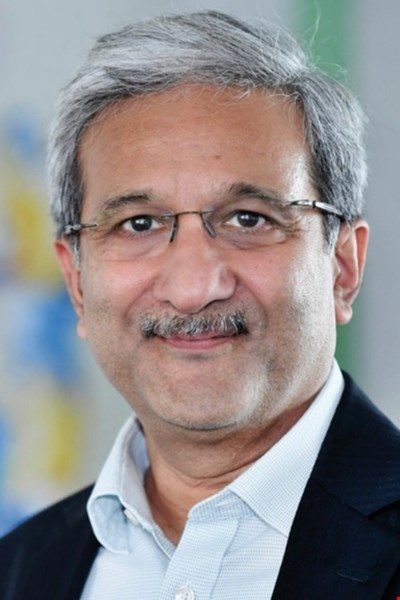
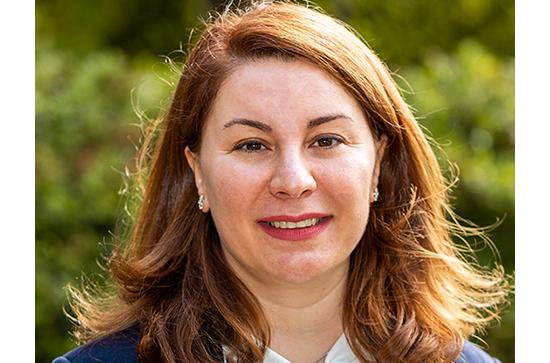
Fiona Lee is the Arthur F. Thurnau Professor of Psychology at the University of Michigan, with affiliations in Organizational Studies and the Advisory Committee. She holds a Ph.D. from Harvard University. Her research focuses on three core areas: Identity Integration (how individuals navigate multiple identities), Power Dynamics (effects of power on behavior), and Cultural Differences (impact of cultural contexts on organizations and individuals). She teaches courses on Organizational Psychology and Research Methods in Personality/Social Contexts. Lee’s work bridges social psychology and organizational behavior, emphasizing multicultural experiences and adaptation. Her recent studies explore refugee well-being, racial discrimination coping strategies, and the role of family in resettlement processes. Notably, she investigates how cultural identity integration influences creativity, decision-making, and social tolerance. Her publications span cross-cultural communication, biculturalism, and institutional barriers faced by minorities. Lee’s research often combines qualitative and quantitative methods to address real-world challenges in workplace dynamics and global mobility.
Craig Carter is the John G. and Barbara A. Bebbling Professor of Supply Chain Management at Arizona State University’s Department of Supply Chain Management. He holds the Harold E. Fearon Fellow of Purchasing Management title. His research focuses on sustainable supply chain management, ethical buyer-supplier relationships, environmental supply chain practices, and diversity sourcing. He has advised on over 100 Fortune 1000 firms globally and served as an editor for multiple journals, including the Journal of Supply Chain Management and Decision Sciences Journal. Education: Ph.D. in Business from Arizona State University (1996), B.S. in Business from the University of Maryland (1990). His industry experience includes roles at Ryder Systems and the U.S. Department of Transportation. Research emphasizes unintended consequences of sustainability initiatives, behavioral decision-making in supply chains, and supply chain leakage of greenhouse gas emissions. His work bridges theoretical frameworks (e.g., configurational approaches) with practical applications, such as mitigating supply risk and enhancing collaboration. Recent publications explore topics like honesty contagion in negotiations and informal exchanges impacting sourcing collaboration. He has been recognized for editorial contributions and has been actively involved in shaping supply chain management’s academic trajectory through thought leadership. Courses taught include Strategic Procurement, Global Supply Operations, and seminars on supply chain theory. His work often integrates empirical research with real-world case studies, emphasizing actionable insights for practitioners.
Dr. Alyas Widita is an Assistant Professor in the Urban Design program at Monash University, Indonesia. He is actively involved in research and teaching, focusing on urban planning, transportation, and smart city technologies. He serves as the Program Coordinator for Urban Design and teaches courses such as Urban Design Studio: Smart City and Smart City Technologies. Education: Ph.D. in City and Regional Planning, Georgia Institute of Technology, United States Dr. Widita's research centers on the built environment, transportation systems, and urban analytics, with a strong emphasis on developing Asian cities. His work explores congestion impacts of mass transit, ride-hailing effects on vehicle ownership, rural-urban migration, walking behavior, and spatial patterns of MSMEs. He employs advanced data analytics and causal evaluation methods to inform urban policy. His recent publications span high-impact journals such as Transport Reviews , Journal of Planning Education and Research , and Travel Behaviour and Society . The research trend shows a consistent focus on data-driven urban policy, sustainable mobility, and equity in urban development across Indonesia and Southeast Asia. Scientific Awards and Recognition: No specific awards listed, but research widely cited and featured in media outlets. Dr. Widita has secured and contributed to multiple research projects funded by international and national agencies, including the World Bank, Korea Transport Institute (KOTI), Central Bank of Indonesia, and Georgia Department of Transportation. He is currently leading or co-leading projects on Jakarta’s subsidence, flood risk management using remote sensing, and the Citarum River revitalization. He collaborates extensively with researchers across disciplines and institutions. His work contributes to UN Sustainable Development Goals, particularly those related to sustainable cities and communities. He is accepting PhD students interested in the built environment, transportation, and urban analytics in developing Asia. He is involved in key labs and research teams including the Citarum Action Research Program (CARP), Intelligent and Dynamic Remote Sensing for Flood Risk, and interdisciplinary urban analytics initiatives at Monash Indonesia.
Tan Chuan Hoo is an Associate Professor (tenured) and Deputy Head of the Department of Information Systems and Analytics at the National University of Singapore's School of Computing. With a distinguished academic career spanning multiple continents, he brings expertise in digital transformation, healthcare informatics, and enterprise systems to his teaching and research. His educational background includes: B.Sc. (1st Class Honours, National University of Singapore) M.Sc. (Accelerated, National University of Singapore) Ph.D. (National University of Singapore) Professor Tan's research focuses on digital transformation, particularly designing, deploying, and evaluating technological innovations. His work centers on two critical areas: digital commerce (provision of digital services such as online shopping aids) and digital organization (ensuring operational efficiency and performance). His research has significant implications for healthcare institutions, corporations, and crisis preparedness and response organizations. He conducts comprehensive analyses using various scientific methodologies including field experiments and mixed methods to understand how digital technologies reshape business operations and enhance societal well-being. His publication record shows a consistent focus on information systems, with recent articles (2020-2025) emphasizing healthcare informatics, digital transformation, and open innovation. His work demonstrates a clear trajectory toward understanding how technology intersects with organizational effectiveness and societal implications, with increasing attention to healthcare applications and digital crisis management. Professor Tan has received numerous prestigious awards for his contributions to the field: Faculty Teaching Excellence Award, NUS (2024, 2017) Information Management Research Award, China Information Economics Society (2023) Reviewer Hall of Fame, Journal of AIS (2020) Outstanding Associate Editor Award, MIS Quarterly (2016) Best Reviewer Award, Journal of AIS (2016) INFORMS ISS Design Science Award (2013) Honorable Mention, Journal of AIS (2015) He has successfully advised PhD students and collaborated with public and private entities on research projects. His editorial service as Associate Editor for Information Systems Research and MIS Quarterly, along with board memberships at other leading journals, demonstrates his significant influence in the field. Professor Tan has secured research grants supporting projects on digital crisis preparedness, disaster response technology, and healthcare digitalization. His research group focuses on understanding how technology can be designed and implemented to support organizations in crisis situations, enhance healthcare services, and improve digital commerce. Current projects include examining digital crisis management, technology for disaster response, and the digital transformation of healthcare services.
Dalibor Radovanović is a researcher at Singidunum University , affiliated with the Faculty of Business Informatics . His work spans cybersecurity, blockchain technologies, and their applications in business and IoT systems. Education: Doctoral Dissertation (2016, Singidunum University) Master's & Basic Studies (Faculty of Business Informatics) Secondary Education: ETŠ Nikola Tesla Research Interests include: Security frameworks for IoT and blockchain integration Smart card and wireless network vulnerabilities E-governance and corporate IT audit methodologies Machine learning applications in cybersecurity Environmental performance optimization in agribusiness Publication Trends reveal a focus on blockchain (2022), cybersecurity (2009-2022), and IT governance (2010-2017). His work bridges theoretical analysis with practical implementations in Serbia's digital economy. Collaborations with scholars like Marko Šarac and Saša Adamović highlight interdisciplinary approaches to securing financial systems, educational institutions, and industrial IoT applications.
Professor Isto Huvila is a leading scholar at Uppsala University's Department of ABM (Archives, Libraries, and Museums) within the Faculty of Humanities. His academic profile spans information science, digital humanities, and cultural heritage studies with a distinctive focus on documentation practices and information management across diverse contexts. His research interests encompass: Information and knowledge management Social and participatory information practices Documentation and paradata theory Digital humanities and archaeological information systems Health information and e-health services Open data and research data management Recent scholarly output reveals a strong trajectory toward understanding information practices across multiple domains. A significant portion of his work examines paradata in archaeological contexts through the CAPTURE project, investigating how documentation of data creation processes can enhance research transparency and data reuse. He also conducts extensive research on digital inclusion among older adults and immigrant populations regarding e-health services, analyzing both experiences and expectations of these user groups. Professor Huvila publishes in high-impact journals including Journal of Documentation, Information Research, Journal of the Association for Information Science and Technology, and Journal of Medical Internet Research. His interdisciplinary approach connects information science with archaeology, health informatics, and digital humanities, yielding practical insights for improving documentation standards, research data management, and e-health service design. His 2025 book 'Paradata: Documenting Data Creation, Curation and Use' represents a major contribution to the field, alongside influential review articles like 'Trends in information behavior research, 2016-2022' in the Annual Review of Information Science and Technology. His work bridges theoretical and practical concerns in information science, making substantive contributions to both academic knowledge and real-world applications in cultural heritage institutions and healthcare information systems.
John C. Butler is a Clinical Associate Professor in the Finance Department at the McCombs School of Business, University of Texas at Austin. He holds leadership roles as Academic Director of the Kay Bailey Hutchison Energy Center, Director of the MS Finance Program, and Director of the Energy Management Minor. His academic journey includes a PhD in Management Science and Information Systems from UT Austin (1998) and a BBA from Texas A&M University (1991). His research focuses on applications of decision analysis across domains including operations, finance, and information systems. Key areas include risk analysis, optimization, multi-attribute utility theory, and energy finance. His work integrates theoretical modeling with empirical validation to address complex decision-making challenges in both public and private sectors. Butler's publications demonstrate a consistent focus on decision modeling methodologies, with recent work emphasizing risk quantification and utility theory applications. His articles frequently intersect operations research, behavioral economics, and systems optimization, reflecting interdisciplinary approaches to solving managerial and policy problems. Awards and Honors: MBA Applause Award (2008, 2011) Finalist, INFORMS Franz Edelman Award (2004) INFORMS Decision Analysis Society Practice Award (2000) Fred Moore Teaching Award Dean's Research Fellowship, Ohio State University (2004) Leadership & Advising: Butler has supervised 11 PhD students to completion and secured significant grants including DOE funding for nuclear terrorism risk analysis. He directs multiple energy finance initiatives and serves on editorial boards for Decision Analysis and previously Decision Support Systems . Centers & Programs: As Academic Director of the Kay Bailey Hutchison Energy Center, he leads interdisciplinary energy research. He also developed the Energy Finance concentration and redesigned the MS Finance curriculum to incorporate quantitative energy market analysis.
Milos Popovic is a Professor and Director at the Institute of Biomedical Engineering, University of Toronto, and serves as Senior Scientist and Director of Research at the Toronto Rehabilitation Institute (KITE), University Health Network. He holds the Toronto Rehab Chair in Spinal Cord Injury Research and Neural Engineering and co-leads the Centre for Research in Advanced Neural Implant Applications (CRANIA). His leadership spans academic, clinical, and translational research domains in neuroengineering and rehabilitation. His research focuses on neurorehabilitation, neuroprosthetics, functional electrical stimulation (FES), brain-machine interfaces, and assistive technologies . He develops physiological control systems and therapeutic robotics to restore motor function after spinal cord injury and stroke. His work integrates biomechanics, signal processing, and human-machine interfaces to innovate rehabilitative solutions. Dr. Popovic's recent publications emphasize electrical neuromodulation, FES therapy for motor recovery, deep brain stimulation for cognitive deficits, and wearable/implantable technologies . The articles reflect a strong trend toward closed-loop systems, translational research, and interdisciplinary innovation in neuroengineering and rehabilitation. Swiss National Science Foundation Technology Transfer Award - 1st place (1997) Engineering Medal for Research and Development, Professional Engineers of Ontario (2008) Elected to the College of Fellows, American Institute of Medical and Biological Engineering (2011) 1st Prize and Best Intellectual Property Award, TiEQuest Business Venture Competition (2012) Morris (Mickey) Milner Award for Assistive Technologies (2013) University of Toronto Inventor of the Year Award (2013) University Health Network’s Inventor of the Year Award (2015) Dr. Popovic has secured significant research funding and leads the Neural Engineering and Therapeutics team at KITE. He co-founded MyndTec Inc. and the Canadian National Spinal Cord Injury Conference, demonstrating strong mentorship, innovation, and national impact. He advises graduate students and postdoctoral fellows in biomedical engineering and rehabilitation sciences. He leads the Rehabilitation Engineering Laboratory and the Neural Engineering and Therapeutics Team at KITE, fostering collaboration across engineering, neuroscience, and clinical rehabilitation. His lab develops advanced neurotechnologies with a focus on clinical translation and commercialization.
Ning Nan is an Associate Professor at the University of British Columbia's Sauder School of Business, specifically within the Department of Accounting and Information Systems. With a BA from Peking University, an MA from the University of Minnesota, and a PhD from the University of Michigan, Dr. Nan focuses on digital business strategy, evolvable IT infrastructure, and complex adaptive systems. His research explores blockchain applications, agent-based modeling, and the intersection of AI with societal challenges like sustainability. Education: PhD in Information Systems, University of Michigan MA in Information Systems, University of Minnesota BA in Computer Science, Peking University Research Interests: Dr. Nan investigates how technology shapes organizational and societal systems, with a focus on AI ethics, sustainability through personalized recommendations, and blockchain's role in decentralized supply chains. He employs agent-based modeling to simulate complex phenomena like innovation diffusion and online community dynamics. Recent work addresses explainable AI in smart cities and carbon-reduction gamification strategies. Teaching: In 2024-2025, he teaches Data Management for Business Analytics , emphasizing practical applications of data-driven decision-making. Key Research Themes: His articles highlight trends in AI sustainability (e.g., carbon footprint impacts of recommendation systems), digital business strategy (blockchain governance, app update strategies), and foundational IS theory (hyperturbulence and IS strategy).
Professor Ashley Braganza serves as Dean of Brunel Business School at Brunel University London and holds the Chair in Business Transformation. He founded and co-directs Brunel's interdisciplinary Research Centre for Artificial Intelligence (established 2018), which includes a dedicated AI Lab and forms part of Brunel's broader AI Ecosystem. His leadership secured £3.5 million in grants during the 2022/23 academic year and a recent €5.8 million ELOQUENCE EU project (2024-2027). His academic qualifications include a PhD in Organisational Change and Information Systems from Cranfield University and an MBA in Strategic Management Responsibility from the University of Strathclyde. Professor Braganza's research centers on artificial intelligence, big data, change management, strategy implementation, process and knowledge management, and transformation-enabled information systems . His practice-based approach stems from over 40 major consultancy projects with global organizations including BT, Microsoft, McDonald's, Astra Zeneca, and UN agencies. He champions interdisciplinary experiential learning and rigorous academic research with real-world applications. Analysis of his 15 most recent publications reveals dominant trends in applying AI and digital technologies to healthcare supply chains, blockchain governance, and socioeconomic challenges like digital poverty. His work consistently bridges operations management, information systems, and social sciences while examining human-organizational impacts of technological transformation. His distinguished recognition includes: Election to the British Academy of Management College of Fellows for 25+ years of scholarly contribution and community service Professor Braganza has directed significant research initiatives including the British Academy-funded digital poverty study in Margate, UK-India collaborative projects on AI in healthcare productivity, and curriculum development for special needs trainers. His consultancy assignments with major corporations have co-created practical frameworks for implementing complex organizational change programs. He founded and chairs the British Academy of Management Special Interest Group in Transformation, Change and Development, and directs Brunel's AI: Social and Digital Innovation Research Centre, fostering cross-disciplinary collaboration through the Operations and Information Systems Management Research Group (OISM).
Zohreh Pourzolfaghar is an Assistant Professor in Management Information Systems (MIS) at the School of Business, Maynooth University (MU). She serves as Director of the IT-Enable Innovation Programme and cluster lead for the Digital Construction cluster at the Innovation Value Institute (IVI). She is also a member of Lero, the SFI Research Centre for Software. Education: PhD in Project Management (University Putra Malaysia, 2011); MSc in Management Systems and Productivity; BSc in Software Engineering. Research Interests : Focuses on digital transformation for SMEs, information management in construction, and smart city architectures. Leads EU-funded projects like EnTrust (agri-data governance), DIGI+ (sustainable digital transformation), and DigiFABs (food & beverage SMEs). Co-PI for projects such as GDI-IE (genomic data infrastructure) and PERFORM (digital retail innovation). Grants & Awards : Secured funding from SFI, Enterprise Ireland, and EU. Notable awards include the BIM Hero Award (2022) and Research Engaged Award (2022). Teaching : Courses include Digital Business, Digital Technology Governance, and Enterprise Architecture. Advises PhD students in MIS and digital transformation. Industry Collaboration : Works with firms like ArcDox and Corballis Technologies on BIM standards and data governance. Active in national and EU policy networks, including NSAI committees.
Adam B. Badawi is a Professor of Law at the University of California, Berkeley - School of Law, where he maintains an active research agenda at the intersection of law, finance, and corporate governance. His scholarly work has established him as a leading expert in contract law, M&A transactions, securities litigation, and ESG compliance. Professor Badawi's research interests span multiple dimensions of corporate law and legal theory. His work on contractual complexity, particularly in debt agreements and M&A transactions, has provided significant insights into how legal drafting affects economic outcomes. He has extensively examined the business judgment rule, board authority, and the role of courts in corporate governance. More recently, his research has expanded into ESG-related topics, analyzing how environmental, social, and governance considerations intersect with traditional corporate law frameworks. His methodological approach often combines legal analysis with empirical techniques, including text analysis of legal documents and event studies of litigation outcomes. Professor Badawi's scholarly output demonstrates consistent high-impact research across multiple domains of corporate law. His early work focused on foundational aspects of contract theory and interpretation, while his more recent publications reflect growing interest in ESG metrics, executive compensation structures tied to sustainability goals, and the evolving regulatory landscape. The trajectory of his research shows a progression from theoretical legal analysis toward increasingly empirical and interdisciplinary approaches that bridge law with finance and data science. Professor Badawi has collaborated with numerous scholars across different institutions, including Duke University, Stanford Law School, and the University of Chicago Law School, reflecting the interdisciplinary nature of his work and its relevance to multiple academic communities.
Weijia Rao is an Associate Professor of Law at Boston University School of Law, located at 765 Commonwealth Avenue in Boston, Massachusetts. With a robust scholarly profile evidenced by 12 published papers with over 2,150 total downloads and 5 total citations, Professor Rao maintains an active research agenda in international legal studies. Professor Rao's research focuses primarily on international investment law, with particular expertise in investor-state dispute settlement mechanisms, bilateral investment treaties, and international arbitration. Their work examines the intersection of domestic politics and international investment law, the effects of foreign investors' challenges to domestic regulations, and the role of national security considerations in international legal frameworks. A significant portion of their research analyzes China's engagement with international investment law and WTO frameworks, as well as the dynamics of arbitrator behavior in ICSID proceedings. The scholarly output demonstrates a clear trend toward examining the practical implications of international investment law on domestic regulatory sovereignty, with recent work increasingly focusing on national security dimensions of international law. Professor Rao's research employs empirical methodologies to analyze how international legal frameworks interact with domestic political processes and economic outcomes, contributing valuable evidence-based insights to ongoing debates about reforming international investment law systems. Professor Rao has established productive research collaborations with scholars from institutions including University of Chicago Law School, University of Miami, and Brigham Young University. Their publications appear in prestigious venues such as the Harvard International Law Journal, Yale Journal of International Law, and Journal of Legal Studies, reflecting the high quality and impact of their scholarship.
Prof. Dr. Michael Gröschel is a Professor of Business Informatics at the Faculty of Computer Science, Mannheim University of Technology. His expertise spans Business Process Management (BPMN, Process Mining), Digital Transformation, and innovative Business Models. He teaches courses on BPM, project management, and e-business, often collaborating with industry clients through student projects. As a consultant, he specializes in BPMN training and IT-driven business strategy. His work emphasizes practical applications of IT tools like RPA and low-code platforms. Recent publications focus on RPA bot performance evaluation, AI in automotive trade, and business model-IT alignment. Prof. Gröschel’s research bridges academic insights with real-world challenges, particularly in leveraging technology for business innovation. He has authored books and articles on business intelligence tools, mobile business strategies, and digital customer care. His consulting services include executive coaching for academic career advancement and enterprise IT management best practices. Office: Building A, Room 007c | Phone: +49 621 292-6764 | Professional website available for further engagement opportunities.
Professor Janet McColl-Kennedy is a leading figure in marketing and service science at The University of Queensland's Business School. She serves as Program Lead for Innovation Pathways (FaBA) and co-founded the Service Innovation Alliance (SIA) research hub, focusing on customer experience, AI, digital transformation, and sustainability. With Fellow status in the Academy of the Social Sciences in Australia and the Australian and New Zealand Marketing Academy, she holds international recognition including Research.com's World's Best Business Scientists ranking and the Christopher Lovelock Career Contributions to the Services Discipline Award (2025). University of Queensland Business School Honorary Visiting Professor, Cambridge Service Alliance Research Collaborator, University of Cambridge Her research spans customer experience management, service ecosystems, digital transformation, and healthcare services. She has pioneered frameworks for customer value co-creation and service recovery strategies, integrating AI and behavioral science. Her 2019 paper on customer experience insights was implemented by a major B2B organization, while her work on value co-creation improved outcomes at Lutheran Community Care. Recent publications focus on AI impacts in food and beverage services, sustainable service ecosystems, and digital health interventions. She has secured over $89 million in competitive grants, including multiple ARC Linkage and Discovery Projects, and leads cross-disciplinary teams with institutions like Cambridge University and Arizona State University. 2024 - ARC College of Experts appointment 2023 - Bo Edvardsson Industry Impact in Services Award 2022 - Elected Fellow of Academy of the Social Sciences in Australia 2021 - Clarivate Highly Cited Researcher 2018 - Ranked most influential marketing academic in Australia With over 220 publications and a Google Scholar H-index of 62, she has mentored 15 PhD students and examined theses at multiple universities. Her teaching spans 30+ years across undergraduate, postgraduate, and executive programs in Australia, USA, Italy, China, and Korea, with awards for blended learning and corporate education.