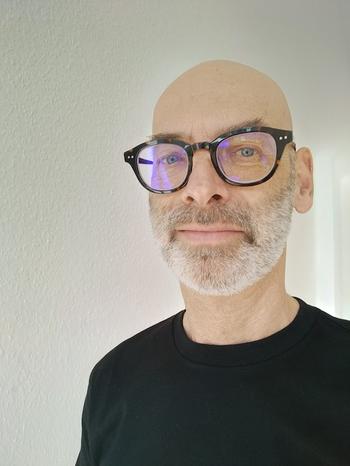
Axel Rudi is a Senior Lecturer at the Department of Social Anthropology , University of Oslo, since August 2024. His research investigates sovereignty, state formation, political violence, and emerging topics like drones and apocalypticism, primarily in Kurdistan (Iraqi, Turkish, Syrian) and Germany. Education: PhD (2019) and MA (2014) from University of Bergen and University of Chicago Research Focus: Kurdish movement, Iraqi Kurdish pseudo-state, sovereignty theory Teaching: Courses on Anthropology of Religion (1400) and Economic Anthropology (1300) His research interests center on sovereignty’s ethnographic dimensions, political violence, and ritualized power dynamics. Recent work explores drone technology’s sociopolitical implications and apocalyptic narratives in contemporary movements. Key collaborative projects include: Emic Sovereignties and Global Intersections (2021–2024) - funded by Norway’s Research Council His publications synthesize historical comparisons (17th-century England and Syria) and analyze ideological coherence in movements like the PKK. Full details of his academic journey follow.
Torben Bech Dyrberg serves as an Associate Professor in the Department of Social Sciences and Business at Roskilde University, Denmark, specializing in political theory, identity politics, and critical analyses of power structures within globalization and Europeanization contexts. His research centers on the intersections of power, identity, and critique in contemporary political discourse, with emphatic focus on radical identity politics beyond traditional left-right divides, cancel culture dynamics, and blasphemy debates. He examines how argumentative strategies legitimize cultural phenomena while exploring tensions between secular frameworks and religious organizations through discourse analysis and political theory lenses. Recent publications reveal consistent engagement with identity-based political conflicts, showing evolution from foundational work on power/resistance in labor contexts (2019) toward urgent analyses of enmity in digital cancel culture (2024) and cross-ideological blasphemy framing. His scholarship bridges economic theory with political sociology, emphasizing critique as both conceptual locus and methodological modus operandi. Scientific awards: None documented in source materials. Advising and grants: The provided documentation contains no explicit references to student supervision, grant acquisitions, or research funding mechanisms despite substantial research output. Laboratory affiliations and team structures remain unmentioned in available institutional materials, though his work demonstrates collaborative patterns through co-authored outputs and interdisciplinary network mappings.
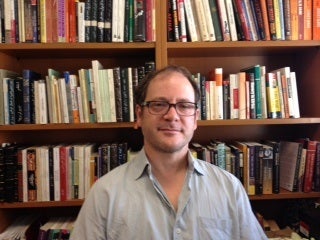
Thomas Golding serves as Associate Professor of Biblical Studies at Adelaide College of Ministries, leveraging over three decades of experience in church leadership, Bible college instruction, and academic administration. His international lecturing spans Ethiopia, the Philippines, and India, with expertise in preaching, teaching, administration, and counseling. His academic credentials include a B.A. in Business Management from the University of Northern Iowa and ThM/Ph.D. in Bible Exposition from Dallas Theological Seminary, reflecting interdisciplinary training that bridges business acumen and theological scholarship. Professor Golding's research centers on Biblical Studies with emphases in Hermeneutics , Exegesis , and practical application of scripture . His work explores Old Testament narratives (Exodus, Isaiah, shepherding imagery) and New Testament epistles (Romans), addressing literary devices, cultural engagement, and discipleship. Teaching responsibilities include Hermeneutics, Romans, Isaiah, Homiletics, and Adult Education, demonstrating integration of academic rigor with ministry practice. Publication trends reveal an evolution from technical exegesis (2003-2013) toward accessible theological application (2018-2022), with increasing focus on cultural relevance, spiritual formation, and practical discipleship. Key thematic threads include biblical authority, shepherding metaphors, and navigating faith-culture tensions. As former Principal of Adelaide College of Ministries, he mentored students through academic programs while drawing on pastoral experience from Perry Bible Church and Broken Hill Christian Fellowship. His CELTA qualification further informs pedagogical approaches to theological education.
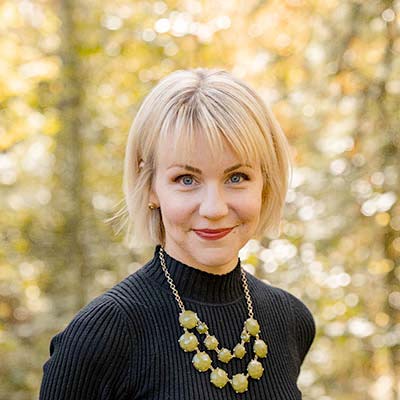
Judith Daar is the Ambassador Patricia L. Herbold Dean and Professor of Law at Northern Kentucky University's Salmon P. Chase College of Law. With expertise at the intersection of law, medicine, and ethics, she specializes in bioethics, reproductive medicine, and assisted reproductive technologies (ART). Her scholarly work examines germline genome editing, surrogate parent arrangements, and stem cell research. Education: Juris Doctor from Georgetown University Law Center, Bachelor of Arts from the University of Michigan Research Focus: Daar’s scholarship addresses legal-ethical dilemmas in ART, including embryo transfer policies, genetic screening, provider autonomy, and postmortem reproduction. Her recent work analyzes socially responsible medicine and the person/property divide in reproductive healthcare. Scientific Recognition: She has received multiple teaching awards and the Suheil J. Muasher Distinguished Service Award for her contributions to reproductive medicine ethics. Her publications span bioethics, law, and reproductive healthcare policy.
Tuğba Özen serves as a Lecturer in the Department of History of Islam and Arts at the Faculty of Theology, Ankara Yıldırım Beyazıt University, a position she has held since 2020 after serving as a research assistant there from 2013-2020. Her academic credentials include a B.A. in Turkish Language and Literature from Gazi University (2010), an M.A. in New Turkish Literature from Gazi University's Institute of Social Sciences (2013), and a Ph.D. in Islamic History and Arts (Turkish-Islamic Literature) from Ankara University (2019). Her doctoral thesis analyzed manzums (poetic compositions) in religious journals from 1908-1928. Dr. Özen specializes in Turkish-Islamic literary traditions with focus on Ottoman Turkish and early Republican period literature. Her research critically examines religious journals, poetic forms, and literary responses to societal transformations including Westernization, nationalism, and religious identity. She investigates how literature engaged with superstition, women's roles, and cultural conflicts through authors like Kılıçzâde Hakkı, Celal Nuri, and Fatma Aliye. Her publication record reveals consistent scholarly engagement with Turkish literary history, particularly analyzing how religious and cultural discourses shaped literary production during Turkey's transition from empire to republic. Recent works (2024-2025) continue her investigation into Islamic literary journals and periodical writings. Dr. Özen has advised at least one thesis and maintains active research in Turkish-Islamic literary studies. She can be contacted via email at tugbaozen@aybu.edu.tr .
Bjarne Friedrichs is a Senior Scientist affiliated with the Department of Environment and Biodiversity at Paris Lodron University of Salzburg. His research focuses on geochronology, tectonics, and volcanology, particularly using (U-Th)/He thermochronology and zircon double-dating to study exhumation processes, magma systems, and volcanic hazards. Key Research Areas: Exhumation dynamics, subduction zones, explosive volcanism, magma accumulation, thermochronometry. Recent Projects: Core Facility Thermochronometrie II, analytical protocols for ICP-MS in thermochronometry, and tectonic evolution of regions like the Calabrian Arc and NE Tibetan Plateau. Scientific Awards: Deutschlandstipendium (2012, 2013, 2014) Doctoral Scholarship (2018) Early Career Scientist's Travel Support (2019) Research Trends: Recent publications emphasize slab dynamics in the Calabrian Arc, Holocene eruptions in Turkey, analytical advancements in thermochronometry, and tectonic-climate interactions in the Tibetan Plateau. Subfields include zircon dating, eruptive recurrence, magma recharge, and glacial exhumation. Network & Activities: Collaborates with researchers in Austria, Germany, and Turkey. Participates in organizing events like Pangeo-Deuqua2024 and the Lange Nacht der Forschung. Active in peer-review and oral presentations at conferences such as EGU General Assembly.
Stéphanie BLOT-MACCAGNAN is a University Professor specializing in History of Law and Institutions at the Faculty of Law, University of Côte d'Azur. She serves as Head of the 'representation' research axis within ERMES laboratory since 2011, is a member of the International Research Program on the Ancient Law of the States of Savoy (PRIDAES), and has been a guest member of the COSP of the Faculty of Law of Nice since 2019. In 2023, she was elected to the National Council of Universities (section 03). Her institutional email is stephanie.maccagnan@univ-cotedazur.fr and her office is located in room 517. Professor BLOT-MACCAGNAN's research focuses on the historical development of legal institutions, with particular emphasis on the history of justice and criminal procedure. Her scholarly work explores the evolution of judicial systems in pre-revolutionary France and the former States of Savoy, examining how legal theories translated into judicial practices. She investigates the roles of various legal actors including judges, lawyers, defendants, and clerks within historical contexts, with special attention to how gender influenced legal proceedings and how legal aid systems developed for the poor. Her recent publications reveal a consistent focus on historical criminal justice systems, particularly examining procedural aspects across different historical periods and geographical contexts. The articles show a methodological approach that combines close analysis of specific historical cases with broader theoretical questions about legal evolution. There's a clear trajectory from studying specific legal mechanisms (like written pleadings or summary procedures) to examining larger questions about the bureaucratization of justice and the relationship between legal theory and practice. Professor BLOT-MACCAGNAN actively supervises doctoral research, currently guiding Nicolas Brito's work on 'Seigneurial justice in eastern Provence (17th-18th centuries)' and William Baber's research on 'Voltaire's Penal Thought.' She participates in international scholarly collaborations, including co-editing significant collective works such as 'Le pont : de l'ouvrage d'art à l'objet juridique' (2023) and 'Assistance, protection et contrôle social dans les Etats de Savoie et les états voisins' (2022), demonstrating her leadership in the field of historical legal studies. She is affiliated with the ERMES research laboratory at the University of Côte d'Azur, contributing to its scholarly activities and participating in international conferences. Her work bridges historical legal scholarship with contemporary legal understanding, making significant contributions to our knowledge of how historical legal systems functioned and evolved.
Professor Małgorzata Wąsek-Wiaderek is a distinguished legal scholar and jurist affiliated with the Catholic University of Lublin (KUL), where she serves as a Professor at the Department of Criminal Procedure within the Faculty of Law, Canon Law and Administration. Simultaneously, she holds the position of Supreme Court Judge in the Criminal Chamber since November 2018, bringing together academic expertise and practical judicial experience at the highest level of Poland's justice system. Professor Wąsek-Wiaderek's academic journey began with her graduation from the 3rd Union of Lublin High School, followed by studies at KUL's Faculty of Canon and Secular Law (1989-1995), where she earned her Master's degree. She further expanded her expertise with a postgraduate program in European law at the Catholic University of Leuven, Belgium (1995-1996), obtaining an LL.M. degree. Her academic progression continued with a doctoral dissertation defense in January 2002 and habilitation in legal sciences in June 2013. She completed a research internship at the Jagiellonian University in March 2000, demonstrating her commitment to comparative legal studies. Her research primarily focuses on the intersection of European law and Polish criminal procedure, with particular emphasis on the impact of Council of Europe standards and European Union integration on national criminal justice systems. Professor Wąsek-Wiaderek has made significant contributions to understanding judicial cooperation mechanisms, particularly the European Arrest Warrant system, and the protection of human rights within criminal proceedings. Her scholarly work consistently addresses the practical implementation of international legal standards in domestic contexts, bridging theoretical frameworks with real-world application. She has authored numerous publications examining temporary detention regulations, procedural fairness, and constitutional guarantees in criminal proceedings. Professor Wąsek-Wiaderek's extensive publication record demonstrates a clear trajectory of deepening expertise in European criminal procedural law. Her recent works increasingly examine the practical challenges of implementing European legal standards within Polish criminal justice, with particular attention to pre-trial detention, judicial cooperation across borders, and the protection of defendants' rights. The interdisciplinary nature of her research connects criminal procedure with European Union law, human rights protection, and constitutional guarantees, reflecting the complex legal landscape of contemporary European justice systems. Her scholarship shows a progression from foundational comparative analyses to nuanced examinations of specific implementation challenges in the Polish context. Professor Wąsek-Wiaderek has received several prestigious awards recognizing her contributions to legal scholarship and the justice system: Bronze Medal for Long Service, awarded by the President of the Republic of Poland (2012) Commemorative Medal for Merit to the Administration of Justice, awarded by the Minister of Justice (2013) John Paul II Rector's Award of the Catholic University of Lublin (2013) Individual first-degree award granted by the Minister of Science and Higher Education for scientific achievements Throughout her career, Professor Wąsek-Wiaderek has held significant positions that demonstrate her expertise and influence in Polish legal circles. She served as a member of the Supreme Court's Office of Studies and Analysis from 2004 to November 2018, and was appointed as a Supreme Court Judge in the Criminal Chamber in November 2018. She has also contributed to legal reform as a member of the Criminal Law Codification Commission during multiple terms (2009-2013, 2013-2017, and since April 2024). Her international experience includes serving as an ad hoc judge of the European Court of Human Rights during the 2014-2016 term and participating in numerous international research projects, including collaboration with Tilburg University and KU Leuven on administrative approaches to combat crime within the EU. She has received research grants, including one from the Ministry of Science and Higher Education (No. NN110 235935) on changes in criminal court jurisdictional autonomy following Poland's EU accession. Professor Wąsek-Wiaderek is an active member of several prestigious scholarly organizations, including the International Penal and Penitentiary Foundation based in Switzerland (since September 2014), the Faculty of Legal Sciences of the Scientific Society of the John Paul II Catholic University of Lublin (corresponding member since March 2015), and the Research Society of European Law. Her scholarly influence extends through her regular participation in national and international conferences, where she presents on cutting-edge issues in criminal procedure and European legal cooperation. Her extensive publication record, spanning multiple languages and prestigious academic venues, demonstrates her significant contribution to the field of criminal procedure law both nationally and internationally.
Prof. Dr. Ferdinand de Jong serves as a Visiting Professor in African Art History at the Free University Berlin for the academic year 2024-25. He is affiliated with the Department of African Art within the Institute of Art History, which falls under the Department of History and Cultural Studies. His scholarly work bridges art history, anthropology, and postcolonial theory to examine classical and contemporary African art, cultural heritage, archives, museums, and memorial practices. De Jong's research program centers on decolonizing approaches to African art and heritage. His key interests include decolonization/coloniality studies, cultural heritage preservation, memory studies, decolonizing archives, masking traditions, and conflict resolution. His scholarship demonstrates how African communities navigate postcolonial contexts through artistic and heritage practices, with particular attention to Senegal and the Casamance region. He has conducted extensive fieldwork on masking traditions, cultural heritage, and conflict resolution in West Africa. His recent publications reveal a strong thematic focus on decolonizing heritage and archives, with particular attention to Senegalese contexts. De Jong explores how African communities are reclaiming cultural narratives and reimagining futures through artistic and archival practices. His work consistently examines intersections of spirituality, modernity, and heritage, positioning African art as central to understanding broader social transformations. As an educator, De Jong teaches courses including 'Decolonizing Heritage: The Reclamation of African Futures,' 'Histories of Photography in Africa,' and 'African Art and Spirituality' during the Winter Semester 2024/25. His teaching examines how photography has been used for both 'honorific' and 'repressive' purposes in Africa, tracing its evolution from colonial documentation to tools of resistance and artistic expression. His approach emphasizes critical engagement with decolonial methodologies and the political dimensions of art historical practice.
Eleanor Rosch is a distinguished Professor of Psychology at the University of California, Berkeley, where she has made groundbreaking contributions to cognitive psychology. Her work primarily focuses on categorization processes, prototype theory, and the intersection of Eastern philosophy with Western psychology. She has been affiliated with several prestigious institutions throughout her career including Brown University and Connecticut College before joining UC Berkeley in 1971. Rosch's educational background reflects her interdisciplinary approach: Completed undergraduate philosophy thesis at Reed College on Wittgenstein Later returned to Harvard to study clinical psychology at the Department of Social Relations Received her Ph.D. from Harvard under the direction of Roger Brown Eleanor Rosch's research has fundamentally reshaped our understanding of how humans categorize the world around them. Her prototype theory revolutionized cognitive psychology by demonstrating that people categorize objects based on their similarity to a "prototype" rather than through strict logical definitions. Through field experiments with the Dani people of Papua New Guinea, she showed that basic-level categories exist across cultures, revealing universal aspects of human cognition despite linguistic differences. Her more recent work has expanded into the psychology of religion, exploring how Buddhist meditation and contemplative practices can inform modern psychological understanding. Rosch has conducted extensive research on semantic categorization, mental representation of concepts, linguistics, cognition, concepts, causality, thinking, memory, and cross-cultural psychology. An analysis of Rosch's publication trends reveals a fascinating evolution from her foundational work in categorization and prototype theory toward more integrative approaches that bridge cognitive science with Eastern philosophical traditions. While her early career was dominated by empirical studies of categorization processes, her later work increasingly explores the implications of Buddhist thought for psychology, mindfulness practices, and the nature of human experience. This trajectory reflects her ongoing commitment to challenging Western cognitive science's assumptions while developing more holistic models of mind. Rosch's significant contributions to cognitive science have been recognized through several prestigious honors: Fellow of the Cognitive Science Society Extensive recognition as one of the most influential psychologists globally (ranked #17 in Psychology worldwide) Invited mediator for discussions between Western scientists and the Dalai Lama Throughout her career, Eleanor Rosch has mentored numerous students and collaborated with leading researchers in cognitive science. Her work with Francisco Varela on "The Embodied Mind" represents a landmark contribution to enactive cognitive science. Rosch has secured significant research funding for her cross-cultural studies, particularly her fieldwork with the Dani people of Papua New Guinea, which provided crucial evidence for the universality of certain cognitive categories. Her research has inspired multiple generations of cognitive scientists and continues to influence fields ranging from artificial intelligence to cross-cultural psychology. Rosch's intellectual journey has led her to establish connections between cognitive science laboratories and contemplative practice communities. While not heading a specific laboratory as traditionally conceived, her work has fostered collaborative networks that bridge academic psychology with Buddhist meditation centers and interfaith dialogue initiatives. Her participation in the Mind and Life Institute dialogues with the Dalai Lama has created ongoing opportunities for interdisciplinary exchange between scientists and contemplative practitioners.
Leah Payne serves as Professor of American Religious History at Portland Seminary, George Fox University, where she also leads the Lilly Endowment-funded Institute for Pastoral and Congregational Thriving. Her scholarship bridges religious history, cultural studies, and contemporary American religious practice with particular focus on Pentecostal and Charismatic Christian movements. Her academic foundation includes advanced theological training at Vanderbilt University: PhD, Vanderbilt University MA, Vanderbilt University MTS, Vanderbilt University BA, George Fox University Payne's research investigates how religious innovation occurs at the intersection of gender, race, and class within American Christianity, with special attention to ritual performance and popular culture. Her work demonstrates how Pentecostal and Charismatic movements navigate political engagement while maintaining distinctive identities through musical expression and embodied practices. She examines the construction of religious authority through historical case studies of women's leadership and analyzes how popular media shapes religious identity formation. Analysis of her publications reveals consistent exploration of religious adaptation in American culture, with increasing attention to political dimensions since 2020. Her work shows particular strength in connecting historical Pentecostal developments with contemporary religious phenomena, especially through musical and media expressions. Her scholarly contributions have been recognized with significant honors: 2024 Christianity Today Book of the Year for History and Biography for God Gave Rock & Roll to You 2016 Pneuma Book Award for Gender and Pentecostal Revivalism American Academy of Religion's first-place award for Best In-Depth Multimedia Journalism for Rock That Doesn't Roll podcast Payne's research has received substantial support from major institutions including the Public Religion Research Institute, Louisville Institute, and Wabash Center for Teaching and Learning in Theology & Religion. While specific advisee relationships aren't publicly documented, her mentorship extends through podcast collaborations and public scholarship platforms. Current projects include developing the Institute for Pastoral and Congregational Thriving as a research hub for practical theological innovation. She actively engages public audiences through multiple podcast platforms including Rock That Doesn't Roll (PRX), Spirit & Power (Axis Mundi Media), and Weird Religion , creating dynamic spaces for discussing religion's role in contemporary culture, politics, and media landscapes.
John Kormendy is a Professor holding the Curtis T. Vaughn Chair in Astrophysics at the University of Texas at Austin's Department of Astronomy. He serves as an Associate Editor of the Annual Review of Astronomy and Astrophysics and was appointed an External Scientific Member of the Max Planck Institute for Extraterrestrial Physics (MPE) in 2012, recognizing his world-leading contributions to astrophysics. His research pioneers galaxy structure and dynamics, featuring the discovery of the Kormendy relation (surface brightness-radius correlation in ellipticals), first detections of extragalactic supermassive black holes, and establishment of the black hole mass-bulge mass correlation. He has fundamentally advanced understanding of secular evolution as a key galaxy-shaping mechanism and maintains active research in dark matter and galaxy dichotomy (E-E vs. E-Sph). Kormendy sustains a twenty-year collaboration with MPE and LMU Munich's astronomy groups, conducting sabbaticals in Garching and strengthening institutional ties through the Hobby-Eberly Telescope and HET Dark Energy Experiment. His science communication includes popular articles in Astronomy magazine and public lectures on black holes, alongside documentation of total solar eclipses (2017 and 2024).
Ursula Geisler is an Associate Professor in Musicology at Linnaeus University's Department of Music and Art, recognized as being in the Top 3% of scholars in her field. Her academic work focuses on the intersection of music with political and cultural history, particularly examining how music functions within societal structures and historical contexts. Her research interests span Musicology, Music History, Popular Music, Sociology of Music, and Choral Music, with particular emphasis on historical periods where music intersects with political power structures. Geisler's work demonstrates a strong focus on 20th century European music history, especially regarding Nazi Germany's music policies and East German-Swedish musical relations during the Cold War. Geisler's scholarly output reveals consistent engagement with how music functions as both cultural expression and political tool. Her publications demonstrate expertise in analyzing music censorship mechanisms, particularly during totalitarian regimes, and examining transnational musical exchanges. She has contributed significantly to understanding choral singing practices as social phenomena and has explored Nordic musical identity construction through figures like Wagner. Her work appears in both Swedish and international publications, reflecting her transnational research perspective that frequently examines Swedish-German musical connections. Geisler has contributed to edited volumes and published in journals including STM-Online and Danish Musicology Online. Geisler has participated in significant academic conferences, including the International Conference on the Concepts and Practices of Choral Singing held in Lund, Sweden in 2012, where she contributed to discussions about historical and contemporary choral practices. Her research has addressed practical concerns in music education, particularly regarding choral singing's role in schools and concerns about its future among young people. Her scholarly approach combines historical musicology with cultural studies methodology, often employing theoretical frameworks from sociology and political science to examine music's role in society. Geisler's work demonstrates particular attention to how archival materials and press coverage reflect societal attitudes toward music during critical historical periods.
Łukasz Kryst is a Professor in the Department of Anthropology at the Academy of Physical Education in Krakow, where he has been employed since 2009. Appointed professor in 2025 after obtaining his habilitation in 2017, he serves as a promoter in the Doctoral School of Physical Culture Sciences. His educational background includes: Master's degree in biology (specializing in anthropology) from Jagiellonian University (2004) Doctoral degree from Jagiellonian University (2009) with thesis on intergenerational changes in human head dimensions Habilitation in 2017 based on research titled "Overweight and obesity among children and adolescents in the context of intergenerational changes in body dimensions, physical activity, and fitness" Professor Kryst's research centers on secular trends in human biology, with primary focus on body composition changes across generations. His work extensively examines overweight/obesity patterns, physical fitness metrics, human development factors, sexual maturation processes, sexual dimorphism, and athlete body composition. This interdisciplinary research bridges biological anthropology, auxology, and sports science to understand anthropometric evolution. He has authored over 100 scientific publications (80+ in international journals) and presented at conferences across Denmark, Spain, Lithuania, Croatia, Russia, India, and Portugal. As principal investigator, he has secured university and external research funding. His international collaborations span institutions in Italy, the UK, and India. Professional leadership includes serving on the Board of the Polish Anthropological Society (chairing its Kraków branch), membership in the European Anthropological Association and International Society for the Study of Human Growth and Clinical Auxology, and participation in the Polish Academy of Sciences' Committee on Rehabilitation, Physical Education, and Social Integration.
Michael Gasper serves as Assistant Professor of History at Occidental College, specializing in the social and cultural history of the modern Middle East and the Muslim world. His research centers on the representation and performance of communal, religious, and national identity through the lens of everyday life during Lebanon's sixteen-year civil war (1975-1991). Utilizing archival sources and oral histories, he examines identity construction in conflict zones with particular focus on secularism, sectarianism, and geopolitical conceptualization. His publications demonstrate consistent thematic focus on identity formation and geopolitical evolution in the Middle East, bridging historical analysis with cultural studies to explore how social identities transform during periods of prolonged conflict and political upheaval. Scientific awards: Carnegie Scholar for project "Rethinking Secularism and Sectarianism during the Lebanese Civil War"