Professor Mohammad FARD is a faculty member at RMIT University's School of Engineering, specializing in Mechanical Engineering and Intelligent Systems. He leads research in autonomous vehicles, crash safety, and driver monitoring using AI. His industry experience includes six years at Nissan Technical Centre, focusing on vehicle body design. He holds a PhD from Tohoku University and has collaborated across Engineering, Health, and Science disciplines, achieving international media coverage for work on driver drowsiness and road safety. Research Interests: Autonomous Vehicles Advanced Crash Safety Driver State Monitoring AI in Noise/Vibration Human Factors/Ergonomics Teaching & Projects: Teaches Advanced CAE, Vehicle NVH, and research supervision in areas like crash simulation and vibration control. Current projects include Formula One safety barriers and driver education for autonomous vehicles. Awards & Labs: No awards listed. Active in cross-disciplinary teams and labs addressing automotive innovation and safety.
Dr. phil. Stefan Ladwig is a researcher at the Institute for Automotive Engineering (Institut für Kraftfahrzeuge) at RWTH Aachen University, specializing in traffic psychology, user acceptance, and human-machine interaction for automated driving systems. His work addresses psychological and ergonomic aspects of emerging mobility technologies, including seating ergonomics, trust-building mechanisms, and communication strategies for autonomous delivery robots. Research Focus: Automated driving, interior design psychology, driver/passenger behavior, and safety requirements. Projects: Lead roles in UrbANT (autonomous delivery robot) and SteeringBow (dynamic driving experience). Collaborations: Affiliated with Aldenhoven Testing Center, Future Mobility Partnership e.V., and innocam.NRW. Ladwig’s recent publications examine rotated seating positions, visual dominance in speed adaptation, and trust-relevant driving scenarios, reflecting his interdisciplinary approach to optimizing human-vehicle interactions. His work spans ergonomics, energy management, and behavioral interventions to enhance safety and usability in next-generation mobility solutions.
Taishi Muraoka serves as an Assistant Research Fellow at Academia Sinica's Institute of Political Science in Taipei, Taiwan, a position he has held since 2022. His academic journey includes postdoctoral fellowships at Harvard University's Program on US-Japan Relations and Washington University's Weidenbaum Center, following his 2019 Ph.D. in Political Science from Washington University in St. Louis. His educational background encompasses a B.A. in Political Science from the University of North Carolina at Charlotte (2013) and a B.A. in Law from Chuo University, Japan (2011). His research expertise spans electoral politics, political institutions, and social media's role in political communication, with particular emphasis on cross-national comparative analysis. Muraoka's scholarly work reveals consistent focus on electoral system design and voter behavior, with recent publications examining polarization's emotional dimensions, multilingual party communication, and diaspora voting incentives. His methodological approach combines large-scale cross-national data analysis with quasi-experimental designs, frequently leveraging social media interactions as behavioral indicators. His scientific recognition includes the 2023 Richard E. Matland Best Paper Award from the Midwest Political Science Association and multiple travel grants from major associations like APSA and MPSA. His award portfolio reflects consistent early-career excellence in political methodology and comparative research. Current research initiatives include a 2025 Academia Sinica Grand Challenge grant on electoral system habit-formation and a Weidenbaum Center-funded project on radical-right party responses to extremism. His collaborative network spans institutions in Europe, Asia, and North America, with frequent co-authorship patterns indicating strong interdisciplinary partnerships.
Professor Andrew Russell is a prominent academic in the Department of Politics at the University of Liverpool, where he served as Head of Department from 2017–2022. Currently on research leave until September 2023, he is finalizing two major works: a monograph co-authored with Andreja Zevnik on European Roma titled The Politics of Unbelonging and a book with David Cutts and Joshua Townsley on the Liberal Democrats titled From Hope to Despair to Where? . University of Liverpool (2017–present): Head of Department (2017–2022), Professor University of Manchester (1994–2017): Lecturer (1994), Senior Lecturer (2004), Professor (2011), Head of Politics (2012–2015) University of Leeds, Loughborough University, and University of Sheffield (1989–1994) His research spans political parties, electoral engagement, and marginalized communities. Notable publications include analyses of the Liberal Democrats' electoral strategies and systemic challenges faced by European Roma. He supervises PhD students in British Politics, comparative centrist parties, and marginalized communities, particularly Roma populations. Recent publications highlight his focus on: 2023–2025: Roma racialization in Europe 2020–2023: Liberal Democrats' post-2010 coalition decline 2000s: Youth political engagement and electoral reform Scientific Awards: Sir Bernard Crick Outstanding Teaching Prize (2012) Andrew has extensive professional engagement, including serving on the Campaign for Social Science board (2016–2022), providing evidence to UK parliamentary committees, and advising international organizations on youth and minority representation. He teaches modules like POLI304 (Contemporary Parliamentary Studies) and POLI109 (Foundations in Politics), emphasizing practical parliamentary links.
Valentijn Visch is a researcher and academic at Delft University of Technology's Faculty of Industrial Design Engineering, specializing in Human-Centered Design and Society, Culture, and Critique. His work focuses on eHealth interventions, gamification in healthcare, and reducing health-related stigmas through innovative design solutions. He teaches courses such as 'eHealth Design for a Healthy Society' and 'Understanding Humans,' emphasizing interdisciplinary approaches to healthcare challenges. His research projects include developing embodied coaches for stroke rehabilitation, AI-driven healthcare decision-making frameworks, and inclusive eHealth tools for low socioeconomic populations. He has been recognized with awards like the Rehabilitation Year Award 2024 for his work on cardiac rehabilitation interventions and a CHI 2024 Best Paper Honourable Mention for studies on patient preferences in AI autonomy. Visch collaborates on initiatives like the 'Emotion Aware Car Seat' project, exploring human-technology interaction. His work bridges academic research with real-world applications, addressing gaps in healthcare accessibility and patient empowerment through technology.
Professor Dr. Christoph Kumpan, LL.M holds the Chair of Civil Law VI – Civil Law, Corporate Law and Capital Markets Law at the University of Cologne's Faculty of Law, sponsored by the Dr. Harald Hack Foundation. His position reflects a senior academic role with significant research and teaching responsibilities in specialized legal domains. Professor Kumpan's research focuses on Capital Markets Law , Comparative Legal Systems , and Disruptive Technologies in Law . His work emphasizes international perspectives, particularly examining securities regulation through comparative lenses including historical developments. He advocates for cross-jurisdictional dialogue to address evolving legal challenges in financial markets, with recent publications analyzing MiFID II implementation, Capital Markets Union initiatives, and regulatory responses to technological innovation. Analysis of his 15 most recent publications reveals consistent specialization in EU financial regulation, with dominant themes including securities disclosure requirements (appearing in 70% of articles), corporate governance frameworks (60%), and comparative legal methodology (50%). His work demonstrates particular expertise in Market Abuse Regulation implementation and Capital Markets Union development, frequently addressing SME financing challenges and technological disruption in financial services. Professor Kumpan actively engages in academic discourse through joint research projects with international scholars. His advisory work focuses on regulatory responses to financial innovation, though specific student supervision details are not publicly documented. Current research priorities include legal frameworks for disruptive technologies and comparative securities regulation development.
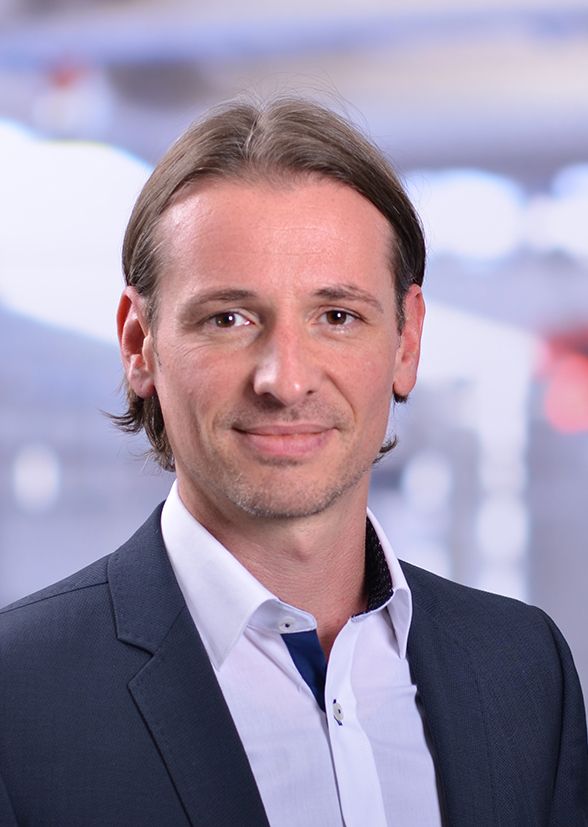
tAno Mateu serves as Chief Information Security Officer (CISO) and Assistant Professor in the Department of CIS within Missouri Valley College's School of Business & Technology, concurrently holding a seat on the President's Cabinet. Based in the Ferguson Center's first floor, his dual role bridges institutional technology leadership with academic instruction in information systems, maintaining active campus presence as evidenced by current contact details including phone 660-831-4033. His research trajectory centers on Information Security and Cybersecurity, directly informed by real-world CISO responsibilities. This synergy enables practical curriculum development in Computer Information Systems where theoretical frameworks intersect with operational security challenges, emphasizing workforce-ready technical competencies within business technology contexts. No documented student advisement records or grant activities appear in directory materials, though his administrative position suggests oversight of campus-wide security infrastructure. The absence of laboratory descriptions or team affiliations in source materials indicates these elements fall outside standard faculty directory reporting parameters for this institution.
Faiz Hamid serves as an Associate Professor in the Department of Management Sciences at Indian Institute of Technology Kanpur. With a Ph.D. in Decision Sciences & Information Systems from IIM Lucknow (2012) and a B.Tech. in Computer Science and Engineering from Institute of Engineering & Management (2007), he brings strong technical and analytical expertise to his academic position. His research interests span Operations Research, Combinatorial Optimization, Network Optimization, and Data Science, with particular focus on transportation systems, pandemic response modeling, and revenue management applications. Dr. Hamid's scholarly work demonstrates consistent publication in high-impact journals including European Journal of Operational Research, Omega, Transportation Research, and IEEE Transactions on Signal Processing. His recent publications reveal a strong trend toward applying optimization techniques to real-world problems, particularly addressing pandemic-related challenges in transportation systems and developing sophisticated mathematical models for railway operations. His 2024 edited volume 'Optimization Essentials: Theory, Tools, and Applications' demonstrates his leadership in the field. Ph.D. Thesis recognized as runner-up for 2014 Best Dissertation Award by The INFORMS Technical Section in Telecommunications Best Paper Award at COSMAR 2010 Doctoral Conference, Indian Institute of Science, Bangalore Professor Dipak C Jain Best Paper Award at IMR Doctoral Conference 2010, IIM Bangalore Silver Medal, National Mathematics Olympiad 2002 Dr. Hamid has advised numerous students and collaborated extensively with researchers globally, particularly in transportation optimization problems. His professional journey includes industry experience as Associate Functional Architect at JDA Software and post-doctoral research at Telecom SudParis, France, before joining IIT Kanpur's faculty.
Professor J. Debus is a distinguished academic in Radiation Oncology at Heidelberg University's Medical Faculty, with extensive research focused on particle therapy, medical physics, and cancer treatment optimization. His work spans clinical trials, radiobiology, and technical innovations in radiation delivery systems. Primary Affiliation: German Cancer Research Center (DKFZ), Heidelberg Research Focus: Particle therapy, radiation oncology, medical physics Key Collaborations: Mein S., Liew H., Tessonnier T., and other leading researchers in radiation oncology Professor Debus' research interests center on advancing particle therapy techniques including proton, carbon ion, and emerging modalities like helium and oxygen ion therapy. His work addresses critical challenges in radiation oncology such as normal tissue sparing, hypoxia-induced radioresistance, and precision treatment delivery. He has made significant contributions to understanding the biological effects of different radiation types and optimizing treatment protocols for various cancer types including head and neck cancers, brain metastases, and prostate cancer. His recent publications demonstrate leadership in clinical trials (GUARD, ESTRON, PROBASE) and technical innovations in radiation delivery systems, particularly in the emerging field of FLASH radiotherapy and ultra-high dose rate treatments. Professor Debus has published extensively on treatment planning optimization, radiation-induced biological effects, and imaging techniques for precise radiation delivery. Leading clinical trials in particle therapy Developing novel techniques for normal tissue protection Advancing understanding of radiation biology across different modalities Professor Debus has secured significant research funding for his work in radiation oncology and particle therapy. His research has contributed to clinical implementation of advanced treatment techniques at the Heidelberg Ion-Beam Therapy Center (HIT), one of the world's leading facilities for particle therapy. He supervises numerous doctoral students and postdoctoral researchers in the radiation oncology field. His laboratory and research team focus on translational research bridging basic radiobiology with clinical applications, with particular emphasis on optimizing treatment protocols for challenging tumor types and improving patient outcomes through precision radiation therapy.
Matthew B. Panzer serves as Associate Dean for Graduate Education and Post-Doctoral Affairs at the University of Virginia's School of Engineering and Applied Sciences, holding professorships in Mechanical & Aerospace Engineering and courtesy in Biomedical Engineering. As Deputy Director of the Center for Applied Biomechanics, he leads research in impact biomechanics and injury prevention. Education: B.S. in Mechanical Engineering, University of Waterloo, 2003 M.S. in Mechanical Engineering, University of Waterloo, 2006 Ph.D. in Biomedical Engineering, Duke University, 2012 Research Focus: Panzer's work employs computational and experimental methods to investigate high-rate non-linear mechanics in tissue mechanics, impact biomechanics, vehicle crashworthiness, military blast/ballistics, and sports injury. Current projects include traumatic brain injury mechanisms in football helmet impacts, biological tissue characterization, human body model development for automotive safety, and protective system design. His approach integrates finite element modeling with experimental validation to translate biomechanical findings into clinical and safety applications. Publication Trends: Recent work (2022-2025) emphasizes brain injury metrics, sex-specific biomechanical responses, and finite element model validation across automotive, sports, and military contexts. Key themes include rotational loading effects, biofidelic model development, and injury risk function derivation, demonstrating strong interdisciplinary integration of neuroscience, engineering, and computational science. Awards: Shannon Fellow (2024-2027) Copenhaver Fellow (2023) MAE Early Career Researcher of the Year (2021, 2022) UVA Research Achievement Award (2019) MAE Young Research of the Year (2018, 2019) Grants and Teaching: Panzer has secured over 40 research grants as Principal Investigator from federal agencies and industry partners. He teaches graduate courses including MAE 6710: Finite Element Analysis (annually since 2015), MAE 7030: Injury Biomechanics, and MAE 6952: Impact Mechanics, mentoring graduate students in biomechanics research despite no specific advisees listed in source materials. Laboratory Leadership: At the Center for Applied Biomechanics, Panzer directs teams conducting experimental testing and computational modeling to advance injury mechanism understanding and develop protective technologies for automotive, sports, and military applications.
Louis B. Kimmelman serves as Professor of Practice at Brooklyn Law School, teaching international arbitration and litigation courses while maintaining an active arbitration practice spanning over 40 years. He specializes in resolving international commercial, construction, and investor-state disputes as an independent arbitrator and holds leadership positions including Chair of the New York International Arbitration Center and co-chair of the Fordham International Arbitration and Mediation Conference. His academic foundation includes: J.D. from Yale Law School B.A. from Yale College Professor Kimmelman's research centers on practical dispute resolution mechanisms, with emphasis on procedural efficiency in international arbitration. His expertise encompasses demonstrative evidence techniques in construction disputes, UNCITRAL rule applications, and cross-border litigation strategy. He actively shapes industry standards through his advisory role in the American Law Institute's Restatement of U.S. Law on International Arbitration project. His publication history since 1975 reveals consistent focus on arbitration procedure evolution, particularly document production mechanisms and tribunal persuasion strategies. Recent works address contemporary challenges like emergency arbitrator applications and digital evidence presentation in multinational construction cases. Professional recognition includes: Fellow of the Chartered Institute of Arbitrators As an educator, he has coached Brooklyn Law School's Vis International Commercial Arbitration Moot Team since 2007, mentoring students in this premier global competition. His professional practice involves high-stakes disputes for corporate and sovereign clients through Sidley Austin LLP (until 2021), Allen & Overy LLP, and O'Melveny & Myers LLP. He drives community engagement through New York Arbitration Week initiatives and the Brooklyn Law School arbitration program, fostering collaboration between practitioners, academics, and students in the dispute resolution field.
Eunsik Kim is a Professor at the University of Windsor , holding a position in the Department of Mechanical, Automotive, and Materials Engineering within the Faculty of Engineering . His research focuses on ergonomics, occupational safety, and biomechanics, with applications in automotive design, workplace safety, and human-machine interaction. He leads the Occupational Safety and Ergonomics research lab , where students explore real-world solutions for challenges such as driver fatigue, musculoskeletal risks in manual labor, and automation in agriculture. Key research interests include: Ergonomics : Optimizing workstation designs, automotive seating, and anti-vibration tools Biomechanics : Analyzing human posture, musculoskeletal loading, and workplace ergonomics Machine Learning : Developing AI-driven systems for posture recognition, workload prediction, and task automation Autonomous Vehicles : Investigating human factors in driving automation and takeover scenarios Education Innovation : Gamification in engineering labs to enhance student motivation and learning Collaborations include projects with Ewha Womans University (South Korea) on autonomous vehicle comfort and a prototype robotic system for mushroom harvesting. His work often bridges theoretical research with practical applications, addressing both industry and academic challenges. Awards and Recognition: Students Ilfeoma Michael and Elnaz Akhavan Rezaee received accolades at the Association of Canadian Ergonomists conference for their lab research Advising and Grants: Professor Kim mentors students in interdisciplinary projects, focusing on ergonomics, robotics, and AI. His research has led to innovations in workplace safety and automated systems, supported by institutional and collaborative funding. Labs/Teams: The Occupational Safety and Ergonomics Lab and partnerships with South Korean institutions drive cutting-edge studies in automotive safety, robotics, and human factors engineering.
Corsin Bisaz serves as a Private Lecturer for constitutional, administrative and international law at the University of Zurich's Faculty of Law while concurrently working as a Clerk at the Swiss Federal Supreme Court since January 2020. His academic position as Privatdozent (PD) represents a significant achievement in the Swiss academic system, requiring habilitation-level qualifications. His research focuses on Swiss constitutional frameworks with particular expertise in direct democracy procedures and electoral law. Bisaz has developed specialized knowledge in the procedural aspects of political rights, evidenced by his extensive contributions to the onlinekommentar.ch commentary platform. His work demonstrates deep engagement with the practical implementation of Switzerland's unique democratic systems across cantonal jurisdictions. The publication record reveals a concentrated research trajectory centered on the Federal Law on Political Rights (BPR), with multiple detailed commentaries covering specific articles of this foundational legislation. His scholarly output shows particular attention to mandate distribution mechanisms, electoral procedures, and the technical aspects of implementing proportional representation systems within Switzerland's federal structure. As both an academic and judicial clerk, Bisaz bridges theoretical legal scholarship with practical application in Switzerland's highest court. His dual role provides unique insights into the interpretation and implementation of constitutional principles within the Swiss political system, particularly regarding direct democratic instruments and electoral processes.
Gilles Savard is a Full Professor in the Department of Mathematics and Industrial Engineering at Polytechnique Montréal. He serves as Director General of the Institute for Data Valorization (IVADO), a position he held until July 2021 when Luc Vinet succeeded him. He is also a member of the Research Group in Decision Analysis (GERAD) and the Interuniversity Research Center on Enterprise Networks, Logistics and Transportation (CIRRELT). In October 2021, he was appointed Acting President of Polytechnique Montréal. His research spans operations research, revenue management, and mathematical optimization with applications in transportation networks, energy systems, and logistics. He has made significant contributions to bilevel programming, network pricing, demand forecasting, and combinatorial optimization. His work bridges theoretical advances in mathematical programming with practical applications in revenue management systems across transportation and energy sectors. Analysis of his recent publications reveals a strong focus on integrating machine learning techniques with traditional optimization methods for revenue management problems. His work increasingly addresses smart grid optimization and energy market applications while maintaining core expertise in transportation revenue systems. The publications demonstrate sophisticated use of bilevel programming frameworks to model complex decision hierarchies in pricing problems. Order of Academic Palms from the French Ministry of National Education (2018) Innovation Personality Award from ADRIQ (2017) Professor Savard has supervised 23 PhD students and 28 Master's students throughout his career, with research spanning revenue management, transportation optimization, bilevel programming, and energy systems. His students have addressed problems in airline revenue management, railway demand forecasting, media placement optimization, and inventory management. He has participated in numerous research projects related to transportation networks, smart grid systems, and revenue optimization frameworks. Professor Savard has been instrumental in establishing Montreal as a hub for artificial intelligence research through his leadership at IVADO.
Cecile Degiovanni is a third-year DPhil student in Legal Philosophy at the University of Oxford and holds the position of Stipendiary Lecturer at Hertford College. She is affiliated with Balliol College and the Oxford Law Faculty. Her research focuses on the ethical and legal dimensions of waiving fundamental rights, such as the right to life, privacy, and physical integrity. She explores whether individuals should possess the power to relinquish these rights without legal consequences. Education and Background: Ecole Normale Supérieure of Paris (continental philosophy) Paris I Panthéon-Sorbonne Agrégation de philosophie (French philosophy teaching credential) Ecole des Hautes Etudes en Sciences Sociales (analytical philosophy) New York University and Oxford as visiting student Paris X Nanterre Law School Professional Experience: Law clerk at Cour de Cassation (French Supreme Court for private/criminal law) Law clerk at Conseil d'Etat (French Supreme Court for administrative law) Assistant to a Judge at the European Court of Human Rights (Luxembourg seat) Research Interests: Philosophical comparisons between common and civil law systems Freedom of speech (part of Egalibex research group) Synthesis of continental and analytical philosophical traditions Leadership: Representative of young researchers for SFPJ (French branch of the International Association for the Philosophy of Law until 2028).