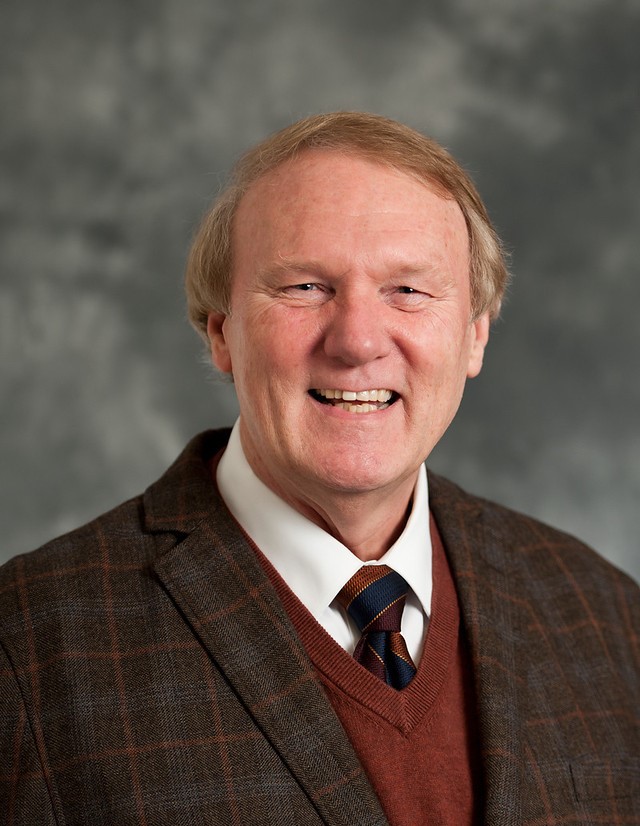
Dr. Geoffrey Fulkerson is a Professor of Philosophy & Theology at Dordt University, where he combines Christian theology with interdisciplinary approaches to address challenges in the church and broader society. His work bridges theology, social theory, and contextual analysis, emphasizing collaborative scholarship. PhD in Systematic Theology, Trinity Evangelical Divinity School (2018) MDiv, Trinity Evangelical Divinity School (2006) BS in Journalism, University of Illinois (2001) His research focuses on the intersection of creation theology, ecclesiology, and place-based contextual analysis, with a strong emphasis on integrating modern scientific insights into theological frameworks. He has contributed to projects exploring the doctrine of creation, theological responses to death, and the evolution of evangelical thought. Dr. Fulkerson has secured substantial grants, including a $4.16 million John Templeton Foundation award (2019–2022) for 'Evangelical Theology and the Doctrine of Creation,' and has served as guest editor for the Trinity Journal in 2018 and 2017. His work highlights collaboration across disciplines and institutions. 2021 DoSER Science for Seminaries Grant ($75,000) 2019 John Templeton Foundation Award ($4.16 million) 2015 Templeton Religion Trust Grant ($3.38 million) 2014 & 2013 Kern Family Foundation Oikonomia Grants (contributor) Dr. Fulkerson teaches courses in Christian Philosophy, Ethics, Ecclesiology, and place-based theological studies, reflecting his commitment to applying theological insights to practical and cultural challenges.
Erik Waaler is a Professor of Theology, Religion and Philosophy at NLA University College in Sandviken, Bergen, Norway. He holds a prominent position in biblical studies with a particular focus on the New Testament, intertextuality, and the intersection of biblical scholarship with archaeology and historical context. His educational background includes: 1984: Cand. Theol. from Det teologiske Menighetsfakultet (MF) 1997: Master in Missiology from Fuller Theological Seminary - School of World Mission 2005: Dr. Theol. in New Testament from Det teologiske Menighetsfakultet (MF) Professor Waaler's primary research interests center on New Testament studies, particularly intertextuality and re-contextualization in First Corinthians and the Gospel of Matthew. His work bridges biblical scholarship with archaeological evidence, especially regarding Hebrew inscriptions from sites like Ketef Hinnom and Khirbet Qeiyafa. He has made significant contributions to understanding Pauline theology, particularly how Paul reinterprets Old Testament texts in his writings. His secondary expertise lies in applied Jewish studies, history, archaeology, and paleography related to the Levant. This interdisciplinary approach allows him to examine biblical texts within their historical and cultural contexts, providing fresh insights into early Christian interpretation of Jewish scripture. Waaler's scholarly output demonstrates a consistent focus on how New Testament authors, particularly Paul, engage with and reinterpret earlier biblical texts. His work spans from detailed analysis of specific passages like the Shema in Deuteronomy 6:4 as reinterpreted in 1 Corinthians, to broader studies of intertextual methods. More recently, he has collaborated on technical archaeological projects using spectral imaging to analyze ancient inscriptions, showing his willingness to engage with cutting-edge methodologies to illuminate ancient texts. His research bridges the gap between traditional biblical scholarship and archaeological evidence, creating a more robust historical understanding of early Christian interpretation. Professor Waaler has been actively involved in projects examining Matthew's use of the Old Testament, Jewish use of the Old Testament with focus on Qumran and Josephus, inscriptions from Khirbet Qeiyafa, and Pauline Theology. His work demonstrates a sustained commitment to understanding the historical and textual foundations of early Christianity through meticulous analysis of both textual and archaeological evidence.
James Davila is a Professor of Early Jewish Studies at the School of Divinity, University of St Andrews, UK. His work focuses on ancient Jewish and Christian religious texts, with particular expertise in the Dead Sea Scrolls, Old Testament Pseudepigrapha, and late antique theological developments. Research Focus: Interdisciplinary studies of Second Temple literature Specialization: Merkavah mysticism, scriptural exegesis, and ritual studies His research bridges the Jewish and Christian scriptural traditions, examining how ancient texts like 4 Ezra and Hekhalot literature influenced early religious thought. Current projects include analysis of ritual practices in gnostic and mystical traditions. Selected publications highlight his contributions to understanding non-canonical scriptures (2013-2014), including critical editions and studies of ritual frameworks in ancient Jewish mysticism. Professional Networks: Society of Biblical Literature, British New Testament Association Academic Leadership: Principal Investigator for British Academy and Leverhulme Trust projects Contact: jrd4@st-andrews.ac.uk
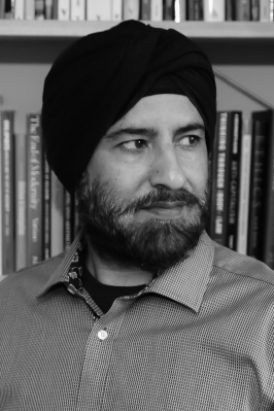
Arvind-Pal S. Mandair is a Professor in the Department of Asian Languages and Cultures at the University of Michigan. He holds the Tara Singh and Balwant Kaur Chattha, Gurbax Singh and Kirpal Kaur Brar Professor of Sikh Studies and serves as Associate Faculty in Asian/Pacific Islander American (A/PIA) Studies. His academic work bridges Global Philosophies, Postcolonial Theory, and Religious Studies, with a focus on Sikh and South Asian traditions. Education: Ph.D. and MA in Philosophy/Religion (University of Warwick, UK, 1999); Ph.D. and B.Sc. in Chemistry (University of Aston, CNAA, 1989) Key research areas include cross-cultural philosophy, decolonial theory, consciousness studies, and the intersections of religion and politics. He founded the journal Sikh Formations: Religion, Culture and Theory and co-edits book series on Critical Sikh Studies and Translation and Religion. His recent publications explore themes such as the Śabad in Sikh philosophy, diasporic identities, and sociopolitical dimensions of Sikh thought. He has also authored influential works like Violence and the Sikhs (2022) and Sikh Philosophy (2022), which interrogate colonial legacies and modern theological frameworks. Mandair’s teaching integrates neuroscience, spirituality, and political theory, particularly in courses like Race, Religion and Caste in India and the USA and Exploring Consciousness . He co-founded the Geophilosophies project, which pluralizes philosophical inquiry beyond Eurocentric paradigms.
Professor Richard North (University College London, Department of English Language and Literature) is a leading expert in Anglo-Saxon and Old Norse studies. His career spans teaching and research in Old English, Middle English, and Old Icelandic literatures, with particular focus on Beowulf , medieval sensory perception , and pre-Christian Germanic religions . Affiliated with UCL since 1989, he was promoted to Reader in 1999 and Professor in 2007. Research interests include: Anglo-Saxon paganism and Christian syncretism Old Norse mythological analysis (Freyr, Loki, Baldr) Viking Age cultural exchange between England and Scandinavia Historical linguistics across Germanic languages Medieval manuscript studies His publications demonstrate interdisciplinary approaches combining literary analysis with archaeology, agronomy, and sensory studies. Recent works explore Cnut's political ideology , Old English poetic meter , and medieval animal symbolism .
Judith Wolfe is a Research Fellow at the Institute for Religion and Critical Inquiry, part of the Faculty of Theology and Philosophy. Her work bridges theology, philosophy, and cognitive science, focusing on religious imagination, narrative theory, and the intersection of art and meaning. She explores how biblical narratives shape theological understanding and investigates the cognitive effects of engaging with art and fiction. Her interdisciplinary approach addresses questions of perception, emotion, and the role of faith in contemporary contexts. Her research interests include the philosophical underpinnings of religious attitudes, the role of narrative in transmitting knowledge, and the empirical study of religious experience. Notable contributions address topics like the buffering effect of fiction on negative emotions, cross-modal associations in art, and the renewal of perception through religious faith. Wolfe has collaborated extensively with scholars such as Marina Iosifyan on studies of art perception and narrative engagement. Her publications span journal articles and edited volumes, reflecting her commitment to advancing interdisciplinary dialogue between theology, philosophy, and empirical research.
Thomas Fulton is a Professor of English at Rutgers University since 2003. He specializes in early modern English literature with emphases on John Milton, William Shakespeare, and intersections of politics, religion, and book history. His research examines how biblical interpretation shaped literary and political thought in the Renaissance. Key works include Historical Milton (2010), The Book of Books (2021), and co-edited volumes like The Bible on the Shakespearean Stage (2018). He has held prestigious fellowships from the Folger Library, NEH, and Beinecke Library. Teaching highlights include leading a travel course to London's Royal Shakespeare Company and courses on Renaissance drama and political theory. Awards include the Goheen Prize and MLA's Best Special Award. Education: PhD Yale University, BA University of Wisconsin-Madison. Research interests span early modern manuscript culture, Reformation print networks, and the performative dimensions of religious texts. Current projects explore adversarial reading practices and gendered interpretations in early modern literature.
Ronnie Littlejohn is Professor of Philosophy and Director of Asian Studies at Belmont University, within the College of Liberal Arts & Social Sciences. He holds a Ph.D. from Baylor University with a specialization in Comparative Philosophy, Chinese thought, Ethics, and Early Modern Thought. His academic work bridges Eastern and Western philosophical traditions, with a particular focus on Daoism, Confucianism, and moral philosophy. Education: Ph.D., Baylor University Post-doctoral Studies: University of Chicago, University of Hawaii, University of Arizona, Harvard University, Notre Dame, Pennsylvania State University Dr. Littlejohn’s research interests include comparative philosophy, Chinese philosophy, ethics, and the philosophy of language. He has conducted extensive field research on Zhengyi Daoist lineages in China and has been deeply involved in promoting Asian studies in the U.S. through leadership roles in ASIANetwork and the National Consortium for Teaching about Asia. His scholarship emphasizes the relevance of classical Chinese thought to contemporary ethical and philosophical debates. His recent publications span topics such as Daoist sacred sites, moral education, philosophical dialogue in Chinese thought, and the reinterpretation of classical texts like the Daodejing and Zhuangzi . The articles reflect a strong thematic engagement with Daoism, Confucian ethics, comparative hermeneutics, and the application of wu-wei to Western moral philosophy. His work consistently bridges historical analysis with contemporary philosophical inquiry. Scientific Awards and Honors: Tennessee Professor of the Year, 2015 Virginia M. Chaney Distinguished Professor Award, 2013 Distinguished Service Award, ASIANetwork, 2021 International Talent Cooperation Programme Award, Henan Province, China, 2016 Distinguished Service Award, International East-West Center Alumni Association, 2006 Award for Innovative Excellence in Teaching, 2003 Dr. Littlejohn has served as a grant director and co-director for multiple educational initiatives, including the Tennessee National Consortium for Teaching about Asia and the National Consortium for Teaching about East Asia. He has directed Belmont University’s student travel programs in China and Hawaii and has led numerous faculty development workshops. He is also an active contributor to academic journals and encyclopedias, including the Internet Encyclopedia of Philosophy and the International Encyclopedia of Ethics . He has directed several symposia on Asian studies at Belmont and has been a keynote speaker at international conferences in China and the U.S. His work in media includes television programs on Daoism and contributions to National Geographic ’s Sacred Journeys series.
Jeffrey Shoulson is Professor of English at Brandeis University, serving concurrently as Vice Provost for Undergraduate Affairs and Dean of Undergraduate Studies. His academic career spans roles at the University of Connecticut, Middlebury College, and University of Pennsylvania. Ph.D., Yale University M.Phil., University of Cambridge B.A., Princeton University Specializing in early modern literature and culture, Shoulson's research examines Jewish-Christian intellectual encounters (16th-17th centuries), Bible translation history, and religious cultural intersections. His work bridges literary analysis with historical research on cultural intermediaries. Recent publications analyze early modern moral frameworks (2025), Renaissance global networks (2019), and comparative inquisitorial practices (2023). Articles demonstrate expertise spanning religious ritual (2022), diasporic identity (2017), and Hebraic influence on English literature (2015). Doris and Simon Konover Chair of Judaic Studies (2012-2017) Ruth and Lillian Marino Chair (2014) Salo W. Baron Prize (2002) Fulbright Fellowship (1989-1990) Shoulson's administrative leadership includes directing undergraduate studies while maintaining active research. He has held prestigious fellowships at the Katz Center for Judaic Studies and Fulbright programs.
Ida Zilio-Grandi is an Associate Professor in the Department of Asian and North African Studies at Ca' Foscari University of Venice, where she specializes in Arabic Language and Literature (SSD L/OR-12). She also holds teaching responsibilities in Islamic Thought and Theology (SSD L/OR-10) and has been actively involved in multiple interdisciplinary programs, including Master’s degrees in Interfaith Dialogue, Islamic Philosophy, and Mediterranean Studies. From 2019 to 2023, she served as Director of the Italian Cultural Institute in Abu Dhabi under the Ministry of Foreign Affairs, reflecting her deep engagement with cultural diplomacy. Education Graduated in Oriental Languages and Literatures (Arabic) from Ca' Foscari University of Venice. PhD in “Studies on the Middle East and the Maghreb from the founding of Islam to the Present day” at the University of Naples “L’Orientale”. Research Interests Her scholarly work centers on Quranic studies, Islamic ethics, and Arabic literature. She investigates religious figures in the Quran (e.g., Mary, Cain, Pharaoh, Jonah), Islamic moral concepts such as gratitude (šukr), patience (ṣabr), tolerance, and mercy, and the ethical dimensions of employment, speech, and hospitality. Her research draws on classical exegesis, adab literature, and contemporary Islamic thought, bridging historical analysis with modern applications. She also explores interfaith dialogue, particularly between Islam, Christianity, and Judaism, and cultural relations between the Islamic world and the West. Publication Trends Her recent publications (2020–2025) reflect a sustained focus on Islamic virtues, ethics, and Quranic interpretation. These include monographs on the moral life of Muslims, studies on Sufism in the UAE, Abraham’s legacy, and environmental ethics in Islam. Her work combines rigorous philological analysis with philosophical insight, often published in high-impact journals and academic volumes. Scientific Service and Recognition Member of the “Committee for Islam in Italy” at the Ministry of Interior (since 2015). Member of the Scientific Committee of the “Dialogue méditerranéen sur la modernité et le religieux” at Collège des Bernardins, Paris. Sits on the editorial boards of Annali di Ca’ Foscari , Islamo-Christiana , and L’opera Comune . Invited Researcher at the Pontificio Istituto di Studi Arabi e d’Islamistica (PISAI), Rome (since 2017). Advising, Grants, and Leadership She has coordinated several Master’s programs at Ca' Foscari, including the LM “Languages, Economies and Societies of Asia and Mediterranean Africa (LEISAAM)” and the international LM “MIM – Crossing the Mediterranean.” She is the Erasmus+ Coordinator for partnerships with the University of Jordan and Mohammed V University in Rabat. She led the research project The Languages of the Absolute (2011–2015), funded by Ca' Foscari University. Though no formal students are listed, her mentorship is evident through her academic leadership and editorial roles. Labs and Research Groups She is affiliated with several research centers, including the Ca' Foscari Center for Studies on Human Rights (CESTUDIR), the Center for Contemporary Middle East Studies (CEM), and the Religion, Law and Economy in the Mediterranean Area Center (REDESM). She is also a member of the Arab-Christian Research Group (GRAC) and the Lay Association for Biblical Culture “Biblia.”
Gary Gilbert is an Associate Professor in the Department of Religious Studies, with scholarly expertise in Ancient Jewish History, Jewish/Christian relations, Jewish art, synagogue studies, and the development of early Christianity. His academic work bridges historical, religious, and cultural analyses of Second Temple and early rabbinic Judaism, as well as the origins of Christianity within its Roman and Jewish contexts. B.A., Haverford College M.A., Columbia University Ph.D., Columbia University His research focuses on the intersection of Jewish life with broader civic and imperial structures in antiquity. Key interests include gentile participation in Jewish communities, the influence of Roman political ideology on early Christian texts, and the evolution of Jewish-Christian relations. He also investigates Jewish visual culture, particularly the symbolism of the menorah in ancient art. His publications reflect a strong engagement with textual and material evidence from the ancient Mediterranean world. Themes across his recent and forthcoming articles include Jewish urban life, the representation of Jewish identity in art and literature, and the theological and political dimensions of New Testament writings—especially the Acts of the Apostles. His scholarship often employs interdisciplinary methods combining history, archaeology, and literary analysis. Israel Institute, Course Development Grant (2023) Summer Fellow, Schusterman Center for Israel Studies (2019) Visiting Lecturer, University of Warsaw (2019) Visiting Scholar, Oxford Centre for Hebrew and Jewish Studies (2005–2006) Claremont Graduate University, Humanities Electronic Media Project (2000) Salo and Jeanette Baron Dissertation Prize nomination (1992) Gilbert has contributed significantly to pedagogical innovation, particularly through integrating technology into religious studies education. He has advised on digital humanities projects and developed curricula on Jewish and Christian origins. Though no formal advisees are listed, his academic mentorship extends through collaborative research, guest lectureships, and participation in scholarly centers. He has secured external funding for research and course development, demonstrating sustained scholarly productivity and institutional engagement. His affiliations with leading centers such as Oxford, the Schusterman Center, and the University of Warsaw highlight his international scholarly presence. He continues to publish in major academic venues and contribute to authoritative reference works like The Jewish Annotated New Testament .
Eddis Miller is an Associate Professor and Department Chairperson in the Department of Philosophy & Religious Studies at Pace University's Dyson College of Arts and Sciences. They are based in the New York City campus and actively contribute to academic life through teaching, research, and university service. Education: PhD in Religious Studies, University of Pennsylvania, 2008 BA in Philosophy and Religious Studies, SUNY Stony Brook, 2002 Their research focuses on continental philosophy, particularly the works of Jacques Derrida and Immanuel Kant, with strong interests in deconstruction, philosophy of religion, ethics, and the intersections between theology and political theory. They explore themes such as unconditional hospitality, messianism, moral law, and the role of religion in questions of economic justice. Their scholarship engages deeply with hermeneutics, postmodern theology, and interreligious dialogue, especially with regard to Islamic thought. Their publications reflect a consistent engagement with high-level philosophical discourse, particularly around Derrida’s deconstructive ethics and Kantian moral philosophy. The works span topics from ancient and medieval theology to contemporary political and economic critiques, showing a broad chronological and thematic range grounded in rigorous textual and philosophical analysis. Professional Service: Committee Member, NYFC Student Affairs, Athletics, Publications, and Scholastic Standing Committee Dr. Miller advises on academic policy and student affairs at the institutional level. While no formal advisees are listed, their leadership as department chair and extensive teaching portfolio suggest strong mentorship roles. Though no grants or awards are explicitly mentioned, their conference presentations at venues like the UK Kant Society and the Left Forum indicate active scholarly participation. Laboratories, Research Groups, or Teams: No specific labs or research centers are mentioned, but Dr. Miller has presented at interdisciplinary forums such as the Religion Graduate Students’ Association of Columbia University and the Center for Ethical Thinking at Pace University, suggesting collaborative engagement across institutions.
Prof. Dr. Christoph Markschies is a leading academic and theologian, serving as President of the Akademienunion (Union of German Academies of Sciences and Humanities) and the Berlin-Brandenburgische Akademie der Wissenschaften (BBAW). He holds a professorship at Humboldt-Universität zu Berlin, specializing in early Christian history, Gnosticism, and late antiquity. His work bridges theological scholarship with institutional leadership, emphasizing interdisciplinary research and academic freedom. Education: Advanced training in theology and religious studies, reflected through his extensive publications and academic roles. His research focuses on early Christian texts, church history, and the intersection of religion and culture in antiquity. Research interests include the development of Christian doctrines, Jewish-Christian relations, and the methodologies of theological historiography. Recent projects address the legacy of theologians like Ernst Troeltsch and the dynamics of early ecumenical councils. He advocates for science communication in schools and has been vocal on academic governance, emphasizing ethical use of technology and sustainability in research practices. His leadership roles include steering initiatives like the 'Geisteswissenschaft im Dialog' program, fostering dialogue between scholars and the public.
Grant MacAskill is the Kirby Laing Chair of New Testament Exegesis at the University of Aberdeen. He holds a Ph.D. from the University of St Andrews (2005). His research focuses on New Testament studies, early Judaism, Enochic traditions, and the intersection of theology with autism and disability studies. He has authored influential books such as Union with Christ in the New Testament and Autism and the Church , and co-edits the Studia in Veteris Testamenti Pseudepigrapha series with Brill. Awards include the British Academy Mid-Career Fellowship (2021) for his project on 2 Enoch and a John Templeton Foundation grant (2014) for work on intellectual humility in the New Testament. Research interests span participatory theology, biblical ethics, and the application of New Testament thought to contemporary issues like neurodiversity. He co-directs the Centre for Autism and Theology, promoting inclusive theological engagement. His recent publications address topics such as Enochic literature in late antiquity, biblical interpretation in autism studies, and early Christian apocalyptic thought. Grants and fellowships include major support for projects like The Entangled Enoch and interdisciplinary work on disability and religion. MacAskill’s academic service includes editorial roles at journals like New Testament Studies and Journal of Disability & Religion . He has advised on projects ranging from grave goods practices to ethical biotechnology, applying biblical insights to modern dilemmas. His work bridges historical exegesis, systematic theology, and practical theology, emphasizing theological engagement with marginalized communities and ethical challenges.
Nathan Eubank holds the Rev. John A. O’Brien Associate Professorship in Theology at the University of Notre Dame. His primary research focuses on Christianity and Judaism in antiquity, with specialization in the Synoptic Gospels and Pauline epistles. He earned his Ph.D. from Duke University and currently explores themes of merit in early Christian thought and the construction of Christian origins. Education: Ph.D. in Theology, Duke University His research interests include the reception of New Testament texts in antiquity, particularly Matthew’s Gospel and Paul’s letters. He examines how early Christian communities interpreted scriptural traditions while navigating tensions between insider/outsider dynamics and economic metaphors in divine relationships. Recent work analyzes texts like Matthew 5:25-26’s legal imagery and Paul’s use of δικαιοσύνη in discussions of generosity. His 2013 monograph explores Matthew’s celestial economy through debt, wages, and treasure imagery. No scientific awards are listed, though his scholarly contributions significantly impact New Testament studies. He advises graduate students in early Christian literature and runs a research group focused on biblical interpretation in antiquity.