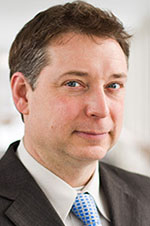
John Pandolfino serves as Chief of Gastroenterology and Hepatology and Hans Popper Professor of Medicine at Northwestern University's Feinberg School of Medicine, where he leads esophageal research and clinical programs. His expertise spans esophageal motor disorders, achalasia, GERD, and eosinophilic esophagitis with significant contributions to diagnostic standardization. His educational credentials include: MD from Loyola University/Stritch School of Medicine (1993) Internal Medicine Internship/Residency at Northwestern University McGaw Medical Center (1994-1996) Gastroenterology Fellowship at Northwestern University McGaw Medical Center (2001) Dr. Pandolfino's research integrates physiology and pathophysiology to address complex esophageal conditions. His work pioneers standardized esophageal function measurements, explores anxiety's role in swallowing disorders, and develops wireless monitoring for acid reflux therapy. Current investigations focus on predicting treatment responses in eosinophilic esophagitis and cognitive interventions for esophageal disease management. His 2025 publications reveal three key trends: (1) Advancement of cognitive/online interventions for symptom management, (2) Refinement of diagnostic protocols for achalasia using imaging, and (3) Critical evaluation of AI applications in motility interpretation. These works collectively enhance diagnostic precision while emphasizing human expertise in complex cases. Notable honors include: Election to American Society of Clinical Investigation (2018) AGA Research Mentor of the Year (2016) Raymond Clouse Award for Clinical Research (2009) Multiple mentorship awards from Feinberg School of Medicine As a dedicated mentor, Dr. Pandolfino has guided numerous trainees evidenced by his Research Mentor of the Year award and Outstanding Mentor recognition. His leadership extends to editorial roles at Gastroenterology and Clinical Gastroenterology and Hepatology , plus advisory positions for NIH and industry partners including Medtronic and Phathom Pharmaceuticals. Current grants support his work on cognitive interventions (ACCORD study) and physiological predictors of treatment response. He directs Northwestern's esophageal research program within the Division of Gastroenterology and Hepatology, collaborating with the Northwestern Scleroderma program and NUCATS. His team develops translational approaches for motility disorders while maintaining strong hospital affiliations with Northwestern Memorial Hospital.