Lillie Padilla is an Assistant Professor of Spanish Linguistics at Sam Houston State University's Department of World Languages and Cultures. Holding a Ph.D. and M.A. in Spanish Linguistics from Arizona State University alongside a Bachelor of Arts from the University of Ghana, her research explores interdisciplinary connections between: Afro-Latinx representation in educational materials Discourse analysis and language ideologies Sociolinguistic studies in Equatorial Guinea Critical race theory applications in language teaching Her work focuses on Spanish subject pronoun expression patterns in multilingual contexts and curriculum development for inclusive pedagogy. Recent publications examine: Representation gaps in Spanish language textbooks Methodological challenges in Equatorial Guinea research Critical discourse analysis of Netflix's Elite series Intersectional representation of Afro-Latinx women Scientific achievements include: Finalist for American Association of Linguistics 2025 award for co-edited volume Representation, Inclusion and Social Justice in World Language Teaching Padilla's research continues to shape conversations about linguistic diversity and marginalized voices in language education through both empirical studies and theoretical frameworks.
Sharese King is the Neubauer Family Assistant Professor of Linguistics at the University of Chicago, where she has taught since 2018. She earned her Ph.D. and Master's in Linguistics from Stanford University, focusing on language variation across African American communities. Her research bridges sociolinguistics, critical race theory, and phonetics to examine how African American speech is constructed, racialized, and socially evaluated. Education: Ph.D., Linguistics, Stanford University (2018) M.A., Linguistics, Stanford University Research Interests: Sociolinguistics Language Variation & Change African American Language Critical Race Theory Phonetic and experimental analysis Dialect and judicial systems Notable Contributions: Interdisciplinary studies on raciolinguistics and courtroom bias Analysis of /s/ articulation in intersectional contexts Reconceptualization of AAVE as AAL to emphasize linguistic diversity Fieldwork in Bakersfield, Rochester, and Chicago Publications in American Speech , Journal of Sociolinguistics , Language , and Nature Scientific Awards: Provost's Postdoctoral Fellowship Neubauer Family Assistant Professorship Labs & Projects: Co-founder of the Chicagoland Language Project
Ameil Joseph is an Associate Professor at McMaster University's School of Social Work, where they contribute to critical scholarship at the intersection of mental health, race, and social justice. Their work examines how ideas about difference, normalcy, sexuality, eugenics, race, ability and mental 'illness' cohere and perform within policy, law and practice, with over a decade of professional experience in mental health settings including supportive housing, settlement services, crisis respite, and forensic community treatment. Education: Ph.D in Social Work, York University (2009-2014) MSW, Wilfrid Laurier University (2005-2007) BA in Psychology, University of Waterloo (1998-2003) Dr. Joseph's research engages with critical mental health, postcolonial theory, critical race theory, and critical disability studies to examine the historical production of ideas about difference. Their scholarship particularly focuses on how these ideas manifest in mental health systems, immigration policy, and criminal justice, with attention to issues of social justice, violence, ethics, and confluence. Their work bridges theoretical frameworks with practical implications, addressing the complex interplay of colonialism, racism, sanism, and eugenics in contemporary social systems. Analysis of Dr. Joseph's recent publications reveals a sustained focus on colonial and eugenic violence within mental health, immigration, and criminal justice systems. Their scholarship consistently examines how racism, sanism, and ableism intersect to produce particular forms of state violence, particularly against racialized immigrants with mental health conditions. Recent work has expanded to address temporal dimensions of oppression, data colonialism, and community responses to grief and loss during the pandemic, demonstrating both theoretical sophistication and practical relevance to current social issues. Scientific Awards: University Scholar 2025 - Recognized for research leadership and impact among eight McMaster professors honored as University Scholars Dr. Joseph has secured significant research funding, including nearly $75,000 from the Social Sciences and Humanities Research Council (SSHRC) for community-engaged projects addressing social justice issues. Their teaching portfolio includes advanced courses on critical mental health perspectives, race and colonialism in Canadian society, and social justice theory. While specific graduate students aren't listed in available materials, their extensive co-author network suggests active mentorship and collaboration. Dr. Joseph contributes to community-based initiatives in Hamilton addressing racism in healthcare and mental health systems, connecting academic scholarship with practical community responses to systemic issues. Dr. Joseph maintains an active presence in community responses to contemporary challenges, particularly through initiatives addressing grief during the pandemic and systemic racism in healthcare. Their work exemplifies the integration of scholarly rigor with community engagement, demonstrating how academic research can inform and be informed by real-world social justice efforts.
Maile Arvin is a Kanaka Maoli feminist scholar and Assistant Professor at the Department of Ethnic Studies, University of Hawaiʻi at Mānoa. Her research and teaching focus on Indigenous relationships to land, histories of race and settler colonialism in Hawaiʻi, Oceania, and the United States. Previously, she was faculty in History and Gender Studies at the University of Utah and founding director of the Center for Pasifika Indigenous Knowledges. PhD in Ethnic Studies, University of California San Diego (2013) MA in Ethnic Studies, University of California San Diego (2009) BA in English, Swarthmore College (2005) Her research examines: Colonial production of racial categories, particularly Polynesians as an 'almost white race' in historical social science History of incarceration of Native Hawaiian children in government institutions (1865–1960s) Intersection of settler colonialism and Indigenous feminisms Critique of eugenics and genomic studies in the Pacific Community-engaged memorialization projects in Hawaiʻi Recent scholarly trends include analyses of Indigenous sovereignty, critiques of settler colonial whiteness, and interdisciplinary studies of race-gender dynamics. Arvin's publications explore Polynesian racialization, decolonial feminism, and the socioeconomic impacts of colonial institutions. NEH Chair's Grant for Nā Lei Poina ʻOle ACLS Digital Justice Seed Grant Arvin leads Nā Lei Poina ʻOle (Beloved Children Never Forgotten), a community history project about reformatories and industrial schools in Hawaiʻi. In collaboration with Kawela Farrant and the North Shore Community Land Trust, this project uses archival and oral histories to confront the legacy of child incarceration. She also critiques the nonprofit-industrial complex's role in limiting Indigenous sovereignty.
Sakari Melander is a Professor at the Faculty of Law , University of Helsinki, specializing in Criminal Law , with a focus on constitutionalization, Europeanization, and sentencing policies. His work bridges theoretical criminal law with practical legislative and policy challenges. Key research areas include EU criminal law, constitutional constraints on criminal legislation, and general doctrines of criminal law. He has extensive experience in parliamentary legal consultation, providing expert opinions to Finland’s Legislative Committees (e.g., on immigration control, anti-corruption directives, and digital evidence handling). Recent publications address topics like EU corporate sanction policies, constitutionalization of criminal law, and reforms in Finnish sentencing systems. His 2025 article in the New Journal of European Criminal Law explores balancing administrative and criminal sanctions in the EU. Scientific awards include: Hilkka ja Otto Brusiin Foundation Thesis Prize (2001) Magister Bonus – Good Teacher Award (2014) Primustohtori Award (2010) Year’s Teacher (2010) Year’s Opponent (2008) He leads research projects such as Criminal Law Under Pressure: Differentiation and Harmonization (2012-2015) and Assessment of Human Trafficking Sanction Practices (2021-2022), and supervises doctoral theses on criminal law topics.
Alison Ledgerwood is a Professor in the Department of Psychology at the University of California, Davis, and Principal Investigator of the Attitudes and Group Identity Lab. Her research examines how social context shapes attitudes and preferences, with a focus on open and inclusive scientific practices. Ph.D., Social Psychology, New York University (2008) M.A., Psychology, New York University (2006) B.A., Psychology, Amherst College (2003) Her research explores psychological distance , framing effects , and system justification theory , while methodologically advancing preregistration , collaborative science , and equity in publishing . She also investigates group identity dynamics and implicit/explicit bias measurement . Recent publications highlight her work on racial bias methodology , open science reform , and contextual framing . Awards include the 2024 Distinguished Service to the Society award, 2021 UC Davis Advising and Mentoring Award, and 2017 SPSP Service to the Field award. 2024 Distinguished Service to the Society, SPSP 2021 UC Davis Graduate Advising and Mentoring Award 2017 Service to the Field, SPSP Hellman Fellowship (2010-2011), UC Davis UC Davis Chancellor's Fellow APS Fellow SESP Fellow Ledgerwood advises on scientific integrity through roles like Chair of the Transparency and Openness Promotion (TOP) II Guidelines Task Force and Anti Colorism and Eurocentrism in Methods and Practices (ACEMAP) Task Force. Her lab fosters contextual evaluation studies and psychological distance frameworks .
Lena Berggren serves as an Associate Professor in the Department of Historical, Philosophical and Religious Studies at Umeå University, Sweden, with her office located in Humanisthuset (HUM.H.125), Umeå. She holds the title of Docent and has been honored as a Distinguished university teacher for exceptional pedagogical contributions. Her academic qualifications include the Swedish Docent credential (a post-doctoral habilitation) and recognition as a Distinguished university teacher, reflecting dual expertise in research and education. Berggren's research centers on Swedish fascism, antisemitism, and ultra-nationalism during the interwar period, with specific focus on clerical fascism intersections with Lutheranism and völkisch thought. She simultaneously advances university pedagogy through investigations into scientific methodology development and assessment strategies for students, creating a unique bridge between historical scholarship and educational innovation. Analysis of her publication trajectory reveals persistent examination of extremist ideologies' historical roots and modern manifestations, culminating in her 2024 co-authored book '100 år av svensk nazism' which directly addresses contemporary far-right movements in Sweden. Her scientific recognition includes: Distinguished university teacher award Berggren secured research funding for the project 'Swedish fascism 1920-1950' (2007-2008), demonstrating sustained investigative focus. While no formal advisee list is documented, her pedagogical publications indicate active mentorship in historical methodology and academic writing development.
Tithi Bhattacharya is a Full Professor in the Department of History at Purdue University. She holds a PhD from the University of London and is renowned for her work in South Asian history, Transnational Gender, Colonialism, and Global History. Bhattacharya is the author of influential books including Ghostly Past, Capitalist Presence (Duke, 2024) and The Sentinels of Culture (Oxford, 2005), and co-author of the widely translated Feminism for the 99%: A Manifesto (Verso, 2019). Her educational background includes a PhD from the University of London. This foundational training has equipped her to critically engage with colonial and postcolonial histories, Marxist theory, and feminist praxis. Bhattacharya's research interests span Social Reproduction Theory, Marxist feminism, and the intersections of class, gender, and colonialism. She examines how capitalism relies on the social reproduction of labor, particularly through gendered and racialized exploitation. Her work also addresses Islamophobia and the politics of fear in colonial and contemporary contexts, as seen in her book Ghostly Past, Capitalist Presence . Analysis of her recent publications reveals a consistent focus on Social Reproduction Theory as a framework for understanding global capitalism and feminist resistance. Her articles frequently address the BRICS nations, anti-colonial movements, and the development of a feminism that centers the 99%. The multilingual nature of her work (appearing in over 30 languages) underscores its international impact. While specific scientific awards are not mentioned in the provided text, Bhattacharya's work has been published in prestigious journals such as the Journal of Asian Studies and South Asia Research , and she serves on the editorial boards of Studies on Asia and Spectre . Information regarding her advising of students and grant activities is not provided in the current text. Similarly, details about labs or research teams are absent.
Ryuko Kubota is a Professor in the Department of Language and Literacy Education at the University of British Columbia (UBC), Faculty of Education, since 2009. Her research spans critical applied linguistics , race and language education , and decolonial pedagogies . She has contributed extensively to understanding language ideologies , multicultural education , and critical literacies . Education: BA in English Linguistics, Rikkyo University (1980) MAT in TESOL, School for International Training (1987) PhD in Education, OISE/University of Toronto (1992) Her research interests focus on the intersection of race, language policies, and critical pedagogies. She examines neoliberal paradoxes in language learning, translingual practices , and antiracist engagement in global contexts. Her work addresses systemic inequities in English language education and immersion programs . Recent publications highlight critical approaches to World Englishes , AI-assisted writing , and raciolinguistic hegemony . These studies span interdisciplinary sub-fields including critical race theory , decolonial education , and language teacher identity . Scientific awards include the DSSA Award 2020 . She supervises graduate students like Charu Gupta (PhD) and collaborates with institutions such as the Language Sciences Institute at UBC. Her teaching includes courses on critical multicultural education and language politics .
Professor Oliver Razum at Bielefeld University's Faculty of Health Sciences leads Working Group 3 in Epidemiology & International Public Health. He serves on multiple commissions including the Faculty Conference and Teaching Commission, and contributes to the Center for Statistics and Bielefeld Center for Data Science. His work focuses on Epidemiology of migration and health Refugee health inequalities Medical rehabilitation equity Othering processes in public health Gender-sensitive health research Recent articles explore 2026 medical rehabilitation for people with disabilities, 2025 refugee mental health frameworks, and 2024 pandemic equity research. Key scientific contributions include the 2025 Georg Forster Fellowship and leadership in diversity-sensitive healthcare initiatives. His research spans urban neighborhood health effects , digital rehabilitation , and structural racism in healthcare . Current projects address intersectional inequalities , post-migration stress , and gender as social determinant . Professor Razum maintains active collaborations with institutions like the German Research Foundation and DRV Westphalia.
Golshan Golriz is an Assistant Professor of Sociology at Queen’s University, Canada. She holds a BA in Women and Gender Studies from York University, an MA from the Women and Gender Studies Institute at the University of Toronto, and a PhD in Sociology from McGill University. Her work focuses on structural inequalities affecting Queer and Trans Black Indigenous and People of Colour (QTBIPOC), combining feminist and social scientific methods with intersectional frameworks. Current research includes LGBTQ religious activism, identity-centric social movements, and cancel culture’s relationship with structural inequality. Education: BA: York University (Women and Gender Studies + Sexualities Studies certificate) MA: University of Toronto (Women and Gender Studies Institute) PhD: McGill University (Sociology) Research Interests: Structural inequalities & QTBIPOC communities Queer/Trans Muslim marginalization Racism, capitalism, and Middle Eastern sexuality representations Social movements and comparative historical methods Current Projects: Co-edited volume on LGBTQ religious activism Comparative study of identity-centric movements Critical analysis of cancel culture mechanisms Lab/Team: Research emphasizes interdisciplinary collaboration, integrating qualitative methods with activism-focused research.
Joshua B. Guild is an Associate Professor in the Department of African American Studies at Princeton University. He is also an Associated Faculty member in the Program in Urban Studies and has been involved with the Center for Digital Humanities. His scholarly work bridges historical research with public engagement and digital innovation. His education includes a PhD in History and African American Studies from Yale University and an undergraduate degree from Wesleyan University, where he was a Mellon Mays Undergraduate Fellow. Professor Guild's research centers on 20th- and 21st-century African American social and cultural history, urban history, and the modern African diaspora. His interests include migration, black internationalism, black popular music, and the black radical tradition. He is deeply engaged in the digital humanities and public scholarship, organizing seminars and contributing to podcasts and public exhibitions. The recent publications and projects reflect a strong focus on urban Black communities, transnational migration, and cultural politics. Themes include the Great Migration, postwar New York and London, New Orleans after Katrina, and the Black 1980s. His work combines historical analysis with cultural critique and social justice advocacy. Scientific Awards and Fellowships: Mellon Mays Undergraduate Fellowship Andrew W. Mellon Foundation Fellowship Ford Foundation Fellowship Woodrow Wilson National Fellowship Foundation Award Charles Warren Center Fellowship (Harvard University) W.E.B. Du Bois Institute Fellow (Harvard University) Professor Guild has advised graduate students through seminars and collaborative projects, though no individual students are named. He has led initiatives supported by institutional grants, particularly in digital humanities and public engagement. His leadership in the 'Black Studies in the Digital Age' seminar and editorial work on the 'Black 1980s' special issue demonstrates his commitment to advancing the field through interdisciplinary collaboration. He is affiliated with the Program in Urban Studies and the Center for Digital Humanities at Princeton, where he contributes to shaping curricula and research directions in African American Studies and digital scholarship.
Professor Tony Kushner is the James Parkes Professor of History at the University of Southampton , affiliated with both the History Department and the Parkes Institute . His work spans Jewish migration history , Refugee studies , and Representation and memory of the Holocaust , with additional expertise in Bystander studies and Heritage, history and memory . Current Research: Cultural history of Jacob Harris (18th-century Jewish triple murderer); co-presentations to the Holocaust with Dr Aimee Bunting. Key Article Trends: Focus on Holocaust memory, urban Jewish communities, migration patterns, and intersections of race, colonialism, and genocide. Scientific Awards: BA Fellowship (Dr Jennifer Craig-Norton) K Pieren Postdoc Research Fellowship Hannah Ewence Postdoc Research Fellowship Kushner Rothschild Parkes Intl Summer School in Jewish Heritage PhD Supervision: Currently supervising 7 PhD students across History and Geography. Grants: Sponsored research projects from the British Academy and Rothschild Foundation (Hanadiv) Europe.
Stephanie Creary is an Assistant Professor of Management at The Wharton School , University of Pennsylvania. She serves as the Faculty Director of the Relationships Across Differences (RADs) Roundtable , a collaborative initiative with Harvard Business School, INSEAD, and NYU Stern. Research Focus: Identity, diversity and inclusion, emotional dynamics, and leadership in diverse organizations. Teaching: Offers courses on leading across cultural and relational differences (MGMT2240, MGMT6240) and advanced organizational effectiveness (MGMT8920). Key Contributions: Conceptualizes DEI work through emotional ambivalence transformation and workplace allyship frameworks (LEAP). Her work appears in top journals like Academy of Management Review , Organization Science , and Harvard Business Review . Scientific Awards: Thinkers50 Radar Class of 2023 NACD Directorship 100 Award Dorothy Harlow/McGraw Hill Best Paper Award (2023) Phillips and Nadkarni Outstanding Paper Award (2022) Multiple Best Reviewer Awards Additional Roles: Visiting Faculty Fellow at Harvard Business School (2022-2024) Host of Knowledge at Wharton Leading Diversity at Work Podcast (4 years)
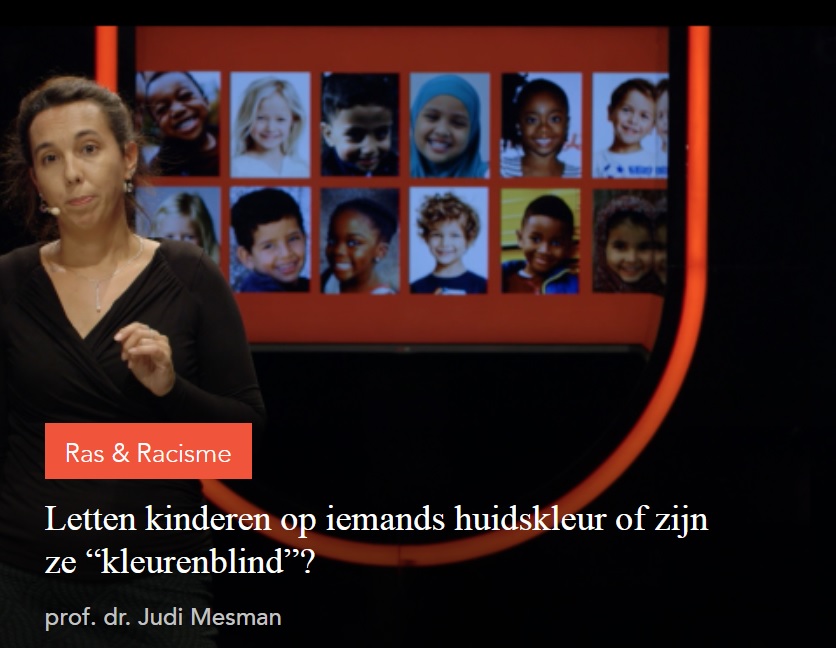
Judi Mesman is a Professor of the Interdisciplinary Study of Social Challenges at Leiden University, where she also holds the position of University Professor of Societal Responsibility and Impact since 2024. She is affiliated with the School of Governance and Global Affairs and the Department of Education and Child Studies. Previously, she served as Dean of Leiden University College The Hague from 2016 to 2022 and as Scientific Director of the Institute of Education and Child Studies from 2012 to 2016. Mesman's research focuses on social (in)justice, particularly intergenerational issues at individual and institutional levels. Her work examines how social and cultural norms in children's upbringing and education influence their self-image and worldview, with special attention to how children perceive and internalize norms regarding sexuality, ethnicity, and gender. She investigates how parents and educators unintentionally transfer prejudices to children through subtle messages and implicit stereotyping. Mesman's research program has significant societal impact, as demonstrated by her receipt of the prestigious Stevin Prize in 2021, the highest award in the Netherlands for researchers who effectively translate knowledge into societal benefits. Her work has influenced educational publishers, teacher training programs, and diversity initiatives. She has conducted studies on implicit stereotyping in schoolbooks and developed interventions to promote anti-racist education. Stevin Prize (2021) Member of Royal Netherlands Academy of Arts and Sciences (2018) Member of Royal Holland Society of Sciences and Humanities Recipient of NWO Veni, Vidi, Vici grants Recipient of ERC Starting and Consolidator Grants Mesman has supervised 26 PhD students to completion and teaches Intercultural Pedagogy in the Bachelor's program in Educational Sciences. She has developed the minor 'The (Un)Just Society' and created a podcast series on working with youth in a multicultural society, for which she received a teaching award. Her current research focuses on how norms and values about gender, ethnicity, and sexuality are transferred among professionals who work with children, including in teacher training programs.