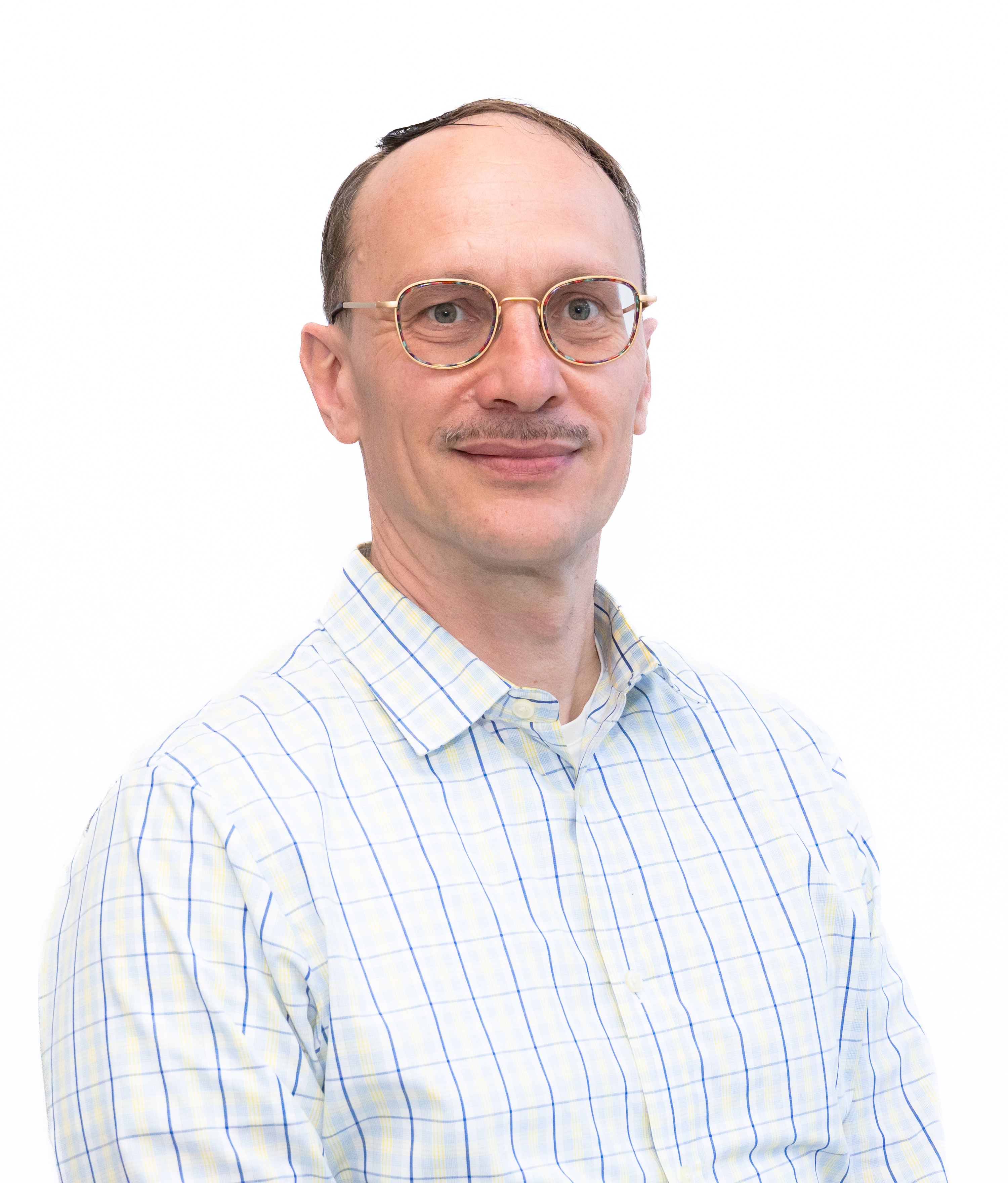
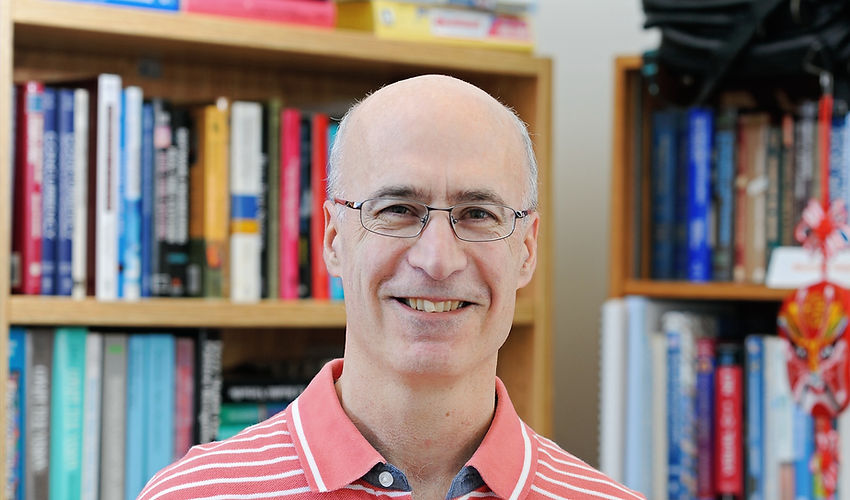
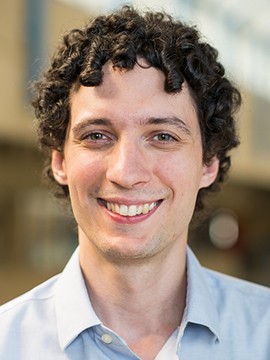
Robert Bergevin is a Full Professor in the Department of Electrical Engineering and Computer Engineering at Laval University's Faculty of Science and Engineering, where he has been employed since 1990 and achieved full professor status in 2001. He is also a member of CeRVIM (Research Center in Robotics, Vision and Machine Intelligence) and actively participates in graduate recruitment. Dr. Bergevin's educational background includes: Ph.D. in Electrical Engineering from McGill University (1985-1990), with thesis titled "Primal Access Recognition of Visual Objects" under Professor Martin D. Levine M.Sc.A. in Biomedical Engineering from École Polytechnique de Montréal (1982-1984), with thesis on "Modeling and numerical simulation of a nuclear magnetic resonance imaging system" under Professor Robert Guardo B.Sc.A. in Electrical Engineering (Communications specialty) from École Polytechnique de Montréal (1978-1982) Professor Bergevin's research spans cognitive computer vision, pattern recognition, and information systems design methodologies. His work is guided by a unique methodology that progresses "from the general to the particular" to achieve "simply communicable and universally applicable understanding." He has been a researcher in cognitive computer vision since 1985, with particular focus on ontology, methodology, and categorization. His research interests include Ontology of Cognitive Digital Vision, Cognitive Digital Vision Development Methodology, Categorization in cognitive digital vision, Analysis and understanding of images and videos, and Understandable artificial intelligence. As a generalist, he is also a proponent of the science of global anticipatory design (R. Buckminster Fuller) and general semantics (Alfred Korzybski). Analysis of Professor Bergevin's recent publications reveals a strong focus on video anomaly detection, carried object detection, and human activity recognition. His work consistently applies cognitive principles to computer vision problems, often developing novel methodologies for segmentation, tracking, and recognition. The research shows progression from foundational work on image analysis to more complex spatio-temporal understanding of video content, with increasing integration of deep learning techniques in recent years while maintaining a focus on interpretable and cognitively-inspired approaches. Among his professional recognitions: Teaching Star, Faculty of Science and Engineering (2019, 2012) Professor Bergevin has supervised numerous graduate students throughout his career, including four PhD candidates and four Master's students in recent years. His current research includes the "Cyber-physical systems and materialized machine intelligence" project funded by Université Laval, École de technologie supérieure, and Fonds de recherche du Québec - Nature and technologies, running from 2019 to 2026. He was also the director of the bachelor's program in computer engineering from 2001 to 2010 and served as Area Editor for the journal Computer Vision and Image Understanding from 2002 to 2017. As a member of CeRVIM (Research Center in Robotics, Vision and Machine Intelligence), Professor Bergevin collaborates with researchers across multiple disciplines to advance the fields of robotics, computer vision, and machine intelligence. His work bridges theoretical foundations with practical applications, particularly in the analysis of human activities and object recognition in complex visual scenes.