Silvia Lopez Gomez is a Lecturer at the Department of Pedagogy and Didactics, Faculty of Education Sciences, University of Santiago de Compostela. Her research focuses on the intersection of digital educational resources , video games , and inclusive pedagogical practices , with a particular emphasis on analyzing the educational potential and risks of digital technologies in both school and family contexts. Doctorate (2018) - Thesis: Descriptive and interpretive analysis of Galician video game design and content Current affiliations: University of Santiago de Compostela, Stellae Research Group Her recent publications examine: Dual impacts of video games (educational value vs. addiction risks) Didactic applications in early childhood and primary education Addressing cyberbullying through bibliometric and qualitative analyses Designing digital materials for inclusive and STEAM education She has contributed to understanding: Video game integration in teaching processes Teacher/family roles in digital education Game design for social awareness (poverty, gender violence, climate change) Usability evaluations of educational platforms like YouTube Kids
Muhammet Emin Misir is an Assistant Professor at Sakarya University, Faculty of Education, Department of Mathematics and Science Education. He is actively engaged in teaching and research, focusing on science education, teacher training, and curriculum development. Licence: Boğaziçi University, Science Teaching (2011) Master's: Boğaziçi University, Primary Education (2014) Doctorate: Sakarya University, Science Education (2023) His research interests include socio-scientific issues, history and philosophy of science, STEM education, textbook analysis, and climate change education. He employs interdisciplinary and innovative methodologies to explore how students and teachers understand science and its societal implications. His recent work emphasizes trust in science during crises, renewable energy in curricula, and AI in education. The most recent articles demonstrate a strong trend toward integrating history and philosophy of science into pedagogy, analyzing science textbooks for equity and modern themes, and evaluating the impact of STEM and inquiry-based approaches. His research spans both qualitative and quantitative methods, often involving curriculum analysis, teacher and student perceptions, and educational interventions. Misir has contributed to national and international journals such as Science & Education , Sakarya University Journal of Education , and Trakya Education Journal , as well as conference proceedings and book chapters. He has been involved in multiple research projects funded by TÜBİTAK and COST Action. COST Action CA23113: "Climate change impacts on mental health in Europe" (2024–ongoing) TÜBİTAK 3005: "Support for Doctoral Research" (2023–ongoing) TÜBİTAK 4008: "STEM Journey for an Accessible Future" (2024, completed) U.S. Mission Turkey Hibe Program (2022, completed) He mentors students in TÜBİTAK 2209-A projects and serves as a reviewer for journals including Sakarya University Journal of Education , Milli Eğitim Dergisi , and Journal of STEAM Education . He is a member of the European Science Education Research Association (ESERA) and the Science Education Researchers Association (FEAD). Misir leads and contributes to interdisciplinary research teams and projects focused on science curriculum development, teacher education, and public understanding of science. He has participated in numerous training programs on research methods, AI in education, and project writing.
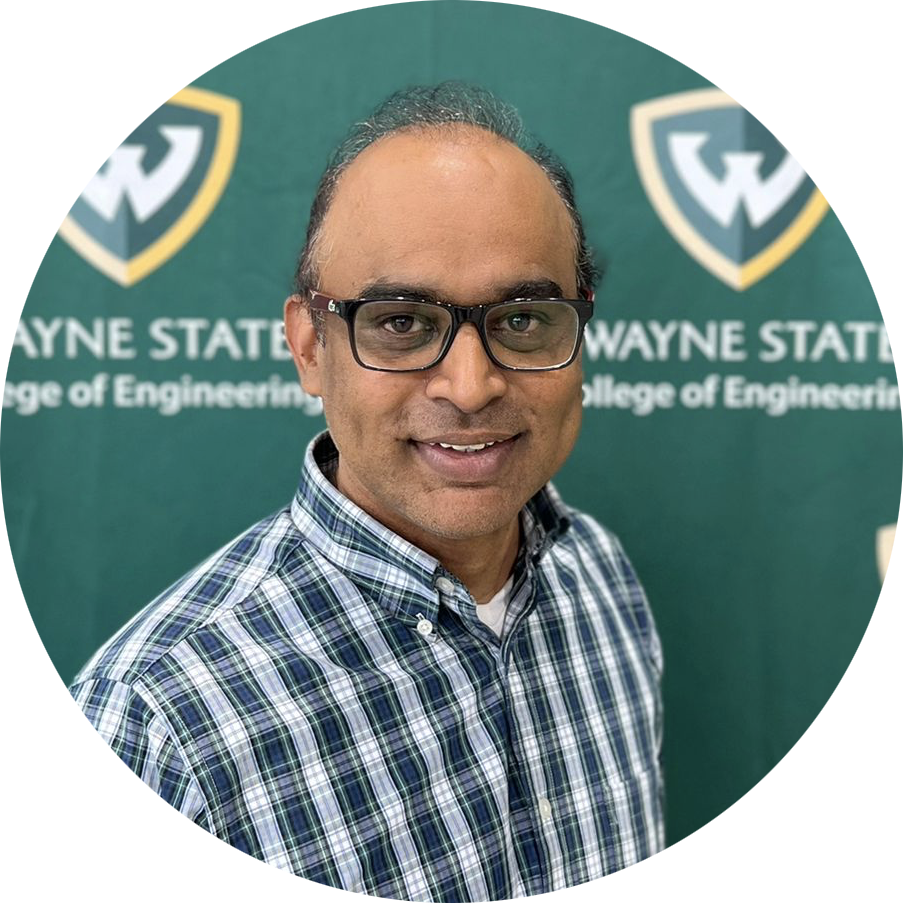
Leela Mohana Reddy Arava is an Assistant Professor in the Department of Mechanical Engineering at Wayne State University , where he serves as the Associate Dean for Research and Graduate Studies . His research focuses on electrochemical energy systems , particularly Lithium-ion , Lithium-sulfur , and Lithium-air batteries with novel electrolytes, and the growth and application of 2D and 3D nanostructures for advanced energy devices. Education: Ph.D. from Indian Institute of Technology Madras Research Interests: Development of high energy and safe batteries for electric vehicles Creation of micro-batteries to power micro-sensors Design of flexible hybrid energy devices for wearable assistive technologies Investigation of thermally stable electrolytes for extreme temperature operation Exploration of atomically engineered transition metal dichalcogenides for polysulfide conversion Study of proton conducting electrolytes for solid oxide electrolysis Article Trends: Advanced battery interface analysis using in situ AFM-SECM and Raman spectroscopy Fundamental redox chemistry studies in Li-S and Li-ion systems Novel 2D material synthesis and electrocatalytic applications Engineering of solid-state electrolytes for dendrite-free operation Development of environmentally stable battery systems for military and industrial applications Integration of nanostructured materials for enhanced energy density Labs & Outreach: Leads the Arava Research Group at Wayne State University Founder of the Mobile Energy Lab outreach program for Detroit schools Initiator of the SHAPE (Summer High School Apprentice Program) in battery technologies
Guillaume Bernard is a researcher at the University of Namur (UNamur) Institute for Research in Didactics and Education. His work focuses on educational practices, particularly in environmental and science education across preschool and secondary levels. Current research includes teacher training adaptation, student empowerment regarding global warming, and STEAM education challenges. He has presented orally at conferences and supervised master's theses on topics like climate change perception and biological adhesives. Research Trends : His recent publications (2018-2025) highlight interdisciplinary approaches combining environmental ethics, pedagogy, and natural sciences, with a strong emphasis on early childhood education and sustainability.
Dr. Sören Kliem is the Head of the Reactor Safety Department at the Institute of Resource Ecology, Helmholtz-Zentrum Dresden-Rossendorf (HZDR), a leading German research center in nuclear and environmental sciences. He holds a PhD from the Technical University Dresden and has been a key figure in reactor safety research since joining Forschungszentrum Rossendorf in 1994. He leads a department focused on advanced nuclear safety analysis, code development, and experimental validation. Education: PhD, Technical University Dresden, Faculty of Machinery Building, 2010 Diploma, Moscow Power Engineering Institute (MEI), 1992 His research interests include reactor dynamics, nuclear accident analysis, thermal-hydraulics, neutron kinetics, coolant mixing in PWRs, and the development and validation of coupled simulation codes such as DYN3D and ATHLET. He is actively involved in EU-funded projects like Horizon 2020 R2CA, McSAFER, and EURATOM EASI-SMR, focusing on the safety of conventional and innovative reactor designs, particularly small modular reactors (SMRs). The 15 most recent publications reflect a strong focus on reactor safety modeling, including boron dilution transients, severe accident management, code validation using experimental data (e.g., from ROCOM), and the application of high-fidelity simulation tools (CFD, coupled codes) to nuclear safety problems. His work emphasizes both numerical simulation and experimental benchmarking, particularly in the context of PWRs and VVER reactors. Scientific Projects: Horizon 2020 R2CA: Reduction of radiological consequences of design basis and design extension accidents (2019–2023) Horizon 2020 McSAFER: High-Performance Advanced Methods and Experimental Investigations for the Safety Evaluation of Generic Small Modular Reactors (2020–2023) Horizon EURATOM EASI-SMR: Ensuring Assessment of Safety Innovations for SMR (2024–2028) Kliem plays a central role in advising and leading collaborative research efforts, supervising junior researchers, and contributing to international benchmarking initiatives. He has no listed formal students, but his leadership implies significant mentoring. He is involved in multiple research facilities, including the ROCOM and TOPFLOW test facilities, which are critical for experimental validation of safety codes. Laboratories and Facilities: ROCOM (Rossendorf Coolant Mixing) test facility – for studying coolant mixing and boron dilution TOPFLOW facility – for two-phase flow and safety experiments DYN3D/ATHLET code development and validation environment
Henrik Stigberg is an Assistant Professor at Østfold University College, affiliated with the Department of Natural Sciences, Practical-Aesthetic, Social and Religious Studies. His research focuses on mathematics education, digital fabrication, and integrating technology into teaching. He holds a Master's degree in Mathematics and Physics from Linköping University, Sweden. Education: Teacher Education at Linköping University (2004-2009) Work Experience: Østfold University College (2018–present), Strömstad schools (2009–2018), and national educational initiatives like 'Matematiklyftet' (2013–2015) Research Interests: Digital fabrication for mathematics learning, programming integration in teacher education, and the use of manipulatives to enhance mathematical thinking. Current projects explore digital competences, making tools for mathematics, and programming in primary education. Publications emphasize critical reflections on educational technologies, teacher training strategies, and innovative teaching methods. Notable works include studies on digital fabrication's role in mathematics education and programming approaches for secondary teachers.
Esma Yilmaz is a Researcher at the Henry Royce Institute, specializing in ceramic processing for high-temperature applications, particularly environmental barrier coatings (EBCs) for aerospace and nuclear systems. She holds a PhD in Material Science from the University of Manchester (2018-2022) and an MSc in Materials Engineering from Istanbul Technical University (2015-2017). Her research focuses on developing advanced ceramic coatings using electrophoretic deposition, with emphasis on oxidation resistance, thermal stability, and interface behavior under extreme conditions. Education: PhD in Material Science, University of Manchester (2018-2022) MSc in Materials Engineering, Istanbul Technical University (2015-2017) Research Interests: Her work integrates materials synthesis, processing, and characterization to enhance coating performance in harsh environments. Key themes include: Development of ytterbium-based silicate EBCs for turbine blades Electrophoretic deposition optimization for uniform coating formation Thermal aging and oxidation mechanisms of ceramic coatings Interfacial stability of multi-layer coating systems Her recent publications (2022-2025) emphasize experimental studies on Yb 2 Si 2 O 7 coatings, exploring effects of processing parameters, steam oxidation behavior, and thermal degradation mechanisms. These studies contribute to improving coating durability for next-generation aeroengine and nuclear applications. Labs/Teams: Active member of the Advanced Materials research group at the Henry Royce Institute, collaborating with institutions like the University of Manchester and industry partners in aerospace material development.
Ioanna Vekiri is an Assistant Professor at the Department of Education Sciences, European University Cyprus, focusing on STEAM Education and Educational Technology. She holds a PhD in Education from the University of Michigan and has been affiliated with institutions like the Hellenic Open University and University of Thessaly. Her research emphasizes gender equity in technology use, transversal competences in education, and inclusive pedagogies for deaf students. She has contributed to projects like FemSTEAM Mysteries (a game-based approach for gender equality) and ImTech4Ed (immersive technologies in education). Education: PhD in Education (Educational Technology), University of Michigan (2001) M.A. in Educational Communications and Technology, New York University (1995) B.A. in Elementary Education, Aristotle University of Thessaloniki (1992) Research Interests: Her work spans STEAM pedagogy , gender equity in STEM , ICT integration in education , and inclusive learning strategies for deaf students . She designs evidence-based interventions to bridge socioeconomic and gender gaps in technology access and literacy. Awards: Rackham One-Term Dissertation Fellowship (2001) Fulbright Scholarship (1993) School of Education Academic Merit Scholarship, NYU (1993–1994) Grants & Projects: ImTech4Ed: Immersive Technologies for Education (Erasmus+, 2021–2023) FemSTEAM Mysteries (Erasmus+, 2020–2022) Deaf literacy interventions (University of Thessaly, 2003–2008) Her contributions include advisory roles at journals like Computers & Education and involvement in international conferences like CSEDU. Labs/Teams: Active in the design of digital game-based learning tools (e.g., FemSTEAM Mysteries) and immersive educational technologies through collaborative projects with EU initiatives.
Elyes Nefzaoui is an Associate Professor in Energy Engineering at Université Gustave Eiffel and a researcher at the ESYCOM laboratory (UMR 9007). He holds dual roles as a teacher and researcher at ESIEE Paris, a leading engineering school in France. He co-founded and led the Energy Engineering Graduate Program (Energy Efficiency and Renewable Energies) for over a decade. Currently, he heads the Energy Harvesting group within ESYCOM and coordinates research in the SEED (Health, Energy, Sustainable Environment) department at ESIEE Paris. His research focuses on thermal meta-materials , energy conversion systems , autonomous sensors , and building energy efficiency . Notable projects include developing metamaterials for solar steam generation, radiative cooling materials, and wireless sensor networks for environmental monitoring. His work bridges material science, thermal engineering, and sustainable energy systems. Publications highlight innovations in black silicon applications for infrared absorption, optofluidic cooling, and building energy modeling. Over 100 peer-reviewed papers and conference presentations demonstrate his contributions to energy systems optimization and environmental monitoring technologies. He leads interdisciplinary teams in labs such as ESYCOM, focusing on translating research into practical solutions for energy sustainability. His work addresses global challenges in renewable energy integration, urban energy systems, and smart building technologies.
Christina Adorjan is a University Lecturer (50%) in STEM Didactics at the Competence Center MINT and Digitality (K:MID) of the Vienna University of Teacher Education (PH Wien). Her role focuses on Making & Tinkering in the STEAM MAKER LAB and FUTURE LEARNING LAB. She holds a postdoctoral degree from TU Helsinki and has extensive experience in science education through her work with Technologykids association since 2013. Teaches physics/chemistry at Montessori School Tulln Author for SchuBu and LÖRN educational platforms Lead Tulln cluster center for edu-MakerSpaces Lower Austria Research interests include: - Integration of Making/Tinkering into STEAM education - Digital literacy in teacher training - Promoting girls' engagement in technology Recent projects: - RoboWOOD (FFG Talents Regional Project: AI/Robotics in wood industry education) - eBazar 2025 event coordination - Conference proceedings on gender equity in technology education
Anastasiya Savran-Wellscheid is a University Lecturer and doctoral student at the Competence Center MINT and Digitality (K:MID) at the University of Education Vienna. Her work focuses on STEAM integration in primary education, aesthetic education, media education, and the application of computational thinking through educational robotics. She is actively involved in the TAP-TS project at the DINA Lab and the RoboCoop-EU initiative, contributing to policy recommendations for STEM education across Europe. Education: BEd (Language Education) and MEd from the University of Education Vienna Projects: TAP-TS (Teacher Academy Project on Sustainability), RoboCoop-EU (Robotics in STEM), DINA Lab collaborations Her research emphasizes cross-curricular approaches, particularly in linking art, technology, and sustainability. She has organized international events such as the Active Learning Event in Santarém, Portugal, and supported visiting researchers like Dr. Olena Lychynska from Ukraine. Savran-Wellscheid also maintains independent creative work in literature and art. Key Contributions: Publications on STEAM frameworks, robotics integration, and policy analysis in STEM education
Niku Dorostkar is a Professor at KPH Vienna/Lower Austria , specializing in German language education (including German as a second language) across primary and secondary school levels. Their work bridges traditional didactics with digital innovation, particularly through projects like the GameLab collaboration with the University of Vienna, which explores the educational potential of video games. Dorostkar leads the Sparkling Science project SpraBiF , focusing on early language education frameworks, and contributes to critical discourse analysis in educational contexts. Research Priorities: Game-based language and literary learning Digital Game-Based Language Learning (DGBLL) Early language support in elementary education Language policy and multilingualism Critical discourse analysis in digital spaces Recent Publications examine the interplay of video games with literary education (e.g., Storyteller and A Juggler’s Tale ), alongside studies on Austrian language policy and cognitive development in children. Dorostkar advocates for pedagogical approaches that contextualize digital media within educational theory, emphasizing Design-Based Research and Citizen Science collaborations. Teaching includes courses at KPH Vienna/Lower Austria and the University of Vienna, with a focus on integrating digital tools into German education. The GameLab project provides hands-on experience with Nintendo Switch and Steam Deck consoles, fostering exploratory learning and didactic material development. Dorostkar also contributes to continuing education platforms like bildung.kphvie.ac.at , offering resources for teachers across Austria.
Botsoglou Kafenia is a Professor of Pedagogy at the Department of Special Education, University of Thessaly (since 2002). She leads the Institute of Teaching and Teacher Education and IASON research center. Her research focuses on modern pedagogical approaches, early childhood education quality, bullying prevention, and innovative teaching methodologies. She holds a BSc from Aristotle University of Thessaloniki (1990), MSc in Research Methodology (2004), and PhD in Educational Sciences (1998). Key areas include: Development of intercultural competence evaluation tools Design of inclusive educational environments Integration of digital games and technology in classrooms Social pedagogical interventions for peer relationships Recent publications emphasize: Educational technology applications (e.g., flipped classrooms, AR books) Preschoolers’ executive functions and school readiness Teacher perceptions of digital tools and inclusive practices Her work bridges theory and practice through participatory research methods, emphasizing child-centered approaches. Current projects explore sustainable academic work environments and technology-enhanced learning spaces.
Professor Nigel Wood is an Honorary Professorial Research Fellow in the Department of Chemical Engineering at Imperial College London, affiliated with the Faculty of Engineering. His research focuses on cardiovascular system dynamics, including pathophysiology of arteries, aortic aneurysms, arterial mass transfer, and computational modeling of blood flow. He collaborates with institutions like the International Centre for Circulatory Health (ICCH), National Heart & Lung Institute (NHLI), and St Mary's Campus. Education: BSc(Eng) in Aeronautics, Imperial College (1956–1959) MSc(Eng) in Aeronautics, Imperial College (via Royal Armament R&D Establishment, 1959–1967) PhD in Physiological Flow Studies, Imperial College (1967–1970) His research spans over five decades, pioneering work on turbulence in circulation (1960s), image-based computational modeling of arterial flow (1990s), and improving steam turbine efficiency (1970s–1990s). Notable contributions include collaborative projects with the British Heart Foundation, Royal Brompton Hospital, and NHS Trusts. He has held concurrent roles at the University of Surrey (Honorary Visiting Professor in Biofluid Mechanics) and City University (Aerospace Visiting Professor), alongside independent engineering consultancy (N B Wood Consultancy). His work integrates engineering principles with clinical applications, addressing cardiovascular diseases and fluid dynamics in biological systems.
Kathryn Finch is a faculty member at VanderCook College of Music and an experienced educator with over two decades in elementary general music classrooms. She currently teaches in Northbrook, IL, and advocates for shifting music education toward student-led activities. Media: MECA Faculty Bio Active in promoting student agency and innovative pedagogy Her work emphasizes practical strategies for empowering students to take ownership of their learning. Finch co-authored three influential teaching resources focused on classroom transformation and interdisciplinary engagement.