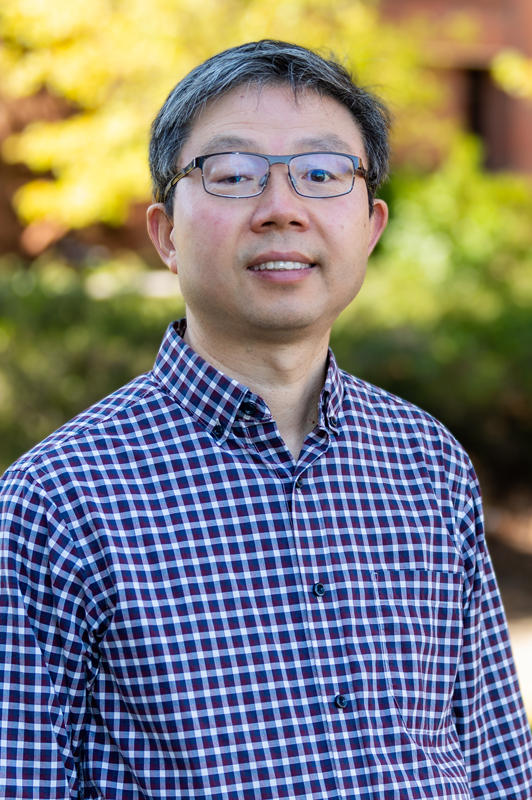
Anirban Acharya, Ph.D., is a Professor of Political Science at Le Moyne College. His research focuses on political power's impact on markets, neoliberalism, and South Asia. He holds degrees from Jadavpur University (B.A., M.A. Economics), Indira Gandhi Institute of Development Research (M.Phil. Development Studies), and Syracuse University (M.A., Ph.D. Political Science). His areas of specialization include International Political Economy, International Relations, and US Foreign Policy. He has received several awards such as the 2018 Le Moyne College Faculty Spotlight and the 2017 Ignatian Mission Award. His media engagements include panel discussions on PBS-WCNY and interviews on topics like Afghanistan's political landscape. Acharya has published works like Right to Sell: Markets, Capitalism, and Urban Space in India (2022) and contributed to edited volumes analyzing South Asian politics. His research has been supported by grants from Syracuse University’s Maxwell School and others. Beyond academia, he is an avid cook, chess player, violinist, and spice enthusiast.
Gerold Schneider is an Associate Professor at the University of Zurich , affiliated with the Department of Computational Linguistics under the Faculty of Arts and Social Sciences and Faculty of Business, Economics and Informatics . He leads the Text Crunching Center (TCC) , focusing on interdisciplinary research at the intersection of NLP, Digital Humanities, and Health Data Science. Research Interests His work spans Text Analytics , Digital Humanities , Corpus Linguistics , and Health Data Science , with applications in: Biomedical NLP (e.g., Alzheimer’s detection, clinical trials) Digital Humanities projects (e.g., analyzing Charles Dickens, UN archives) Migration discourse framing across languages Adversarial data collection for hate speech detection Interdisciplinary methodologies for digital unstructured data Recent Publications 2025–2024 research highlights include annotated corpora for preclinical and neurological studies, AI-driven analysis of historical linguistic variation, and innovative tools for language learners. His NLP applications address health diagnostics, ethical AI, and cross-lingual political discourse. Labs & Teams As TCC leader, he spearheads collaborative projects within the Digital Society Initiative (DSI) communities (AI & Law, Health, Ethics, etc.), integrating computational methods with humanities and health research.
Zhuo Feng is Professor of Electrical and Computer Engineering at Stevens Institute of Technology, directing the HUDSON Lab and holding a Ph.D. from Texas A&M University. His research develops spectral graph methods for VLSI design, including circuit simulation, power grid verification, and machine learning applications. Funded by NSF CAREER and multiple grants, his work has produced award-winning algorithms like GRASS for graph sparsification. Recent publications focus on spectral methods for circuit stability analysis, physics-informed neural networks, and explainable AI frameworks. He teaches graduate courses in VLSI design and GPU programming while co-founding LeapLinear Solutions. NSF CAREER Award (2014) ACM/IEEE DAC Best Paper Award (2013) Multiple Best Paper Nominations (ICCAD 2008, 2006)
Zhi-Pei Liang is the Franklin W. Woeltge Professor in the Department of Electrical and Computer Engineering at the University of Illinois at Urbana-Champaign, with joint appointments in the Department of Bioengineering, Beckman Institute for Advanced Science and Technology, and Coordinated Science Laboratory. His research spans biomedical engineering, medical imaging, and signal processing with a focus on advancing magnetic resonance imaging and spectroscopy technologies. His educational background includes a Ph.D. in Biomedical Engineering from Case Western Reserve University (1989) and a B.S. in Electrical Engineering from South-China University of Technology (1982), followed by postdoctoral training at UIUC (1989-1991). Professor Liang's research interests center on magnetic resonance imaging and spectroscopy , with particular emphasis on ultrafast imaging techniques , model-based reconstruction methods , and the integration of physics-based modeling with machine learning . His pioneering work on SPICE (SPectroscopic Imaging by exploiting spatiospectral CorrElation) has revolutionized high-resolution metabolic brain imaging by enabling label-free molecular imaging through the marriage of spin physics and machine learning. His research spans pattern recognition, parameter estimation, image formation theory, and algorithms for medical imaging applications. Analysis of his recent publications reveals a strong focus on high-resolution metabolic imaging , particularly using SPICE methodology to map brain metabolism with unprecedented detail. His work bridges fundamental physics of magnetic resonance with advanced computational methods to overcome traditional limitations in imaging speed and resolution. Current research directions include J-resolved spectroscopic imaging, deuterium-based metabolic mapping, and multimodal integration of PET and MRSI for studying neurological disorders. Elected to International Academy of Medical and Biological Engineering (2012) Gold Medal, International Society for Magnetic Resonance in Medicine (2022) Technical Achievement Award, IEEE Engineering in Medicine and Biology Society (2014) Fellow, National Academy of Inventors (2021) Author of influential book 'Principles of Magnetic Resonance Imaging' (1999) President of IEEE Engineering in Medicine and Biology Society (2011-2012) Professor Liang has advised numerous students and postdocs in biomedical imaging research and has received multiple teaching honors including the Ronald W. Pratt Outstanding Teaching Award (2005) and multiple listings among UIUC's Excellent Teachers. His research has been supported by various grants from NIH, NSF, and other funding agencies. He leads the SPICE (Spectroscopic Imaging by exploiting spatiospectral Correlation) research group which focuses on developing novel imaging techniques that combine physics-based modeling with machine learning for ultrafast metabolic imaging. His laboratory, part of the Beckman Institute's Integrative Imaging Theme, collaborates extensively with clinical researchers at Carle Illinois College of Medicine and other institutions to translate advanced imaging techniques into clinical applications for neurological disorders, cancer, and metabolic diseases. Current projects focus on high-resolution mapping of brain metabolism in Alzheimer's disease, stroke, and brain tumors using novel MR spectroscopic imaging techniques.
Joseph S. Friedman is an Associate Professor of Electrical & Computer Engineering at the University of Texas at Dallas, leading the NeuroSpinCompute Laboratory within the Erik Jonsson School of Engineering and Computer Science. His research focuses on unconventional computing paradigms leveraging nanotechnology, including neuromorphic systems, spintronics, and memristive devices. He specializes in nanomagnet-based logic architectures, neuromorphic computing with domain walls and skyrmions, and hardware security for emerging technologies. His research explores energy-efficient computing through novel paradigms such as reversible skyrmion logic, neuromorphic networks using magnetic tunnel junctions, and stochastic Bayesian inference circuits. He has pioneered spintronic neurons demonstrating 94% accuracy in handwritten digit recognition and developed secure logic locking mechanisms using nanomagnet logic. His work integrates experimental fabrication with SPICE modeling, emphasizing scalable beyond-CMOS systems. Recent advancements include toggle SOT-MRAM architectures, quantum circuit design for neutral atom systems, and neuromorphic networks leveraging superconducting flux quanta. He advises over 20 graduate and undergraduate students, fostering innovation in AI hardware and unconventional computing. Notable projects include the NeuroSpinCompute Lab's domain wall neuromorphic networks, secure logic locking schemes, and collaborations with institutions like Sandia National Labs on neuromorphic reservoir computing. Current research trends emphasize low-energy spintronic architectures, hybrid quantum-classical systems, and neuromorphic applications in edge computing. His research is supported by NSF grants CCF-1910800 and CCF-2146439, focusing on neuromorphic and spintronic systems. He regularly contributes to conferences like IEEE Rebooting Computing and SPIE Spintronics, showcasing breakthroughs in nanomagnetic logic and neuromorphic inference.
Matthias Bucher is a Professor at the Department of Electronics and Computer Engineering, Technical University of Crete. He specializes in analog/RF integrated circuits design, MOSFET compact modeling, and device characterization. His research focuses on nanoscale CMOS, wide-band semiconductor devices, and high-voltage MOSFETs. He leads the Electronics Laboratory and teaches courses such as Electronics II and CMOS Analog IC Design. Education: Ph.D. in Electrical Engineering, Swiss Federal Institute of Technology (EPFL), 1999 M.S. in Electrical Engineering, Swiss Federal Institute of Technology, 1993 Research Interests: Prof. Bucher’s work emphasizes charge-based compact models (e.g., EKV3), RF device modeling, and noise analysis in MOSFETs/JFETs. His contributions include open-source tools for Verilog-A modeling and parameter extraction methodologies for advanced CMOS technologies. Labs/Teams: He directs the Electronics Laboratory , focusing on nanoelectronics and high-reliability circuits. His team collaborates on semiconductor device modeling for aerospace and industrial applications. Grants/Awards: While not explicitly listed, his extensive publication record and leadership in open-source projects indicate sustained recognition in semiconductor research communities.
Md Sakib Hasan is an Assistant Professor in the Department of Electrical and Computer Engineering at the University of Mississippi. He holds a Ph.D. in Electrical Engineering from the University of Tennessee-Knoxville (2017). His research focuses on hardware acceleration, neuromorphic computing, and memristor-based systems. Research interests span: AI hardware accelerators and energy-efficient computing Biomimetic systems and bio-inspired electronics Hardware security through chaotic systems and PUFs Recent publications demonstrate strong emphasis on: Neuromorphic architectures for computer vision and temporal processing Biomembrane-based computing systems Chaotic cryptography and secure hardware design
Kate Kemsley is a Professor in the School of Chemistry, Pharmacy and Pharmacology at the University of East Anglia (UEA), where she leads the Centre of Expertise in Food Authenticity, part of the UK's Food Authenticity Network. She also holds an external role as Scientific Director at Mestrelab Research S.L., a scientific software division of Bruker Corporation. Education: Doctor of Philosophy Master of Physics, University of Oxford Her research focuses on the application of computational statistics, machine learning, and deep learning to diverse datasets including NMR, LC-MS, infrared, and Raman spectroscopy, with a strong emphasis on food authenticity and natural product integrity. She applies AI and cheminformatics to detect adulteration in edible oils, spices, coffee, fruits, and meat. A significant portion of her recent work involves high-resolution and benchtop NMR data analysis using convolutional and message-passing neural networks. The most recent articles highlight a strong trend in applying deep learning models—particularly message passing neural networks (MPNNs)—to predict NMR chemical shifts and verify molecular structures. These works bridge cheminformatics and artificial intelligence, demonstrating applications in small molecule analysis, metabolomics, and food authenticity. The research spans analytical chemistry, machine learning, and industrial applications in food, pharma, and instrumentation. Scientific Awards and Recognition: h-index of 37 (Scopus) Leader of UEA's Centre of Expertise in Food Authenticity Member of DEFRA Expert Committee, Authenticity Methodology Working Group (2024–2027) She is actively involved in advising and research grants, currently leading or participating in multiple funded projects such as AI-driven small molecule structure elucidation, metabolomics studies on arthritis, and integration of compact NMR with mass spectrometry. Her collaborations span forensic, food, pharmaceutical, and instrumentation sectors, including partnerships with Mestrelab Research and Versus Arthritis. She is accepting PhD students and regularly contributes to training and dissemination through webinars and workshops. Kate Kemsley is affiliated with key research groups including the UEA Centre of Expertise in Food Authenticity and collaborates with the Community for Analytical Measurement Science and the UK Food Authenticity Network. Her work integrates academic research with industrial software development through her role at Mestrelab, advancing automation and high-throughput analysis in chemical and food sciences.
Dr. Patrick W. C. Ho is a Lecturer in the Department of Electrical & Computer Systems Engineering (ECSE) at Monash University Malaysia School of Engineering. He holds a PhD in Electronics Engineering from the University of Nottingham Malaysia Campus (2016), with research focusing on non-volatile FPGA architectures using memristors. His academic journey includes roles as a Scholarly Teaching Fellow and unit coordinator for courses like ECE2131 Electrical Circuits and ECE4063 Large Scale Digital Design. He has industry experience with Intel Microelectronics and Altera Corporation, alongside teaching A-level Physics at Methodist College Kuala Lumpur. Education: BEng (First Class Honours) in Engineering (2009) MSc in Science (2012) PhD in Electronics Engineering (2016) Research Interests: Dr. Ho specializes in memristor-based non-volatile memory systems, VLSI design, and FPGA architectures. His work bridges hardware design with emerging materials, as seen in his Q1 journal article on memristive LUTs. Collaborations with CAD-IT expand his focus into AI, image processing, and object recognition. Recent projects include studies on memristor substrate performance (2023–2026) and UAV communication reliability (2021–2024). Teaching and Industry Engagement: As ECSE’s Industrial Training Advisor and IAP representative, he actively connects academic curricula with industry needs. His teaching spans foundational engineering courses and advanced digital design modules. Labs and Collaborations: Active in CAD-IT partnerships for student FYP co-sponsorship. Research groups focus on nanotechnology, machine learning integration in UAV systems, and memristor material analysis.
J. Scott Smith is a Professor of Food Chemistry and Chair of the Food Science Graduate Program at Kansas State University's Department of Grain Science and Industry within the College of Agriculture. He holds a 70% research and 30% teaching appointment. His academic journey includes a BS in Biology (Brescia College, 1972), MS in Biochemistry (Kansas State, 1975), and PhD in Food Science (Penn State, 1981). He has been at Kansas State since 1989, previously serving at Penn State. His research focuses on food chemistry and toxicology, particularly heterocyclic amine (HCA) inhibition in cooked meats, advanced glycation endproducts (AGEs), and food irradiation safety. Notable contributions include studies on spice inhibition of oxidation and irradiation markers like 2-dodecylcyclobutanone (2-DCB). He teaches advanced food chemistry courses and has pioneered methods for assessing food contamination from ammonia refrigeration leaks. Smith is an active member of the Institute of Food Technologists (IFT), American Chemical Society, and AOAC International. His work has been widely covered globally, including breakthroughs in cranberry preservation and meat safety. He oversees research labs such as the BIVAP Feed Quality Assurance Lab and collaborates on food safety innovations.
Nessim Znaien serves as Assistant Professor of History of Colonial and Postcolonial Maghreb at Philipps University of Marburg's Center for Near and Middle Eastern Studies (CNMS) since 2022, where he heads the Maghreb Field of Expertise team. His academic trajectory spans French institutions including Aix-Marseille University and research roles at the French Research Institute on Contemporary Maghreb in Tunis. His educational background includes: PhD in History, Université Paris 1-Panthéon Sorbonne (2012-2017) with thesis 'The Grapes of domination. Social History of Alcohol in Tunisia under Protectorate (1881-1956)' MA in History, École Normale Supérieure de Lyon (2011-2012) CAPES in History (2009) Bachelor’s degree in Modern Standard Arabic, Aix-Marseille University (2014-2018) University degrees in Italian (B2) and Turkish (B1) from Aix-Marseille University (2018-2021) Znaien's research centers on 19th-20th century North African history through material and food studies, examining colonial societies' structures and Tunisian historiography. His work uniquely bridges alcohol history with broader socio-economic patterns, revealing how substances like wine, bread, and harissa became sites of colonial control, cultural resistance, and identity formation. This approach illuminates the intersection of environmental, economic, and cultural forces in Mediterranean colonial contexts. His extensive publication record demonstrates consistent thematic focus on colonial North Africa's social history, with recurring analysis of alcohol systems, food economies, and material culture. The work shows sophisticated methodological integration of environmental history, economic anthropology, and postcolonial theory, particularly examining how colonial policies reshaped local consumption patterns and production systems across Tunisia, Algeria, and Morocco. No scientific awards are documented in the provided materials. Znaien actively contributes to academic infrastructure through research leadership and peer review. He coordinated a €30,000 Foundation for Research on Alcoholism project (2014-2019) on 'Alcohol under the French Empire,' participated in ERC's TARICA project (2017-2020) analyzing post-Arab Spring North Africa, and contributed to the French 'Bourgeon Project' (2017-2019) on Muslim world alcohol histories. He serves on scientific boards for L'Année du Maghreb and the Digital Encyclopedia of European History, while reviewing for journals including Journal of Medical History and Journal of North African Studies. As head of the Maghreb Field of Expertise team at CNMS, Znaien directs research on contemporary North African societies while maintaining strong connections to Tunisian academic networks through his editorial roles and ongoing historiographical analyses of post-revolutionary Tunisia.
Alan Rooney is an Assistant Professor in the Department of Earth & Planetary Sciences at Yale University, affiliated with the Yale School of Arts and Sciences. He leads the Rooney Geochronology and Geochemistry Group, which is part of the Yale Metal Geochemistry Center. His research integrates radiogenic isotope geochemistry (e.g., Re-Os, Sr, Nd) with field-based methods like sedimentology and stratigraphy to investigate tectonic, climatic, and biologic transitions in Earth history. Current projects include refining Neoproterozoic chronology, studying Mid-Pleistocene ice sheet dynamics, and advancing EARTHTIME’s Re-Os geochronometer standards. His research interests are centered on three main areas: 1) Proterozoic tectonics and eukaryotic diversification, 2) ice sheet dynamics over the last 5 million years using multiple geochemical proxies, and 3) radiogenic isotopes as tracers of crustal-mantle processes. He collaborates with researchers at Dartmouth College, Oxford University, and other institutions to address these topics. The Rooney Lab emphasizes experimental approaches, such as simulating seafloor weathering of mafic rocks, to better understand isotopic fluxes into the sedimentary record. His articles highlight a focus on geochronology and isotopic analysis to unravel climate-tectonic interactions, with recent work emphasizing the Great Oxidation Event, Ediacaran biogeochemical shifts, and Mid-Pleistocene glacial variability. These studies often combine field observations with laboratory experiments to deconvolve complex Earth system processes. Dr. Rooney has no listed scientific awards. He advises three graduate students: Gryphen Goss, Sam Shipman, and Carey Ciaburri. The lab’s NSF-funded involvement in EARTHTIME underscores its commitment to advancing geochronological standards. The Rooney Geochronology Lab operates within ultra-clean facilities equipped with advanced mass spectrometers (e.g., Thermo Fisher Neptune-Plus MC-ICP-MS, Triton-Plus TIMS), adjacent to the Microprobe Facility’s electron microprobe resources, enabling precise geochemical and petrological analyses.
Guofu Niu is a Professor in the Department of Electrical and Computer Engineering at Auburn University, holding the Ed and Peggy Reynolds Family endowed chair. His research specializes in semiconductor device physics, compact modeling of SiGe heterojunction bipolar transistors (HBTs), FinFETs, and cryogenic electronics for RF and power applications. Key research areas include RF linearity characterization, avalanche effects, thermal noise, and low-temperature device performance. He has developed advanced models (e.g., Mextram) for circuit simulation tools, enhancing the accuracy of semiconductor design workflows. Publications focus on nano-scale device reliability, tunneling currents, and optimization of RF amplifiers, with applications in 5G technology and extreme-environment electronics. Collaborative projects span industry and academia to advance semiconductor modeling frameworks.
Professor Ahmet Bindal is a faculty member in the Department of Computer Engineering at San José State University . He earned his B.S. in Electrical Engineering from Bogazici University, Turkey, followed by M.S. and Ph.D. degrees from the University of California, Los Angeles. Industry Experience : 20 years at IBM, Intel, Philips, and Cadence Design Systems. Current Research : Nano-scale electron devices, silicon nanowire transistors, robotics, and VLSI architecture. Research Trends : His work focuses on silicon nanowire transistors for VLSI, FPGA, and robotics. Key themes include low-power/high-speed integrated circuits , dynamic logic design , neuromorphic engineering , and advanced semiconductor processing . Patents and Publications : He holds four U.S. patents (three with IBM, one with Intel). His 30+ journal and conference publications span nanowire transistors, FPGA architecture, robotics, and semiconductor process modeling. Teaching Contributions : Developed an undergraduate System-on-Chip (SoC) course and a MOSFET design laboratory at SJSU. Books Authored : Fundamentals of Computer Architecture and Design (Springer, 2017). Electronics for Embedded Systems (Springer, 2017). Silicon Nanowire Transistors (Springer, 2017).
Farshad Moradi is a Professor at the Department of Electrical and Computer Engineering at Aarhus University, specializing in neuromorphic engineering, spintronics, and biomedical device design. His work focuses on integrating advanced materials and circuits for applications in neural interfaces, energy-efficient computing, and wireless biomedical systems. Research Interests include: Spintronic-based neuromorphic computing architectures Ultra-low power analog/mixed-signal integrated circuits Ultrasonically powered implantable medical devices Neural signal processing and seizure detection systems Wireless energy transfer and structural health monitoring Key Projects (2016-2026): SPICE: Spintronic-Photonic Integrated Circuit Platform PHOTON-NeuroCom: Photonic-assisted Neuromorphic Computing Neuro-Sense: Flexible bioinspired neuroprostheses CorroSense: Self-powered corrosion monitoring HERMES: Hybrid Enhanced Regenerative Medicine Systems Recent innovations include: Ultrasonically powered optogenetic implants Low-power neural amplifiers for deep-brain interfaces Spin-torque nano-oscillator-based neuromorphic hardware Energy harvesting systems for structural monitoring