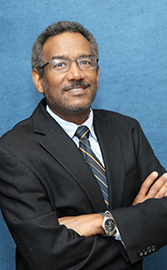
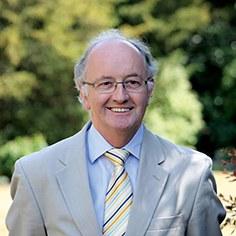
Dr. Jules Freeman is a Senior Scientist in Forest Genetics at the School of Biological Sciences, University of Tasmania. His research focuses on genomics, quantitative genetics, and the genetic basis of trait variation in plants, particularly eucalypts and radiata pine. He has collaborated with institutions like Scion (New Zealand Forest Research Institute) since 2018, addressing challenges such as myrtle rust impact and drought tolerance. Freeman holds an Orcid identifier (0000-0003-1166-9976) and can be contacted at Jules.Freeman@utas.edu.au. Education: PhD in "The Application of Molecular Markers to Eucalyptus globulus Tree Improvement" from the University of Tasmania (2007). BSc (1st Class Hons) in "Phylogeography of Eucalyptus globulus" from the University of Tasmania (2000). Research Interests: Jules Freeman specializes in applying genomics and quantitative genetics to enhance tree improvement, particularly in native and production forests. His work addresses plant disease resistance (e.g., myrtle rust), drought tolerance, and conservation genetics. He employs cutting-edge techniques to study genetic variation and its role in climate change resilience, collaborating with international partners to advance sustainable forestry practices. Grants and Collaborations: Leading a $9.68M project funded by MBIE (New Zealand) to develop tree phenotyping methods using genetics, remote sensing, and AI. Collaborating with Scion on radiata pine genomics ($512,616). Investigating soil microbial communities post-logging ($12,750 Holsworth grant). Quantitative genetics of eucalypt traits (ARC grant, $415,000). Labs and Teams: Freeman works with the Eucalypt Genetics Group and Scion's research teams, contributing to initiatives like the USC Research Futures Project ($5.45M) to strengthen collaborative research networks.
Eve Runno-Paurson is a Professor of Integrated Crop Production at the Institute of Agricultural and Environmental Sciences , Estonian University of Life Sciences. Her research focuses on plant pathology, fungal resistance, and sustainable crop management, particularly in potato and other field crops. Contact: Kreutzwald 5, eve.runno-paurson@emu.ee Her work spans Phytophthora infestans dynamics, arbuscular mycorrhizal fungi , and climate-resilient crop systems . Recent publications explore nitrogen fertilization in sweet potatoes, machine learning for pathogen identification, and stress volatile emissions in infected plants. Key trends in her research include disease monitoring , host-pathogen interactions , and agricultural sustainability . She has no listed scientific awards or students in the provided data.
Christopher Mundt is a Professor in the Department of Botany and Plant Pathology at Oregon State University, affiliated with the College of Agricultural Sciences. His research focuses on plant disease epidemiology, host plant resistance, and sustainable agricultural practices. He leads studies on wheat stripe rust and fungal pathogen dynamics, emphasizing strategies for durable resistance through genetic diversity and population genetics. His work integrates field experiments, computational modeling, and molecular approaches to address challenges in crop disease management. Key projects include studying invasive pathogen spread and fungicide resistance in wheat pathogens like Zymoseptoria tritici. Collaborations with cereal breeders aim to identify quantitative trait loci for disease resistance and develop molecular breeding tools. Educational Background: Not explicitly stated in text. Research Interests: Host-pathogen interactions, pathogen population genetics, and sustainable disease management strategies. Mundt’s publications span epidemiological modeling, fungicide resistance, and crop breeding. He has been recognized with major awards including the James and Mildred Oldfield Award and Fellowships from AAAS and the American Phytopathological Society. His team includes postdoctoral researchers, graduate assistants, and undergraduate collaborators. He teaches courses such as BOT 550 (Plant Pathology) and BOT 668 (Plant Disease Dynamics), contributing to both research and education in plant pathology.
Daniel Buchvaldt Amby is an External Researcher at the Department of Plant and Environmental Sciences, University of Copenhagen, specializing in molecular plant pathology. His research focuses on the evolutionary ecology of inter-kingdom host shifts between plants and insects of plant pathogenic fungi, with particular expertise in identification and characterization of fungal pathogens affecting agricultural crops. Dr. Amby's research program centers on developing and applying molecular (multi-loci and genome sequencing) and morphological diagnostic tools (microscopy and colony appearance) for identifying plant pathogenic fungi and oomycetes. He investigates population genetics, biology, and phenotyping of microbial pathogens causing diseases in crops such as strawberry, citrus, and quinoa. His previous work and ongoing collaborations explore beneficial fungal or bacterial strains that help plants (barley, maize, tomato) withstand abiotic stresses (drought, salinity) and biotic stresses (plant diseases) using molecular, biochemical, physiological, and multispectral imaging techniques. His research bridges fundamental understanding of pathogen biology with practical agricultural applications for disease management. Analysis of Dr. Amby's recent publications (2022-2025) reveals a strong thematic focus on quinoa pathology, high-throughput phenotyping methodologies, and molecular identification of plant pathogens. His work demonstrates integration of traditional microbiological techniques with modern genomic and imaging technologies. Key research directions include development of automated phenotyping platforms (PhenoLab), characterization of emerging diseases in alternative crops, and establishment of practical diagnostic protocols for fungal pathogens. His publications appear in reputable journals across plant science, agricultural technology, and plant pathology domains, reflecting interdisciplinary research with practical applications for sustainable agriculture.
Professor Fahri Yiğit is a faculty member at Muğla Sıtkı Koçman University, specifically at the Fethiye Ali Sıtkı Mefharet Koçman Vocational School in the Department of Plant and Animal Production, Greenhouse Program. With a doctorate in Plant Protection from Ege University, he has established himself as a specialist in plant pathology and disease management in greenhouse agriculture. His educational background includes a Master's Degree (1990-1993) and Doctorate (1994-1998), both in Plant Protection from Ege University's Faculty of Agriculture and Institute of Science respectively. Professor Yiğit has taught numerous courses related to soil science, ecological farming, biological control, greenhouse applications, and agricultural warfare medicines. Yiğit's research primarily focuses on plant pathology , particularly biological control of plant diseases in greenhouse environments. His extensive publication record demonstrates expertise in managing fungal pathogens affecting tomatoes and other greenhouse crops. He has conducted significant research on Fusarium species, powdery mildew, and gray mold diseases, developing integrated approaches combining biological and chemical control methods. His work often addresses practical agricultural problems faced by farmers in the Mediterranean region of Turkey, particularly in Fethiye where his vocational school is located. Analysis of his 15 most recent publications reveals a consistent focus on tomato disease management in greenhouse settings. His research spans molecular techniques for pathogen identification, evaluation of biological control agents like rhizobacteria and Trichoderma, and practical integrated disease management strategies for commercial growers. A notable trend is his exploration of alternative approaches such as boron application and humic acid treatments to enhance plant resistance and reduce chemical pesticide use. Throughout his career, Professor Yiğit has maintained strong connections with agricultural practices in the field, as evidenced by his numerous studies conducted in the Fethiye region and his focus on practical solutions for greenhouse farmers. His work bridges fundamental plant pathology research with applied agricultural extension, making significant contributions to sustainable greenhouse production in Turkey's Mediterranean region.
Lawrence B. Smart is a Professor at Cornell University's School of Integrative Plant Science , with appointments in the Horticulture Section and Plant Breeding and Genetics Section . He earned his B.S. in Biology from Cornell (1987) and Ph.D. in Genetics from Michigan State University (1992), followed by an NSF Postdoctoral Fellowship at UC-Davis. Research Focus : Genomics-assisted breeding of bioenergy crops (shrub willow), industrial hemp, and hop Key Projects : Hybrid vigor in willow, hemp cultivar development for New York State, hop adaptation to local growing conditions Awards : No explicit honors mentioned in available text His lab investigates fundamental genetic mechanisms in sex determination , pest/disease resistance , and nutrient uptake in perennial woody plants. Recent publications emphasize genomic approaches to optimize biomass yield and chemical composition for bioenergy, along with hemp's cannabinoid profiles and hop's regional adaptation . Extension work connects research to stakeholder needs in agricultural sustainability. Contact : lbs33@cornell.edu , 630 W. North Street, Geneva, NY. He teaches PLSCI 5030: Hemp Breeding and Genetics .
Joanna Kud is an Assistant Professor in the Department of Entomology & Plant Pathology at the University of Arkansas. Her research focuses on molecular mechanisms of plant-nematode interactions, with emphasis on effector proteins, immune signaling, and parasitism strategies. She holds a Ph.D. in Plant Science from the University of Idaho (2013) and a M.Sc. in Biotechnology from Maria Curie-Sklodowska University (Poland). Her work bridges genetics, biochemistry, and ecology to understand plant defense systems against parasitic nematodes. Key research areas include nematode effector biology, host specificity determinants in Globodera spp., and the role of root exudates in parasitism. She has discovered novel rhabdovirus associations in nematodes and characterized critical immune receptors like NILR1 and RHA1B. Her studies also explore the impact of ubiquitin ligases in plant defense pathways and viral-nematode interactions. Dr. Kud has published over 20 peer-reviewed articles in top journals like PNAS, Plant Cell, and PLOS Pathogens. She received multiple awards including the 2015 Western ASPB Best Talk Award and the 2011 Biotechnologist of the Year award in Poland. Her teaching includes graduate courses in Molecular Plant-Pathogen Interactions and Nematology. Professional Experience: Research Scientist (2022), Postdoctoral Fellow (2018-2021) at University of Idaho Grants & Funding: Active grants include USDA-NIFA projects on nematode resistance mechanisms
Brian J. Steffenson , a Professor of Plant Pathology at the University of Minnesota , is the Lieberman-Okinow Endowed Chair of Cereal Disease Resistance. His work focuses on leveraging genetic diversity in wild cereal species to enhance disease resistance in wheat, barley, oat, and rye. As Co-Director of the Stakman-Borlaug Center, he leads collaborative projects to clone resistance genes and study cereal rust evolution. Education PhD in Plant Pathology, University of California-Davis (1988) MS in Plant Pathology, University of Minnesota (1983) BS in Plant Pathology, University of Minnesota (1980) Research Interests Genetics of disease resistance in cereals Exploitation of wild crop progenitors for trait improvement Molecular diversity in plant pathogens Host-parasite co-evolution Virulence mechanisms in rust fungi Article Trends Recent work highlights gene discovery in barley (e.g., Rpg1 , rpg4 , RpgQ ), virulence effectors in rust fungi, and cross-species pathogen dynamics. Key methods include map-based cloning, haplotype analysis, and transgenic resistance testing. Projects integrate UN SDG goals for sustainable crop production. Grants USDA Agricultural Research Service (2022–2026): Genetic Enhancement of FHB Resistance , Host Immunity in Rust Evolution Collaborative projects on oat crown rust and barley germplasm development Labs & Teams Steffenson Lab Collaborations with researchers in Germany (IPK Gatersleben), Ethiopia, and the U.S.
Jianbo Li is a Research Fellow at the Plant Breeding Institute under the School of Life and Environmental Sciences at the University of Sydney. His work focuses on cytogenetic techniques and wheat improvement. He holds a BSc, MSc in Crop Genetics (Shanxi University, 2015), and a PhD in Biomedical Engineering (University of Electronic Science and Technology of China, 2020). His research emphasizes molecular mapping of disease resistance genes, wheat-wild species introgression, and cytogenetic analysis using techniques like ND-FISH and GISH. He is part of the “Hybrid wheat for food security” project. His publications highlight advancements in wheat disease resistance and genetic improvement. Notable work includes studies on leaf/stem rust resistance genes and stripe rust-resistant translocation lines. While no awards are listed, his contributions to crop science are evident through his collaborative projects and published research. Advising and grants details are not explicitly stated, but his involvement in high-impact projects suggests active engagement in academic collaborations and funding initiatives.
Dr. Ibrahim Amir is a Professor and Project Leader of the Small Grains Breeding program at Texas A&M University's College of Agriculture & Life Sciences. He serves as Associate Director & Chief Scientific Officer at Texas A&M AgriLife Research, focusing on wheat and oat cultivar development across Texas and internationally. He holds a Ph.D. in Soil and Crop Sciences from Colorado State University (1998). His research integrates molecular genetics, genomic prediction, and remote sensing technologies to enhance crop resilience against biotic/abiotic stresses. He collaborates globally with institutions like CIMMYT and USDA-ARS, releasing 30 wheat and 3 oat cultivars. Key areas include hybrid wheat development, QTL mapping for disease resistance, and UAS-based phenotyping. Teaching responsibilities include SCSC 660 (Experimental Designs in Agriculture) and SCSC 402 (Crop Stress Management). He oversees a team including support staff and advisees like Abdullah, Mustafa Cerit, and Geraldine Opena. Over 200 publications span refereed journals, extension articles, and technical reports.
Margery Daughtrey serves as a Senior Extension Associate in Cornell University's School of Integrative Plant Science, Plant Pathology and Plant-Microbe Biology Section. Based at the Long Island Horticultural Research and Extension Center in Riverhead, NY, she has dedicated over 50 years to advancing disease management solutions for New York's floriculture industry since joining in 1978. Her educational foundation includes: Master of Science from University of Massachusetts (1978) Bachelor of Science from College of William and Mary (1975) Daughtrey's research centers on critical pathogens threatening ornamental crops, with emphasis on foliar diseases (powdery mildew, downy mildew) and root-rotting organisms (*Pythium*, *Phytophthora*, *Thielaviopsis*). She pioneers integrated approaches balancing environmental safety and efficacy for greenhouse operations near populated areas, addressing emerging threats like boxwood blight and impatiens downy mildew through cultural controls, biocontrols, and reduced-risk chemicals. Her publication record reveals consistent focus on pathogen emergence and management innovation, particularly for ornamental systems. Key trends include diagnostic advancements for *Calonectria pseudonaviculata*, viral disease monitoring in vegetables, and resistance mitigation strategies that address offshore production challenges and recirculating irrigation systems. Recognition for her impactful work includes: Award of Merit (2017) from the American Phytopathological Society's Northeastern Division Three Dynamic Women in Horticulture (2015) by Farmingdale State College Cornell CALS Outstanding Extension Award (2014) APS Fellow designation (2012) Suffolk County Legislature service proclamation (2008) Daughtrey's extension program delivers actionable guidance through national collaborations with AmericanHort and APS, plus direct grower engagement. Her outreach spans: Workshops for arborists and Master Gardeners on oak wilt and boxwood blight Technical support for offshore cutting producers to prevent pathogen introduction Development of IPM protocols for flood-irrigation systems She leads diagnostic and research initiatives at Cornell's Long Island facility, leveraging partnerships with the U.S. National Arboretum's Boxwood Collection and national disease task forces to address evolving threats to ornamental horticulture.
Yaniv Brandvain is an Associate Professor in the Department of Plant Biology within the College of Biological Sciences at the University of Minnesota - Twin Cities. He leads the "higgledy piggledy lab" which focuses on plant evolutionary genomics, with research spanning speciation, hybridization, adaptation, mating system evolution, and genomic conflict. His research interests include: Plant speciation mechanisms and the role of hybridization Mating system evolution in plants Genomic approaches to understanding evolutionary processes Plant domestication and de novo domestication efforts Reproductive isolation and genomic conflict Evolutionary consequences of selfing versus outcrossing Dr. Brandvain's research integrates population and quantitative genomic theory with empirical data analysis to address fundamental evolutionary questions. His work combines molecular genetics, comparative analyses, and theoretical modeling to understand the origin and maintenance of species diversity. A key aspect of his research program involves studying plant speciation using diverse model systems including Mimulus, Capsella, Helianthus, and Silphium. Scientific recognition: McKnight Land Grant Professor Dr. Brandvain actively mentors postdoctoral researchers and has collaborated extensively with colleagues across the University of Minnesota including Suzanne McGaugh, David Moeller, Emma Goldberg, James Pease, Kevin Smith, Candice Hirsch, and Peter Tiffin. He co-founded evolTWIN, a cross-departmental evolutionary biology group that facilitates collaboration among evolutionary biologists in the Twin Cities area. His lab has been instrumental in advancing the domestication of Silphium as a potential new perennial crop. The Brandvain lab maintains a strong presence in the evolutionary biology community, regularly presenting at major conferences and advocating for open science practices including the use of preprint servers for rapid dissemination of research findings.
Edith Steiner is a Lecturer at Centennial College's School of Media, Art, & Design, with a PhD in Environmental Studies (2015). Her career bridges environmental research with arts-based practices, including documentary filmmaking and interdisciplinary scholarship. PhD in Environmental Studies (2015) Mentor in documentary film workshops (2016) Her research focuses on environmental justice, landscape studies, and the intersection of art with ecological critique. She has contributed to publications like The Goose and engaged in conferences such as ASLE's Rust/Recovery: Works of Resistance. Steiner's artistic projects, including the award-winning Northland: Long Journey and Conversations on the Lake , explore themes of border ecologies, post-conflict landscapes, and memory in environmental contexts. Her ongoing Borderland Memories in Lower Silesia project, funded by the Canada Council for the Arts, continues this tradition of blending media creation with scholarly inquiry. Canada Council for the Arts, Research and Creation grant (2017-2018) Best Documentary nomination (Female Eye Film Festival, 2014)
Professor Chris Gilligan serves as Director of Research and Head of the Epidemiology and Modelling Group within the Department of Plant Sciences at the University of Cambridge. A Fellow of King's College since 1988, Professor Gilligan has dedicated over 40 years to advancing mathematical approaches for plant disease control and food security. His leadership extends to trustee roles at Royal Botanic Gardens, Kew and the James Hutton Institute, demonstrating significant influence in botanical and agricultural policy spheres. ScD, University of Cambridge (1999) MA, University of Oxford (1978) MA, University of Cambridge (1977) DPhil Plant Pathology, Wolfson College, University of Oxford (1974-1978) BA Agricultural & Forest Sciences, Keble College, University of Oxford (1971-1974) Professor Gilligan's research program focuses on developing theoretical epidemiological frameworks to predict and control outbreaks of plant pathogens and pests within changing agricultural landscapes. His work addresses critical food security challenges through innovative modeling approaches that have been deployed across multiple continents. Current projects target desert locust population dynamics, wheat rust pathogens across Africa and Asia, and disease threats to staple crops including cassava, banana and citrus. His research integrates environmental change considerations with practical surveillance systems to mitigate risks to global food production. Analysis of Professor Gilligan's recent publications reveals a sophisticated integration of mathematical modeling with real-world agricultural challenges across diverse systems. His work spans from developing early warning systems for wheat rusts deployed in Ethiopia to creating transferable models for citrus greening in the U.S. and comprehensive frameworks for aflatoxin contamination throughout maize supply chains. A notable trend is the increasing sophistication of spatially-explicit models that incorporate climate variables and human activity patterns to predict disease spread with greater precision. These models demonstrate remarkable transferability across different crop-pathogen systems while maintaining scientific rigor. CBE for Services to Plant Pathology in the field of Epidemiology (2015) R.W. Holley Lecturer, Cornell University (2012) Professorial Research Fellow, BBSRC (2005-2010) Fisher Lecturer, Rothamsted Research (2009) Honorary Fellow, American Phytopathological Society (2005) Professor Gilligan's research has attracted substantial funding from major international organizations including the Bill and Melinda Gates Foundation and UK Foreign, Commonwealth and Development Office. His current program provides practical disease surveillance applications across 15 sub-Saharan African countries, Bangladesh and Nepal. The wheat rust early warning system developed through this work has been successfully implemented in Ethiopia through collaboration with the UK Met Office, CIMMYT and the Ethiopian Institute of Agricultural Research, with expansion underway in Kenya, Bangladesh and Nepal. His models have directly informed policy decisions by the UK Government, United States Department of Agriculture, and Australian authorities on emerging pest and pathogen threats. As leader of the Epidemiology and Modelling Group, Professor Gilligan directs a comprehensive research program organized around three major thematic areas: Orchard Crops (focusing on citrus greening and avocado viroid), Stored Foods (addressing aflatoxin contamination), and Forestry and Urban Trees (managing threats like ash dieback and oak processionary moth). The group's work integrates field data with sophisticated mathematical models to create practical tools for disease prediction and management. Their recent development of an animation showing cassava brown streak disease spread across Nigeria demonstrates the group's innovative approach to visualizing complex epidemiological dynamics for practical decision support.
Iago Hale is a Professor and Program Coordinator at the University of New Hampshire (UNH) in the Department of Agriculture, Nutrition, and Food Systems. His research focuses on applied plant genetics and breeding, particularly in enhancing agricultural sustainability through crop genetic diversity. He coordinates the Hale Lab, which specializes in kiwiberry breeding and genomic resource development. Ph.D. and M.S. in plant-related fields from University of California-Davis B.A. in Religion and Physics from Dartmouth College His work integrates field-based breeding with molecular genetics to address socioeconomic and ecological challenges in small-scale farming. Recent publications highlight collaborations in wheat domestication, kiwifruit genomics, and non-host resistance mechanisms. He teaches advanced courses in agricultural sustainability and experimental design. The Hale Lab's research spans crop diversification, environmental impact frameworks, and genetic resource development. Key projects include kiwiberry commercialization and systems-based approaches to plant breeding. While no specific scientific awards are listed, his program emphasizes stakeholder engagement through field days and producer surveys.