David Butz is a Professor in the Department of Geography and Tourism Studies at Brock University. He holds roles as Core Faculty in the Geography , Social Justice and Equity Studies , and Popular Culture graduate programs. He serves as Editor-in-Chief of Studies in Social Justice and contributes to editorial boards of ERDKUNDE , Journal of Autoethnography , and Pakistan Geographical Review . His research focuses on social and cultural geography, qualitative methodologies (e.g., autoethnography), mobility justice, and the socio-spatial impacts of road construction in northern Pakistan. He supervises graduate students exploring topics like road impacts in Ghana, rural decline, fat activism, and music’s role in spatiality. His work integrates ethnographic fieldwork, photovoice methods, and interdisciplinary collaborations. Key publications include studies on Shimshal, Pakistan’s road project (e.g., Road Construction, Mobility and Social Change ), mobility justice frameworks, and reggae music’s spatial dimensions. He hosts a weekly reggae radio show, Riddim Come Fawaad , and has authored/co-edited books on mobilities and social justice. Dr. Butz has advised over 50 graduate students since 2000 and served as an external examiner for global PhD committees. His research spans Pakistan, Ghana, and global South contexts, emphasizing community voices and epistemic justice.
Ryan Galt is a Professor in the Department of Community & Regional Development at the University of California, Davis. His research focuses on the governance of agrifood systems, political ecology, and the intersection of agriculture, environment, and society across scales. He holds a Ph.D. (2006) and M.S. (2001) in Geography from the University of Wisconsin, Madison, and a B.A. (1999) in Geography from UC Berkeley. Key research themes include: (1) pesticide use and regulation in global food systems, (2) community-based food systems like CSA models, (3) wildfire resilience in agricultural landscapes, and (4) agroecological transitions in the Corn Belt. He emphasizes participatory methodologies and critical pedagogy in sustainability education. Recent work explores pandemic impacts on direct-market farmers, pesticide trade inequities, and institutional pathways for agricultural diversification. His publications span 30 years of addressing systemic challenges in food systems through interdisciplinary approaches.
Dr Jonathan Cave serves as Associate Professor (Reader) in the Department of Economics at the University of Warwick, with additional affiliation at The Alan Turing Institute. His career spans applied game theory, regulatory economics, and health policy, informed by extensive government advisory roles including the UK Regulatory Policy Committee (2015-2024). His educational background includes: BSc in Chemistry & Economics from Yale University (1969-1973) MA in Economics from University of Cambridge (1974-1975) PhD in Economics from Stanford University (1975-1979) Cave's research integrates economic theory with real-world policy challenges, particularly in digital health systems and AI governance. Recent work analyzes patient experience data through NLP techniques, remote healthcare delivery in low-resource settings, and transatlantic ICT policy frameworks. His scholarship bridges theoretical game theory with practical applications in health economics, emphasizing ethical data usage during crises like the COVID-19 pandemic. He maintains strong industry connections through GNKS Consulting, applying academic insights to regulatory practice. Trends in his 2020-2024 publications reveal three dominant strands: 1) Methodological innovations in health data analysis using corpus linguistics; 2) Implementation science for telemedicine in African healthcare systems; 3) Policy frameworks for EU-US digital collaboration. These intersect with Sustainable Development Goals 3 (Health), 10 (Inequality), 11 (Cities), and 13 (Climate), reflecting his commitment to socially impactful research. His grant portfolio demonstrates sustained funding success, including: UKRI's GCRF_NF151 REaCH project (2020-2022) on remote consulting safety in Africa MRC-funded mobile health initiative (2019-2020) for marginalized African communities ESRC grant on livestock disease management (2007-2010) examining epidemiology-economics-politics interfaces Cave collaborates extensively with Professor Frances Griffiths (Warwick) and African researchers on digital health projects, while maintaining advisory capacity for government bodies. His current work focuses on scaling remote consulting solutions validated in the REaCH trials across LMIC urban-rural divides.
Christopher Heurlin is an Associate Professor in the Government and Legal Studies department at Bowdoin College , with a dual affiliation in Asian Studies . His research focuses on comparative politics, particularly authoritarianism, protests, and institutional trust in China and other communist regimes. Specializations: Chinese politics, protest movements, NGO governance, political economy of land dispossession His book Responsive Authoritarianism in China (Cambridge University Press, 2016) explores how protests influence policymaking in China. Current research compares the collapse and resilience of communist regimes across Asia, including China, North Korea, Vietnam, Laos, and Mongolia. He also investigates socioeconomic consequences of land loss, such as unemployment among rural populations. Publications emphasize land disputes, institutional trust, and NGO-state relations under authoritarian systems. Key themes include authoritarian adaptation , protest dynamics , and state-civil society interactions . Heurlin earned his PhD and MA from the University of Washington and a BA from Carleton College. He teaches courses on dictatorship politics , protest movements , and Chinese political systems .
Dr. Jan E. Christopher is an Associate Professor of Economics in the Department of Accounting, Economics and Finance at the College of Business , Delaware State University. With over 25 years of experience as a staff analyst, economic analyst, and market specialist in finance, urban economics, statistics, and public policy, she has held leadership roles including Department Chair and Acting Chair. She has secured multiple federal grants and served as a Distinguished Visiting Professor at the U.S. Air Force Academy and U.S. Coast Guard Academy. Ph.D. in Economics (Urban Economics), Howard University (1993) MBA in Business Administration, University of Oklahoma (1984) MA in Political Science (Public Policy), University of Rochester (1982) BA in Economics, Hampton University (1980) Dr. Christopher’s research spans Data Analytics, Financial Economics, Political Economy, Public Sector Economics, Transportation and Defense, and Urban Economics . Her work explores regional economic disparities, poverty dynamics, public health economics, and financial market mechanisms. Publications highlight trends in Medicaid healthcare access, income inequality metrics, and fiscal policy impacts, with a focus on Texas and Washington, D.C. datasets. Her scientific contributions have been recognized with the American Economic Association/Federal Reserve Dissertation Fellowship and Delaware State University Professional Development Awards . She received a U.S. Department of Homeland Security pin for service at the Coast Guard Academy and multiple Merit Compensation Pay Increases during her early academic career. Dr. Christopher has managed federal grants from the U.S. Department of Transportation-Federal Highway Administration and Ford Foundation. She directed the Delaware State University Summer Transportation Institute and served as Fixed-Income Market Specialist for the U.S. Department of Treasury. As a FINRA Arbitrator , she has mediated financial disputes, and held leadership roles in academic governance, including DSU Faculty Senate Finance Committee and AACSB Strategic Planning Committee.
Professor Lucyna Przybylska is a social scientist affiliated with the University of Gdańsk's Faculty of Social Sciences, Department of Spatial Economy. Her work focuses on sacralization processes, public space dynamics, and the interplay between religion, tourism, and urban development. A graduate of geography and theology, she employs observational methods and digital tools to explore topics like roadside memorials, flag displays, and pilgrimage practices. Her research projects include long-term studies on 'Sacralization of Public Spaces in Poland' and 'Accident Crosses on Polish Roads,' with Gdynia frequently serving as a case study. She emphasizes critical source analysis and visual literacy in her pedagogy, guiding students through essay and photo-essay projects. Recent publications analyze the proliferation of roadside memorials and crosses in post-communist Poland, flag symbolism in urban landscapes, and the socio-spatial functions of maritime pilgrimages. Her work bridges cultural geography with sociology, offering insights into how communities negotiate meaning in shared spaces.
Ilaria Agostini is an Assistant Professor affiliated with the University of Bologna, conducting research within the Montpellier Interdisciplinary Research Center in Human and Social Sciences. Her work focuses on transdisciplinary urban studies, ecological land planning, and historical landscape preservation. Key research themes include neoliberal urban restructuring, bioregional alternatives, and the socio-environmental impacts of tourism-driven urbanization. Her research methodologies blend action-oriented fieldwork with traditional archival, iconographic, and cartographic analysis. Notable contributions include critiques of late capitalist urban development, advocacy for non-market revitalization of historic centers, and theoretical engagements with figures like Ivan Illich and Murray Bookchin. Publications emphasize urban conflicts, self-organized dissent movements, and the protection of rural wisdom. Recent works analyze territorial collapse amid climate crises and global migrations. Agostini has co-edited volumes on Florence's tourism monoculture, Saint-Macaire's urban political ecology, and Mediterranean archaeological landscapes. Her interdisciplinary approach bridges architecture, environmental science, and social policy, with a focus on sustainable urban-rural alliances. Ongoing projects explore neo-rural practices, bioregional governance, and the cultural dimensions of landscape preservation.
Rathna Ramanathan is a Professor and prominent figure in graphic design and typography at the Royal College of Art (RCA), School of Communication. She previously served as Dean of the School of Communication (2018–2020) and Head of the Visual Communication Programme (2015–2018). Prior to RCA, she was a Senior Lecturer at Central Saint Martins College of Art and Design. Her PhD from the University of Reading (Department of Typography and Graphic Communication) and MA from Central Saint Martins, alongside her BA in Fine Art from the University of Madras, underpin her academic expertise. Her research focuses on intercultural communication design, Non-Latin typography, and experimental publishing practices. Notable projects include the Murty Classical Library of India and collaborations with Tara Books. Ramanathan’s work bridges practice and theory, with exhibitions at venues like St Bride Library and UCL Urban Lab. Her publications span academic journals, books, and design press, addressing topics from Indian graphic design history to typography as illustration. She also advises organizations like Adobe on Indic typefaces. Her professional experience spans over 20 years in design education, practice, and research across South Asia, Europe, and North America. She founded her design studio Minus9Design at age 21, collaborating with global clients such as the BBC, UNICEF, and Harvard University Press.
Benjamin Faber is an Associate Professor of Economics at the University of California, Berkeley, affiliated with the Department of Economics within the College of Letters and Science. His research focuses on international and development economics, exploring topics such as rural-urban migration, spatial inequality, e-commerce impacts, and responsible sourcing policies. He has held positions since 2013, including teaching graduate and undergraduate courses in development economics and international trade. Faber has organized numerous seminars including the Berkeley International Econ Seminar and Trade Work in Progress Seminar, fostering academic collaboration. His work appears in top journals like the Quarterly Journal of Economics and Review of Economic Studies, addressing welfare measurement, firm heterogeneity, and spatial economic dynamics. Notable contributions include analyzing China's highway system effects and Mexico's tourism impacts. His research often bridges theory with empirical evidence, emphasizing policy-relevant outcomes in developing economies. Education details are not explicitly listed in the provided materials, but his academic trajectory is evident through his prolific publication record and teaching roles since 2013. Faber's affiliations include the National Bureau of Economic Research (NBER) and Center for Economic Policy Research (CEPR), with his work frequently featured in policy platforms like VoxDev.org and the World Trade Report. His research questions address critical contemporary issues such as the distributional impacts of globalization and the role of digital technologies in reducing rural-urban divides. Advising and grants information is not specified, but his extensive collaborations with global institutions and co-authors from universities like MIT, Yale, and Peking University highlight his network-driven research approach. Faber's work is methodologically rigorous, combining large-scale data analysis with theoretical frameworks to inform policy decisions on migration, trade, and development interventions.
Michel Rautenberg is a Professor of Sociology at Jean Monnet University in Saint-Étienne, France, where he also served as Dean of the Faculty of Humanities and Social Sciences from 2015 to 2020. He is a researcher at the Centre Max Weber (CNRS UMR 5283) and a member of the Labex IMU (Intelligence of Urban Worlds). He has held leadership roles including Vice-President for Research at his university and has directed major research programs on urban imaginaries and heritage transformation. PhD in Anthropology from EHESS (1990) Habilitation from Lyon 2 (1999) Professor of Ethnology at Lille 1 University (1999–2006) Expert for ANR, JPI, and international journals His research focuses on cultural and industrial heritage, collective memory, social imaginaries, and urban transformation. He has conducted fieldwork in France, Bulgaria, Wales, and collaborates with the University of São Paulo on urban imaginaries. His work emphasizes post-industrial landscapes, identity, and critical heritage studies. He has directed publications in journals such as Urbanities and Cahiers de la recherche architecturale , and is a founding member of the International Urban Symposium. The 15 most recent publications reflect a sustained engagement with urban heritage, the social construction of memory, and the cultural politics of post-industrial transformation. Keywords across these works include urban studies, cultural heritage, and sociology, with recurring subfields such as urban identity, heritage conservation, and post-industrial landscapes. His research demonstrates a transnational and interdisciplinary approach, bridging anthropology, sociology, and urban planning. Prix du livre du Conseil Général du Rhône (1997) Member of editorial boards: Urbanities , Cahiers de la recherche architecturale Director, Sociologies-Matières à penser book series (2010–2019) President, Scientific Council of GIS IPAPIC (2012–2015) Rautenberg has supervised numerous research projects and special journal issues on heritage and urban identity. He has been actively involved in academic governance and peer review, contributing to funding agencies and publishers. He currently collaborates with institutions in Brazil and serves on the board of the Centre culturel de rencontres de Goutelas (since 2019). His work integrates theoretical depth with community-based and policy-relevant research. He is affiliated with the Centre Max Weber and has led collaborative research initiatives involving architecture, urban planning, and cultural policy. His international symposia and editorial roles demonstrate a strong commitment to interdisciplinary dialogue and knowledge dissemination in the field of critical heritage and urban studies.
Jeff Sadler is an Assistant Professor in the Department of Biosystems & Agricultural Engineering at Oklahoma State University, where he also serves as an Extension Specialist for Water Resources with OSU Extension. He leads the WaDE (Water Data and Education) Lab, focusing on data science and machine learning applications in water resources. Education: PhD in Civil and Environmental Engineering, University of Virginia (2019) MS in Civil Engineering, Brigham Young University (2015) BS in Civil Engineering, Brigham Young University (2013) Research Interests: Jeff’s research lies at the intersection of data science and water resources. He specializes in machine learning, particularly physics-guided and process-aware deep learning, for modeling stream temperature, water quality, flood dynamics, and hydrological forecasting. His work emphasizes real-time decision support, reproducible modeling, and integrating domain knowledge into data-driven systems. Recent Research Trends: His recent publications demonstrate a strong focus on advanced deep learning architectures (e.g., graph neural networks, recurrent models), data assimilation, multi-task learning, and surrogate modeling for environmental systems. Applications center on the Delaware River Basin and coastal Virginia, with implications for climate change adaptation and infrastructure resilience. Scientific Awards: No awards explicitly listed in the provided text. Advising and Grants: Jeff mentors graduate students and supervises master's and doctoral research. He is actively funded through multiple grants from the USDA, NOAA, and USGS, supporting projects in water quality monitoring, rural health, evapotranspiration forecasting, and integrated hydrological modeling. Labs and Teams: He leads the WaDE Lab, which develops data-driven tools for water resource education and management. He has collaborated extensively with researchers from the U.S. Geological Survey, University of Virginia, and other institutions on cyberinfrastructure, reproducible modeling, and environmental machine learning.
Mary Gallagher is Professor of French and Francophone Studies at University College Dublin, affiliated with the School of Languages, Cultures and Linguistics. She has held significant academic appointments at UCD since 1991, progressing from Lecturer to full Professor, and has served as a Visiting Professor in France, China, and Tunisia. Her scholarly leadership includes founding roles in the Association for the Study of Caribbean and African Literature in French (ASCALF) and the Irish Association of French and Francophone Studies (ADEFFI), where she was president from 2006 to 2008. She led the PRTLI-funded 'World Writing in French' research programme and has coordinated multiple Erasmus+ partnerships with institutions in the French Caribbean, Tunisia, and Vietnam. Education: BA in French and German, Trinity College Dublin DEA in French Literature, Université de Paris VII (Denis Diderot) Doctorat ès Lettres, Université de Paris VIII (Vincennes-Saint-Denis), supervised by Henri Meschonnic, viva chaired by Édouard Glissant Higher Diploma in Mediation and Diploma in Arbitration Law and Procedure, University College Dublin Her research focuses on postcolonial Francophone literature, Caribbean studies, Creole identity, migration, and ethical dimensions of writing. She has published extensively on Saint-John Perse, Lafcadio Hearn, and Paul Morand, with a recent emphasis on Holocaust testimony through her critical edition of Paul Léon’s letters from Drancy. Her work bridges literary scholarship, cultural critique, and historical recovery, often engaging with themes of displacement, memory, and transcultural dialogue. The 15 most recent publications illustrate a sustained engagement with global Francophone narratives, from Caribbean poetics and Creole hybridity to Shoah testimony and critiques of academic corporatism. Her scholarship reveals a trajectory from regional Caribbean studies to broader global and ethical concerns, emphasizing literary witness, intercultural translation, and the responsibilities of the intellectual in an age of globalization. Scientific Recognition and Editorial Roles: Editor of 22 issues of the biennial journal of ASCALF Editorial Board member, Journal of French and Francophone Philosophy (US) Editorial Board member, Forum Poetiki (Poland) Editorial committee roles for monograph series at Palgrave, Gallimard, Brill, and Peter Lang As an advisor and grant leader, she has supervised major research programmes and cross-institutional collaborations. She has not advised named students in the provided texts but has mentored through programme leadership and editorial guidance. She convened UCD’s Asia-Pacific Research Forum (2018–2022), now a formal Research Centre. Her work continues to shape interdisciplinary approaches to Francophone and postcolonial studies. Research Groups and Collaborations: Founder, Association of Francophone Postcolonial Studies (formerly ASCALF) President, Irish Association of French and Francophone Studies (ADEFFI, 2006–2008) Convenor, UCD Cross-College Asia-Pacific Research Forum (2018–2022) Initiator of Erasmus+ partnerships with Université des Antilles, Université de Tunis, and Université Nationale du Vietnam Developing an all-island Irish research group on Former French Island Colonies
Dr. Charlotte Goodburn is a Reader in Chinese Politics and Development at King's College London, serving as Deputy Director of the Lau China Institute and part of the Department of International Development. She holds a PhD from the University of Cambridge and has conducted extensive fieldwork in China, Taiwan, and India. Her research focuses on rural-urban migration, comparative development in Asia (especially China and India), gender dynamics, and policy transfer. She teaches courses on Chinese politics and globalization, supervising PhD students on topics including SEZs, labor regimes, and urbanization. Education: PhD in Land Economy, University of Cambridge MPhil in Contemporary Chinese Studies, University of Cambridge BA in History, University of Cambridge Affiliations: Urbanisation, Rural Development and Social Transformations research group Cities, Climate and Capital in the Greater Indian Ocean World Chinese International Investments research group Her work emphasizes political economy comparisons between China and India, particularly in migration governance, special economic zones (SEZs), and urbanization. Recent projects examine SEZ impacts in Africa and India, labor control strategies, and hukou system dynamics. She has published widely in journals like World Development and Work, Employment and Society .
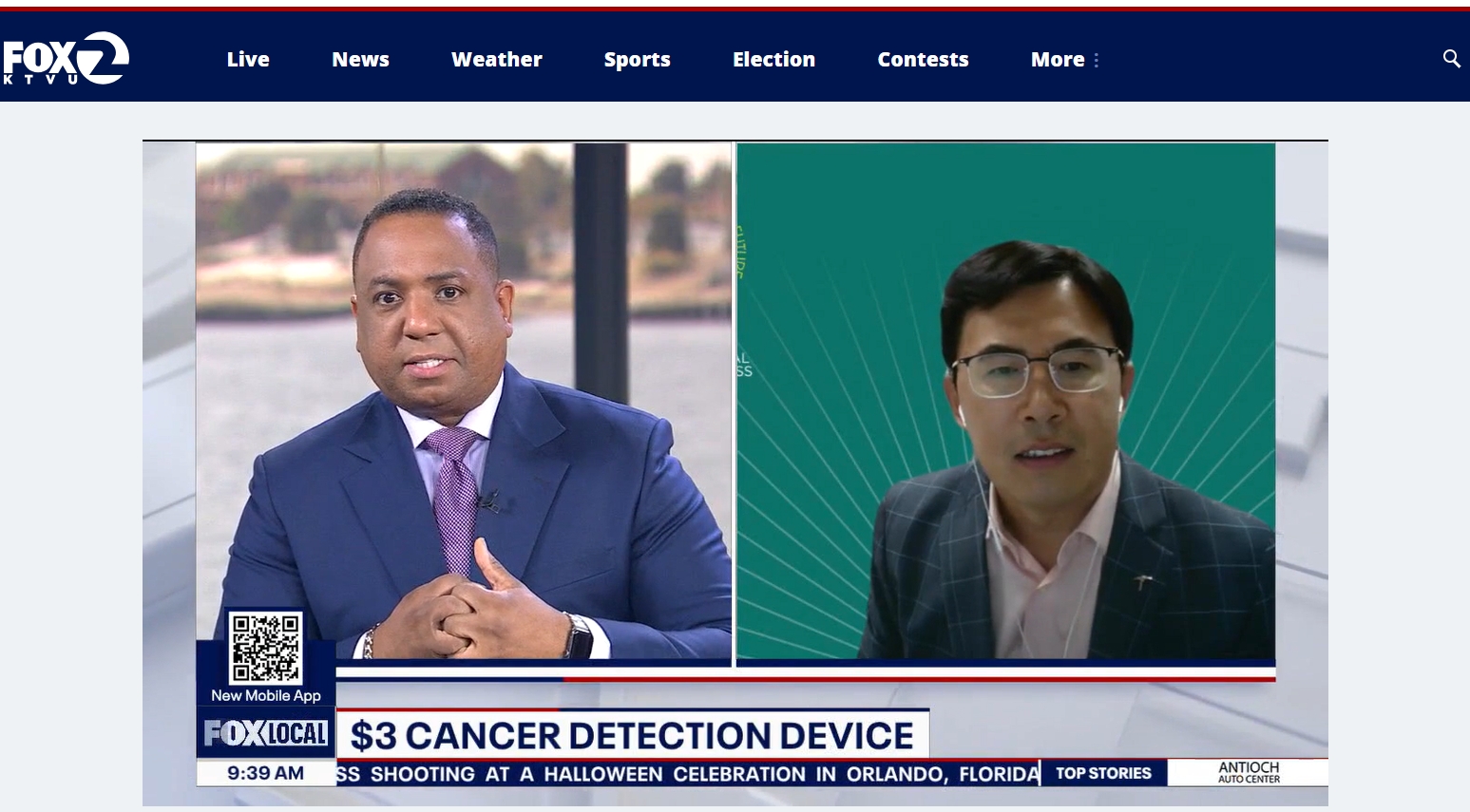
Dr. XiuJun Li is a Professor in the Department of Chemistry and Biochemistry at The University of Texas at El Paso (UTEP) within the College of Science. He leads the Li Microfluidic Lab-on-a-Chip & Nanotechnology Group, focusing on the development of cutting-edge, low-cost diagnostic technologies for applications in bioanalysis, biomedical engineering, forensic science, and environmental science. His work is highly interdisciplinary, bridging chemistry, engineering, and biology. Dr. Li's primary research interests lie in microfluidics, nanotechnology, lab-on-a-chip systems, and point-of-care diagnostics. His lab specializes in creating paper and polymer hybrid microfluidic devices for the ultrasensitive detection of cancer biomarkers, infectious diseases (such as SARS-CoV-2 and pertussis), and environmental toxins. A significant focus is on making these devices instrument-free and affordable, particularly for use in resource-limited settings and rural areas. His recent work on a $3 paper-based cancer detector has garnered significant media attention, including features in the New York Post and local TV stations. The trend in Dr. Li's recent publications reveals a strong emphasis on developing portable, visual, and quantitative diagnostic platforms. His research frequently involves the integration of nanomaterials for signal amplification, the use of microfluidic chips for controlled reactions, and innovative readout methods like bar-chart displays and smartphone-based detection, all aimed at creating practical tools for real-world healthcare challenges. Dr. Li has received substantial recognition for his contributions to science, including being named one of the World's Top 2% of Cited Researchers by Elsevier and a Top Scholar by ScholarGPS. He is an Editorial Board Member for Microsystems & Nanoengineering (Nature Publishing Group) and has been awarded a Travel Grant from GEM on the Road’s PFI Programming. He holds patents for his inventions in biosensing and photothermal detection. Dr. Li is a dedicated mentor and educator. He has advised numerous PhD and Master's students, many of whom have gone on to prestigious postdoctoral positions at institutions like Harvard, UPenn, and MD Anderson. He is also the Director of the Forensic Science program at UTEP, where he organizes outreach events to engage students. His lab is actively involved in research, with multiple postdoctoral fellows and graduate students currently working on projects related to cancer detection and infectious disease study.
Susan Davies is a Professor and Interim Dean at the Tulane School of Social Work, where she also serves as Associate Dean for Research. She previously held leadership and research roles at the University of Alabama at Birmingham, including directing the CDC-funded Prevention Research Center and holding scientific appointments in multiple interdisciplinary centers such as the Center for AIDS Research (CFAR) and the Minority Health Research Center. Her research is centered on improving behavioral health outcomes among vulnerable populations, particularly focusing on HIV/STI prevention among adolescents, maternal mental health, and the social determinants of health. She employs ecological and ecosystemic frameworks to understand risk and protective factors within families and communities, with a strong emphasis on intervention development, program evaluation, and community organizing. Her work often integrates interdisciplinary collaboration across public health, medicine, nursing, and psychology. The recent publications reflect a sustained focus on adolescent sexual health, maternal well-being, and community-level influences on risk behaviors. Her studies utilize diverse methodologies including longitudinal analysis, randomized trials, and qualitative assessments, often targeting underserved populations in the Deep South. Common themes include health equity, family functioning, neighborhood effects, and innovative intervention strategies such as entertainment education and social media outreach. Susan Davies has secured significant research funding from federal agencies including the CDC and NIH. Notable grants include a five-year CDC Prevention Research Center award on community health renewal and an NIH/NICHD-funded prenatal behavioral intervention study to prevent cytomegalovirus in pregnancy. She has served as Principal Investigator on twelve studies and as co-PI or investigator on numerous others, demonstrating a robust and sustained research program. She is deeply committed to mentoring, having guided five junior faculty recipients of K-awards across disciplines such as Medicine, Surgery, Public Health, Nursing, and Psychology. She has chaired 15 dissertation committees and served on over 40 others, advising students from various departments across her institutions. Her leadership extends to academic administration, where she plays a central role in shaping research strategy and educational programs at Tulane School of Social Work.