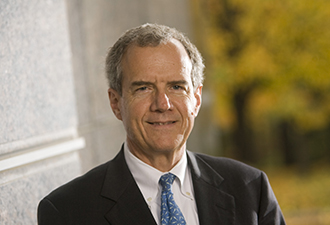
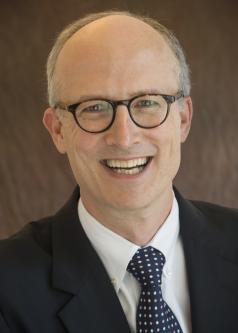
W. Edward "Ted" Afield is the Vice Dean and Mark and Evelyn Trammell Clinical Professor of Law at Georgia State University College of Law , where he directs the Philip C. Cook Low-Income Taxpayer Clinic . He holds a J.D. from Columbia Law School, an LL.M. in Taxation from the University of Florida Levin College of Law, and an A.B. in History from Harvard College. Education : LL.M. (University of Florida), J.D. (Columbia), A.B. (Harvard) Afield's research focuses on tax compliance , professional regulation , and the intersection of tax law with religion , including policy impacts on education and doctrinal tax procedure. His recent publications emphasize ethical tax systems, digital dispute resolution, and social justice in taxation. He has been recognized as a Harlan Fiske Stone Scholar at Columbia and is a Fellow of the American College of Tax Counsel . Afield also served on the IRS Advisory Council (2020-2022) and chaired the AALS Teaching Methods Section. At Georgia State, Afield teaches Federal Income Taxation , Corporate Taxation , and Property Law , while managing a caseload of 160-200 tax controversy cases through the clinic. His work bridges tax scholarship with experiential legal education , advocating for innovative solutions to systemic tax challenges.
Dr. Thomas Campbell is a Professor and the Doy and Dee Henley Distinguished Professor of Jurisprudence at the Dale E. Fowler School of Law , Chapman University. His expertise spans Antitrust Law , Federal Trade Commission , Separation of Powers , Economics and the Law , and Politics . Campbell has held prominent roles, including Dean of the Fowler School of Law (2011–2016), Bank of America Dean and Professor at UC Berkeley's Haas School of Business (2002–2008), and Professor of Law at Stanford University (1987–2002). Education: B.A., M.A., and Ph.D. in Economics from the University of Chicago Juris Doctor (JD) from Harvard Law School, where he served on the Harvard Law Review Board of Editors Campbell's research focuses on the intersection of economics and legal analysis, particularly in antitrust, constitutional law, and separation of powers. His scholarly work has appeared in top journals like the Harvard Law Review , Stanford Law Review , and Columbia Law Review , alongside his book Separation of Powers in Practice (2004). Recent publications highlight trends in antitrust policy, executive authority, and labor law post- Janus . Notable honors include the White House Fellowship and a clerkship with U.S. Supreme Court Justice Byron White . His career combines academic rigor with public service, including roles as a U.S. Congressional member, California State Senator, and Director of the California Department of Finance. Campbell and his wife have volunteered in Africa, teaching courses on fundraising, constitutional law, and business strategy.
Orly Lobel is the Warren Distinguished Professor of Law and founding Director of the Center for Employment and Labor Policy at the University of San Diego School of Law . She holds an SJD and LLM from Harvard University, and an LLB from Tel Aviv University. As a member of the American Law Institute , she shapes national conversations on technology policy, labor law, and equality. Education SJD, Harvard University (2006) LLM, Harvard University (2000) LLB, Tel Aviv University (1998) Her research bridges artificial intelligence , employment law , and human capital policy , with recent work focusing on algorithmic fairness , noncompete clauses , and digital governance . She leads the Center for Employment and Labor Policy and co-founded the Center for Intellectual Property and Markets. Key publication trends show emphasis on AI regulation , labor market dynamics , and data governance . Her 2023-2024 work includes analyzing remote work policy , noncompete bans , and affirmative disclosure requirements for government agencies. Scientific Awards & Grants : ACUS Consultant Team Recognition Robert Wood Johnson Foundation Grant Thorsnes Prize for Outstanding Legal Scholarship (twice) Searle-Kauffman Fellowship Netspar Research Grant Herzog Endowed Scholar University Professorship (2022-23) As a policy advisor , she served on President Obama’s innovation team and consulted the Federal Trade Commission , Government Accountability Office , and ACUS. Her books have been optioned for film and adapted into audiobooks, with translations in multiple languages.
Alex Lee serves as Professor of Law and Director of the Center on Law, Business, and Economics at Northwestern Pritzker School of Law. He teaches Securities Regulation, Business Associations, and Administrative Law while leading interdisciplinary initiatives at the nexus of legal scholarship and economic analysis. His educational foundation includes: BA in Mathematics from Harvard College Part III of Mathematical Tripos from the University of Cambridge PhD in Economics from Yale University JD from Yale Law School Professor Lee's research pioneers quantitative approaches to securities regulation , administrative law , and litigation economics . His work integrates mathematical modeling with legal theory to examine regulatory efficiency, investor protection frameworks, and settlement dynamics. Key contributions address cost-benefit analysis in rulemaking, Priest-Klein hypothesis validation, and SOX Section 404 compliance impacts. His publication trajectory reveals sustained focus on law-economics intersections, particularly securities regulation (40% of recent work) and litigation modeling (33%). Articles consistently employ game-theoretic frameworks and empirical validation while influencing regulatory policy debates through rigorous economic analysis. As Center Director, Lee fosters collaborative research on business law innovations, regulatory design, and economic implications of legal frameworks. His leadership bridges academic scholarship with practical regulatory challenges through the Center's interdisciplinary programming.
Michael A. Livermore is a Professor at the University of Virginia School of Law, where he joined the faculty in 2013. He teaches courses on environmental law, regulation and legal technology, and is recognized as a leading expert in cost-benefit analysis for regulatory evaluation. Livermore frequently collaborates on interdisciplinary projects with researchers across economics, computer science, neurology, and the humanities. Livermore earned his J.D. magna cum laude from NYU Law, where he was a Furman Scholar, was elected to the Order of the Coif, and served as a managing editor of the Law Review. After law school, he spent a year as a fellow at NYU Law's Center on Environmental and Land Use Law before clerking for Judge Harry T. Edwards on the U.S. Court of Appeals for the D.C. Circuit. Prior to joining UVA, he was the founding executive director of the Institute for Policy Integrity at New York University School of Law. Professor Livermore's research focuses on environmental law, cost-benefit analysis, and the application of data science techniques to legal texts. He is considered one of the early scholars in the emerging field of computational legal studies, using natural language processing and other computational methods to analyze legal materials. His work bridges traditional legal scholarship with cutting-edge data science approaches, creating new methodologies for understanding law and legal institutions. Livermore hosts the Online Workshop on the Computational Analysis of Law, a global forum for scholars working at this intersection. Livermore is a leading expert on cost-benefit analysis in regulatory contexts, authoring influential books including "Reviving Rationality: Saving Cost-Benefit Analysis for the Sake of the Environment and Our Health" (2020) and "Retaking Rationality: How Cost-Benefit Analysis Can Better Protect the Environment and Our Health" (2008). His recent scholarship increasingly focuses on the intersection of artificial intelligence and law, examining how language models can be applied to legal tasks and how to measure their performance in legal reasoning. As a prolific scholar, Livermore has published dozens of academic works in top law journals as well as peer-reviewed legal, scientific, and social science journals. His 2024-2023 publications demonstrate a clear trend toward computational legal studies, with multiple papers on language model interpretability, judicial analysis using computational methods, and the application of AI to legal tasks. These works span disciplines including legal scholarship, computer science, economics, and empirical legal studies. Livermore is a senior fellow of the Administrative Conference of the United States, reflecting his expertise in administrative law and regulatory process. His scholarship has significantly influenced debates about regulatory policy, particularly regarding environmental regulation and the proper role of cost-benefit analysis. Throughout his career, Professor Livermore has demonstrated a commitment to interdisciplinary collaboration and methodological innovation. His early work established him as a leading voice in environmental regulation and cost-benefit analysis, while his more recent scholarship has positioned him at the forefront of the emerging field of computational legal studies. He has participated in dozens of regulatory proceedings on diverse issues ranging from climate change to prison safety, bridging academic scholarship with practical regulatory challenges.
Marco Bevilacqua serves as a Post-doctoral Research Fellow in Administrative Law at Luiss Guido Carli University's Department of Political Science, Rome, focusing on governance innovation through conditionality mechanisms and European Commission spending power expansion. His academic foundation includes a 2023 doctoral degree from the University of Pisa with the thesis "Criteria and instruments for the rationalisation of the enlarged public sector". Prior educational engagement featured a 2022 visiting researcher position at Université Gustave Eiffel in Paris, examining French urban regeneration frameworks and ecological transition governance. Bevilacqua's research expertise spans administrative law, public finance, and public economic law, with demonstrated exploration of artificial intelligence implications in public decision-making processes—including rulemaking, judicial contexts, and public management—as evidenced by his 2023 teaching at the University of Tuscia. His work critically analyzes shifting European governance models and national-local authority dynamics in economic planning. Professionally, he advised Italy's Department for Public Administration in 2023 on administrative procedure simplification to advance National Recovery and Resilience Plan (NRRP) targets. He actively contributes to academic discourse as a panellist at national and international conferences, though specific student mentorship or laboratory affiliations remain unreported in available materials.
Thomas Lininger is the Orlando John and Marian H. Hollis Professor at the University of Oregon School of Law, where he has served since 2003. His work spans criminal law, environmental law, and evidentiary ethics, with a focus on domestic violence prosecution, environmental advocacy ethics, and improving access to justice for indigent parties. He has received multiple teaching and service awards and actively contributes to policy and legal reform through state commissions. JD, Harvard Law School BA, Yale University Lininger’s scholarship addresses: Confrontation Clause applications in domestic violence cases Environmental ethics for judges and attorneys Evidentiary privilege reforms Wildfire risk management Pro se litigant support His publications have been cited by the U.S. Supreme Court and numerous state courts. Awards include: Ersted Award for Distinguished Teaching (2006) Lokey Award for Faculty Excellence (2008) Hollis Teaching Award (2010) Madison Award for inclusive discourse (2023) Margie Paris Award for student advocacy (2025) Lininger has served on the Oregon Criminal Justice Commission, Public Defense Commission, and Tobacco Settlement Task Force, and held leadership roles in professional organizations like the American Bar Association’s Ethics Committee.
Andy Grewal is the Orville L. and Ermina D. Dykstra Professor in Income Tax Law at the University of Iowa College of Law. He joined the faculty in 2011 and was awarded the Professor of the Year in 2022 by law students. His work spans tax law, administrative law, statutory interpretation, and constitutional law, with significant influence on tax litigation and regulatory debates. Education : BA from Williams College (2002), JD from University of Michigan Law School (2005), LLM in Taxation from Georgetown University (2006). Professor Grewal's research critically examines tax regulations, executive authority, and constitutional limits in taxation. His scholarship has shaped major legal arguments in U.S. Circuit Courts and the Supreme Court, particularly regarding the economic substance doctrine and tax policy. His recent publications focus on post-Loper Bright regulatory frameworks, presidential immunity, and constitutional challenges to tax laws. Articles highlight intersections between tax doctrine, administrative deference, and public policy. Scientific Awards : Professor of the Year (2022), Richard Katcher Senior Tax Prize, Georgetown Graduate Tax Fellow Merit Scholarship. Grewal's affiliations include the District of Columbia Bar, U.S. Tax Court Bar, and U.S. Supreme Court Bar. He contributes to legal discourse via the Notice & Comment blog, analyzing administrative law and tax controversies.
Luis Inaraja Vera serves as an Assistant Professor of Law at Gonzaga University School of Law, where he teaches Environmental Law, Water Law, and the Advanced Environmental and Natural Resources Law & Policy Seminar. His academic career bridges U.S. and European environmental legal frameworks through multinational research and practice. His educational credentials include: J.D. from New York University School of Law LL.M. in Environmental Law summa cum laude from Vermont Law School LL.M. in Environmental Law from the University of the Basque Country LL.B. from University of Barcelona B.S. in Environmental Science from University of Girona Professor Inaraja Vera specializes in environmental and natural resources law with emphatic focus on climate change adaptation in water governance. His research critically examines regulatory innovations like voluntary environmental programs while addressing transboundary challenges through comparative analysis of U.S. and European jurisdictions. He investigates the intersection of property rights, judicial review mechanisms, and ecological sustainability in rapidly evolving legal landscapes. His publication portfolio reveals a clear trajectory toward climate-responsive water law and adaptive regulatory frameworks. The articles demonstrate increasing emphasis on practical implementation challenges, cross-jurisdictional comparisons, and empirical assessment of environmental programs—particularly evident in his forthcoming 2025 Harvard Environmental Law Review piece on voluntary regulation and 2024 Washington University Law Review analysis of climate-driven water transitions. Professional experience includes research positions at New York University's Furman Center for Real Estate and Urban Policy and Indiana University's Environmental Resilience Institute, where he also taught at the Maurer School of Law. Prior to academia, he practiced environmental law with Cuatrecasas, Gonçalves Pereira, and collaborated with Earthjustice and the Natural Resources Defense Council during law school.
Stephen E. Roady serves as a Senior Lecturing Fellow at Duke Law School and Professor of the Practice of Marine Science and Conservation at Duke University's Nicholas School of the Environment, with additional appointments as a faculty fellow in Duke's Nicholas Institute for Environmental Policy Solutions. His career spans over three decades of environmental litigation and policy work focused on federal statutes like the Clean Water Act and Magnuson-Stevens Act. Environmental Law Expertise Marine Conservation Leadership International Ocean Policy Advisor Roady's research focuses on ocean stewardship through the Public Trust Doctrine , and deep seabed mining regulations . His recent publications examine transboundary species management, marine governance challenges, and the intersection of legal frameworks with ecological preservation. Scientific Awards: Professor of the Year, Duke School of the Environment (2008) Wasserstein Public Interest Fellow, Harvard Law School (2007-2008) He teaches courses in environmental law, ocean and coastal law and policy, and coastal resilience, while serving as a key advisor to Pacific Small Island Developing States on climate-related marine issues.
M. Todd Henderson serves as the Michael J. Marks Professor of Law at the University of Chicago Law School. His academic career spans corporate law, securities regulation, and law and economics, with a focus on market mechanisms, governance structures, and policy implications. Henderson's work has been recognized through prestigious awards like the Paul M. Bator Award (2010) and invitations as a visiting professor at institutions including the University of Paris Ouest and Stanford University's Hoover Institution. Education : JD from University of Chicago (1998), BSE in civil engineering and operations research from Princeton (1993). Research : Explores corporate governance, insider trading regulation, economic growth, and poverty reduction through empirical and theoretical lenses. Publications highlight his contributions to legal scholarship, including analyses of digital asset regulation, corporate board structures, and the interplay between law and economic principles. His articles often address practical implications of legal frameworks on market behavior and societal outcomes.
Anders la Cour-Harbo serves as an Associate Professor in the Department of Electronic Systems at Aalborg University's Technical Faculty of IT and Design. His academic career spans over two decades with consistent publication output since 2000, demonstrating sustained research activity in unmanned aircraft systems and related technologies. His institutional affiliation places him within Denmark's prominent engineering research environment focused on practical technological applications. Professor la Cour-Harbo's research interests center on unmanned aircraft systems engineering, with particular expertise in drone applications for industrial settings. His work spans drone load systems, emergency landing technologies, predictive maintenance, and offshore operations. The research fingerprint shows strong emphasis on Unmanned Aircraft Engineering (100%), Load System Engineering (87%), and Unmanned Aircraft System Engineering (46%), reflecting his specialized focus areas. His projects consistently address real-world applications of drone technology, particularly in challenging environments like offshore wind farms. Analysis of his publication trends reveals a strategic focus on practical drone applications with increasing emphasis on safety systems, regulatory compliance, and industrial implementation. Recent publications (2023-2024) show strong industry relevance with applications in offshore wind turbine maintenance, predictive maintenance systems, and vision-based control technologies. His research bridges theoretical control systems with practical implementation challenges in drone operations. Teacher of the Year 2015 Teacher of the Year 2006 Professor la Cour-Harbo leads multiple significant research projects including SafeEye (Automated emergency landing for small unmanned aircraft), UAS-ability (research infrastructure for drone development), and OPAL (Offshore Delivery of Packages). He serves as chair for JARUS (Joint Authority for Rulemaking of Unmanned Systems), significantly influencing European drone legislation. His spin-off company Vixos demonstrates successful technology transfer from academic research to commercial application. The Harm threshold for unmanned aircraft in European legislation impact shows his direct contribution to shaping regulatory frameworks. His laboratory and research team focus on practical drone applications with infrastructure supporting airborne data collection and drone development. The UAS-ability project specifically created research infrastructure for drone development and airborne data collection. His collaboration network spans multiple countries, with significant European partnerships focused on advancing drone technology standards and applications. His work with JARUS places him at the forefront of international drone regulation development.
Bryan Camp is a Professor of Law and George H. Mahon Professor of Law at Texas Tech University School of Law , where he has been a faculty member since 2001. He brings extensive practical experience from roles as Assistant County Attorney in Arlington, Virginia, private practice at Quinn & Racusin in Washington D.C., and the IRS Office of Chief Counsel's National Office in Washington, D.C. Education: B.A., Haverford College (1982) J.D., University of Virginia (1987) M.A., University of Virginia (1988) LL.M., Columbia University (1993) His research focuses on taxation of cyberspace , U.S. legal intellectual history , and tax administration . Professor Camp has authored over 75 published articles and 358 blog posts, with scholarship influencing tax policy discussions in London and Berlin. Key contributions include analyses of electronic gaming taxation, jurisdictional time periods in the Tax Code, and historical perspectives on the Earned Income Tax Credit. Scientific Awards: 2007 & 2010: Law School's Outstanding Researcher 2008: George H. Mahon Professorship 2010: Texas Bar Foundation's Best Law Review Article 2000: IRS General Litigation Division's Attorney of the Year Professor Camp actively participates in the American Law Institute and chairs the American Bar Association Section of Taxation's Individual and Family Taxation Committee . He has delivered over 69 Continuing Legal Education presentations since 2003, focusing on tax procedure and statutory interpretation.
Jeffrey Lubbers is Professor of Practice in Administrative Law at American University Washington College of Law and Fellow in the Law and Government Program. His expertise spans federal regulatory processes and administrative law reform. Education: J.D. University of Chicago Law School A.B. Cornell University Research focuses on rulemaking procedures, judicial review of agency actions, and comparative administrative systems. Authored foundational texts including 'A Guide to Federal Agency Rulemaking' and 'Administrative Law and Process in a Nutshell'. Engages in administrative law reform projects internationally, particularly in China. Previously served as Research Director of the Administrative Conference of the United States.
Daniel Rodriguez holds the Harold Washington Professorship at Northwestern Pritzker Law School, specializing in constitutional theory, administrative law, and state governance. His scholarship examines the interface between legal rules and government action, particularly concerning state constitutional design and regulatory authority. Recent work focuses on the 'police power'—government's authority to regulate health, safety, and welfare—as articulated in his 2024 monograph Good Governing: The Police Power in the American States . Rodriguez's research analyzes constitutional stability mechanisms, federalism dynamics in legal regulation, and administrative state evolution. Current projects include studies on constitutional monarchy's persistence in democratic systems, liability frameworks for pandemic-related business impacts, and biases in regulatory administration. His scholarship frequently engages with historical institutional development and contemporary governance challenges. Beyond constitutional theory, Rodriguez maintains active research programs in access-to-justice reform and local government innovation. He has led major academic institutions as dean at Northwestern Law (2012-2015), University of Texas Law, and University of San Diego Law, and served as President of the Association of American Law Schools. His commitment to legal education extends to developing pandemic-related coursework during COVID-19.