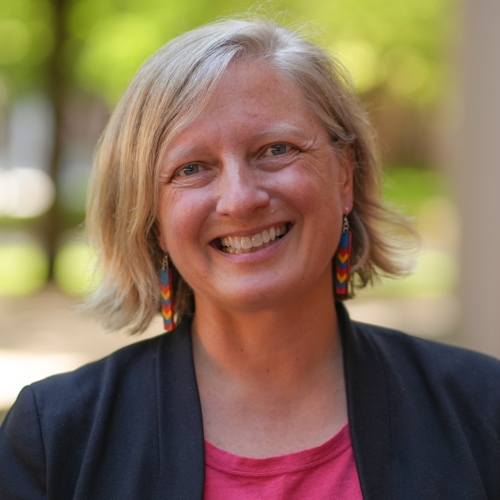
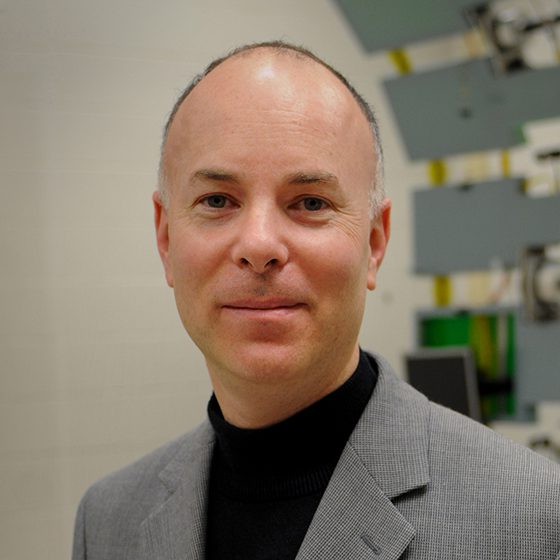
Uma Urs is a Senior Lecturer in Business and Management at Oxford Brookes Business School, Oxford Brookes University. Her research examines mergers and acquisitions with particular focus on post-merger integration processes, organizational routines, and contingency factors in strategic management. Her work analyzes how acquisition strategies impact performance outcomes, integration approaches for cross-border deals involving emerging market firms, and the role of routine amalgamations in synergy realization. Current projects include developing AI-enabled microfinance solutions for rural communities. Urs's publications establish frameworks for evaluating integration strategies and organizational connectors during post-acquisition transitions. Her research provides insights into Indian outbound acquisitions and contextual factors influencing M&A success.
Dr. Sharon Chamard is a Professor at the Justice Center , University of Alaska Anchorage , with a focus on the spatial distribution of crime , public space conflicts , and community-based crime prevention . Holding a Ph.D. in Criminal Justice from Rutgers University (2003), she integrates environmental criminology and crime mapping into her research and teaching. Her work examines geographic patterns of sexual assault , youth violence , and homeless encampments in Anchorage. Current projects include analyzing mobility patterns of chronic public inebriates and spatial features of homeless camps . Dr. Chamard has authored two Problem-Oriented Guides for Police for the U.S. Department of Justice, addressing business partnerships and homelessness-related public safety . Research Interests : Homeless encampments, situational crime prevention, community policing, crime mapping Collaborations : Anchorage Police Department's Community Action Policing Team, Alaska Justice Information Center, Municipality of Anchorage Dr. Chamard has presented at international symposia, including the Environmental Criminology and Crime Analysis (ECCA) Conference in India and New Zealand, and contributed to Alaska Justice Forum publications. She also serves on the UAA Faculty Senate and chairs the UAA Chancellor search committee .
Michael Jenkins, Ph.D., is a Professor in the Department of Criminal Justice, Cybersecurity and Sociology at the University of Scranton. He holds degrees from The University of Scranton (B.S.) and Rutgers University (M.A. and Ph.D.). A Fulbright US Scholar Grant Recipient (2017), his research focuses on policing strategies, international law enforcement, police reform, and the intersection of technology with crime prevention. He frequently engages with media outlets like the New York Times and BBC to discuss unbiased, historically contextualized analyses of policing issues. His work emphasizes community problem-solving approaches, police legitimacy, and the evolving role of technology in law enforcement. Professor Jenkins has contributed to transformative research on topics such as transnational policing practices, institutional trust in police organizations, and the adaptation of police forces to 21st-century challenges. His current projects include a book manuscript on international policing and collaborative work with the Metropolitan Police Department in London on police use of force. He mentors undergraduate students on policing and crime-related projects, emphasizing evidence-based strategies and ethical leadership. His scholarly contributions span qualitative methods in policing research, labor unions in police departments, and the educational needs of police executives. Jenkins advocates for balanced, objective discourse on contentious issues like police accountability, blending academic rigor with real-world policy implications. Key Research Themes: Community Policing, International Law Enforcement, Technology in Policing, Police Reform Media Engagements: Regular commentary in national media on policing narratives and public perception Grants & Awards: Fulbright Scholar Program (2017), Ongoing collaborations with international institutions
Ann Meier is Professor of Sociology and Associate Dean for Research & Graduate Programs in the College of Liberal Arts at the University of Minnesota. She earned her PhD in Sociology from the University of Wisconsin (2003). Dr. Meier's research examines family dynamics and life course development, with particular focus on adolescent transitions, gender relations, and parental well-being. Research Focus: Investigates family relationships across the life course, examining how family structures, conflicts, and transitions impact individual well-being. Research areas include adolescent development, parenting stress, gender equity in domestic labor, and the impacts of social inequalities on family functioning. Recent work explores COVID-19's disproportionate effects on marginalized families. Publication Trends: Recent articles demonstrate strong focus on pandemic impacts on families, including healthcare disparities, employment vulnerability, and gendered division of labor. Longitudinal methodologies characterize investigations into parental well-being across child development stages. Earlier work established foundations in adolescent development and family meal dynamics. Educational Background: PhD Sociology, University of Wisconsin (2003) MS Sociology, University of Wisconsin, Madison (1999) BA Sociology, George Washington University (1995)
Dr. Joshua Wiley is a Senior Lecturer at Monash University in the School of Psychological Sciences and Turner Institute for Brain and Mental Health, where he has been appointed since 2016. He previously completed his PhD at the University of California at Los Angeles in 2015 and trained in pragmatic randomized controlled trials through postdoctoral work with a primary care and prevention group. Dr. Wiley's research focuses on understanding and improving sleep and mental health, particularly in people after a cancer diagnosis. His work spans both basic science and applied intervention research, examining the daily and longitudinal dynamics of sleep, psychosocial factors, and health. His team has expertise in sleep and insomnia, emotion regulation, depression and anxiety, and cancer, using methods including clinical trials, ecological momentary assessment, actigraphy, digitomics, and statistics. His recent publications demonstrate a strong focus on personalized medicine approaches to sleep interventions, particularly in cancer contexts, as well as examining the relationship between daily activities and mental health. His work increasingly integrates AI and data analytics to develop personalized recommendations for interventions. APS Young Investigators Colloquium Award (2016) Dr. Wiley actively supervises PhD students and has secured over $10 million in competitive grant funding from major organizations including NHMRC, ARC, NIH, DoD, and Wellcome Trust. His lab emphasizes wellbeing alongside academic success, with a collaborative and supportive culture. He serves on editorial boards for journals including International Journal of Behavioral Medicine and previously for Sleep journal (2017-2022). His external position includes Honorary Research Fellow at Peter MacCallum Cancer Centre (2017-present).
Andreas Blume is the McClelland Professor of Economics at the Eller College of Management, University of Arizona. He holds a PhD in Economics from the University of California-San Diego (1989). His research focuses on game theory, strategic communication, and experimental economics, particularly examining how communication operates under imperfect languages, noisy channels, and organizational coordination challenges. Blume has explored topics such as the evolution of message meanings, language barriers, and the role of costly communication in organizational settings. His work bridges theoretical models with experimental validation, emphasizing practical implications for economic decision-making and organizational behavior. Blume's educational background includes prior faculty roles at the University of Iowa and University of Pittsburgh. His research interests span strategic communication in sender-receiver games, incomplete contracts, and dynamic coordination through organizational routines. He is affiliated with the Economic Science Laboratory and the Institute for Behavioral Economics at the University of Arizona. His recent studies investigate mediated communication mechanisms, information exchange between rivals, and the interplay between contracts and communication. Blume’s experimental work often highlights how communication structures influence outcomes in games with conflicting or aligned interests. Key themes include the welfare effects of communication noise, the resilience of language in strategic interactions, and the design of effective communication policies in organizations. Blume’s contributions to economic theory include foundational insights into correlated equilibria, intentional vagueness in messaging, and the role of decentralized learning in organizational performance. His research has been published in top journals such as the Journal of Economic Theory , Econometrica , and Theoretical Economics .
Professor Dionisios Pnevmatikatos holds the position of Professor at the School of Electrical and Computer Engineering, National Technical University of Athens (NTUA), where he leads research in Computer Architecture and Reconfigurable Computing. He previously served as a Professor at the Technical University of Crete (TUC) from 2000 to 2019, directing the Microprocessor and Hardware Laboratory (MHL) and chairing the department. His academic journey includes a B.Sc. from the University of Crete (1989), M.Sc. and Ph.D. from the University of Wisconsin-Madison (1991 and 1995). Research Interests: Focuses on Computer Architecture, Reconfigurable Computing, Application Acceleration, Custom Architectures, and Hardware Acceleration of Bioinformatics Algorithms. His work spans FPGA-based systems, parallel computing, and energy-efficient designs. Key Projects: Coordinator of FASTER (EU FP7), Principal Investigator in DeSyRe, AXIOM, dRedBox, and EDRAH2020 projects. Active in EU initiatives like H2020 OPTIMA and Vitamin-V for RISC-V ecosystems. Leadership roles in conferences include SAMOS 2018 and FPL 2011 program chairs. Teaching: Courses include Computer Architecture, Digital Systems Design, and Parallel Processing Systems at NTUA. Former roles include teaching at University of Crete and TUC. Labs: Affiliated with Computing Systems Laboratory (CSLab) at NTUA and FORTH-ICS since 1997. Involved in prototyping manycore architectures and network processors.
Professor Benedetta Cappellini is a Professor in the Business School at the University of London. Her research focuses on consumer behavior, food studies, family sociology, cultural acculturation, and ethics of care. She examines topics such as food practices in families, migrant experiences during crises, intergenerational relationships, and the intersection of gender and social class in consumption patterns. Her research explores how individuals and families navigate food practices, cultural identities, and social dynamics through consumption patterns. Key themes include the ethics of care in marketing, the role of food in family formation and conflict, and the impact of austerity on parenting and grandparenting practices. She also investigates how migrants adapt culturally and cope with challenges like the pandemic, alongside studies on aging and social interaction. Recent articles analyze topics such as 'Careless (food) marketing' emphasizing ethical frameworks, the role of food in coupledom conflicts, and relational engagement strategies in marketing. She also explores intergenerational food practices and the social implications of food waste in schools. Her work often bridges sociology and consumer behavior, offering insights into marginalized voices and systemic inequities. No scientific awards explicitly mentioned. Professor Cappellini supervises PhD students including Jiyoun Han, Meichen Jiao, and Yanbo Zhang. While grants are not detailed in the provided texts, her research frequently addresses sociocultural issues, suggesting potential funding in areas like migration studies, family sociology, and consumer ethics.
Dr. Jacqueline Pike Gerber is an Associate Professor of Information Systems and Technology at Duquesne University's Palumbo-Donahue School of Business. She holds a Ph.D. from the University of Pittsburgh and a B.B.A. from Ohio University's Honors Tutorial College. Her research focuses on emerging technologies, social networking behaviors, mass collaboration systems (e.g., Wikipedia), and policy frameworks for managing contentious objects in digital environments. She explores how technologies like Facebook and LinkedIn shape user interactions and organizational decision-making. Dr. Gerber teaches courses in the business core, information systems, and master's programs in analytics. Her work bridges technology, user behavior, and organizational dynamics, including studies on boundary-blurring social networks in hiring contexts and conflict resolution in open-source projects. She co-authored textbooks on business information systems, including Design an App for That . Awards: 2022 Rangos Prize for academic excellence Prior Experience: Microsoft MVP and IT roles in corporations Research Themes: Publicness of social networks, rule-breaking in mass collaborations, visual information design Her publications analyze temporary organizations, digital footprints in hiring, and pedagogical innovations in cross-functional teams. She actively collaborates with industry and academia to advance understanding of technology's societal impact.
Patrick Timothy Kinkade is a Professor of Criminal Justice at Texas Christian University (TCU), affiliated with the AddRan College of Liberal Arts. He holds a Ph.D. in Social Ecology from the University of California, Irvine, with emphases in Criminology, Methodology, and Public Policy. His research focuses on Urban Sub-Cultures, Corrections, Organized Crime, and Policy Analysis, with notable work in cybercrime and crime prevention strategies. Dr. Kinkade teaches courses such as Sociology of Corrections, Organized Crime, and Crime and the Media. His scholarship explores intersections between technology and crime, including hacker subcultures, petty theft in industries like car washes, and internet-based fraud. He has published in journals like The Social Science Journal and International Journal of Cybercriminology . No scientific awards or grants are explicitly listed, though his professional affiliations include roles related to criminal justice education and policy analysis. His work emphasizes practical applications of criminological theory to real-world issues, including corrections systems and crime prevention methodologies.
Dina Izenstark is an Associate Professor in the Child and Adolescent Development Department at San José State University's Lurie College of Education. She holds a PhD in Human Development & Family Studies and an MS in Recreation, Sport, and Tourism from the University of Illinois at Urbana-Champaign. Her research explores the impact of nature exposure on children and families, examining how family-based nature activities strengthen relationships and promote well-being. Her work bridges environmental psychology and family studies, with specific interests in nature-based interventions, outdoor recreation patterns, and developmental outcomes. Research investigates how environmental settings influence family communication, child executive function, and relational quality across the lifespan. Publications consistently focus on nature's role in family systems, with recent work examining outdoor activities during the COVID-19 pandemic, cross-cultural contexts in Latinx families, and longitudinal impacts from childhood to adulthood. Methodologies include experimental designs, qualitative analysis, and multi-wave surveys. Dr. Izenstark teaches courses in child development and advises students in research projects related to family dynamics and environmental influences. Her work contributes to interdisciplinary efforts promoting nature accessibility as a public health strategy.
Dr. AnneMarie Dorland is an Assistant Professor in the Bissett School of Business at Mount Royal University, specializing in marketing and design thinking. She holds a PhD from the University of Calgary, MA from Concordia University, and BDes from the University of Alberta. Her research focuses on creativity enhancement in organizational and educational settings, leveraging design thinking methodologies. She serves as Associate Director of MRU's CityXLab within the Institute for Community Prosperity. Education: PhD in Communication and Culture, University of Calgary MA in Communication Studies, Concordia University Bachelor of Design (BDes), University of Alberta Research Interests: Design thinking integration in education and organizations Creative capacity development Innovation leadership and policy Failure-positive mindset in learning environments Ethnography of creative industries Awards and Grants: Recipient of 2024 MRFA Teaching Excellence Award SSHRC Insight Grant (2022) SSHRC Explore Grant (2019) Multiple teaching awards from University of Calgary and MRU Advising & Engagement: Advisor for student research teams at CityXLab SSHRC committee representative for Alberta post-secondary design thinking initiatives Mentor for IABC Calgary and Dress for Success workshops Labs & Projects: Leading CityXLab’s research on Canada’s creative future Creator of Creative-Capacity.com and DoingDesignThinking.com
Natalia Almada is a Stanford University Assistant Professor and 2012 MacArthur Fellow renowned for her lyrical documentary and narrative films that explore Mexican-American cultural memory, bureaucracy, and violence. Her work spans multiple genres including documentary, experimental narrative, and fiction. Academia: Stanford University faculty since 2012 Residence: Mexico City and San Francisco Education: MFA in Photography - Rhode Island School of Design (2001) BFA - College of Santa Fe (1995) Her films examine: Political legacy through El General (2009) and family connection to Mexican president Plutarco Elías Calles Mexican social dynamics in Al Otro Lado (2005) and El Velador (2011) Bureaucracy's psychological impact in Todo lo demás (2016) Technological dependency in Users (2021) Memory and illness in upcoming Captions Will Be Needed (2025) Major Awards: MacArthur "Genius" Fellowship (2012) Guggenheim Fellowship (2008) Two Sundance Documentary Directing Awards (2009, 2021) United States Artists Fellowship (2010) Alpert Award (2011) Her filmography shows a progression from: Early works exploring cross-border identity and drug trade (2001-2005) Political legacy films (2009) Psychological studies of institutional workers (2016) Science fiction reflections on technology's emotional impact (2021-2025) Contact: nalmada@stanford.edu | Altamura Films
Andreas Thurnherr is a Lamont Research Professor at the Lamont-Doherty Earth Observatory and an Adjunct Professor in Earth and Environmental Sciences at Columbia University. His work focuses on physical oceanography, particularly the dynamics of ocean circulation, heat and tracer transport, and the development of advanced oceanographic instrumentation. Contact: Oceanography, 61 Route 9W, Palisades NY 10964, United States | 845-365-8816 Thurnherr investigates the role of topography in oceanic upwelling and water-mass transformation, critical processes for the global overturning circulation. His research also emphasizes improving methods for turbulence parameterization and collecting high-latitude velocity data near magnetic poles. He has pioneered innovations such as routine vertical velocity measurements in the ocean and advanced instrumentation for studying marine processes. His contributions bridge observational challenges in physical oceanography with practical technological solutions.
Keith Evan Green is a Professor at Cornell University with dual appointments in the Department of Human Centered Design (College of Human Ecology) and the Sibley School of Mechanical and Aerospace Engineering (College of Engineering). He also holds graduate faculty roles in Information Science and Robotics. His transdisciplinary research focuses on architectural robotics, exploring how cyber-physical environments can augment human experiences through reconfigurable spaces and robotic furnishings. Green earned degrees from the University of Pennsylvania and University of Illinois at Chicago, and previously served as a tenured faculty member at Clemson University and the University of Auckland. He directs the Architectural Robotics Lab (ARL), which pioneered concepts like 'robot-rooms' and has received significant NSF funding. Key honors include the Jean and Douglas McLean Professorship and multiple best paper awards at CHI, DIS, and IDC conferences. His lab collaborates globally with institutions like TU Delft, and his work spans healthcare robotics, educational tools, and community-focused design. Current research emphasizes socio-spatial interfaces, emotion regulation systems, and child-robot interaction frameworks. Education: B.A. Psychology, University of Pennsylvania (1985) M.Arch., University of Illinois at Chicago (1990) Ph.D. Architecture, University of Pennsylvania Research Interests: Architectural Robotics integrates design, robotics, and psychology to create adaptive environments. Current projects include socio-spatial interfaces fostering human connections, soft robotic surfaces for stress regulation, and educational tools like CyberPLAYce. Green's work emphasizes ethical design for under-served populations including post-stroke patients and children. Grants & Funding: Recent projects include a $600K NSF grant for 'Robot Rooms' and collaborations with NASA JPL, Sandia Labs, and industry partners like Microsoft Research. The ARL also developed the LIT ROOM literacy tool supported by NSF grants. Lab & Teams: The ARL employs a radical collaboration model, involving researchers from robotics, psychology, and design. Notable projects include the Animated Work Environment (AWE), communIT, and the home+ furniture suite. Partnerships span TU Delft, Politecnico di Milano, and the Bartlett UCL.