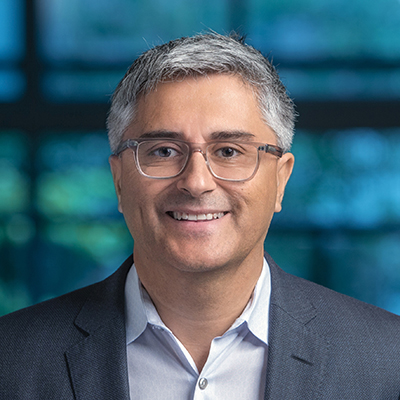
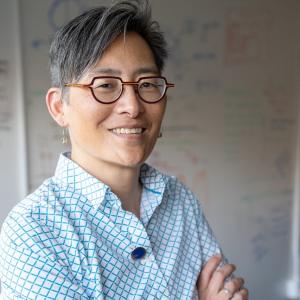
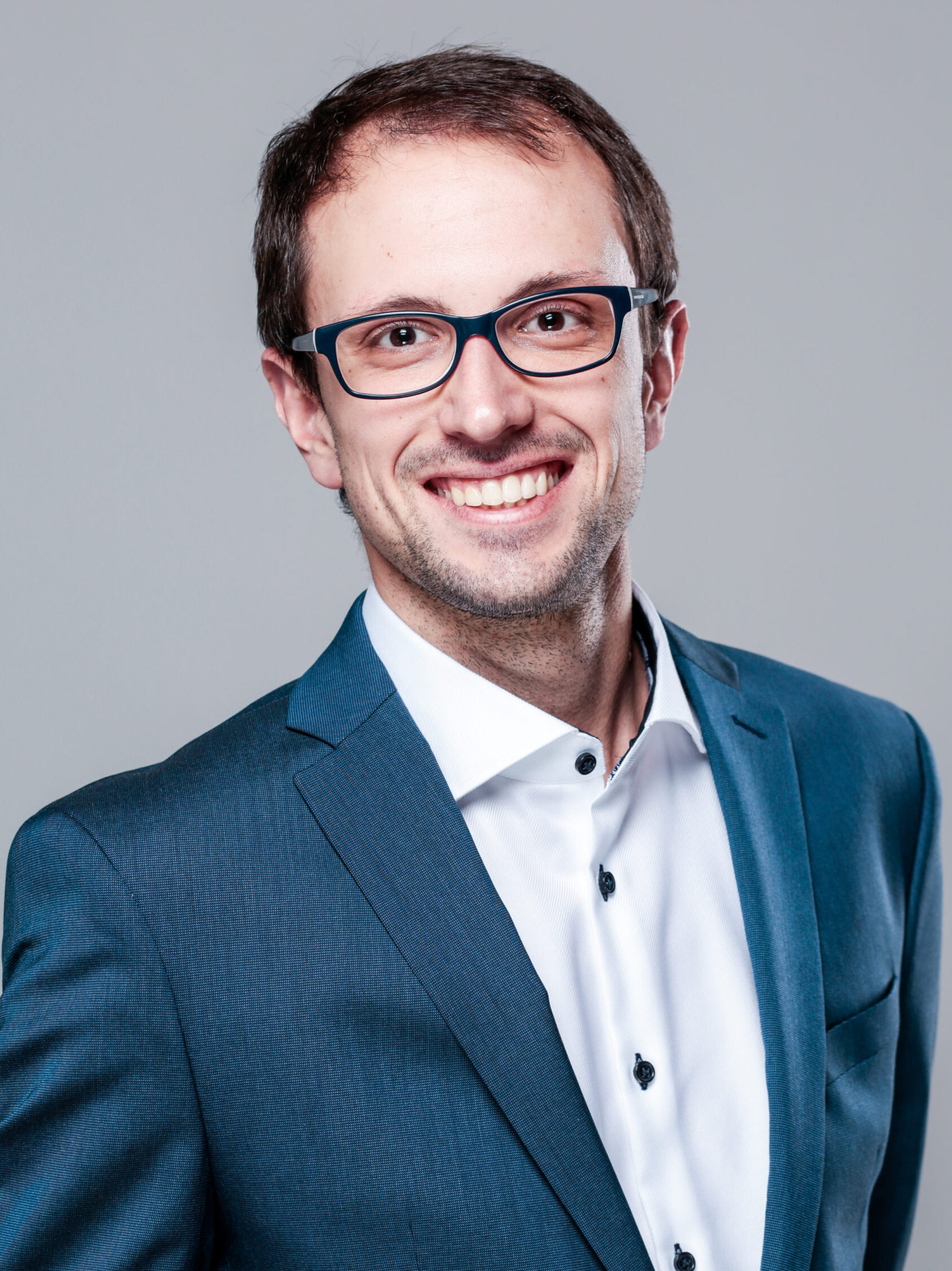
Alexander Steiger is an Assistant Professor at the Department of Computer Science, Duke University, under the Trinity College of Arts & Sciences. His academic career began with a Ph.D. at Duke in 2023, and he is currently affiliated with the institution. Education: Ph.D., Duke University (2023) Steiger's research focuses on computational geometry, algorithms, and their applications in robotics and data structure optimization. His work addresses complex geometric problems, including the efficient decomposition of 3D cube unions and motion planning for robots in polygonal environments. He also explores algorithm design for diverse top-k queries in database systems. His recent publications highlight advancements in geometric algorithms and their computational efficiency, with applications in spatial data processing and robotic navigation. The methodologies he develops often balance theoretical rigor with practical implementations for real-world problems. External Relationships: Viiv (GlaxoSmithKline) Steiger teaches courses such as Data Structures and Algorithms , Discrete Math for Computer Science , and Introduction to Algorithms , covering both foundational and advanced topics in computer science education.
Dr. Sharmila Anandasabapathy is a Professor of Medicine in Gastroenterology and Vice President & Senior Associate Dean of Global Programs at Baylor College of Medicine in Houston, Texas. She also serves as Director of Baylor Global Initiatives and the Baylor Global Innovation Center, overseeing Baylor's global health programs and affiliations. Her work focuses on developing innovative technologies for cancer screening and diagnosis in low-resource settings worldwide. Dr. Anandasabapathy's educational background includes: BA in English Literature from Yale University MD with distinction in Research, Molecular Biology from Albert Einstein College of Medicine Internship & Residency at New York-Presbyterian Hospital/Cornell Medical Center Gastroenterology Fellowship at Mount Sinai Medical Center Dr. Anandasabapathy is an advanced gastrointestinal endoscopist whose research focuses on developing and validating novel technologies for early gastrointestinal cancer diagnosis. Her primary areas of interest include Barrett's Esophagus, Esophageal Cancer, Gastric Cancer, and advanced endoscopic techniques including Confocal Microendoscopy, Fluorescent Imaging, and Magnification Endoscopy. She specializes in creating low-cost, portable diagnostic solutions for resource-limited settings. Her work bridges clinical gastroenterology with biomedical engineering, focusing on practical applications of advanced imaging technologies for cancer screening in global contexts. She has particular expertise in developing battery-operated, portable endoscopic devices suitable for use in low-resource environments across Africa, Central America, and Asia. Dr. Anandasabapathy's publication record demonstrates a consistent focus on high-resolution microendoscopy for gastrointestinal cancer detection, particularly in resource-limited settings. Her research spans technological development, clinical validation, and cost-effectiveness analysis across multiple international contexts. A significant portion of her recent work examines implementation strategies for low-cost endoscopic screening in diverse global populations, with particular attention to esophageal and colorectal cancers. Her collaborative approach is evident in the multidisciplinary nature of her publications, which frequently involve partnerships with engineers, public health experts, and international research teams. The evolution of her work shows increasing emphasis on practical implementation of screening technologies in real-world settings across multiple continents. Dr. Anandasabapathy has received numerous honors throughout her career: Zelig A. Rosen Award for Excellence in Cardiology (1996) Medical Society of the State of NY Award for Outstanding Community Service (1997) AMSA/National Health Service Corps Award for Community Service Project (1998) Ciba-Geigy Award for Outstanding Community Service by a Medical Student (1999) Physicians for Social Responsibility National Broadstreet Pump Award in Public Health (1999) David E. Rogers Memorial Research Award Finalist (2001) Chief fellow in Gastroenterology, Mount Sinai Medical Center (2003-2004) FOCDD Database Development Award Recipient (2004) Gulf Coast Digestive Disease Center Pilot Project Award (2008) Global Directory of Who's Who "Top Doctors" (2013) Dr. Anandasabapathy serves as Principal Investigator on multiple NIH-funded grants focused on developing innovative technologies for gastrointestinal cancer screening. Her current portfolio includes three NIH/NCI grants: "High Resolution Microendoscopy for the Management of Esophageal Neoplasia" (CA181275), "Low Cost Tethered Capsule Endoscope for Barrett's Esophagus Screening" (CA252245), and "The Effectiveness of High Resolution Microendoscopy in High Grade Intraepithelial Lesions Diagnosis for People Living with HIV" (CA232890). She also leads eight clinical trials testing portable endoscopic technologies across the United States, Africa, China, Mexico, and Honduras. Her research program involves extensive collaborations with academic institutions including Mount Sinai School of Medicine, Rice University, and Harvard University, as well as partnerships with NGOs and foundations focused on global health innovation. Through these collaborations, she has developed tablet-based reporting platforms, training modules for sedation/anesthesia, and environmentally appropriate innovations for chronic disease management in low-resource settings. Dr. Anandasabapathy directs the Baylor Global Innovation Center, which focuses on developing novel, environmentally appropriate technologies for addressing global disease burden. Her team works on creating mobile and portable solutions for clinical care and cancer screening, point-of-care diagnostic technologies, and low-cost devices for managing chronic non-communicable diseases worldwide. The center maintains active collaborations with academic centers, NGOs, and foundations to implement these innovations in regions including West Africa (The Gambia), India, China, and Central America.
Maurizio Bevilacqua serves as a Full Professor in the Department of Industrial Engineering and Mathematical Sciences at the University of Ancona (Università Politecnica delle Marche). His academic focus falls under the scientific sector IIND-05/A - Impianti industriali meccanici (Mechanical Industrial Plants). Based at the university's Engineering faculty located at Via Brecce Bianche in Ancona, Italy, Professor Bevilacqua maintains an active research profile with numerous publications spanning industrial engineering, digital transformation, and smart manufacturing technologies. Professor Bevilacqua's research interests center on cutting-edge industrial engineering topics including Digital Twin technology, Industry 4.0 implementation, smart retrofitting of industrial machinery, maintenance engineering, and robotics applications in manufacturing. His work demonstrates particular expertise in applying these technologies to challenging sectors such as oil and gas, food manufacturing, and maritime transportation. His research bridges theoretical innovation with practical industrial applications, as evidenced by his numerous case studies across different manufacturing sectors. An analysis of his recent publications (2023-2025) reveals a strong emphasis on digital transformation in industrial settings, with particular focus on Digital Twin implementations across various sectors. His work shows a progression from foundational Industry 4.0 concepts toward more sophisticated applications including Digital Triplet frameworks and human-machine integration approaches that anticipate Industry 5.0 paradigms. Many of his studies combine multiple advanced techniques such as machine learning, fuzzy cognitive maps, and association rule mining to solve complex industrial problems. Professor Bevilacqua's research demonstrates strong industry collaboration, with numerous case studies conducted in real industrial settings across multiple sectors including oil and gas, food manufacturing, and maritime transportation. While specific grant information isn't provided in the available materials, his extensive publication record suggests active participation in research projects that bridge academic theory with practical industrial implementation. His work frequently addresses challenges related to legacy system modernization, operational resilience, and sustainable manufacturing practices. Though specific laboratory affiliations aren't detailed in the available information, Professor Bevilacqua's research appears to focus on industrial applications of digital technologies, suggesting collaboration with industrial partners and possibly university research centers focused on manufacturing innovation, robotics, and industrial IoT. His work on smart retrofitting solutions indicates involvement with projects that transform conventional machinery into intelligent systems capable of integration within modern digital manufacturing ecosystems.
René Vidal is the Rachleff & Penn Integrates Knowledge (PIK) University Professor at the University of Pennsylvania, with appointments in the Departments of Electrical and Systems Engineering, Radiology, Computer and Information Science, and Statistics and Data Science. He also serves as Director of the Center for Innovation in Data Engineering and Science (IDEAS) and the NSF-Simons Collaboration on the Mathematical Foundations of Deep Learning (THEORINET). A dual faculty member at Johns Hopkins University in Biomedical Engineering, Computer Science, and other departments, Vidal is an Amazon Scholar and Affiliated Chief Scientist at NORCE. PhD, Electrical Engineering and Computer Sciences, University of California, Berkeley (2003) M.S., Electrical Engineering, University of California, Berkeley (2000) B.S. (valedictorian), Electrical Engineering, Pontificia Universidad Catolica de Chile (1997) His research spans the mathematical foundations of deep learning, focusing on non-convex optimization , learning dynamics , and overparametrization . Key contributions include Sparse Subspace Clustering , Kernel GPCA , and Low-Rank Matrix Factorization , with applications in autism diagnosis , robotic surgery , and cardiac imaging . Recent work explores continual learning , adversarial robustness , and trustworthy AI in biomedical contexts. His 15 most recent publications highlight advances in medical imaging , language models , and robust computer vision , spanning topics from chest X-ray analysis to motor imitation tasks in autism . Articles like Geometric Analysis of Nonlinear Manifold Clustering underscore his theoretical contributions, while works on KDA: Knowledge-Distilled Attacker and Conformal Information Pursuit address practical AI safety and interpretability. Scientific accolades include: 2022 ACM Fellow 2021 IEEE McCluskey Technical Achievement Award 2017 Jean D’Alembert Fellowship 2012 J.K. Aggarwal Prize 2009 Sloan Research Fellow 2005 NSF CAREER Award His lab mentors 11 current PhD students across Johns Hopkins and University of Pennsylvania , with alumni contributing to institutions like Meta , Amazon , and GE Research . Vidal’s interdisciplinary work bridges mathematics , engineering , and healthcare , supported by grants from the DoD , NSF , and ONR .
Daniel Flippo serves as Associate Professor and Patrick Wilburn Keystone Research Scholar in Biological and Agricultural Engineering at Kansas State University's College of Engineering. His research integrates robotics with agricultural systems to address global food sustainability challenges beyond 2050 through precision automation. His educational foundation includes: Ph.D. in Mechanical Engineering, University of Oklahoma (2009) M.S. in Mechanical Engineering, Wichita State University (2004) B.S. in Mechanical Engineering, Kansas State University (1994) Flippo's work pioneers small autonomous agricultural vehicles and drone systems that enhance soil management, reduce chemical runoff, and enable biodiversity through innovations in wheel-terrain interaction and skid-steering dynamics. His research bridges space robotics testing methodologies with terrestrial farming applications. Publication analysis reveals consistent advancement in robotic vehicle dynamics, particularly in wheel-soil interaction modeling and autonomous navigation systems applicable to both Mars exploration and precision agriculture. Key recognition includes: Patrick Wilburn Keystone Research Scholar designation He has directly mentored four graduate students while securing competitive research funding from NASA and the Kansas Corn Commission. His grant portfolio focuses on robotic pest identification systems and sustainable agricultural machinery development. Flippo directs the SWEET (Suspension and Wheel Evaluation and Experimentation Test-bed) laboratory and actively contributes to BotsKC, a STEM education initiative promoting engineering through competitive robotics.
Arnab Kumar-Mondal is a Machine Learning Researcher at Apple Inc., with a Ph.D. in Deep Learning from McGill University and Mila – Quebec Artificial Intelligence Institute. His work bridges theoretical and applied research in computer vision, language modeling, robotics, and AI for science. Ph.D. from McGill University (2025 completion) Internships at Microsoft Research and Apple Visiting Researcher at ServiceNow Research and Huawei Noah’s Ark Lab B.Tech in Electronics and Electrical Engineering from IIT Kharagpur His research focuses on equivariant learning , state space modeling , and generative adversarial networks (GANs) , with applications in medical imaging, human motion analysis, and vector graphics generation. Key contributions include canonicalization frameworks for symmetry-aware modeling and spectral analysis of representation quality in self-supervised learning. Collaborations span institutions like ServiceNow, Huawei, and Mila. Recent publications (2023–2025) explore symmetry-aware generative modeling , efficient dynamics modeling in interactive environments, and rotation-invariant visual representation learning. His work on ternary language models at ICLR 2025 demonstrates scalable pretraining techniques. Arnab maintains active contributions to open-source software, including PyTorch implementations for semi-supervised segmentation via CycleGAN. His technical depth extends to VLSI engineering, embedded systems, and free-form lens design from undergraduate research. Professional activities include patents on video-language foundation models, internships at leading tech firms, and cross-institutional research roles.
Scott Mahlke is a Professor and Associate Chair in the Department of Electrical Engineering and Computer Science at the University of Michigan's College of Engineering. He is affiliated with both the Advanced Computer Architecture Laboratory and the Software Systems Laboratory. Dr. Mahlke joined the University of Michigan in 2001 after completing his Ph.D. at the University of Illinois and working at HP Laboratories. Ph.D., University of Illinois Former Researcher, HP Laboratories Dr. Mahlke's research spans compilers, computer architecture, and high-level synthesis, with particular focus on overcoming challenges in performance, power consumption, and reliability for next-generation computer systems. His work integrates hardware and software co-design approaches to address fundamental limitations in modern computing platforms. His research has evolved from traditional compiler and architecture topics toward increasingly incorporating machine learning acceleration, autonomous systems, and reliability engineering. Analysis of his recent publications (2021-2025) reveals a strong trend toward hardware-software co-design for emerging workloads, particularly in autonomous systems, neural network acceleration, and reliability-aware computing. His work demonstrates consistent innovation in bridging compiler technology with architectural innovations to solve real-world performance and efficiency challenges. Dr. Mahlke has received significant recognition for his contributions to the field: National Science Foundation CAREER Award (2003) for "Compiler-Directed Synthesis of Application Specific Processors" Morris Wellman Faculty Development Assistant Professor appointment (2004) ISCA Most Influential Paper Award (2006) for the 1991 paper "IMPACT: An Architectural Framework for Multiple Instruction Issue Processors" Young Alumni Award from the University of Illinois ECE Department (2007) As an educator, Dr. Mahlke has taught core computer systems courses including EECS 370 (Introduction to Computer Organization), EECS 483 (Compiler Construction), and EECS 583 (Advanced Compilers) since joining Michigan. His teaching philosophy follows Yale Patt's 10 commandments for teaching, emphasizing understanding over memorization, genuine respect for students, and taking responsibility for course content. He has received mixed but generally positive student evaluations, with students noting both his deep subject matter expertise and areas for improvement in lecture delivery. Dr. Mahlke maintains active research leadership through his affiliations with the Advanced Computer Architecture Laboratory and Software Systems Laboratory, where his team continues to explore innovative approaches to compiler and architecture challenges in modern computing systems.
Lena Ting is Professor and McCamish Foundation Distinguished Chair in Biomedical Engineering at Georgia Institute of Technology's College of Engineering, Coulter Department of Biomedical Engineering, with a secondary appointment in Rehabilitation Medicine at Emory University. She co-directs the Georgia Tech and Emory Neural Engineering Center and leads the Neuromechanics Lab. Her research spans Neuromechanics of movement control Rehabilitation engineering for Parkinson's disease and stroke Computational modeling of sensorimotor systems Human-robot interaction for gait rehabilitation Cortical correlates of balance control She bridges engineering, neuroscience, and physiology to address movement impairments in aging, cerebral palsy, and neurological disorders. Her 15 most recent publications (2024-2025) reveal strong focus on Cortical biomarkers for balance dysfunction Individual-specific gait signatures Neuromechanical modeling of spasticity Non-mechanical human-robot interaction Computational frameworks for sensorimotor control with significant applications in Parkinson's disease, stroke rehabilitation, and cerebral palsy. Scientific recognition includes: McCamish Foundation Distinguished Chair Blue Sky Award for Parkinson's research She directs the Neuromechanics Lab which develops robotic devices, computational models, and AI-driven approaches to personalize rehabilitation. Current projects include physiologically-inspired exoskeleton controllers, gait rehabilitation predictors for stroke survivors, and precise clinical assessment methods. She leads multiple grants including a $15M NSF grant on muscle dynamics and Parkinson's disease research.
Professor Simon Marvin is a distinguished academic in the Faculty of Social Sciences at the University of Sheffield, where he holds the position of Professor of Geography. With an internationally recognized publication profile, Professor Marvin has established himself as a leading expert in the field of urban studies, particularly in understanding the complex relationships between socio-technical networks and urban and regional restructuring. Professor Marvin completed his MA in Urban Studies and Planning at the University of Sheffield during the mid-1980s, and later pursued PhD studies at the Open University, where he conducted research on Sheffield's combined heat and power district heating program. His academic journey has included significant roles at Newcastle University, Salford University, and Durham University, where he served as Chair in the Department of Geography. Professor Marvin's research is characterized by innovative, interdisciplinary approaches that have opened up new agendas in urban studies and infrastructural research. His work spans telecommunications, infrastructure and mobility, sustainability, systemic transitions, climate change, ecological security, and most recently, the intersection of artificial intelligence and urban development. He has been instrumental in advancing the field through his critical examination of smart cities and the emerging paradigm of urban AI, exploring how technological systems reshape urban environments while addressing pressing ecological challenges. His extensive publication record shows a clear evolution from early work on urban infrastructure and socio-technical networks toward contemporary research on urban AI, robotics, and climate-controlled urban environments. The publications reveal a consistent focus on how technological systems reshape urban environments while addressing ecological security challenges, with recent work particularly examining the implications of automation and artificial intelligence for urban governance and spatial organization. Currently, Professor Marvin serves as either Principal Investigator or Co-Investigator on five Research Councils UK (RCUK) funded grants, including two major projects, one impact grant, and two international networks. These projects employ five researchers and also include research work for the Swedish Mistra Urban Futures Foundation. His expertise is sought after by policy users across central government and urban and regional agencies in the UK, Europe, and internationally. Professor Marvin currently serves as an urban expert on the JPI Urban Europe Scientific Advisory Board. Professor Marvin's work bridges academic research with practical policy applications, making his contributions relevant to both scholarly debates and real-world urban challenges. His ongoing research trajectory suggests continued engagement with the most pressing urban issues of our time, particularly the intersection of technological innovation, environmental sustainability, and urban governance in an era of climate emergency.
Jan Bergmans is a Full Professor in the Department of Electrical Engineering at Eindhoven University of Technology (TU/e). He leads the Signal Processing Systems group and holds professorships at multiple research centers including the Eindhoven MedTech Innovation Center (e/MTIC), Center for Care & Cure Technology Eindhoven, NeuroPlatform, EAISI Health, and EAISI Foundational. With approximately 35 years of experience in signal processing theory and applications, Bergmans focuses on developing computationally efficient signal analysis techniques for healthcare, wireless communication, surveillance, and intelligent lighting applications. Bergmans' educational background includes: MSc in Electrical Engineering from Eindhoven University of Technology (1981) PhD in Electrical Engineering from Eindhoven University of Technology (1987) His research interests center around signal processing and data analytics theories, algorithms, architectures, and systems. Bergmans develops mathematical models that incorporate domain-specific knowledge, such as propagation models for radio communication channels or pathophysiological models for clinical decision support systems. His work emphasizes creating powerful yet computationally efficient signal analysis techniques, with significant applications in healthcare technology and medical diagnostics. The integration of engineering principles with clinical needs is a hallmark of his research approach, enabling practical solutions that address real-world medical challenges. Analysis of Bergmans' recent publications reveals a strong focus on medical signal processing, particularly in ECG and fetal monitoring applications. His work combines advanced signal processing techniques like adaptive Kalman filtering with practical healthcare applications. There's also significant research in visible light communications and sensor network technologies, showing the breadth of his expertise across different application domains of signal processing. The consistent theme across his work is developing computationally efficient algorithms that incorporate domain-specific knowledge to solve practical engineering problems. Scientific recognition includes: Senior Member of the IEEE Author of numerous papers and 2 books Holder of approximately 40 US patents Bergmans has established smooth collaborations with strategic industrial and clinical partners, including Philips Research and multiple hospitals in the Eindhoven region. He co-manages BrainBridge, the strategic collaboration between TU/e, Philips Research, and Zhejiang University (China). His research group has secured numerous projects, including recent third-tier projects like MEDEIA, PISANO SPS, and RAISE projects focusing on medical engineering innovations and robust AI for radar signal processing. As a key figure in the Signal Processing Systems group and one of the founders of the Eindhoven MedTech Innovation Center (e/MTIC), Bergmans plays a central role in bridging academic research with industrial and clinical applications. His leadership extends to managing multiple research teams working on healthcare technology, wireless communications, and sensor systems, fostering an environment where theoretical signal processing advances translate into practical medical and technological solutions.
Andrea Vinci is an accomplished researcher with 66 publications and 1,261 citations, specializing in the intersection of quantum computing, edge-cloud architectures, and Internet of Things (IoT) systems. His work demonstrates significant contributions to solving complex computational problems through innovative approaches that bridge theoretical quantum algorithms with practical distributed computing applications. His research interests span quantum computing applications for resource management, multi-density clustering techniques for urban analytics, and platform-independent IoT application development. Vinci has pioneered work in variational quantum algorithms for cloud/edge resource allocation, quantum kernels for IoT data classification, and distributed AI for cognitive building systems. His research demonstrates a consistent focus on addressing NP-hard problems through quantum-classical hybrid approaches. Analysis of Vinci's publication trends reveals a strategic research trajectory moving from foundational work in smart city analytics and crime prediction toward cutting-edge quantum computing applications for IoT and edge-cloud systems. His recent publications (2023-2025) show increasing focus on quantum machine learning techniques specifically tailored for IoT data processing, with significant attention to practical implementation challenges. Vinci maintains an extensive collaborative network, frequently publishing with researchers including Fabrizio Marozzo, C. Mastroianni, J. Settino, and Antonio Guerrieri across multiple high-impact venues including IEEE Transactions, ACM conferences, and specialized journals in quantum computing and distributed systems. His technical contributions include the development of the COGITO platform for cognitive buildings, novel approaches to multi-density crime prediction, and significant advancements in quantum kernel methods for IoT data analysis. Vinci's tutorial publications indicate his role in educating the broader research community about emerging quantum computing applications for distributed systems.
Al-Hafeez Z Dhalla serves as an Assistant Research Professor in the Department of Biomedical Engineering at Duke University and is a Faculty Network Member of the Duke Institute for Brain Sciences. His academic appointment reflects his engineering expertise in translating optical technologies to clinical ophthalmology applications. He earned his Ph.D. from Duke University in 2012, establishing a foundation for his specialized work in biomedical optics. This educational trajectory directly informs his current research and teaching activities within the university's engineering framework. Dr. Dhalla's research program centers on developing optical coherence tomography (OCT), scanning laser ophthalmoscopy (SLO), and LiDAR systems for non-invasive, high-resolution biological tissue imaging. His laboratory specifically targets ophthalmic disease diagnosis and treatment, with strong emphasis on engineering novel instrumentation for image-guided surgery and robotic microsurgery. A critical aspect of his work involves preparing these technologies for commercialization through rigorous clinical validation and regulatory approval processes, bridging the gap between engineering innovation and medical practice. His publication portfolio demonstrates consistent advancement in optical imaging technologies, particularly handheld OCT devices, real-time volumetric surgical imaging, and adaptive optics for photoreceptor visualization. The research exhibits a clear trajectory from fundamental optical engineering toward clinical implementation, with recurring themes of enhancing surgical precision through robotic integration and improving diagnostic capabilities via novel scanning methodologies. Within the educational sphere, Dr. Dhalla teaches multiple courses including BME 791 (Graduate Independent Study), BME 590 (Special Topics), BME 494/493 (Projects in Biomedical Engineering), and BME 436L (Biophotonic Instrumentation), directly connecting his research expertise to student training in optical instrumentation and biomedical device development.
Dr. Fabian Barthels is a Researcher and Research Group Leader at the Institute of Pharmaceutical and Biomedical Sciences of Johannes Gutenberg-Universität Mainz , Germany. His work focuses on RNA methyltransferases, epitranscriptomics, and medicinal chemistry technologies. Ph.D. in Medicinal Chemistry (University of Mainz, 2018) Biochemistry M.Sc. (University of Tübingen, 2016) Biochemistry B.Sc. (University of Tübingen, 2013–2016) Dr. Barthels' research explores dysregulation of RNA modifications in disease pathology, developing selective covalent/non-covalent inhibitors for RNA methyltransferases using DNA-encoded libraries and PROTACs. His group created microscale thermophoresis assays and 3D-printed lab equipment like FINDUS and a differential scanning fluorometer. His group's publications highlight advancements in RNA-MST protocols, METTL1/DNMT2 inhibitor discovery, and photoaffinity probes for viral proteases. Recent work includes fluorescent MTase probes (Angewandte Chemie 2024) and RNA-ligand interaction studies (Chemical Science 2023). 2023 Boehringer-Ingelheim Foundation Dissertation Award 2022 Walter-Schunack Prize in Medicinal Chemistry 2022 Phoenix Pharmacy Award (co-awarded) 2016–2018 Deutschlandstipendium for academic potential Dr. Barthels' lab includes researchers like Ariane Frey (Poster Award winner) and Annabelle Weldert (best presentation awardee). His DFG-funded Transregio 319 project on RNA Modification and Processing and CZS MAINCE initiative on Medical AI demonstrate his grant leadership.
Robert Gutzwiller is an Associate Professor in Human Systems Engineering at The Polytechnic School, Arizona State University . He serves as Associate Director of the Center for Human, Artificial Intelligence, and Robot Teaming and Affiliate of the Center for Cybersecurity & Trusted Foundations , both under ASU's Global Security Initiative. Education: Ph.D. in Cognitive Psychology (2014, Colorado State University) M.S. in Cognitive Psychology (2011, Colorado State University) B.S. in Psychology (2008, Baylor University) His research focuses on cognitive engineering applications for cyberspace, transportation, and defense domains. Key areas include: Engineering human attention under multitasking overload Human-automation trust and interaction dynamics Cybersecurity cognition and defense mechanisms Human systems integration in military/healthcare Recent publications analyze 15 articles across human-AI teaming, attention modeling, and cyber defense. Notable trends include trust measurement via eye tracking, decision-making biases in cyber attackers, and workload management tools like SEEV Modeler and STOM Model. Scientific recognitions include: Jerome H. Ely Award (Human Factors Journal) Marc Resnick Best Paper Award Lightning Bolt Innovation Team Award (U.S. Navy) Exemplary Achievement Awards for leadership SMART Scholarship (U.S. Department of Defense) He has received funding from Army Research Office, DARPA, IARPA, NASA, Office of Naval Research , and other government agencies. His lab work focuses on human-autonomy teaming and cognitive cyber situational awareness through collaborations with U.S. Navy and defense institutions.
Anthony H. Smith serves as an Associate Professor in the Computer and Information Technology Department at Purdue University's Polytechnic Institute, leveraging over 15 years of technical expertise in LAN/WAN/wireless network design, implementation, and security. His career bridges academia and industry through applied research and active consultancy in wireless technologies. His educational foundation includes: MS in Technology from Purdue University (1994) BS in Business Administration from Wittenberg University (1984) Professor Smith's research centers on wireless networking security and innovative antenna systems , with significant contributions to broadband wireless access and network design. His work uniquely integrates academic theory with real-world applications, particularly through consultancy projects focused on wide-area wire-line replacement strategies and penetration testing. Key themes include the intersection of robotics and wireless networks for self-organizing systems. Analysis of his 15 publications (2007-2010) reveals concentrated expertise in wireless security vulnerabilities (e.g., evil twin attacks, EAP protocol flaws), 802.11 performance optimization, and robotics-driven network formation. His scholarship consistently addresses industry-relevant challenges while advancing wireless curriculum development for network engineering education. His scholarly impact is recognized through multiple Polytechnic Research Awards: Polytechnic Research Award (October 2024) Polytechnic Research Award (March 2024) Polytechnic Research Award (December 2023) Polytechnic Research Award (November 2023) While specific student advising details are unavailable, Professor Smith maintains strong industry connections through AHSmith Consulting (2005-2012) and prior roles at NetLink Technologies and Lennox International. His grant activity isn't documented, but his consultancy demonstrates sustained applied research funding. Professional engagement includes IEEE membership (2005-2012) and Microsoft Certified Systems Engineer certification. His operational framework combines academic instruction with hands-on network design for corporate/municipal clients, reflecting a practitioner-scholar approach where research directly informs real-world wireless solutions. Current focus areas likely extend his antenna-as-sensor innovations toward next-generation mobile broadband architectures.