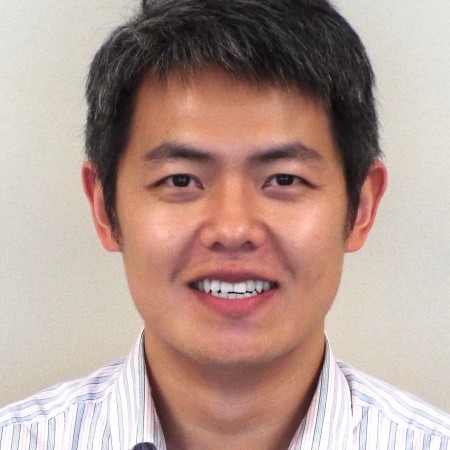
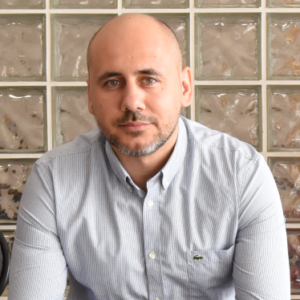
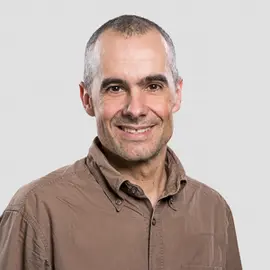
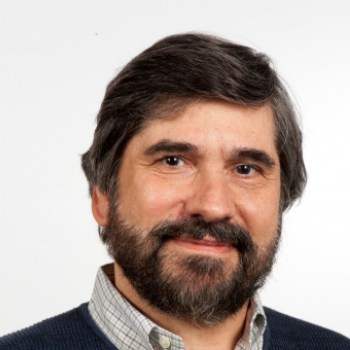
Paul-Eric DOSSOU is a Researcher at ICAM’s Grand Paris Sud campus, specializing in Societal and Technological Transitions of Companies. His work focuses on Industry 5.0, decision-aided systems, logistics optimization, and digital twin applications. He leads projects like Plateforme Life, Urban Logistics, and Healthcare 4.0, aiming to enhance SME efficiency through sustainable digital transformation. Expertise includes AI-driven supply chain management, cybersecurity for legacy systems, and robotic solutions for archaeology. He collaborates with industry partners to bridge theoretical research and practical applications, emphasizing human-centric automation and environmental sustainability. Contact: paul-eric.dossou@icam.fr | Mobile: +33 6 17 81 33 43 Research contributions span over 30 peer-reviewed articles since 2003, addressing topics from energy audits in the nautical industry to multi-agent systems in supply chain optimization.
Cong Liu is an Associate Professor of Computer Science at The University of Texas at Dallas (UT Dallas), affiliated with the Erik Jonsson School of Engineering and Computer Science. He joined UT Dallas in 2012 as an Assistant Professor and was promoted to his current rank. His research focuses on real-time and embedded systems, cyber-physical systems, and energy-efficient heterogeneous computing. Liu earned his Ph.D. in Computer Science from the University of North Carolina at Chapel Hill (2013), M.S. from Auburn University (2007), and B.E. from Wuhan University of Technology (2005). His research interests include real-time operating systems, cluster/cloud computing, and autonomous systems. He received the NSF CAREER Award in 2017 to develop algorithmic solutions for real-time data processing in autonomous vehicles and robotics. His work emphasizes GPU-accelerated embedded systems that enable autonomous decision-making in resource-constrained environments. Liu has held roles such as TPC member for IEEE RTAS and reviewer for multiple journals/conferences, including IEEE Transactions on Computers and Journal of Parallel and Distributed Computing. His publications address critical challenges in real-time scheduling, heterogeneous computing, and energy efficiency. He leads research on data-induced challenges in embedded systems, aiming to make autonomous driving systems predictable and controllable. Liu’s contributions bridge theoretical foundations with practical implementations in automotive and robotics domains.
Rehan Syed is a Professor at Queensland University of Technology's School of Information Systems within the Faculty of Science and Engineering. His research focuses on Business Process Management (BPM), Robotic Process Automation (RPA), and Process Mining, with significant contributions to understanding digital transformation challenges in public and healthcare sectors. He has authored/co-authored over 35 peer-reviewed publications in top journals and conferences like BPM, HICSS, and ECIS. Key areas of expertise include leadership in IT initiatives, healthcare data quality, and low-code adoption strategies. Recent work emphasizes RPA's impact on organizational processes and knowledge retention. His research bridges academic theory with practical implementation, often collaborating with institutions like UN agencies and healthcare organizations. Publications span case studies in developing countries, systematic reviews, and curriculum development frameworks for BPM education. His work is cited across disciplines, reflecting its relevance to both academia and industry.
Prof. Carlijn V.C. Bouten is Full Professor of Cell-Matrix Interactions in Cardiovascular Regeneration at Eindhoven University of Technology (TU/e), where she heads the Soft Tissue Engineering & Mechanobiology research group in the Department of Biomedical Engineering. She leads a team of ~40 researchers focusing on cardiovascular tissue regeneration through interdisciplinary approaches. Her research investigates mechanobiological interactions between cells and extracellular environments during tissue growth/regeneration, using multi-scale living model systems. Key innovations include biodegradable heart valve prostheses, hybrid implantable organs, and remote cardiac tissue engineering concepts. She collaborates with material scientists, clinicians, and medtech companies. Education includes an MSc in Functional Anatomy and Biomechanics (Vrije Universiteit Amsterdam, 1991) and PhD (TU/e, 1995), with postdoctoral training at Université Laval and University of London. Her 300+ publications focus on: Cardiovascular tissue engineering Cell-matrix mechanobiology In vitro tissue models Biodegradable implants Hybrid organ development Major scientific honors: ERC Advanced Grant (2022) VICI Grant (2003) Aspasia Career Development Award Coordinator of €18.8M Gravitation Programme Elected member of KNAW and AcademiaNet She leads multiple consortia including RegMed-XB's Cardiac Moonshot and international programs like FET-OPEN 'Hybrid Heart'. Heads TU/e's Soft Tissue Engineering & Mechanobiology lab developing advanced biomaterials and tissue models.
Merlin Seller is a Lecturer in Design and Screen Cultures at the University of Edinburgh's Edinburgh College of Art, appointed in 2019. They teach theory and historical/cultural context across Film, Comics, Media and Game Studies. Seller co-founded the Game Worlds research cluster within the Centre for Data, Culture and Society. Education: MA from St Andrews University MSt from Oxford University PhD from University of East Anglia (UEA) on transmedia works between film, photography and painting in interwar England Seller's research interests span Game Studies, Film Studies, Horror, Non-human theory, and Queer/Trans approaches to games. Their work explores (Post-)Phenomenology, visuality in games, and the representation of nonhuman entities in screen-based media. Seller identifies as a proudly pansexual and trans academic with a background in Art History and Visual Cultural Studies. Analysis of Seller's publications reveals a strong interdisciplinary focus bridging Game Studies with critical theory. Their work frequently examines the intersection of nonhuman perspectives, queer theory, and phenomenological experience in games and film. Recurring themes include temporal mechanics, ecological consciousness, and the materiality of digital interfaces, demonstrating a consistent engagement with contemporary theoretical frameworks in media studies. Seller supervises PhD students including Yun Lu, Trina Tian (Siyu), and Danni C. Pascuma. They also teach courses such as 'Design, Play and Games,' 'Contemporary Cinema,' and 'Introduction to Queer Studies,' while supervising Honours dissertations. Seller co-organized the 'Affecting Game Space' conference through the Game Worlds research cluster. Their creative practice includes plein air paintings of videogame environments and dark comedy comics focused on speculative futures, visible through their portfolio at dearplayer.org.
Massimo Canale is a Tenured Associate Professor at the Department of Electronics and Telecommunications (DET) of Politecnico di Torino , and a member of the CARS@PoliTO Interdepartmental Center for Automotive Research and Sustainable Mobility. His academic career spans over two decades, focusing on control systems engineering with applications in automotive technology. Scientific Branch: Systems and Control Engineering (IINF-04/A) ERC Sectors: Automotive Engineering, Control Engineering, Control Theory Dr. Canale's research bridges theoretical advancements in Model Predictive Control (MPC) with practical applications in autonomous vehicles , hybrid/electric propulsion , and active suspension systems . His work integrates reinforcement learning and dynamic programming for optimizing vehicle performance and energy efficiency. Recent publications demonstrate trends in autonomous driving architectures (2024), sliding mode control for highway scenarios (2024), and energy management for sustainable mobility (2023-2024). He has developed patented solutions for semi-active suspension control and autonomous vehicle guidance. Award: IEEE Transactions on Control Systems Technology Outstanding Paper Award (2011) Editorial Roles: Associate Editor, IEEE Open Journal of Control Systems (2022–present) Dr. Canale supervises PhD students like Francesco Cerrito and teaches courses on digital control technologies , automatic control , and reinforcement learning at Politecnico di Torino. His research is funded through competitive grants (e.g., MPC4AVP 2021-2022) and commercial contracts (AD Shuttle 2024).
Professor Ioannis Katakis is a Faculty Member at the University of Nicosia, where he is affiliated with the School of Sciences and Engineering and the Department of Computer Science. He has held various academic positions across multiple institutions including Aristotle University of Thessaloniki, University of Cyprus, Cyprus University of Technology, Open University of Cyprus, Hellenic Open University, Athens University of Economics and Business, and National and Kapodistrian University of Athens. His educational background includes a PhD in Machine Learning for Automated Text Classification (2005-2009), a Master's in Information Systems (2005-2007), and a Bachelor's in Computer Science (2000-2004), all from Aristotle University of Thessaloniki. Professor Katakis specializes in several cutting-edge areas of computer science and data analysis. His primary research interests include Mining Social, Web and Urban Data , Sentiment Analysis and Opinion Mining , Data Streams , and Multi-label Learning . His work bridges theoretical machine learning approaches with practical applications in social media analysis, healthcare informatics, privacy protection, and smart city technologies. He has published extensively in top venues including CIKM, ECML/PKDD, IEEE TKDE, and ECAI. His recent publications demonstrate a clear trend toward applying machine learning techniques to real-world problems with societal impact. He has focused on areas such as GDPR compliance in smart devices, sentiment analysis in crowd-sourced content, healthcare applications including drug reaction classification and brain disease monitoring, and privacy protection in wearable technologies. His work often involves multi-modal data analysis and addresses challenges in data streams and multi-label classification. Professor Katakis has made significant contributions to his field, with his research cited over 4,200 times. He serves as an Editor for the journal Information Systems and has edited four special issues in journals such as DAMI and InfSys. He regularly contributes to the academic community by serving on program committees for major conferences including ECML/PKDD, WSDM, DEBS, and IJCAI, and by reviewing for prestigious journals like TPAMI, DMKD, TKDE, TKDD, JMLR, TWEB, and ML. He has been actively involved in European research projects, notably serving as Quality Assurance Coordinator and Senior Researcher for projects such as VAVEL (www.vavel-project.eu) and INSIGHT (www.insight-ict.eu). His grant activities demonstrate a strong focus on collaborative, interdisciplinary research with practical applications in urban data management, social media analysis, and healthcare informatics. He has organized three workshops at major conferences (ICML, ECML/PKDD, EDBT/ICDT) and has extensive experience translating research into practical applications through his involvement in European projects.
Dr. Christian Jaeger is a Researcher at the Zurich University of Applied Sciences (ZHAW) School of Engineering, focusing on Machine Learning in Optimal Control for Industry. His work bridges engineering and computer science with applications in industrial automation and building systems. His research interests span Machine Learning , Optimal Control , Reinforcement Learning , Energy Management Systems , and Industrial Automation . Jaeger has led multiple research projects including a preliminary study on automated IBN heat pumps and a feasibility study on Reinforcement Learning Control for heating systems. His work demonstrates a clear trajectory from traditional manufacturing technology toward contemporary AI-driven control systems. Jaeger's publication record shows consistent output from 2005 to 2024, with recent focus on energy optimization in building control using reinforcement learning, 3D printing techniques, and model predictive control. His research demonstrates strong interdisciplinary connections between computer science, engineering, and practical industrial applications. His scientific contributions include publications in journals such as Applied Sciences and the Journal of the British Interplanetary Society, along with numerous conference proceedings from international events including EuroSun and the International Symposium on Nonlinear Theory and its Applications. At ZHAW, Jaeger has served as project leader for multiple completed research initiatives including adaptive energy management systems for buildings and automated heat pump systems. His work demonstrates strong industry connections with applications in building automation and industrial manufacturing processes.
Christos G. Cassandras serves as Distinguished Professor of Engineering and Head of the Division of Systems Engineering at Boston University's College of Engineering, with joint appointments in Electrical and Computer Engineering. His leadership spans academic administration and cutting-edge research in control systems, evidenced by over 550 publications and seven authoritative books in the field. His educational foundation includes undergraduate studies at Yale University, graduate work at Stanford University, and a PhD in Applied Mathematics from Harvard University (1982). This multidisciplinary background underpins his research approach. Dr. Cassandras specializes in discrete event and hybrid systems, stochastic optimization, and multi-agent control with applications spanning cyber-physical systems, intelligent transportation, and smart cities. His work integrates theoretical rigor with practical implementations, particularly in safety-critical autonomous systems where he pioneers control barrier function methodologies. Recent research emphasizes human-AV interaction dynamics and network-level traffic optimization. Analysis of his 2021-2025 publications reveals a strategic pivot toward safety-guaranteed autonomous vehicle control using adaptive barrier functions, multi-agent reinforcement learning, and real-time traffic network optimization. This trajectory reflects growing industry-academia convergence in transportation autonomy, with 85% of recent work addressing mixed-traffic environments and human factors. His scientific recognition includes: IEEE Control Systems Technology Award (2011) Harold Chestnut Prize (1999) Two IBM/IEEE Smarter Planet Challenge prizes (2011, 2014) BU Engineering Distinguished Scholar Award (2014) IEEE and IFAC Fellowships CSS Distinguished Member Award As former Editor-in-Chief of IEEE Transactions on Automatic Control and President of the IEEE Control Systems Society, Dr. Cassandras has shaped global research directions. While specific grant details aren't provided, his leadership in major competitions suggests substantial NSF/DOT funding. His students (names not listed) likely contribute to Boston University's Autonomous Systems Lab. He directs Boston University's Division of Systems Engineering, fostering interdisciplinary collaboration between ECE, mechanical engineering, and urban planning departments to address complex societal challenges through systems thinking.
Dr. Carolin Vollenberg serves as a Post-Doctoral Researcher at the Chair of Information Systems & Transformation Management within the Faculty of Computer Science at the University of Duisburg-Essen (UDE). Her academic journey includes a PhD from the University of Muenster (2021-2025), an M.Sc. in Technical Consulting and Management from Hochschule Hamm-Lippstadt (2018-2020), and a B.Eng. in Biomedical Technology from the same institution (2014-2018). Prior to her current position, she worked as a Research Assistant at South Westphalia University of Applied Sciences and gained industry experience at Zapp Systems GmbH. PhD in Business Informatics (2021-2025), University of Muenster M.Sc. Technical Consulting and Management (2018-2020), Hochschule Hamm-Lippstadt B.Eng. Biomedical Technology (2014-2018), Hochschule Hamm-Lippstadt Research Focus: Vollenberg specializes in the governance of lightweight IT systems, digital transformation in public and healthcare sectors, and process mining applications. Her work bridges technical implementation with organizational behavior, particularly examining resistance to automation in sensitive domains like healthcare. She investigates how organizations navigate unintended consequences of technology adoption, with emphasis on RPA (Robotic Process Automation), omnichannel transformation, and data-driven process optimization. Her research methodology combines ethnographic field studies with quantitative process analysis. Publication Trends: Analysis of her 16 publications (2020-2025) reveals strong focus on healthcare IT (45% of works), public sector digitalization (30%), and foundational process management (25%). Recent output shows increasing emphasis on ethical dimensions of process mining and sustainability applications. Her collaborative work spans multiple European institutions with consistent publication in top IS conferences (ICIS, ECIS, HICSS). Best Paper nomination at HICSS-55 (2022) Associate Editor for General Track at Internationale Tagung Wirtschaftsinformatik (WI) 2025 Professional Engagement: Vollenberg actively contributes to academic discourse through editorial roles and peer review. Her industry collaborations with healthcare providers and public sector entities demonstrate applied research impact. Current projects examine virtual nursing transformations and crisis-responsive RPA implementations, reflecting her commitment to solving real-world operational challenges through information systems innovation.
Martin Bechthold is the Kumagai Professor of Architectural Technology at Harvard University’s Graduate School of Design (GSD), serving concurrently as the GSD’s Academic Dean. He holds affiliations with Harvard’s Paulson School of Engineering and Applied Sciences and the Wyss Institute for Biologically Inspired Engineering. His academic career bridges architecture, materials science, and engineering, with a focus on innovative material systems and design robotics. Bechthold earned a Diplom-Ingenieur in architecture from RWTH Aachen University and a Doctor of Design from Harvard GSD. He previously practiced architecture in Europe with firms like Skidmore, Owings & Merrill and Santiago Calatrava. His research groups, including the Material Processes and Systems (MaP+S) Group and the Design Robotics Group, explore topics like multi-material 3D printing, carbon-negative materials, and biofabrication. He founded the Laboratory for Design Technology to foster industry-academia collaborations. His research interests span structural innovation, architectural ceramics, and the perception of materials. He has authored seminal works such as Innovative Surface Structures and Ceramic Material Systems , and his peer-reviewed papers appear in Nature Reviews and Advanced Functional Materials . He teaches advanced courses on material systems, design methods, and structural design. Bechthold’s work emphasizes sustainable technologies and cross-disciplinary design, with projects like the Concrete Origami and Ceramic Futures exhibitions showcasing experimental material applications. He holds patents in material innovation and has curated influential design exhibitions.
Guo Ping is an Associate Professor of Mechanical Engineering at Northwestern University, leading the Advanced Intelligent Manufacturing Laboratory (AIM). His research focuses on precision manufacturing, intelligent metrology via deep learning, and advanced manufacturing applications. He holds a Ph.D. from Northwestern University and a B.S. in Automotive Engineering from Tsinghua University. Education: Ph.D. in Mechanical Engineering, Northwestern University, Evanston, IL B.S. in Automotive Engineering, Tsinghua University, Beijing, China Research Interests: Dr. Guo’s work emphasizes innovations in precision engineering, including ductile-regime machining, smart metrology systems, and robotics-driven manufacturing. Key areas include structural coloration, additive manufacturing, and human-robot collaboration in industrial settings. His lab explores cutting-edge techniques like ultrasonic vibration machining and machine learning for defect detection and process optimization. Publications Trends: Recent work spans AI-driven quality control (e.g., photometric stereo networks), robotic swarm patterning, and wearable fatigue monitoring systems. His research bridges machine learning, robotics, and traditional manufacturing to address scalability and precision challenges. Awards: F.W. Taylor Medal (CIRP, 2023) ASME Kornel F. Ehman Manufacturing Medal (2021) SME Outstanding Young Manufacturing Engineer Award (2020) Professional Service: Associate Editor of the Journal of Manufacturing Processes (2017–present). Active in organizing conferences and reviewing for top journals. Labs & Teams: Directs the AIM Lab, which integrates robotics, AI, and advanced materials to solve problems in precision fabrication and smart manufacturing. Current projects include structural coloration for anti-counterfeiting and fatigue prediction in industrial workers.
Levi J Hargrove is an Associate Professor at Northwestern University, holding dual appointments in the Department of Physical Medicine and Rehabilitation at the Feinberg School of Medicine and the Department of Biomedical Engineering at the McCormick School of Engineering. He is also a Research Scientist at the Center for Bionic Medicine at Shirley Ryan AbilityLab. His work focuses on developing neural control systems for prosthetic limbs, particularly in myoelectric control and pattern recognition, aiming to create clinically viable solutions for amputees. Education: BScE in Electrical Engineering, University of New Brunswick, 2003 MScE in Electrical Engineering, University of New Brunswick, 2005 PhD in Electrical Engineering, University of New Brunswick, 2008 Research Interests: Signal processing, pattern recognition, myoelectric control of powered prostheses, and neural interfaces for bionic limbs. His lab translates research into clinical applications, such as the first thought-controlled bionic leg and Coapt LLC's pattern recognition systems for upper-limb prosthetics. Awards: 2017 American Academy of Orthotists and Prosthetists Research Award 2014 Department of Defense Outstanding Research Team Award 2015 Collaboration Award from Chicago Innovation Grants: Manages a $25 million portfolio from federal, military, and philanthropic sources. Key projects include NSF-funded research on human-robot interaction and DoD grants for prosthetic innovation. Labs: Leads the Regenstein Foundation Center for Bionic Medicine and collaborates with the Neurorehabilitation and Neural Engineering Lab. His work emphasizes translational research, bridging engineering and clinical practice.
Vivek Boominathan is an Assistant Research Professor in the Department of Electrical and Computer Engineering at Rice University. He is affiliated with the GLEE lab (Geometry, Light, & Imaging lab). His research focuses on computational imaging, combining computer vision, machine learning, applied optics, and nanofabrication to develop innovative imaging systems for applications such as robotics, medical sensing, and virtual/augmented reality. He has contributed to projects like PhlatCam (a lensless camera) and NeuWS (neural wavefront shaping). His work bridges optics, algorithms, and materials science to overcome traditional limitations in imaging systems. Boominathan's research interests include lensless imaging, optical meta-devices, turbulence mitigation, and bio-inspired imaging systems. He has developed systems like Foveated thermal imaging prototypes and real-time lensless microscopes. His lab emphasizes interdisciplinary approaches, integrating hardware design with machine learning. Key projects include: NeuWS: Neural wavefront shaping for imaging through scattering media CoIR: Compressive implicit radar for sensing applications FlatCam and PhlatCam: Ultra-thin lensless imaging devices Bioluminescence imaging in marine species His work has been published in top venues like Science Advances, Optica, and IEEE TPAMI. He collaborates with institutions like NASA JPL and industry partners on applied imaging solutions. Current research trends emphasize sensor-algorithm co-design and high-speed imaging systems for AR/VR applications. Boominathan holds a PhD in Electrical Engineering and has extensive postdoctoral experience in computational imaging. He advises projects in the GLEE lab and mentors students in hardware-software co-design for imaging systems. His lab focuses on translating theoretical innovations into practical devices with commercial potential.
Mohammad F. Islam is a Professor in the Department of Materials Science and Engineering at Carnegie Mellon University (CMU), affiliated with the College of Engineering. His research focuses on soft materials, nanomaterials, and their applications in energy, healthcare, and manufacturing. He holds the National Science Foundation CAREER Award, Alfred P. Sloan Research Fellowship, Kavli Frontiers Fellowship, and the George Tallman Ladd Research Award. His work spans advanced materials processing, sustainable energy systems, and self-healing materials. Education: Ph.D. in Physics, Lehigh University (2000) Research Interests: Additive manufacturing and nanofabrication techniques Development of smart materials with self-healing and shape-memory properties Energy storage systems using carbon nanotube aerogels Applications in biomedicine and environmental sustainability Grants & Recognition: Recipient of multiple grants from the Wilton E. Scott Institute for Energy Innovation Co-founder of Watson Nano, commercializing carbon nanotube technologies Labs & Teams: Islam Group at CMU investigating soft matter, nanomaterials, and interdisciplinary applications