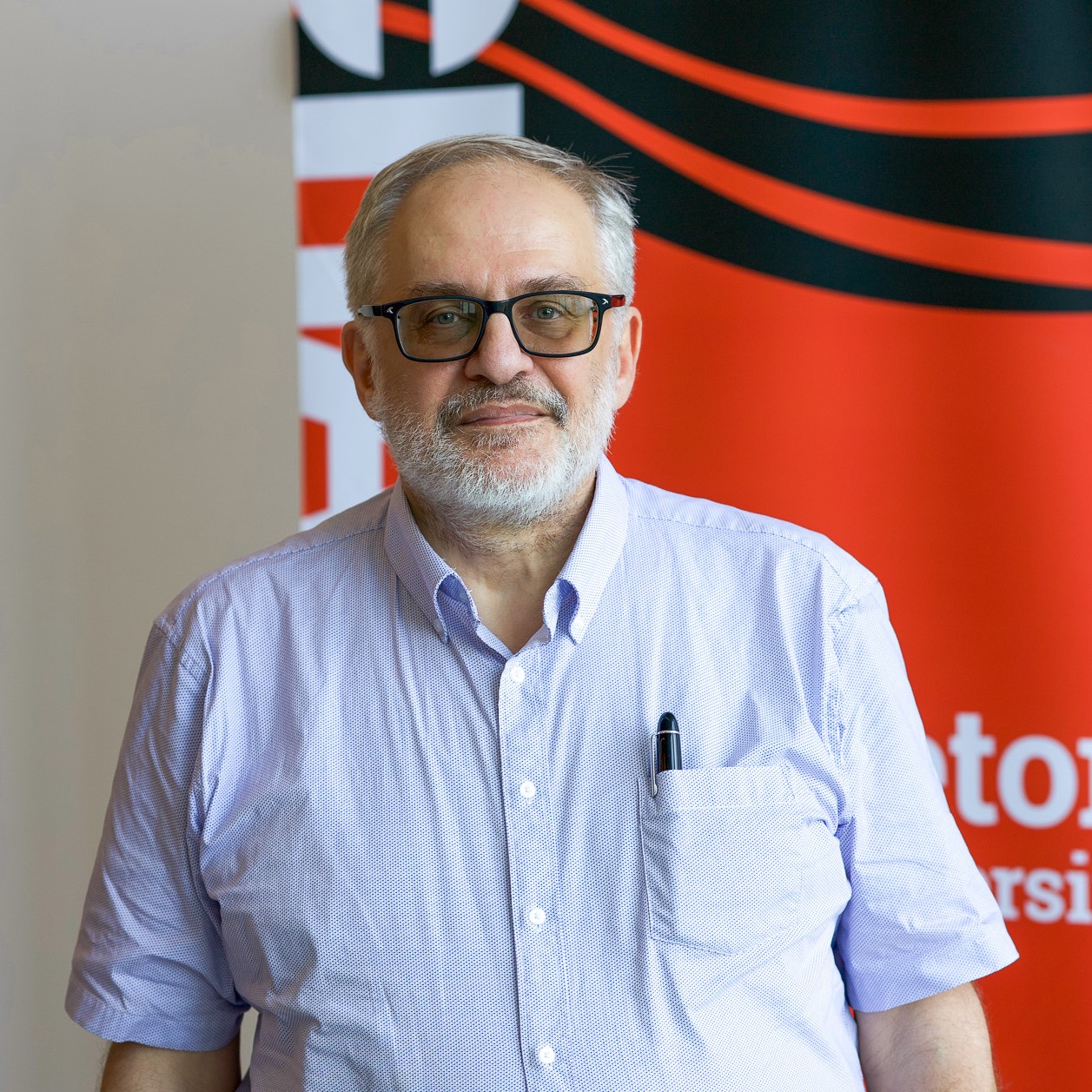
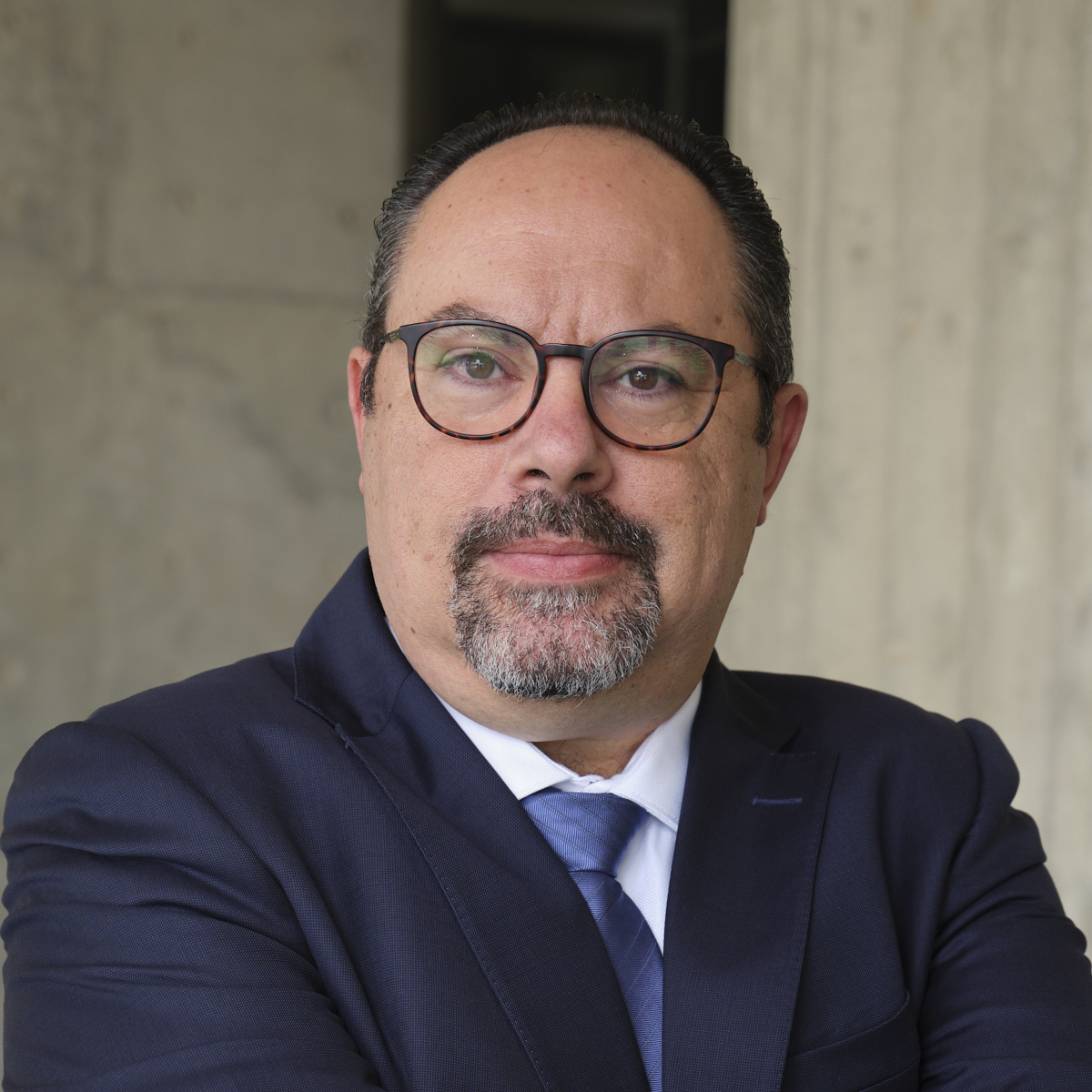
Ioannis Lambadaris is a Full Professor and Chancellor’s Professor at Carleton University's Department of Systems and Computer Engineering, Faculty of Engineering and Design. Holding a Ph.D. from the University of Maryland, he has contributed extensively to network performance analysis over 25+ years. Specializes in stochastic processes, cloud computing, and wireless edge systems Led Ericsson 5G Chair initiatives Supervised over 70 graduate students His research spans QoS control , VNF placement optimization , and IoT indoor localization , with over 170 publications. Recent work focuses on reinforcement learning and deep learning in network resource allocation. Scientific Recognition: Chancellor’s Professor Ericsson 5G Chair Contact: ioannis@sce.carleton.ca | Office: Mackenzie 4448, Ottawa, ON
Martin Magnusson is a Professor at the Department of Natural Sciences and Technology, Örebro University, leading the Center for Applied Autonomous Sensor Systems (AASS) and the Robot Navigation and Perception Lab . His research focuses on robotics and artificial intelligence , particularly 3D mapping, localization, radar-based navigation, and human-robot interaction . Email: martin.magnusson@oru.se Phone: +46 19 303870 Location: Room T1222 His work addresses fundamental challenges in achieving robust autonomy through innovations like the 3D Normal Distributions Transform (3D-NDT) and methods for scan registration in dynamic environments. Recent research extends to radar-based navigation and heterogeneous map data integration , with ethical implications regarding military applications of autonomous systems. Key research themes include: Autonomous Perception: Radar and lidar sensor fusion for localization Dynamic Mapping: Flow-aware and quality-assessed environmental models Human-Aware Robotics: Predictive modeling for safe shared-space navigation Professor Magnusson teaches Computer Graphics , connecting academic principles (e.g., ray tracing, light scattering) to applied research in radar simulation models and neural rendering . His research projects span DARKO (agile production robots), NiCE (changing environment navigation), and Radarize (underground autonomous vehicles).
Sung-Woo Lee serves as an Associate Professor in the Department of Radiation Oncology at the University of Maryland School of Medicine, based at the Central Maryland Radiation Oncology Center in Columbia, MD. His educational background includes: Bachelor of Science and Master of Science in Nuclear Engineering from Hanyang University, Seoul, Korea Master of Science in Health Physics from Texas A&M University Ph.D. in Nuclear Engineering (specializing in Health Physics and Medical Physics) from Texas A&M University (2003) Dr. Lee's research focuses on Medical Physics and Radiation Oncology , with expertise in stereotactic radiosurgery systems (Gamma Knife/CyberKnife), image-guided radiotherapy, treatment planning optimization, and imaging dose assessment. His work bridges engineering principles with clinical radiation oncology applications to enhance precision in cancer treatment. Analysis of his 2014 publications reveals concentrated research on comparative effectiveness of stereotactic radiosurgery platforms for brain metastases, CyberKnife prescription parameter optimization, and quantification of imaging dose impacts in robotic radiosurgery. His 2008 foundational work established clinical validation protocols for dual-tube kV localization systems in radiotherapy treatment rooms. Dr. Lee maintains active clinical engagement at the Central Maryland Radiation Oncology Center, where he applies medical physics expertise to advance radiotherapy technology implementation and quality assurance protocols.
Dr. Simone Foti is a Research Fellow at the Department of Computing, Faculty of Engineering in Imperial College London . He holds a PhD from University College London (UCL) and has held internships at Disney Research Studios and Adobe Research. Education : PhD (2023), MRes (2019), MSc (2017), BSc (2015) His research spans Geometric Deep Learning , Computer Graphics , and Computer Vision , focusing on improving 3D generative models for applications in AR/VR, the metaverse, medical imaging, and digital human creation. Recent work explores problems in non-Euclidean domains like graphs and meshes, with trends including latent disentanglement , 3D reconstruction , and medical applications of geometric AI. Collaborations include institutions like Carnegie Mellon University, Politecnico di Milano, and UCL, with publications across top venues such as NeurIPS , CVPR , and Computer Graphics Forum . Current projects include UV-free texture generation and mesh sampling techniques .
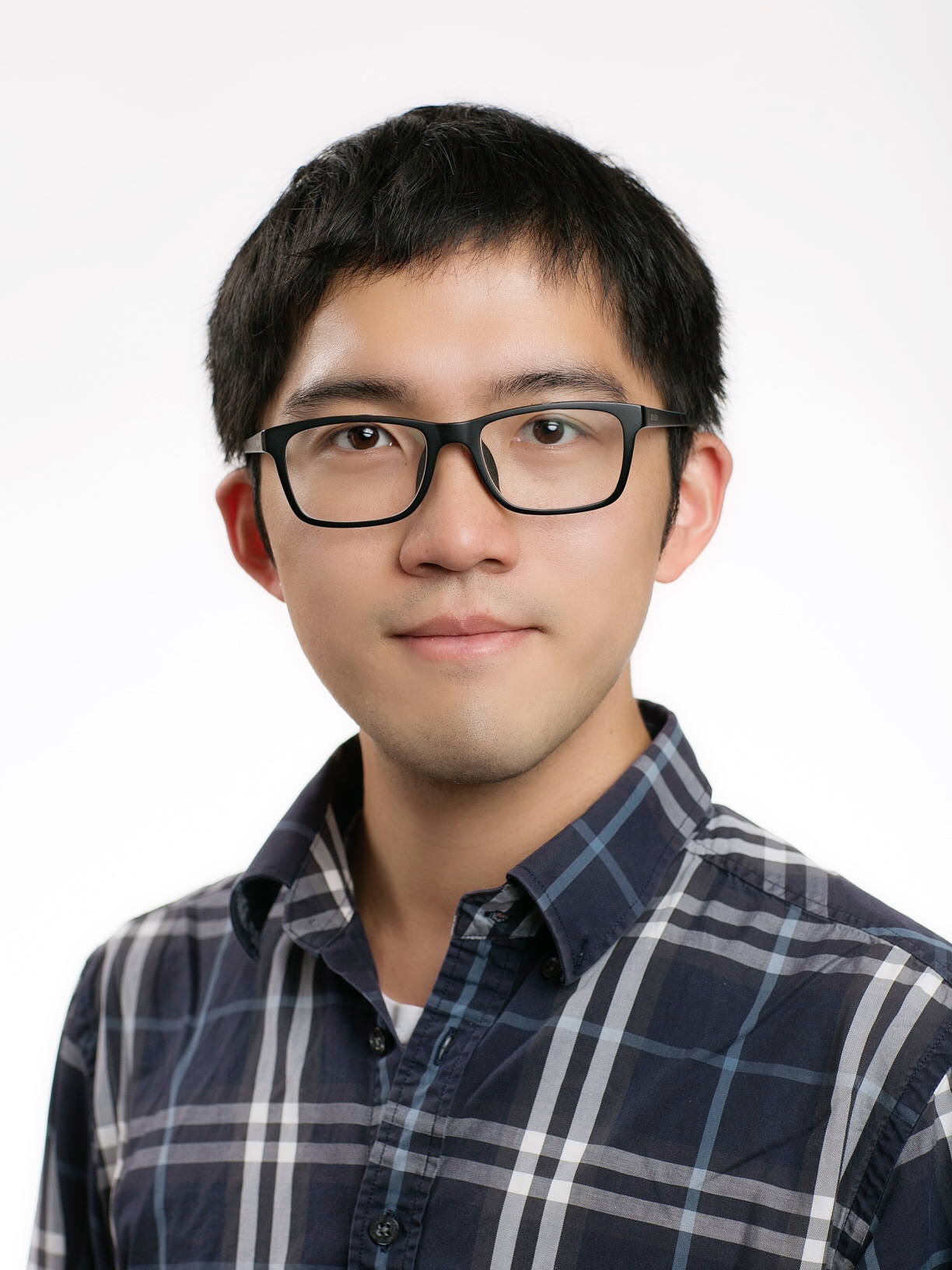
Dongyi Wang is an Assistant Professor in the Department of Biological and Agricultural Engineering at the University of Arkansas, where he directs the Smart Agriculture and Food Engineering (SAFE) Lab. His work bridges advanced technologies like artificial intelligence, robotics, and machine vision with agrifood manufacturing to enhance product quality, safety, and worker welfare. Ph.D. in Bioengineering from the University of Maryland, College Park B.S. in Electrical and Computer Engineering from Fudan University Visiting experience at The Chinese University of Hong Kong Research interests span smart agrifood manufacturing , robotics , machine vision , and artificial intelligence , with applications in crop monitoring, food safety, and healthcare. His lab develops solutions like automated defect detection, pathogen sensing, and sustainable processing systems. Article analysis reveals a focus on AI-driven agricultural automation , hyperspectral imaging , robotic manipulation of bio-products , and food safety innovations . Recent works include YOLO-based tomato defect segmentation, E. coli biosensing, and UAV-based blackberry monitoring. Awards & Memberships College of Engineering Dean’s Award of Excellence Rising Star Research Award (UARK) Outstanding Mentor Award (UARK) Professional memberships in ASABE and IEEE As an educator, he teaches instrumentation and artificial intelligence in agrifood manufacturing . The SAFE Lab, funded by USDA NIFA, NSF, and federal/local agencies (> $7M), prioritizes workforce development in AI/robotics for agrifood industries.
Vasos Vassiliou is an Associate Professor in the Department of Computer Science at the University of Cyprus and Founding Academic Member & Research Group Leader at the Smart Networked Systems (SNS) Multidisciplinary Research Group within the CYENS Research Center. His work focuses on systems and protocols for improving network performance, reliability, and security in next-generation communication systems (5G/6G), with a strong emphasis on distributed AI/ML techniques, device-to-device (D2D) networking, IoT security, programmable metasurfaces, and intelligent network resource management. Department of Computer Science, University of Cyprus CYENS Research Center, Cyprus His research spans multiple subfields including D2D communication (interference management, device discovery), IoT security (blockchain solutions, intrusion detection), network optimization (traffic prediction, power management), and programmable metasurfaces for advanced beam steering. Recent projects like ERMIS (3D Indoor Positioning), ADROIT-6G (DAI-driven architecture), and METACITIES (digital twins/metaverse) demonstrate his leadership in cutting-edge research. His publications reveal a strong focus on distributed intelligence , machine learning applications , and security protocols across wireless systems. He has supervised multiple PhD students to completion and actively contributes to IEEE/ACM as Senior Member. IEEE Senior Member ACM Senior Member Teaching responsibilities include core courses like Computer Networks and specialized postgraduate modules on IoT Networks .
Dimitrios Dourakis is an Associate Professor of General Surgery at the European University Cyprus (EUC), Faculty of Medicine in Nicosia, concurrently serving as Director Surgeon of the Minimally Invasive Surgery Clinic at Medical Center Group in Greece since 2015. His academic appointment as Lecturer in Surgery at EUC began in 2016, complementing his active clinical and research roles across multiple institutions. His academic credentials include: Doctoral thesis (2015, National and Kapodistrian University of Athens): Study of anti-adhesive agents on experimental intestinal anastomoses University Diploma in Colorectal and Anal Surgery (2013, University Paris-Diderot) University Diploma in Hepatobiliary Surgery (2012, University of Paris XI) Inter-University Diploma in Ultrasound Techniques (2011, Universities of Paris, Nancy & Strasbourg) University Diploma in Laparoscopic Surgery (2010, University of Strasbourg) Medical Degree (2002, National and Kapodistrian University of Athens) Dr. Dourakis' research centers on Minimally Invasive Surgical Innovation , with pioneering work in Robotic Surgery and Image Guided Procedures . He developed the Transanal Total Mesorectal Excision (PROGRESS technique) and advanced protocols for colorectal liver metastases management. His work bridges traditional open surgery with cutting-edge technology to optimize precision, reduce complications, and accelerate patient recovery in complex gastrointestinal and hepatobiliary cases. His publication trajectory since 2010 reveals consistent innovation in robotic pancreatic resection, augmented reality navigation for liver surgery, and endoscopic salvage techniques for challenging adenomas. Recent work emphasizes solving anatomical challenges like the Arc of Bühler variation while integrating digital tools to enhance surgical accuracy across the gastrointestinal tract. He received the Arapakis Endowment Scholarship for medical studies and a 1st prize for the 'Exploring the Brain' public outreach initiative. His editorial contributions include peer review for 8 major surgical journals including World Journal of Gastrointestinal Surgery and International Journal of Medical Robotics . As Simulation Program Lead and Structure & Function Committee Chair at EUC, he directs surgical education innovation while co-leading research with ELPEN. His current projects span ambulatory surgery optimization and digital learning platforms, building on prior work with the French Colorectal Liver Metastases Working Group and IRCAD's Image Guided Surgery protocols. He maintains active roles at IRCAD/University of Strasbourg as Laparoscopic Surgery Expert since 2010, training surgeons globally, and leads EUC's simulation program while developing joint initiatives with the ELPEN research center to advance translational surgical science.
Professor Damiano Varagnolo is affiliated with the Department of Engineering Cybernetics at the Norwegian University of Science and Technology (NTNU), where he conducts research spanning control systems, robotics, power systems, and data-driven modeling. His work bridges theoretical advances with practical applications in underwater vehicles, medical rehabilitation, and energy infrastructure. His research focuses on: Development of formation control algorithms for autonomous underwater vehicles (AUVs) and snake robots Transient stability enhancement for grid-forming converters in renewable energy systems Data-driven modeling of physiological signals for wheelchair propulsion and industrial processes Distributed optimization for underwater communication networks Recent publications (2024-2025) demonstrate strong emphasis on: Underactuated vehicle control using hand position concepts Energy expenditure estimation through physiological signal processing Consensus protocols for JANUS-based underwater networks Educational innovation through control-themed outreach initiatives like the Advent Calendar project He actively collaborates with NTNU colleagues across engineering disciplines and contributes to curriculum development through graph-theoretic approaches for educational coherence.
Dr. Martin Dierolf is a researcher at the Technical University of Munich (TUM), working within the Department of Physics and the Chair of Biomedical Physics led by Prof. Dr. Franz Pfeiffer. He is actively involved in research related to X-ray imaging, particularly focusing on the Munich Compact Light Source (MuCLS) and its applications in biomedical research. His work spans both the optimization of the MuCLS machine performance and the development of experimental methods for biomedical applications. Dr. Dierolf's primary research interests include: Optimization of the Munich Compact Light Source (MuCLS) for biomedical research Development of experimental and algorithmic methods for ptychography Biomedical applications of ptychographic coherent diffractive imaging (PCDI) Wave-field characterization of focusing optics Scanning transmission X-ray microscopy Grating-based phase-contrast imaging techniques His recent publications demonstrate a strong focus on advancing X-ray imaging techniques, particularly using compact light sources. His work spans from fundamental physics of X-ray optics to practical medical applications, with particular emphasis on breast imaging, renal tissue analysis, and cardiovascular applications. A significant portion of his recent work focuses on the Munich Compact Light Source and how to optimize its use for various biomedical applications. Dr. Dierolf has received recognition for his academic supervision, having been awarded the Supervisory Award of the Graduate Center of the TUM Department of Physics in both 2019 and 2021. He has also received Best Poster Awards at international conferences in 2008 and 2009. As an educator, Dr. Dierolf serves as a lecturer and teaching assistant for courses in Modern X-Ray Physics at TUM. He is scheduled to teach in the Winter term 2025/26, indicating his ongoing active role at the university. His research is conducted within the framework of the Munich Compact Light Source facility, which represents a significant advancement in making synchrotron-like X-ray sources accessible in laboratory settings. This work has potential applications across multiple biomedical fields, from cancer research to cardiovascular imaging.
Aljaž Božič is a Research Scientist at Meta Reality Labs Research , focusing on neural rendering, 3D reconstruction, and AI-driven geometry modeling. He earned his Ph.D. in Computer Science from the Technical University of Munich (TUM) and holds a Master's in Computer Science from TUM and a Bachelor's in Mathematics from the University of Ljubljana . His research spans computer vision, graphics, and artificial intelligence , with a focus on neural rendering , generative AI , and 3D deformable object modeling , targeting applications in VR/AR and robotics. His work includes time-consistent dynamic scene reconstruction (SceNeRFlow), volumetric hair appearance modeling, and high-fidelity walkable VR spaces (VR-NeRF), alongside efficient NeRF distillation and calibration methods (Neural Lens Modeling). Key article trends include Transformer-based monocular reconstruction (TransformerFusion), neural parametric shape models (NPMs), and self-supervised non-rigid tracking (Neural Deformation Graphs). He has contributed to open-source projects like the TransformerFusion GitHub repository , emphasizing MIT-licensed tools for scene reconstruction. At TUM, he served as a Teaching Assistant for courses such as 3D Scanning and Spatial Learning and 3D Vision Seminar , bridging academic instruction with research innovation. His work integrates advanced neural networks with practical optimization techniques, advancing fields like RGB-D reconstruction (DeepDeform) and variational SLAM.
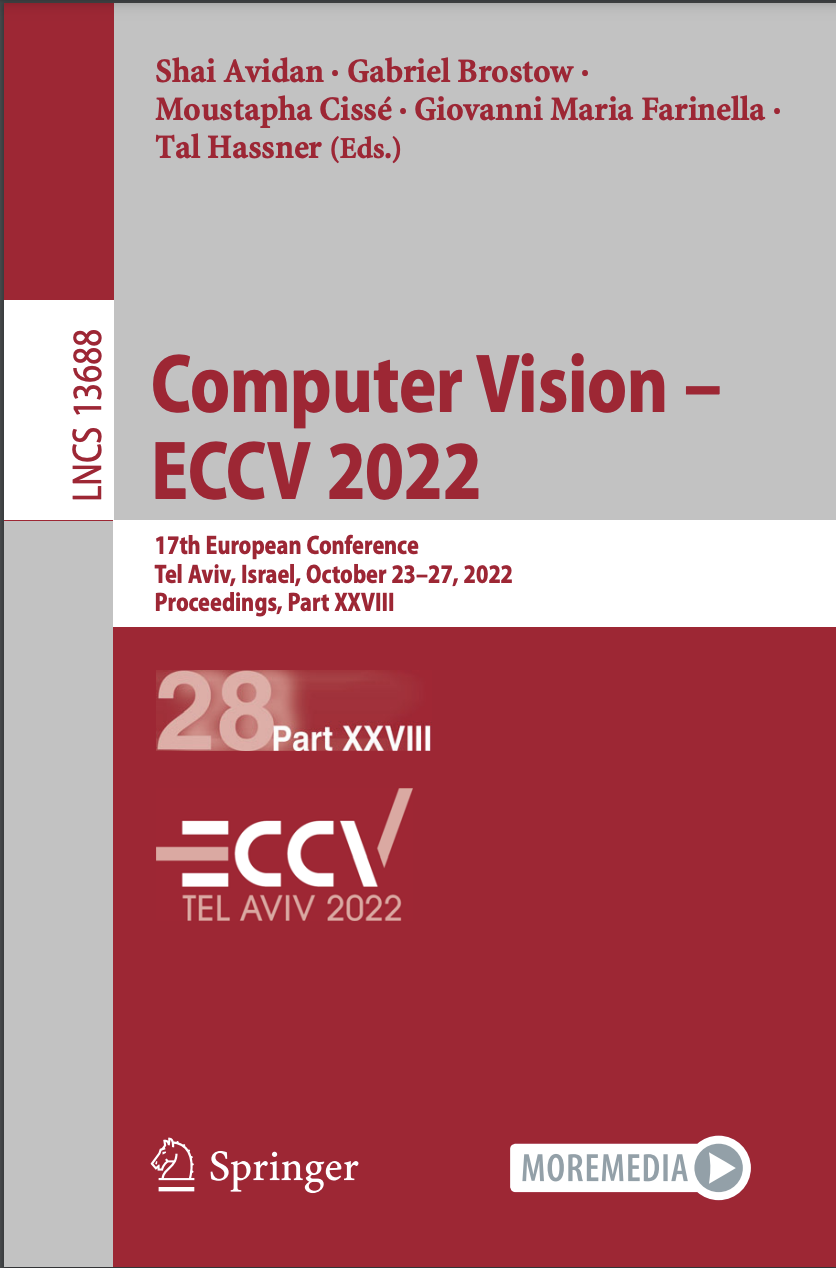
Giovanni Maria Farinella is a Full Professor at the Department of Mathematics and Computer Science, University of Catania, Italy. He is the Founder Member of the IPLAB Research Group at University of Catania since 2005, an Associate Member of the Computer Vision and Robotics Research Group at University of Cambridge since 2006, and an Associate Member of the Italian National Research Council since 2018. He serves as Scientific Advisor of the NVIDIA AI Technology Centre and board member of the CINI Laboratory of Artificial Intelligence and Intelligent Systems. Dr. Farinella obtained his degree in Computer Science (summa cum laude) from the University of Catania in 2004 and was awarded a Doctor of Philosophy (Computer Vision) from the same institution in 2008. He has obtained the National Scientific Qualification to Associate Professor in 2013-2014 and to Full Professor in 2018. His primary research interests focus on First Person (Egocentric) Vision, Computer Vision, Pattern Recognition, and Machine Learning. Dr. Farinella has pioneered research in egocentric video analysis, object interaction detection, activity recognition, and scene understanding from a first-person perspective. His work bridges theoretical computer vision with practical applications in industrial settings, healthcare, and cultural heritage sites. His recent publications demonstrate a clear trajectory toward more sophisticated, real-time egocentric vision systems capable of understanding complex human activities, anticipating actions, and detecting procedural mistakes through integration of visual analysis, gaze tracking, and large language models. Dr. Farinella has published extensively in top-tier computer vision venues, with his most recent work focusing on egocentric action anticipation, mistake detection in procedural tasks, and the integration of multimodal large language models with visual understanding. His research shows strong emphasis on practical industrial applications while advancing fundamental computer vision techniques. PAMI Mark Everingham Prize 2017 Intel's 2022 Outstanding Researcher Award Dr. Farinella has served as Associate Editor for IEEE Transactions on Pattern Analysis and Machine Intelligence, Pattern Recognition - Elsevier, and International Journal of Computer Vision. He has held leadership roles as Area Chair for CVPR 2020/21/22/23, ICCV 2017/19/21/23, ECCV 2020, and as Program Chair of ECCV 2022. He founded and directs the International Computer Vision Summer School (since 2006) and the Medical Imaging Summer School (since 2014). As PI of the EGO4D project, he helped create one of the largest egocentric video datasets with over 3,670 hours of footage from 923 participants across 74 locations worldwide. His IPLAB research group leads multiple significant projects including VALUE, ENIGMA, and FIPEVIS, with strong industry collaborations.
Mads Bruun Ingstrup is an Associate Professor at the Department of Business and Sustainability, University of Southern Denmark. He also serves as Head of the Center for Sustainable Business Development and Policy and is part of the SDU Climate Cluster. His academic career at the university spans from Research Assistant (2008-2009) to his current position as Associate Professor (2024-). Dr. Ingstrup holds a PhD in Business Administration (2009-2013), an MSc in Economics and Business Administration (2006-2008), and a BSc in International Business Administration and Modern Languages (2003-2006), all from the University of Southern Denmark. His research focuses on business development and management, drawing on theories from industrial marketing, economic geography, and innovation. He investigates how regional industrial specializations such as industry clusters, firm networks, and business ecosystems emerge, develop, and transform. His work examines how institutional settings, political initiatives, and facilitation activities influence these specializations across urban and rural contexts and various industries including water, energy, and robotics. Dr. Ingstrup's recent publications demonstrate a strong focus on sustainable innovation, cluster development, and the application of emerging technologies in business promotion. His work bridges academic theory with practical business applications through extensive collaboration with industry partners. Teaching Prize 2024 for special contribution to involving practice and collaboration Active in numerous research projects with business communities and policy organizations Recipient of multiple research grants for collaborative projects As an advisor, he has co-supervised PhD student S. L. Nielsen and provides counsel to municipalities, cluster organizations, regional governments, and the Danish Business Authority on business development matters. His collaborative approach ensures his research has relevance beyond academia. Dr. Ingstrup leads the Center for Sustainable Business Development and Policy and participates in the SDU Climate Cluster, focusing on sustainable business practices, climate adaptation, and regional development initiatives through projects like ClimatePol and NEPTUN.
Xu Chen is a doctoral researcher at ETH Zurich specializing in 3D generative models and neural implicit shape animation . His work focuses on creating photo-realistic simulations of human activity for applications in human-centric perception tasks .
Prof. Dr.-Ing. Dirk Lowke is a Professor at the Department of Materials Engineering, Technical University of Munich. He specializes in materials and digital manufacturing in construction, focusing on 3D printing with concrete and clay, ecological material optimization, durability, circularity, and mobile robotics. Before joining TU Munich in 2023, he led the Building Materials Department at TU Braunschweig's Institute of Materials Science and Technology (iBMB) from 2017 to 2023 and was a board member of the Braunschweig Materials Testing Institute. He studied civil engineering at TU Cottbus and earned his doctorate from TU Munich. Academic Affiliation: Technical University of Munich Prior Employment: TU Braunschweig (2017-2023) His research emphasizes digital and sustainable construction, particularly through resource-efficient production and maintenance of mineral structures. He contributed to understanding the thixotropy of self-compacting concrete (SCC) and the zeta potential of cementitious suspensions. Recent work includes interlaboratory studies on 3D printed concrete properties and numerical modeling for particle bed 3D printing. He actively participates in RILEM conferences and co-edited proceedings on digital fabrication. Prof. Lowke's publications highlight advancements in selective cement activation, shotcrete 3D printing, and additive manufacturing applications for coastal biogenic structures. He investigates how process parameters affect material density, dimensional accuracy, and hardened state properties, aiming to enhance the practicality and sustainability of digital construction methods.
Roozbeh Mottaghi is a Senior AI Research Scientist Manager at Meta's Fundamental AI Research (FAIR) group and an Affiliate Associate Professor at the Paul G. Allen School of Computer Science & Engineering at the University of Washington. His work bridges academic research and industrial AI development, focusing on embodied artificial intelligence, robotics, and computer vision. Dr. Mottaghi received his Ph.D. in Computer Science from UCLA under the supervision of Alan Yuille. He completed his Master's degrees at Simon Fraser University and Georgia Institute of Technology, and earned his Bachelor's degree from Sharif University of Technology. Prior to his current positions, he was a Postdoctoral Researcher at Stanford University and Research Manager of the PRIOR team at the Allen Institute for AI. Dr. Mottaghi's research focuses on embodied AI , where agents learn to interact with and understand their physical environments. His work spans robotics , computer vision , and human-robot interaction , with particular emphasis on 3D scene understanding, visual reasoning, and language-vision integration. His research addresses fundamental challenges in how AI systems can perceive, navigate, and manipulate the physical world through embodied experiences. His recent publications demonstrate a strong trend toward increasingly sophisticated embodied AI systems capable of complex multi-agent collaboration, open-vocabulary understanding, and human-like reasoning about physical environments. His work bridges simulation and real-world robotics, with significant contributions to benchmark creation and standardized evaluation frameworks for embodied AI. Dr. Mottaghi's work has been recognized with several prestigious honors including: Outstanding Paper Award at NeurIPS 2022 Multiple oral presentations at top-tier conferences (CVPR, ICCV) Spotlight presentations at major computer vision conferences Dr. Mottaghi has mentored numerous students and researchers, including PhD students and Pre-doctoral Young Investigators. His advising style emphasizes both theoretical rigor and practical implementation, preparing students for successful careers in both academia and industry. His work has been supported by significant research funding from Meta and previously from the Allen Institute for AI. Dr. Mottaghi has been instrumental in developing AI2-THOR, RoboTHOR, and Habitat simulation platforms, which have become standard tools in the embodied AI research community. His leadership in the PRIOR team at AI2 and currently at Meta's FAIR has driven significant advances in how AI systems understand and interact with the physical world.