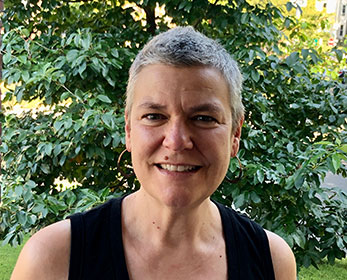
Dr. Gavin Morris is a Lecturer in Education at Charles Darwin University's College of Education, with over two decades of teaching experience in Australian schools. His academic qualifications include a PhD from Charles Darwin University (2019), Master of Education from University of Sydney (2016), and Bachelor of Education from James Cook University (2000). Morris specializes in Indigenous research methodologies, Health & Physical Education, and Sport Science. His qualitative work focuses on trauma healing, truth-telling, and decolonization practices in Aboriginal communities, particularly using Dadirri (deep listening) methodologies. Recent research explores digital platforms for cultural preservation and community resilience. As a registered postgraduate research supervisor, Morris contributes to undergraduate and postgraduate programs while maintaining active fieldwork in remote Northern Territory communities like Nauiyu at Daly River.
Chris Chesterfield is a Professor of Practice at Monash University's Monash Sustainable Development Institute (MSDI), specializing in water governance, urban planning, and sustainable development. He joined Monash in 2014 as part of the executive team at the Cooperative Research Centre for Water Sensitive Cities, leading strategic research on water system transformations. His work focuses on developing tools like the Water Sensitive Cities Index, adopted globally to drive policy and practice changes. He has held senior roles at Melbourne Water and the Office of Living Victoria, contributing to Melbourne's leadership in water-sensitive urban design. Chris chairs key committees including the Victorian Environmental Water Holder and the Birrarung Council (Yarra River advisory body). He leads projects on integrated water management and urban sustainability, collaborating with government agencies and international stakeholders. His research emphasizes governance frameworks for water-sensitive cities, policy reforms, and nature-based solutions. Chris has contributed to over 20 research outputs since 2002, with recent work focusing on urban water governance, river management, and policy integration. He actively advises government bodies such as the Victorian Planning Authority and Infrastructure Victoria, shaping legislative reforms and urban development strategies.
Dr. Alyas Widita is an Assistant Professor in the Urban Design program at Monash University, Indonesia. He is actively involved in research and teaching, focusing on urban planning, transportation, and smart city technologies. He serves as the Program Coordinator for Urban Design and teaches courses such as Urban Design Studio: Smart City and Smart City Technologies. Education: Ph.D. in City and Regional Planning, Georgia Institute of Technology, United States Dr. Widita's research centers on the built environment, transportation systems, and urban analytics, with a strong emphasis on developing Asian cities. His work explores congestion impacts of mass transit, ride-hailing effects on vehicle ownership, rural-urban migration, walking behavior, and spatial patterns of MSMEs. He employs advanced data analytics and causal evaluation methods to inform urban policy. His recent publications span high-impact journals such as Transport Reviews , Journal of Planning Education and Research , and Travel Behaviour and Society . The research trend shows a consistent focus on data-driven urban policy, sustainable mobility, and equity in urban development across Indonesia and Southeast Asia. Scientific Awards and Recognition: No specific awards listed, but research widely cited and featured in media outlets. Dr. Widita has secured and contributed to multiple research projects funded by international and national agencies, including the World Bank, Korea Transport Institute (KOTI), Central Bank of Indonesia, and Georgia Department of Transportation. He is currently leading or co-leading projects on Jakarta’s subsidence, flood risk management using remote sensing, and the Citarum River revitalization. He collaborates extensively with researchers across disciplines and institutions. His work contributes to UN Sustainable Development Goals, particularly those related to sustainable cities and communities. He is accepting PhD students interested in the built environment, transportation, and urban analytics in developing Asia. He is involved in key labs and research teams including the Citarum Action Research Program (CARP), Intelligent and Dynamic Remote Sensing for Flood Risk, and interdisciplinary urban analytics initiatives at Monash Indonesia.
Dr. Erica Garcia is a Senior Lecturer in Environmental Science at Charles Darwin University’s Faculty of Science and Technology, specializing in aquatic ecology. She leads research on river, wetland, and groundwater ecosystems, focusing on food web dynamics and biodiversity in changing environments. Her current projects include citizen science initiatives for groundwater security and wetland condition assessments. Dr. Garcia holds a PhD from Michigan State University (2006) and a B.A. from the University of California, Berkeley (1999). She teaches courses in ecology and resource management and collaborates on interdisciplinary projects addressing water sustainability in Northern Australia. Her research spans observational, experimental, and molecular methods to understand ecosystem processes. Education: PhD in Zoology/Ecology, Evolutionary Biology and Behavior, Michigan State University (2000–2006) Bachelor of Science in Integrative Biology, University of California, Berkeley (1995–1999) Research Interests: Dr. Garcia’s work emphasizes freshwater ecosystems, including food web interactions, groundwater ecology, and the impacts of human activities on riverine systems. She employs eDNA, isotopic analysis, and remote sensing to assess ecosystem health and biodiversity. Current projects investigate groundwater resources and citizen science approaches to environmental monitoring. Grants & Projects: Co-lead on the Northern Australian Community Groundwater Security Project (citizen science) Principal Investigator for the Adelaide River Aquatic Ecosystem Mapping project (2023–2024) Collaborator on the Water Security for Northern Australia Program (2023–2026) Labs/Teams: She is affiliated with the Research Institute for the Environment and Livelihoods at CDU and collaborates with international networks on global river ecology and climate change impacts.
Professor Sabine Dittmann is a leading expert in coastal ecosystem ecology and marine sciences at Flinders University, Australia. As a Professor of Marine Biology in the College of Science and Engineering, her work bridges research and environmental management, focusing on hypersaline estuaries, blue carbon restoration, and invasive species control. She holds a Habilitation in Ecology from the University of Bremen (2001), PhD from the University of Göttingen (1987), and MSc from the same institution (1984). Her research interests include coastal ecosystem health, mangrove and saltmarsh restoration, and decision support frameworks for marine conservation. She has advised government agencies on marine parks, Commonwealth Marine Reserves, and the Coorong ecosystem. Key roles include national president of the Australian Marine Sciences Association (2012–2014), current president of the Royal Society of South Australia, and member of the Australian Antarctic Science Council since 2019. Her recent work emphasizes the global challenges of hypersaline wetland restoration, invasive species impact, and blue carbon methodologies. Over 112 publications span estuarine dynamics, benthic macrofauna, and policy-relevant ecosystem assessments. Projects like the Coorong benthic surveys highlight her commitment to translating science into conservation action.
Dr. Edoardo Bertone is a Senior Lecturer at Griffith University's School of Engineering and Built Environment - Architecture and Design. He holds a PhD in Water Resources Engineering from Griffith University and Bachelor/Master degrees in Civil Engineering from the Polytechnic University of Turin. His research focuses on data-driven modeling, Bayesian Networks, and System Dynamics applied to water resources management, climate change adaptation, and the water-energy nexus. He is affiliated with Griffith's Cities Research Institute and Australian Rivers Institute, collaborating on projects with water utilities, governments, and private entities. Dr. Bertone has received awards such as the 2024 PVC Science Excellence in Teaching and the JSPS Fellowship (2022). He supervises doctoral and master's students in areas like water quality management and climate change impacts. Education: PhD in Engineering (Griffith University, 2015); MEng and BEng in Civil Engineering (Polytechnic University of Turin, 2009-2011). Research Interests: Water quality modeling, drinking water optimization, data-driven prediction, climate change adaptation, and sustainable development goals. He leads over 25 funded research projects, including initiatives on reservoir water quality management in Thailand, real-time nutrient monitoring, and cyanobacteria bloom modeling. Dr. Bertone’s work integrates advanced sensors, machine learning, and Bayesian networks to address environmental challenges. Awards: Listing includes PVC Excellence Awards (2024, 2017), JSPS Fellowship, and recognition as a Rising Star in Queensland Science (2015). Grants & Supervision: Principal supervisor for 10+ doctoral candidates and collaborator on projects funded by Seqwater, CSIRO, and the Ian Potter Foundation. Key grants include $745k for biofertilizer combatting eutrophication and $269k for coagulation optimization models. Dr. Bertone’s contributions extend to urban sustainability, co-editing the book *SeaCities: Urban Tactics for Sea-Level Rise* and developing frameworks for integrating SDGs into architectural education.
Professor Mindy Blaise is a Vice Chancellor’s Research Fellow and Director of the Centre for People, Place and Planet at Edith Cowan University (ECU), Western Australia. Her transdisciplinary research focuses on feminist knowledge production, anticolonial practices, and pedagogies addressing environmental crises and social inequities. Blaise holds a Doctor of Education (1999) from the United States and has held academic positions at institutions including the University of Texas, Austin, and The Education University of Hong Kong. Her research interests include experimental pedagogies for the Anthropocene, queer theory, postdevelopmentalism, and multi-species ethnography. She leads major projects like the ARC Discovery Project on 'Understanding and Addressing Everyday Sexisms in Australian Universities' and collaborates internationally through collectives such as #FEAS (Feminist Educators Against Sexism), which won the 2023-2025 AARE award. Blaise’s recent articles explore topics like regenerative sustainability education, feminist postdevelopmental lexicons, and ecological grief in childhood. Her work often bridges early childhood education with environmental humanities, emphasizing ethical relations with non-human worlds. Grants include funding from the ARC, Healthway, and philanthropic foundations for projects on climate justice, Indigenous knowledge transfer, and anti-sexism initiatives. Professional associations: AARE, AERA, Gender and Education Association Research supervision: Over 15 completed PhD/MEd projects focusing on gender, ecology, and pedagogy Labs/teams: Director of ECU’s strategic research centre; co-founder of Common Worlds Research Collective and The Ediths
Professor Ashish Sharma is a Professor of Hydrology and Water Resources in the School of Civil and Environmental Engineering at the University of New South Wales, Sydney, Australia. With a PhD in Civil Engineering from Utah State University and extensive experience in hydrological research, he has established himself as a leading expert in his field. Dr. Sharma's research focuses on hydrological uncertainty, with particular emphasis on the impact of climate change and variability on hydrological practice. His work spans multiple areas including remote sensing applications, stochastic hydrological modeling approaches, development of hydrological models, and addressing key hydrology challenges such as design flood estimation and water resources management. He has made significant contributions to understanding how climate change affects hydrological extremes and water availability. His publications reveal a strong trend toward advanced modeling techniques for climate change impact assessment, with recent work focusing on spectral transformation methods, multivariate bias correction in climate models, flood forecasting improvements, and the relationship between temperature and precipitation extremes. His research increasingly integrates remote sensing data with hydrological modeling to address challenges in data-scarce regions. Professor Sharma has held significant leadership positions including President of the International Commission of Hydrologic Sciences (IAHS) Commission on Statistical Hydrology (STAHY) since 2016, service on the Australian Research Council's College of Experts twice, and participation on the Technical Committee for the Australian Rainfall and Runoff Design Flood Estimation guidelines (ARR2016). In addition to his research leadership, Professor Sharma actively mentors students and collaborates with researchers globally, as evidenced by his extensive publication record across top hydrology and climate journals. His work bridges theoretical hydrology with practical applications for water resources management under changing climate conditions.
Kendra Gonzales is a Research Fellow at the Fenner School of Environment & Society, Australian National University (ANU), and concurrently holds an appointment as Associate Professor at the Department of Environmental Science, Ateneo de Manila University. She previously served as the Director of the Ateneo Institute of Sustainability (2021-2024) and is involved in international initiatives like the World Climate Research Programme’s My Climate Risk project. Her research focuses on environmental performance metrics, climate resilience, and systems thinking applications. Education: BS Physics (Ateneo de Manila University), joint MSc Environmental Management (Ateneo/USF), PhD in Earth and Atmospheric Science (Purdue University). Research interests include sustainability, climate resilience, disaster risk management, and earth system science. She applies systems thinking to address environmental challenges, particularly in Southeast Asia, emphasizing interdisciplinary approaches to quantify resilience and develop systemic metrics for companies and investors. Recent work highlights policy-relevant climate science, disaster risk communication, and land-use change impacts. Her contributions span e-learning modules for climate education and frameworks for sustainable enterprise collaboration. Collaborates internationally with organizations like the Sustainable Development Solutions Network Philippines and the World Weather Research Programme. Labs/Teams: Part of Fenner School’s Earth systems and risk resilience research groups.
Professor Stuart Phinn is a distinguished academic at the University of Queensland, serving as Professor in the School of the Environment and Centre Director of the Remote Sensing Research Centre (Earth Observation Research Centre). He also maintains affiliations with the Centre for Marine Science. With a career spanning over two decades, Professor Phinn has established himself as a leading expert in earth observation and environmental monitoring, with over 559 publications including 295 journal articles. His educational background includes a Bachelor (Honours) of Science (Advanced) from The University of Queensland and a Doctor of Philosophy from San Diego State University. Professor Phinn's leadership extends to founding directorships of Australia's national earth observation coordination body (www.eoa.org.au) and collaborative research infrastructure (www.tern.org.au), as well as a world-leading research-to-operational program supporting government environmental monitoring (www.jrsrp.org.au). He also leads the Earth Observation for Government Network. Professor Phinn's research focuses on monitoring environmental change using earth observation and field data. His work primarily involves using images collected from satellites and aircraft, combined with field measurements, to map and monitor Earth's environments and how they change over time. This research is conducted in collaboration with environmental scientists, government agencies, NGOs, and private companies. A growing aspect of his work focuses on national coordination of earth observation activities and the collection, publishing, and sharing of ecosystem data. His work provides solutions to support sustainable development and resource use for governments, industries, and communities. His recent publications demonstrate a consistent focus on applying earth observation technologies to solve environmental challenges across multiple domains. The 15 most recent articles reveal strong themes in coral reef mapping and monitoring, land cover change detection, fire resilience analysis, and advanced remote sensing techniques including multi-sensor fusion and machine learning applications. His work spans terrestrial, coastal, and marine environments, with significant contributions to understanding environmental change in Australia and internationally, particularly in Indonesia. Professor Phinn has secured substantial research funding from diverse sources including government agencies (Queensland Government, Great Barrier Reef Marine Park Authority), industry partners (SmartSat CRC, Blue Economy CRC), and international organizations (Google Inc, Vulcan Inc). Current projects include evaluating impacts of threats to endangered reptiles, automating tree-scale vegetation structure monitoring, and continuing the Joint Remote Sensing Research Program. As an academic supervisor, Professor Phinn has mentored numerous PhD and Master's students, with current supervision spanning topics from forest disturbance analysis to kelp forest mapping and fire resilience of mine site rehabilitation. His extensive supervision history demonstrates his commitment to training the next generation of earth observation scientists. The Earth Observation Research Centre he directs fosters a collaborative research environment focused on transforming satellite and airborne images with field survey data into meaningful environmental information for decision-making.
Associate Professor Margaret Grose is an academic at the University of Melbourne's Melbourne School of Design, specialising in Landscape Architecture. She holds an Associate Professorship and teaches ecological design principles in the Masters of Landscape Architecture and Bachelor of Environments programs. Her work bridges design and ecological science, with a focus on urban ecosystems, water management, and cultural landscapes. Education: Grose began in Agricultural Science (soils/water processes), completed a PhD in ecophysiology of Australian plants, followed by postdoctoral research at Oxford University and the University of Cambridge’s Mathematical Biology group. She later trained in Landscape Architecture and practiced as an environmental scientist in urban design projects. Research interests include integrating ecological science into design, the role of historical ecological knowledge in contemporary design, and urban water systems. Her recent Universitas 21 Fellowship explores teaching ecology to built environment students globally. Publications span topics like urban forestry in China, dryland river parks, and impacts of artificial light on ecosystems. She has received the 2011 Faculty Teaching Award for Excellence in the Masters program. Supervision focuses on river design, urban waterways, ecological planting resilience, and design of public spaces in Mediterranean climates. She collaborates on interdisciplinary projects combining ecology, urban planning, and cultural heritage.
Professor Richard Kingsford is a distinguished river ecologist and conservation biologist at the University of New South Wales (UNSW), serving as Director of the Centre for Ecosystem Science within the School of Biological, Earth & Environmental Sciences. With a career spanning over three decades since earning his PhD from the University of Sydney in 1986, he has established himself as a leading expert on Australian river systems. His research focuses on river ecology and conservation biology, particularly in the wetlands and rivers of the Murray-Darling Basin and Lake Eyre Basin. Kingsford's work integrates field ecology with policy development, having previously worked for the NSW Government Environment agency from 1986-2004 before transitioning to academia. He has made significant contributions to understanding how river regulation impacts ecosystems and biodiversity. Kingsford's recent publications demonstrate his expertise in freshwater ecosystem science, adaptive management approaches, and conservation interventions. His research spans from fundamental ecological studies of river systems to applied conservation projects including the Wild Deserts rewilding initiative in Sturt National Park and the Platypus Conservation Initiative. He has developed expertise in using emerging technologies like drone imagery and remote sensing for ecosystem monitoring. As an influential researcher, Kingsford has served on numerous state and federal advisory committees, helping translate scientific findings into river policy and management practices across Australia. His work bridges the gap between academic research and practical conservation outcomes through community engagement and strategic adaptive management approaches. Director of the Centre for Ecosystem Science, UNSW Leader of Wild Deserts rewilding project Expert in Murray-Darling Basin and Lake Eyre Basin ecosystems Specialist in freshwater conservation and adaptive management
Professor Steven Armfield is a faculty member at the University of Sydney's School of Aerospace, Mechanical and Mechatronic Engineering. He holds a BSc in Applied Mathematics from Flinders University and a PhD from the University of Sydney. His research focuses on fluid mechanics, particularly buoyancy-driven flows, computational modeling, and thermal convection in environmental and industrial contexts. He has led major projects on river management strategies, building ventilation systems, and large-scale fluid dynamics models. As FluD Director, he leads fluid dynamics research initiatives. Education: BSc Applied Mathematics, Flinders University PhD, University of Sydney Research Interests: Professor Armfield's work spans computational fluid dynamics (CFD), natural convection boundary layers, turbulent mixing in stratified flows, and heat transfer applications. His studies address environmental challenges (e.g., river stratification) and engineering systems (e.g., HVAC efficiency). He employs experimental, theoretical, and numerical methods to advance understanding of complex fluid behaviors. Publications: His recent work emphasizes parameterization of turbulent flows, buoyancy effects in stratified systems, and scaling laws for natural convection. Key themes include improving predictive models for environmental and industrial fluid dynamics. Awards: Australian National Research Fellowship Stanford University UPS Visiting Professorship Saitama University Visiting Scholarship Shundoh International Foundation Research Scholarship Advising & Grants: Supervises PhD students in topics like urban fluid dispersion and Navier-Stokes solvers. Secured funding for projects involving CFD analysis of data centers and thermal stratification in open channels. Labs/Teams: Led the School of Aerospace, Mechanical and Mechatronic Engineering (2008–2015) and currently directs the Fluid Dynamics (FluD) research group.
Dr. Mahdi Sedighkia is a Research Fellow at The Australian National University (ANU), affiliated with the Institute for Climate, Energy & Disaster Solutions (ICEDS) and the Mathematical Sciences Institute (MSI). His research focuses on flood modeling, water resource management, climate change impacts, and the application of AI and GIS/RS techniques. He holds degrees in environmental and water resource engineering from the University of Tehran, Tarbiat Modares University, and James Cook University. Education: B.Eng: Environmental Engineering, University of Tehran M.Sc: Water Resource Engineering, Tarbiat Modares University PhD: Environmental Engineering, James Cook University Research Interests: Flood/river hydraulic modeling and damage assessment AI and fuzzy systems in water resources management Climate change impact on ecosystems and water resources RS/GIS applications in hydrology and ecology Collaborations and Projects: Conserving floodplains to mitigate flood risk (2025–2028) Community-driven flood resilience initiatives (2022–2025) Groups: Extreme Events, Water and Flooding, Risk Resilience Publications: Focus on integrated modeling, reservoir optimization, and environmental flow assessment in river systems.
Pascal Scherrer is Associate Dean (Research) and Professor within the Faculty of Business, Law and Arts at Southern Cross University . Based in Lismore, Australia, he combines an administrative leadership role with active research in sustainability, regional development, tourism and visitor management. His work bridges academia, industry and government, having jointly secured over AUD $2 million in competitive funding and delivered high-impact projects for clients such as the NSW National Parks & Wildlife Service and the Australian Meat Processor Corporation. Education BSc – Griffith University BSc (Hons) – Griffith University Graduate Certificate TESOL – Bond University PhD – Griffith University Research Interests Dr Scherrer’s scholarship centres on sustainability science applied to tourism and regional development. His current flagship project is a circular-economy partnership with the Australian Meat Processor Corporation aiming to reduce plastic packaging waste across red-meat supply chains. Earlier work includes sustainable-visitor-capacity assessments on Rottnest Island , alternatives to summiting Wollumbin-Mt Warning that informed a AUD $7.4 million NSW government trail investment, and longitudinal monitoring of visitor experiences at Point Fraser artificial wetland in Perth. Cross-cutting themes include visitor risk perception in remote alpine and coastal settings, community engagement in protected-area governance, Indigenous tourism business models , and the intersection of digital culture (e.g., selfie-taking) with tourism safety. Scientific Awards 2023 – Southern Cross University Research Award 2014 – Southern Cross University Vice-Chancellor’s Award for Excellence in Community Engagement Grants & Advising Scherrer has jointly attracted over AUD $2 million in research and consultancy funding from state and federal agencies, industry bodies and NGOs. He currently supervises Honours and PhD candidates across topics in sustainable tourism, regional development and visitor management, and teaches undergraduate and postgraduate units covering sustainable tourism, visitor-economy management, and planning & policy. Professional Affiliations & Service Member, IUCN World Commission on Protected Areas Member, North Coast Regional Advisory Committee, NSW National Parks & Wildlife Service External facilitator for community and local-government projects