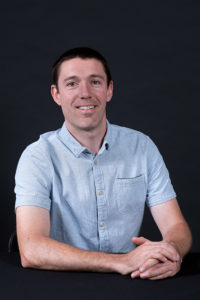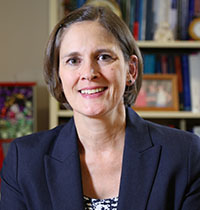
Heidi Nepf is a Professor of Civil and Environmental Engineering at the Massachusetts Institute of Technology (MIT), where she holds the Donald and Martha Harleman Professorship and is a Margaret MacVicar Fellow. She leads the Environmental Fluid Mechanics Lab, which focuses on the interaction of flow with aquatic vegetation and its implications for sediment transport, chemical flux, and ecosystem function. Her research aims to develop models that improve the management of natural resources and the design of green infrastructure. Dr. Nepf's research interests span several critical areas of environmental engineering and fluid mechanics: Environmental Fluid Mechanics of aquatic vegetation Coastal protection through natural vegetated landscapes Blue carbon sequestration in seagrass meadows and salt marshes Sediment transport in vegetated regions Wave interactions with flexible vegetation Green infrastructure for urban stormwater management Restoration of coastal ecosystems Her recent work has demonstrated the cost-effectiveness of marshes for coastal protection, showing that maintaining marsh in front of seawalls is an economically justified nature-based solution. She has also investigated how patchy seagrass meadows accumulate carbon, finding that continual migration of patches within meadows can limit carbon accretion and storage. Her research on microplastics has revealed that these pollutants are more likely to accumulate in porous sediment where they can hide within pore spaces. Analysis of her publications shows a strong focus on applying fluid mechanics principles to environmental problems, with particular emphasis on the role of vegetation in modifying flow, sediment transport, and pollutant dynamics. Dr. Nepf's scientific contributions have been recognized through prestigious appointments including the Margaret MacVicar Fellowship and the Donald and Martha Harleman Professorship. Her work has been featured in MIT News, APS-Physics News, AGU Research Spotlight, and NSF Public Outreach. Her research has practical applications in coastal management, river restoration, and urban stormwater treatment. She has developed models for predicting wave dissipation by marsh plants, which can be used to assess the level of coastal protection provided by marshes. Her work on floating treatment wetlands provides guidance for improving nutrient removal efficiency in stormwater systems. She has also collaborated on designing modular landscape forms for stormwater detention ponds that improve water management while providing ecological benefits and versatile green space for cities. Dr. Nepf leads the Nepf Environmental Fluid Mechanics Lab, which conducts both laboratory and field research on the interaction between flow and vegetation. The lab collaborates with institutions like the Water Institute of the Gulf and has received funding from sources including the Abdul Latif Jameel World Water and Food Security Lab.