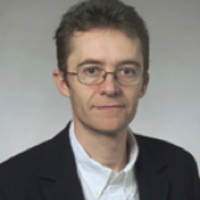
Eric Rebillard is the Avalon Foundation Professor in the Humanities at Cornell University, affiliated with the College of Arts and Sciences and departments/programs including Classics, History, Archaeology, Jewish Studies, Medieval Studies, and Religious Studies . His work bridges historical analysis with archaeological and literary approaches to Late Antiquity and early Christianity. Education: PhD in Classics from the Sorbonne (1993) Former affiliations: French CNRS (1996-2003), École française de Rome Research focuses on religious practices in Late Antiquity , particularly early Christian martyr narratives, burial customs, and the social dynamics of religious identity . His scholarship challenges conventional narratives about the exclusivity of Christian communities and emphasizes the fluidity of religious self-identification. Publications span monographs, edited volumes, and translated papers, with recurring themes of Roman Empire , Augustine of Hippo , and funerary archaeology . Key article trends include analysis of martyr texts , material culture , Augustinian theology , and Christianization processes in the Latin West. Awards include a Guggenheim Fellowship (2020-21) for his project on the triumph of Christianity. Grants supported interdisciplinary collaborations, such as the OpenURL citation project with Cornell University Library (2009).
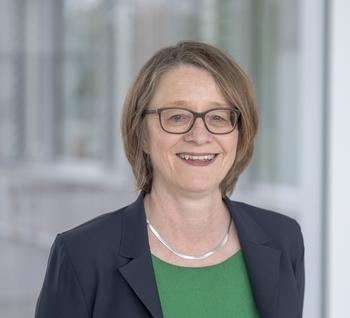
Prof. Dr. Susanne Gödde is a Professor of Religious Studies at the Free University of Berlin’s Institute for Religious Studies (WE 8) within the Department of History and Cultural Studies. She holds a W3-Professur since 2016 and serves as Principal Investigator in the Graduate College „Normativität, Kritik, Wandel“. Her academic journey includes habilitation at FU Berlin (2006) and professorships at LMU Munich (2008–2016). 1985–1993: Studied Greek Philology, German Studies, and Classical Archaeology at Westfälische Wilhelms-Universität Münster 1999: PhD in Greek Philology from Münster 2006: Habilitation at FU Berlin Her research focuses on Ancient Greek Religion and Literature , Mythology , and its modern reception, with emphasis on tragedy, novels, and ritual practices. Current projects include DFG research groups on aetiological narratives and sacrificial theory. She explores foundation myths , sacrifice as cultural metaphor , and gender in religious contexts . Recent publications analyze themes such as mythological origins (2025), virginity and violence in Greek novels (2025), rituals in tragedy (2023), and narrative contingency (2022). Her work bridges classical philology, religious studies, and cultural theory. Heidelberger Förderpreis für klassisch-philologische Theoriebildung Lise Meitner-Habilitationsstipendium des Landes Nordrhein-Westfalen Promotionsstipendium der Westfälischen Wilhelms-Universität Münster As advisor, she has mentored PhD students Dr. Emrys Schlatter , Dr. Sebastian Zerhoch , and Dr. Stephanie Roberta Graf . Her outreach includes podcasts on ancient asylum, mythological themes, and public lectures on Homeric reception.
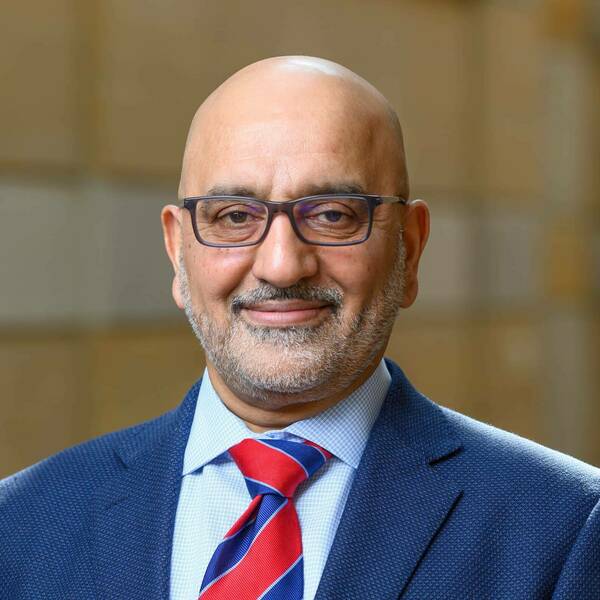
Ebrahim Moosa is Professor of Islamic Studies at the Keough School of Global Affairs, University of Notre Dame, with concurrent appointments at the Kroc Institute for International Peace Studies and Department of History. He co-directs Contending Modernities , a global research initiative examining religious-secular interactions. Ph.D., University of Cape Town M.A., University of Cape Town Islamic and Arabic studies, Darul Ulum Nadwatul `Ulama, India B.A., Kanpur University Postgraduate diploma in journalism, City University London Research Focus : Critical analysis of classical and modern Islamic thought, emphasizing legal pluralism, ethical reasoning, and the interplay between tradition and contemporary challenges. His work spans theological debates, madrasa reform, and post-colonial Muslim identity. Recent Publications : Explored water ethics in Islamic thought (2025), Ghazali's pedagogy (2023), and Sharia debates (2021). His scholarship bridges historical Islamic discourses with modern issues like secular governance (2020) and pandemic-era religious practice (2020). American Academy of Religion’s Best First Book (2006) Carnegie Scholar (2005) Engagement : Active media commentator, podcast host ( Diffused Congruence: The American Muslim Experience ), and contributor to Harvard Law School’s Islamic Law Blog. Led madrasa reform initiatives in India and Qatar.
Christopher Thane Callahan is a scholar of Japanese religions and Buddhism affiliated with the Department of East Asian Languages and Cultures and the Center for East Asian and Pacific Studies at the University of Illinois, where he serves as a Teaching Assistant Professor. Education: Ph.D. in Religious Studies, Harvard University M.A. in Asian Religions, University of Hawaii M.A. in Japanese Literature, University of Hawaii B.A. in Philosophy, Washington and Lee University His research focuses on Japanese religious traditions, particularly Pure Land Buddhism, and explores intersections of doctrine, ritual, and visual culture. He teaches courses on Japanese religion in media, introduction to Japanese culture, and advanced topics in Buddhism. Callahan’s recent publications examine the historical and doctrinal evolution of Pure Land practices, including analyses of foundational texts like Kakunyo’s Hōon kōshiki and the Pure Land section of the Qixinlun. These works reflect his broader interest in how Buddhist traditions adapt across cultural and historical contexts. Contact: Email: ctc@illinois.edu Office Hours: Tuesdays 3:30-5:30pm in LCLB 2047 Address: 707 S Mathews Ave, 2090 FLB, MC-173, Urbana, IL 61801 Phone: 217-244-1432
Karen Ruffle is a Professor of History of Religions at the University of Toronto's Mississauga (UTM) and St. George (UTSG) campuses. She co-edits the International Journal of Islam in Asia and the DeGruyter series Religion and Society , while convening the international working group Sensing Shi'ism . PhD in Religious Studies, University of North Carolina-Chapel Hill MA in Religious Studies, University of North Carolina-Chapel Hill BA in Religion, Middlebury College Her research focuses on South Asian Shiʿism, emphasizing devotional texts, ritual practices, and material culture. Fieldwork spans India, Pakistan, Iran, Turkey, and Syria. Current projects include two monographs on Shiʿi material culture in South Asia. As co-editor and working group convenor, Ruffle fosters interdisciplinary collaboration on Shi'i studies through ethnographic, theoretical, and empirical approaches to material culture, sensorium, and ritual practices. She contributes to academic leadership through editorial roles and international scholarly networks.
Victoria Mills is a Senior Lecturer in Victorian Literature and Culture at Birkbeck, University of London, within the School of Creative Arts, Culture and Communication. She serves as Co-Director of the Birkbeck Centre for Nineteenth-Century Studies and Programme Director for the MA in Victorian Studies. Previously, she held a Research Fellowship at Darwin College, Cambridge and a Teaching Fellowship in Nineteenth-Century Literature at King's College, London, following a career in the museum sector at institutions including the Victoria and Albert Museum and The Museum of the Home. Her educational background includes: PhD, University of London MA Victorian Studies, University of London MA Museum Studies, University of Leicester BA (Joint Hons.) Ancient and Modern History, University of Oxford Dr. Mills' research spans the intersection of literature, visual and material cultures, with particular focus on museums, collecting practices, the history of the book, gender and sexuality (especially Victorian masculinities), nineteenth-century classical reception, and the Arts and Crafts Movement. Her work often examines how material objects function within literary texts and how literature engages with visual culture. She has published extensively on nineteenth-century writers including George Eliot, Oscar Wilde, Henry James, and Charles Kingsley, exploring themes of collecting, gender, and visual representation. Her recent publications reveal a consistent focus on material culture approaches to Victorian literature, with increasing attention to gender studies and museum practices. The trajectory of her work shows movement from analyzing specific literary texts to broader cultural studies of collecting practices, museum spaces, and the material conditions of reading and writing in the nineteenth century. Her research demonstrates interdisciplinary engagement with art history, museum studies, gender theory, and book history. Her scientific recognition includes: British Academy Small Research Grant (2024-2026) for 'Art, Labour and Devotion: Uncovering the Victorian Art-Workman' Co-curator of 'Victorian Sentimentality' at Tate Britain (2011) Researcher for 'The Fallen Woman' exhibition at the Foundling Museum (2015) Dr. Mills actively supervises doctoral research and teaches across the BA in English literature and MA in Victorian Studies. Her supervision focuses on nineteenth-century literature and culture related to her research interests, with current doctoral work examining topics like 'Fashioning Victorian Femininity in UK Museums.' She has received research funding including a British Academy Small Grant (2024-2026) for her project on the Victorian art-workman and has co-organized international workshops including 'Mediating History's Materiality' and 'Books in and out of time.' Her grant activity demonstrates strong external funding success and international collaboration. She is actively involved with research centers including the Centre for Nineteenth-Century Studies and the Centre for Museum Cultures, and serves on the steering committees of these institutes. Her professional engagement extends to committee membership with the British Association for Victorian Studies and fellowship in the Higher Education Academy.
Mona Kasra is an Iranian-American Associate Professor of Digital Media Design in the Department of Art at the University of Virginia. Her work bridges new media art, projection design, and immersive theatre, exploring political and theoretical implications of visual media technologies across cultural contexts. Ph.D. in Arts & Technology from University of Texas-Dallas M.F.A. in Video/Digital Art from California State University Northridge B.A. in Graphic Design from Art University of Tehran Her research focuses on hybrid practices integrating digital technologies with live performance, emphasizing audience immersion and narrative reconfiguration. Key areas include: Projection mapping for theatrical spaces Interactive media installations Cross-cultural digital storytelling Immersive audience experiences Time-space manipulation in performance Recent creative works demonstrate trends in: Site-specific installations (abandoned buildings, warehouses) Collaborative design with choreographers/musicians Exploration of identity in hyper-mediated environments Integration of indigenous rituals with modern technology Academic leadership roles include: Faculty co-lead, Karsh Institute’s Digital Technology for Democracy Lab Chair of ACM SIGGRAPH (2023-2024) Board member, New Media Caucus Executive Committee member (2019-2025), UVA Scientific awards: Helen Hayes Award nominations for media design (2022) United Scenic Artists Local 829 membership Her transdisciplinary approach has been supported by grants including the Arts Enhancement Grant and collaborations with institutions like the Smithsonian's Lemelson Center.
Prof Michael Bull is a Professor of Sound Studies at the University of Sussex, affiliated with the School of Media, Arts and Humanities and the Department of Media and Film. His career spans academic roles, music promotion, and adult education. He holds a BSc in Philosophy and Sociology from the University of Bristol, a PGCE from Brunel University, an MA in Modern European Thought from the University of Greenwich, and a PhD in Sociology from Goldsmiths College. His research focuses on sound studies, mobile communication technologies, urban soundscapes, and critical theory. He pioneered foundational works like Sounding Out the City (2000) and co-founded journals such as Senses and Society (2003) and Sound Studies (2015). He also established book series like The Study of Sound (2018) and Sound in Urban and Popular Culture (2020). Bull’s work bridges sociology, media studies, and cultural theory, emphasizing interdisciplinary approaches. Recent projects include exploring sirens in cultural history and reinterpreting World War I’s auditory legacy. His contributions have been recognized through extensive citations and global academic collaborations.
Dr. Justine Potts is Junior Research Fellow in Classics at St John's College, University of Oxford, specializing in religious and intellectual history of the Roman Empire. Her research employs comparative approaches to examine the development of religious confession practices and the emergence of monotheism. Key research areas include: Social and cultural history of confession practices in Greco-Roman world Comparative analysis of monotheistic transitions in Roman Empire and ancient South Arabia Epigraphic analysis of religious artifacts and votive offerings Long-term evolution of religious institutions and practices She holds a DPhil in Ancient History and MA in Classics from University of Oxford, with additional studies at University of Bologna. Her doctoral research on 'Confession in the Greek and Roman world' is being developed into a monograph, while her current comparative project examines parallels in monotheistic developments across Mediterranean and Arabian contexts.
Yasmine Musharbash is an Associate Professor in the School of Archaeology & Anthropology at the Australian National University (ANU), part of the College of Arts and Social Sciences (CASS). She previously served as Head of the ANU Department of Anthropology (2020–2023) and held positions including Senior Lecturer (2019–2023) at ANU, and a Future Fellow and Senior Lecturer at the University of Sydney (2009–2019). Her research focuses on anthropology of the everyday, settler-colonial studies, monster anthropology, and Warlpiri studies in Central Australia. Education includes a PhD in Anthropology from ANU (2003), an MA in Social Anthropology and English from Freie Universität Berlin (1997), and extensive exchange studies in Australia and Europe. She has held postdoctoral roles at the University of Western Australia (2004–2008) and the Aboriginal Areas Protection Authority (2009). Key research interests include Indigenous/non-Indigenous relations, human-other-than-human relations, anthropology of death, and sleep. Her work explores how monsters and monstrous imagery reflect social transformations in settler-colonial contexts. Musharbash has published widely on Warlpiri communities, focusing on daily life, emotions, and cultural resilience. Her recent articles analyze legal violence against Indigenous Australians, ethnographic fiction, and the symbolism of monsters in cross-cultural contexts. She co-edited Living with Monsters (2023), exploring real and fictional monsters through ethnography. Awards include the Australian Research Council Future Fellowship. Musharbash supervises research students and has contributed to projects on Indigenous families and welfare systems in Yuendumu. She engages with broader themes of boredom, embodiment, and spatial practices in anthropology.
Professor Martin Clayton is a leading scholar in Ethnomusicology at Durham University's Department of Music. He holds a BA in Music and Hindi (1988) and a PhD in Ethnomusicology (1993) from SOAS, University of London. His research focuses on Hindustani classical music, rhythmic analysis, and embodied musical interaction, with a strong emphasis on interdisciplinary approaches combining computational methods and ethnographic fieldwork. Clayton has directed major research projects including the AHRC-funded 'Interpersonal Entrainment in Music Performance' and the EU's EnTimeMent initiative. He is a former editor of the British Journal of Ethnomusicology and has served on committees for the British Forum for Ethnomusicology and European Seminar in Ethnomusicology. His work bridges ethnomusicology, music psychology, and computational analysis, with key contributions to understanding entrainment in music performance across cultures. Recent publications explore rhythmic structures in North Indian rāga performance, computational analysis of musical gestures, and cross-cultural comparative studies. His research often employs innovative methodologies like automated video analysis and motion capture to study performer interactions. Clayton was elected a Fellow of the British Academy in 2020 and currently holds a Leverhulme Trust Major Research Fellowship. His advising spans projects on Indian classical music, Afro-Brazilian ritual music, and global guitar practices. Notable collaborations include work with computational music researchers and movement scientists, yielding datasets on entrainment in diverse musical contexts. Clayton’s work has been disseminated through edited volumes, software tools like movementsync , and international conferences.
Caora McKenna is an Assistant Professor at the University of King’s College in Halifax, specializing in digital journalism, audience engagement, and emerging media platforms. She previously served as Audience Editor at The Globe and Mail and City Editor at The Coast, focusing on Halifax city news, policing, and housing. Her teaching includes courses on digital reporting and journalism ethics. McKenna holds a Combined Honours Bachelor of Journalism from King’s College and a Spanish degree from Dalhousie University. She is fluent in English and Spanish, with research interests in AI’s impact on news, local media sustainability, and audience-centric storytelling. She launched The Signal’s TikTok channel with students and has contributed to over 159 articles across diverse topics including health, politics, and culture. Education: Bachelor of Journalism (Honours), University of King’s College Spanish Language, Dalhousie University Research Interests: Digital optimization, journalism ethics, AI in news production, local media resilience, and audience engagement strategies. She frequently writes about emerging platforms, reader habits, and access to information. Grants & Advising: No formal grants or advisees listed, but her teaching and mentorship at King’s reflect her commitment to student-driven projects like The Signal’s TikTok initiative. Labs/Teams: Involved in the News Workshop at King’s College, fostering experimental journalism projects.
Kirsten Schut is a Research Fellow in the Foundation Year Program at the University of King's College. She holds a BHum from Carleton University and MA/PhD in Medieval Studies from the University of Toronto. Her doctoral work focused on the Italian Dominican theologian John of Naples (ca. 1300-1350), analyzing his role within Angevin Naples and the canonization of Thomas Aquinas. Her research explores death practices across medieval Europe and colonial Americas, monastic clothing rituals, and intellectual history of medieval religious orders. Current projects include an intellectual biography of John of Naples and a study of lay death rituals in religious habits. She has taught medieval history and theology at Toronto, Mississauga, Ottawa, and Carleton University's Great Books program. Her publications investigate themes like pastoral care for the dying, interfaith dynamics in medieval theology, and political theology in John of Naples' works. Postdoctoral fellowships include positions at the Universities of Cologne, Bristol, and the Pontifical Institute of Mediaeval Studies in Toronto.
Penelope Edwards is a Professor of Southeast Asian Studies and Walter and Elise Haas Professor of Asian Studies at the University of California, Berkeley. She serves as Director of the Institute of East Asian Studies. Her research focuses on cultural history of Burma/Myanmar, Cambodia, and the Chinese diaspora, with emphasis on Theravada Buddhist practices, colonialism's impact, and global religious networks. Her research interests include literary and material culture analysis, the intersection of Buddhism with nationalism, and performance traditions across Southeast Asia. She has published extensively on topics ranging from Cambodian national identity formation under French colonialism to contemporary Buddhist networks. In 2025, she will teach a graduate seminar on Buddhism and modernity in Southeast Asia and Sri Lanka. Edwards has edited special journal issues on Cambodian Buddhism and translated key historical texts related to Khmer religious institutions.
Julie Stone Peters is the H. Gordon Garbedian Professor of English and Comparative Literature at Columbia University, with affiliations at Columbia Law School and Queen Mary University of London. She holds a BA from Yale, a PhD from Princeton, and a JD from Columbia. Her research bridges law, performance, and media history, focusing on the intersection of legal systems and cultural practices across eras. She directs Academic Careers Advising for Columbia PhD students and co-chairs the Theatre and Performance PhD program. Peters has authored influential works like *Law as Performance* and *Theatre of the Book*, earning accolades such as the ACLA’s Harry Levin Prize. Her current projects include *The Video and the Law* and collaborative work on 'Fragments for a History of the Legal Body.' Her research spans legal theatricality, human rights, and media’s role in shaping legal narratives. Awards include Guggenheim, Fulbright, and Humboldt fellowships. Peters teaches widely, including at Harvard and the Metropolitan Detention Center, and co-edits the Cambridge Elements in Legal Humanities series.