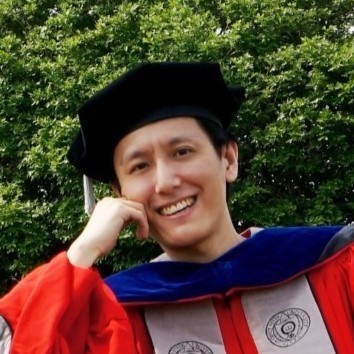
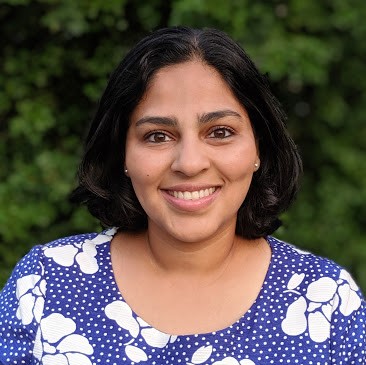
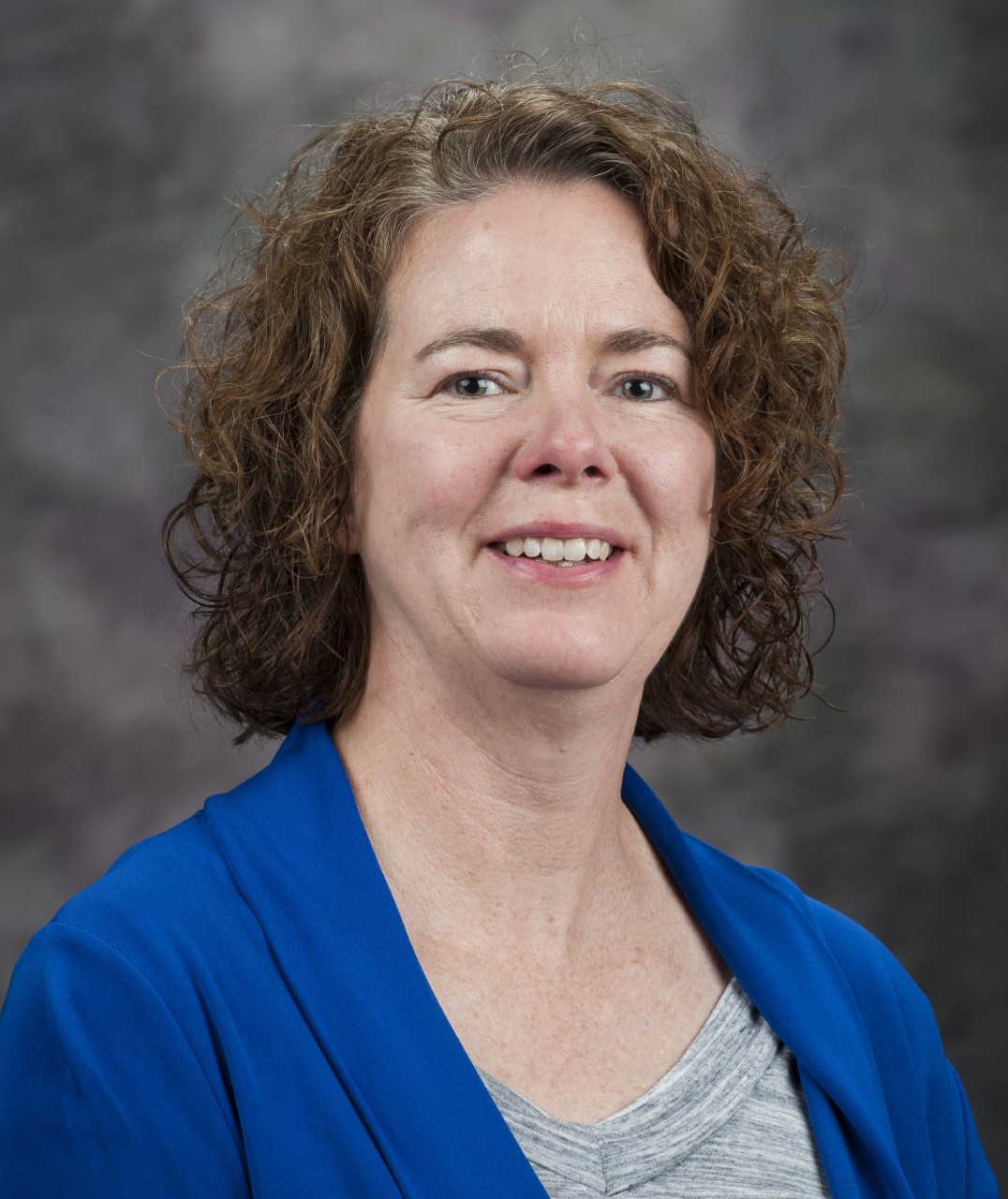
Dr. Yang Deng is a tenure-track Assistant Professor at the School of Computing and Information Systems, Singapore Management University, and a Lee Kong Chian Fellow. Previously, he was a Postdoctoral Research Fellow at NExT++ (National University of Singapore). His research focuses on Natural Language Processing, Information Retrieval, and Large Language Models, with special interests in Proactive Conversational AI, Trustworthiness of LLMs, and Human-Centered Information Seeking. He has published over 40 papers in top-tier venues including ACL, EMNLP, WWW, and SIGIR. PhD from The Chinese University of Hong Kong (2023) Research Advisor to CHEANG Chi Seng Research Domains: Natural Language Processing Information Retrieval Large Language Models Human-Agent Interaction Digital Transformation Trustworthy AI Scientific Recognition: Lee Kong Chian Fellowship Google South Asia & Southeast Asia Research Awards 2024 EMNLP 2024 Outstanding Area Chair NeurIPS 2024 Best Reviewer
Tian Xie is an Assistant Professor in the Department of Computer Science at Utah State University (USU). His research focuses on Mobile Networks, IoT Security, Network Security, and Data-Driven Network Analysis. He holds a Ph.D. (2023) and B.S. (2016) in Computer Science and Electrical Engineering from Michigan State University (MSU). Education : Ph.D. in Computer Science, Michigan State University, 2023 B.S. in Electrical and Computer Engineering (With Honor), Michigan State University, 2016 Research Interests : Explores vulnerabilities in cellular emergency services (911), 5G/4G security, IoT systems, blockchain technologies, and secure cloud computing. His work emphasizes practical defenses against network threats and improving system resilience. Awards : 2022 AT&T Security Award for 911 Security Research Best Community Paper Award Runner-Up at ACM MobiCom’22 NAIRR Pilot Award (2024) for 5G/4G Cellular Security Google Security Reward (2019) for VoWiFi Research Grants & Advising : Lead the NAIRR-funded 5G/4G cellular security project Advising 2 Ph.D., 1 MS, and 1 undergraduate student Teaching : Instructors for courses like Introduction to Cybersecurity and Computer Network and Security at USU, with prior teaching experience at MSU.
Bruce Draper is a Professor and Chair of the Department of Computer Science in the College of Natural Sciences at Colorado State University. His work bridges artificial intelligence, machine learning, and computer vision, with a strong emphasis on real-world applications involving visual data and intelligent systems. Research Interests: Draper's research centers on machine learning with a focus on visual learning, adversarial AI, and visual agents. He investigates how AI systems can perceive, interpret, and interact with visual environments through technologies like facial recognition, object tracking, augmented reality, and automated visual communication. His work addresses both the capabilities and vulnerabilities of modern AI, particularly in defending systems against adversarial attacks. Publication Trends: His recent scholarly output reflects a consistent trajectory in advancing computer vision and AI robustness. The articles span topics from adversarial defense mechanisms and visual agent autonomy to scalable learning frameworks and real-time video analysis. Collectively, they emphasize secure, efficient, and context-aware visual intelligence systems grounded in deep learning and representation learning. Scientific Awards: No specific awards mentioned in the provided text. Advising and Grants: While no students or grants are explicitly listed, his leadership role as department chair and prior experience as a DARPA program manager suggest extensive involvement in research funding, mentorship, and high-impact project direction. His background indicates likely supervision of graduate students and management of federally funded research initiatives in AI and computer vision. Labs and Teams: Although no specific lab or research group is named, his research scope implies leadership or affiliation with interdisciplinary teams working on AI security, computer vision, and augmented reality systems within the Department of Computer Science at CSU.
Dr. Julie Risien is an Adjunct Professor and Director of the NSF Polar STEAM program at Oregon State University, affiliated with the STEM Research Center and the Office for Research Advancement. She holds a joint role on the graduate faculty of the College of Earth, Ocean and Atmospheric Sciences (CEOAS) and the Environmental Sciences Program. Her work bridges science, education, and institutional change, focusing on broader impacts, faculty development, and transdisciplinary collaboration. Education: Ph.D. in Environmental Sciences (Social Science) M.S. in Marine Resource Management B.A. in Environmental Sciences (Marine Ecology) Dr. Risien’s research centers on the intersection of science and society, particularly how learning networks, organizational structures, and institutional incentives shape public engagement and research impact. She investigates transformative learning networks, broader impacts strategies, and reform in promotion and tenure systems. Her work supports scientists in developing meaningful public engagement and navigating institutional reward systems. Her recent publications reflect a strong trend in higher education reform, focusing on infrastructure for broader impacts, evaluation methods, and equity in academic advancement. She frequently publishes on institutional systems that support or hinder public engagement and the integration of innovation and entrepreneurship into tenure processes. Dr. Risien has led or co-led major NSF-funded initiatives including Polar STEAM, ARIS, ARC-Learn, and PTIE. She is a Principal Investigator and Co-PI on transformative projects aimed at redefining success in academia and enhancing research impacts in society. She advises and collaborates on graduate research through her roles in CEOAS and the Environmental Sciences Program, and leads national efforts to build research impact networks. Her leadership extends to co-developing tools for departmental self-assessment on equity in promotion and tenure. Dr. Risien is a key figure in OSU’s research impact ecosystem, leading the STEM Research Center’s efforts in transdisciplinary research and public engagement. She is central to the Polar STEAM initiative and collaborates with the Patricia Valian Reser Center for the Creative Arts and Precollege Programs to integrate arts and science.
Bertalan Polner is an Assistant Professor at the Institute of Psychology , Eötvös Loránd University, affiliated with the Department of Clinical Psychology and Addiction . He serves as a Member of the Research Ethics Committee and maintains an active research profile at Radboud University’s Donders Centre for Cognition as a PostDoc researcher. Academic Rank: Assistant Professor Current Institutions: Eötvös Loránd University (ELTE), Radboud University Research Focus: Schizotypy-psycho sis interactions, computational psychiatry, sleep-cognition links, memory mechanisms, and emotion regulation. Dr. Polner’s research explores how positive schizotypy interacts with sleep disturbances and visual perception anomalies , using network analysis to map relationships between personality traits and mental health outcomes. His work often integrates computational modeling (e.g., drift diffusion models, predictive coding) to understand cognitive deficits in psychotic disorders. Recent publications highlight his contributions to: Mapping schizotypy’s role in stress-reactivity (2025) Investigating REM sleep’s impact on mind-wandering (2023) Analyzing reward processing in borderline personality disorder through schema modes (2023) He also develops educational tools like the introduction_to_R and Structural Equation Modeling repositories on GitHub, supporting psychological research methodology.
Xingyu Zhou is an Assistant Professor in the Department of Electrical and Computer Engineering at Wayne State University. He earned his Ph.D. in ECE from Ohio State University under Prof. Ness Shroff, with prior degrees from BUPT (B.S.) and Tsinghua University (M.S.) in Electrical Engineering. His research bridges machine learning and stochastic systems, focusing on bandits, reinforcement learning, and cloud computing with differential privacy. His work addresses privacy-preserving sequential decision-making and optimal load balancing. Ph.D., Electrical and Computer Engineering, Ohio State University M.S., Electrical Engineering, Tsinghua University B.S., Electrical Engineering, BUPT His research explores machine learning (bandits, reinforcement learning, offline alignment techniques) and stochastic systems (load balancing, cloud computing). Recent work emphasizes differential privacy in federated learning, contextual bandits, and reinforcement learning frameworks. Publications span top venues like ICML , NeurIPS , and ICLR , with a focus on privacy-utility trade-offs and robust optimization. Key scientific awards include the NSF CAREER Award, Best Student Paper at WiOpt 2022, and Ohio State University’s Presidential Fellowship. He actively contributes to teaching , offering graduate courses in online decision-making and undergraduate programming courses in electrical engineering.
Manon Revel is a Postdoctoral Research Scientist at Meta FAIR and a former Postdoctoral Employee Fellow at Harvard's Berkman Klein Center (2023–2024). She holds a PhD in Social and Engineering Systems and Statistics from MIT, alongside degrees from Ecole Centrale Paris and MIT's Technology and Policy program. Her research focuses on computational social choice, collective intelligence, and AI alignment, blending mathematics, political theory, and technology to design democratic decision-making systems. She has pioneered work on liquid democracy, governance frameworks for social media, and ethical AI alignment metrics. Revel has taught at MIT, Notre Dame, and the Kroc Institute for International Peace Studies, and led initiatives like the Future of Social Media reading group at the Institute for Rebooting Social Media. Her interdisciplinary approach addresses challenges in democratic innovation and AI ethics, with notable contributions to Management Science, AAAI, and AAMAS. Education: PhD in Social and Engineering Systems & Statistics, MIT (2023) M.S. in Technology and Policy, MIT B.S./Diplôme d'Ingénieur in Engineering & Applied Mathematics, Ecole Centrale Paris Research Interests: Designing mathematical models for collective decision-making in human and AI systems AI alignment through reward model evaluation and systematic error analysis Governance frameworks for social media and democratic institutions Liquid democracy's epistemic performance and scalability Key Contributions: Revel's work bridges theory and practice, including the SEAL framework for AI alignment, the Democracy Levels framework for ethical AI governance, and empirical studies on liquid democracy's truth-tracking capabilities. Her publications analyze social media regulation, interdisciplinary dialogue in academia, and representative body selection using axiomatic models. Awards & Affiliations: Doctoral Democracy Fellow, Harvard Kennedy School's Ash Center (2021–2023) Adjunct Professor, University of Notre Dame (past) Lead of AI & Democracy research program at Berkman Klein Oral presentation at AAAI-25 for SEAL: Systematic Error Analysis for Value Alignment Labs & Collaborations: Revel collaborates with institutions like the MIT Media Lab, the Responsible AI Institute, and the Center for Strategic and International Studies, focusing on interdisciplinary projects at the intersection of technology, democracy, and ethics.
Scott Huettel is a Professor in the Department of Psychology and Neuroscience at Duke University, holding concurrent roles as Senior Associate Dean for Research in Trinity College of Arts & Sciences and Bass Fellow. He also serves as Professor of Neurobiology and Psychiatry and Behavioral Sciences, and holds affiliations with multiple interdisciplinary centers including the Center for Cognitive Neuroscience and Duke Institute for Brain Sciences. His research focuses on decision neuroscience, investigating brain mechanisms underlying economic and social decisions using fMRI, behavioral assays, and computational methods. He has authored influential textbooks like Functional Magnetic Resonance Imaging and pioneered applications of fMRI analysis techniques such as functional connectivity and pattern classification. Education: Ph.D. in Psychology from Duke University (1999). Research Interests : Decision neuroscience, neuroeconomics, social decision making, and the neural basis of individual differences in behavior. His work bridges cognitive neuroscience with computational models to explore how brain systems mediate complex choices, particularly in contexts involving risk, ambiguity, and social dynamics. Grants & Leadership : Leads major grants including the NIH-funded Neurobiology Training Program and Duke’s Psychiatry Physician-Scientist Residency Program. Past roles include Chair of Psychology and Neuroscience and Interim Co-Director of the Duke Institute for Brain Sciences. Active in educational innovation through Bass Connections and courses like Decision Neuroscience. Labs & Teams : Core faculty in the Center for Brain Imaging and Analysis, contributing to advanced neuroimaging methodologies. Collaborates across disciplines to address translational challenges in health behavior, consumer decision-making, and aging.
Dr. Jakob Kaiser is a Post-Doctoral Research Fellow at Ludwig Maximilian University of Munich (LMU) within the Department of Psychology: General and Experimental Psychology. He holds a PhD from the University of Sussex, focusing on emotions in decision making. His research investigates self-control mechanisms, the sense of agency's influence on behavior, and the impact of technology on human autonomy. Education: Bachelor’s in Computer Science (University of Greifswald) Master’s in Cognitive Science (University of Osnabrueck) PhD in Psychology (University of Sussex) Research Interests: Self-Control: Investigating how humans regulate impulses, particularly in health-related contexts. Sense of Agency: Exploring how perceived control shapes behavior and social interactions, with implications for mental health. Human-Computer Interactions: Evaluating how AI systems can support or hinder self-regulation and agency in users. Publications: His recent work focuses on neuroscientific mechanisms underlying decision making, the role of subjective control in learning, and the societal implications of AI technologies. Key themes include neural oscillations, interoceptive processing, and the interplay between emotion and action regulation. Grants/Funding: Principal Investigator of a DFG-funded project investigating agency and self-control mechanisms. Labs/Teams: Leads research within LMU’s experimental psychology group, collaborating on interdisciplinary projects at the intersection of neuroscience and technology.
Malavika Murugan is an Assistant Professor in the Department of Biology at Emory University's College of Arts and Sciences. Her research investigates the neural mechanisms underlying social behavior, with particular focus on how the brain processes social information to enable recognition and social decision-making. She directs the Murugan Lab at Rollins Research Center. Murugan's work combines cellular-resolution imaging, optogenetics, electrophysiology, and quantitative behavioral analysis to understand neural circuits for social recognition. Her research examines how brain regions encode social novelty, reward valuation, and group affiliation preferences. Recent studies investigate sex differences in social reward processing and hippocampal-septal pathways regulating social novelty detection. Her laboratory develops automated behavioral assays for social reward-seeking and maps brainwide inputs to behaviorally-relevant circuits. These approaches reveal how interconnected neural systems transform social sensory information into adaptive behaviors. Murugan holds a PhD from Duke University and B.Tech from Vellore Institute of Technology. She teaches neuroscience and biology courses at Emory College.
Dr. Stephen E. Humphrey is the Alvin H. Clemens Professor of Management and Organization at Penn State's Smeal College of Business. His research centers on team effectiveness with two primary questions: how to build successful teams and how to enhance existing teams' performance. Key research themes include: Strategic team composition and role allocation Structural adaptation during organizational change Conflict dynamics across team lifecycles Power transitions in cross-functional teams He examines how temporal context affects team functioning, including member changes, reward restructuring, and leadership transitions. Recent publications focus on trust development in short-term teams, cultural influences on work design, and relational reputation theory. Dr. Humphrey teaches negotiation strategies across undergraduate, MBA, EMBA, and executive programs, developing simulations used in management training worldwide.
Mary Cain is a Professor in the Department of Psychological Sciences at Kansas State University, leading the Center for Cognitive and Neurobiological Approaches to Plasticity (CNAP). Her research investigates the neural mechanisms of reward processing and addiction, focusing on how early environmental conditions influence drug-taking behavior and relapse in adulthood. Current affiliations: Kansas State University, Department of Psychological Sciences Laboratory focus: Environmental, behavioral, and neurobiological factors in drug use Research interests span neurobiology of reward , addiction mechanisms , and behavioral pharmacology . Her work employs differential rearing paradigms (isolation vs. enrichment) in rodent models to study changes in glutamate transmission and hedonic processing. Recent projects examine cue-induced relapse to amphetamine and cannabinoid effects on reward valuation. Recent publications show thematic focus on substance abuse neurobiology , with keywords including addiction neuroscience, behavioral pharmacology, and neuroimaging. Sub-fields span psychostimulant relapse, glutamate homeostasis, taste reactivity, and environmental modulation of reward circuits. Students in her lab gain hands-on experience with Stereotaxic surgery Self-administration protocols Western blot analysis Taste reactivity assays Grant writing Data publication Graduate students are funded through federal grants or teaching assistantships.
Stefan M. Brudzynski is Professor of Psychology at Brock University, where he directs research on neural mechanisms of behavior with emphasis on vocalization and locomotion. His laboratory employs multidisciplinary approaches including behavioral testing, neuropharmacology, and electrophysiology to investigate brain structures regulating behavioral patterns. Brudzynski's research program examines ultrasonic vocal communication in rats as indicators of emotional states, with particular focus on the mesolimbic cholinergic system's role in initiating negative emotional states. His work has established fundamental principles of rat ultrasonic communication and its neurochemical substrates, contributing to models of affective disorders.
James C Thompson is a Professor of Psychology at George Mason University, directing the Perception & Action Neuroscience Group. His research investigates neural mechanisms of human movement perception using fMRI and EEG, with applications in surveillance and developmental disorders. Research spans biological motion processing, social cognition, and adolescent neurodevelopment. Key themes include emotion regulation, substance use predictors, and neural representations of social identity. Publications demonstrate a consistent focus on striatal activation patterns and sex differences in reward processing. Advises doctoral students on topics ranging from social decision-making to neurocognitive modeling. Supervised dissertations include work on gait synchronization and identity representation.
Tom Smeets is a Full Professor of Clinical Psychology at the Tilburg School of Social and Behavioral Sciences (TSB), Tilburg University. He serves as Head of the Department of Medical and Clinical Psychology and Scientific Director of the Centre of Research on Psychological disorders and Somatic Diseases (CoRPS). University : Tilburg University School : Tilburg School of Social and Behavioral Sciences Department : Medical and Clinical Psychology Email : T.Smeets@tilburguniversity.edu His research focuses on stress and trauma-related psychopathology, neurobiology of learning and memory, instrumental behavior, avoidance, fear conditioning, and EMDR. He explores how neurological, psychophysiological, and psychological markers of resilience interact with stress-related disorders, including studies on acute stress effects and memory systems. Recent publications (2025) highlight his work on virtual reality interventions for childhood anxiety, climate anxiety measurement inconsistencies, cognitive biases in depression/anxiety, emotional information-processing in mental disorders, and Tetris-based trauma interventions. His datasets include Boosting long-term effects of degraded memories via acute stress and Tracking fear levels during the coronavirus pandemic . Scientific Awards : NWO Brain and Cognition Grant NWO RUBICON Grant NWO VENI Grant NWO VIDI Grant External Roles : Board Member, RINO Zuid (2021–2029) Board Member, Experimental PsychoPathology (2020–2028) Grant Reviewer for NWO, ZonMW, DFG, FRS-FNRS, NIAS-Lorentz He leads the Follow the Dot to Beat Anxiety project and contributes to Prof. A. Jansen’s NWO-funded Gravitation Programme , advancing digital mental health tools and stress-related disorder interventions.