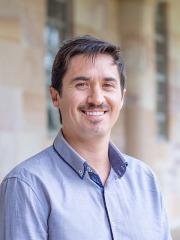
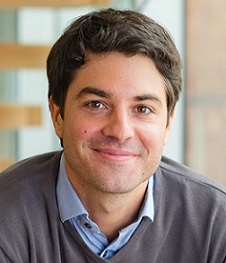
Sander Muns is a Researcher at Tilburg University's Economics Department within the Tinbergen Institute . His work focuses on pension economics, labor economics, and welfare economics, with significant contributions to understanding pension risk allocations, demographic challenges, and wealth redistribution mechanisms in the Netherlands context. Expertise: Pension systems, life-cycle consumption, capital market impacts, and population dynamics External Roles: Researcher at SCP (Social Cultural Planning Office) since 2023 Key Collaborations: Interdisciplinary work with actuarial scientists, social policy experts, and public finance researchers Muns' research explores how pension systems can achieve Pareto-optimal risk allocations and how population decline affects labor markets and welfare policy. His work has been cited in Dutch policy discussions and academic journals. Current projects examine home equity utilization for retirement consumption smoothing and demographic shifts' implications on social security systems. His research output spans from 2007 to 2025 with particular activity in recent years.
Jeffrey R. Brown is the Josef and Margot Lakonishok Professor of Business and Dean of the Gies College of Business at the University of Illinois at Urbana-Champaign. He also serves as Director of the National Bureau of Economic Research (NBER) Retirement Research Center and previously led the Center for Business and Public Policy. His expertise spans macroeconomics, finance, and political economy, with a focus on retirement security, public insurance markets, and policy design. Education: Brown holds a PhD in Economics from MIT (1999), an M.P.P. from Harvard (1995), and B.A. degrees in Economics and Political Science from Miami University (1990). He has held roles at the White House Council of Economic Advisers, the Social Security Advisory Board, and as a consultant to federal agencies and financial firms. Research Interests: His work examines the intersection of public and private insurance markets, particularly retirement-related topics like annuities, pensions, Social Security, and long-term care. He explores behavioral economics barriers to optimal retirement planning and the impact of tax policies on savings behavior. Publications: Brown’s recent work analyzes trends in retirement income strategies, political connections and firm value, and the effects of policy interventions on consumer decisions. His articles appear in leading journals such as the Review of Economics and Statistics and Journal of Financial Economics . Awards: He has received prestigious honors including the Paul A. Samuelson Award and Lumina Award. His leadership roles include trustee positions at TIAA and advisory roles at the Brookings Institution’s Tax Policy Center. Administration & Governance: As Dean, Brown oversees strategic initiatives and academic programs. He also chairs the TIAA Audit Committee and contributes to policy discussions through roles at the Center for Audit Quality and UI Singapore Research LLC.
Yogi Vidyattama is an Associate Professor at the Canberra School of Politics, Economics and Society, University of Canberra. He specializes in spatial microsimulation modeling, economic growth, income distribution, and fiscal decentralization. Previously affiliated with the University of Indonesia, he contributed to regional economic analysis in Indonesia. His research focuses on linking economic policies with spatial outcomes, including corruption determinants, healthcare access, and disaster resilience. Education: PhD in Patterns of Provincial Economic Growth from Australian National University (2008), Master's from ANU (2003), and Bachelor's in Fiscal Decentralisation from University of Indonesia (2000). Research interests include microsimulation modeling, regional economic disparities, and policy impacts. He has led 49 projects, including studies on electric vehicle policy, disaster capability mapping, and regional fast rail economic impacts. His work contributes to UN SDGs related to economic growth, inequality reduction, and disaster resilience. Publications span over 117 outputs, analyzing topics like Indonesia's regional corruption, Australian housing crises, and pandemic policy effects. Awards and recognitions are unspecified, but his roles in executive councils of ANZRSAI and PRSCO highlight peer recognition. Advised 10 students and maintains NATSEM's spatial models and GIS systems.
Alex Michaelides is a Professor of Finance at Imperial College Business School since 2013 and a Research Fellow at CEPR (International Macroeconomics and Financial Economics Programmes). He holds affiliations with Imperial's Energy Futures Lab and Language and Communication Intelligence initiatives. Previously, he served at the London School of Economics (LSE) as Lecturer (2001-2006) and Associate Professor (2006-2010), and at the University of Cyprus as Professor of Finance (2010-2014). He earned his PhD in Economics from Princeton University (1997) and BA in Economics from Harvard (1993). His research focuses on household finance (e.g., life-cycle portfolio choice), asset pricing with heterogeneous agents, housing markets, and macro-finance intersections. Notable work includes analyses of pension systems, sovereign debt crises (e.g., Cyprus), and banking system dynamics. He has held visiting roles at the Federal Reserve Bank of New York, ECB, and served on the Central Bank of Cyprus' board (2013-2014). Leadership roles include Head of Finance at Imperial (2014-2021) and Director of Postgraduate Studies (since 2023). His work bridges theoretical models with policy-relevant insights, addressing fiscal procyclicality, central bank independence, and climate regulatory impacts.
Dr. Jorge Miranda-Pinto is a Senior Lecturer at the School of Economics within the Faculty of Business, Economics and Law at the University of Queensland. He is also a Research Associate at the ANU Centre for Applied Macroeconomic Analysis (CAMA) and an Affiliate of the Centre for Efficiency and Productivity Analysis. His research focuses on applied macroeconomics, international economics, and macroeconomic theory, with an emphasis on business cycle fluctuations, production networks, fiscal policy transmission, and sectoral shifts. He holds a PhD in Economics from the University of Virginia (2017). Educations: PhD in Economics (University of Virginia, 2017) His research explores the role of firm and household heterogeneity in shaping macroeconomic volatility and the effects of fiscal stimulus. Recent work includes analyzing commodity price shocks, service trade impacts, and monetary policy transmission mechanisms. He has contributed to projects such as the ARC-funded study on unobserved networks in macroeconomic fluctuations (2022–2025). Publications highlight interdisciplinary approaches to understanding economic dynamics, including articles on production networks, business cycle asymmetry, and trade credit effects. His work bridges theoretical models with empirical applications, addressing global economic challenges. Grants: ARC Discovery Project (2022–2025) Miranda-Pinto collaborates with institutions like the IMF and Federal Reserve Bank of Cleveland, reflecting his engagement with policy-relevant research. He is available for academic supervision and media commentary on macroeconomic topics.
Paula Lopes-Cocco is Associate Professor (Education) in the Department of Finance at the London School of Economics. Her research examines household financial decision-making, particularly retirement saving strategies, pension choices, and credit behaviors.
Umut Oguzoglu is a Professor of Economics at the University of Manitoba , with a longstanding affiliation as a Research Fellow at IZA . His research spans labour economics , health economics , economics of education , and applied microeconometric methods . PhD, Economics, University of Guelph MA, Economics, University of Guelph BA, Economics, Marmara University His methodological expertise includes panel data analysis , dynamic modeling , and instrumental variable techniques . Recent projects examine: Intergenerational health behavior transmission Physician relocation impacts on healthcare Sibling sex composition and STEM major choices COVID-19's effect on traffic accidents Gambling-community economic linkages Scientific awards include the 2020 Best Paper Prize from The Economic Record. He has supervised 3 PhD students, 13 MA/MSc students, and served on 16 thesis committees. Major grants include: SSHRC Partnership Grant (2020-2027) for poverty solutions CIHR grant (2020-2023) for lupus employment research Manitoba Gambling Research Program grant (2015)
Erzo F.P. Luttmer is the Dartmouth Professor of Economics at Dartmouth College and a Research Associate at the National Bureau of Economic Research (NBER) and Research Fellow at the Institute for the Study of Labor (IZA). He earned his Propedeuse Degree from Delft University of Technology, M.A. from Erasmus University, and Ph.D. from Harvard University. His research focuses on understanding the drivers of redistribution and social insurance demand, emphasizing social effects and cognitive limitations in economic behavior. Key areas include behavioral economics, policy design, and welfare cultures. He has served as editor of the American Economic Review and collaborates with institutions like the Harvard School of Public Health. His articles explore topics such as annuity valuation, Medicaid’s value, and Social Security perception, with methodologies including field experiments and regression discontinuity designs. Notable contributions include analyzing peer-to-peer lending dynamics and the impact of health on consumption utility. Dr. Luttmer’s work bridges theoretical models with empirical evidence, addressing policy implications for taxation, insurance, and social welfare systems. His affiliations and editorial roles reflect his significant contributions to academic discourse in economics.
Professor Isabella Dobrescu is Head of the School of Economics at the University of New South Wales (UNSW) Business School and co-chair of the STEP UP initiative in Education. She serves as an editor for the Journal of Pension Economics & Finance and maintains an active research program spanning labor economics, public finance, health economics, and applied econometrics. Her educational background includes a Ph.D. in Economics with Honors from the University of Padua (2009), an M.Sc. in Economic Mathematical Modeling Summa cum Laude from West University of Timisoara (2005), and dual bachelor's degrees in Economics from Nottingham Trent University and Finance Summa cum Laude from West University of Timisoara (2003). Dobrescu's research has evolved from structural work on consumption and saving dynamics to pioneering applications combining theory, empirical analysis, and randomized controlled trials to improve educational outcomes through technology. Her recent work focuses on financial literacy interventions for high school students through the STEP UP program, while maintaining her longstanding research on aging populations, retirement decision-making, and risk behavior. Her publication portfolio demonstrates consistent output across labor economics, health economics, and applied econometrics, with recent emphasis on educational technology interventions and financial decision-making in retirement contexts. The research shows methodological diversity spanning structural modeling, nonparametric partial identification techniques, and experimental approaches. UNSW Business School Research Impact Award (2021) UNSW President's Award for Building Collaborations (2019) UNSW Scientia Education Fellowship (2017) Australian Government Office of Learning & Teaching Citation (2016) ARC Early Career Research Fellowship (2012) Dobrescu has secured over AU$2.5 million in competitive research funding since 2010, including major ARC Linkage grants and substantial UNSW strategic investments. She leads the STEP UP initiative which has received over AU$650,000 in funding for financial literacy outreach programs. Her collaborative approach is evident in numerous multi-investigator projects with colleagues including Bateman, Thorp, Motta, and Newell across economics, finance, and education domains. As Head of the School of Economics and co-chair of STEP UP, Dobrescu leads research teams focused on educational interventions using technology, retirement decision-making, and the economics of aging. Her Playconomics platform represents a significant innovation in experiential economics education, receiving media coverage from major outlets including The Sydney Morning Herald and The Australian.
Anders Stenberg is a Professor of Economics at Stockholm University , where he works at the Swedish Institute for Social Research (SOFI) . His research focuses on Labor Economics and Education Economics , with particular attention to gender dynamics, policy evaluation, and socioeconomic outcomes. Co-leader of the Labor Economics (AME) research unit Member of the GAINS (Gender Analysis and Interdisciplinary Network, Stockholm) group His work examines: Causal effects of educational content on voter turnout and health outcomes Policy impacts of domestic services subsidies on immigrant labor market integration Long-term consequences of upper secondary school programs Evaluations of Higher Vocational Education in Sweden Interactions between gender identity and household income dynamics Recent publications demonstrate his expertise in: 2024 - Intergenerational educational spillovers and mental health economics 2023 - High school specialization and earnings trajectories 2022 - Gender income dynamics and adult education effectiveness 2012-2017 - Longitudinal studies on education-policy interactions
Lawrence D. W. Schmidt is the Victor J. Menezes Career Development Assistant Professor of Finance at the MIT Sloan School of Management. He holds a PhD and MA in Economics from the University of California, San Diego, and previously served as an Assistant Professor at the University of Chicago’s Kenneth C. Griffin Department of Economics. His research bridges finance and macro-labor economics, focusing on household risk exposures, institutional investor behavior, and labor market dynamics. Key areas include human capital valuation, asset pricing implications of labor market risks, and the design of retirement savings institutions. Education: BA, University of California, Santa Barbara; PhD and MA, University of California, San Diego. Research Interests: Human capital risk and asset pricing Income inequality and retirement savings disparities Big data analysis of labor and financial markets Policy design for financial welfare Recent Trends in Publications: Schmidt’s work increasingly emphasizes the interplay between technological change and labor market outcomes, particularly in quantifying risks faced by workers and the implications for financial markets. His studies on retirement savings inequities highlight racial and socioeconomic disparities in wealth accumulation, informed by large-scale administrative datasets. Awards: 2024 Dimensional Fund Advisors Prize 2015 AQR Top Finance Graduate Award Advising & Grants: Collaborations with institutions like NBER and MIT Sloan reflect his focus on policy-relevant research. His work often involves interdisciplinary teams, as seen in co-authored papers on employer 401(k) practices and technology-driven labor displacement. Labs/Teams: Active contributor to the MIT Sloan Consumer Finance Initiative, which explores household finance and policy solutions for economic stability.
Marcel Fratzscher serves as President of the German Institute for Economic Research (DIW Berlin) and Professor of Macroeconomics at Humboldt University of Berlin. He holds membership on the Advisory Board of the German Federal Ministry for Economic Affairs and Energy and maintains a prominent public presence as a columnist for Zeit Online, Financial Times, and Project Syndicate. His research spans macroeconomics, financial markets, economic inequality, European integration, monetary policy, and gender distribution. Fratzscher critically examines the social market economy, focusing on how economic policies affect inequality across demographic groups. His expertise includes pension systems, labor market dynamics, migration economics, and climate policy impacts on industry. His approach combines rigorous academic analysis with practical policy recommendations, often challenging conventional wisdom in economic discourse. Fratzscher's recent publications reveal a consistent thematic focus on economic inequality and social justice. His articles analyze paradoxical trends like falling wage inequality alongside rising overall income inequality, discrimination in the workplace (including weight-based discrimination), and the economic costs of social issues like crime fear and gender-based violence. He consistently advocates for policy reforms in pension systems, minimum wage structures, migration policy, and housing markets. As an advisor and public intellectual, Fratzscher bridges academic research and policy implementation. His recommendations often challenge conventional wisdom, such as his arguments against the notion that migration is economically costly or that minimum wage increases necessarily harm employment. He has proposed innovative solutions like the 'Boomer solidarity tax' to address old-age poverty without burdening younger generations. Fratzscher leads DIW Berlin, one of Germany's premier economic research institutions, where he oversees research on critical economic and social issues facing Germany and Europe. The institute's Socio-Economic Panel (SOEP) provides longitudinal data that informs much of his research on inequality and social dynamics. Under his leadership, DIW Berlin continues to shape economic policy debates through evidence-based analysis and forward-looking recommendations.
Benjamin Faber is an Associate Professor of Economics at the University of California, Berkeley, affiliated with the Department of Economics within the College of Letters and Science. His research focuses on international and development economics, exploring topics such as rural-urban migration, spatial inequality, e-commerce impacts, and responsible sourcing policies. He has held positions since 2013, including teaching graduate and undergraduate courses in development economics and international trade. Faber has organized numerous seminars including the Berkeley International Econ Seminar and Trade Work in Progress Seminar, fostering academic collaboration. His work appears in top journals like the Quarterly Journal of Economics and Review of Economic Studies, addressing welfare measurement, firm heterogeneity, and spatial economic dynamics. Notable contributions include analyzing China's highway system effects and Mexico's tourism impacts. His research often bridges theory with empirical evidence, emphasizing policy-relevant outcomes in developing economies. Education details are not explicitly listed in the provided materials, but his academic trajectory is evident through his prolific publication record and teaching roles since 2013. Faber's affiliations include the National Bureau of Economic Research (NBER) and Center for Economic Policy Research (CEPR), with his work frequently featured in policy platforms like VoxDev.org and the World Trade Report. His research questions address critical contemporary issues such as the distributional impacts of globalization and the role of digital technologies in reducing rural-urban divides. Advising and grants information is not specified, but his extensive collaborations with global institutions and co-authors from universities like MIT, Yale, and Peking University highlight his network-driven research approach. Faber's work is methodologically rigorous, combining large-scale data analysis with theoretical frameworks to inform policy decisions on migration, trade, and development interventions.
Colin M. Ramsay is a Professor in the Department of Finance at the Edwin J. Faulkner College of Business, University of Nebraska-Lincoln. His expertise lies in actuarial science, focusing on risk theory, pensions, health and disability insurance, and micro-insurance applications. B.Sc., City University, London M.Math. and Ph.D., University of Waterloo Ramsay’s research integrates economic principles into actuarial science, addressing challenges like the annuity puzzle, moral hazard, and adverse selection in insurance markets. He also explores peer-to-peer insurance and food security in developing regions. Recent publications highlight innovative annuity designs, LTC funding strategies, and stochastic modeling of insurance risks. His work spans theoretical advancements in ruin probability calculations and practical applications in funeral insurance and agricultural sustainability in the Caribbean. Ramsay teaches graduate and undergraduate courses in life contingencies and pension mathematics, emphasizing probabilistic models and actuarial assumptions.
Phillip B. Levine serves as the Katharine Coman and A. Barton Hepburn Professor of Economics at Wellesley College, with active affiliations as a Nonresident Fellow at the Brookings Institution and Research Associate at the National Bureau of Economic Research (NBER). His academic home is firmly within Wellesley's Department of Economics, where he teaches core statistics and econometrics courses alongside specialized policy-focused seminars. Levine's research spans critical social policy domains including fertility economics, college pricing systems, and childhood poverty interventions. His methodological signature involves rigorous statistical analysis of real-world policy impacts, particularly regarding disadvantaged youth. Key contributions include seminal work on abortion policy effects, retirement behavior during economic crises, and the disconnect between college sticker prices and actual affordability. His influential publications include the books Sex and Consequences: Abortion, Public Policy, and the Economics of Fertility , Targeting Investments in Children (co-edited), and A Problem of Fit: How the Complexity of College Pricing Hurts Students . Recent scholarship (2022-2025) reveals intensifying focus on declining US fertility rates, racial wealth gaps in college access, and post-pandemic birth trends, with frequent appearances in top economics journals. As founder and CEO of MyinTuition Corp., Levine bridges academic research and practical application through a simplified financial aid calculator now adopted by dozens of institutions. His policy commentary reaches broader audiences via New York Times , Washington Post , and major broadcast networks, demonstrating exceptional translation of complex economics into public discourse.