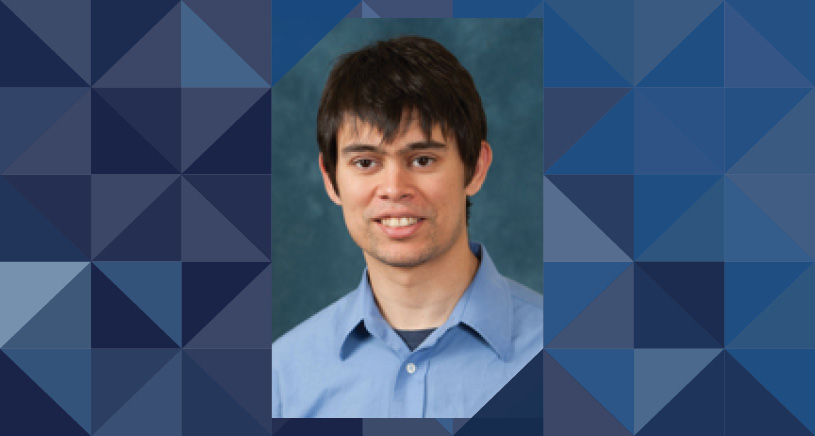
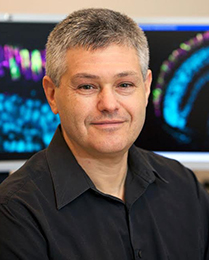
Professor Karsten Mueller is a distinguished researcher in cognitive neurology and neural data science at the Max Planck Institute for Human Cognitive and Brain Sciences in Leipzig, Germany. He holds the position of Associate Professor at Leipzig University's Faculty of Medicine and serves as a faculty member at both the International Max Planck Research School on Neuroscience of Communication (IMPRS NeuroCom) and the International Max Planck Research School on Cognitive NeuroImaging (IMPRS CoNI). Additionally, he has been appointed as a Visiting Professor at the First Faculty of Medicine at Charles University in Prague since 2025. His work focuses on advanced neuroimaging techniques to understand brain structure and function in various neurological conditions. Dr. Mueller received his Dr. habil. degree in Cognitive Neurology from Leipzig University's Faculty of Medicine in 2006, the same year he became a Private lecturer (Privatdozent) at the institution. His academic journey includes a postdoctoral position from 1999 to 2008 at the Department of Cognitive Neurology, Max Planck Institute for Human Cognitive and Brain Sciences, under the supervision of D.Y. von Cramon. In 2015, he was awarded the title of Apl.-Professor (Associate Professor) at Leipzig University, recognizing his significant contributions to the field. Professor Mueller's research spans several critical areas in cognitive neuroscience and neuroimaging. His primary focus is on understanding brain connectivity and structure in neurological disorders, particularly Parkinson's disease, frontotemporal dementia, and the effects of deep brain stimulation. He leads the Methods and Development Group for Neural Data Science and Statistical Computing, where his team develops advanced computational approaches for analyzing complex neuroimaging data. His work bridges clinical neurology with cutting-edge data science, creating innovative methods to extract meaningful insights from brain imaging studies. This interdisciplinary approach has led to significant contributions in understanding how neurological conditions affect brain networks and cognitive functions. Analysis of Professor Mueller's recent publication record reveals a strong emphasis on applying advanced computational and machine learning techniques to neuroimaging data. His research consistently explores the relationship between brain structure/function and various neurological conditions, with particular attention to Parkinson's disease, frontotemporal dementia, and stroke recovery. A notable trend is his increasing use of artificial intelligence and deep learning approaches to improve diagnostic accuracy and understand disease progression. His work also demonstrates a growing interest in connecting peripheral biomarkers (like retinal imaging) with central nervous system changes, suggesting a more holistic approach to understanding neurological disorders. The collaborative nature of his research is evident through numerous international partnerships, particularly with institutions in Prague. Professor Mueller leads the Methods and Development Group for Neural Data Science and Statistical Computing at the Max Planck Institute. This team focuses on developing innovative computational approaches for analyzing complex neuroimaging datasets. Their work encompasses statistical modeling, machine learning applications, and the creation of open-source tools for the neuroscience community. The group collaborates extensively with clinical researchers to translate advanced data analysis techniques into meaningful clinical insights, particularly in the areas of movement disorders, dementia, and brain connectivity research.