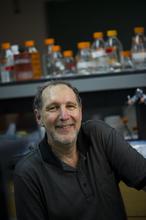
John Spudich
استاد · Light sensors and photosensory transduction
The University of Texas Health Science Center at Houstonمعرفی
John Spudich, PhD is a Professor and Director of the Center for Membrane Biology at The University of Texas Health Science Center at Houston, where he holds the prestigious Robert A. Welch Distinguished Chair in Chemistry. His academic appointments span the Molecular and Translational Biology and Neurosciences Graduate Programs, reflecting the interdisciplinary nature of his work.
Dr. Spudich's research focuses on microbial sensory rhodopsins, particularly their molecular mechanisms and applications as molecular tools for research and gene therapy. His laboratory made the groundbreaking discovery of natural light-gated anion channels (ACRs), which has opened new pathways for neural inhibition in both research and clinical applications. His work bridges fundamental biophysics with translational medicine, with applications ranging from vision restoration to neurological disorder treatments.
His publication record demonstrates consistent high-impact contributions to the field, with key publications in Science, PNAS, and Annual Review of Biochemistry. These works have established foundational knowledge in microbial rhodopsin diversity, mechanisms, and optogenetic applications.
- Robert A. Welch Distinguished Chair - A prestigious endowed position recognizing exceptional contributions to chemistry
- Fellow of the American Academy of Arts and Sciences - Election to one of America's oldest and most prestigious honorary societies
- President of the International Union of Photobiology - Leadership role in advancing research on light's role in biology and photomedicine
Dr. Spudich actively translates basic research into clinical applications, with his work on anion channelrhodopsins directly informing ongoing clinical trials for vision restoration and potential treatments for neurological disorders. His laboratory implements photochemistry, structural biology, and biophysical methods to elucidate atomic structure/function relationships in sensory rhodopsin activation, while developing methods for studying their function in animal cells and purified systems.