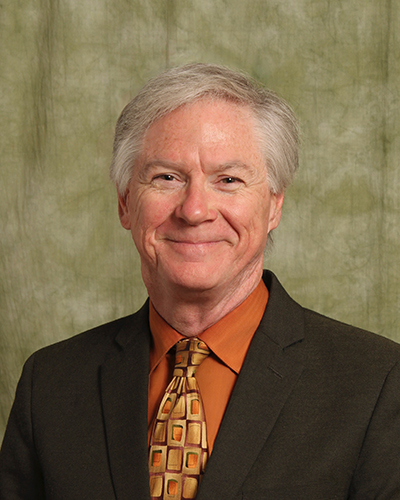
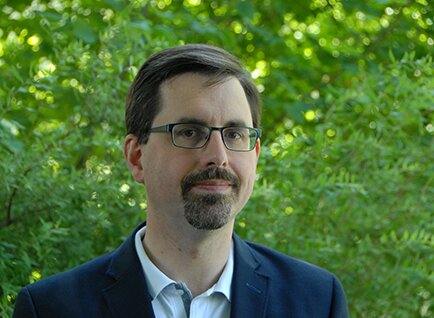
Professor Jennifer Ingleheart is a Professor in the Department of Classics and Ancient History at Durham University. Her research focuses on Latin poetry (particularly Ovid and Catullus), the reception of Roman culture, and the history of sexuality. She holds a D.Phil. from Oxford and has held previous roles in the U.S., University of Wales, and Oxford colleges. Her work explores how ancient Roman homosexuality influenced modern identity formation, evident in her monograph Masculine Plural: Queer Classics, Sex, and Education (2018). She has curated exhibitions on censored classics and organized major conferences on 'Romosexuality'. Her publications include commentaries on Ovid's Tristia , edited volumes on exile and reception, and essays on topics like Ovid's erotic poetry and queer classicism in education. She actively engages in public outreach, delivering talks on Ovid's Amores and the history of sexuality. Her research spans classical texts' translation history and their role in constructing modern LGBTQ+ identities. Professor Ingleheart has supervised students on Latin poetry and its reception, particularly in contexts of homosexuality. Her grants include British Academy funding for the 'Romosexuality' conference, and she has contributed to BBC documentaries and school-level classical education materials.
John H. Starks, Jr. serves as Associate Professor in Middle Eastern and Ancient Mediterranean Studies at Binghamton University, with additional appointments in Residential Life and as Collegiate Professor of Newing. His scholarly work bridges classical studies with critical examinations of ethnicity and performance in antiquity. His academic credentials include: BA from Washington and Lee University MA and PhD from University of North Carolina at Chapel Hill Starks specializes in Greek and Roman Comedy , examining theater history through gendered and performative lenses. His research on Non-"Western" Ethnicity pioneers studies of African and Levantine identities in the Ancient Mediterranean, while his epigraphic work reveals social structures through Greek and Latin inscriptions. Additional expertise spans Hellenistic social history and Roman historiography, particularly Greek perspectives on Rome. Publication trends show interdisciplinary innovation: combining literary analysis with social anthropology (Terence in political context), challenging Eurocentric narratives (beauty standards in Vandal Africa), and recovering marginalized voices through material evidence (pantomime actresses in inscriptions). His accolades include: Binghamton University Council/Foundation Award for Faculty Service Chancellor's Award for Excellence in Teaching CAAS and New York Classical Club grants for "The Ghoul Next Door" musical comedy project Vassar College's Blegen Research Fellowship Two Women's Classical Caucus Best Article Awards (2010, 2015) Starks has secured significant grant funding for creative scholarship like "The Ghoul Next Door" adaptation, while his teaching excellence award reflects commitment to courses spanning Cleopatra studies, ancient satire, and race/ethnicity in antiquity. Though student advising details aren't publicized, his curriculum vitae indicates extensive mentorship in Latin/Greek language instruction and specialized seminars on women in ancient theater. No dedicated research labs or institutional teams are documented in available materials.
Dr. Jeremia Pelgrom is an Assistant Professor in Ancient History at the University of Groningen's Faculty of Arts. His research focuses on Roman Republican colonialism, rural history, and Hellenistic Italy. He directs projects such as the Landscapes of Early Roman Colonization (NWO-funded) and co-leads the Settler Colonial Paradigms network (SECOPS), exploring the long-term structures of Western colonialism. Pelgrom has held roles including Director of Ancient Studies at the Royal Netherlands Institute in Rome (2012–2018) and co-directed the Mapping the Via Appia project. His work integrates archaeology, history, and comparative studies to analyze colonial strategies and their modern legacies. Education: PhD in Ancient History (Leiden University, 2012) with a thesis on Roman colonial landscapes. Key projects include comparative analyses of classical and Hellenistic colonization, funded by NWO and collaborative initiatives. He also engages in interdisciplinary research on settler colonialism's historical roots and legal frameworks, notably through the Renaissance of Roman Colonization study. Research Interests: Roman imperialism, colonialism in antiquity, rural settlement patterns, and the reception of classical models in modern colonial discourse. Pelgrom's work bridges ancient and modern contexts, examining how ancient colonial paradigms influenced later colonial practices. His fieldwork includes surveys in southern Italy and the Via Appia corridor. Publications Highlight: Recent studies (2023–2024) focus on Daunian population centers, Roman colonial landscapes, and comparative colonial strategies. His work often employs GIS and legacy data analysis to reconstruct ancient settlement dynamics. Pelgrom collaborates with international teams on projects like the Ancient Colonization comparative platform (www.ancientcolonisation.nl). Grants & Leadership: Secured NWO grants for LERC and MaVA projects. Serves as co-director of SECOPS and contributes to the Colonialism as a Structure theme group at Groningen. His research emphasizes methodological innovation in archaeology and interdisciplinary dialogue. Labs/Teams: Active in the Crasis ancient colonialism network and collaborates with the Royal Netherlands Institute in Rome. Projects like Santa Prisca involve re-examining legacy excavation data to uncover new insights into Roman urban and religious landscapes.
Jan Bernhard Meister is a Professor at the University of Bern, where he holds an SNF Eccellenza Professorship since 2019. After completing his PhD in Ancient History at the University of Basel (2010) and habilitation at Humboldt-Universität zu Berlin (2018), he focuses on historical-anthropological research spanning the Greek Archaic period, late Republican and Imperial Rome, and Late Antiquity. Epochal Focus: Greek Archaic Period, Late Republican Rome, Imperial Rome, Late Antiquity, Early Medieval. His research integrates reception history into themes like political culture , social differentiation , and body symbolism . He has published extensively on Roman imperial bodies, Greek aristocracy, and cultural communication mechanisms. Meister co-coordinates the European Network for the Study of Archaic Greece, a successor to a DFG-funded network. Scientific Awards: SNF Eccellenza Fellowship.
Henrik Mouritsen is a Professor of Roman History at King's College London, based in the Department of Classics within the Faculty of Arts & Humanities. His research focuses on the political history of the Roman Republic, Roman slavery and manumission, Pompeii, Latin epigraphy, and the reception of antiquity. Previously, he held a Leverhulme Major Research Fellowship (2005–2008) and led an AHRC-funded digital prosopography project on the Roman Republic. He has served as Head of the Department of Classics (2009–2013). His work bridges ancient and modern historiography, emphasizing cultural change and social structures in Roman Italy. Education: PhD on Pompeii, Denmark Postdoctoral research at University of Cambridge and UCL Lectureship at University of Leicester before joining King’s in 1999 Research Interests: Mouritsen explores the political dynamics of the Roman Republic, including local governance in Italy, slavery, and the reception of ancient texts. His projects integrate epigraphic and archaeological evidence to reconstruct social hierarchies and elite networks. Recent work examines populism in ancient Rome and its parallels with modern contexts. Grants & Awards: Leverhulme Major Research Fellowship (2005–2008) Lead Investigator for AHRC-funded 'Digital Prosopography of the Roman Republic' (2013–2016) Labs/Teams: Directs the Prosopographic Database of the Roman Republic , a collaborative digital resource for scholarly research.
Jaclyn Neel is an Associate Professor in the College of the Humanities at Carleton University, affiliated with the Department of Classics and Religious Studies. She holds a B.A. from Columbia University and a combined M.A./Ph.D. in Classics and Ancient History from the University of Toronto. Her academic work bridges classical scholarship, historiography, and cultural studies. B.A., Columbia University M.A./Ph.D., University of Toronto (Collaborative Program in Ancient History) TESL-Canada Diploma, 2011 Her research focuses on Roman mythology, political discourse, and the legacy of antiquity in modern culture. She explores how myths like those of Romulus, Tarpeia, and early kingship were used to shape Roman identity and political ideology. Her work combines literary analysis, historical interpretation, and gender theory, particularly in examining concepts like toxic masculinity and republican values. Her recent publications demonstrate a strong trend in analyzing mythic narratives within historical texts, especially in how figures such as Tarpeia or the Vibennae reflect broader societal concerns about loyalty, gender, and power. She frequently publishes in leading journals like Journal of Roman Studies , Mnemosyne , and Classical Quarterly , and has authored two major monographs: Legendary Rivals (2014) and Early Rome: Myth and Society (2017). Her scholarship often engages with interdisciplinary themes, including memory studies, rhetoric, and reception theory. Jaclyn Neel teaches a range of courses including Rise of the Roman Empire , Rome of the Caesars , and multiple levels of Latin language instruction. She contributes to academic life through course development, student mentorship, and participation in departmental events and publications.
Anthony Corbeill is the Basil L. Gildersleeve Professor of Classics and Interim Chair in the Department of Classics at the University of Virginia. He is a leading scholar in Roman cultural history, with a focus on rhetoric, sexuality, gesture, and language. Previously, he taught for 26 years at the University of Kansas before joining the University of Virginia in 2017. Research Interests: Roman Rhetoric and Oratory Grammatical and Biological Gender in Ancient Rome Ancient Gesture and Body Language Political Humor and Invective Roman Religion and Prodigies Cicero and Caesar Studies Roman Educational Practices His recent publications reflect a deep engagement with Cicero’s speeches, Roman declamation, religious practices, and gender. The articles demonstrate a consistent focus on rhetorical strategies, textual interpretation, and cultural symbolism in late Republican Rome. His work often bridges literary analysis with social and political history. Scientific Awards: Charles J. Goodwin Award of Merit (2016) from the Society for Classical Studies for Sexing the World Outstanding Academic Book of 1997 ( Choice ) for Controlling Laughter Corbeill has held prestigious fellowships including the Rome Prize from the American Academy in Rome (1994–1995), and has served as editor of Memorials of the American Academy in Rome and as a Trustee (2014–2016). He has held visiting appointments at Oxford, Michigan, Wisconsin, Vassar, and the Institute of Classical Studies in London. He was a SCS Fellow to the Thesaurus Linguae Latinae in Munich early in his career. No information is available about advising students or leading a lab or research team.
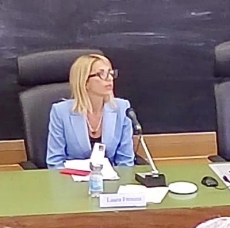
Laura Frosina is an Associate Professor of Comparative Public Law (IUS/21) at the Department of Political Science, Sapienza University of Rome. She teaches courses such as States, Autonomies and Separatisms in the Master's program in International Relations and Comparative Public Law in the undergraduate program in International Cooperation and Development. She is a member of the Doctoral Faculty in Public, Comparative, and International Law and actively participates in national and international research projects. PhD in Theory of the State and Comparative Political Institutions, Sapienza University of Rome (2005) Laurea in Political Science (with honors), Sapienza University of Rome (2000) Postgraduate Course in Assembly Consultants, Sapienza University of Rome (2001) Her research centers on comparative constitutional law, with a strong focus on Spain, Italy, and Latin America. Key themes include multilevel governance, European Union institutions, separatism, autonomy, federalism, parliamentary systems, and constitutional reforms. She analyzes political-constitutional crises, emergency powers, and the evolution of democratic institutions in pluralistic societies. Her work frequently examines the interplay between law, politics, and institutions in contexts of territorial tension. The most recent articles highlight a sustained scholarly engagement with Spanish constitutional dynamics, particularly around the Catalan independence movement, coalition governments under Sánchez, judicial-political conflicts, and broader EU institutional challenges. Trends include the analysis of secession referendums, emergency governance during the pandemic, urban constitutionalism, and the transformation of party systems. Her publications appear in specialized journals such as Nomos , Federalismi.it , and Revista de Derecho Constitucional Europeo , as well as in edited volumes from major academic publishers. Member, Editorial Board of Nomos (since 2001) Responsible, Critical Reviews Section, Nomos (since 2014) Member, Editorial Board, Federalismi.it (2006–2010) Member, Editorial Board, Focus America Latina , Federalismi.it (since 2009) Member, Editorial Board, Quaderni di Nomos (since 2012) Member, Editorial Board, Rivista di Diritto pubblico comparato ed europeo (since 2022) Principal Investigator, Cities and Models of Governance in the 21st Century (Sapienza SEED PNR Project, 2022–2025) Member, Large Ateneo Research Project Following Constitutional Law No. 1/2020, which Parliament? (Sapienza, 2022) Laura Frosina has been involved in numerous research projects funded by the Italian Ministry of Education, Universities and Research (MIUR), CNR, Sapienza University, and the European Committee of the Regions. She has served as a research fellow and principal investigator on topics including intergovernmental cooperation, EU multilevel governance, democratization in South Asia, and urban governance. She has collaborated with the Center of Excellence Integración Europea y Globalización at the University of Granada and participated in international training programs for parliaments in the Balkans. Her academic work bridges doctrinal legal analysis with political science perspectives, contributing to both theoretical and policy-oriented debates. She is affiliated with the Association of Comparative and European Public Law and has coordinated academic events and seminars, including tributes to her mentor Fulco Lanchester. Her institutional page lists regular office hours and remote availability via Google Meet, indicating active engagement with students and the academic community.
Daniele Miano is a Professor of History at the University of Oslo , specializing in the history and historiography of early Rome and Italy. He focuses on public monument construction in mid-Republican Rome and the interplay between myth and history in ancient texts. His research also explores the diversity of ancient gods and goddesses, particularly in Italy, using historical semantics to interpret their significance. Education: Sapienza University of Rome (BA), Scuola Normale Superiore (PhD 2013). His work includes editing Myth and History in the Historiography of Early Rome and Gods and Goddesses in Ancient Italy , and contributing to Brill's New Jacoby . He is currently co-editing the forthcoming Handbook of Universal History Writing (Oxford University Press). His teaching courses at the University of Oslo include studies on Alexander the Great, the Roman Empire, and ancient deities.
Thibaud Lanfranchi is a Lecturer at Université Toulouse - Jean Jaurès, affiliated with the research team Patrimoine, Littérature, Histoire (PLH). His academic background includes studies at the École normale supérieure de Lyon and membership in the French School of Rome. His research focuses on: Political and social history of the Roman Republic Evolution of Roman institutions and legal systems Pre-Roman Italian societies Historiographical methodologies in ancient history Reception of classical political concepts in modern scholarship Lanfranchi's publications exhibit consistent focus on Republican-era power structures, particularly the tribunate of the plebs and transitions from monarchy to republic. Recent work engages with anthropological reinterpretations of human history and critical analysis of German historiographical influence in French academia. He collaborates regularly with scholars like Clément Bur on projects examining governance models and social mobility in ancient Rome. Lanfranchi co-organized the 2024 conference Gouverner par le conseil and contributes to the Libera Res Publica publication series.
Lucia Rossi is a Lecturer in Ancient History at the University of Paris 1 Panthéon-Sorbonne, where she has held her current position since September 2020. Previously, she served as a lecturer at multiple institutions including the University of Évry-Val-d'Essonne, University of Rouen, and Aix-Marseille University, while also teaching classical literature at secondary institutions. Her academic journey includes a doctorate in History from Aix-Marseille University and Sapienza University of Rome, complemented by research-focused master's degrees from the University of Naples Federico II. Research interests focus on Mediterranean historical dynamics including: Piracy and coastal security systems in the Eastern Mediterranean Trade networks connecting Asia Minor, Cyprus, and Egypt Economic structures of Hellenistic and Roman Egypt Wheat transportation logistics and commercial practices She is affiliated with ANHIMA research programs exploring territorial organization, economic exchanges, and cultural transfers in antiquity. Publications emphasize economic history through epigraphic analysis, particularly examining grain trade infrastructure, merchant networks, and Nile security systems. Her articles consistently analyze institutional frameworks governing Mediterranean commerce. No scientific awards are documented. Current projects include forthcoming publications on Memphis as a Hellenistic frontier port and a monograph on Egypt-Rome wheat trade routes.
Anne Hrychuk Kontokosta is a Visiting Assistant Professor at New York University's College of Arts and Science. She holds a Ph.D. (2010) and M.A. (2003) in History of Art and Archaeology from NYU, and a B.A. (1999) in Anthropology and Classics from the University of Alberta. External Affiliations: Archaeological Institute of America, College Art Association, Society of Architectural Historians, Universities Art Association of Canada, Institute of Fine Arts Alumni Association (Board Member) Research Focus: Her work investigates Roman art, architecture, and urbanism with emphasis on Rome's topography, construction technologies, social history, and ancient architectural treatises. She explores how material culture reflects sociopolitical dynamics and economic systems. Publication Trends: Recent research spans Roman bathing culture, gladiatorial monuments, and architectural innovation, with fieldwork in Turkey and Italy. Her work bridges physical monuments, epigraphic evidence, and theoretical frameworks. Scientific Awards & Fellowships Research Associate, Institute for the Study of the Ancient World (2012-15) Social Sciences and Humanities Research Council of Canada Doctoral Fellowship (2009) Sir James Lougheed Doctoral Award (2008) Classical Art and Archaeology Fellowship (2005-2007) Kenan T. Erim Fellowship (2004) Bachelor Fund for Mediterranean Art and Archaeology (2000) Contact: anne.hrychuk@nyu.edu
Andreas Bendlin serves as Associate Professor of Classics & Roman History at the University of Toronto, holding dual appointments in the Department of Historical Studies at the University of Toronto Mississauga (UTM) and the Graduate Program in the Department of Classics. He has directed the Collaborative Program in Ancient Greek and Roman History—a major partnership with York University—since 2009. His academic credentials include: Dr. habil., Religious Studies, University of Erfurt, Germany (2005) D.Phil., Ancient History, University of Oxford, England (1998) MA hons., Ancient History, University of Oxford, England (1996) MA, Classics, Eberhard-Karls University, Tübingen, Germany (1994) Bendlin's research centers on religion in Greco-Roman antiquity with concentrated expertise in Roman religious systems, polytheism, and religious pluralism. His work extends to Roman social structures, cultural practices, and literary traditions, examining specific phenomena like ancient associations, cognitive dimensions of ritual, and divinatory practices including oracles. He is currently developing a monograph on Late Republican Roman religious cultures. Prior to joining UTM in 2005, Bendlin held a Junior Research Fellowship at Oxford's Brasenose College (1996-1999) and taught at the Universities of Oxford, Potsdam, and Erfurt. He has also conducted visiting professorships at the University of Cape Town and Universitá di Siena. His recent research engagements include a KHK Visiting Research Fellowship (2011-2012) focused on The Emergence of Religious Pluralism in Ancient Rome and a 2019 Visiting Researcher position at the Käte Hamburger College.
Dr. habil. Oliver Grote is a historical researcher at the Chair of Ancient History, University of Regensburg, specializing in the political systems of the Roman Republic and Greek Polis. His research combines systems theory with classical studies to analyze conflict dynamics and power structures in antiquity. Formation of the Greek Polis Ancient Sparta's political functions Roman Republic political organization His work on conflict as a driver of political evolution appears in journals like Historische Zeitschrift and Gymnasium . Current projects focus on 2nd-century BCE Roman political practices and Greek alliance sustainability. Scientific recognition includes: Doctoral scholarship at Bielefeld Graduate School International publication reviews in Bryn Mawr Classical Review and Gnomon
Alicia Jiménez is an Associate Professor in the Department of Classical Studies at Duke University's Trinity College of Arts & Sciences. Her research focuses on postcolonial theory, ancient Roman imperialism, and material traces of violence in the creation of Roman provinces, particularly in the Iberian Peninsula. She leads the Proyecto Arqueológico Renieblas (PAR), investigating Roman military camps near Numantia. Her work bridges archaeology, history, and theory, emphasizing colonialism's material impacts. Education: Ph.D. in Classical Archaeology (university unspecified) Affiliations: Editorial Board Member of Archaeologia Iberica and Journal of Roman Archaeology Research interests include Roman military infrastructure, material culture, and colonialism's sociocultural effects. She has conducted extensive fieldwork in Spain, focusing on sites like Renieblas and Numantia. Her grants include the Kress Grant and support from the Gerda Henkel Foundation for 3D modeling of Roman camps. Publications explore Roman imperialism, coinage, and funerary practices, with a focus on Hispania's Romanization. Teaching includes courses on Roman archaeology, provincial studies, and ancient inequality. Grants: Kress Grant (2023-2024) Gerda Henkel Foundation (2019-2021) Loeb Classical Library Foundation (2016-2017) Labs/Teams: Proyecto Arqueológico Renieblas (PAR), collaborating with institutions like the CNRS and Duke's archaeology department.