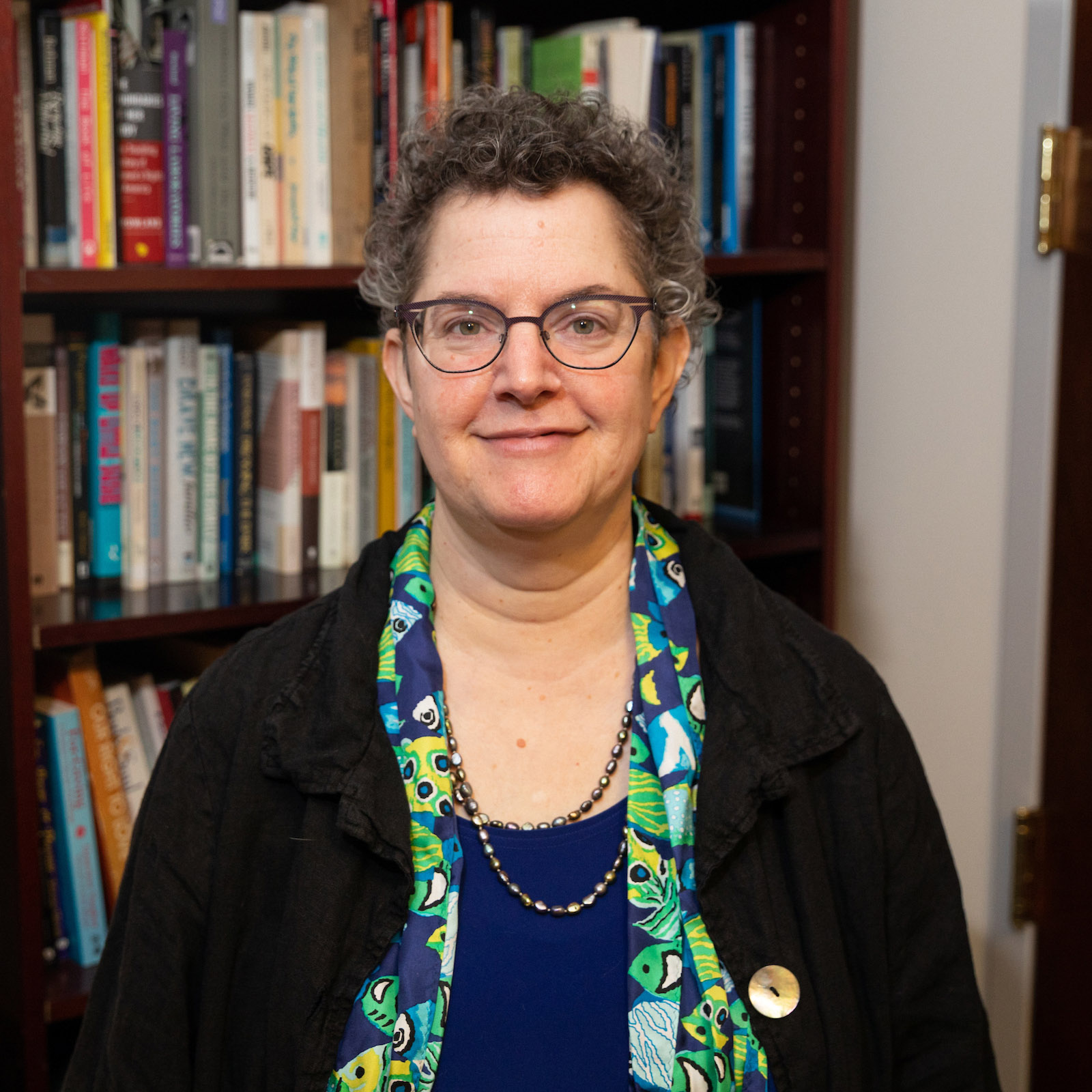
Sylvi Marlen Sandvik is a Researcher at the Faculty of Technology and Science , University of Agder. Her work focuses on alpine ecology, plant biology, and climate change impacts, with extensive publications spanning 2000-2024. PhD in Scientific Seminar (Dr. Scient Cand real) Email: sylvi.m.sandvik@uia.no Phone: +47 38141341 | Mobile: +4748155784 Research Highlights: Dr. Sandvik specializes in alpine plant responses to climate change, including: Thermal thresholds for embryo growth in Conopodium majus (2024) Nitrogen-fixing legumes' impact on alpine ecosystems (2013) Long-term warming effects on snowbed vegetation (2004, 2014) Reproductive costs in Parnassia palustris under warming (2008-2010) Recent Publications: 15+ peer-reviewed works from 2000–2024, including Annals of Botany (2024), Global Change Biology (2013), and Oikos (2001). Key journals: Arctic, Antarctic and Alpine Research , Environmental and Experimental Botany , Nordic Journal of Botany .
Rosemarie Parz-Gollner is a distinguished Professor at the Institute of Wildlife Biology and Game Management, Department of Ecosystem Management, Climate and Biodiversity at the University of Natural Resources and Life Sciences, Vienna (BOKU). With a career spanning over four decades since earning her PhD in 1984, she has established herself as a leading expert in wildlife management and conservation biology in Austria. Her work focuses on the ecology and management of key species including beavers, cormorants, and otters, with particular emphasis on human-wildlife conflict resolution and population monitoring. Her research interests encompass wildlife management, beaver ecology and conservation, cormorant population dynamics, otter research, bird population monitoring (particularly grey herons), conservation genetics, and ecosystem management. Dr. Parz-Gollner has led numerous research projects funded by Austrian federal states, the European Commission, and other institutions, addressing critical wildlife management challenges across Austria. Analysis of her recent publications reveals a strong focus on genetic studies of beaver populations, continued monitoring of waterbird populations (particularly cormorants and grey herons), and innovative approaches to studying otter ecology through non-invasive genetic sampling and stable isotope analysis. Her work demonstrates a consistent commitment to applied conservation science with direct relevance to wildlife management policy. Among her notable scientific achievements is the Österreichischer Staatspreis für Angewandte Ökosystemforschung MAB-Projekt Altenwörth, BMWF, awarded in 1990, recognizing her early contributions to applied ecosystem research. Dr. Parz-Gollner has actively supervised numerous graduate students, guiding doctoral and master's theses on diverse wildlife topics. Her research has been supported through various grants focused on wildlife management and conservation. She maintains strong connections with conservation organizations including BirdLife Austria and the Cormorant Specialist Group, and has served on scientific committees such as the advisory board of the Neusiedler See-Seewinkel National Park. Her laboratory and field work primarily focuses on non-invasive monitoring techniques for wildlife populations, particularly genetic methods for population assessment and conflict resolution strategies for species like beavers that interact with human infrastructure and activities.
Professor Andreas Obermair is the Director of Queensland Centre for Gynaecological Cancer Research (QCGC Research) and a Professor of Gynaecological Oncology at The University of Queensland since 2007. He holds an Honorary Professor title at UQ since 2006 and serves as a Senior Medical Officer at Royal Brisbane & Women's Hospital, along with Visiting Medical Officer positions at St Andrews War Memorial Hospital and Buderim Private Hospital. As an NHMRC Leadership Fellow and Affiliate of the Centre for Extracellular Vesicle Nanomedicine, he leads significant research initiatives in gynaecological oncology. Professor Obermair's research spans multiple critical areas in gynaecological oncology including clinical trials methodology, where he emphasizes evidence-based approaches to cancer management; translational research applying new technologies to prevention and treatment; quality of life studies focusing on ovarian, endometrial, cervical and vulval cancers; and minimally invasive surgical techniques like total laparoscopic hysterectomy. His work has demonstrated that systematic training and mentoring can overcome barriers to adopting less-invasive surgical approaches that improve patient outcomes. His recent publications reveal a strong focus on improving cancer care through innovative approaches including telehealth follow-up for ovarian cancer patients, surgical complication management, vulval cancer treatment patterns, hormone therapy impacts, and immunotherapy applications for endometrial cancer. His research consistently addresses both clinical outcomes and patient quality of life considerations across various gynaecological cancers. NHMRC Investigator Fellowship Level 2 (2021-25) Cancer Australia's Jeannie Ferris Recognition Award (2017) for outstanding achievements in clinical practice and research Professor Obermair actively supervises multiple PhD and MPhil students working on biomarker research, patterns of care in endometrial cancer, and lifestyle factors affecting cancer outcomes. He has secured substantial funding from NHMRC, Cancer Australia, and the Cherish Women's Cancer Foundation for projects including the ALIVE WELL Centre of Research Excellence, the ANVU trial for vulvar cancer, and multiple clinical trials addressing precision surgery and treatment options for gynaecological cancers. He co-founded and serves on the Board of the Cherish Foundation, which funds clinical research for women with gynaecological cancers, demonstrating his commitment to consumer-focused research.
Valérie A.M. Schoof is a Professor at York University's Faculty of Science, Glendon Campus, specializing in primate behavioral endocrinology. She leads the Community Nkima Project at Lake Nabugabo (Uganda) and the Primate Behavioral Endocrinology Lab at Glendon. PhD in Biological Anthropology from Tulane University Postdoctoral Fellow at McGill University's School of the Environment Her research integrates primate endocrinology with ecology and evolution, focusing on hormonal responses to social/physical environments. Key projects include: Vervet monkey dispersal decisions Reproductive seasonality in modified habitats Parasite impacts on social networks MHC gene variation in capuchins Stress responses in population dynamics She collaborates with: Toronto Zoo Lewa-Borana Conservancy (Kenya) Savanna chimpanzee projects in Senegal
Maria Rosaria Capobianchi is a distinguished professor of Molecular Biology at Saint Camillus International University of Health and Medical Sciences (Unicamillus) in Rome, where she contributes to the Master’s Degree in Medicine and Surgery. She has held key leadership roles at the National Institute for Infectious Diseases "L. Spallanzani," including Director of the Virology Laboratory and Director of the Department of Epidemiology, Preclinical Research, and Advanced Diagnostics. She is actively involved in the WHO Collaborating Center for Highly Infectious Diseases and collaborates with WHO, ECDC, and the Italian Ministry of Health. Her research focuses on virology, molecular biology, emerging infections, antiviral defense mechanisms, and innovative diagnostic methods . She has led and participated in numerous national and international research projects funded by European, US, and regional bodies. Her work spans pathogenesis, viral evolution, host immune responses, and public health preparedness. The analysis of her recent publications reveals a strong emphasis on SARS-CoV-2, including viral variants, vaccine effectiveness, immune response dynamics, genomic surveillance, and diagnostic innovation. Her work integrates molecular virology with clinical and epidemiological insights, contributing significantly to pandemic response and preparedness. Her scientific honors include: Knight of Merit of the Republic Inclusion in the "Top Italian Scientists" list by Via-Academy She has mentored numerous researchers and students through her leadership in research projects and academic roles, though specific advisees are not listed. She has been a consultant to the National Transplant Center on viral infections in transplantation and has contributed to public health policy and training initiatives. Her work continues to influence clinical virology, infectious disease management, and global health security. She is affiliated with: Laboratory of Virology, INMI "L. Spallanzani" Department of Epidemiology, Preclinical Research and Advanced Diagnostics, INMI WHO Collaborating Center for Clinical Care, Diagnosis, Response, and Training on Highly Infectious Diseases
Veronika Vicic is a Scholarly Teaching Fellow in Animal Science at Charles Sturt University, within the School of Agricultural, Environmental and Veterinary Sciences. She is currently completing her PhD in Animal Sciences, focusing on the development of a sustainable supply chain for non-replacement male calves in the Australian dairy industry. Her work bridges animal production, welfare, meat science, and industry engagement. Bachelor of Animal Science (First Class Honours), Charles Sturt University (2014–2017) Doctorate of Philosophy (Animal Sciences), Charles Sturt University (in progress) Veronika's research centers on improving livestock system efficiency, particularly in beef and dairy integration. Her interests include dairy beef production, feedlot management, bovine respiratory disease (BRD), meat quality, and stakeholder engagement across the supply chain. She combines applied research with consumer and producer outreach to promote sustainable agricultural practices. Her recent publications highlight a strong focus on dairy beef supply chains, BRD diagnostics using molecular tools, and pathogen monitoring in feedlot environments. The research trends reflect a commitment to solving practical industry challenges through science-based, collaborative approaches that enhance animal welfare and economic viability. Scientific Awards: Communicate Your Research Finalist - Smartbeef (2017) Emerging Scientist Finalist - Dairy Research Foundation (2017) International Livestock Forum Scholarship Recipient (2017) Growing Young Leaders Program Recipient - Picture You in Agriculture (2020) National Council of Women NSW Australia Day Award (2022) Veronika is actively involved in mentoring and public engagement. She has supervised HDR students internally and participated in outreach programs such as the Growing Young Leaders Program. She has also been involved in grant-funded projects with industry partners like Meat and Livestock Australia. Her work emphasizes industry collaboration, knowledge transfer, and building trust between producers and consumers. She is engaged with several research teams and industry networks, including the Australian Lot Feeders Association and the Graham Centre for Agricultural Innovation. Her activities include organizing and speaking at workshops, participating in public lectures, and contributing to media discussions on dairy beef and agricultural sustainability.
Cyril Stephen is a Professor at the School of Agricultural, Environmental and Veterinary Sciences at Charles Sturt University, Australia. He is an active researcher and registered supervisor, with a strong focus on animal reproduction, particularly in beef cattle, sheep, and horses. His work integrates veterinary science, agricultural systems, and reproductive physiology, with significant contributions to understanding the impact of phytoestrogens on fertility and developing innovative technologies like the remote calving alert device. Education: BVSc & AH (Bachelor of Veterinary Science and Animal Husbandry) DVSc (Doctor of Veterinary Science) MANZCVS (Member of the Australian and New Zealand College of Veterinary Scientists) DipACT (Diploma in Animal Clinical Techniques) His research interests center on theriogenology , phytoestrogen effects on livestock fertility , embryo development , and reproductive management in agricultural animals . He investigates how natural compounds in pasture legumes affect conception rates and reproductive outcomes in cattle and sheep, aiming to improve breeding efficiency and animal welfare. The analysis of his recent publications reveals a consistent focus on reproductive challenges in livestock, particularly the influence of environmental and nutritional factors such as phytoestrogens. His work also extends to technological innovations in monitoring calving and improving neonatal survival. A recurring theme is the integration of clinical veterinary practice with agricultural science to solve real-world farming problems. Scientific Contributions and Recognition: Active editorial board member of Clinical Theriogenology Peer reviewer for the Ontario Agri-Food Innovation Alliance Tier 1 Research Program Invited speaker at the International Symposium of the Indian Society for Study of Animal Reproduction (ISSAR) 2021 Featured in multiple media outlets including ABC Southern Queensland for public engagement on calf loss prevention Cyril Stephen supervises both Honours and higher degree research (HDR) students, contributing to the next generation of veterinary and agricultural scientists. He has been involved in grant review responsibilities and collaborative research projects, particularly in the area of fertility control and reproductive technology. His work is supported by institutional and external engagement, reflecting strong interdisciplinary collaboration. He is affiliated with the Gulbali Research Institute at Charles Sturt University, which focuses on agricultural, environmental, and veterinary research. His team works on projects ranging from basic reproductive physiology to applied technology development, including sensor-based monitoring systems for extensive beef systems. Future research directions likely include expanding fertility control methods, refining reproductive technologies, and enhancing pasture management strategies to mitigate phytoestrogen risks.
Philip Baker is a Professor and Pro-Vice-Chancellor for Medicine and Health Sciences at the University of East Anglia, affiliated with Norwich Medical School and the Metabolic Health research group. He previously served as Pro-Vice-Chancellor for Life Sciences and Dean of Medicine at the University of Leicester, demonstrating a strong leadership trajectory in academic medicine. His research focuses on maternal and fetal health, with particular emphasis on placental biology, preeclampsia, prenatal environmental exposures (including air pollution and metals), and neurodevelopmental outcomes. His work integrates clinical obstetrics with molecular and epidemiological approaches, often from an international perspective shaped by leadership roles in North America, Asia, and Australasia. Recent publications highlight ongoing contributions to understanding placental regulation of fetal growth, vasodilatory dysfunction in preeclampsia, and the impact of environmental factors on child development. These works reflect a sustained focus on perinatal medicine and developmental origins of health and disease. Fellow of the Academy of Medical Sciences Principal author of the G8 2010 position paper on 'Health of Women and Children' Baker has supervised over 40 PhD/MD theses and secured over £50 million in direct research funding, with institutional applications exceeding £100 million. His leadership roles have involved managing budgets up to £250 million annually and large research teams. He is actively involved in major research initiatives such as the CLIMB cohort study and the STRIDER trial. He is based at the Bob Champion Research & Education Building at UEA and maintains a high research output, with over 450 peer-reviewed articles and an H-index of approximately 98.
Kadri Simm is a Professor of Practical Ethics at the University of Tartu, Faculty of Arts and Humanities, and Head of the Philosophy Department. She holds a PhD in Philosophy (2005) and has held academic positions since 2001, including visiting fellowships at the National Institutes of Health (USA) and the Brocher Foundation (Switzerland). Her research focuses on bioethics, political philosophy, and research ethics, with notable contributions to open science ethics and pandemic response frameworks. Education: PhD (University of Tartu, 2005), MA in Gender Studies (Central European University, 2001), BA in History (University of Tartu, 2000). Research Interests : Bioethics (including reproductive technologies, genomics, and pandemic ethics), justice and distributive justice, practical ethics teaching methods, and research integrity governance. Her work bridges theoretical philosophy with applied ethics, addressing contemporary challenges like AI in healthcare and open science norms. Awards : 2023 Best Higher Education Textbook Prize for 'Praktilise eetika käsiraamat', Fulbright Scholarship (2022), Tartu University’s Badge of Distinction (2023), and multiple research grants from the EU and Estonian institutions. Grants & Projects : Lead researcher in ROSiE (Open Science Ethics) and BEYOND (Research Integrity Training). Coordinated Estonia’s first national research ethics survey and developed ethics training materials for early-career researchers. Labs/Teams : Active in the Clinical Ethics Committee of Tartu University Hospital and serves as Research Integrity Counselor for the Faculty of Arts and Humanities. Editor of BMC Medical Ethics and Studia Philosophica Estonica .
Prof. Jocelyn Dubuc is a Full Professor at the Faculty of Veterinary Medicine (Université de Montréal), specializing in bovine population health and reproductive medicine. He leads the Department of Clinical Sciences , focusing on dairy cow uterine health, metabolic diseases, and epidemiology. His work bridges clinical practice and research, emphasizing evidence-based management strategies. Education: 2005: DVM, Université de Montréal 2007: MSc in Veterinary Sciences, Université de Montréal 2010: PhD in Veterinary Science, University of Guelph Research Focus: Uterine infections and postpartum disorders Metabolic diseases (e.g., ketosis) Antimicrobial stewardship On-farm diagnostic tools Reproductive tract disease epidemiology His studies have redefined understanding of postpartum endometritis and shaped clinical guidelines for dairy herd management. Awards: 2013: Prix Carl J. Norden for Teaching Excellence 2015: Journal of Dairy Science Loyalty Program Grants & Collaborations: Leading projects funded by MAPAQ, FRQNT, and industry partnerships. Key member of RQR (Reproduction Network) and Op+lait (Dairy Quality Optimization). Developed courses on uterine health monitoring and metabolic diagnostics. Teams: Collaborates with over 100 researchers in networks like Vetmétabo (AI-driven veterinary medicine) and the Québec Dairy Health Benchmarking Initiative.
Dr. Panagiota Kotsila is a researcher at the Institute of Environmental Science and Technology (ICTA-UAB) and a key member of the Barcelona Laboratory for Urban Environmental Justice and Sustainability (BCNUEJ) at Universitat Autònoma de Barcelona. She serves as Principal Investigator for multiple significant research projects including the ERC Consolidator Grant-funded IMBRACE project, which focuses on embracing immigrant knowledges for just climate health adaptation. Her educational background includes a Ph.D. in Philosophy, Development Studies from the University of Bonn (awarded May 23, 2014), a Joint European Master in Environmental Studies (JEMES) from Univesidade de Aveiro, Portugal (awarded January 31, 2011), and a Diploma in Biology from the National and Kapodistrian University of Athens (awarded July 30, 2008). Dr. Kotsila's research spans urban environmental justice, political ecology, climate adaptation, and housing inequalities, with a particular focus on issues of gentrification, migration, and urban heat justice. Her work often takes Barcelona as a case study while maintaining a comparative perspective across Europe and beyond. She employs interdisciplinary approaches that bridge social sciences, environmental studies, and public health. Her recent publications demonstrate a strong focus on urban heat injustice, particularly examining how migrant communities experience and resist heat vulnerabilities in urban settings. Her work also explores radical spatial imaginaries, counter-mapping practices, and the intersection of feminist political ecology with degrowth movements. The research shows an increasing emphasis on climate adaptation, social-climatic tipping points, and the role of immigrant knowledge in climate health adaptation. ERC Consolidator Grant for IMBRACE project h-index of 15 with 983 citations Dr. Kotsila supervises doctoral students including Fatima F. and West K. M. on the IMBRACE project. She leads multiple international research projects with funding from the European Commission, including the ERC Consolidator Grant IMBRACE (2024-2029), VIABLE UNKNOWNS (2024-2026), ReHousIn (2024-2027), SUSTAIN (2022-2025), and previously WEGO-ITN (2019-2022). Her research has been picked up by numerous news outlets and has significant academic impact as evidenced by citations and Mendeley readership. She is actively involved with the Barcelona Laboratory for Urban Environmental Justice and Sustainability (BCNUEJ), which appears to be her primary research team, focusing on urban environmental justice issues through interdisciplinary and community-engaged approaches.
Jennifer Makelarski is an Assistant Professor in the Department of Social, Behavioral, and Population Sciences at the School of Public Health and Tropical Medicine, Tulane University. She holds a PhD in Epidemiology from the University of Iowa and has over 15 years of experience in public health research and education. She has been actively involved in teaching, primarily in online accredited MPH programs, for more than five years. Her research is centered on social epidemiology, with a strong focus on reducing health disparities by addressing social risks such as food insecurity, socioeconomic vulnerability, and access to community resources. She employs both quantitative and qualitative methods in study design and implementation, often in urban, underserved populations. Her recent publications highlight her work during the early phase of the COVID-19 pandemic, examining health-related social risks among U.S. women and female caregivers, food insecurity, and the impact of hospital-based food pantries. She has also contributed significantly to the CommunityRx project—a clinic-based intervention connecting patients to community resources—using both empirical and computational modeling approaches. Her work spans topics including women's health, racial and ethnic disparities, mental health, and public health informatics. Her scientific contributions appear in top-tier journals such as American Journal of Public Health , Journal of Women’s Health , PLoS Computational Biology , and Annals of Family Medicine . She frequently collaborates with interdisciplinary teams, particularly with Dr. Stacy T. Lindau, and is committed to community-engaged research that addresses real-world public health challenges. Scientific Awards: No awards mentioned in the provided text. Advising and Grants: No specific information on students advised or grants received is provided in the text. Labs and Research Teams: While no formal lab is named, her work is closely tied to the CommunityRx initiative and population health research on the South Side of Chicago, indicating active participation in community-engaged research teams focused on urban health equity and resource integration.
Amy Agigian is an Associate Professor in the Sociology & Criminal Justice Department at Suffolk University, where she has served since 1998, progressing from Tutor to her current position. She concurrently holds leadership roles as Executive Director of Our Bodies Ourselves Today and Founding Director of the Center for Women’s Health and Human Rights. Her academic credentials include: PhD from Brandeis University MA from Brandeis University BA from University of California, Santa Cruz Dr. Agigian's research centers on Sociology of Reproduction , Gender and Women’s Studies , and Health and Human Rights , critically analyzing how social stratification impacts reproductive experiences. Her work bridges academic scholarship and activism, particularly through contributions to feminist health education frameworks and human rights advocacy in women's health contexts. She examines intersections of gender, sexuality, and healthcare access through interdisciplinary lenses. Her 2017-2022 publications reveal consistent engagement with menstrual health as a human rights issue, reproductive justice frameworks, and historical analyses of women's health movements. These works demonstrate strong interdisciplinary connections between sociology, gender studies, public health, and human rights law, with recurring themes of health equity and social justice. No scientific awards were documented in the source material. While specific student advisement and grant details aren't enumerated, Dr. Agigian actively mentors through her directorship roles and has coordinated significant academic initiatives like the Radcliffe Exploratory Seminar on gender-based rights reversals. Her professional activities emphasize applied sociology in community health contexts. She directs Suffolk University's Center for Women’s Health and Human Rights and leads Our Bodies Ourselves Today , focusing on evidence-based health education, policy advocacy, and global health equity initiatives that connect academic research with real-world impact.
Prof. Dr. Tanja Pommerening is a leading scholar at the Institute for the History of Pharmacy and Medicine, Philipps University of Marburg. With a unique interdisciplinary background bridging Egyptology, Pharmaceutical Sciences, and Cultural History, she holds a W3 Professorship since 2020 and has made significant contributions across multiple academic domains. Universitätsprofessorin für Geschichte der Pharmazie und Medizin (2020–Present) Initiatorin des DFG-GRK 1876 (2013–2020) Sprecherin des Marburger Gespräche zur Alten Heilkunde (2020–Present) Her research focuses on the intersection of ancient scientific texts , medical practices , and cultural knowledge systems in Egypt and the ancient Near East. She has pioneered work on: Archaeometry of funerary substances Transdisciplinary analysis of medical metrology Decolonization of academic collections Comparative pharmacology across Egyptian and Chinese traditions Recent publications reveal her expertise in mummification practices , ancient metrology , and knowledge transmission through edited volumes on bodily concepts (2025), cosmos-body connections (2024), and knowledge systems (2019). Her work appears in journals like PLoS ONE and Zeitschrift für Phytotherapie . Scientific recognition includes: Dalberg Prize (2005) Jerry Stannard Memorial Award (2005) Académie internationale d’histoire de la pharmacie (2022) Active in editorial roles as Area Editor for the UCLA Encyclopedia of Egyptology and co-editor of multiple academic series, she continues to shape the field through her leadership in projects like AESOH (2023–2027) and ArchaeoScent (2023–2025).
Christian Keitel is an Honorary Professor for Archival Science and Digital Archiving at the University of Applied Sciences Potsdam. He works at the Landesarchiv Baden-Württemberg, where he has served since 2000, currently as Deputy Head of Department 2 (Specialized Programs and Educational Work). His research focuses on conceptual principles of conventional and digital archiving, DIMAG systems, certification of digital archives, authenticity of digital records, and cooperative learning processes in digital archiving. University of Applied Sciences Potsdam – Honorary Professor (2015–) Landesarchiv Baden-Württemberg – Deputy Head of Department (2011–), Senior Archivist (2000–) Keitel’s scholarly work emphasizes digital preservation, metadata standards, and long-term archive certification. His publications address challenges in trustworthiness of digital repositories, significant properties of electronic records, and collaborative digital archiving frameworks. He co-authored DIN standards 31644 and 31645 for trustworthy digital archives. Recent articles highlight his contributions to digital ingest workflows, metadata extraction, and municipal archive solutions. His work explores intersections between traditional archival principles and modern digital challenges, including authenticity verification, system development, and cross-institutional cooperation.