معرفی
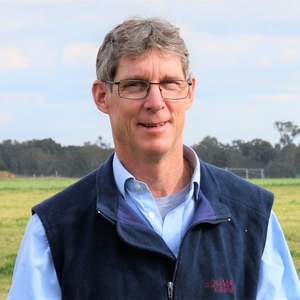
Cyril Stephen is a Professor at the School of Agricultural, Environmental and Veterinary Sciences at Charles Sturt University, Australia. He is an active researcher and registered supervisor, with a strong focus on animal reproduction, particularly in beef cattle, sheep, and horses. His work integrates veterinary science, agricultural systems, and reproductive physiology, with significant contributions to understanding the impact of phytoestrogens on fertility and developing innovative technologies like the remote calving alert device.
Education:
- BVSc & AH (Bachelor of Veterinary Science and Animal Husbandry)
- DVSc (Doctor of Veterinary Science)
- MANZCVS (Member of the Australian and New Zealand College of Veterinary Scientists)
- DipACT (Diploma in Animal Clinical Techniques)
His research interests center on theriogenology, phytoestrogen effects on livestock fertility, embryo development, and reproductive management in agricultural animals. He investigates how natural compounds in pasture legumes affect conception rates and reproductive outcomes in cattle and sheep, aiming to improve breeding efficiency and animal welfare.
The analysis of his recent publications reveals a consistent focus on reproductive challenges in livestock, particularly the influence of environmental and nutritional factors such as phytoestrogens. His work also extends to technological innovations in monitoring calving and improving neonatal survival. A recurring theme is the integration of clinical veterinary practice with agricultural science to solve real-world farming problems.
Scientific Contributions and Recognition:
- Active editorial board member of Clinical Theriogenology
- Peer reviewer for the Ontario Agri-Food Innovation Alliance Tier 1 Research Program
- Invited speaker at the International Symposium of the Indian Society for Study of Animal Reproduction (ISSAR) 2021
- Featured in multiple media outlets including ABC Southern Queensland for public engagement on calf loss prevention
Cyril Stephen supervises both Honours and higher degree research (HDR) students, contributing to the next generation of veterinary and agricultural scientists. He has been involved in grant review responsibilities and collaborative research projects, particularly in the area of fertility control and reproductive technology. His work is supported by institutional and external engagement, reflecting strong interdisciplinary collaboration.
He is affiliated with the Gulbali Research Institute at Charles Sturt University, which focuses on agricultural, environmental, and veterinary research. His team works on projects ranging from basic reproductive physiology to applied technology development, including sensor-based monitoring systems for extensive beef systems. Future research directions likely include expanding fertility control methods, refining reproductive technologies, and enhancing pasture management strategies to mitigate phytoestrogen risks.