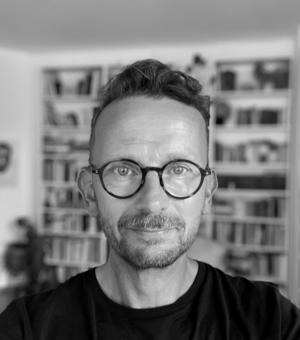
Professor Dan Hicks (FSA, MCIfA) is a leading scholar in contemporary archaeology at the University of Oxford's School of Archaeology, Curator of World Archaeology at the Pitt Rivers Museum, and Fellow of St Cross College. His career spans roles at the University of Bristol and visiting positions at Boston University, Musée du quai Branly, and Freie Universität Berlin. Research Interests: Colonialism/decolonization, cultural restitution, material culture, museum studies, conflict archaeology, memory politics Awards: Rivers Memorial Medal (2017), Best Book in Public History Prize (2021) Supervision: Accepts DPhil students in colonialism, heritage, museums, and contemporary archaeology Hicks' work critically examines colonial legacies through archaeological lenses, focusing on decolonizing museums and heritage practices. His 2020 book The Brutish Museums (Pluto Press) has been recognized as a New York Times Best Art Book and won multiple accolades. Scientific Awards: Rivers Memorial Medal (Royal Anthropological Institute, 2017) Best Book in Public History Prize (National Council on Public History, 2021) Elliott P Skinner Book Award (Association for Africanist Anthropology, 2021 - joint winner) Bread and Roses Book Prize shortlist (2021)
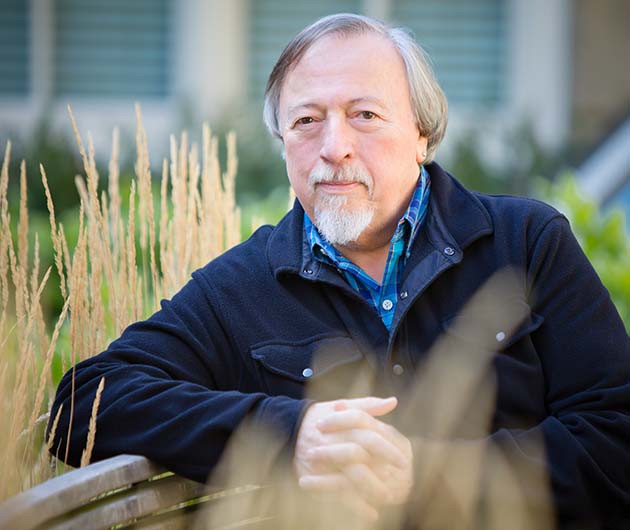
Stephen Kimber is the Inglis Professor and Cohort Director of the MFA in Fiction program at the University of King's College, Halifax. He holds a Master of Fine Arts from Goucher College and has been a prominent figure in Canadian literature, journalism, and broadcasting for decades. His academic affiliations include extensive teaching roles in the School of Journalism, Writing & Publishing from 1983 to 2021, serving thrice as director and co-founding the MFA in Creative Nonfiction program. Professor at University of King's College Cohort Director for MFA in Fiction Former Director of the School of Journalism, Writing & Publishing His research and creative work span fiction, nonfiction, and multimedia projects. He has authored 13 books, including the award-winning novel Reparations and the biographical Alexa! , which earned the Evelyn Richardson Award. Current projects include a WWII-era Halifax TV series and novel series with Two East Productions. His writing has appeared in major Canadian publications, and he has held roles as a political columnist for the Daily News , CBC broadcaster, and contributor to Atlantic Business Magazine . He serves on the National Advisory Council of The Walrus and has leadership roles in writers' organizations such as the Writers’ Federation of Nova Scotia. Key awards include the Evelyn Richardson Award and nominations for major Canadian literary prizes. His grants and advisory work are intertwined with his academic and creative leadership in Halifax's cultural landscape.
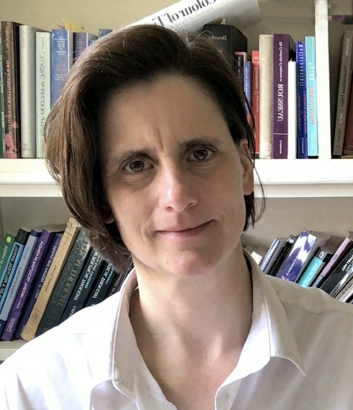
Cécile Fabre is a distinguished Senior Research Fellow at All Souls College and Professor of Political Philosophy at the University of Oxford. She is affiliated with the Faculty of Philosophy, the Department of Politics and International Relations, and Nuffield College at Oxford. With a career spanning over two decades, she has held prestigious academic positions including Tutorial Fellow at Lincoln College, Professor of Political Theory at the University of Edinburgh, and Lecturer at the London School of Economics. Her educational background includes a BA in History from La Sorbonne (1992), an MA in Political Theory from the University of York (1993), and a D.Phil in Politics from the University of Oxford (1997). Professor Fabre's research focuses on political philosophy , moral philosophy , and applied ethics , with particular expertise in just war theory, theories of distributive justice, democracy, and the ethics of foreign policy. Her recent work has increasingly addressed the ethics of espionage and cultural heritage. Her publications reveal a consistent pattern of examining moral obligations in international contexts, with a strong emphasis on cosmopolitan perspectives that challenge traditional state-centric approaches to justice and ethics. Among her notable honors are being named a Fellow of the British Academy (2011) and receiving the Scots Philosophical Association Centenary Fellowship (2022). Professor Fabre has supervised 15 doctoral students to completion, with most securing academic positions globally. She has extensive governance experience, having served on various appointment panels, as University Proctor (2018-2019), and on the Publications Committee of the British Academy since 2019. She has also contributed significantly to academic publishing as a member of numerous editorial boards and as a reviewer for major university presses and journals.
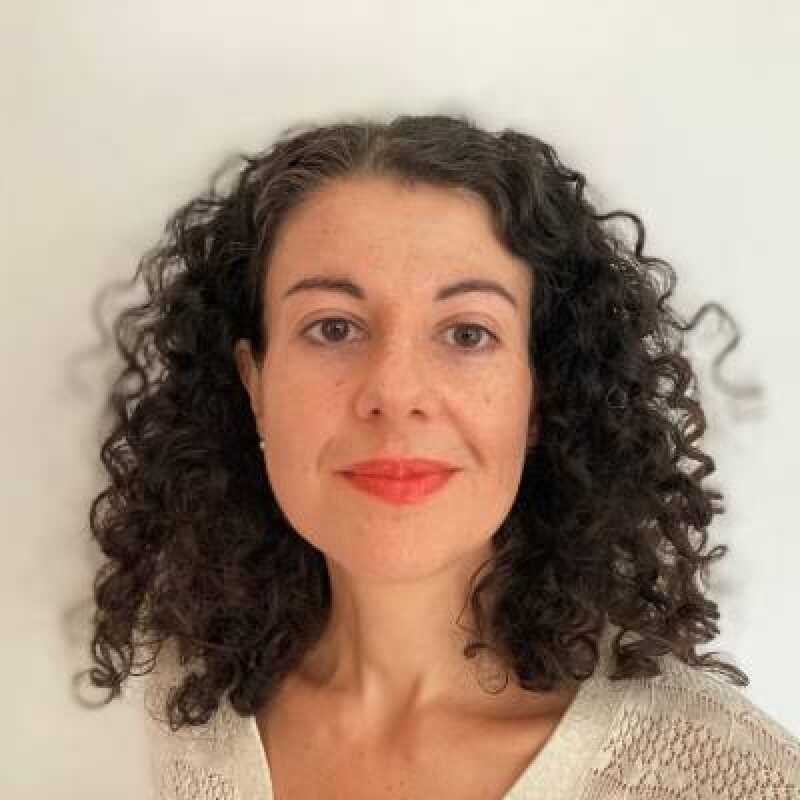
Tatiana Sánchez Parra is an Assistant Professor of Cultural Anthropology at the University of Tennessee. Her research focuses on reproductive violence and justice in contexts of war and transitional justice, particularly in Colombia and Latin America. She employs feminist peacebuilding, social reproduction frameworks, and creative/arts-based methodologies in her work. Previously, she held a Marie Skłodowska-Curie Actions Fellowship at the University of Edinburgh and remains a visiting researcher there. Education: Ph.D. in Sociology, University of Essex (2018) M.A. in Theory and Practice of Human Rights, University of Essex (2013) M.A. and B.A. in Social Anthropology, Universidad de los Andes, Colombia (2007/2006) Key research interests include: Gendered victimhood in transitional justice Reproductive autonomy and social reproduction in militarized contexts Creative methods for knowledge production Environmental devastation and conflict legacies Her book ‘Born of War in Colombia’ (2024) examines how children born of conflict-related sexual violence remain marginalized in Colombia’s transitional justice systems. Recent publications analyze Colombia’s Truth Commission, feminist methodologies, and reparations frameworks. Awards include the prestigious Marie Skłodowska-Curie Actions Fellowship (2018-2020). She co-edits special journal issues on gender-based violence in Latin America and Colombia’s peacebuilding processes. Teaching includes courses on anthropology of human rights and reproduction/sexuality studies. She collaborates with Afro-Colombian communities and transitional justice actors to advance transformative justice measures for conflict-affected populations.
Professor Caroline Rose is a faculty member at the University of Leeds, serving as Professor of Sino-Japanese Relations within the School of Languages, Cultures and Societies, Faculty of Arts, Humanities and Cultures. She has been a key figure in East Asian Studies at Leeds since 1996, contributing significantly to research and teaching in contemporary East Asian international relations and educational policy. Her educational background includes a BA (Hons) in Modern Chinese Studies and a PhD, both from the University of Leeds. Caroline Rose's research centers on the complex dynamics of Sino-Japanese relations, particularly focusing on the 'history problem'—including textbook controversies, the Yasukuni Shrine, war reparations, and official apologies. She also investigates citizenship and history education in China and Japan, as well as broader issues of trust and friendship in East Asia. Her interdisciplinary work bridges international relations, political history, and comparative education. Although no specific publications are listed in the provided text, her research portfolio indicates consistent engagement with high-impact topics in East Asian politics and memory studies, likely reflected in scholarly outputs over the past decades. Major study on history and citizenship education in China and Japan New project on trust and friendship in East Asia She has held the role of Subject Leader for East Asian Studies, demonstrating academic leadership. While no grants or specific awards are mentioned, her sustained research activity suggests involvement in funded projects and scholarly recognition. She teaches courses such as Modern Japan, Sino-Japanese Relations, Japanese Politics, and Topics in Contemporary Asia Pacific Studies. She is associated with research groups in East Asian Studies, Asia Pacific Studies, Japanese Studies, Chinese Studies, History, and Politics.
Dr Stella Bolaki is Reader in American Literature and Medical Humanities at the School of English, University of Kent, and Co-Director of the Centre for Health and Medical Humanities. She has been a faculty member since 2011, after holding positions at the University of Glasgow and the University of Edinburgh, where she also held a postdoctoral fellowship at the Institute for Advanced Studies in the Humanities (IASH). Her educational background includes a BA from Athens and an MSc and PhD from the University of Edinburgh. BA, Athens MSc, University of Edinburgh PhD, University of Edinburgh Stella’s research spans interdisciplinary fields including contemporary American literature, medical humanities, disability studies, and Black feminist theory. Her work critically examines narratives of illness, chronic conditions, self-care, and the intersection of art and health. She has pioneered research on artists’ books as tools for wellbeing, testimony, and community engagement, particularly in contexts of trauma and social injustice. Her recent publications and projects reveal a consistent focus on expanding narrative forms in medical humanities—moving beyond traditional literary modes to include photography, performance, film, and digital storytelling. Themes of inequality, mental health, climate anxiety, and embodiment recur across her work, especially in her ongoing monograph on self-care. Fellow of the Higher Education Academy Wellcome Trust funding recipient British Academy funding recipient Research England grant awardee Kent’s AHRC Impact Acceleration Account funding Stella supervises doctoral research across a wide range of interdisciplinary topics and has co-supervised a CHASE-funded project on health zines. She contributes to teaching in American literature and medical humanities at the Kent and Medway Medical School. Her professional service includes editorial roles for Contemporary Cultural Studies in Illness, Health and Medicine and the Journal of Literary & Cultural Disability Studies , and leadership in the Eastern Arc Medical and Health Humanities Network and the Kent Medical Humanities Network. She leads public-facing research through creative workshops, exhibitions, and events such as ‘Artists’ Books and the Medical Humanities’ and ‘Mending the Psyche: Art as Reparation’, often in collaboration with NHS partners and community organizations.
Rana Jaleel is an Associate Professor in the Department of Gender, Sexuality, and Women's Studies at the University of California, Davis, within the College of Arts & Sciences. She holds multiple leadership roles, including Chair of the Cultural Studies Graduate Group, Chair of the Designated Emphasis in Feminist Theory and Research, Faculty Advisor for the Sexuality Studies Minor, and Co-Director of HATCH: The Feminist Arts & Sciences Initiative. She is also a 2021–2024 College of Arts & Sciences Dean's Faculty Fellow. Education: Ph.D. in American Studies, New York University J.D., Yale Law School MFA in Poetry, University of Michigan, Ann Arbor Rana Jaleel’s research centers on the politics of evidence, examining how harm is recognized or erased in legal, cultural, and political contexts. Her work critically engages with reproductive labor, race, gender, sexuality, property, and international law. She draws from feminist theory, critical ethnic studies, legal studies, and decolonial thought to interrogate the intersections of power, knowledge, and violence. Her interdisciplinary approach is reflected in her contributions across law, cultural studies, and creative writing. Her publications and editorial projects reveal a strong focus on racial capitalism, settler colonialism, queer/trans of color critique, and feminist legal theory. She explores how international legal frameworks for sexual violence are shaped by imperial and racial power. Her work frequently appears in journals such as Critical Ethnic Studies Journal , Cultural Studies , and Brooklyn Law Review . She has co-edited special issues on democracy, gendered citizenship, and racial capitalism, demonstrating a commitment to collective scholarly work. Scientific Awards: Author of Color First Book Award from Duke University Press for The Work of Rape Rana Jaleel is actively involved in academic service and mentorship. As Co-Director of HATCH and leader of the Write the Future! Lab, she fosters creative and critical scholarship among undergraduate students, particularly from women/queer/trans of color and transnational feminist perspectives. She serves on the Editorial Collective and Board of The Critical Ethnic Studies Journal and is a member of the American Association of University Professors’ Committee A on Academic Freedom and Tenure. Her leadership extends to admissions and curriculum development in interdisciplinary programs. She is co-editing a forthcoming issue of South Atlantic Quarterly on 'Queer/Trans of Color Transits and the Global Imaginaries of Racial Capitalism' and continues to develop projects that bridge creative practice, legal critique, and feminist theory.
Kristine Andra Avram is a Visiting Researcher at the Center for Conflict Research (ZfK) at Philipps University of Marburg, serving as a Post-doctoral fellow in the BMBF project 'Transformations of Political Violence' (2024-2025). Her work bridges peace and conflict studies, narratology, and social sciences with a focus on meaning-making in contexts of political violence and state repression. Her educational background includes a PhD in Political Science (summa cum laude, 2022) from Philipps University of Marburg, an MA in Peace and Conflict Studies (2010-2013) with study abroad at the University of Haifa, and a BA in Communication Science and Romance Studies (2007-2010) from the University of Erfurt, including Erasmus at Complutense University of Madrid. Avram's research examines how narratives shape interpretations of violence, influence reckoning with traumatic pasts, and inform transitional justice efforts. Using interdisciplinary narrative and (auto)ethnographic methods, she reveals storytelling as a site of agency and resistance—both for processing historical violence and envisioning just futures. Her work centers on concepts like responsibility, truth, and hope within post-communist contexts, particularly Romania. Her recent publications (2023-2025) demonstrate methodological innovation in narrative analysis applied to political violence, with increasing attention to researcher positionality and reparative methodologies. Articles span qualitative frameworks, courtroom narratives, postcolonial critiques of peacebuilding, and ethical dimensions of studying violence. Key scientific awards include: Dissertation Award from Südost-europagesellschaft (2023) Honorable Mention from Gert-Sommer-Award for Peace Psychology (2023) Mobility Grant from EISA (2023) Scholarships from MARA, Friedrich Ebert Foundation, and University of Haifa She has secured significant research funding including a Fritz Thyssen Foundation grant (2017-2022) as co-applicant and has taught courses on narrative reconstructions of the past at Philipps University Marburg and Goethe University Frankfurt. Her advisory work includes designing memory projects and conflict resolution initiatives with pax christi Rhein-Main. Avram actively collaborates within the Center for Conflict Research's interdisciplinary teams, focusing on political violence, transitional justice, and narrative methodologies in post-communist contexts through projects like 'Ascribing Individual Criminal Responsibility' and 'Transformations of Political Violence'.
Tyran K. Steward is an Assistant Professor of History at Williams College, specializing in African-American and Modern U.S. History. His research intersects political, labor, and social history with analyses of popular culture and sport, particularly focusing on racial dynamics in the North during the early twentieth century and the American Interwar Period. Education: B.A., Morehouse College (2000) M.A., Eastern Michigan University (2009) Ph.D., Ohio State University (2013) Steward’s forthcoming book, The Benching of Willis Ward , examines the 1934 racist benching of a Black football player at the University of Michigan, using this incident to trace the emergence of black conservatism and northern Jim Crow structures. His work highlights how sports serve as critical sites for racial hierarchy and political reimagining. His publications include analyses of racial liberalism in academia, Black women's citizenship struggles, and reviews of seminal works in African-American Studies. Steward has advised senior theses on topics like reparations and Black internationalism, and previously held a Mellon Postdoctoral Fellowship at Carleton College.
Emmanuelle Tourme-Jouannet is a Professor at Sciences Po Law School, where she leads research in critical international law theory and ecological justice. Affiliated with the Law School's Research Center, she directs the international research program "Justice and International law in a global world" and serves as co-editor-in-chief of the Journal of History of International Law. Her academic foundation includes: Master in International Law, Université Paris II (Panthéon-Assas) Master in Philosophy of Law, Université Paris II (Panthéon-Assas) Master in Political Philosophy, Université Paris IV (Sorbonne) PhD in Law, Université Paris II (1993) Professor Tourme-Jouannet's work fundamentally interrogates international law through decolonial lenses , examining colonial legacies, recognition theory, and ecological transformation. Her scholarship bridges legal history , philosophy , and human rights , with increasing focus on environmental justice since 2021. She pioneers frameworks for ecological international law while maintaining critical analysis of capitalism's relationship with global legal structures. Analysis of her 15 most recent publications reveals three dominant trajectories: (1) Decolonization through recognition theory (2019-2023), (2) Ecological reimagining of international law (2021-2024), and (3) Historical critiques of colonial international law (2011-2021). These strands converge in her argument for a reconstructed international society based on justice rather than power. Her scientific recognition includes: Université Paris II’s doctoral award Chancellerie des Universités de Paris’ Maurice Picard Prize Académie des sciences morales et politiques’ Dupin-Ainé Prize Professor Tourme-Jouannet has directed major academic programs including the Master in International Law at Paris I and the French-American double degree with Columbia/Cornell. She supervises doctoral candidates through Sciences Po's PhD program and leads the IREDIES-CERDIN research initiative. Her editorial leadership spans the European Journal of International Law and Harvard's Global Law and Policy Institute. Current research focuses on implementing ecological rights frameworks through the "Un droit sans conditions pour le vivant" project, positioning her at the forefront of international law's response to the planetary crisis.
Professor Paul Gready is a Co-Director of the Centre for Applied Human Rights (CAHR) at the University of York. His work bridges academia and activism, focusing on universities as sites of protection and activism, transitional justice, human rights cities, and arts-based interventions. He previously directed CAHR and worked at Amnesty International before entering academia. Gready co-edits the Journal of Human Rights Practice and leads major projects like the UNESCO Chair on Human Rights Defenders and the AHRC-funded Art Rights Truth initiative exploring arts-activism collaborations in crises contexts. His teaching includes courses on human rights practice, culture, and protest, with fieldwork in South Africa. Research emphasizes interdisciplinary approaches to human rights challenges, including transitional justice in Colombia and Tunisia, and the role of cities like York in fostering human rights culture. He actively advises NGOs and chairs international networks, reflecting his commitment to practical impact alongside scholarly rigor.
Dr. Sandrine Maljean-Dubois is a CNRS Research Director at Université Jean Moulin Lyon 3, specializing in International Environmental Law . She leads the CERIC team, focusing on projects like CLIMARM, I-Biolex, and the Environmental Trial initiative. Her work addresses the legal dimensions of climate change, biodiversity, and sustainable marine resource management, particularly through the Paris Agreement and Climate Litigation frameworks. Research Focus: Her scholarship explores the intersection of international law and global environmental challenges. Key topics include Climate justice and state accountability Legal mechanisms for biodiversity conservation Compliance in multilateral environmental agreements Due diligence obligations for marine protection Recent Contributions: Maljean-Dubois has published extensively on climate litigation , the no-harm principle , and the legal evolution of environmental treaties . Her 2024 work on the ICJ’s advisory opinion on climate reparations and the 2023 analysis of climate law’s global reset highlights her expertise in adapting legal norms to planetary crises.
Kate Ogg is Professor and Associate Dean (Higher Degree Research) at ANU Law School. Her interdisciplinary research examines refugee law, human rights litigation, and feminist legal theory through works including the monograph 'Protection from Refuge: From Refugee Rights to Migration Management'. Ogg's scholarship investigates how courts shape refugee journeys globally. She holds a BA/LLB (First Class Honours, University Medal) from Griffith University, MSc (Distinction) from Oxford, and PhD from ANU. Ogg provides expert testimony to the Australian Federal Parliament and contributes to international media discourse on refugee policy. Research Focus: Current ARC-funded projects examine community sponsorship for refugees and movement litigation. Key research streams include: COVID-19 border restrictions' impact on citizenship conceptualizations Feminist engagements with international refugee law Deliberative democratic approaches to human rights adjudication Constitutional struggles in displacement contexts Recent publications analyze pandemic border controls as internal displacement events and refugee law's response to democratic backsliding. Collaborative work advances methodological innovation through refugee-centered legal scholarship. Leadership: As Director of the Rewriting Jurisprudence project, Ogg collaborates with scholars and lawyers with displacement experiences to reimagine legal precedents. She co-leads the Law, Governance & Institutions cluster at ANU's Institute for Climate, Energy & Disaster Solutions.
Keller Easterling is a Professor at the Yale School of Architecture and director of its Master of Environmental Design program. An architect, writer, and theorist, her work interrogates infrastructure space as a medium of political and social innovation. Key themes include global development , spatial justice , and climate resilience , with projects like ATTTNT (2023–2024), a reparations-focused land trust network, and Switch (2015), a mobility framework addressing urban sprawl. Books : Extrastatecraft (2014), Subtraction (2014), Medium Design (2021). Exhibitions : Featured in the Venice Biennale (2014), Architectural League (New York), and the Rotterdam Biennale . Research : Explores spatial products of capitalism , decolonial landholding , and non-extractive design . Engages with HBCUs and land activists to operationalize community economies and mutualist infrastructures . Select Articles : Contributions to Harvard Design Magazine , Domus , and e-flux , analyzing infrastructure as design and spatial counter-logics . Teaching & Collaborations : Leads design studios on medium design and infrastructural reprogramming . Collaborated with institutions like MIT , Guggenheim , and Prada , with recent talks at the European Graduate School (2025) and MoMA (2025).
Dr. Douglas Lobner is a Research Professor in the Department of Biomedical Sciences at Marquette University, College of Health Sciences. His research focuses on neurodegenerative disease mechanisms, environmental toxin interactions, and dental material toxicity. He investigates how environmental factors like mercury, pesticides, and BMAA interact with genetic predispositions to cause neurodegenerative diseases such as Alzheimer’s, Parkinson’s, and ALS, particularly through the cystine/glutamate transporter (system xc-). His work also explores dental pulp capping materials, emphasizing growth factor-enhanced repair mechanisms and system xc- regulation to prevent root canal procedures. Key collaborations involve studies on glutamate signaling, neurotoxicant synergy, and drug-induced neuroplasticity. Published research includes over 14 studies from 2009–2014, emphasizing system xc- regulation by growth factors, neurotoxin synergies (e.g., methylmercury and BMAA), and dental material toxicity mitigation strategies. His lab contributes to the Neuroscience Collaboratory and Integrative Neuroscience Research Center at Marquette.