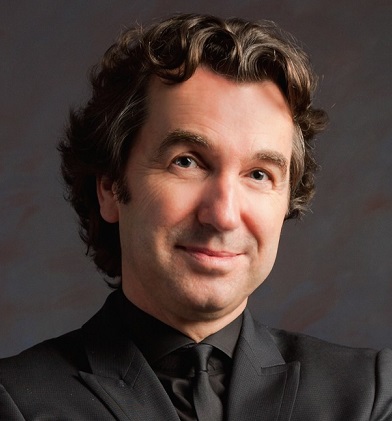
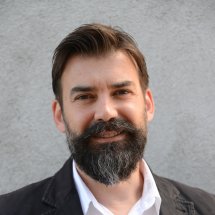
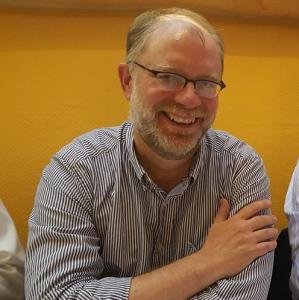
Christoph Emmrich is an Associate Professor in the Department for the Study of Religion (DSR) at the University of Toronto. His research focuses on Buddhist and Hindu traditions in Nepal, Burma, and Tamil Nadu, with expertise in ritual studies, textual analysis, and the intersection of religion with gender, language, and material culture. He holds a PhD from the University of Heidelberg (2004) and has conducted extensive fieldwork in the Kathmandu Valley, Yangon, Mandalay, and Mawlamyine. Key areas of study include Nepalese and Burmese Buddhism, Jainism in Tamil Nadu, and the analysis of ritual manuals, literary texts, and historiography. His work addresses questions of memory, translation, and resistance in religious practices. Recent publications explore the inclusion of Burma in South Asian Studies, the role of repetition in Theravāda Buddhism, and the cultural significance of jewelry in Newar rituals. Emmrich’s research also engages with the historiography of Tamil Jain literature and the impact of colonial frameworks on religious scholarship. He contributes to interdisciplinary projects such as the study of Buddhist textual transmission and the reclamation of marginalized religious narratives.
Prof. Gabriel Faimau is an Associate Professor of Sociology at the University of Botswana, concurrently serving as Visiting Associate Professor at Botswana International University of Science and Technology (BIUST) and Extraordinary Researcher at North-West University, South Africa. He holds a PhD in Sociology from the University of Bristol, where he was supported by the Overseas Research Scholarship (ORS). His research focuses on digital society, new media's role in religious practices, multiculturalism, HIV/AIDS impacts, and graduate employability. Recent studies include digital infrastructure in Botswana, urban informality in Harare, and the use of qualitative methods in religious media analysis. He has conducted fieldwork on Botswana's prophetic ministries and their digital strategies. Award highlights include DAAD Fellowships (2019) and grants from the Nagel Institute/John Templeton Foundation and HRDC. He serves on advisory boards for JPIC in Indonesia and IRGSC, while maintaining memberships in ISA, IAMCR, and AoIR. His academic journey includes roles as Lecturer and Research Head at Kgolagano College, Senior Lecturer at North-West University, and Teaching Assistant at the University of Bristol’s School of Sociology, Politics and International Studies (SPAIS).
Dr. Julye Bidmead is an Associate Professor and Interim Chair of the Department of Religious Studies at Chapman University's Wilkinson College of Arts, Humanities, and Social Sciences. She directs the Office of Fellowships and Scholar Programs while maintaining active archaeological fieldwork. Education : Bachelor of Arts - California State University, Eastbay Master of Arts - Vanderbilt University Ph.D. - Vanderbilt University (Method and Theory of Religion) Research Focus : Religious continuity in Mesopotamia Gender roles in ancient Near Eastern rituals Hebrew Bible studies Biblical archaeology field methods Ritual studies in ancient civilizations Religious theory and practice interplay Publication Trends : Her scholarly works span from 1999-2016, covering Hebrew Bible analysis (40%), Mesopotamian religious practices (35%), and digital humanities applications (25%). The publications include dictionary entries, field reports, and book chapters. Professional Recognition : Valerie Scudder Award Pedagogical Innovative Award Academic Contributions : Dr. Bidmead integrates archaeological fieldwork with classroom instruction, teaching Religious Studies, First Year Foundation courses, and University Honors Program classes. She actively contributes to the Jezreel Expedition as Education Director and field archaeologist.
Nicola Laneri is a Full Professor of Archaeology and Art History of the Ancient Near East and Eastern Mediterranean at the University of Catania, Department of Humanities. He also serves as Director of the School of Religious Studies at CAMNES in Florence. His academic career includes visiting positions at Columbia University, the University of Chicago, Leiden University, and the Middle East Technical University in Ankara. University: University of Catania School: Department of Humanities Academic Rank: Professor Email: nlaneri@unict.it, nicolalaneri@hotmail.com Office: Palazzo Ingrassia (Via Biblioteca 4), Catania Office Hours: Monday and Thursday, 9:00–12:00 Website: disum.academia.edu/nicolalaneri Education and Academic Appointments: Ph.D., University of Naples L'Orientale (1999) Fulbright Research Scholar, Columbia University (2000) Research Fellow, Italian Academy at Columbia University (2000) Visiting Professor, Middle East Technical University, Ankara (2002–2004) Research Fellow, Oriental Institute, University of Chicago (2005) Erasmus Visiting Professor, Leiden University (2015) Research Interests: Nicola Laneri specializes in the archaeology of religion, funerary practices, and material culture in the Ancient Near East. His work investigates the development of religious systems, ritual transformation, and socioeconomic dynamics across Mesopotamia, Anatolia, and the Eastern Mediterranean. He has conducted extensive fieldwork in Turkey, Iraq, Syria, Iran, and Azerbaijan. Recent Publications and Research Trends: His recent publications reflect a strong focus on the material dimensions of religion, funerary archaeology, and urban development. Key themes include the emergence of polytheism, the social analysis of death rituals, and ceramic production technologies. The 15 most recent works demonstrate a consistent engagement with interdisciplinary approaches, combining archaeology, anthropology, and textual analysis to reconstruct ancient belief systems and socioeconomic structures. Scientific Awards: Laurentum Prize (2024) Advising and Research Grants: Laneri supervises graduate students in topics ranging from Mesopotamian iconography to contemporary museum practices. He has directed or co-directed major archaeological projects including the Hirbemerdon Tepe Archaeological Project (2003–2016), the GaRKAP in Azerbaijan (since 2017), and the Baghdad Urban Archaeological Project at Tell Muhammad (since 2022). He is Principal Investigator of the PRIN 2020 project 'Godscapes: Modeling Second Millennium BCE Polytheisms in the Eastern Mediterranean,' funded by MUR. Labs and Research Teams: He leads international research collaborations involving scholars from Italy, Azerbaijan, the United States, and the Netherlands. His teams integrate archaeological excavation, material analysis, and digital modeling to explore ancient urban and religious landscapes. He is actively involved in training the next generation of archaeologists and fostering cross-institutional academic partnerships.
Stefano Rapisarda is a Full Professor of Romance Philology and Linguistics at the Department of Humanities, University of Catania. He has held academic positions since 2002, progressing from Researcher to Associate Professor (2018) and Full Professor (2021). He is President of the Master's Degree in "Linguistic Sciences for Education and Interculturality" at the Special Teaching Structure of Ragusa and serves on multiple university commissions. He has been delegated to lead the Special Educational Structure of Ragusa and represents the University of Catania on the Board of Directors of the Ibleo University Consortium. His research focuses on three interrelated areas: the philology of medical-scientific and magical-divinatory texts; intercultural contacts in the Mediterranean from Late Antiquity to the Early Modern period; and the intersections between philology, history, politics, and ideology. He has conducted extensive textual editions of medieval works, including the Thesaurus pauperum , Nicole Oresme’s Contre la divination , and various chiromantic and scapulomantic texts. His work emphasizes material manifestations of interculturality such as bilingual glossaries, multilingual inscriptions, and codices with mixed scripts. The 15 most recent publications highlight a sustained engagement with medieval divination, philology in wartime, intercultural textual practices, and the political dimensions of language and scholarship. Key themes include prognostication, textual criticism, linguistic hybridity, and the role of intellectuals during periods of conflict. His recent books examine the global history of the Spanish language and the ideological uses of philology in the 19th and 20th centuries. Scientific Awards and Honors: Candidate for the 'Premio Prezzolini per la Traduzione Letteraria' Qualified under the Fulbright Program for teaching at Northwestern University (2011) Advising and Grants: While no specific students are listed, Rapisarda has been a member of doctoral committees at the University of Macerata and the University of Catania. He has served as Principal Investigator on multiple funded research projects, including 'Scholars in Arms' (€15,500), 'Transnational Intellectual Networks' (€22,500), and 'Scholarship in Wartimes' (€30,000), managing over €70,000 in institutional funding. He has contributed to major national research initiatives (PRIN) and international collaborations, including a HERA-funded proposal on academics in wartime. Labs and Research Groups: He directs the 'Professori in Guerra' Digital Library, an archive of autobiographies and militant texts by scholars. He co-directs the 'Divinatoria' book series with Classiques Garnier and has organized international workshops on divination. He is a founding member and treasurer of the International Society for the Critical Study of Divination and serves on the editorial board of the International Journal of Divination and Prognostication .
Jamie Barnes is an Associate Professor in Sociology (Sociology and Criminology) at the University of Sussex, affiliated with the School of Law, Politics and Sociology. He holds a PhD in Social Anthropology from the University of Sussex and has a strong background in qualitative, autoethnographic, and phenomenological research methods. His work bridges sociology, anthropology, and religious studies, with a focus on lived experience, embodiment, and ontological inquiry. BA (Hons) Social Anthropology, University of Cambridge (1995) MSc in Comparative & Cross-Cultural Research Methods, University of Sussex (2010) PhD in Social Anthropology, University of Sussex (2015) Postgraduate Certificate in Teaching and Learning in Higher Education (Distinction, 2018) Associate Fellow and Fellow of the Higher Education Academy Jamie Barnes' research centers on ontology, embodied perception, and the shifting nature of subjective reality, particularly within religious and spiritual contexts. Drawing from personal and ethnographic experience, he employs autoethnography to explore how devotional worlds are constituted through sensory experience, narrative, metaphor, and charismatic relationships. His work contributes significantly to the Sociology of Religion and the Anthropology of Christianity. Recently, he has extended this inquiry into ecological sensibilities, investigating the intersections between environmental awareness, embodiment, and social ontology. His teaching reflects these interests, with modules such as 'Transcendence, Devotion & Desire' and supervision across sociology, criminology, and gender studies. His recent publications reveal a consistent engagement with autoethnographic methodology, the phenomenology of belief, and ecological thought. Articles like 'Sand in sculpture: creatively rewilding ecologies of health' (2024) and 'The ecological sensibilities project' (2022) indicate a growing focus on environmental and health-related sociological inquiry. Earlier works such as 'Stories, senses and the charismatic relation' (2020) and 'The ontological implications of spirit encounters' (2019) establish his foundational contributions to understanding religious experience through reflexive ethnography. His scholarship often appears in qualitative and interdisciplinary journals, emphasizing narrative, embodiment, and methodological innovation. Jamie Barnes has received recognition for his teaching excellence, including a Postgraduate Certificate in Teaching and Learning in Higher Education with Distinction and Fellowship of the Higher Education Academy. He is a dedicated advocate for autoethnographic methods, having organized the 4th British Conference of Autoethnography and co-convened the South Coast Autoethnography Network (SCAN). He also serves on the organizing committee of the International Conference of Autoethnography (ICAE), contributing to the growth of this methodological approach in the UK and internationally. As an educator, Jamie Barnes has supervised numerous undergraduate and postgraduate students and has convened key modules across sociology and criminology. His academic service includes membership on the Social Sciences and Arts Cross-Schools Research Ethics Committee at the University of Sussex. He leads the 'Ecology, Economy and Ecosystems' research project, which includes the podcast 'The Ecological Sensibilities Project,' demonstrating his commitment to public engagement and innovative scholarly communication. Jamie Barnes is actively involved in research networks centered on autoethnography and interdisciplinary sociology. He co-convenes the South Coast Autoethnography Network (SCAN) and contributes to the international ICAE network. His podcast project exemplifies a creative approach to disseminating sociological research, blending academic rigor with accessible media formats. These initiatives reflect his broader vision of sociology as a reflexive, embodied, and socially engaged practice.
Victor Ghica is a Professor of Antiquity and Early Christian Studies at MF University College (2015–present), following a tenure as Associate Professor at Macquarie University (Sydney) and roles at the Institut français d'archéologie orientale (Cairo) and Université Laval (Québec). His work bridges archaeology, linguistics, and religious studies, focusing on Late Antiquity and Early Christianity in Egypt and Dalmatia. Ph.D. in Theology (Université Laval, 2006) Doctorate in Religious Sciences (EPHE, Paris, 2006) Licentiate in Ancient Near Eastern Studies (Pontificium Institutum Biblicum, Rome, 2002) B.A. in Arabic and Islamic Studies (Rome, 1999) B.A.Hons. (Universitatea Bucuresti, 1996) Ghica’s research spans archaeological fieldwork (Egyptian oases, Croatia), textual analysis of Coptic and Syriac manuscripts, and the material culture of Early Christian communities. He directs the ERC-funded DEChriM project, which reinterprets fourth-century Egyptian Christianity through archaeological evidence. His recent publications focus on excavations at Dayr Muṣṭafā Kāšif, Šams al-Dīn, and Dush in Egypt’s Kharga Oasis, alongside Croatian fieldwork in Bribir. These works emphasize the interplay between ritual practices, desert settlements, and cross-cultural exchanges in Late Antiquity. As a field director and project coordinator, Ghica leads international teams in Egyptian oases and Croatia. He co-edits the Texts and Studies in Eastern Christianity series (Brill) and contributes to understanding Early Christian material culture through archaeobotany, epigraphy, and architectural remains.
Dr. German Gamero Igea is an Assistant Professor at the Department of Economics and Business Administration, Faculty of Economic and Business Sciences, University of Burgos. His research focuses on Medieval and Political History, particularly Iberian court dynamics, economic governance, and minority integration during the reign of Ferdinand the Catholic. He leads the research group ERGO Accounting, Change and Society and has published extensively on topics such as royal livery practices, religious service in courts, and material culture in diplomacy. Education: PhD in History from Universidad de Valladolid (2020), thesis on 'Rey y reinos en la corte de Fernando el Católico' supervised by Dr. María Isabel del Val Valdivieso and Dr. John Hamilton Edwards. Key Research Areas: Medieval Court Culture, Political Integration in Iberia, Economic Dispossession Mechanisms, and Royal Governance Structures. His academic work explores the 15th-16th century Iberian Peninsula , analyzing how royal households managed power through gift exchanges, administrative reforms, and minority inclusion. Notable publications include studies on Ferdinand the Catholic’s court practices, Aragonese fiscal policies, and the role of non-elite servants in dynastic transitions. Awards and Collaborations: No specific awards mentioned. Collaborates with institutions like the University of León, Universidad de Alicante, and the research group EMICAL.
Dr. Gareth Atkins, based at Queens' College Cambridge as an Official Fellow and Tutor , serves as Director of Studies across multiple history-related degree programs. His academic responsibilities include supervising 18th-20th century British History , delivering lectures on 'God and the British' spanning 1688-1900, and co-convening specialized options on Anglo-French relations and City of London studies. Research focuses on the intersection of Religion and British History , analyzing how religious dynamics shaped British public life through three key strands: Evangelical political influence during Britain's Church-State evolution Religious language adaptation in saint-making practices Media analysis through stained glass, printed Bibles, and historical culture Current collaborative projects include William Wilberforce's religious biography and Gods of the Sea examining maritime religion. His 2019 monograph Converting Britannia and 2016 edited collection Making and Remaking Saints demonstrate sustained engagement with religious impact on British institutions and cultural memory.
Volker L. Menze is a Professor at the Central European University (CEU) in the Department of Historical Studies . He is also a Senior Member of the Center for Eastern Mediterranean Studies and a Member of the Center for Religious Studies . His research focuses on ecclesiastical history between 300-700 CE, with a particular emphasis on Church Councils , Christological controversies , and religious conflict in Late Antiquity and the Early Middle Ages. Key Research Areas: Ecclesiastical Politics Syriac Texts and Hagiography Book Burning and Alternative Ecclesiologies Episcopal Nepotism Comparative Church Council Studies Major Publications: Justinian and the Making of the Syrian Orthodox Church (Oxford, 2008) The Last Pharaoh of Alexandria: Patriarch Dioscorus and Ecclesiastical Politics in the Later Roman Empire (Oxford, 2023) From Ctesiphon to Toledo: Comparative Perspectives on Early Church Councils (Annales Historiae Conciliorum, 2024) Current Project: With Richard Price: Alexander of Hierapolis and the 'Nestorian Controversy'
Janet Hoskins is Professor of Anthropology and Religion at the University of Southern California, where she has been on faculty since 1985. She previously held a professorship at Monash University in Melbourne, Australia, and has held numerous visiting appointments including at Stanford University, National University of Singapore, Kyoto University, and the Ecole des Hautes Etudes en Sciences Sociales in Paris. Her educational background includes: Ph.D. in Anthropology, Harvard University, 1984 M.A. in Anthropology, Harvard University, 1982 B.A. in Anthropology, Pomona College, 1975 Hoskins' research explores several interconnected themes: indigenous representations of time and history, the relationship between gender, exchange and narrative, and colonial/postcolonial theory with specific focus on Caodaism. Her work bridges visual anthropology, material culture studies, and religious studies, examining how traditional practices adapt in transnational contexts. She has conducted extensive fieldwork in Indonesia, Vietnam, and California, with additional research in Cambodia, Laos, and Malaysia. Her recent publications reveal a consistent focus on Vietnamese religious traditions, particularly Caodaism and Dao Mau, examining how these practices transform in diaspora contexts. Her work shows increasing attention to transpacific connections, religious syncretism, and the material dimensions of religious practice. She frequently analyzes how religious communities maintain identity while adapting to new cultural environments, with particular attention to ritual performance, spirit possession, and religious iconography. Honors and awards include: Harry J. Benda Prize for best book in Southeast Asian Studies National Endowment for the Humanities Fellowship Residency at the Getty Center for Humanities and Arts President of the Society for the Anthropology of Religion Lee Kong Chian International Fellowship USC Phi Kappa Phi Faculty Recognition Award Hoskins has secured substantial research funding including multiple National Science Foundation grants, Luce Foundation awards, and Templeton Trust funding. She co-founded USC's Center for Transpacific Studies and has served as Graduate Advisor for Anthropology and Chair of the Anthropology Department. Her documentary films on Indonesian and Vietnamese religious practices have been widely distributed and screened at international festivals. She directs the Transnational Religion research project, which examines indigenous Vietnamese religions in both homeland and diaspora contexts. This work involves collaboration with scholars in Vietnam and the United States, with research sites in California's Vietnamese communities. The project has produced numerous publications, films, and digital resources documenting spirit possession rituals, religious architecture, and transnational religious networks.
Dr Davide Salaris is a Marie Skłodowska-Curie European Fellow at the McDonald Institute for Archaeological Research, University of Cambridge (Department of Archaeology), funded by UKRI for 2024-2026. His work integrates material culture studies with computational, GIS and remote-sensing approaches to investigate long-term settlement dynamics, landscape management and cultural heritage in the Ancient Near East. Research Interests Salaris focuses on the archaeology of south-western and north-western Iran, especially the regions historically known as Elymais and Media Atropatene. Using GIS-based spatial analysis, remote sensing and geoarchaeological field techniques, he explores: Settlement patterns from the Bronze Age to the Sasanian period Fortified landscapes and territorial control Religious architecture and rock-reliefs of the Parthian era Cultural interactions between Iranian, Hellenistic and Mesopotamian worlds His recent projects include reassessments of Masjed-e Soleyman, Salmas Plain, Van Plain and Qara Żīāʾ-al-Dīn Plain, always foregrounding interdisciplinary digital methods. Scientific Awards Marie Skłodowska-Curie European Fellowship (2024-2026), funded by UKRI Grants & Advising As an MSCA Fellow, Salaris currently leads a UKRI-funded project examining landscape and power in pre-Islamic Iran. No doctoral or master’s students are explicitly mentioned in the provided materials. Laboratories & Teams He is formally affiliated with the McDonald Institute for Archaeological Research at Cambridge, whose state-of-the-art laboratories (GIS & Remote Sensing Laboratory, Geoarchaeology Laboratory, etc.) support his computational and environmental analyses.
David Luebke serves as the Katherine G. Brady & Thomas A. Brady, Jr., Roger Chickering & Alison Baker Professor of Central European Histories within the Department of History at the University of Oregon's College of Arts and Sciences. His academic profile centers on the religious and social transformations of early modern Germany, with particular emphasis on the Reformation era and its enduring societal impacts. Professor Luebke's research investigates the complex interplay between religious change, political authority, and communal identity in sixteenth- and seventeenth-century Central Europe. His work examines how confessional diversity shaped local governance, spatial practices, and social relations, with recurring themes including religious coexistence in multiconfessional settings, the rhetoric of Reformation debates, and the lived experiences of rural populations navigating religious upheaval. He employs interdisciplinary methodologies drawing from cultural history, spatial analysis, and memory studies to reconstruct the nuanced realities of religious transformation. His recent scholarship reveals a consistent focus on the spatial dimensions of religious practice and the adaptive strategies communities developed amid confessional fragmentation. Publications like The Empire's Reformations: Politics and Religion in Germany, 1495-1648 (2024) demonstrate his expertise in analyzing how imperial structures interacted with grassroots religious innovations. The trajectory of his work shows increasing attention to transgressive social practices—including mixed marriages and shared sacred spaces—as mechanisms for negotiating religious difference in early modern German territories.
Ismail K. Poonawala is a Professor in the Department of Near Eastern Languages and Cultures at the University of California, Los Angeles (UCLA). Holding a PhD in Near Eastern Studies from UCLA (1968), he specializes in Ismaili studies, Islamic jurisprudence, and Arabic literature. PhD, Near Eastern Studies, UCLA (1968) MA with distinction, Arabic Language and Literatures, Cairo University (1964) MA, Arabic, Bombay University (1959) BA, Arabic, Bombay University (1957) His research focuses on Ismaili thought, particularly through critical editions and analyses of foundational texts like the Rasāʾil Ikhwān al-Ṣafāʾ and works of al-Qāḍī al-Nuʿmān. He has extensively studied Qur'anic exegesis, doctrinal controversies, and the historical intersection of Islamic theology and politics. Poonawala has contributed to debates on authorship attribution in Islamic manuscripts and addressed modern succession disputes within the Bohra community. His publications include critical editions of Ismaili texts and articles exploring Islamic messianism, humanism, and the translatability of the Qur'an.
Nishat Awan is a Professor of Architecture and Visual Culture at University College London (UCL Urban Laboratory) , where she explores the intersection of geopolitics and space through digital spatial representation, border regimes, and migrant narratives. Her research interrogates the ethical limits of witnessing distant places, focusing on diasporas, migration, and urban displacement. Current Project: Topological Atlas (ERC Starting Grant-funded) producing visual counter-geographies of migrant movements Prior Affiliations: TU Delft (Director of Research), Goldsmiths , University of Sheffield Her work spans publications like Diasporic Agencies (Routledge, 2016) and Spatial Agency (Routledge, 2011), alongside exhibitions at Nieuwe Instituut , Istanbul Biennale , and Yorkshire Sculpture Park . She also serves as reviews editor for the Journal of Visual Culture . Key themes include: Digital witnessing and its ethical challenges Counter-geographies of border regimes Alternative architectural practices in trans-local contexts Scientific awards include the ERC Starting Grant (2024) and ISRF early career fellowship (2015). Her teaching emphasizes critical engagement with migration, identity, and decolonial visual culture.