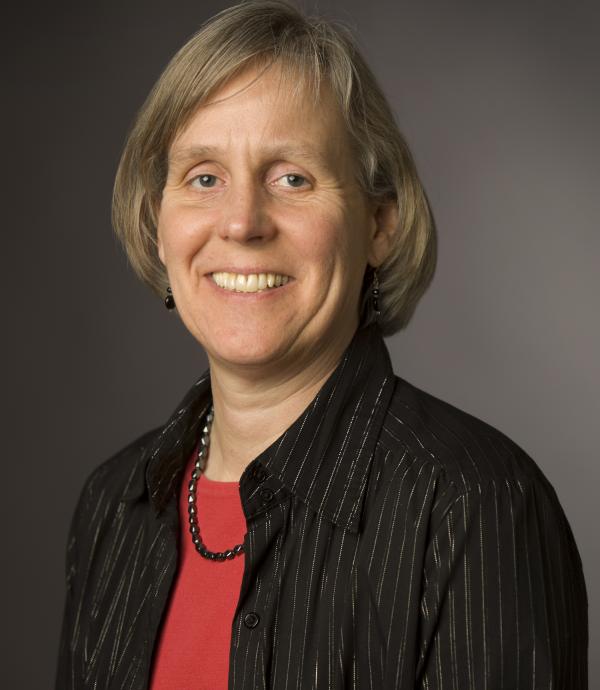
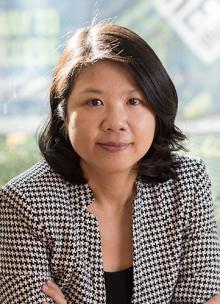
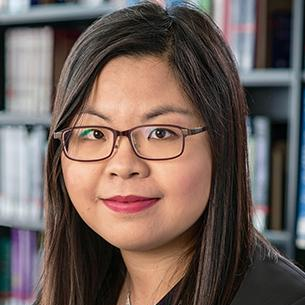
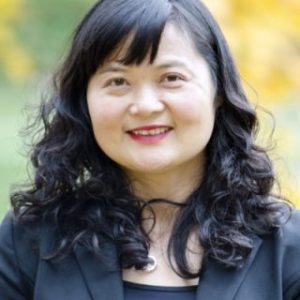
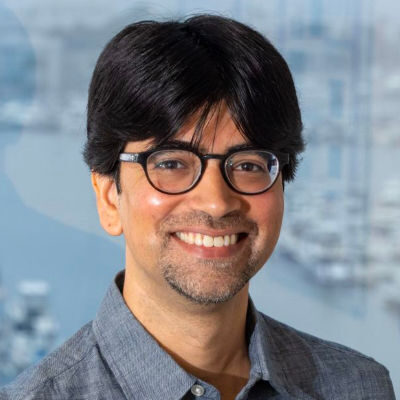
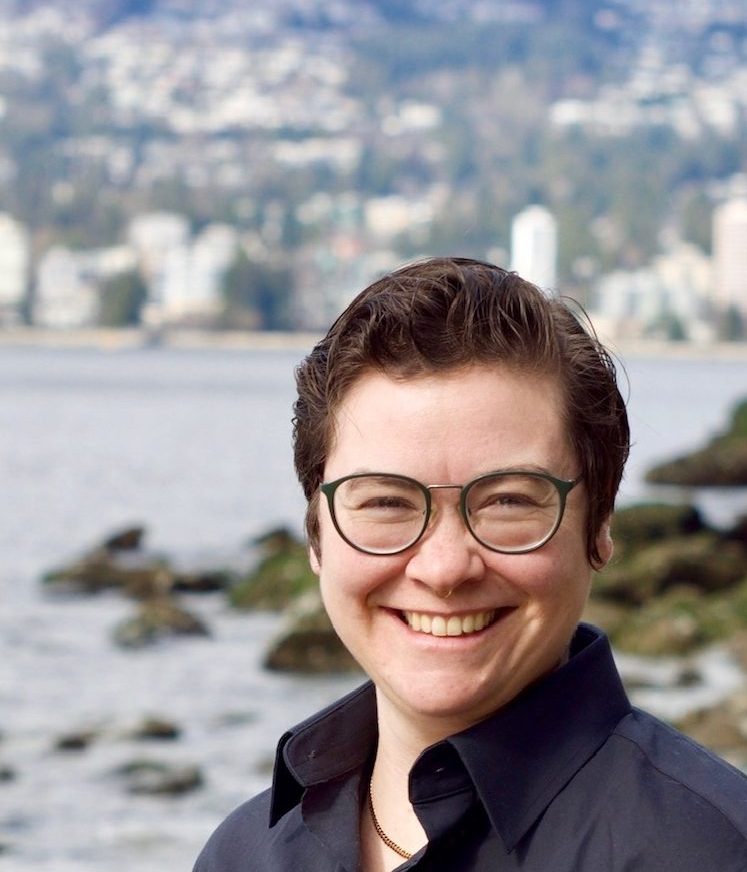
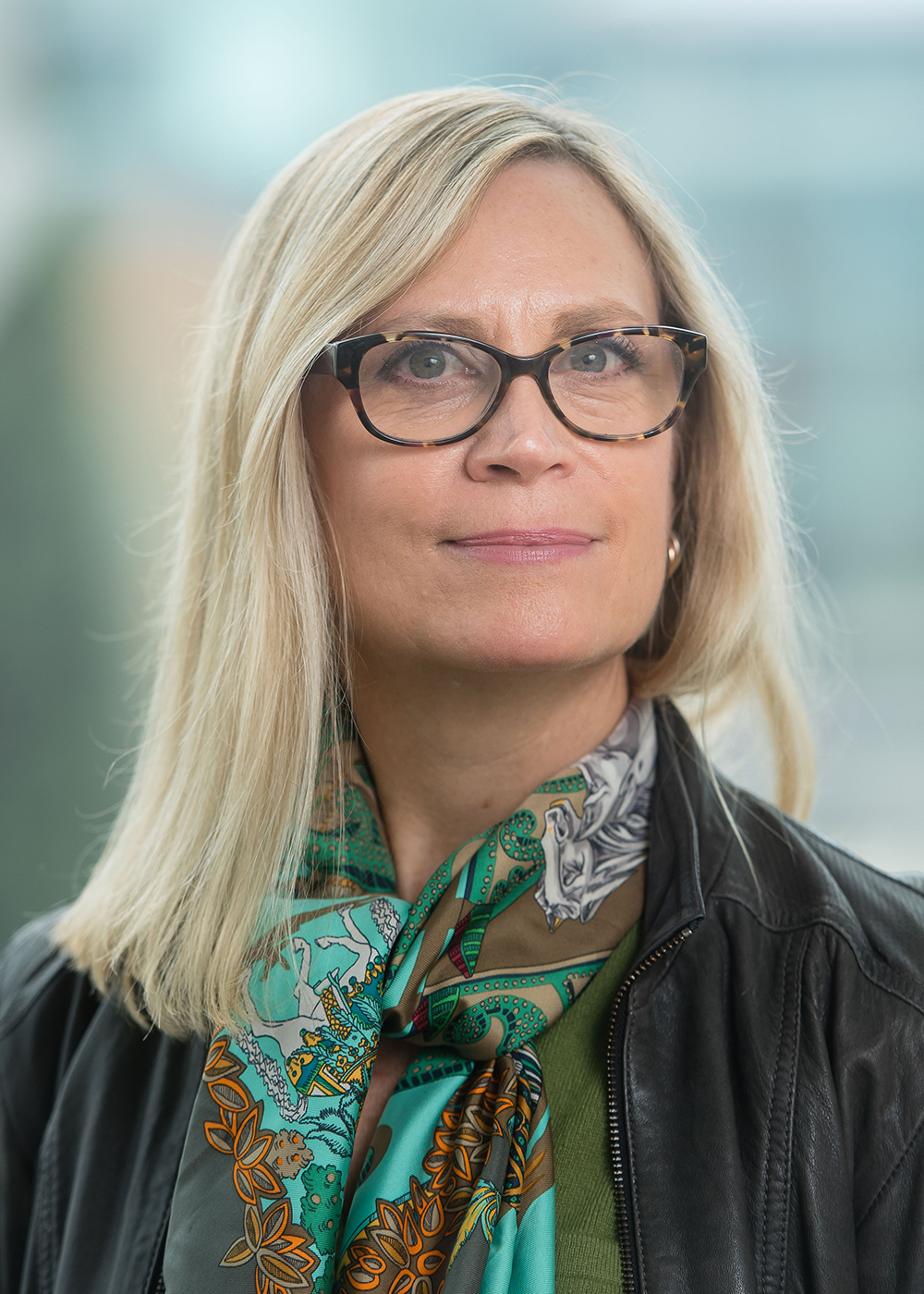
Andrea Carminati is a Full Professor at the Department of Environmental Systems Science, ETH Zurich. His research focuses on soil-plant hydraulics , rhizosphere dynamics , and drought adaptation mechanisms in crops and forest species. He investigates how root traits , soil texture , and biogenic substances like mucilage influence water uptake , gas exchange , and soil microbial activity . Key Research Areas: Soil-Plant Water Relations Rhizosphere Hydrology Drought Resistance in Maize and Trees Microplastics in Agricultural Soils Hydraulic Redistribution and Isohydricity Contact: Email: andrea.carminati@usys.ethz.ch Phone: +41 44 633 61 60 Recent studies highlight his work on soil texture-specific transpiration responses , rhizosheath properties under drought , and microplastic impacts on soil hydrology . He employs advanced techniques like X-ray computed tomography and neutron radiography to visualize root-soil interactions.
Shyon Baumann is an Associate Professor in the Department of Sociology at the University of Toronto, where he has held faculty positions since 2002. He maintains an affiliation with the Centre for the Study of the United States (CSUS) and previously served as Co-Editor-in-Chief of Poetics (2015-2017) while holding multiple administrative roles within the university. His educational background includes: PhD in Sociology from Harvard University Professor Baumann's research centers on the sociology of culture, examining cultural evaluations, preferences, and choices through the lens of social inequality. His work investigates how cultural consumption and production intersect with status hierarchies, with primary case studies in film, television, advertising, music, and food. He is particularly renowned for his contributions to food studies, analyzing the gourmet foodscape and ethical consumption dynamics. His recent publications (2021-2025) reveal a concentrated focus on food sociology, especially meat consumption ethics, the 'meat paradox,' and producer-consumer relationships in sustainable food systems. Parallel research explores cultural capital acquisition across life stages and omnivorous consumption patterns in music and high-status goods, consistently linking cultural practices to social stratification. His notable recognition includes: Best Student Paper (Co-Winner), Culture Section of American Sociological Association (2001) Professor Baumann has taught core sociology courses including Media Ethics and Policy and Sociology of Culture. His editorial leadership at Poetics and sustained research output demonstrate significant scholarly influence, though specific grant details and student mentorship records aren't publicly documented in the provided materials.
Dr. Mildred E. Warner is a renowned Professor in the Department of City and Regional Planning at Cornell University's College of Architecture, Art, and Planning. Her work spans local government service delivery, economic development, environmental sustainability, and multigenerational planning, with a focus on challenging gender biases and promoting social infrastructure as a catalyst for economic growth. She collaborates globally with local government associations, planners, and policy groups. Ph.D. in Development Sociology (1997), Cornell University M.S. in Agricultural Economics (1985), Cornell University B.A. in History (1979), Oberlin College Dr. Warner's research interrogates the impacts of privatization, fiscal decentralization, and market-driven approaches on local governance, emphasizing spatial inequality and rural-urban disparities. She investigates age- and gender-based planning, environmental policy, and pragmatic municipalism, with recent work analyzing water affordability, broadband access, and pandemic response strategies. Her comparative international studies span Canada, Ecuador, Honduras, the UK, Germany, the Netherlands, Spain, and China. Her publications highlight trends in privatization , remunicipalization , public-private partnerships , and age-friendly urban planning . These works often intersect with public health policy , environmental justice , and social equity in service delivery. Scientific awards include the Margarita McCoy Award (2020) , Planning for Social Inclusion Award (2006) , and the Excellence in Research Award (2019) . She has secured major grants from the USDA, NIH, Pew Charitable Trusts, and international bodies to fund her work on aging, rural development, and infrastructure equity. Dr. Warner mentors graduate students in planning and public administration, advising on research design and community development. She directs the Local Government Restructuring Lab and co-founded the Community and Regional Development Institute at Cornell. Her expertise is frequently sought in policy circles and media profiles.
Kristine Andra Avram is a Visiting Researcher at the Center for Conflict Research (ZfK) at Philipps University of Marburg, serving as a Post-doctoral fellow in the BMBF project 'Transformations of Political Violence' (2024-2025). Her work bridges peace and conflict studies, narratology, and social sciences with a focus on meaning-making in contexts of political violence and state repression. Her educational background includes a PhD in Political Science (summa cum laude, 2022) from Philipps University of Marburg, an MA in Peace and Conflict Studies (2010-2013) with study abroad at the University of Haifa, and a BA in Communication Science and Romance Studies (2007-2010) from the University of Erfurt, including Erasmus at Complutense University of Madrid. Avram's research examines how narratives shape interpretations of violence, influence reckoning with traumatic pasts, and inform transitional justice efforts. Using interdisciplinary narrative and (auto)ethnographic methods, she reveals storytelling as a site of agency and resistance—both for processing historical violence and envisioning just futures. Her work centers on concepts like responsibility, truth, and hope within post-communist contexts, particularly Romania. Her recent publications (2023-2025) demonstrate methodological innovation in narrative analysis applied to political violence, with increasing attention to researcher positionality and reparative methodologies. Articles span qualitative frameworks, courtroom narratives, postcolonial critiques of peacebuilding, and ethical dimensions of studying violence. Key scientific awards include: Dissertation Award from Südost-europagesellschaft (2023) Honorable Mention from Gert-Sommer-Award for Peace Psychology (2023) Mobility Grant from EISA (2023) Scholarships from MARA, Friedrich Ebert Foundation, and University of Haifa She has secured significant research funding including a Fritz Thyssen Foundation grant (2017-2022) as co-applicant and has taught courses on narrative reconstructions of the past at Philipps University Marburg and Goethe University Frankfurt. Her advisory work includes designing memory projects and conflict resolution initiatives with pax christi Rhein-Main. Avram actively collaborates within the Center for Conflict Research's interdisciplinary teams, focusing on political violence, transitional justice, and narrative methodologies in post-communist contexts through projects like 'Ascribing Individual Criminal Responsibility' and 'Transformations of Political Violence'.
Tyran K. Steward is an Assistant Professor of History at Williams College, specializing in African-American and Modern U.S. History. His research intersects political, labor, and social history with analyses of popular culture and sport, particularly focusing on racial dynamics in the North during the early twentieth century and the American Interwar Period. Education: B.A., Morehouse College (2000) M.A., Eastern Michigan University (2009) Ph.D., Ohio State University (2013) Steward’s forthcoming book, The Benching of Willis Ward , examines the 1934 racist benching of a Black football player at the University of Michigan, using this incident to trace the emergence of black conservatism and northern Jim Crow structures. His work highlights how sports serve as critical sites for racial hierarchy and political reimagining. His publications include analyses of racial liberalism in academia, Black women's citizenship struggles, and reviews of seminal works in African-American Studies. Steward has advised senior theses on topics like reparations and Black internationalism, and previously held a Mellon Postdoctoral Fellowship at Carleton College.
Ying-Yi Chih is a Professor of Project Management at the Research School of Management, Australian National University (ANU) , and serves as the Associate Dean (Students and Industry Experience) for the College of Business and Economics. Her research focuses on project management, public-private partnerships (PPPs), value co-creation in projects, and employee well-being in project-based environments like the construction industry. She has published extensively in journals such as International Journal of Project Management and Journal of Construction Engineering and Management , with funding from government and industry sources. Education: PhD in Project Management Research Interests include: Infrastructure Project Planning and Management Public-Private Partnerships (PPPs) Value Co-Creation in Professional Services Employee Psychological Well-being and Performance Management Recent Publications highlight trends in green innovation, crisis resilience, leadership dynamics, and technology adoption in construction and project management. Her work bridges theoretical frameworks with practical applications in the AEC (Architecture, Engineering, Construction) industry and public sector projects. Editorial Roles: Associate Editor for Journal of Management in Engineering and Editorial Board member for Journal of Vocational Behavior . Research Projects have explored value co-creation, international development projects, and performance management in multi-project environments, with collaborations across Australia, Taiwan, Vietnam, and the Philippines.
Dr. Zhiying Ma is an Assistant Professor at the University of Chicago Crown Family School of Social Work, Policy, and Practice , with faculty affiliations at the Center for East Asian Studies, Center for the Study of Gender and Sexuality, and Global Studies Program. She holds a joint PhD in Comparative Human Development and Anthropology from the University of Chicago and bachelor's degrees in Psychology and Philosophy from Peking University. Research Focus: Examines biopolitical paternalism in China's mental health governance Develops peer support systems for persons with serious mental illnesses Investigates intersections of disability rights, care ethics, and welfare systems Conducts ethnographic fieldwork in psychiatric hospitals and community teams Key Projects: Led a CBPR pilot project (2019-2021) to create peer support manuals in Guangzhou, and currently scales services in Guangzhou/Yunnan with Cyrus Tang Foundation support. Collaborated with the WHO on community mental health models. Scientific Recognition: 2021 Ford Global Fellow Published in SSM-Mental Health , Cultural Anthropology , and Disability Studies Quarterly Advocacy & Impact: Combines scholarship and activism , consulting for NGOs on disability livelihoods and gender equality. Collaborates with China's community mental health teams to improve service fidelity and client satisfaction.
Roberto Navigli serves as an Associate Professor in the Department of Computer Science at Sapienza University of Rome, conducting pioneering research in Natural Language Processing. He holds editorial leadership positions including Associate Editor of the Artificial Intelligence Journal and membership on the Journal of Natural Language Engineering editorial board. His research program centers on multilingual semantic technologies, with foundational contributions to word sense disambiguation, ontology learning from unstructured text, and large-scale knowledge acquisition systems. Navigli's work bridges theoretical linguistics with practical applications in relation extraction and open information extraction, emphasizing cross-lingual capabilities and resource scalability. Publication analysis reveals a sustained focus on semantic resource development, evolving from early WordNet extensions (2003) to contemporary open knowledge extraction frameworks (2015). This trajectory demonstrates consistent innovation in transforming unstructured text into structured knowledge representations for multilingual applications. Major scientific recognition includes: Marco Cadoli 2007 AI*IA Prize for best doctoral thesis in AI Marco Somalvico 2013 AI*IA Prize for best young AI researcher ERC Starting Grant (2011-2016) for multilingual word sense disambiguation Google Focused Research Award on Natural Language Understanding Navigli directs significant research initiatives funded by competitive grants, including his ERC project and Google collaboration, while providing academic leadership through area chair roles at ACL, WWW, and *SEM conferences. His service as senior program committee member for IJCAI and editorial board positions underscores substantial community impact.
Anne Jamison serves as a Tenure track adjunct faculty in the Department of International Economics, Government and Business at Copenhagen Business School. Her research aligns with UN Sustainable Development Goals, particularly SDG 16 (Peace, Justice and Strong Institutions). Her primary research areas include: International Political Economy Political Risk and Sovereign Credit Populism and Ideational Systems Foreign Direct Investment and Indigenous Communities Energy Projects and Violent Conflict in Fragile States Recent publications (2024-2025) reveal a focus on integrating high-frequency political, environmental, social, and governance (ESG) data to model sovereign credit risk, and examining cross-national variation in populist support through demand-side explanations. She investigates how World Bank-funded infrastructure projects correlate with violent conflict in fragile contexts, advocating for systemic reform in international development finance. Dr. Jamison has supervised three research projects and engaged with global media to disseminate findings on corporate accountability in conflict zones, emphasizing practical policy implications for multilateral institutions.
Guofang Li is a Professor in the Department of Language and Literacy Education at the Faculty of Education, affiliated with the Centre for Early Childhood Education & Research (CECER). Her work centers on bilingual development and literacy education within multicultural contexts, particularly focusing on Chinese-Canadian communities. Her research interests include: Early bilingual development Family literacy practices Early literacy instruction methodologies Early education for minority learners Teacher education for multilingual classrooms Analysis of her 2021-2025 publications reveals a concentrated focus on Chinese-Canadian children's bilingual development, examining home literacy environments, digital technology impacts, and pandemic-related disruptions. She consistently advocates for equity-focused approaches in superdiverse educational settings, emphasizing translanguaging practices and critical perspectives on linguistic justice. Scientific Awards: No awards explicitly mentioned in source materials Advising and Grants: No specific student names or grant information provided in source materials Labs and Teams: Centre for Early Childhood Education & Research (CECER): An interdisciplinary hub facilitating collaborative research between academics, educators, and community partners focused on advancing evidence-based early childhood education practices through longitudinal studies and community-engaged projects.
Max Planck Institute of Colloids and InterfacesGermany
Dr. Jay Pujara is a Research Associate Professor of Computer Science at the University of Southern California (USC) and Director of the Center on Knowledge Graphs. He is also a Principal Scientist at the Information Sciences Institute (ISI) and leads research teams in data science and AI. Ph.D., University of Maryland, College Park (2016) M.S. and B.S. in Computer Science, Carnegie Mellon University Research Interests include artificial intelligence, probabilistic models, knowledge graph construction, statistical relational learning, NLP, and streaming inference. His work focuses on scalable algorithms for big data and uncertainty modeling in dynamic environments. Recent Publications highlight advancements in knowledge graphs, LLM reasoning, and table understanding. Notable topics include non-verbal abstract reasoning , faithful conversational datasets , and KGQA re-ranking . Scientific Awards : SWSA Ten-Year Award (2023), Outstanding Paper (IUI 2019), Top Reviewer (NeurIPS 2018), Best Paper (SRL Workshop 2016) Advising & Grants : Mentored 12+ graduate students, including Ph.D. advisees on topics like causal modeling and neuro-symbolic tasks. Secured NSF funding for table understanding in paleoclimate studies.
Callan Hummel (they/them) is an Assistant Professor in the Department of Political Science at the University of British Columbia's Faculty of Arts. Their research focuses on why and how communities with little political power organize and negotiate with their governments, with particular expertise in comparative politics, civil society, LGBTQ+ policy, labor politics, health policy, and Latin American politics. Hummel earned their Ph.D. and M.A. from the University of Texas at Austin in 2017 and 2014, respectively, and completed their B.A. at the University of Washington in 2009. As a nonbinary researcher, they bring unique perspectives to their work examining political power dynamics and marginalized communities. Dr. Hummel is the author of Why Informal Workers Organize: Contentious Politics, Enforcement, and the State (Oxford University Press 2021), which won the 2023 Riker Prize for the Best Book in Political Economy. Their current research agenda examines the expansion of trans and nonbinary rights globally, using diverse methodologies including statistical analysis, ethnography, survey, computational, experimental, and formal modeling. They conduct field research with trans-led NGOs and street vendor unions in Miami, Florida, La Paz, Bolivia, and São Paulo, Brazil. Hummel's recent scholarly output demonstrates a strong focus on transgender rights, particularly in Latin American contexts, with several 2024-2025 publications examining gender-affirming policies in Bolivia and transgender experiences in Florida. Their work consistently bridges political science with public health concerns, particularly regarding the impacts of policy on marginalized communities. The research combines comparative analysis with deep ethnographic engagement, often focusing on how informal workers and transgender communities navigate state institutions. 2023 Riker Prize for Best Book in Political Economy Publications in Lancet Global Health , BMJ Global Health , British Journal of Political Science Research funded by NIH, NSF, Department of Education, and APSA Dr. Hummel actively supervises graduate students and has contributed to understanding harassment and satisfaction among political science graduate students. Their interdisciplinary approach connects political science with public health, gender studies, and economic sociology. They are available for collaborations through research clusters and grant opportunities at UBC.
Victoria Lemieux is a Professor at the University of British Columbia (UBC) Faculty of Arts, School of Information, and Cluster Lead for Blockchain@UBC, Canada’s largest research cluster focused on blockchain technology. Her research centers on risks to trustworthy records in blockchain systems and their impact on transparency, financial stability, and human rights. She has pioneered Canada’s first research-oriented graduate blockchain training program and organized multiple interdisciplinary summer institutes. Education: Ph.D. in Archival Studies from University College London (2002), Certified Information Systems Security Professional (CISSP, 2005). Affiliated with UBC’s Peter Wall Institute for Advanced Studies, Sauder School of Business, and Institute for Computers, Information and Cognitive Systems (ICICS). Research interests span blockchain technology , trustworthy records , risk management , information governance , and visual analytics , with recent work addressing healthcare data frameworks, Web3 AI integration, and socio-cultural dynamics of decentralized systems. She has published extensively on blockchain applications in archives, land transactions, and privacy-preserving technologies. Scientific Awards : 2015 Emmett Leahy Award 2015 World Bank Big Data Innovation Award 2016 Emerald Literati Award 2016 Emerald Literati Outstanding Paper Award Supervision: Currently accepts doctoral students in Computational Archival Science and blockchain-related archival research. Affiliated with the Blockchain@UBC cluster and multidisciplinary research teams exploring decentralized systems for social good.
Michele Gelfand is a Professor of Organizational Behavior at the Stanford Graduate School of Business and Professor of Psychology by courtesy at Stanford University . She is renowned for her research on cross-cultural organizational behavior, negotiation, conflict management, and cultural psychology. Her work explores the concept of tight and loose cultures and their impact on global leadership, organizational dynamics, and societal responses to threats. PhD in Social and Organizational Psychology, University of Illinois, Urbana-Champaign (1996) Her research spans interdisciplinary approaches, integrating computational methods, neuroscience, and behavioral science to understand cultural evolution and its multilevel consequences. She has led groundbreaking studies on the effects of cultural tightness-looseness on political polarization, pandemic responses, and corporate mergers. Recent publications highlight her work on social norm dynamics, threat-driven cultural adaptation, and the psychological underpinnings of political and terrorist ideologies. Her articles frequently appear in top journals such as Science , Nature Human Behaviour , and Proceedings of the National Academy of Sciences . Notable scientific awards include the 2020 Katzell Award , 2016 Diener Award , and 2011 Anneliese Maier Research Award . She has also been elected to the National Academy of Sciences and the American Academy of Arts and Sciences . Gelfand’s Culture Lab at Stanford investigates topics like cultural norms, revenge, forgiveness, and diversity. She actively mentors postdoctoral researchers and serves as an editor for the Oxford Handbook of Cross-Cultural Management . Her executive education programs focus on global leadership and negotiation strategies.
Dr. Basak Tas is a Research Fellow at King's College London, based in the Institute of Psychiatry, Psychology & Neuroscience within the Department of Addictions Sciences. She has been working at King's since 2014, initially as a PhD student and then as a Post-doctoral Research Associate, before taking up her current role in 2021. Her work focuses on opioid overdose and related interventions, collaborating with Professor Sir John Strang and Dr. Will Lawn. Her educational background includes an undergraduate degree in Neuroscience from King's College London and an MSc in Neuroscience from the University of Edinburgh. She completed her PhD at King's College London under the supervision of Professor Sir John Strang, Dr. Caroline Jolley, and Dr. James Bell. Her PhD thesis was titled "Clinical and Laboratory Investigation into Heroin and Opioid Overdose Risk". Dr. Tas's research centers on opioid overdose mechanisms, opioid use disorder treatments, and health interventions to reduce drug-related deaths. She investigates experimental drug studies and develops wearable technologies for overdose detection. Her work aims to understand the physiological underpinnings of overdose and create practical tools for real-world overdose prevention, particularly in high-risk populations. Her recent publications (2020-2025) focus on innovative approaches to prevent opioid overdose deaths, including wearable biosensors (e.g., PneumoWave) and mHealth technologies. She explores risk factors for respiratory depression and the acceptability of detection devices among people who use opioids. Her work bridges laboratory models of overdose with clinical applications in supervised injecting facilities and community settings. Dr. Tas was awarded the following scientific award: Addictions Clinical Academic Group (CAG) Early Career Research Prize (2022) She contributes to teaching by supervising MSc Addiction Studies projects and teaching in the BSc Psychology "Addictions" and "Choices" modules. Additionally, she has been involved in public engagement, including school workshops and the art-science project "Heroin Bodies". Dr. Tas is part of the Drugs Research Group within the Addictions Department at King's, led by Professors John Strang and John Marsden. Her current work involves collaboration on projects related to opioid overdose and wearable technologies.