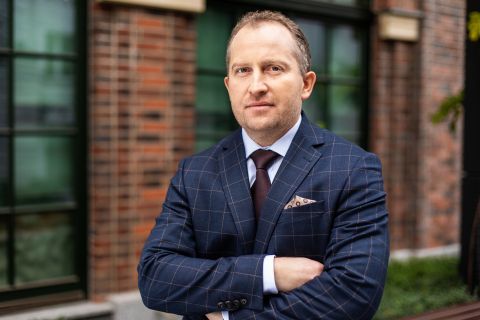
Elizabeth De Armond is a Full-Time Faculty member and Director of the Legal Research & Writing Program at Chicago-Kent College of Law, Illinois Institute of Technology. She holds a B.S. in Information & Computer Science from Georgia Tech, J.D. (magna cum laude) from Notre Dame Law School, and an LL.M. from Harvard Law School. Her expertise spans Legal Research and Writing pedagogy, Fair Credit Reporting Act compliance, and privacy law. She has clerked for the Sixth Circuit Court of Appeals and practiced in real estate transactions and consumer advocacy. Education: LL.M. (Harvard), J.D. (Notre Dame), B.S. (Georgia Tech) Research focuses on consumer protection, digital privacy, and RICO act applications. Key publications include scholarship on credit reporting preemption and privacy in the digital age. Awarded for 2017's 'Preventing Preemption' legal article. Active contributor to National Consumer Law Center publications since 1998. Scientific Awards: 2017 American College of Consumer Financial Services Writing Competition (Professional Division) Advances curricular reform in legal skills education, emphasizing experiential learning integration. Engaged in interdisciplinary work at the intersection of technology, privacy, and legal practice. Serves on editorial boards and provides expert commentary on AI-driven privacy challenges.
Dr. Temitope Lawal is a Research Fellow at Northumbria University, affiliated with the Business and Law School, where he contributes to the PROBabLE Futures initiative focused on the responsible use of probabilistic AI in law enforcement. His expertise lies at the intersection of law, technology, and public policy, with a strong emphasis on the ethical and legal implications of emerging technologies. His research interests include artificial intelligence and law, digital governance, cybercrime, AI in criminal justice, internet governance, and cross-border legal regulation. He actively engages in policy development and has contributed to consultations on AI, copyright, and criminal court reform. Dr. Lawal's recent publications reflect a strong trend in examining the integration of AI into policing and legal systems, with a focus on accountability, ethics, and regulatory frameworks. His work spans comparative studies between the UK and Australia, African perspectives on cybercrime, and the future of digital evidence in courts. Fellow at the Centre for Space, Cyberspace, and Data Law, Bond University Member of the Law, Literature, and Humanities Association of Australia Dr. Lawal has advised on and led the development of professional tech policy courses, including Australia’s first such program at the Australian National University. He has participated in numerous conferences and workshops globally, contributing to academic and policy discourse. His professional background includes legal practice at Banwo & Ighodaro, regulatory work at the Nigerian Communications Commission, and academic coordination at Bond University. He is actively involved in research events and knowledge exchange. He is part of research teams and initiatives such as PROBabLE Futures and has collaborated with institutions including Bond University, Queen Mary University of London, and the Australian National University.
Dr. L.M. Michelle Bruijn is an Associate Professor at the Department of Legal Methods, Faculty of Law, University of Groningen. Her research focuses on drug-related crime, housing rights, eviction cases, and cannabis regulation, employing quantitative legal research and data science. She holds a Veni Grant (NWO) for the PROHOUSE project (2024–present), investigating housing rights in eviction cases. She is a member of the Young Academy Groningen (YAG), network coordinator of the Scientific Network on Evictions and Housing Research (SNEHR), and a board member of the Dutch Lawyers Association (NJV). Education: PhD in Law (cum laude, 2021) Research Interests: Her work bridges legal theory and societal impact, addressing issues like the interaction between private, criminal, and administrative law. Recent projects include platforms for mayors to tackle drug crime ethically and an interactive case law database. She also collaborates with NGOs like the Centrum voor Criminaliteitspreventie en Veiligheid (CCV) and health institutions like the Trimbos Institute. Awards: Ben Feringa Impact Award (2022) for societal research impact Veni Grant (NWO, 2024) for PROHOUSE project Teaching and Skills: Founder and chair of the Groningen Centre for Legal Skills, focusing on legal education and training. Coordinates master’s theses and the Minor Law program. Teaches courses such as 'Law and Legal Skills: The Dutch Example' and 'Juridische Onderzoeksvaardigheden.' Labs/Networks: Leads the PROHOUSE project and contributes to the Groningen Centre for Legal Skills, offering workshops and teaching materials for legal education.
Jose Juan Castelló Pastor is an Associate Professor in the Department of International Law at the Faculty of Law, University of Valencia, Spain. He is actively involved in legal research related to digital law, intellectual property, and European private law. His academic work focuses on the intersection of technology, commerce, and legal regulation in the EU context. Education: PhD in Law, University of Valencia LLM, Queen Mary College, University of London His primary research interests include Private International Law, Copyright Law, Internet Law, E-Commerce Regulation, Digital Platforms, Geo-blocking, and Intermediary Liability . His work explores how EU regulations such as the Geo-blocking Regulation (RBGI), the Portability Regulation, and the Platform Economy Regulation impact consumer rights, market fairness, and jurisdictional challenges in digital environments. His recent publications analyze trends in digital content portability, search engine ranking transparency, and notice-and-takedown mechanisms. These works highlight a consistent focus on balancing intellectual property rights with user access and platform accountability in the digital single market. Scientific Awards: No awards mentioned in the provided text. Castelló Pastor supervises academic research, as evidenced by his PhD thesis on search engines and copyright, advised by Dr. Felipe Palau Ramírez. He is affiliated with two research groups: GIPI (R+D Intellectual Property Group) and GEDPED (Study Group on European Private and Digital Law) . His research contributes to shaping policy discussions on digital regulation in Europe. Labs and Research Teams: GIPI Group R+D Intellectual Property GEDPED Study Group on European Private and Digital Law
Cody Rei-Anderson is a Lecturer at the Business School of Edinburgh Napier University, specializing in Intellectual Property Law and Technology Law with research spanning AI regulation, copyright frameworks, and digital accessibility. Education: PhD in Law, Victoria University of Wellington (2023) LLM, University of British Columbia (2019) JD, University of British Columbia (2017) BA&Sc, McGill University (2012) His research critically examines legal adaptations for emerging technologies , particularly focusing on copyright challenges in AI-generated content , streaming/podcast distribution models , and accessibility of digital legal systems . He investigates how traditional legal frameworks can evolve to address innovation while ensuring equitable access, with strong emphasis on comparative international approaches and policy implications for creators, users, and institutions. Recent publications reveal a cohesive trajectory analyzing digital disruption in copyright ecosystems, shifting from foundational accessibility studies (2018) toward cutting-edge AI copyright questions (2024-2025), demonstrating increasing specialization in technology-law intersections with practical policy applications. Scientific Awards: Victoria University of Wellington Research Excellence Award (PhD) Visiting fellowship at University of Lucerne Dr. Rei-Anderson actively supervises doctoral research, currently serving as second supervisor for Mazafer Ul-raqib's project on Standard Essential Patents in IoT ecosystems. His research is institutionally funded through Edinburgh Napier University grants, supporting his work on global IP law challenges and technology policy development. As a member of the International Association for the Advancement of Teaching and Research in Intellectual Property (ATRIP), he engages with international scholars to advance IP education while contributing to academic discourse through invited presentations at major institutions including University of British Columbia and University of Waikato.
María Pilar Gutiérrez Santiago is a full Professor at the University of León, affiliated with the Faculty of Law's Department of Private Law and Business Law. Her work focuses on Civil Law, particularly contract theory, consumer rights, and medical liability, with a strong emphasis on judicial interpretation of legal codes and doctrines. Education: PhD in Law from the University of León (1997) Research interests include: Civil Law and its intersection with family dynamics Consumer Law and defective product liability Medical liability and informed consent practices Legal reasoning and interpretation theories Post-mortem rights protection Recent publications (2022-2024) highlight trends in: Judicial responses to mortgage foreclosures and consumer arbitration Domestic work compensation under Article 1438 of the Spanish Civil Code Medical malpractice standards in anesthesiology Contractual interpretation and integration theories Compensatory pension termination criteria
Rafał Paweł Poździk is a Professor at the Department of European Union Law, Faculty of Law and Administration, Maria Curie-Skłodowska University in Lublin. His research focuses on European Union Law , EU Fund Management , and Digital Transformation in Public Administration . PhD in Law (2005), Postdoctoral Degree (2016) Legal Advisor at the Main Office of Geodesy and Cartography (2015–present) Legal Advisor at Lublin Voivodeship Marshal’s Office (2015–present) His scientific contributions address EU project management, structural fund recovery, and administrative law compliance. Articles highlight themes like judicial oversight of EU fund usage , competition law , and digital governance . He has contributed to key commentaries on EU funding regulations and administrative procedures.
Dr. Adriana Tomczyk is an Assistant Professor at the University of Szczecin's Faculty of Law and Administration, specializing in civil and private law. She holds a Doctor of Laws degree from 2020, focusing on civil law consequences of violating moral norms between close persons. Her teaching includes family law, inheritance law, and civil law, with a focus on legal protections for persons with disabilities. She actively participates in university governance as the Academic Rights Ombudsman and coordinates accessibility initiatives for students with disabilities. Tomczyk leads the Department for Scientific and Teaching Projects and has secured significant grants for legal research journals and disability inclusion programs. She is a key member of the Civil and Commercial Law Research Team, contributing to nationwide conferences and legal analyses. Her research spans contractual liability, family law dynamics, and disability rights. Recent work examines judicial enforcement officer liabilities and Supreme Court civil rulings. She has organized major conferences like the 2021 'Social Inclusion of Persons with Disabilities' and managed EU-funded accessibility projects. Tomczyk's contributions extend to editorial roles in legal journals and institutional roles enhancing academic standards and international collaboration.
Prof. Dr. Ranka Račić is a Full Professor of Civil Law at the Faculty of Law, University of East Sarajevo. She has held academic positions since 1985, progressing from assistant to full professor by 2011. Her expertise spans Civil Procedure, Non-Litigation Procedures, and Enforcement Law. She teaches courses such as Civil Procedural Law I/II and Real Law at the undergraduate level, and advanced topics like Theory of Executive Procedure at the graduate level. Education: Graduated from the University of Mostar (1985), earned her master's (1991) and doctoral degrees (1997) from the University of Niš. Professional Experience: Worked at Universities in Džemal Bijedić (1985–1992), Podgorica (1992–2000), and Banja Luka (2008–2021) before joining East Sarajevo in 2000. She has held leadership roles including Dean of the Faculty of Law and member of the Senate. Research Interests: Focus on Civil Procedure, Enforcement Law, Legal Remedies, and Procedural Reforms. She has authored over 15 monographs/textbooks and numerous articles on topics like defamation law, enforcement systems, and mental health legal protections. Her work includes contributions to legal reforms in BiH and regional legal harmonization. Professional Activities: Arbitrator at the Foreign Trade Chamber of BiH and Chamber of Commerce of Republika Srpska. Educator at the Center for Judicial Education in Republika Srpska and Montenegro. Member of legal associations in Republika Srpska, Serbia, and Montenegro. Involved in expert projects such as the 'Acceleration of Litigation Proceedings' and 'Support for Competition Policy in BiH.' Grants/Advising: No formal grants mentioned, but extensive involvement in legal education and policy projects. She contributes to legal reforms through working groups and expert consultations. Labs/Teams: Not explicitly noted, but collaborates with regional legal institutions and academic networks.
Roles and Affiliations: Vilhelm Persson is a Professor at the Department of Law, Lund University, with additional roles as Researcher in Public Law, Health Law, and Human Rights Law. He is also a member of the LU Profile Area: Human Rights. His primary email is vilhelm.persson@jur.lu.se. Research Interests: Persson's work spans constitutional law, administrative law, and globalization's impact on public law. Key areas include economic governance of public authorities, freedom of expression, and ethical review standards for research involving humans. He explores cross-border legal challenges, fire protection legislation, and institutional accountability mechanisms. His research bridges theoretical legal frameworks with practical governance issues. Recent Trends in Publications: Recent work focuses on ethical review compliance in social sciences, international healthcare collaboration legal frameworks, and EU policy implementation. He often addresses regulatory gaps in digital and cross-border contexts, emphasizing transparency and accountability in public administration. Grants and Projects: Leads initiatives like 'Strain at a gnat and swallow a camel? Ethical review of humanities and social sciences fit for purpose' (Swedish Research Council, 2022–2025) and the Lund Human Rights Research Hub. Collaborates on projects analyzing autonomous decision-making systems in precision medicine. Labs/Teams: Active in the Lund Human Rights Research Hub, contributing to interdisciplinary work on human rights, legal policy, and global governance challenges.
Ulrika Wennersten is an Associate Professor and Vice Dean for Education at Lund University School of Economics and Management (LUSEM). She holds dual roles as Senior Lecturer in the Department of Business Law and the Department of Law. Her affiliations include the Lund University Centre for Business Law (ACLU). Wennersten specializes in Intellectual Property Law, Media Law, Fashion Law, and Art Law, with a focus on digitalization challenges, legal protection of creative works, and ordre public in patent systems. She has authored influential textbooks like Grundläggande Immaterialrätt and contributes to Nordic and international IP networks. Research Interests: Wennersten’s research examines the intersection of law and creativity, particularly in digital environments. Key areas include copyright enforcement, legal frameworks for emerging technologies (cloud computing, social media), and the balance between commercial interests and societal values. Her work explores ethical dimensions of intellectual property, such as protecting cultural heritage and addressing moral rights in public art. Publications and Projects: With over 35 publications, she has contributed to peer-reviewed journals like NIR: Nordiskt Immaterialrättsskydd and authored chapters on topics like fashion law, design protection, and EU copyright policy. She leads the Lund University Intellectual Property Network (LUIP) and participates in projects analyzing IP challenges in the circular economy and public art preservation. Teaching and Outreach: Wennersten teaches courses on European IP law, commercial law, and fashion studies. She advocates for innovative pedagogical methods, including flipped classrooms. Internationally, she has been a visiting professor at Bocconi University (Italy) and the Ohio State University (USA). She chairs the Immaterialrättsligt Forum (FIF) and leads the Copyright Group at the Swedish Association for Intellectual Property (SFIR). Labs/Teams: Active in the Lund University Centre for Business Law (ACLU), she collaborates with interdisciplinary teams on projects like Public Art and the New Commons , exploring legal and cultural dimensions of public space.
Eric Drott is a Professor of Music Theory at the University of Texas at Austin’s College of Fine Arts, where he holds a joint appointment in the Department of Music Theory. Previously, he earned his PhD at Yale University (2001) and taught there before joining UT Austin. His research spans contemporary music cultures, streaming platforms, protest music, genre theory, digital music, and political economy. His award-winning work includes the book Music and the Elusive Revolution (2011), exploring post-1968 French music communities, and an upcoming book Streaming Music, Streaming Capital analyzing streaming platforms' economies. He co-edited the Oxford Handbook of Protest Music with Noriko Manabe. His research has been published in top journals such as the Journal of the American Musicological Society and Cultural Politics , addressing topics like AI music ethics, music surveillance, and fake-stream fraud. He has received prestigious awards including the National Endowment for the Humanities fellowship and the Royal Musical Association’s Dent Medal (2020). Teaching focuses on 20th-century analysis, current music theory trends, and the intersection of music and social movements. His courses include MUS 321J: 20th-Century Musical Analysis and UGS 303: Music, Protest, and Social Movements .
Dr. Diogo de Oliveira Machado serves as a Casual Academic at the University of New South Wales (UNSW) within the School of Art & Design, Faculty of Arts, Design & Architecture (ADA). He earned his PhD in Law from UNSW, an MSc in Criminology from the University of Glasgow, and an LLB First-Class Honours from the University of Brasília. Prior to his academic career, Dr. Machado worked extensively as an international lawyer, negotiating treaties and advancing international cooperation through major global institutions including the United Nations, G20, OECD, Interpol, FATF, European Judicial Network, Organisation of American States, Mercosur, and International Association of Anti-corruption Authorities. His research spans criminal law, public international law, and cultural heritage protection, with particular focus on transnational crimes and art market vulnerabilities to financial crimes. Dr. Machado's scholarly work bridges his professional legal experience with academic inquiry, examining how legal frameworks can better protect cultural assets from criminal exploitation. Analysis of his recent publications reveals growing emphasis on heritage valuation beyond ownership concepts, particularly within international humanitarian law contexts. His work increasingly addresses the intersection of cultural property protection with anti-money laundering frameworks, highlighting regulatory gaps in art market supervision. Though specific awards aren't listed in available materials, his scholarship is described as award-winning, reflecting significant contributions to understanding cultural property crime and international legal cooperation mechanisms.
Dr. Leon Terrill is a Professor and Director of Online Programs in the Faculty of Law & Justice at the University of New South Wales (UNSW). He specialises in Indigenous land rights, native title, property law, and economic development on Indigenous land. His work bridges legal theory, policy, and practice, focusing on tenure reform, remote housing, and self-determination. Education: BA, LLB (Hons) from the University of Melbourne and a PhD from UNSW. Research interests include Aboriginal land reform, township leasing, and the intersection of property law with Indigenous communities. He teaches Land Law, Native Title Law, and Pacific Island Laws. Dr. Terrill’s research emphasizes empirical analysis of Indigenous land governance and its socio-economic impacts. Key themes in his publications include critiques of neoliberal land policies, comparative studies of Indigenous land rights in Australia and Canada, and the legal frameworks shaping Indigenous economic development. He has authored influential books such as Beyond Communal and Individual Ownership: Indigenous Land Reform in Australia and Native Title from Mabo to Akiba . His work is widely cited in debates over property theory, housing equity, and Indigenous self-determination.
Danaya C. Wright is a Professor of Law at the University of Florida Levin College of Law, where she has established herself as a leading scholar across multiple legal disciplines. Her academic career demonstrates deep expertise in property law, family law, legal history, and constitutional law, with significant contributions to scholarly discourse through her extensive publication record. Professor Wright's research interests span several interconnected domains of legal scholarship. Her work in property law focuses on regulatory takings, railroad easements, and rails-to-trails conversions, examining how property rights evolve in response to changing social and economic conditions. In family law, she explores inheritance equity, child custody history, and legal frameworks governing non-traditional families. Her constitutional law scholarship addresses issues ranging from Article V amendment processes to equal rights for sexual minorities following Obergefell v. Hodges . Professor Wright's interdisciplinary approach often incorporates historical analysis to illuminate current legal debates, particularly regarding women's rights and the evolution of family law, as seen in her influential work 'Well-Behaved Women Don't Make History: Rethinking Family, Law, and History'. Professor Wright's scholarly output reveals an evolving trajectory that maintains her foundational expertise while expanding into new areas. Her early work focused on historical legal developments in family law and property rights, while her more recent scholarship has increasingly addressed constitutional questions, particularly regarding Article V and the Equal Rights Amendment. She has also expanded her research to examine inheritance law in non-traditional family structures, reflecting evolving social norms regarding family formation. The interdisciplinary nature of her work is evident in publications like 'Harry Potter and the Law,' which has garnered over 2,800 downloads on SSRN and demonstrates her ability to engage with legal concepts through popular culture. Professor Wright has made significant contributions to legal scholarship with 28 scholarly papers listed on SSRN and over 5,800 total downloads. Her work has appeared in prestigious law reviews including the Washington and Lee Law Review, Cornell Journal of Law and Public Policy, and the Columbia Journal of Gender and the Law. She has collaborated with numerous scholars across the legal academy, demonstrating engagement with a broad intellectual community. While specific details about Professor Wright's teaching awards or grants are not provided in the available information, her scholarly record suggests active engagement with law students through her teaching of property law, family law, and legal history courses. Her research on historical legal developments and contemporary property issues likely informs a rich classroom experience that connects past legal frameworks to present-day challenges. Her work on non-traditional families and inheritance law suggests she addresses contemporary social changes in her teaching.