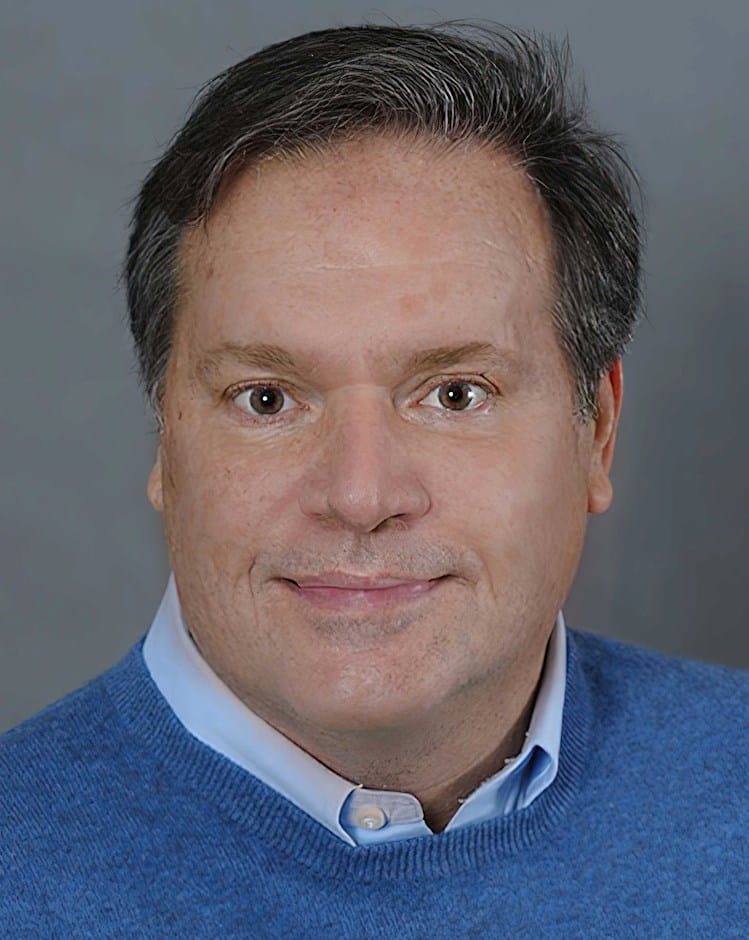
Rodrigo Carril is an Assistant Professor at the Department of Economics and Business at Universitat Pompeu Fabra (UPF) and an Affiliated Professor at the Barcelona School of Economics (BSE). His research focuses on Public Economics and Industrial Organization, particularly examining public procurement policies and their economic impacts. He holds a PhD in Economics from Stanford University (2020) and is a Juan de la Cierva Researcher. Education: PhD in Economics, Stanford University (2020). His work explores topics such as pharmaceutical market dynamics, defense contracting efficiency, and regulatory frameworks for public procurement. He has received prestigious awards including the Claire and Ralph Landau Prize (2020) and the Young Economists' Essay Award (2022). Key research trends include analyzing procurement policies' effects on competition, evaluating preference programs for disadvantaged groups, and methodological contributions to econometric techniques like regression discontinuity designs. Awards: Claire and Ralph Landau Prize 2020 Young Economists' Essay Award 2022 Advising and Grants: While specific grants aren’t listed, his collaborative work involves co-authors like Claudia Allende, Mark Duggan, and Andres Gonzalez-Lira, indicating active academic partnerships. He is affiliated with the BSE and contributes to policy-oriented research initiatives. Labs/Teams: Engaged in interdisciplinary projects at UPF and BSE, focusing on public sector efficiency and regulatory economics.
Dae-Jin Lee is an Assistant Professor at IE University’s School of Science and Technology, specializing in statistical modeling and data science. Previously, he served as a Research Line Leader at the Basque Centre for Applied Mathematics (BCAM) and coordinated the Knowledge Transfer Unit in Data Science/AI. His academic background includes a Ph.D. in Mathematical Engineering (2010) from Universidad Carlos III de Madrid and postdoctoral research at CSIRO (Australia). His research focuses on statistical methods for complex data, including penalized splines, tensor product smooths, and applications in biomedicine, epidemiology, environmental science, and sports analytics. He has led multidisciplinary projects funded by public and industry grants, collaborating globally with experts across fields like engineering, medicine, and biology. Key research themes include predictive modeling for health outcomes (e.g., SARS-CoV-2 pneumonia severity), sports injury prevention, and AI in healthcare. His work integrates machine learning with traditional statistical techniques, addressing real-world challenges like pedestrian dynamics simulations and automated medical diagnostics. He is actively involved in scientific organizations, including the Spanish Biostatistics Society and the Statistical Modelling Society. His recent publications highlight innovations in growth curve modeling, AI ethics, and spatiotemporal data analysis, reflecting his commitment to advancing both theoretical and applied statistics.
Nicholas Polson is the Robert Law, Jr. Professor of Econometrics and Statistics at the University of Chicago Booth School of Business. His academic career centers on Bayesian statistics with applications in financial econometrics and machine learning. Polson's research interests span Bayesian statistics, financial econometrics, Markov chain Monte Carlo methods, particle learning, and deep learning applications in finance. His work has significantly contributed to understanding stochastic volatility models and developing new algorithms for Bayesian inference. He has pioneered applications of deep learning in asset pricing, portfolio management, and financial prediction, demonstrating how neural networks can detect complex patterns invisible to traditional financial models. His recent publication trends reveal a strong focus on integrating deep learning with financial econometrics, particularly in developing characteristics-sorted factor models, portfolio optimization techniques, and explaining the performance differences between active and passive investment strategies. His work consistently bridges theoretical statistical methods with practical financial applications, with a particular emphasis on nonlinear modeling and high-dimensional data analysis. His article 'Bayesian Analysis of Stochastic Volatility Models' was named one of the most influential articles in the 20th anniversary issue of the Journal of Business and Economic Statistics Polson teaches courses including 'Bayes, AI and Deep Learning' and 'Business Statistics' at Chicago Booth, with scheduled offerings for both 2024-2025 and 2025-2026 academic years. His work has been featured in Chicago Booth Review, where he has contributed insights on statistical analysis in chess, machine learning applications in money management, and the odds of cheating in competitive settings. His research demonstrates the powerful intersection of Bayesian statistics, financial modeling, and modern machine learning techniques.
Joseph L. Pagliari is a Clinical Professor of Real Estate at the University of Chicago Booth School of Business. With over 40 years of industry experience, he focuses his research and teaching on issues broadly surrounding institutional real estate investment, analyzing important questions from rigorous theoretical and empirical perspectives. His educational background includes: Bachelor's degree in Finance from University of Illinois-Urbana (1979) MBA from DePaul University-Chicago (1982) PhD in Finance from University of Illinois-Urbana (2002) Professor Pagliari's research centers on asset pricing, strategic use of leverage, portfolio allocation, joint ventures, hedonic pricing, and option-pricing theory. His work specifically addresses the risk-adjusted performance of core and non-core funds, principal/agent issues in incentive fees, comparisons between REITs and private real estate, real estate's pricing and return-generating process, real estate's role in mixed-asset portfolios, and analysis of high-yield financing. His research demonstrates how real estate characteristics impact investment decisions, pricing mechanisms, and portfolio construction across different market conditions and time horizons. His recent publications show a strong focus on understanding leverage dynamics in real estate debt markets, analyzing real estate returns by investment strategy, and examining the role of real estate in mixed-asset portfolios. Pagliari's work on high-yield lending reveals how asset-level volatility significantly impacts mezzanine debt returns, while his research on investment horizons demonstrates how time horizon affects optimal real estate allocations in portfolios. His analysis of credit spreads across different leverage ratios provides critical insights into real estate debt pricing over nearly three decades. Professor Pagliari has received significant recognition for his contributions to real estate research: 2015 winner of PREA's James A Graaskamp Award (recognizing significant research contributions to the common body of knowledge) He actively contributes to the academic and professional real estate community through board memberships and presentations. Pagliari serves on the board of the Real Estate Research Institute (RERI) and previously served on the Real Estate Information Standards (REIS) board. He has presented his research at numerous industry events including ARES, AREUEA, NCREIF, NAREIM, PREA, and ULI, as well as at the Federal Reserve Bank of Atlanta and before a subcommittee of the House of Representatives. His views have also been published in popular press outlets including Barron's and The Wall Street Journal. Professor Pagliari is deeply involved in the real estate academic community, serving as editor of the Handbook of Real Estate Portfolio Management and contributing to numerous academic and professional associations including the American Real Estate Society (ARES), American Real Estate and Urban Economics Association (AREUEA), Homer Hoyt Institute (where he is a Hoyt Fellow), National Association of Real Estate Trusts (NAREIT), National Council of Real Estate Investment Fiduciaries (NCREIF), Pension Real Estate Association (PREA), and Urban Land Institute (ULI).
David Rossell is an Associate Professor at the Department of Economics, Universitat Pompeu Fabra (UPF) in Barcelona, Spain. He is affiliated with the Statistics@UPF research group and directs the Master in Data Science at the Barcelona School of Economics (BSE). Previously, he held positions at IRB Barcelona as head of the Biostatistics Unit and at the University of Warwick's Statistics Department. He obtained his PhD in Statistics from Rice University, Houston (USA), and conducted postdoctoral research at M.D. Anderson Cancer Center under Professors Valen Johnson and Veera Baladandayuthapani. Research Interests: Rossell specializes in high-dimensional statistical inference, Bayesian methods, computational statistics, and applications in biomedicine and social sciences. His work emphasizes methodology for complex data integration, variable selection, graphical models, and experimental design. Key areas include non-local priors, scalable Bayesian computation, and the development of R packages for statistical analysis (e.g., casper , chroGPS , gaga ). Publications: His recent work focuses on advancing Bayesian variable selection, graphical models with external data, and causal inference. Themes include leveraging external datasets for improved model accuracy, robustness to model misspecification, and applications in healthcare and complex mixture analysis. His contributions span methodological innovation and computational tools for high-dimensional problems. Funding & Grants: Rossell has secured funding through Spanish and European grants, including Juan de la Cierva Fellowships, AGAUR fellowships, and Marie Slodowska-Curie Actions. He supports PhD and postdoctoral researchers through programs like La Caixa InPhD and Beca Beautriu de Pinós. Labs & Teams: He leads the BSE Data Science Center and contributes to interdisciplinary collaborations at UPF and IRB Barcelona, bridging statistical theory and practical applications in genomics, epigenomics, and health data analysis.
Jorge Garcia Vidal is a Professor in the Department of Computer Architecture at the School of Computer Science, Universitat Politècnica de Catalunya (UPC). He is a key member of the CNDS - Computer Networks and Distributed Systems research group, with a sustained record of research activity from the late 1980s to the present, including publications projected into 2025. His work bridges theoretical network performance analysis and applied IoT systems, particularly in environmental monitoring. His research interests center on Computer Networks , Internet of Things (IoT) , Sensor Networks , and Data Quality in IoT . He has made significant contributions to ATM network performance, medium access control, and traffic modeling. More recently, his focus has shifted to air quality monitoring using low-cost sensor networks, employing techniques in Graph Signal Processing , Machine Learning , and Anomaly Detection to improve data reliability and estimate pollutants like black carbon. The recent article trends show a strong emphasis on developing data-driven frameworks, virtual sensors, and robust models for environmental IoT platforms. His work integrates advanced signal processing and machine learning to address the challenges of heterogeneous, low-cost sensor data in urban settings. His scientific achievements have been recognized with awards including the Premio Extraordinario de Doctorado and the Premio Mejor Tesis Doctoral . He has advised several doctoral students, including Pau Ferrer-Cid, David Fusté Vilella, Steluta Iordache, and Julian David Morillo Pozo. He is actively involved in numerous competitive and non-competitive R&D projects, such as those related to digital twins, IoT platforms for smart cities, and nature-based urban solutions, often funded by state and regional programs. He collaborates extensively within UPC and with external partners. His research is conducted primarily within the CNDS research group at UPC, a collaborative environment focused on computer networks and distributed systems, with connections to broader initiatives in smart cities and environmental monitoring.
Christian B. Hansen is the Wallace W. Booth Professor of Econometrics and Statistics at the University of Chicago Booth School of Business. He serves as the academic coordinator for Booth's Sokolov Executive MBA Program and is co-editor of the Journal of Political Economy - Microeconomics. Hansen joined the Chicago Booth faculty in 2004 after completing his PhD at MIT. Education: PhD in Economics, Massachusetts Institute of Technology (2004) Bachelor's degree in Economics, Brigham Young University (2000) Professor Hansen specializes in applied and theoretical econometrics, with research focusing on high-dimensional statistical methods in economic applications, panel data models, clustered standard errors, quantile regression, and weak instruments. His most recent work explores the application of machine learning and artificial intelligence techniques to estimate causal and policy effects. Hansen teaches courses including Applied Econometrics, Machine Learning, and Statistics at Chicago Booth. Scientific Awards and Honors: Neubauer Family Faculty Fellow at Booth NSF research grant recipient National Science Foundation graduate research fellow during PhD studies Hansen has published in leading journals including the American Economic Review, Annals of Statistics, Econometrica, Journal of Business and Economic Statistics, Journal of Econometrics, Review of Economics and Statistics, and Review of Economic Studies. He is currently working on a book titled "Applied Causal Inference Powered by ML and AI" with Victor Chernozhukov, Nathan Kallus, Martin Spindler, and Vasilis Syrgkanis.
Gomez Melis, Guadalupe is a Professor at the Universitat Politècnica de Catalunya (UPC), affiliated with the GRBIO research group (Bioestadística i Bioinformàtica) and the Department of Statistics and Operations Research. She collaborates with the Institut de Recerca i Innovació en Salut (Health Research Institute) and the Faculty of Mathematics and Statistics (FME). Her work focuses on biostatistics, survival analysis, multistate models, and clinical trial design, with significant contributions to understanding disease progression and outcomes, particularly in pandemic-related studies. She has supervised doctoral theses and leads various research projects funded by EU and national grants. Her research spans statistical methodologies for healthcare data, including censored data analysis and adaptive clinical trial designs. Key activities include leading over 450 research outputs, including articles in high-impact journals like Biostatistics and BMC Medical Research Methodology , and collaborations on projects like the EU-funded Siemens Energy AI Chair initiative. Her work often integrates statistical modeling with real-world health data, addressing challenges in infectious disease dynamics, elderly patient care, and genomic analysis. Notable contributions include developing the GofCens package for goodness-of-fit methods and the MSMpred interactive tool for predicting patient trajectories via multistate models. She actively participates in international conferences and serves on scientific committees, demonstrating her role in advancing biostatistical methodologies globally.
Pedro Galeano is an Associate Professor in the Department of Statistics at Universidad Carlos III de Madrid (UC3M) since 2009. He holds a PhD in Statistics (2004) under Prof. Daniel Peña, focusing on multiple time series. Previously, he served as Visiting Assistant Professor of Statistics and Econometrics at the University of Chicago’s Graduate School of Business and as a Postdoctoral Fellow at the Department of Statistics and Operations Research at Universidade de Santiago de Compostela. His research focuses on time series analysis, outlier detection, Bayesian inference in financial models, and functional data analysis with applications to missing data. He is an Associate Editor of the Journal of Time Series Analysis and advises the Heliyon journal. Key contributions include developing methodologies for detecting structural breaks, modeling systemic risk via copula approaches, and advancing robust statistical techniques for high-dimensional data. Active in academic leadership, Galeano co-organized the NICDA Workshop 2025 and has published extensively on topics like dynamic factor models, sequential parameter change detection, and functional data applications in energy markets. His work bridges theoretical statistics with practical applications in finance, economics, and environmental science.
Andrea Meilán-Vila is an Assistant Professor in the Department of Statistics at Universidad Carlos III de Madrid since 2021, holding a Juan de la Cierva Fellowship since 2023. She earned her PhD in Statistics from Universidade da Coruña (2021) and previously served as a Postdoctoral Fellow at Universidade de Santiago de Compostela's Department of Statistics, Mathematical Analysis and Optimisation. Her research focuses on nonparametric methods for analyzing complex data types, including directional, spatial, and functional data. Key areas include kernel smoothing techniques, goodness-of-fit testing for regression models, and spatial trend estimation. She serves as an Associate Editor for the Journal of Nonparametric Statistics . Recent work emphasizes applications in climate science (temperature curve modeling), fluid dynamics (wake flow control), and biomedical imaging (hippocampus shape analysis). Her methodologies address challenges like sparse data estimation and spatial correlation in regression frameworks. Key Projects: STENED (Stein-based goodness-of-fit tests for non-Euclidean data) Awards: Juan de la Cierva Fellowship (2023) Publications span journals like Journal of Fluid Mechanics , Statistical Papers , and TEST , with a focus on methodological advancements in statistical modeling and computational validation.
Daniel Fernández-Muñoz is an Associate Professor at the Universidad Politécnica de Madrid (UPM) , affiliated with the Department of Physical Electronics, Electrical Engineering and Applied Physics. He earned his PhD in 2021 with a thesis on "Generation scheduling in isolated power systems with high variable renewable generation and pump-storage," receiving both the Extraordinary Doctoral Award and Carlos González Cruz Award. He has held academic roles since 2006, including Assistant Professor positions from 2016-2021 and a current permanent Associate Professor appointment. Education : PhD in Electrical Engineering (UPM), DEA in Electrical Engineering (2010), Civil Engineering degree (2006) Research Focus : Renewable energy integration, power system optimization, battery degradation modeling, and frequency control in isolated grids Collaborations : Instituto de Sistemas Eléctricos de Potencia (Austria), EERA Joint Programme on Energy Storage, H2020 project eNeuron His work emphasizes hybrid wind-battery systems , pumped-storage hydropower , and virtual power plants , with notable publications in JCR Q1 journals. He has contributed to the Energy2Win project on sustainability education and served as a peer reviewer for multiple scientific journals. Scientific Awards Premio Extraordinario de Doctorado (UPM) Premio Carlos González Cruz Teaching activities include Physics for Biomedical Engineering and Energy Systems for Telecommunications. He has participated in international conferences as an invited speaker and contributed to projects funded by the Spanish government and private entities.
Clemente Jesus Navarro Yañez is a Professor at Pablo de Olavide University , affiliated with the Centre for Urban Political Sociology and Policies and the SPL-UPO Political Sociology and Local Policies Research Group . He contributes to Political Sociology , Urban Sociology , and Comparative Politics through extensive publications and international collaborations. Key research domains include: Urban Regeneration: Methodological frameworks for evaluating urban policy impacts, notably in Andalusia Cultural Scenes: Analyzing how cultural consumption patterns drive local development Political Contention: Comparative studies of protest mechanisms in Southern Europe and Latin America His methodological expertise spans: Quasi-experimental area comparisons Multivariate regression analysis Protest event analysis protocols Cluster analysis of temporal dynamics Scientific contributions appear in Political Studies , European Urban and Regional Studies , and Social Forces , with a focus on: Political participation mechanisms Creative class localization Contextual determinants of municipal governance Comparative housing regime analysis
Aitor Goti Elordi is a Professor in the Department of Mechanics, Design and Industrial Management at the Faculty of Engineering, University of Deusto. His extensive research portfolio spans industrial engineering, maintenance optimization, Industry 4.0 implementation, and sustainable manufacturing practices. He leads multiple EU-funded and industry-collaborative research projects focused on digital transformation in manufacturing sectors. His research interests center around the intersection of industrial engineering and digital transformation, with particular focus on maintenance optimization using evolutionary algorithms, predictive maintenance systems, and the development of future skills requirements for evolving industrial sectors. His work bridges theoretical research with practical industrial applications, particularly in the Basque manufacturing ecosystem. Analysis of his recent publications reveals a strong trend toward interdisciplinary research addressing Industry 4.0 challenges across multiple sectors. His work consistently focuses on practical applications of data science and AI in industrial contexts, with growing emphasis on sustainability and circular economy principles. A distinctive pattern in his research is the development of competency frameworks to identify future skills requirements across various industrial sectors including steelmaking, renewable energy, and supply chain logistics. Professor Goti Elordi leads multiple significant research projects including SUSTASKILLS (2023-2025) focused on industrial symbiosis skills, REshaping Supply CHAins for Positive social impact (2022-2025), and Real-time acoustic sensorS and artificial Intelligence appLications (2023-2026). His work has secured funding from the European Commission, Basque Government, and major industrial partners including SIDENOR, NEMAK, and ETXE-TAR. He actively supervises student projects, particularly in the area of machinery redesign and additive manufacturing applications. His teaching and research integrate practical industrial experience with academic rigor, emphasizing the development of both technical and transversal skills needed for future industrial challenges.
Alberto Maydeu Olivares is a Professor at the Department of Clinical Psychology and Psychobiology, Universitat de Barcelona, within the Faculty of Psychology. He leads the Violence, Behavior, Individual differences and Technology Studies (WITS) research group. His expertise spans psychometrics, structural equation modeling (SEM), and item response theory (IRT). He holds a Licenciatura in Psychology from the Universitat de Barcelona (1988), a Doctorat in Quantitative Psychology from the same institution (1991), and advanced degrees from the University of Illinois, including a Ph.D. in Quantitative Psychology (1997) and masters in Mathematical Statistics and Quantitative Psychology. His research focuses on improving psychological measurement methods, evaluating model fit in SEM/IRT, and addressing methodological challenges in behavioral data. Notable projects include NSF-funded work on SEM fit indices (2017–2020) and AGAUR-supported studies on IRT applications (2014–2017). He teaches advanced courses like Multivariate Analysis and Structural Equation Models at the master’s level. Maydeu Olivares has authored influential papers on goodness-of-fit assessment, causal effect estimation via instrumental variables, and forced-choice test design. His work bridges statistical rigor with practical applications in psychology, addressing issues like faking in assessments and common method bias. He actively contributes to methodological advancements, emphasizing transparent and robust statistical practices.
Ahmed AbuRa'ed is a Researcher at the Department of Information and Communication Technologies (DTIC) at Universitat Pompeu Fabra (UPF), Barcelona. He is affiliated with the TALN research group and the Large-Scale Text Understanding Systems Lab. His work focuses on advancing knowledge in scientific text summarization, information extraction, and machine learning. Education: PhD in Computer Science (2020), UPF, Barcelona, Spain M.Sc. in Computer Science (2015), University of Trento, Italy B.Sc. in Computer Information Systems (2007), An-Najah University, Nablus, Palestine Research Interests: Natural Language Processing (NLP), Machine Learning/Deep Learning, Semantic Web, Information Extraction, Data Mining, and Scientific Document Summarization. His projects include developing systems for automatic generation of state-of-the-art reports, scientific text summarization, and cross-document relation discovery. Publications Focus: His 15 most recent articles (2016–2021) emphasize advancements in scientific literature analysis, including citation detection, text simplification, and cross-document summarization. Notable works involve systems like LaSTUS/TALN for scientific text processing and OlloBot for Arabic health dialogue agents. Labs & Teams: Active member of the TALN research group and the Large-Scale Text Understanding Systems Lab at UPF's DTIC department. Open to collaborations in NLP, Machine Learning, and related fields via email or Skype.