Professor Jo Barraket is a leading academic and researcher in social equity, social innovation, and public policy. As Director of the Melbourne Social Equity Institute and member of the Dilun Duwa Centre for Indigenous Business Leadership, she focuses on improving social equity through organizational innovation, cross-sector collaboration, and policy design. Her research addresses social procurement, health equity, digital inclusion, and employment pathways for marginalized groups. Her work includes landmark projects such as the Australian Digital Inclusion Index and evaluations of Commonwealth Social Enterprise Development Funds. She has secured over $11M in research grants, including multiple ARC grants, and produced over 75 scholarly publications. Her current projects compare social procurement policies in Australia and Scotland, and study youth unemployment in construction via employment-focused procurement. Key research themes include: social enterprise scaling strategies, cross-sector partnerships for policy implementation, and the role of philanthropy in equitable housing. She advises governments and OECD on inclusive employment policies and chairs major research initiatives like the Social Enterprise Impact Lab. Prof Barraket’s transdisciplinary approach combines rigorous academic research with practical outputs like policy guides and digital tools to maximize societal impact. She previously founded the Centre for Social Impact Swinburne, now a global leader in social economy research.
Rodrigo Carril is an Assistant Professor at the Department of Economics and Business at Universitat Pompeu Fabra (UPF) and an Affiliated Professor at the Barcelona School of Economics (BSE). His research focuses on Public Economics and Industrial Organization, particularly examining public procurement policies and their economic impacts. He holds a PhD in Economics from Stanford University (2020) and is a Juan de la Cierva Researcher. Education: PhD in Economics, Stanford University (2020). His work explores topics such as pharmaceutical market dynamics, defense contracting efficiency, and regulatory frameworks for public procurement. He has received prestigious awards including the Claire and Ralph Landau Prize (2020) and the Young Economists' Essay Award (2022). Key research trends include analyzing procurement policies' effects on competition, evaluating preference programs for disadvantaged groups, and methodological contributions to econometric techniques like regression discontinuity designs. Awards: Claire and Ralph Landau Prize 2020 Young Economists' Essay Award 2022 Advising and Grants: While specific grants aren’t listed, his collaborative work involves co-authors like Claudia Allende, Mark Duggan, and Andres Gonzalez-Lira, indicating active academic partnerships. He is affiliated with the BSE and contributes to policy-oriented research initiatives. Labs/Teams: Engaged in interdisciplinary projects at UPF and BSE, focusing on public sector efficiency and regulatory economics.
Professor Tatsuhisa Tamura is affiliated with the Faculty of Law at Waseda University , specializing in Public Law . His academic career spans over two decades, with a focus on local government law, administrative law, and economic regulation. Research Interests include: Public Law : Constitutional frameworks and local governance structures. Disaster Relief Law : Legal systems for JSDF deployment in crises. Economic Regulation : Impacts of deregulation on administrative law. Civic Accountability : Judicial control mechanisms like resident litigation. Policy Reform : Decentralization and carbon-neutral governance. Recent Publications (2015–2020) address municipal financial systems, citizen litigation frameworks, and disaster response protocols. His work emphasizes balancing efficiency with democratic control in shrinking societies. Grants & Projects include: 2025–2029: Sustainable Public Official Law (JSPS Grant). 2019–2022: Civil Defense Systems in Large-Scale Disasters . 2017–2021: Legal Regulation of Local Government Enterprises . 2021–2025: Comparative Studies on Personnel Administration . Teaching involves courses like Local Government Law and Administrative Law at Waseda’s Graduate School of Law. He also contributes to public policy debates on carbon neutrality and judicial transparency.
Hoda Heidari is the K&L Gates Career Development Assistant Professor in Ethics and Computational Technologies at Carnegie Mellon University (CMU), with joint appointments in the Machine Learning Department and the Institute for Software, Systems, and Society. She is affiliated with the Human-Computer Interaction Institute and the Heinz College of Information Systems and Public Policy, and co-leads the university-wide Responsible AI Initiative and K&L Gates Initiative for Ethics and Computational Technologies. Education: PhD in Computer and Information Science (University of Pennsylvania), MSc in Statistics (Wharton School) Her research focuses on the Ethical, Societal, and Policy Implications of AI , particularly fairness and accountability in high-stakes domains. Her work includes evaluating risks/benefits of general-purpose AI, human-AI decision-making systems, and AI governance frameworks. She has received multiple awards, including best paper honors at AIES, FAccT, and SAT-ML. Her research is supported by the NSF Program on Fairness in AI, PwC, CyLab, Meta, and J. P. Morgan. Recent Publications examine generative AI safety, fairness measurement, AI incident documentation, and ethical governance. Her teaching includes courses on Responsible AI, ML Ethics, and Societal Decision-Making, with a focus on preparing students to critically analyze AI's societal impact. Scientific Awards: Best Paper (AIES 2024, FAccT 2021, SAT-ML 2023), Exemplary Track Award (EC 2021) Grants: NSF, PwC, CyLab, Meta, J. P. Morgan She advises doctoral students and postdocs across CMU departments and collaborates with interdisciplinary teams. Her service includes organizing AI safety workshops and advising on NIST guidelines for AI red-teaming.
Mr. Kazi Tansen serves as Lecturer at the University of East London, affiliated with the Architecture, Computing & Engineering research institute. His scholarship addresses blockchain applications in cybersecurity and governance systems. Recent work develops blockchain frameworks for secure e-procurement systems, digital identity solutions for smart cities, and corruption mitigation in public sector procurement. His publications examine blockchain's disruptive potential in transforming cybersecurity protocols and enhancing transparency in governmental operations.
Craig Carter is the John G. and Barbara A. Bebbling Professor of Supply Chain Management at Arizona State University’s Department of Supply Chain Management. He holds the Harold E. Fearon Fellow of Purchasing Management title. His research focuses on sustainable supply chain management, ethical buyer-supplier relationships, environmental supply chain practices, and diversity sourcing. He has advised on over 100 Fortune 1000 firms globally and served as an editor for multiple journals, including the Journal of Supply Chain Management and Decision Sciences Journal. Education: Ph.D. in Business from Arizona State University (1996), B.S. in Business from the University of Maryland (1990). His industry experience includes roles at Ryder Systems and the U.S. Department of Transportation. Research emphasizes unintended consequences of sustainability initiatives, behavioral decision-making in supply chains, and supply chain leakage of greenhouse gas emissions. His work bridges theoretical frameworks (e.g., configurational approaches) with practical applications, such as mitigating supply risk and enhancing collaboration. Recent publications explore topics like honesty contagion in negotiations and informal exchanges impacting sourcing collaboration. He has been recognized for editorial contributions and has been actively involved in shaping supply chain management’s academic trajectory through thought leadership. Courses taught include Strategic Procurement, Global Supply Operations, and seminars on supply chain theory. His work often integrates empirical research with real-world case studies, emphasizing actionable insights for practitioners.
Remko Van Hoek serves as Professor of Practice in the Department of Supply Chain Management at the Sam M. Walton College of Business, University of Arkansas. He teaches Sourcing and Procurement courses across undergraduate, master's, and doctoral programs. Prior to joining the University of Arkansas, Dr. Van Hoek held academic positions in Europe and served as a visiting professor at Cranfield School of Management, complemented by extensive industry experience as a supply chain and procurement executive at global corporations including Nike, PwC, and The Walt Disney Company. He currently serves on the Council of Supply Chain Management Professionals (CSCMP) Board of Directors and acts as executive director of the CSCMP Supply Chain Hall of Fame hosted by the Walton College. Dr. Van Hoek's research centers on digital transformation in procurement and supply chain management, with particular focus on blockchain implementation, artificial intelligence applications, and sustainable sourcing practices. His work investigates how emerging technologies reshape procurement processes, supplier relationship management, and risk mitigation strategies. He explores innovative approaches to supplier diversity programs, ethical sourcing frameworks, and the strategic evolution of procurement from cost reduction to value creation. His research consistently bridges academic theory with industry practice through case studies from major corporations, developing actionable frameworks for practitioners facing digital disruption and sustainability challenges. Analysis of his 15 most recent publications (2023-2025) reveals dominant themes in AI-driven supply chain risk prevention, blockchain implementation for transparency, and sustainable supplier engagement. His work demonstrates consistent industry collaboration, drawing from case studies at Walmart, Moet Hennessy, and Bayer to address post-pandemic resilience challenges. A significant portion examines procurement's strategic evolution beyond transactional functions, with recurring emphasis on ethical considerations in digital transformation and the practical implementation barriers for emerging technologies in global supply networks. As a Professor of Practice, Dr. Van Hoek integrates executive-level industry experience into curriculum development and student mentorship. His industry-engaged teaching model includes guest lecturer programs connecting students with supply chain practitioners, as evidenced by his co-authored work on integrating industry insights into supply chain education. While specific grant funding details are not publicly documented, his leadership in the CSCMP Supply Chain Hall of Fame demonstrates commitment to professional development and industry-academia knowledge transfer. Dr. Van Hoek directs the CSCMP Supply Chain Hall of Fame initiative, which documents transformative contributions to supply chain management through interviews with industry pioneers and historical case studies. This platform serves as both an educational resource for Walton College students and a professional development tool for supply chain practitioners globally. The Hall of Fame preserves critical industry knowledge while highlighting contemporary innovations in supply chain strategy and technology implementation.
Prof. Dr. Evi Hartmann holds the Chair of Business Administration, especially Supply Chain Management at Friedrich-Alexander University Erlangen-Nuremberg (FAU) within the Department of Business, Economics, and Social Sciences. She is actively involved in multiple research focus areas including sustainability, energy markets and energy system analysis, and insurance and risk. Her academic leadership extends across interdisciplinary collaborations with engineering, mathematics, and industry partners. Dr. Hartmann studied industrial engineering at the University of Karlsruhe (TH), received her doctorate in 2002 from the Institute of Technology and Management at the Technical University of Berlin, and completed her habilitation in business administration in 2008. Prior to her academic career, she worked as a consultant at AT Kearney from 1998 to 2005, followed by a junior professorship for 'Purchasing and Supply Management' at the Supply Chain Management Institute at the European Business School. Her research program focuses on supply chain management, purchasing, and strategic foresight, with particular emphasis on application-oriented approaches that bridge theory and practice. Current research trajectories include supply chain resilience in crisis situations (including pandemic response), digital transformation through Industry 4.0 technologies, sustainable and low-carbon supply chains, and the integration of strategic foresight methodologies in logistics decision-making. Her work frequently employs Delphi studies, bibliometric analyses, and multi-tier case studies to examine complex supply chain phenomena. Analysis of her recent publications reveals a strong trend toward interdisciplinary research that combines supply chain management with digital transformation, sustainability, and crisis response. Her work increasingly examines the intersection of technology adoption (particularly Industry 4.0), organizational culture, and supply chain resilience across multiple industries including automotive, food, and maritime logistics. Prof. Hartmann is recognized as the author of two academic bestsellers in her field, though specific awards are not detailed in available materials. Her research has been published in top-tier journals including IEEE Transactions on Engineering Management, International Journal of Production Research, and Journal of Cleaner Production. Her research program demonstrates extensive industry collaboration, with numerous projects involving real-world implementations and close partnerships with companies. She leads research initiatives examining the practical implications of digital transformation, sustainability challenges, and resilience strategies in supply chain operations. Current projects include studies on digital ecosystems, physical internet applications, and the future of freight forwarding technologies. Prof. Hartmann participates in several research networks including the Energy Campus Nuremberg (EnCN) and collaborates with the Department of Mathematics on gas networks and markets research. She is also involved with the Nuremberg Energy Region (Energieregion Nürnberg eV) and contributes to interdisciplinary research centers focused on sustainable development and digital transformation in supply chains.
University of California, Los AngelesUnited States
Christopher S. Tang is a UCLA Distinguished Professor and Edward W. Carter Chair in Business Administration at the Anderson School of Management , where he researches global supply chain management with a focus on social innovation in developing countries . He also serves as Senior Associate Dean for Global Initiatives and Faculty Director of the Center for Global Management . Education: Ph.D. in Management Science (1985, Yale University) M.Phil. in Administrative Science (1983, Yale University) M.A. in Statistics (1983, Yale University) B.Sc. in Mathematics (First Class Honors, 1981, King’s College, University of London) His research explores the intersection of corporate responsibility and supply chain innovation , addressing topics like microfinancing , mobile platforms for developing economies , direct agricultural procurement , and disaster response logistics . He emphasizes visibility, integrity, and agility in uncertain environments. Recent work highlights AI adoption benefits for supply chains , strategies to reduce forced labor risks , and policy impacts on ride-sharing platforms . His research bridges operations management and social justice , advocating for environmental stewardship alongside business growth. Scientific Awards: Salzberg Medallion (2017) Lifetime Fellow, INFORMS (2011) Responsible Research in Management Award (2017) Teaching Excellence Award (multiple years, UCLA-NUS) Dean’s Excellent Service Award (2014) As an influential adviser and consultant , Tang has worked with Amazon, HP, IBM, Nestlé, GKN , and Accenture . He has taught at Stanford University, UC Berkeley, Hong Kong University of Science and Technology , and served as visiting professor at Cambridge University and the Institute of Advanced Study at HKUST .
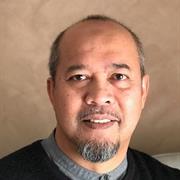
Associate Professor Bambang Trigunarsyah holds a position at RMIT University since 2018, affiliated with the School of Property, Construction and Project Management (PCPM). He earned his BSc in Civil Engineering from Colorado School of Mines, a Master's in Civil Engineering (Construction Management) from the University of Indonesia, and a PhD in Engineering Project Management from the University of Melbourne. His career spans industry roles, including project engineering in Indonesia's oil and gas sector, academic leadership at the University of Indonesia, and international teaching/research appointments at Queensland University of Technology (QUT) and King Fahd University of Petroleum and Minerals in Saudi Arabia. Research interests focus on post-disaster reconstruction, infrastructure project governance, constructability of infrastructure, and project management in developing countries. Notable projects include risk management frameworks using blockchain, circular economy in Saudi construction, and BIPV energy solutions. He actively supervises HDR students in areas like public-sector project success determinants and thermal environment studies. Bambang serves as Higher Degree Research Delegate Authority (HDR DA) for the School of PCPM and teaches postgraduate project management programs. Professional memberships include AIPM, PMI, and ASCE. His industry advisory roles include Indonesia's National Construction Service Development Board (2002-2007) and Australia-Indonesia Centre's Infrastructure Cluster (2016-2018). Recent research emphasizes BIM applications in infrastructure preservation, risk assessment methodologies, and climate-resilient construction. His work bridges theory and practice, addressing challenges in emerging economies and complex project environments.
Jonathan P. Wong is a Senior Policy Researcher at the RAND Corporation and Professor of Policy Analysis at the RAND School of Public Policy. His work bridges academic research and defense policy, focusing on military strategy, acquisition, force planning, and the integration of emerging technologies into military operations. Education: Ph.D. and M.Phil. in Policy Analysis (Pardee RAND Graduate School), M.A. in Security Studies (Georgetown University), B.A. in Political Science (UC San Diego) Professional Experience: U.S. Marine Corps infantry officer (2001–2011), Consultant at Boston Consulting Group, current RAND researcher and professor Wong’s research interests center on defense innovation, military logistics, artificial intelligence in warfare, space capabilities, and the human dimension of military operations. He has led studies on human-machine teaming, non-lethal weapons, defense acquisition reform, and U.S. military posture in the Indo-Pacific. His work emphasizes practical, policy-relevant insights grounded in operational experience. The trends in his recent publications reveal a deep engagement with modern defense challenges: integrating commercial technologies into military systems, improving acquisition agility, enhancing battlefield awareness, and ensuring that defense innovation serves warfighter needs. His research spans strategic, operational, and tactical levels, often focusing on the U.S. Army and Marine Corps. Wong has not received public recognition in the form of listed awards in the provided texts, but his leadership in congressionally mandated studies and high-impact policy research suggests significant influence in defense circles. Advising & Grants: Co-led major projects such as the Long Range Precision Fires study and research on integrating women into Marine Corps infantry. His work is frequently funded by the Department of Defense and other federal entities, though specific grant details are not listed. Wong is affiliated with RAND’s defense and national security research teams, contributing to strategic analysis and policy development. He is not associated with a formal lab but works within RAND’s collaborative research environment, often partnering with other veterans and defense experts to produce actionable insights for military leaders and policymakers.
Robert Swinney is the Senior Associate Dean for Executive MBA and Quantitative Management Programs and a Professor of Operations Management at Duke University's Fuqua School of Business. He specializes in strategic supply chain operations, consumer behavior dynamics, and platform management. His research explores sustainability, risk mitigation, and ethical practices within complex supply networks. Education: Bachelor of Science in Astronomy, California Institute of Technology PhD in Operations Management, Wharton School, University of Pennsylvania Prior Role: Associate Professor at Stanford University Graduate School of Business Research Interests: His work addresses operational implications of consumer behavior, start-up and platform operations, supply chain resilience, and ethical sourcing strategies. He emphasizes practical applications in healthcare, food delivery systems, and digital content platforms. Editorial Contributions: Currently serves as Department Editor at Manufacturing & Service Operations Management , with prior roles at Management Science and Production & Operations Management . Advising & Grants: No specific grants or advising roles explicitly listed in provided text.
Yusupova Guzel Fatehovna is an Associate Professor at the Department of Applied Economics within the Faculty of Economic Sciences at the National Research University Higher School of Economics (HSE), where she has been working since 1998 with 28 years of scientific and teaching experience. She also serves as a Senior Research Fellow at the Institute for Enterprise and Market Analysis, specifically in the Laboratory of Competition and Antimonopoly Policy. Her research interests focus on Industrial Organization, Competition Policy, Antitrust Economics, Digital Markets, Market Analysis, and Economics of Network Effects, with particular attention to Russian industrial markets. Her professional expertise stems from her Candidate of Economic Sciences degree (2007) in Economics and Management of the National Economy, with a dissertation on "Boundaries of Russian markets and competition," and her Associate Professor title awarded in 2013. Dr. Yusupova's publication record shows a consistent focus on competition policy and market analysis, with her most recent work examining AI applications in cartel detection, digital platform competition, and the nuances of antitrust enforcement in specialized markets. Her research demonstrates progression from foundational industrial organization topics to increasingly complex digital market challenges. Honorary certificate of the Ministry of Science and Higher Education of the Russian Federation (November 2022) Gratitude of HSE (March 2022) Gratitude of the Faculty of Economic Sciences HSE (January 2021) Winner of the Competition for the best Russian-language scientific works of HSE employees - 2021 Multiple academic bonuses for publications and contributions to HSE reputation (2010-2024) As an educator, Dr. Yusupova teaches graduate and undergraduate courses including Analysis of Industry Markets and Competition Policy, Introduction to the Economy of Digital Platforms, and Theory of Industrial Markets. Her teaching reflects her research expertise, bridging theoretical industrial organization concepts with practical antitrust applications. She has participated in numerous international conferences and research projects focused on competition policy effectiveness, with particular emphasis on Russian market contexts and transition economy challenges.
Mazdak Nik-Bakht is an Associate Professor at Concordia University's School of Building, Civil, and Environmental Engineering. His work bridges construction engineering with digital innovation, focusing on smart infrastructure and sustainable development. PhD, Construction Engineering & Mgmt., University of Toronto PhD, Structural Engineering, Iran University of Science & Technology MASc & BASc, Structural and Civil Engineering, Iran University of Science & Technology His research integrates Artificial Intelligence and Social Network Analysis into construction management systems. Key areas include: Smart infrastructure and urban computing Deconstruction and circular economy principles Building Information Modeling (BIM) and digital twinning Process mining in Architecture, Engineering, and Construction (AEC) industry Decision models in construction project management Semantic computing and computational linguistics applications Recent publications show a focus on BIM analytics , urban resilience , and social media's role in infrastructure planning . Papers often combine AI and network theory to solve complex construction challenges. 2015 Outstanding paper award - Built Environment Project and Asset Management journal He teaches courses on: Big Data Analytics for Smart City Infrastructure Building Information Modeling (BIM) for Construction Building Economics Project Cost Estimating
Stephen Brown is a Full Professor at the School of Political Studies , part of the Faculty of Social Sciences at the University of Ottawa . His research focuses on democracy, democratization, conflict, foreign aid, and LGBT rights, particularly in Sub-Saharan Africa and Mongolia. He also analyzes Canadian foreign aid policies under recent governments. Email: brown@uottawa.ca Office: 613-562-5800 (1896) Languages: English, French, Spanish, Portuguese His work bridges international development, political science, and human rights, examining how foreign aid intersects with democratic ownership, gender equality, and conflict resolution. Recent publications highlight tensions between donor priorities and local contexts, as well as Canada's evolving role in global development. Key trends in his 15 most recent articles (2025–2020) include: Canadian foreign aid policy under Harper and Trudeau governments LGBTQI+ rights advocacy in Africa and Asia Impact of global crises (e.g., COVID-19) on development cooperation Political economy of extractive industries in developing economies Debates on aid effectiveness, policy coherence, and donor alignment Transitional justice and electoral conflict management in post-crisis states