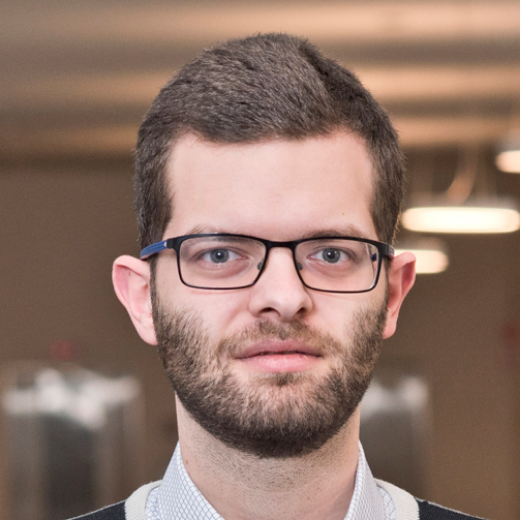
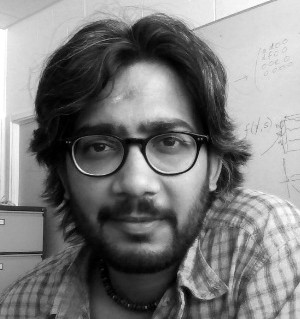
Giuseppe Roberto Pisaturo is a researcher at the Free University of Bozen-Bolzano , affiliated with the Faculty of Engineering . His work focuses on hydraulic modeling , sediment dynamics , and hydropower systems , with particular emphasis on ecological impacts and sustainable management strategies in Alpine environments. Research interests: Hydropeaking effects on river ecosystems Reservoir sedimentation and flushing operations 3D hydraulic modeling for ecological assessment Water distribution system optimization Pumps-as-Turbines energy recovery Gravel bed flow dynamics His methodological expertise spans experimental techniques (PIV, LDA), numerical simulations (Navier-Stokes solvers), and data-driven modeling applied to environmental systems. He contributes to the development of tools like QEPANET plugin for QGIS and applies genetic algorithms for optimal hydraulic infrastructure placement.
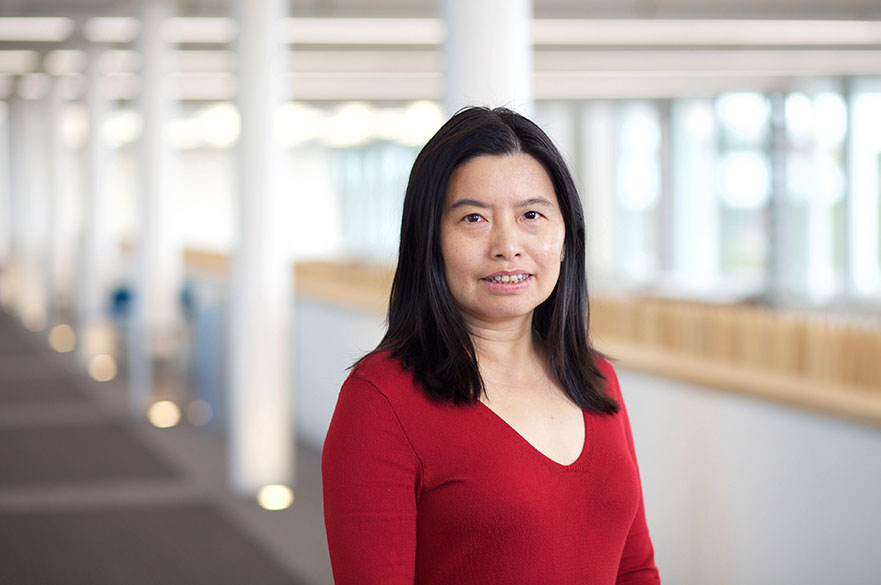
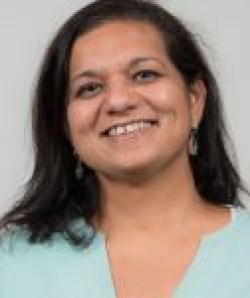
Haida Liang is a Professor of Physics at Nottingham Trent University, leading the Imaging & Sensing for Archaeology, Art History & Conservation (ISAAC) research group and directing the Imaging, Materials and Engineering Research Centre (IMEC). Her work spans advanced optical imaging, spectroscopic techniques, and remote sensing for non-invasive analysis of cultural heritage materials. Academic Affiliation: School of Science & Technology, Department of Physics and Maths Key Collaborations: National Gallery, British Museum, British Library, Getty Conservation Institute Her research integrates optics, data science, and interdisciplinary methodologies , focusing on: Development of ultra-high resolution Optical Coherence Tomography (OCT) for 3D imaging of paintings and archaeological materials Mobile spectral imaging systems for in situ analysis Machine learning for rapid spectral dataset analysis Study of light-matter interactions and laser degradation effects Investigation of historical global connections through material analysis Recent publications highlight AI-driven heritage science and standoff Raman/LIBS spectroscopy applications. She has secured major funding from AHRC, EPSRC, NERC, Royal Society, and EU Horizon 2020. Scientific accolades include Fellowship in the International Institute for Conservation (IIC) . She supervises PhD/MSc students in projects like non-invasive manuscript analysis and laser-based conservation protocols.
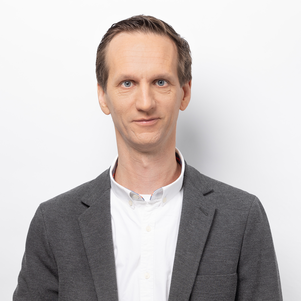
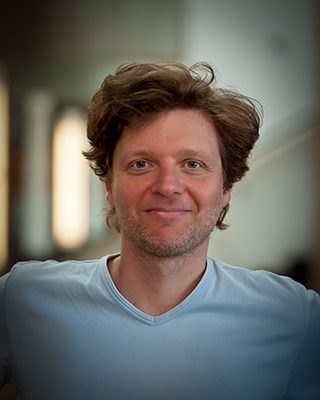
Jacob Hoogenboom (born 1972) is an Associate Professor at Delft University of Technology in the Department of Imaging Physics within the Faculty of Applied Sciences. He leads the Hoogenboom Lab, which specializes in integrated light and electron microscopy techniques. His research group is part of the DEMI (Delft Electron Microscopy Initiative) and actively participates in NEMI (the Netherlands Electron Microscopy Infrastructure). Hoogenboom earned his PhD from Utrecht University in September 2002 for research conducted at the FOM Institute for Atomic and Molecular Physics (AMOLF) in Amsterdam. He subsequently worked as a postdoctoral researcher at the MESA+ Institute for Nanotechnology at University of Twente and as a research fellow at ICFO - the Institute of Photonic Sciences in Barcelona, Spain. In 2008, he joined TU Delft as an Associate Professor after spending 8 months at Utrecht University. His research focuses on developing integrated microscopy techniques that combine the strengths of light and electron microscopy. Key areas include correlative microscopy (particularly SEM fluorescence CLEM), ultrafast microscopy, molecular nanophotonics, and light-electron-matter interactions. His lab aims to overcome limitations of existing microscopes by physically integrating different modalities into single instruments, enabling higher precision, super-resolution imaging, and faster detection. Analysis of his recent publications (2024-2025) reveals a strong focus on advancing correlative cryo-electron microscopy techniques, particularly workflows for fluorescence-targeted lamella milling from vitrified cells. His work bridges fundamental physics with practical applications in life sciences and materials research, emphasizing both technical innovation and practical implementation. Microscopy Today Innovation Award (2013) Professor Hoogenboom actively supervises students and has developed educational materials including an interactive textbook on electricity and magnetism. His lab collaborates extensively with industry partners and end users to translate technological advances into practical applications for life sciences, health, and materials research. The Hoogenboom Lab operates at the interdisciplinary intersection of physics, engineering, chemistry, and biology.
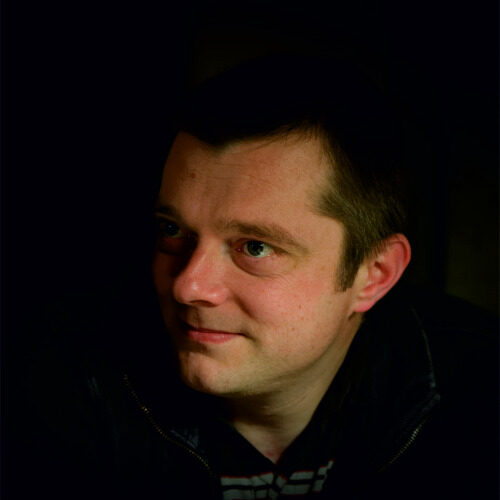
Pascal Masselin is a Lecturer at the University of the Coastal Opal Coast, specializing in Functional Materials. His research focuses on optical glasses, particularly the synergy between chemists and opticians to develop laser-inscribed waveguides in chalcogenide glasses and characterize irradiation-induced refractive index variations. He collaborates with teams from the Chemical Sciences Laboratory of Rennes and the Materials, Microelectronics and Nanoscience Institute of Provence. Key research themes: Laser inscription, waveguide fabrication, refractive index characterization, nonlinear optics. Notable achievements: Expertise in femtosecond laser processing, submission to Journal of Non-Crystalline Solids (2008), and studies on visible-to-infrared glass transmission. Scientific awards include the BQR (Bonus Qualité Recherche) grant in 2005. Beyond research, he organized the Ultra-Fast Phenomena Days (2005), participated in educational outreach (2006-2008), and presented physics training programs at schools. His work bridges materials science, optical engineering, and ultrafast laser technology.
Jean-Pierre Landesman serves as an Adjunct Professor in the Department of Engineering Physics at McMaster University, with scholarly activity spanning over 30 years and recent publications extending to 2025. His work centers on semiconductor device physics, specifically III-V materials systems including InP and GaAs, with emphasis on experimental characterization of fabrication-induced mechanical effects. Landesman's research interests focus on semiconductor stress phenomena, optoelectronic device reliability, and photonic materials engineering. He specializes in spatially-resolved luminescence techniques (micro-photoluminescence, cathodoluminescence) to quantify mechanical strain in laser diodes and quantum well structures. Key areas include plasma etching damage analysis, silicon nitride film property optimization for photonics, and automotive-grade component qualification under high-temperature stress. Analysis of his 2021-2025 publications reveals consistent expertise in correlating mechanical stress with optical properties in III-V devices. He frequently employs finite element simulations (FEM) to model strain distributions from dielectric films and etching processes, publishing in journals like Journal of Vacuum Science and Technology, Applied Optics, and ECS Meeting Abstracts. His work bridges semiconductor processing, materials characterization, and device performance validation. No scientific awards or honors were documented in the provided text. Landesman instructs the graduate course ENGPHYS 723 (Semiconductor Diode Laser Physics) in 2025, 2024, 2022, and 2019. While his publication record indicates active research collaboration, the text lacks specifics about PhD/Master's students, grant funding, or project leadership. Automotive reliability studies suggest industry partnerships, but no funding sources are named. The provided information does not reference any dedicated laboratory, research team, or institutional facilities under his direct leadership.
Matthieu Roussey is a Professor in Experimental Photonics at the Department of Physics and Mathematics , University of Eastern Finland . His research focuses on integrated optics , nano- and micro-structures on/in waveguides , and photonics applications for environmental and biomedical sensing. Expertise : Integrated Optics, Nanophotonics, Optical Sensor Development Key Projects : Microplastic Research (2016–present), Circular Economy of Water (2021–2023) Research Focus Roussey's work bridges fundamental and applied photonics, including: Design of dielectric surface waves and Bloch surface wave platforms Development of grating-based sensors for micro/nanoplastic detection Exploration of smart photonic integrated circuits (PICs) for telecom and atmospheric sensing Advancements in nanophotonic fabrication via atomic layer deposition and electron beam lithography Scientific Contributions His recent publications highlight trends in: Surface Wave Excitation : Grating designs enabling multiple Bloch surface wave generation Environmental Photonics : Hyperspectral imaging for microplastic identification in water Optical Sensor Innovations : Portable SPR sensors, hybrid graphene-silicon waveguide gratings Nanofabrication Techniques : Precision methods for nanostructures and waveguide components
Alan DeWeerd is a Professor in the Department of Physics at the University of Redlands, with expertise in quantum optics and physics education. He previously served as an Assistant Professor at Creighton University (1996–1998). Education: Ph.D., Physics, University of Wisconsin M.S., Physics, University of Wisconsin B.S., Physics, University of California, Irvine His research focuses on quantum optics experiments with single photons and entangled pairs, alongside projects in applied optics such as optical tweezers, negative refraction, and light scattering. He has also advanced physics education through publications in pedagogical journals. Scientific Awards: Faculty Research Grant and Hewlett Faculty Development Grant (2002) Department of Education Graduate Assistantship in Areas of National Need (1991–1994) Wisconsin Alumni Research Foundation Graduate Fellowship (1990–1991) Outstanding Senior in Physics (1990), Sigma Pi Sigma (1989), Phi Beta Kappa (1988) DeWeerd has collaborated with students on experimental physics projects and secured grants to support undergraduate research. He is affiliated with the American Association of Physics Teachers, American Physical Society, and Council on Undergraduate Research.
Gabriel Leen serves as a Senior Research Fellow in the Department of Electronic and Computer Engineering within the Faculty of Science and Engineering at the University of Limerick. His research integrates optical engineering, acoustics, and biomedical applications to develop advanced sensing technologies for medical diagnostics and industrial processes. Dr. Leen's primary research focuses on optical fiber sensor systems for pressure, temperature, and refractive index measurements, with significant applications in urodynamic analysis, radiotherapy dosimetry, and respiratory monitoring. His pioneering work in acoustic levitation enables contactless sample manipulation for X-ray crystallography, reducing sample consumption while enabling time-resolved structural studies of biological macromolecules. This interdisciplinary approach bridges physics, engineering, and clinical medicine through innovative device fabrication and signal processing techniques. Analysis of his recent publications (2023-2025) reveals three dominant research trajectories: 1) Acoustic droplet manipulation systems for X-ray light sources enabling new crystallography methodologies; 2) Miniaturized optical fiber sensors with biocompatible designs for in vivo medical applications; and 3) Laser-based processing techniques for flexible electronics and sensor fabrication. These themes demonstrate consistent innovation in translating fundamental physical principles into practical biomedical instrumentation with clinical impact.
Mark Greiner is a Professor of Ophthalmology and Visual Sciences at the University of Iowa Carver College of Medicine, holding the Robert and Joell Brightfelt Professorship in Cornea Research. He serves as Medical Director of the Iowa Lions Eye Bank and Fellowship Director for the Cornea, External Diseases and Refractive Surgery program, with clinical operations based at the Pomerantz Family Pavilion. His educational journey includes a BA in English from UC Berkeley, an MD from UC Davis School of Medicine, internal medicine internship at UC Davis Medical Center, ophthalmology residency at UC Davis Health System Eye Center, and cornea fellowship at Devers Eye Institute in Portland, Oregon. Dr. Greiner's research centers on corneal endothelial metabolic function with emphasis on Fuchs' endothelial dystrophy, endothelial keratoplasty techniques (including DMEK), and the role of mitochondrial biology in corneal diseases. His work bridges molecular mechanisms with clinical applications in eye banking and diabetes-related ocular complications, driving innovations in corneal transplantation. Recent publications (2024-2025) reveal dominant themes in Fuchs dystrophy pathophysiology, advanced corneal imaging, and international consensus development for endothelial keratoplasty standards. His collaborative studies span molecular biology, surgical outcomes, and functional vision assessment using driving simulators. His distinguished awards reflect excellence in research, teaching, and leadership within ophthalmology: Faculty Teaching Award, University of Iowa Carver College of Medicine Donald D. Heistad Prize for Best Poster Presentation P.J. Leinfelder Award for Best Resident Research Best Doctors in America recognition Cornea Society Best Paper Award William E. Scott Research Award Junior Faculty of the Year Secretariat Award from American Academy of Ophthalmology As Fellowship Director, Dr. Greiner mentors cornea specialists while leading the Iowa Lions Eye Bank. His grant-funded work through the Institute for Vision Research and Fraternal Order of Eagles Diabetes Research Center focuses on translational corneal science. He maintains active collaborations with the Center for Biocatalysis and Bioprocessing and Institute for Vision Research, advancing diabetic eye disease research and corneal tissue preservation techniques through multidisciplinary teams.
Komron Shayegan is a Postdoctoral Scholar Research Associate in Applied Physics and Materials Science, currently affiliated with the Electrical Engineering department. He earned his B.S.E. in Electrical Engineering from Princeton University in 2018, with a concentration in Electronic Devices and Materials. His career includes research at attocube systems AG in electronics, followed by advanced studies and publications in thermal radiation and nanophotonics. Princeton University (B.S.E. 2018) – Electrical Engineering, Electronic Devices and Materials Komron’s research focuses on nonreciprocal thermal radiation, nanophotonic engineering, and optical metasurfaces. He explores magneto-optical coupling, infrared absorption, and broadband emissivity control, with applications in energy efficiency and optical communication. His work also extends to organic electronics and thin-film solar cell optimization. Key trends in Komron’s publications include thermal radiation manipulation, magneto-optical effects, metasurface design, and advanced optical coatings. His studies bridge semiconductor physics, nanophotonics, and infrared spectroscopy, emphasizing directional and spectral control of thermal emission and absorption. Komron’s lab work involves experimental validation of Kirchhoff’s law violations, development of electrically tunable apertures, and deposition techniques for low-refractive-index materials. While formal grants and awards aren’t listed, his contributions to high-power optical devices and reconfigurable surfaces highlight his technical expertise.
Kartic Subr is an Associate Professor and Royal Society University Research Fellow at Heriot Watt University's School of Engineering and Physical Sciences, specifically within the Institute of Sensors, Signals & Systems. His research focuses on computer graphics, particularly Monte Carlo methods for image synthesis, stochastic sampling techniques, and advanced rendering algorithms. Before joining Heriot Watt in July 2014, he was a post-doctoral researcher at Disney Research in Edinburgh and held a Royal Society's Newton International Fellowship at University College London. Dr. Subr received his PhD in June 2008 from the University of California, Irvine under the guidance of Jim Arvo. His dissertation explored sampling decisions in Monte Carlo image synthesis. Prior to his PhD, he earned a Bachelor of Technology degree in Computer Science and Engineering from PESIT (Bangalore University, India) and worked for a year as a Telecommunications engineer at Hewlett Packard. Dr. Subr's research centers on improving the efficiency and accuracy of image synthesis through advanced sampling strategies. His work spans Monte Carlo integration techniques, frequency analysis of light fields, and novel approaches to rendering effects like depth of field and motion blur. He has made significant contributions to understanding the statistical properties of stochastic sampling patterns and their impact on integration error. His research bridges computer graphics, signal processing, and statistical methods to develop more efficient rendering algorithms. His most recent publications demonstrate a clear trajectory toward more sophisticated analysis of light transport and image formation. The 2013-2014 papers focus on error analysis of combined sampling strategies, Fourier analysis of stochastic methods, and efficient handling of 5D light fields. His work consistently addresses fundamental challenges in rendering while developing practical algorithms that balance computational efficiency with visual quality. Dr. Subr has received several prestigious awards for his research: Royal Society University Research Fellowship (2014) Newton International Fellowship (2010) Best Paper award at I3D 2011 for "Real-time rough refraction" Best-paper-honorable-mention at I3D 2012 Dr. Subr has supervised numerous research projects and collaborated extensively with institutions including Disney Research, INRIA-Grenoble, and University College London. His research has been supported by competitive fellowships from the Royal Society and has resulted in multiple publications at top-tier graphics and vision conferences. He actively seeks PhD students in the areas of stochastic sampling and signal processing, indicating ongoing research funding and project development. While specific lab information isn't detailed in the provided text, Dr. Subr's research appears to be conducted within the Institute of Sensors, Signals & Systems at Heriot Watt University, with strong connections to the broader computer graphics research community through collaborations with researchers at Disney Research, INRIA, and UCL.
Sudha K. Iyengar, PhD, is Professor and Vice Chair for Research in the Department of Population and Quantitative Health Sciences at Case Western Reserve University School of Medicine, with additional professorial appointments in Genetics & Genome Sciences and Ophthalmology & Visual Sciences. She directs an interdisciplinary laboratory that identifies genes underlying complex eye, kidney and speech-sound disorders using large-scale genomic and computational approaches. Education: Details of degrees and institutions are not provided in the supplied text. Research interests span genetic epidemiology of multifactorial disease, genomics of age-related macular degeneration, Fuchs endothelial corneal dystrophy, diabetic retinopathy, speech-sound disorders, and development of statistical methods for high-density genomic data. Her recent publications (2018-2019) concentrate on GWAS and multi-ethnic meta-analyses for diabetic retinopathy, AMD progression, refractive error, cataract, and longitudinal outcomes of childhood speech disorders, reflecting a portfolio that integrates big-data genomics with clinical and population sciences. Professional service & grants: Principal Investigator on multiple NIH R01 awards (NEI, NIDCD) and VA Million Veteran Program project, member of NIH study sections and editorial boards, and active grant reviewer for international agencies. Mentoring: Over her CWRU career she has mentored 7 PhD students and 4 post-doctoral fellows, many now holding faculty positions with NIH funding.
Zoran Popović is a Professor of Computer Science at the University of Washington's Paul G. Allen School of Computer Science & Engineering, where he directs the Center for Game Science. He is also the founder and Chief Scientist at Enlearn, a company focused on adaptive learning systems. His work bridges computer science, biology, and education through innovative game-based approaches to scientific discovery and learning. Popović received his Sc.B. with Honors in Computer Science from Brown University in 1991, followed by an M.S. and Ph.D. in Computer Science from Carnegie Mellon University in 1993 and 1999 respectively. His doctoral research focused on the automatic synthesis and transformation of realistic character animation. Before joining the University of Washington faculty in 1999, he held research positions at Sun Microsystems, Justsystem Pittsburgh Research Center, and the University of California at Berkeley. His primary research interests span computer graphics, animation, computer vision, and robotics, with a particular focus on scientific discovery through gameplay, learning games, high-fidelity human modeling and animation, and control of realistic natural motion. His work has pioneered the field of scientific discovery games, most notably through Foldit, a biochemistry game that has produced significant scientific results published in Nature. His research has expanded into educational games for mathematics learning and protein structure prediction, creating systems that blend human intuition with computational approaches. Analysis of his recent publications reveals a consistent trajectory toward increasingly sophisticated integration of human computation, machine learning, and educational theory. His work has evolved from foundational computer graphics research to complex systems that leverage collective human intelligence for scientific discovery and personalized learning. The publications demonstrate strong interdisciplinary connections between computer science, biology, education, and cognitive science, with growing emphasis on adaptive learning systems and explainable AI. ACM SIGGRAPH Significant New Researcher Award (2004) Alfred P. Sloan Fellowship (2003-2004) NSF CAREER Award (2001-2006) Schlumberger Foundation Fellowship (1997-1999) Dr. Frank H. Netter Award for Special Contributions to Medical Education (2013) Katerva Award (2013) Nature publications resulting from Foldit player contributions Professor Popović has mentored an extensive group of students who have gone on to successful careers in both academia and industry, including multiple faculty members at prestigious universities and founders of technology companies. His Center for Game Science has secured significant research funding for projects that combine scientific discovery with game mechanics, resulting in practical educational tools used by hundreds of thousands of students. The Center's work with Foldit has demonstrated how games can solve complex scientific problems that have stumped traditional computational approaches for years. The Center for Game Science, which Popović directs, operates as an interdisciplinary research hub bringing together computer scientists, biologists, educators, and game designers. The lab has developed multiple successful game platforms including Foldit (for protein folding), Refraction (for teaching fractions), and Nanocrafter (for DNA nanotechnology). Their research combines cutting-edge computer science with practical applications that have real-world impact in both scientific research and education.
Anak Bahadur Bhandari is a Researcher and Senior Engineer at the Geophysical Institute, University of Bergen, part of the Faculty of Mathematics and Natural Sciences. His career spans atmospheric physics and optical measurement techniques, with significant contributions to wind energy research and biomedical optics. His research interests include: Atmospheric physics and wind energy applications Optical remote sensing and lidar technology Polarized light scattering in biological tissues BRDF measurements and radiometric calibration Turbulence characterization for wind energy assessment Dr. Bhandari's publication record shows consistent research productivity from 2007 through 2019, with recent work focusing on lidar-measured turbulence intensities and wind turbine wake assessment. His research bridges fundamental optical physics with practical applications in renewable energy and medical diagnostics, demonstrating interdisciplinary expertise. Notable research contributions include: Development and characterization of the SUMO turbulence measurement system for wind energy applications Comprehensive BRDF measurements of Spectralon reflectance standards under various illumination conditions Modeling of polarized light transport in human skin tissue Long-term radiation observations documented in Bergen's Radiation Yearbooks Dr. Bhandari has been actively involved with the Norwegian Center for Offshore Wind Energy (NORCOWE) and the Bergen Offshore Wind Center (BOW), contributing to Norway's leadership in wind energy research. His collaborative approach is evident in numerous multi-institutional publications spanning atmospheric science and biomedical optics.
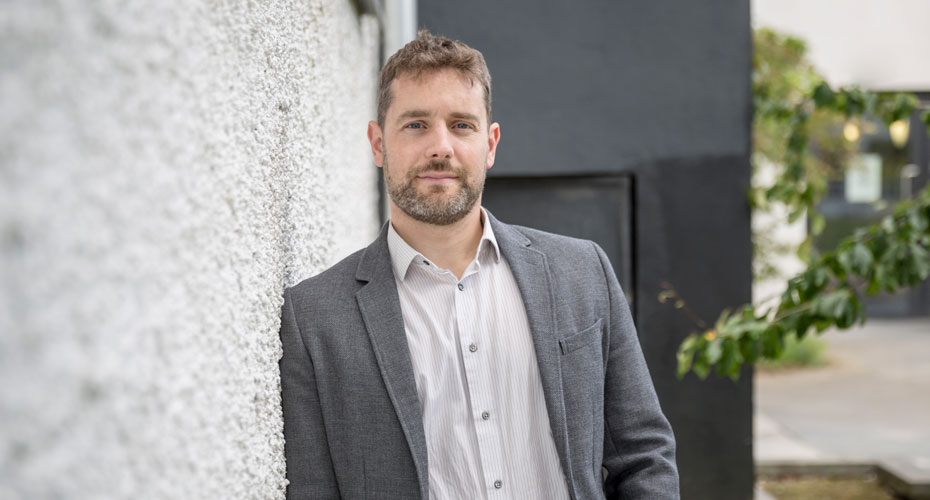
Dr. Shane Donohue is a Lecturer in the UCD School of Civil Engineering at University College Dublin. His research focuses on the application of seismic wave-based technology to assess the internal stability of earthwork infrastructure, including railways, roads, and flood defenses. He collaborates with major infrastructure managers like Network Rail, Environment Agency, and international institutions such as Chang’an University in China. Research Interests Dr. Donohue’s work addresses the aging and climate-stressed earthworks that underpin critical infrastructure. He specializes in non-invasive geophysical methods to detect internal soil moisture and pore pressure changes, enabling early intervention. His research spans geotechnical engineering , climate change adaptation , and transport network resilience , with applications in flood defense systems and earthwork stability monitoring . The seismic wave technology he developed allows rapid, large-scale assessment of geotechnical assets, reducing risks of catastrophic failures and associated costs. His projects are funded by EPSRC and NERC in the UK. Scientific Awards European Association of Geoscientists and Engineers (EAGE) 'Best of Near Surface 2014' 2017 Telford Premium Prize for best paper in the Institution of Civil Engineers (ICE) journal, Forensic Engineering Dr. Donohue’s research has been applied to real-world challenges, such as the 2015 River Douglas levee breach in the UK, where traditional surface-based methods failed to predict internal instability.