Dr. Fabian Anicker is a Researcher at the Department of Communication and Media Studies (KMW I) of the Heinrich Heine University Düsseldorf . Since 2022, he has led the Meinungsmonitor Künstliche Intelligenz (MeMo:KI) project, and since April 2025, the DFG-funded project "Large Language Models als kommunikative Akteure" . He serves as deputy spokesperson of the Deutsche Gesellschaft für Soziologie (DGS) section on sociological theory. Education: 2011: MA in Global and International Sociology, University of Edinburgh 2007–2010: Bachelor in Social Sciences, Heinrich Heine University Düsseldorf 2019: PhD at HHU-Düsseldorf (thesis: "Entwurf einer Soziologie der Deliberation" ) Research Focus: His work bridges political sociology (public sphere, democratic theory), sociology of technology (AI, LLMs), and sociological theory (theory formation, agency). The DFG project investigates the communicative agency of LLMs and their societal impact, particularly on user attitudes and deliberation processes. Notable Contributions: Co-editor of "Die Praxis soziologischer Theoriebildung" (2024) Empirical pragmatization of Habermasian communication theory Conceptual analysis of AI agency and democratic structures
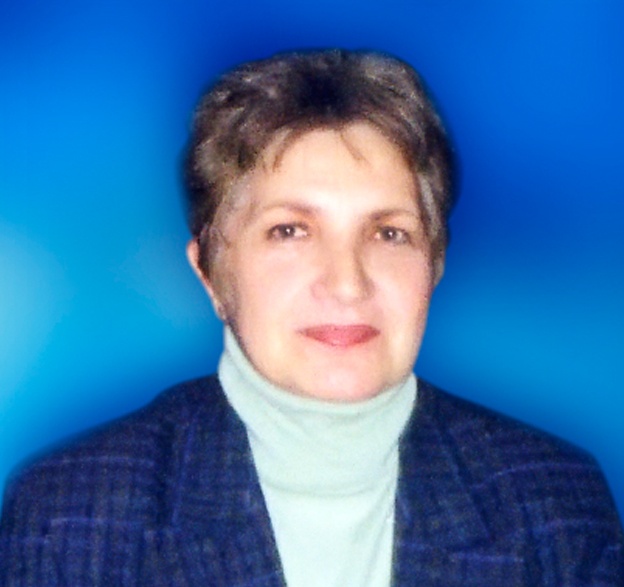
Lyudmila Mykhailivna Logachova is a Senior Lecturer at Zaporizhzhia Polytechnic National University, affiliated with the Faculty of Information Security and Electronic Communications and the Department of Radio Engineering and Telecommunications. With over four decades of academic experience since joining the university in 1980, she has established herself as a dedicated educator and researcher in the field of microwave engineering and electromagnetic theory. Dr. Logachova specializes in the following research areas: Waveguide theory and analysis Microwave filter design and optimization Electromagnetic field propagation Antenna systems design Radio wave propagation in terrestrial environments Millimeter wave applications Her scholarly work demonstrates a consistent focus on waveguide theory and microwave engineering, with particular emphasis on harmonic filters, wave diffraction phenomena, and impedance analysis. Over her career, she has published 18 scientific papers including 2 patents, with recent work extending into applications of millimeter waves in medicine and advanced mobile communication systems. Her research shows a progression from fundamental waveguide theory to more applied technologies in telecommunications. Dr. Logachova has been actively involved in academic conferences, particularly the annual "Science Week" at Zaporizhzhia Polytechnic, where she has presented numerous papers on waveguide filters, antenna systems, and radio wave propagation. Her contributions to the field include both theoretical analyses and practical engineering solutions for high-power microwave systems. As an educator, she teaches several advanced courses including Technical Electrodynamics, Satellite Information Systems, and Microwave Electronic and Quantum Devices. Her pedagogical approach combines theoretical foundations with practical applications, preparing students for careers in radio engineering and telecommunications.
Dr. Nick Bertenshaw is a Senior Lecturer at the University of Portsmouth , affiliated with the School of Education, Languages and Linguistics and the Centre for European & International Studies Research. He earned an ESRC-funded PhD from the University of Essex and has been teaching linguistics and English language modules since joining the university in 2009. Research focuses on second language acquisition, psycholinguistics, and bilingualism Specializes in integrating generative theories of language acquisition with classroom practice Teaches modules including Second Language Acquisition (L7), English Forms & Functions (L5), and How Language Works (L4) In 2012, he became a Fellow of the Higher Education Academy. His recent work explores AI literacy and grammar analysis in transformed texts, as well as online processing of binding principles in L2 learners. Scientific Awards : Fellow of the Higher Education Academy
Juliette Boks-Vlemmix serves as a Lecturer in Pedagogy at the Department of Teacher Education within the Faculty of Social and Educational Sciences at the Norwegian University of Science and Technology (NTNU). Her institutional affiliation is centered at Gunnerushuset, G528, Kalvskinnet campus. Her research focuses on teacher educators' professional development through aesthetic approaches, university-school collaboration, and mentorship practices. Key areas include cartographic reviews of collaborative learning, bridging campus-practice school divides, and neonarratives in educator identity formation. She examines how aesthetic methods transform professional learning and strengthen research-practice partnerships in teacher education. Recent publications (2021-2024) reveal a concentrated exploration of collaborative frameworks, with systematic reviews mapping teacher educators' aesthetic professional development and interventions targeting student teachers' teamwork skills. Her work consistently addresses the integration of theoretical knowledge with practical teaching contexts. She actively contributes to academic discourse through presentations at major conferences including NERA, ECER, and ATEE, focusing on narrative methodologies and professional identity. Her teaching portfolio includes core pedagogy courses: PPU4602 - Educational Theory 2 for ITE 8-13, PPU4603 - Educational Theory 3 for ITE 8-13, PPU4512 - Adapted Teaching, and PPU1000 Pedagogikk 1 for Lektor 8-13 (2023).
Petter Grytten Almklov is a Professor in the Department of Sociology and Political Science at the Norwegian University of Science and Technology (NTNU), conducting interdisciplinary research at the intersection of sociology, anthropology, and safety science with focus on organizational and work-related phenomena in contemporary society. He holds a civil engineering degree in geosciences and a doctorate in social anthropology, providing dual technical and social science foundations for his work. Research Focus: His scholarship centers on six interconnected domains presented through structured exploration: Safety, community security, and risk management systems Technology-mediated work in high-reliability contexts Societal digitalization and big data governance Epistemological processes of measurement and standardization Public sector governance and cross-organizational collaboration Healthcare systems and child welfare practices Analysis of his 2021-2025 publications reveals consistent methodological commitment to qualitative, practice-oriented approaches examining how representation and standardization processes manifest in concrete organizational settings. His work demonstrates particular attention to safety science applications across maritime, security, and public sector contexts while addressing fragmentation challenges in modern work structures. No scientific awards were documented in the provided source material. While extensive collaborative research is evident, specific details regarding student advising, grant funding mechanisms, laboratory facilities, or dedicated research teams were not included in the available information.
Dr. Iker Zirion Landa is a Professor of Public International Law at the University of the Basque Country (UPV/EHU) , where he also serves as faculty member at the Department of Public Law and Historical-Legal Sciences and of Political Thought History . As a researcher at Hegoa Institute for Development and International Cooperation Studies, he leads the Feminism and Conflict research group. PhD in International Studies Specialist in gender analysis within peacebuilding Expert on Democratic Republic of the Congo post-conflict dynamics Research Interests span critical peace studies, feminist international law, gendered power structures in humanitarian action, and the intersection of masculinity studies with post-conflict reintegration. His work problematizes the liberal peace paradigm while emphasizing voluntary simplicity , empathetic legal frameworks , and transformative justice mechanisms . Recent scientific contributions focus on gender analysis in DDR programs, feminist approaches to transitional justice, and critical evaluations of international legal frameworks for sexual violence protection in conflict zones. Current projects examine masculinity transformation in humanitarian contexts and gender-sensitive policy implementation across African Great Lakes region.
Peter Gouzouasis is a Full Professor in the Department of Curriculum & Pedagogy (EDCP) within the Faculty of Education at the University of British Columbia. His academic home is situated within the Centre for Early Childhood Education & Research (CECER), where he contributes to interdisciplinary research on early childhood learning and development. Professor Gouzouasis's research interests span a wide range of topics in arts education, with particular focus on qualitative assessment of learning, arts learning, storied forms of assessment, and music acquisition from birth through age 9. His scholarly work encompasses action research, adolescent issues, art education research, artistic and aesthetic development, cultural studies, curriculum theory, educational technologies, literacy, music education research, pedagogy, and teacher education research. He has made significant contributions to the development and application of arts-based educational research (ABER) and creative analytical practices (CAP), especially in the areas of artography and autoethnography. His recent publications reveal a strong emphasis on autoethnographic and a/r/tographic approaches to music education research, exploring the intersections between music, poetry, and narrative forms of inquiry. His work frequently examines emotional and social dimensions of music learning, including how music making relates to empathy, prosocial behavior, and happiness in young learners. He has also conducted important population-level research examining the relationships between school arts participation and academic achievement, providing empirical evidence for the value of arts education. Professor Gouzouasis has been actively involved in mentoring doctoral students and collaborating with colleagues on innovative research projects. His work with Matthew Yanko on elementary school music ateliers grounded in the pedagogies of Freinet, Reggio Emilia, and the maker movement demonstrates his commitment to practical applications of theoretical frameworks. He has also contributed significantly to the development of learning stories and Reggio Emilia-inspired documentation as formative assessment methods for music classrooms.
Suzanne Grant is a Senior Lecturer in Medical Anthropology at the University of Dundee, working within the School of Medicine and Population Health and Genomics department. She holds a prominent position in medical anthropology research and teaching, with a focus on healthcare quality and safety improvement. Dr. Grant actively supervises PhD students and leads multiple research projects addressing critical healthcare challenges. Her educational background includes: Master in Science, Public Health Research from the University of Edinburgh (2010) Doctor of Philosophy in Social Anthropology from the University of St Andrews (2006) Master of Arts in Social Anthropology from the University of St Andrews (1999) Dr. Grant's research is situated at the innovative intersection of anthropology and healthcare improvement. She specializes in applying ethnographic methods, particularly video reflexive ethnography (VRE), to understand and enhance health, care, and wellbeing contexts. Her work uniquely combines insights from anthropology, improvement science, and design to develop novel approaches for improving healthcare systems. A key aspect of her methodology involves actively engaging professionals, patients, carers, and NHS stakeholders in the co-design of improvements across diverse healthcare settings. Her research focuses on critical areas including patient safety, medication management, and healthcare system optimization, with particular attention to socio-technical aspects of healthcare delivery. Dr. Grant's recent publications demonstrate a consistent focus on applying ethnographic approaches to address pressing healthcare challenges, particularly in medication safety, inter-professional collaboration, and care home settings. Her work spans multiple healthcare contexts including acute medical units, pediatric care, and community care settings, reflecting her commitment to improving healthcare systems across the continuum of care. Her notable scientific achievements include: Economic and Social Research Council (ESRC) studentship Emslie Horniman/Sutasoma Trust Award from the Royal Anthropological Institute Medical Research Council (MRC) Population Health Scientist Postdoctoral Fellowship As an academic advisor, Dr. Grant supervises PhD students and research projects at both undergraduate and postgraduate levels. Her extensive grant portfolio demonstrates significant research leadership, with funding from major organizations including the Scottish Government, Medical Research Council, Economic and Social Research Council, and NHS Scotland. These projects address critical issues in healthcare improvement, medication safety, and system redesign. Dr. Grant also co-convenes the British Sociological Association Medical Sociology Scottish Regional Group and is an active member of the Video Reflexive Ethnography International Association, highlighting her leadership in these specialized research communities. Dr. Grant leads the BMSc Healthcare Improvement degree programme and several key modules focusing on ethnography and healthcare improvement. Her interdisciplinary approach connects medical education with design anthropology through collaborations with the Duncan of Jordanstone College of Art and Design, creating innovative educational pathways for future healthcare professionals.
Florence Crespin-Mazet serves as a Professor of Marketing at KEDGE Business School and Director of the Business Engineering Program at KBS Toulon. Her academic leadership spans strategic program direction and research supervision within the Marketing department. Education: PhD in Business Co-Development (University of Manchester, 2007) DEA (University of Lyon III) MBA (Illinois State University, USA) MSc (ESSCA Business School) Her research centers on business-to-business marketing, complex project negotiation, and knowledge communities as sources of organizational resilience. Recent work examines how social collectives develop dynamic capabilities for territorial resilience, with applications in healthcare, construction, and medical device sectors. She explores the interplay between community structures and innovation diffusion in project-based organizations. Publications reveal consistent focus on community-driven innovation across 2017-2025, with increasing emphasis on resilience frameworks in healthcare and territorial development. Her work bridges academic theory and industry practice through collaborations with major corporations. Professional Engagement: Member of KCO community (https://kco.kedge.edu) researching business communities Coordinator of collective work with 50+ contributors on community-based value creation Industry partnerships with Air Liquide, Arcadis, Bouygues, EDF, ENGIE, Laerdal Medical, Schneider Electric, and others She directs knowledge transfer through executive education and corporate consulting, focusing on community-based business development strategies in complex project environments.
Will Valley is an Associate Professor of Teaching in Applied Biology at the Faculty of Land and Food Systems, University of British Columbia . With a PhD in Sustainable Food System Education and a background in Secondary Sciences education, Valley specializes in pedagogical innovations for sustainable food systems, systems thinking, and community-engaged scholarship. PhD, Sustainable Food System Education (UBC) BEd, Secondary Sciences (UBC) BSc, General Biology (UBC) His research focuses on regenerative education frameworks, decolonial pedagogy, and urban agriculture's multifunctionality. He teaches courses like LFS 100: Introduction to Land and Food Systems and LFS 400: Audio Storytelling . Selected publications analyze community-based food systems, decolonizing methodologies, and equity-centered pedagogies. Recent work explores reparative just transitions (2025) and ethical engagements between Western and Indigenous sciences (2024).
Ian Corrie is a Principal Lecturer in the Department of Nursing, Health and Professional Practice at the University of Cumbria. He also serves as the Honorary Colonel of 335 Medical Evacuation Regiment and as a Special Advisor to EMCC. His work integrates military and academic leadership, particularly in paramedic training and healthcare education. Research Focus: Transformative learning and disruptive pedagogy in health and social care education Healthcare leadership development through coaching and experiential learning Emotional labour and psychological resilience in paramedic practice Interdisciplinary doctoral education and translational research Crisis management and disaster response training Recent Trends: His recent publications emphasize the application of transformative learning theory in real-world healthcare and military contexts, particularly during the COVID-19 pandemic. He explores how emotional preparedness, leadership coaching, and interdisciplinary collaboration can enhance both individual and organizational capacity in crisis response. Collaborations: Ian Corrie frequently collaborates with academics such as Catherine Hayes, David Bates, Ron Lawson, and others across institutions. He is active in international conferences and contributes to edited volumes on healthcare education, leadership, and crisis strategy.
Raúl Álvarez Pérez is an Associate Professor in the Department of Social Work and Social Services at the Faculty of Social Sciences, Pablo de Olavide University, Seville. He concurrently serves as Director General of Social Policies under the Vice-Rectorate for Culture and Social Policies and as Academic Director of the Interuniversity Master's Degree (UPO, UCO, US) on "Policies and Practices for Sustainable Human Development." His academic credentials include: Diploma in Social Work from the University of Seville Bachelor's Degree in Sociology from Pablo de Olavide University PhD from the Autonomous University of Madrid (Thesis: "Political Participation and Collective Action of Older Persons. The Consequences of Aging and Generational Replacement in Democratic Spain") Official Master's Degree in Social Problems from UNED Master's Degree in Gerontology from the University of Salamanca His research spans rural social services organizational models, impact assessment of social programs in rural Andalusia, participatory processes in marginalized communities, ethics of care in social work practice, political participation of older adults, and women's health issues in correctional settings. He integrates theoretical frameworks with practical interventions to address systemic inequalities in vulnerable populations. Analysis of his 15 most recent publications reveals consistent thematic threads: human rights integration into social work education, ethical dilemmas in gerontological care, and political mobilization of aging populations. His work demonstrates methodological rigor through participatory action research while maintaining critical engagement with neoliberal policy frameworks affecting rural communities and prison systems. His recognition includes: Salgado Alba Award (2011) from the Spanish Society of Geriatrics and Gerontology for best social sciences communication Álvarez Pérez has secured research grants for evaluating the GRUSE strategy in primary healthcare and Andalusian rural social service models. His supervisory approach emphasizes critical reflexivity, preparing students to navigate complex ethical terrain in social work practice through community-based projects and policy analysis. He actively contributes to the Social Research and Participatory Action Group (GISAP) and the Social Sciences Laboratory (FCSlab), fostering interdisciplinary collaborations that bridge academic research with grassroots social movements across Andalusia.
Erin Murphy is a Lecturer in the Department of Cinema Studies at Colby College. Her teaching includes: CI210 - Contemporary Documentary Filmmaking: A Creative Practice CI254 - The Self-Reflexive Documentary CI310 - Advanced Contemporary Documentary Filmmaking: A Creative Practice Research interests span Documentary Filmmaking, Cinematography, and Creative Practice in Media Arts. She focuses on self-reflexive documentary techniques and hands-on filmmaking approaches.
Professor Jeff Bezemer is a leading academic in Communication at the UCL Institute of Education, University College London, with appointments in the Culture, Communication & Media school. He holds an MA in Intercultural Communication (Tilburg University, 1999) and a PhD in Educational Linguistics (Tilburg University, 2003). Research: Focuses on clinical communication, health education, and multimodal analysis of professional interactions. Key Projects: Body-worn cameras in paramedic work, surgical education, inter-professional communication, and neurodisability early intervention. Teaching: Supervises PhD students and teaches Master’s modules on multimodal communication. Professional roles include Vice-Dean (Health) and UCL conference committee membership.
Inga Oliynyk is a Senior Lecturer in Sports Science at Linnaeus University, affiliated with the Faculty of Social Sciences and the Department of Sports Science. She holds responsibility for the specialization in sports and health within the subject teacher education program and is actively involved in curriculum development, quality assurance, and strategic educational planning. Her work bridges academic research and practical teaching, emphasizing scientific foundations and professional relevance. Her research is grounded in didactic and sociocultural theories, with a strong focus on gender, embodiment, norms, and power relations in physical education and health. She investigates how teachers and students interact within institutional frameworks, and how historical and societal contexts shape educational practices. Her work promotes inclusive, equitable, and reflective teaching, particularly in early school years. The recent publications indicate a consistent thematic trajectory centered on gender equity, didactic choices, and inclusive pedagogy in sports education. Her work spans academic, popular science, and anthology formats, often employing ethnographic and qualitative methodologies. She is particularly interested in how feedback, progression, and assessment can enhance student learning and professional development in teacher education. Scholarly contributions emphasize gender equity and inclusive practices in physical education. Research integrates sociocultural theory, ethnography, and curriculum studies. Publications appear in both peer-reviewed and practice-oriented outlets. Work bridges research, teacher training, and educational policy. Inga Oliynyk is actively involved in two research environments: Etnografiskt forum , which focuses on ethnographic and qualitative research methods, and Health, Gender and Embodiment , an interdisciplinary group exploring the intersections of health, gender, and bodily experience. These affiliations reflect her methodological rigor and thematic depth. While no formal awards or student supervision list is mentioned, her leadership role in program coordination and her sustained publication record indicate significant academic engagement and impact.