Prof. Marine Hugonnier is a filmmaker and Professor of Moving Image and Fictional Form at the Media Art Department of Karlsruhe University of Arts and Design. Her work critically examines the politics of vision, blending documentary and fictional forms to interrogate the colonial and extractive underpinnings of visual representation. She explores the materiality of film, the gaze's complicity with power structures, and the boundaries between observer and observed. Notable exhibitions include Field Reports at the Guggenheim Bilbao (2024), Cinema in the guts at Le Jeu de Paume Paris (2022), and inclusion in major collections like MoMA New York and Museo Reina Sofía Madrid. Her practice emphasizes reflexive filmmaking, advocating for ethical reconfigurations of image production through feminist and non-human-centric frameworks.
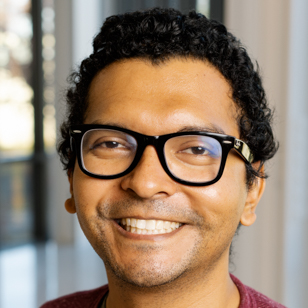
Allan Martell is Assistant Professor in Information and Library Science at Indiana University. He earned his Ph.D. from University of Michigan (2020), M.S. from Georgia Tech (2012), and B.A. from Central American University (2008). His research explores how societies negotiate memories of violence through information curation. Current work examines affective dimensions of memory activism and archival practices. He studies social memory infrastructures and collaborative interpretation frameworks. Publications analyze archival practices in contexts including HIV/AIDS documentation, military records, Salvadoran cultural trauma, and social media memory. He co-leads projects on community accountability in queer archives and January 6 memory preservation.
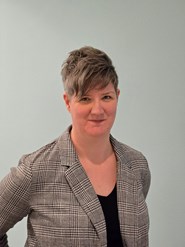
Evelina Liliequist serves as Associate Professor at Humlab, Umeå University's interdisciplinary research environment housed within the University Library. Her work critically examines digital cultures through the dual lenses of queer theory and ethnographic practice, with particular focus on how technology mediates identity formation and spatial experiences in both online and rural contexts. Her research program centers on Digital Ethnography, Queer Studies, and Artificial Intelligence critique, employing autoethnographic and qualitative methods to investigate LGBTQI experiences in digital spaces. Key themes include the queering of AI systems that enforce gender binaries, sharenting practices among same-sex couples, and the geographical dimensions of queer belonging—especially in rural northern Sweden where she documents how marginalized communities navigate place and identity. Analysis of her recent publications (2022-2025) reveals three dominant trajectories: 1) Critical interventions in AI ethics through queer perspectives that challenge computational binarism, 2) Documentation of aging experiences among LGBTQI Swedes through interview-based studies, and 3) Deconstruction of regional narratives about northern Sweden that influence development policies. Her methodological contributions to digital research ethics and autoethnographic practice provide frameworks for studying vulnerable populations in online environments. Liliequist actively contributes to the Queer Perspectives on Automated Facial Analysis Technology (Queer AI) research group and led the 2022-2023 study on health conditions of LGBTQI seniors. Her scholarship appears across disciplinary venues including First Monday, Geografiska Annaler, and Lambda Nordica, demonstrating her commitment to bridging digital humanities, geography, and gender studies within Humlab's collaborative ecosystem.
Associate Professor Jon Whitty is an academic in the School of Business at the University of Southern Queensland, specializing in critical project management theory and higher education governance. His work critiques managerialism in universities and explores project governance, organizational complexity, and professional staff dynamics. He holds a BEng(Hons) from Wales and a PhD from Queensland. His research bridges philosophy (Bourdieu, Heidegger) with practical project management challenges, focusing on how institutional structures impact project work and academic autonomy. Research interests include: Project management methodologies and their philosophical underpinnings Power dynamics in public and academic institutions Knowledge management in project-driven organizations Organizational learning through systemic lessons learned frameworks Critiques of managerialism in higher education Recent articles highlight themes like sham compliance in project governance, symbolic violence against professional staff, and the existential challenges faced by project managers. His work often employs critical theory to expose contradictions between institutional ideals and operational realities. No scientific awards are listed. His grants and advising focus on organizational change and project management education, though specific details are not provided. He is affiliated with research teams examining projectification and higher education policy.
Eleonora Venneri is an Associate Professor of General Sociology at the Department of Law, Economics and Sociology (DiGES) of the Università Cattolica del Sacro Cuore. She specializes in social planning, health sociology, research methodology, and urban resilience. Her teaching includes courses on Social Science Methodology and General Sociology for undergraduate and master's programs. Venneri's research focuses on reflexive methodologies in social inquiry, healthcare professions, and the intersection of environmental and public health policies. Her work emphasizes ethical considerations in research, particularly in pandemic response and community-based interventions. She has contributed to scholarly discourse on urban resilience, qualitative data analysis, and the sociological foundations of care relationships in healthcare systems. Her recent articles examine ecological approaches to health determinants, pandemic resiliency frameworks, and the role of reflexivity in adult education. Research Interests: Venneri’s research spans social planning, health sociology, and methodological innovation. She explores how interdisciplinary approaches can address complex societal challenges such as urban resilience, healthcare system adaptation during crises, and ethical research practices. Her work bridges theoretical frameworks with practical applications, advocating for participatory approaches in policy design and service planning. Grants & Labs: While specific grants or lab affiliations are not explicitly detailed, her involvement with the Department of Law, Economics and Sociology suggests collaboration with institutional research centers like the Laboratory of History of Law and Economics. Her teaching and research activities are anchored in fostering critical reflection and evidence-based strategies for social change.
Sally Goldspink is an Associate Professor in Health & Social Care and Director of the Professional Doctorate Health & Social Care at Anglia Ruskin University (ARU), Cambridge. She is affiliated with the School of Midwifery and Community Health within the Faculty of Health, Medicine and Social Care. Her work bridges academic leadership and practitioner development, focusing on applied learning in healthcare contexts. Dr. Goldspink holds a BSc in Occupational Therapy (1994), MA in Higher Education (2012), and EdD from ARU (2018). She is an Advance HE Senior Fellow and external examiner, contributing to curriculum development across health and social care programs. Her research explores learning experiences in healthcare practice, qualitative methodologies, and practitioner development. Key interests include reflexive practice, phenomenological analysis, and the integration of technology in education. She leads the CoPPER knowledge exchange group, fostering collaboration between education, research, and practice. Recent work includes a £518k ESNEFT-funded project evaluating Professional Midwifery and Nurse Advocates, and publications on remote qualitative methodologies, reflexive practices, and online learning strategies. She actively supervises doctoral students in areas like interprofessional working, patient advocacy, and healthcare pedagogy.
Despina Zacharopoulou is a Senior Lecturer at the Royal College of Art's Art & Humanities School , where she has led MA Crits, tutorials, and school groups since 2016. She serves as Academic Leader for the RCA Contemporary Art Summer School and the 'Rethinking Contemporary Performance Art' Masterclass, combining philosophical inquiry with experimental performance practices. Practice-led Ph.D. in Philosophy and Fine Art MSc and Diploma in Architecture (summa cum laude) MFA in Visual Arts (Antwerp Royal Academy) Her research redefines performance art through non-dialectical philosophy (Spinoza, Deleuze, Foucault), examining it as 'Spatium Monstrorum' - a field of intensities rather than fixed identities. Key projects include Protreptic (2021), a 168-hour durational work commissioned by Marina Abramović Institute, and collaborations with institutions like Bangkok Art Biennale. Recent publications in Performance Philosophy and Performance Research demonstrate her focus on: Embodied philosophies as artistic practice Surface ontologies in live art Governmentality protocols in performance Technologies of the self and vulnerability Scientific recognition includes: Onassis Foundation Doctoral Fellowship Stavros Niarchos ARTWORKS Fellowship RCA Knowledge Exchange Award Erasmus-Socrates Scholarship She has participated in international exhibitions including Frieze Special Projects, World Stage Design, and Marina Abramović Institute collaborations, with work documented in The Art Newspaper Greece and L'Officiel Thailand .
Sharon Gewirtz is a Professor of Education at King’s College London and Co-Director of the Centre for Public Policy Research (CPPR). She has held leadership roles including Head of the School of Education, Communication & Society (2012–2017) and Director of Research for the Faculty of Social Science & Public Policy (2008–2012). A Fellow of the UK Academy of Social Sciences since 2019, she specializes in education policy and sociology, focusing on social justice, governance, and accountability in education systems. Her research investigates how policies affect educational transitions and professional practices, particularly in vocational training and teacher accountability. Key projects include a six-year ESRC-funded study on England’s vocational education system and a £2.2m grant addressing post-school transitions for non-university youth. She supervises PhD students exploring themes like democracy in education, teacher professionalism, and care-experienced young people’s HE choices. Gewirtz teaches on BA Social Sciences and MA Education, Policy and Society. Her work appears in journals like Discourse and Journal of Vocational Education and Training , and she serves on editorial boards of major education journals. Her grants include awards from ESRC and the Economic and Social Research Council for projects on migrant youth transitions and mixed-income communities. She co-authored books like Professionalism (2015) and contributed to policy debates on education markets and neoliberalism’s impact on academia. Her research emphasizes ethical reflexivity and policy-practice connections, advocating for equitable education systems that empower marginalized groups.
Carine Chemin-Bouzir is an Associate Professor at NEOMA Business School, specializing in critical management approaches with a focus on psychoanalysis (particularly Lacanian theory) and the future of work. She holds a doctorate in Management Sciences and emphasizes collaborative learning and practical experience in her teaching. Her research explores alternative organizational practices, institutional logics, and the role of psychoanalytic frameworks in understanding organizational dynamics. Her work includes contributions to workforce planning (GPEC), alternative consulting processes, and pedagogical innovations in business education. She is a founding member of the AIMS Permanent Working Group on psychoanalysis and organizations. Recent publications highlight ambiguity in institutional strategies and the application of Lacanian theory to organizational change. Key research areas span critical management studies, institutional theory, and the intersection of psychoanalysis with organizational behavior. While her articles focus on theoretical frameworks and practical applications, she has not been explicitly noted for scientific awards. She collaborates actively in academic conferences and contributes to book chapters on management tools and governance.
Jeff Farmer is a Research Professor in the Department of Mathematics at the University of Denver, affiliated with the College of Natural Sciences and Mathematics. He holds a PhD in Mathematics from Texas A&M University. His research spans interdisciplinary areas including thermal engineering, functional analysis, and mathematics education, with notable contributions to operator theory and pedagogical strategies in STEM education. Dr. Farmer's work bridges pure and applied mathematics, with recent focus on thermal control systems for extreme environments such as lunar missions. His earlier research includes foundational studies in Banach spaces, Lipschitz operators, and geometric series. In education, he has explored culturally responsive teaching methods, teacher professional development, and curriculum design for diverse learning environments. His publications reflect a dual focus on advancing mathematical theory (e.g., polynomial reflexivity in Banach spaces) and improving educational practices (e.g., tailoring learning environments for mathematics education). Despite prolific output across disciplines, no specific scientific awards or grants are explicitly mentioned in the provided information. No graduate students or advising roles are listed in the current data. His professional activities include contributions to conferences and scholarly lectures, though specific details about laboratories or collaborative teams are not provided.
Maryam Khosronejadtoroghi is a Senior Lecturer affiliated with the School of Education within the Faculty of Education and Arts. Her research focuses on educational theory and practice, with a particular emphasis on professional identity formation in engineering education, teacher development, and creative writing pedagogy in primary schools. She employs mixed-methods approaches, including microethnography and reflexive analysis, to explore how students and educators negotiate identities and engage in collaborative learning environments. Research Interests: Professional identity practices in STEM education Contextualized teacher professional development Reflexivity in educational research and practice Creative writing instruction and literacy development Authentic assessment design in higher education Recent work highlights trends in analyzing classroom dialogues, authorial agency in children’s narratives, and the role of technology in fostering collaborative problem-solving. Her contributions bridge educational theory with practical applications, emphasizing context-sensitive pedagogical models. Advising & Grants: No specific grants or advising roles are explicitly mentioned in the provided texts. Labs/Teams: Collaborates with interdisciplinary teams investigating educational design, scaffolding in learning environments, and engineering communication practices.
Dr. Margaret Struthers is a Senior Lecturer at the School of Education , Manchester Metropolitan University , with over a decade of experience in social work education and practice. She works across BA, MA, and apprenticeship programs in social work, serving as simulation and employability lead and skills development lead for the MA program. Education: Master of Research in Health and Social Care , BA (Hons) Applied Social Studies , and Certified Qualifying Social Worker (CQSW) Research Interests focus on domestic violence and abuse , motivational interviewing , and innovative teaching methods . Her work integrates active learning and simulation-based approaches to bridge theory and practice. Recent projects include safeguarding victims of domestic abuse during the pandemic and technology-enhanced learning. Key Contributions include: Co-Investigator on ESRC-funded research on domestic abuse during the pandemic Associate Innovation Scholar 2025 for simulation-based education Development of micro-simulation tools and immersive storytelling techniques Awards & Recognitions : Practice Teaching Award Practice Development (Teaching and Training) Award Senior Fellow of the Higher Education Academy She maintains a practice base in domestic violence and abuse while collaborating with employer partners and service users to enhance professional authenticity in education. Her full-time role involves designing curricula that connect research to real-world scenarios.
Professor Karen Pashby holds the position of Professor of Global Citizenship Education and Lead for Research in the School of Education at Manchester Metropolitan University. She also serves as President of the Comparative and International Education Society of Canada (2023-2025) and leads the Education and Global Futures Research Group. Her academic journey includes a PhD from the University of Toronto (2013) and postdoctoral research at the University of Oulu and the University of Alberta. She holds additional roles as Docent at the University of Helsinki and Adjunct Professor at the University of Alberta. Education: PhD in Philosophy of Education from OISE/University of Toronto (2013) Postdoctoral research at University of Oulu (Finland) and University of Alberta Her research focuses on decolonial approaches to global citizenship education (GCE), environmental sustainability, and ethical internationalisation. She bridges theory and practice through collaborations with teachers, co-producing resources such as the HEADSUP checklist adaptation for secondary classrooms. Key themes include addressing colonial complicity, critical pedagogy, and the intersection of GCE with Sustainable Development Goal 4.7. Her work emphasizes reflexive praxis, challenging normative frameworks in education. Teaching areas include citizenship education, comparative education, and critical policy studies. She supervises doctoral students exploring decolonial pedagogies, anti-racist education, and global citizenship policy. Professional engagement includes leadership roles in networks like Bridge 47, contributing to global policy dialogues and teacher training initiatives. Her contributions extend to international collaborations, such as the British Academy-funded project with Louise Sund on ethical global issues pedagogy. She advocates for transformative learning through initiatives like the Education and Global Futures Group, emphasizing solidarity and critical reflexivity in education systems.
Leslee Thorne-Murphy is an Associate Professor and Associate Chair of the Department of English at Brigham Young University. She holds a PhD in English Literature from Brandeis University, with undergraduate and master's degrees from BYU. Her research focuses on Victorian literature, particularly the intersection of philanthropy and narrative in 19th-century texts, as well as digital humanities projects like the Victorian Short Fiction Project. She has served as an associate dean and contributed to initiatives such as the 'Victorian Short Fiction Project (Viki Wiki)'. Her work explores topics like charity bazaars, textile symbolism, and authorship practices in Victorian contexts. Educations: PhD (Brandeis University), MA/BA (BYU) Affiliations: Public Humanities Affiliated Faculty, Victorian Short Fiction Project Her research emphasizes how Victorian authors used literature to address social issues like poverty and class disparities. She has explored narratives in works by Charlotte Yonge and others, examining themes of charity, moral responsibility, and institutional reform. Recent projects include analyzing textile symbolism in British literature and the role of periodicals in shaping Victorian short fiction. Thorne-Murphy’s academic service includes leadership roles in the English Department and contributions to conferences such as INCS 2022. She balances scholarly work with family life, including her role as a parent and Relief Society secretary in her LDS congregation.
Toby James is a Professor of Politics and Public Policy at the University of East Anglia’s School of Politics, Philosophy, Language, and Communication Studies. He serves as Co-Director of the Electoral Integrity Project, an independent research initiative based at UEA and Queens University, Canada, which produces the annual Global Electoral Integrity Report. Additionally, he is Editor-in-Chief of Policy Studies and holds an Adjunct Professorship at Queens University. His work focuses on electoral integrity, democracy, political leadership, and public policy, with a particular emphasis on improving election quality globally through policy-relevant research. Previous Positions: Universities of Sydney, York, Swansea, Trinity College Dublin, and institutions like the John W. Kluge Center at the Library of Congress. Key Projects: The Electoral Integrity Project, ESRC-funded research on pandemic impacts on elections, and collaborations with organizations like International IDEA and the Carter Center. Teaching: Leads MA modules on global democracy and undergraduate courses on states and institutions. James’ research explores electoral integrity, democratic theory, and institutional design. Recent work includes analyzing pandemic effects on elections, evaluating political leadership impacts, and conceptualizing democratic principles. His awards include being a finalist for the ESRC Impact Prize and receiving the UEA Outstanding Contribution to Public Policy Award. He actively engages with policymakers, providing evidence to parliamentary committees and advising international organizations. Current projects address electoral management, democratic backsliding, and inclusive voting practices. James’ interdisciplinary approach bridges academic rigor with practical policy solutions.